Garment Quality Control and Factory Audit in Indonesia: A Sourcing Manager's Operational Guide
16 min read
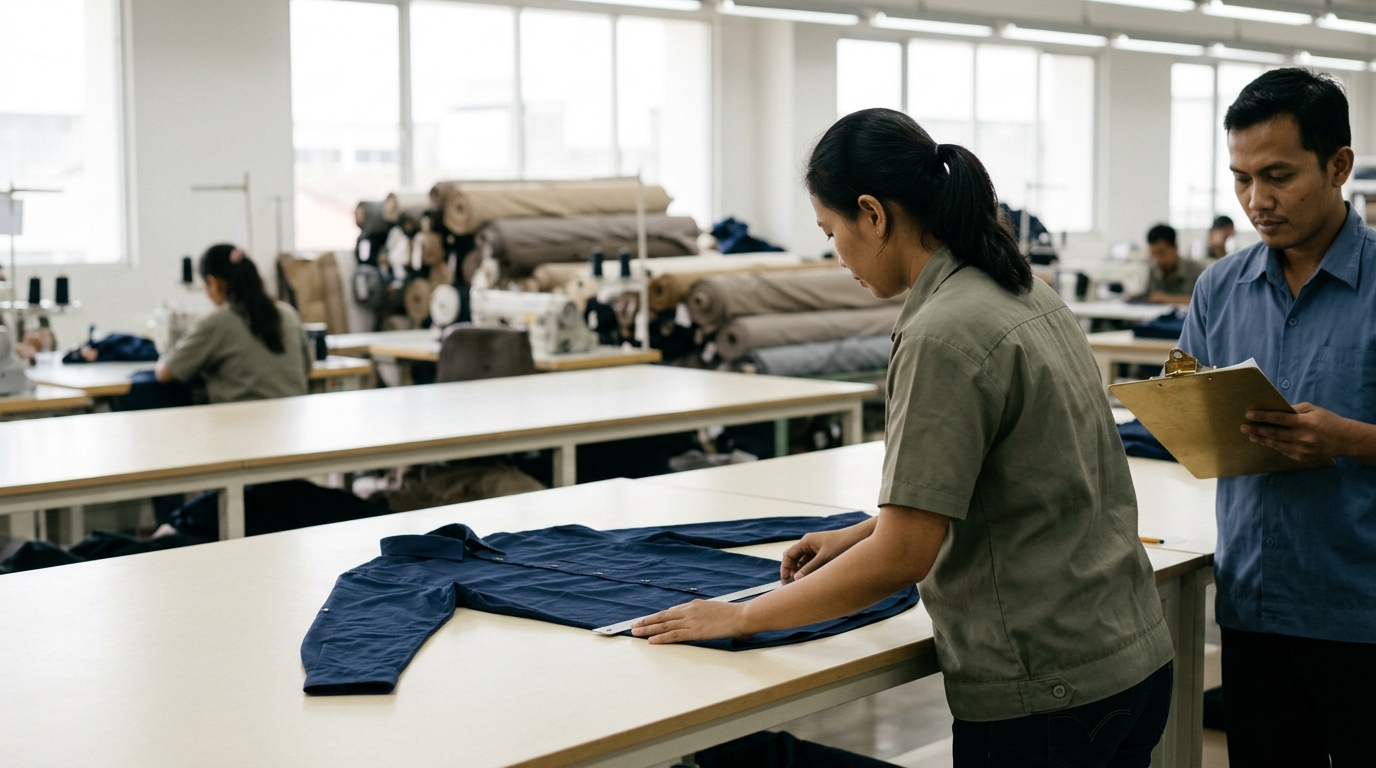
Managing garment quality control and factory audit processes in Indonesia is one of the most operationally complex tasks a US-based sourcing team faces. Indonesian factories range from large export-ready facilities with ISO 9001 and BSCI certification to smaller cut-make-trim operations with…
Managing garment quality control and factory audit processes in Indonesia is one of the most operationally complex tasks a US-based sourcing team faces. Indonesian factories range from large export-ready facilities with ISO 9001 and BSCI certification to smaller cut-make-trim operations with limited internal QC infrastructure. The gap between these tiers is wide — and the cost of misreading it shows up in shipment holds, rework charges, and compliance failures.
This guide covers every layer of the garment quality control factory audit Indonesia workflow: social compliance standards, technical capability assessments, AQL inspection strategy, defect classification, fabric testing, and corrective action protocols. It also addresses regional factory risk differences across Bandung, Jakarta, Semarang, and Surabaya — a dimension most generic QC guides ignore entirely.
If you source activewear, denim, knitwear, uniforms, orwoven shirtsfrom Indonesian factories, the frameworks here will help you build a repeatable, risk-calibrated QC program. The first step is understanding why Indonesia demands more rigorous audit planning than most sourcing teams initially expect.
Why Indonesia Is a Critical — and Demanding — Garment Sourcing Market
Indonesia consistently ranks among the world's top garment exporters. Its manufacturing base spans Jakarta, Bandung, Semarang, and Surabaya, with each cluster carrying a distinct product specialization and risk profile.
Regional Factory Profiles Across Key Indonesian Cities
Understanding city-level differences is a practical QC input, not just sourcing trivia.
Bandung is the dominant hub for knitwear, activewear, and denim. Factories here range from mid-size export-oriented operations to smaller CMT shops. Subcontracting without disclosure is a documented risk in this cluster. Unannounced audit strategies are particularly valuable here.
Jakarta and its industrial satellites (Tangerang, Bekasi, Bogor) host larger, more formalized facilities. Many carry existing BSCI or Sedex registration. Compliance infrastructure is generally stronger, but worker overtime violations remain common even in formally audited facilities.
Semarang is a growing hub for woven shirts, uniforms, and workwear. Factories tend to be mid-size with moderate compliance maturity. Lab testing infrastructure on-site is often limited — external lab partnerships are the norm.
Surabaya serves as East Java's export gateway. Factory profiles here skew toward larger integrated operations with stronger machinery investment but variable QC system documentation.
The Compliance Risk Context
Indonesia's garment industry faces documented labor compliance pressure. Working hours and wage violations appear across facility tiers. Any US brand importing from Indonesia should treat social compliance audit results as a live risk signal, not a one-time box-check.
Indonesian factories also face a layered buyer-audit landscape. Large retailers impose their own technical standards. Brands using global standard programs — BSCI, Sedex, WRAP — must navigate overlapping audit schedules and corrective action timelines simultaneously.
Types of Factory Audits Used in Indonesian Garment Sourcing
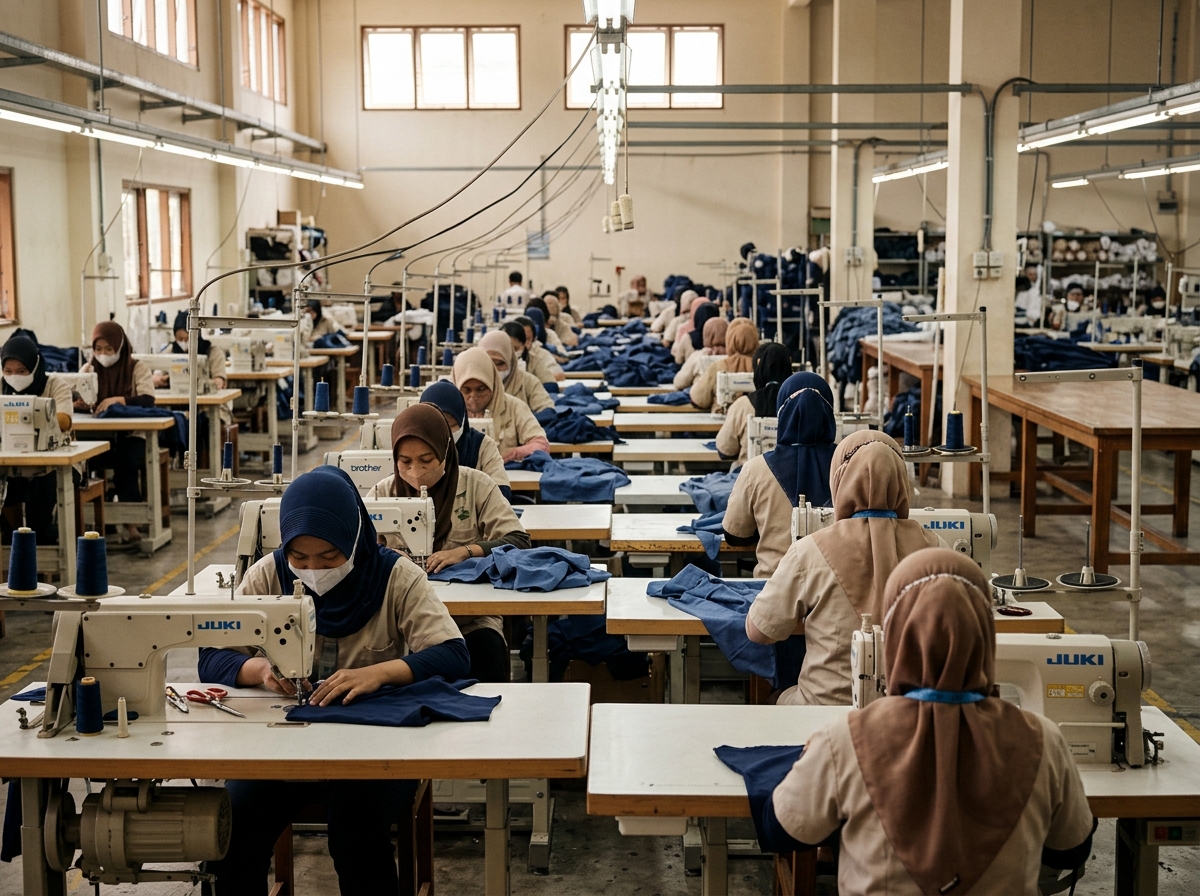
No single audit type covers everything. A sourcing manager running garment quality control factory audit Indonesia operations needs to deploy at least two audit types in combination.
Social Compliance Audits
These audits examine labor practices, health and safety conditions, and environmental management, measuring each against the requirements of a defined standard.
- BSCI (Business Social Compliance Initiative): Originally developed in Europe and now administered by amfori. The standard addresses wages, working hours, freedom of association, child labor, and health and safety, applying a graded scoring scale from A through E. European buyers widely recognize BSCI certification, and US retailers sourcing from Indonesia are increasingly adding it to their requirements. - Sedex/SMETA (Sedex Members Ethical Trade Audit): Combines a data-sharing platform with the SMETA audit methodology, available in either a 2-pillar or 4-pillar format. The 4-pillar version extends beyond standard labor and health-and-safety criteria to incorporate environment and business ethics. Because SMETA reports can be shared across multiple buyers through the Sedex platform, they offer meaningful efficiency gains in multi-buyer supply chains. - WRAP (Worldwide Responsible Accredited Production): A US-origin certification built around twelve principles spanning labor, health and safety, and environmental compliance, with a focus on lawful and ethical manufacturing. Unlike buyer-driven programs, WRAP certification is factory-initiated: the factory independently arranges and funds a third-party audit. Indonesian factories supplying US mass-market brands commonly hold WRAP certification.
Technical and QMS Audits
Technical audits focus on manufacturing capability, examining machinery condition, workforce skill levels, production capacity, line efficiency, and the quality management infrastructure in place. QMS audits take a different angle, evaluating whether the factory operates a documented quality system — typically one aligned to ISO 9001 or a buyer-specified standard.
Announced vs. unannounced audits each serve a distinct purpose in Indonesia. Announced audits give factories the opportunity to organize documentation and ensure relevant personnel are available, making them better suited to capability assessments. Unannounced audits, by contrast, capture actual working conditions and real-time compliance status. Factories with genuinely strong compliance cultures tend to perform at a comparable level under either format; facilities concealing structural violations typically show notable discrepancies between the two.
Social Compliance in Practice: BSCI, Sedex, and WRAP Across Indonesian Factories
Key Audit Criteria and What They Reveal
All three standards cover core labor criteria: minimum wage compliance, working hours (typically evaluated against local law and ILO conventions), freedom of association, prohibition of child and forced labor, and health and safety conditions.
Violations related to working hours and wages are the findings cited most often in Indonesian garment audits. Overtime pay calculations, pay-slip accuracy, and maximum weekly hour limits are consistent flashpoints regardless of facility tier. Health and safety issues — including blocked emergency exits, inadequate fire suppression systems, and insufficient PPE for chemical handling — appear with particular frequency in finishing and washing departments.
Interpreting Audit Grades and Risk Scores
BSCI grades run from A (best practice) to E (business should not be maintained). A grade of C or D does not automatically trigger a sourcing exit, but it requires a documented corrective action plan with a defined re-audit timeline.
Sedex risk scores are calculated by combining audit findings with risk data drawn from country-level and sector-level sources. Within Indonesia, the garment sector receives elevated risk flags specifically around working hours and the treatment of migrant workers. Because an aggregate Sedex risk score can mask significant individual findings, it should always be reviewed alongside the underlying SMETA audit report rather than in isolation.
WRAP certification is binary: certified or not. Factories must achieve passing scores across all twelve principles. A failed WRAP audit requires the factory to remediate and re-audit before certification is issued or renewed.
Corrective Action Timelines by Standard
| Standard | Critical Finding Response | Re-Audit Trigger |
|---|---|---|
| BSCI | Immediate containment; CAP within 30 days | Within 6–12 months depending on grade |
| Sedex/SMETA | CAP uploaded to Sedex platform; buyer notified | Buyer-driven; typically 6 months |
| WRAP | Factory must remediate before certification issued | Full re-audit required |
Technical Audit Checklist for Indonesian Garment Factory Quality Control
A technical audit determines whether a factory has the physical capability to deliver what it proposes. This is a separate question from compliance — it is entirely possible for a factory to clear a social audit while still being unable to produce consistently to specification.
Facility and Equipment Assessment
Key areas to assess on a technical walk-through:
- Cutting room: Fabric spreading equipment, cutting machine condition, ply height controls, marker accuracy. Manual cutting dominates in smaller Bandung facilities; automatic cutting systems signal higher capability tiers. - Sewing lines: Machine maintenance logs, needle gauge consistency, stitch density controls, line balancing documentation. Poorly balanced lines produce bottlenecks that drive overtime and create inline defect accumulation. - Finishing and packing: Pressing equipment calibration, measurement check stations, thread trimming protocols, carton compression ratings. - Sample room and lab: On-site measurement tables, light boxes for color evaluation, and basic testing equipment (e.g., seam strength tester, wash fastness equipment) indicate internal QC maturity.
Red Flags That Require Immediate Escalation
- ✓Subcontracting disclosed during audit that was not declared during onboarding
- ✓No production records or batch tracking documentation
- ✓Absence of internal QC checkpoints between cutting, sewing, and finishing
- ✓Sample room isolated from production floor with no feedback loop
- ✓Machine maintenance logs absent or clearly backdated
- ✓Workforce headcount significantly lower than stated capacity
Undisclosed subcontracting is a specific risk in the Bandung cluster. Smaller CMT operations frequently overflow capacity to nearby workshops without buyer knowledge. This breaks traceability, invalidates the audit scope, and can introduce child labor or wage violation risks from the subcontractor. Request a signed subcontracting disclosure statement as a standard onboarding document.
AQL Inspection Strategy for Indonesian Garment Factories: In-Line vs. Final
In-Line Inspection During Production
In-line inspections catch defects at the source — during cutting, sewing, and finishing — before they compound across the production run. An inline inspector checks operator output at intervals, typically every one to two hours per line. Findings feed directly into supervisor corrective actions the same shift.
In-line inspection is particularly valuable for first-time orders with a new Indonesian supplier, high-defect-risk categories (activewear seaming, denim washing), and large production runs where a late-stage defect discovery would be commercially catastrophic.
Final Random Inspection and AQL Levels Explained
Final random inspection (FRI) relies on statistical sampling governed by ANSI/ASQ Z1.4, the civilian standard that succeeded MIL-STD-105E. The acceptable quality level (AQL) threshold establishes the maximum rate of defects that can be tolerated within a given production lot.
| AQL Level | Typical Application | Defect Tolerance |
|---|---|---|
| AQL 1.5 | Critical items (safety, regulatory compliance) | Very low — tightest sampling |
| AQL 2.5 | Standard garments for US/EU retail | Industry default for major defects |
| AQL 4.0 | Promotional, low-price-point goods | Higher tolerance; not recommended for branded product |
The standard practice among US apparel brands is to apply AQL 2.5 for major defects and AQL 1.5 for critical defects — a category that includes chemical safety concerns, sharp hardware, and incorrect labeling in regulated markets. Minor defects are typically evaluated against an AQL 4.0 threshold.
MIL-STD-1916 presents an alternative sampling philosophy built on zero-acceptance-number plans, favored by buyers who want a more stringent binary pass/fail framework. Its use in Indonesian garment factory audit workflows is less widespread than AQL-based approaches, but it remains applicable for categories with elevated compliance requirements.
Common Garment Defect Categories Found in Indonesian Factories
Defect Severity Classification
All defects are classified as critical, major, or minor:
- Critical: Renders the product unsafe or non-compliant (e.g., sharp wire in padding, incorrect care label for a regulated fiber content, chemical exceeding REACH limits). - Major: Affects function or appearance significantly enough to cause consumer rejection (e.g., seam failure, measurement deviation beyond tolerance, color shading between panels). - Minor: Cosmetic issues unlikely to affect consumer acceptance but tracked for process improvement (e.g., loose thread ends within tolerance, minor press mark).
Top Defect Categories by Product Type
| Defect Category | Most Affected Products | Inspection Focus |
|---|---|---|
| Stitching irregularities | All categories | Stitch density, seam alignment, skip stitches |
| Measurement deviation | Woven shirts, uniforms, denim | Point-of-measure against approved spec |
| Fabric flaws (holes, slubs, weaving faults) | Knitwear, wovens | Fabric inspection before cutting (4-point system) |
| Color shading (side-to-side, end-to-end) | Denim, knits | Panel grouping, shade band review |
| Print misregistration | Activewear, graphic tees | Print placement tolerance check |
| Trim and label errors | All categories | Label content, placement, attachment method |
Defect tracking should produce a continuously updated defect rate log organized by style and production line. Applying Pareto analysis to this data identifies the 20% of defect types responsible for 80% of all rejections. For recurring critical or major defects that require root-cause investigation and systemic correction, eight-discipline (8D) reports provide the appropriate structured methodology.
Fabric and Material Testing Before and During Production
Pre-Production Testing Protocol
Fabric testing before cutting begins is non-negotiable for US-market shipments. Standard pre-production tests include:
- Shrinkage (after wash and dry cycling per AATCC or ISO method) - Colorfastness (to wash, rubbing, light, and perspiration) - Tensile and tear strength - Pilling resistance (critical for knitwear and activewear)
Lab Selection in Indonesia
Indonesian accredited labs operating under ISO 17025 and SNI frameworks provide cost-effective testing for most standard parameters. For US-market compliance or when results will be used in regulatory submissions, international lab networks — including globally recognized third-party testing organizations — offer results with broader market acceptance.
The practical model for most US importers: use local Indonesian labs for pre-production screening (faster turnaround, lower cost), and route pre-shipment chemical compliance testing through an internationally accredited lab.
Chemical Compliance: REACH and OEKO-TEX STANDARD 100
US importers often underestimate chemical compliance requirements. While REACH is an EU regulation, US retailers increasingly apply REACH-aligned restricted substances lists (RSLs) to their supply chains. Azo dyes, formaldehyde, phthalates, and heavy metals in trims are the most common Indonesian garment findings against RSL requirements.
OEKO-TEX STANDARD 100 certification at the fabric or finished-product level serves as a widely recognized market signal of chemical safety compliance. When Indonesian mills or garment factories hold OEKO-TEX certification, it reduces the volume of testing buyers need to conduct independently. However, it is important to verify that the certificate covers the specific fabric construction and colorway used in your production run — certification is product-specific and does not extend as a blanket endorsement across everything a factory produces.
Corrective Action and Follow-Up After an Audit or Failed Inspection
Building a Corrective Action Plan for Indonesian Suppliers
Every finding recorded in a corrective action plan (CAP) must be addressed with four specific elements: the root cause of the issue, the corrective action to be taken, the factory employee responsible for implementation, and verifiable evidence of closure tied to a defined deadline. Open-ended commitments such as "we will train workers," offered without measurable evidence requirements, do not constitute acceptable CAP responses.
A tiered CAP response framework works as follows:
1. Immediate containment: Stop the defect or violation from propagating. Segregate affected production. Suspend the non-compliant practice. 2. Short-term fix: Address the direct cause within a defined window — typically 30 to 60 days for major findings. 3. Long-term systemic change: Modify the process, policy, or management system so the finding cannot recur. Verified at re-audit.
Remote Verification vs. On-Site Re-Audit
CAP closure can be verified remotely using photographic evidence, updated procedure documents, payroll records, and training attendance logs uploaded to a shared platform. Remote verification is appropriate for lower-risk findings.
Critical findings — undisclosed subcontracting, child labor indicators, structural fire safety violations — require on-site re-audit by a qualified third party before the supplier relationship continues.
Escalation Triggers
- Supplier probation: Triggered when a factory fails to close CAP items within the agreed timeframes. New order placement is suspended until a re-audit produces a passing result. - Dual-sourcing: Activated when a factory records repeated Grade D BSCI results or sustains major defect rates above the acceptable threshold across several consecutive inspections. - Exit criteria: Undisclosed subcontracting to unregistered facilities, confirmed child labor, or falsified audit documentation result in immediate sourcing termination under the codes of conduct maintained by most brands.
Building a Durable QC Program Across Your Indonesian Garment Supply Base
Risk-Based Audit Scheduling
Audit frequency should reflect actual risk, not a fixed calendar. A practical risk-scoring model weights: prior audit grade, defect rate history, order volume, product category risk, and time since last audit. High-risk suppliers (new onboarding, prior critical findings, high-value orders) receive more frequent touchpoints. Stable, long-term suppliers with clean track records can move to annual cycles with interim data monitoring.
Training Factory QC Teams
A sustainable quality program invests in the factory's own QC capability. Operator quality awareness training — defect recognition, self-inspection habits, reporting responsibility — reduces defect generation at source. Inline checker development and QC supervisor coaching convert audits from reactive events into ongoing process management.
Digital QC Tools for Indonesian Factory Environments
Mobile inspection apps allow third-party inspectors and internal QC teams to log defects in real time, attach photo evidence, and auto-generate reports against buyer templates. Supplier portals enable factories to upload CAP evidence, test reports, and production milestones for remote buyer review. In environments where factory IT infrastructure is basic, mobile-first platforms perform significantly better than desktop-dependent systems.
Data from inspection reports, audit scores, and defect logs should feed into a supplier scorecard reviewed quarterly. This scorecard becomes the operational foundation for sourcing decisions, audit frequency adjustments, and supplier development investment.
Integrating Audit Data with Sustainability Goals
Garment quality control factory audit Indonesia data serves a dual function: it drives operational decisions and, increasingly, feeds directly into supply chain sustainability reporting. Social audit scores, corrective action closure rates, and chemical compliance test results are all inputs to ESG reporting frameworks and retailer sustainability scorecards. Designing your data collection with both purposes in mind from the outset eliminates the need for expensive retroactive data-gathering efforts later.
Building an effective garment quality control and factory audit program in Indonesia means bringing social compliance, technical assessment, and AQL-driven inspection together into one coordinated workflow. The gaps most likely to produce costly surprises — regional factory risk variation, undisclosed subcontracting exposure, and chemical compliance shortfalls — are also the ones most preventable when the right audit structure is in place.
You now have the framework needed to apply this structure consistently across your Indonesian supply base. The practical next step is translating it into a repeatable checklist format that your team can bring to every factory visit.
You understand the audit standards, the regional risk profiles, and the defect frameworks. Use our structured checklist to run consistent, thorough QC visits across your Indonesian garment factories — covering social compliance, technical capability, and AQL inspection readiness in a single document.
Download the Audit Checklist →Frequently Asked Questions
What AQL level should I use for garment inspections in Indonesia? AQL 2.5 is the industry standard for major defects on garments destined for US retail. Apply AQL 1.5 for critical defects — safety hazards, regulatory labeling errors, or chemical compliance failures. AQL 4.0 is sometimes used for minor cosmetic defects on promotional products but is not recommended for branded lines.
How do BSCI, Sedex, and WRAP audits differ for Indonesian apparel factories? BSCI and Sedex/SMETA both operate on a membership basis, requiring either the buyer or the factory to enroll in the respective program. BSCI delivers a graded outcome, while Sedex functions as a shared repository where SMETA audit reports are stored and made accessible to multiple buyers simultaneously. WRAP operates differently: the factory drives the process, paying for both the audit and certification without dependence on buyer membership. Despite shared coverage of core labor and health-and-safety criteria, the three programs diverge in their scoring methodologies, report structures, and levels of buyer recognition.
How often should I audit my Indonesian garment supplier? A risk-based scheduling approach consistently outperforms fixed audit intervals. New suppliers and any factory with a history of critical findings warrant at least annual audits, supplemented by interim inspection checkpoints. For established suppliers that maintain clean records and consistently pass AQL evaluations, annual reviews supported by data-driven monitoring between visits are generally sufficient.
What are the most common defects found in Indonesian garment factories? Stitching irregularities, measurement deviations, fabric shading, and trim or label errors are the most frequently cited categories. Product-specific risks include seam failures in activewear, shade banding in denim, and print misregistration in graphic-printed styles.
Can I use a single audit report for multiple compliance standards in Indonesia? To a degree, yes. A SMETA 4-pillar report shared through the Sedex platform can satisfy the requirements of several buyers at once, substantially reducing the burden of duplicated audits. That said, WRAP certification cannot be fulfilled through this route — it demands its own dedicated audit process. BSCI results are not interchangeable with WRAP. Before scheduling any audit, confirm directly with each customer which standard and report format they will accept.
What happens if my Indonesian factory fails a social compliance audit? The factory receives a list of findings and is required to submit a corrective action plan with defined deadlines. The buyer determines whether to pause orders, continue with enhanced monitoring, or require a re-audit before shipment release. Critical findings — child labor, falsified records, structural safety hazards — typically trigger an immediate hold. Lower-grade findings trigger a monitored remediation process with a follow-up audit.
Need eyes on the ground in Indonesia?
MTS is an execution partner — supplier verification, manufacturing management, quality control and export logistics across Indonesia, Vietnam and China.
Related services
Receive furniture sourcing insights across Asia.
One email per week. No spam.