Sourcing from Thailand: The Complete B2B Guide
16 min read
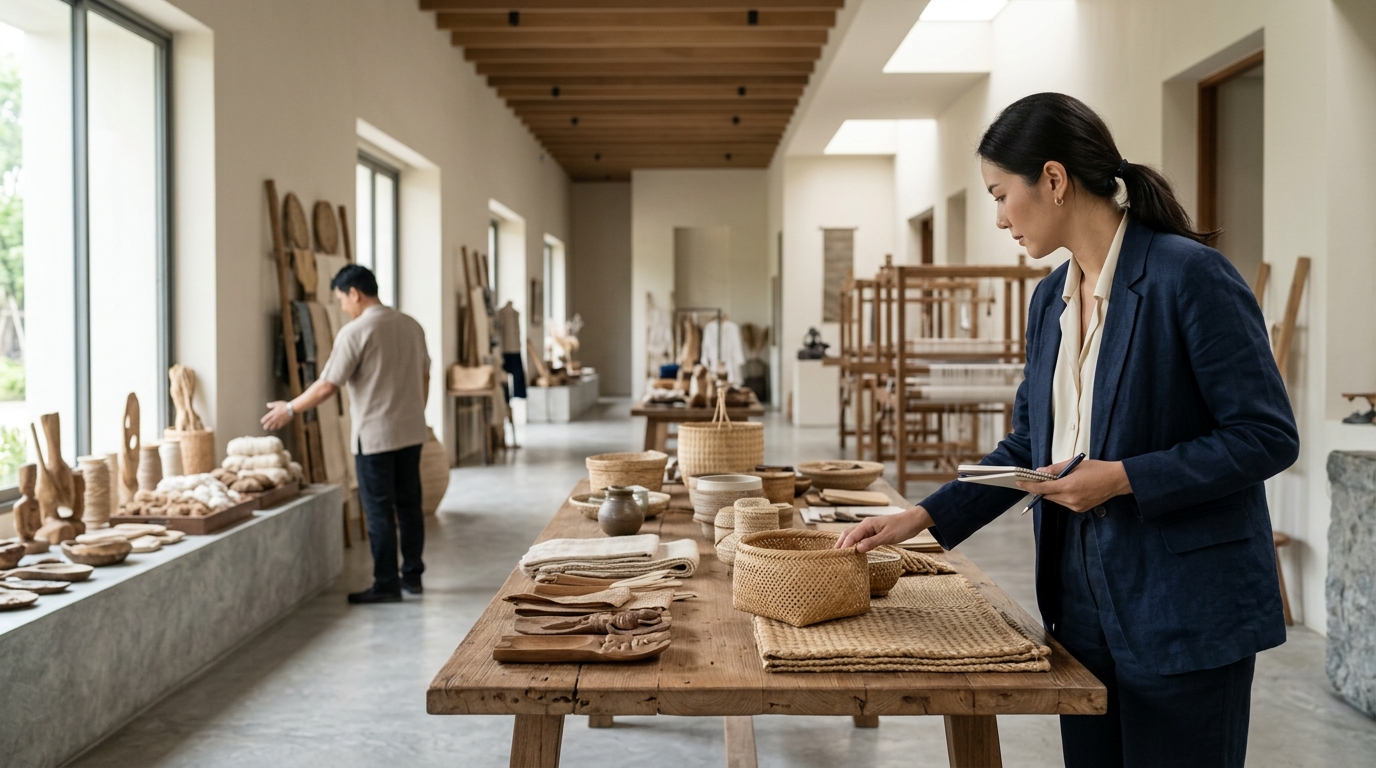
Thailand offers global buyers a mature manufacturing base across garments, automotive parts, rubber, food processing, and electronics — backed by BOI investment incentives, RCEP preferential tariffs, and well-established export infrastructure. This guide covers everything procurement teams need to plan, verify, and execute sourcing from Thailand with confidence.
Thailand has maintained its position as one of Southeast Asia's most commercially mature sourcing destinations for over three decades. Unlike markets where manufacturing capability is concentrated in one or two sectors, Thailand offers genuine industrial depth across garments and apparel, automotive and motorcycle components, natural rubber and rubber products, processed food and beverages, and electronics assembly. That breadth makes sourcing from Thailand a realistic option for buyers across a wide range of product categories — but it also means the supplier landscape varies considerably in capability, compliance posture, and export readiness.
For procurement managers evaluating the country for the first time, the most useful starting point is understanding where Thailand's supply chain infrastructure is genuinely competitive and where it is not. Thailand is not the lowest-cost destination in ASEAN. Labour costs are above those in Vietnam, Cambodia, and Myanmar for comparable assembly work. What Thailand offers instead is supply-chain depth — domestic Tier 2 and Tier 3 suppliers for automotive and industrial categories, port infrastructure at Laem Chabang that handles high volumes reliably, and a regulatory framework that, while requiring careful navigation, is broadly transparent and enforceable.
Trade policy has added further commercial logic to the decision. Thailand's participation in the Regional Comprehensive Economic Partnership (RCEP) creates preferential tariff pathways to fifteen member markets, including China, Japan, South Korea, and Australia. Combined with existing ASEAN Free Trade Area (AFTA) agreements and bilateral deals, Thai-origin goods can access a substantial share of global import markets at reduced duty rates — provided the Rules of Origin documentation is correctly prepared. For buyers whose end markets sit within RCEP, this is a material consideration in total landed-cost calculations.
This guide is intended for procurement teams, brand owners, and supply-chain leaders who are moving beyond initial research and need a structured, practical view of how sourcing from Thailand actually works — from sector selection and supplier verification through to factory inspection, quality control, and customs documentation. Where relevant, it links to MTS's dedicatedservice capabilitiesand specialist guides that provide deeper operational coverage.
Manufacturing Sectors Where Thailand Has Genuine Competitive Depth
Garments and Apparel
Thailand's garment industry is concentrated primarily in and around Bangkok, with secondary clusters in the northern city of Chiang Mai. The sector has historically served mid-to-premium-tier buyers rather than competing head-on with the high-volume, low-cost production of Bangladesh or Cambodia. Thai garment factories tend to have stronger technical capability in cut-and-sew complexity, embroidery, and specialised finishing — making them a practical choice for buyers with detailed specification requirements or smaller, more varied runs.
Compliance infrastructure is relatively well established. Many factories serving European and US buyers carry BSCI, WRAP, or equivalent social compliance certifications, and testing access for fabric, dye, and chemical content is readily available through accredited labs. Buyers should nonetheless conduct their ownsupplier verificationrather than relying solely on existing audit reports.
Automotive Parts and Components
Thailand is often described as the 'Detroit of Asia' — a description that reflects the genuine concentration of OEM and Tier 1 automotive assembly in the country. Toyota, Honda, Isuzu, and a range of Japanese, European, and US vehicle brands have established production in Thailand, creating a deep domestic supply chain for stampings, castings, rubber components, electronics, and plastic injection-moulded parts.
For aftermarket and OEM parts buyers, the Eastern Economic Corridor (EEC) — covering Chonburi, Rayong, and Chachoengsao provinces — is the primary sourcing geography. Factories in this corridor frequently hold IATF 16949 certification and have experience shipping to JIT supply chains in multiple markets. Lead times and documentation standards tend to be higher than in other Thai manufacturing sectors.
Natural Rubber and Rubber Products
Thailand is one of the world's largest natural rubber producers, and this feedstock advantage translates directly into competitiveness for downstream rubber products: industrial seals and gaskets, surgical gloves, automotive rubber components, conveyor belts, and moulded rubber parts. Buyers in categories that use significant rubber content will find Thai suppliers frequently able to offer better raw material traceability and pricing than competitors sourcing rubber as an import.
Food Processing and Agricultural Exports
Processed food and agricultural products represent a significant share of Thailand's export value. Canned and frozen seafood, fruit products, rice, cassava derivatives, and ready-to-eat meals are categories where Thai factories have long export experience and established relationships with international retail and foodservice buyers. Regulatory compliance — Thai FDA registration, HACCP certification, and export health certificates from the Department of Livestock Development or the Department of Fisheries — is well understood by experienced exporters in this sector.
Electronics and Hard-Disk-Drive Assembly
Thailand hosts significant electronics assembly capacity, particularly in hard-disk-drive components and sub-assemblies, where a cluster of suppliers and supporting industries has developed over several decades. For buyers of PCB assemblies, electronic sub-assemblies, and precision components, Thailand offers a technically capable supplier base with experience in export compliance for major destination markets.
How BOI Incentives and the EEC Affect Your Supplier Selection
The Board of Investment (BOI) of Thailand promotes manufacturing investment through a package of incentives that can include exemption from corporate income tax for a defined period, import duty waivers on machinery and production inputs, and facilitated work-permit and visa processing for foreign technical staff. Factories that have applied for and received BOI-promoted status have gone through a government assessment of their investment plan, capital base, and operational intent.
For buyers, this is relevant in two practical ways. First, a BOI-promoted supplier may have lower effective input costs on imported machinery and materials, which can translate into more competitive pricing. Second, BOI status provides an additional layer of verifiable identity — promoted companies are registered in the BOI database and can be cross-referenced directly.
Within the EEC specifically, additional incentives apply for targeted industries including next-generation automotive, smart electronics, advanced agriculture and food, and medical devices. Suppliers operating in the EEC with sector-specific BOI promotion may offer buyers both cost advantages and access to higher-specification production capabilities. See MTS'smanufacturing services guidefor more on how to structure production arrangements with promoted facilities.
Supplier Verification: How to Assess Thai Manufacturers Before Committing
The Thai supplier landscape includes factories of genuinely high capability alongside a smaller number of trading companies and agents that represent themselves as manufacturers. Distinguishing between them before placing a first order is a core risk-management step. A structuredsupplier verification processfor Thailand should include the following elements.
Company Registration Checks via DBD
The Department of Business Development (DBD) maintains a public registry of registered Thai companies. A basic search will confirm the company's registration number, registered address, founding date, registered capital, and director details. Discrepancies between what a supplier presents in commercial documents and what the DBD registry shows are a meaningful red flag.
Sector-Specific Licence Verification
Depending on the product category, additional licences may be legally required. Food exporters should hold Thai FDA registration. Factories producing medical devices require relevant regulatory approvals. Factories exporting certain controlled agricultural commodities need Department of Foreign Trade (DFT) export licences. Buyers should request copies of all applicable licences and verify their status directly with the issuing body where possible.
Physical Factory Inspection
Document verification and digital due diligence can be conducted remotely, but a physical inspection of the production facility provides information that no registry or certificate can replicate: actual machine capacity, workforce size, storage conditions, and production planning systems. An independentfactory inspectionconducted by a qualified inspector — either a third-party provider or an MTS representative — is the most reliable way to close verification gaps before contract signature.
Subcontracting Disclosure
A common but underappreciated risk in Thai sourcing is undisclosed subcontracting. A factory may be fully capable for your product category in normal periods but may move production to a subcontractor during peak season without notification. Your supplier contract should explicitly require written approval before any subcontracting, and inspection rights should extend to subcontractor facilities if they are used.
Quality Control and Inspection Cadence for Thailand-Based Orders
Effectivequality controlis not a single checkpoint at the end of production — it is a planned sequence of interventions that begin before production starts. For Thailand, where factory capability varies significantly even within the same product category, front-loading quality oversight generally produces better outcomes than relying solely on pre-shipment inspection.
A three-stage inspection approach is commonly used for new supplier relationships:
| Inspection Stage | Timing | Primary Focus |
|---|---|---|
| Pre-Production Inspection (PPI) | Before production begins | Raw materials, components, approved samples, tooling |
| During Production Inspection (DPI) | 20–40% of order completed | Workmanship, in-process defects, packing materials |
| Pre-Shipment Inspection (PSI) | 80–100% packed | AQL sampling, labelling, carton marks, quantity |
For established suppliers with a consistent defect history below agreed thresholds, buyers sometimes reduce mid-production oversight. However, any change in a supplier's subcontractors, key personnel, or raw material sources should trigger a return to the full three-stage cycle. MTS'sproduction managementframework provides a structured approach to managing inspection scheduling alongside production milestones.
Navigating RCEP, CPTPP, and Thailand's Preferential Trade Agreements
Sourcing from Thailand can deliver meaningful tariff savings for buyers whose end markets are covered by Thailand's preferential trade agreements, but realising those savings requires correct documentation.
Under RCEP, Thai-manufactured goods exported to member markets may qualify for reduced duty rates subject to Rules of Origin compliance. The standard requirement is that sufficient transformation or value-added work occurs in Thailand — the specific threshold varies by product and destination country. The exporting factory issues a Certificate of Origin (typically RCEP Form or ATIGA Form D for ASEAN destinations), which the importer presents to customs at the destination.
Thailand is also a signatory to the Comprehensive and Progressive Agreement for Trans-Pacific Partnership (CPTPP), which expands preferential access to markets including Japan, Canada, Australia, and Mexico. Buyers sourcing from Thailand for shipment to CPTPP member markets should confirm with their customs broker whether the CPTPP route or a bilateral agreement offers a better tariff outcome for their specific product category.
For buyers who need support with trade documentation and certificate of origin preparation, MTS'simport/export support guidecovers the documentation workflow in detail.
Thailand Customs, Export Documentation, and Import Permits
Thailand's customs administration operates under the Thai Customs Department, which has progressively digitised its processes. The country uses a risk-based selectivity system for both exports and imports, meaning that well-documented, consistent shipments from established exporters typically clear with minimal intervention.
For export documentation, the standard set includes:
- Commercial Invoice - Packing List - Bill of Lading or Airway Bill - Certificate of Origin (form type depends on the destination trade agreement) - Any sector-specific export permits (food health certificates, phytosanitary certificates, DFT export licences where applicable)
Importers in destination markets should confirm the full documentation requirements for their product category and country combination before the first shipment. Gaps discovered after goods have left Thailand create expensive delays and, in some cases, return or destruction of shipment.
For buyers importing goods from Thailand into markets with strict import control — medical devices into the EU, food products into the US, chemicals in multiple jurisdictions — the compliance documentation must be prepared in parallel with production, not as an afterthought. MTS'strading services guideoutlines how to manage multi-market documentation across a single production run.
Structuring a Sourcing Engagement: First Order to Long-Term Supply
Moving from initial supplier identification to a stable, performing supply relationship in Thailand involves several distinct stages, each with its own risk profile. Buyers who treat sourcing from Thailand as a single transaction rather than a relationship-building process tend to experience higher rates of quality failure and supplier turnover.
Sourcing and Shortlisting
Initial supplier identification can draw on trade directories, industry exhibitions (Bangkok International Trade and Exhibition Centre hosts a range of sector-specific fairs), referrals from industry networks, and market-entry intermediaries. MTS'sproduct sourcing guideprovides a structured framework for building and narrowing a supplier shortlist against defined technical, commercial, and compliance criteria.
Sampling and Technical Review
Request production samples — not stock samples — from any supplier under serious consideration. Provide detailed technical specifications and review samples against each requirement before committing to a production order. For technically complex products, a pre-production meeting at the factory to align on specifications can prevent the majority of first-order quality issues.
Contracting and Payment Terms
For first orders, a Letter of Credit (LC) or structured escrow provides the strongest buyer protection. As a supplier relationship matures and consistent quality is demonstrated, many buyers shift to Telegraphic Transfer (TT) terms. Purchase orders should specify Incoterms clearly — FOB Laem Chabang or FOB Bangkok is standard for sea freight — and should include explicit inspection rights, subcontracting restrictions, and intellectual property protections. If you are placing orders that require significant design or tooling input, IP ownership clauses must be reviewed by qualified legal counsel familiar with Thai commercial law.
Ongoing Supplier Relationship Management
Long-term supply relationships in Thailand benefit from regular engagement beyond the purchase order cycle. Periodic factory visits, performance review meetings, and early notification of upcoming order volumes allow suppliers to plan capacity and manage their own supply chains more effectively. Buyers who are seen as committed, communicative partners tend to receive better scheduling priority during peak production periods. MTS'sbusiness representation guidecovers in-market representation options for buyers who cannot maintain regular direct presence.
Comparing Thailand Against Other ASEAN Sourcing Destinations
For buyers evaluating Thailand alongside other ASEAN options, the following qualitative comparison covers the factors most relevant to procurement decision-making.
| Factor | Thailand | Vietnam | Indonesia | Malaysia |
|---|---|---|---|---|
| Labour cost (manufacturing) | Moderate | Lower | Lower-Moderate | Higher |
| Supply-chain depth (automotive) | High | Developing | Moderate | Moderate |
| Supply-chain depth (garments) | Moderate | High | Moderate | Lower |
| Port infrastructure | Strong | Good | Moderate-Variable | Good |
| RCEP membership | Yes | Yes | Yes | Yes |
| CPTPP membership | Yes | Yes | No | No |
| BOI-equivalent incentive programme | BOI (Thailand) | Various provincial | BKPM | MIDA |
| English language in business | Good | Moderate | Moderate | Good |
This comparison is qualitative and intended to guide sector-specific evaluation rather than replace it. For buyers considering Vietnam, Indonesia, or Malaysia as alternatives or complements to a Thailand strategy, MTS publishes dedicated country hub guides for each market.
Frequently Asked Questions
What are the strongest manufacturing sectors for sourcing from Thailand?
Thailand has established depth in five principal sectors: garments and apparel, automotive and motorcycle parts, natural rubber and rubber products, processed food and beverages, and hard-disk-drive and electronics assembly. The automotive cluster around the Eastern Economic Corridor (EEC) and the garment hubs in and around Bangkok are particularly well-developed. Buyers in these sectors will find a larger pool of experienced, export-ready factories than in most other ASEAN markets.
How does RCEP benefit buyers sourcing from Thailand?
Under the Regional Comprehensive Economic Partnership (RCEP), goods manufactured in Thailand and exported to other member countries — including China, Japan, South Korea, Australia, and the ASEAN bloc — may qualify for reduced or zero tariff rates, provided they meet the applicable Rules of Origin. Buyers should request a RCEP Form or equivalent Certificate of Origin from their Thai supplier and confirm that the product's value-added content meets the required threshold. Working with a freight forwarder familiar with RCEP documentation is advisable to avoid origin claims being rejected at destination customs.
What is the BOI in Thailand and how does it affect procurement decisions?
The Board of Investment (BOI) of Thailand grants promoted status to qualifying manufacturers, which can include corporate tax exemptions, import duty waivers on machinery and raw materials, and streamlined work-permit processing. For buyers, sourcing from a BOI-promoted factory can signal a degree of operational credibility and often indicates that the supplier has invested in documented processes to meet government standards. However, BOI status alone is not a substitute for independent factory verification; it confirms investment promotion eligibility, not product quality.
How should I verify a Thai supplier before placing a first order?
Start with the Department of Business Development (DBD) registry to confirm the company's legal registration, registered capital, and director information. Cross-reference with any relevant industry licences — for food exporters, check Thai FDA approval; for automotive parts, check OEM certification records. A physical factory inspection conducted by an independent third party, or by your own team, remains the most reliable verification step. Review the factory's export history, capacity utilisation, and subcontracting arrangements before committing to a contract.
What quality inspection cadence is recommended for Thailand-based production?
For new supplier relationships, a three-stage inspection model is generally recommended: a Pre-Production Inspection (PPI) to confirm materials and components before production begins, a During Production Inspection (DPI) at roughly 20–40% completion, and a Pre-Shipment Inspection (PSI) when at least 80% of the order is packed. Once a supplier has a consistent track record across three or more shipments, buyers sometimes move to a risk-based approach — maintaining the PSI but reducing mid-production checks. Any change in factory subcontractors or raw material sources should trigger a fresh full inspection cycle.
What import permits or licences do Thai factories typically need to export?
The required permits depend heavily on product category. Food and agricultural products typically require an export licence from the Department of Foreign Trade (DFT) and, where applicable, health and phytosanitary certificates. Rubber products may require documentation under commodity control regulations. Electronics and automotive parts generally require standard commercial documentation but may need country-specific compliance certificates (CE, UL, or equivalent) for destination markets. Buyers should confirm the full documentation set with their supplier and customs broker before the shipment date, not after.
How does Thailand compare to other ASEAN sourcing destinations?
Thailand sits in a middle tier on labour cost — typically higher than Vietnam, Cambodia, and Myanmar, but lower than Malaysia and Singapore. Its advantage lies in supply-chain depth: for automotive, rubber, and processed food, Thailand has established domestic supplier ecosystems that reduce lead times and component risk. Infrastructure quality — ports, road freight, and industrial parks — is generally above the ASEAN average. For purely cost-driven, labour-intensive categories, buyers may find Vietnam or Bangladesh more competitive; for technical complexity or integrated supply chains, Thailand often performs better.
What are common due-diligence failures when buying from Thai manufacturers?
The most frequent failures include: relying on online directories without independent company verification; accepting factory audit reports older than twelve months; not confirming whether production will be subcontracted without disclosure; and overlooking currency and payment-term risks in long-run contracts. A second common failure is assuming that because a factory passed a social compliance audit, it also meets technical product standards — these are separate assessments requiring different skill sets.
Does Thailand have free trade zones or special economic zones I should know about?
Yes. The Eastern Economic Corridor (EEC) covers parts of Chonburi, Rayong, and Chachoengsao provinces and offers targeted incentives for high-value industries including automotive, electronics, aerospace, and biofuels. The Industrial Estate Authority of Thailand (IEAT) administers bonded industrial estates where duty suspension on imported inputs is available. Manufacturers operating within these zones sometimes pass cost benefits to buyers through lower component prices or faster export processing, making the EEC worth prioritising when shortlisting suppliers for complex manufactured goods.
What payment and contract terms are standard when sourcing from Thailand?
For first orders with unverified suppliers, a Letter of Credit (LC) or escrow arrangement provides the strongest buyer protection. Established relationships commonly shift to Telegraphic Transfer (TT) terms — often 30% deposit with 70% against Bill of Lading copy. Payment in USD is standard for export contracts, though some regional buyers transact in Thai Baht or the currency of a third RCEP member. Contracts should specify Incoterms clearly (FOB Bangkok or Laem Chabang is typical), define inspection rights before shipment, and include dispute resolution under a mutually agreed jurisdiction.
Thailand's manufacturing landscape rewards buyers who invest in structured due diligence, maintain active supplier relationships, and use available trade agreements intelligently. The country's combination of sector depth, trade connectivity, and improving regulatory transparency makes it a credible long-term sourcing base — not just a contingency option. Teams that approach Thailand manufacturing with the same rigour they apply to any mature supply market will generally find it delivers on both quality and commercial terms. MTS works with buyers at every stage of this process, from initialsupplier identificationthrough to ongoingquality and production oversightin-market.
Need eyes on the ground in Thailand?
MTS is an execution partner — supplier verification, manufacturing management, quality control and export logistics across Indonesia, Vietnam and China.
Continue exploring
Compare sourcing in other pan-Asian markets
Related services
Related articles
Receive furniture sourcing insights across Asia.
One email per week. No spam.