Indonesia Business Representation: A Complete Playbook for Foreign Buyers
12 min read
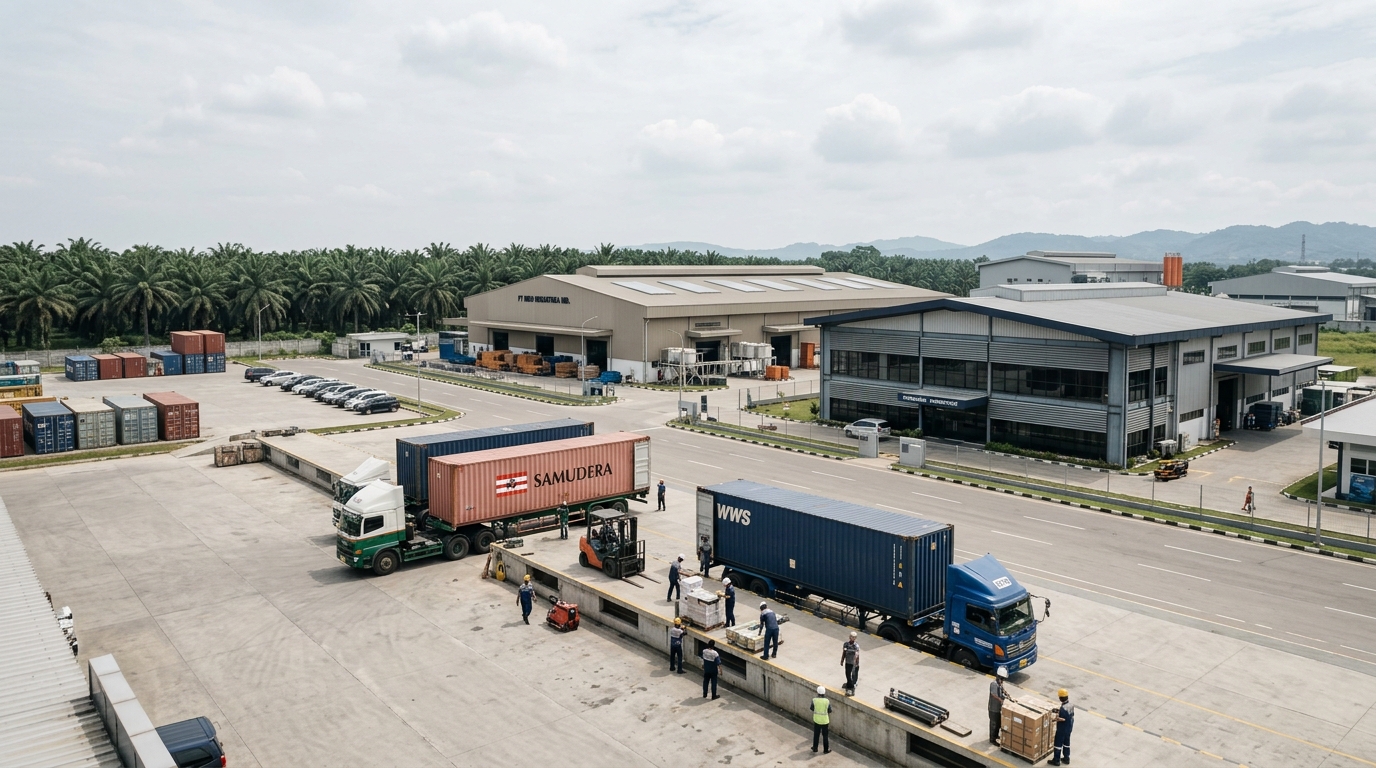
Foreign companies sourcing from Indonesian factories face a structural problem that remote management cannot solve: suppliers respond differently when a buyer representative is physically in the room. Production priorities shift, quality checks tighten, and communication becomes more direct. Yet building that presence through a wholly owned legal entity is neither quick nor cheap, and for many buyers at the early or mid-scale stages of Indonesian sourcing, it is disproportionate to the volume at stake. Indonesia business representation — whether through a formal rep office structure, a third-party execution partner, or a staged entity build — is how serious buyers solve this problem without overcommitting capital.
Indonesia's manufacturing base is broad and geographically dispersed. Greater Jakarta and the West Java industrial corridor (Karawang, Bekasi, Purwakarta) host automotive suppliers, electronics assemblers, and fast-moving consumer goods producers. East Java around Surabaya is a centre for footwear, furniture, and agro-industrial output. Batam, operating under a free-trade zone framework, attracts electronics and light manufacturing given its proximity to Singapore logistics infrastructure. A buyer with suppliers spread across these clusters needs a representative who can move between them, not a fixed office in one city.
This playbook maps the main structures available to foreign buyers, explains the compliance boundaries each one carries, and lays out a practical decision framework for choosing the model that fits your sourcing volume, timeline, and risk appetite. Whether you are evaluating your first Indonesian supplier or managing a portfolio of ten factories, understanding the options for indonesia business representation before committing to any structure will save time and avoid costly reversals.
For the broader context of how this applies across the region, seeBusiness Representation in Asia: Your Professional Local Presence Without an Office.
The Four Main Models for On-the-Ground Presence in Indonesia
Foreign buyers typically approach Indonesian market presence through one of four models, each sitting at a different point on the commitment curve.
| Model | Commercial Rights | Setup Time | Relative Cost | Best For |
|---|---|---|---|---|
| Third-party representative (no entity) | Limited to mandate | Days to weeks | Lower | Early-stage sourcing, SME buyers |
| KPPA representative office | Liaison only, no revenue | 4-8 weeks | Moderate | Buyers needing a legal footprint without trading |
| PT PMA (foreign-owned company) | Full commercial rights | 2-5 months | Higher | High-volume buyers, long-term commitment |
| Joint venture with local partner | Shared commercial rights | Variable | Variable | Specific regulated sectors |
Most B2B buyers entering Indonesia for the first time start with a third-party representative or a KPPA, then upgrade to a PT PMA once sourcing volumes justify the compliance overhead. Some never need the PT PMA at all — their commercial relationship remains between the foreign parent and the Indonesian supplier, with the representative providing operational oversight.
Understanding the KPPA Representative Office and Its Permitted Scope
The KPPA (Kantor Perwakilan Perusahaan Asing) is Indonesia's framework for a foreign company to establish a legal presence without incorporating a local subsidiary. It is registered through the relevant ministry and gives the foreign company a formal Indonesian address and the ability to employ local staff and sponsor a KITAS work permit for an expatriate representative.
What a KPPA can do: attend and host business meetings, conduct supplier audits and factory visits, manage market research activities, coordinate logistics and documentation review on behalf of the parent company, and maintain ongoing supplier relationships.
What a KPPA cannot do: issue invoices, sign purchase or sales contracts as a principal, import goods for resale, or generate any form of local revenue. All commercial transactions must flow through the foreign parent company directly.
The INSW (Indonesia National Single Window) system handles customs and import documentation at a national level, and while a KPPA does not typically interact with INSW directly as an importer, your in-country representative should be familiar with how documentation flows through it, since delays in customs clearance often surface as production schedule problems.
How a PT PMA Gives Foreign Buyers Full Commercial Rights in Indonesia
A PT PMA (Perseroan Terbatas Penanaman Modal Asing) is the standard vehicle for foreign direct investment in Indonesia. It is a limited liability company that can be wholly or partially foreign-owned, depending on the sector. The Investment Coordinating Board (BKPM, now integrated into the Ministry of Investment) oversees foreign investment approvals, and the Negative Investment List determines which sectors are open to 100% foreign ownership and which require a local partner.
When a PT PMA Makes Sense for Sourcing Buyers
A PT PMA becomes the right tool when:
- Your annual procurement volume from Indonesia justifies a dedicated local team on your payroll - You need to import raw materials, process them locally, or re-export finished goods under an Indonesian entity - Your supplier base expects a counterparty with local legal standing for contract purposes - You are building a regional hub in Indonesia that will serve markets beyond your home country
For buyers whose sole purpose is supplier oversight and quality management, the PT PMA is often more structure than the situation requires. The compliance obligations — monthly and annual tax filings, mandatory social insurance contributions (BPJS), minimum capital requirements, and ongoing reporting — create an administrative load that a small sourcing team may not be equipped to manage.
Minimum Capital and KITAS Considerations
Foreign-owned PT PMAs are generally subject to minimum paid-up capital requirements, the exact thresholds for which are defined by regulation and can vary by sector. Any expatriate employee sponsored by the PT PMA requires a KITAS (Kartu Izin Tinggal Terbatas), a limited-stay work permit that is typically valid for one or two years and renewable. The KITAS process involves the Ministry of Manpower and requires the company to demonstrate that the role cannot be filled by a local candidate — a requirement that shapes how foreign buyers should structure their in-country team.
Using a Third-Party Execution Partner Without Setting Up Any Entity
For buyers who need credible, professional indonesia business representation but are not ready to commit to a legal entity, a third-party execution partner is frequently the most practical starting point. Under this model, an established local service firm — such as MTS — acts as your representative under a service agreement and, where appropriate, a notarised power of attorney (Surat Kuasa).
This structure allows the partner to:
- Attend supplier meetings, factory tours, and production kick-offs on your behalf - Conduct pre-shipment inspections and report findings directly to your team - Manage day-to-day supplier communication in Bahasa Indonesia - Escalate quality or delivery issues in person rather than by email - Coordinate with freight forwarders and customs brokers on your timeline
The commercial contract remains between your company and the Indonesian supplier. The execution partner operates within a mandate you define, which means you retain full control over sourcing decisions while gaining the on-the-ground presence that makes those decisions better informed.
For buyers already working with Indonesian suppliers, you can exploreMTS's sourcing and representation servicesto understand how an execution partner model works in practice.
Key Compliance and Documentation Touchpoints Your Representative Must Know
A business representative in Indonesia who understands the paperwork environment is worth significantly more than one who only manages relationships. Several compliance and documentation areas directly affect sourcing outcomes.
Import and Export Documentation
Indonesia's INSW platform centralises import and export declaration processing. Your representative should understand how to track shipment status, identify where a declaration may be stalled, and coordinate between the supplier, freight forwarder, and customs broker to resolve bottlenecks. Goods subject to SNI (Standar Nasional Indonesia) certification requirements — including certain electronics, textiles, and construction materials — must carry valid SNI marks before clearing customs, and your representative needs to verify this is in order before goods leave the factory.
Halal Certification Requirements
For food, beverage, cosmetics, and certain pharmaceutical inputs, Indonesian regulations mandate halal certification from BPJPH (the Halal Product Assurance Organizing Body) for products distributed within Indonesia. Buyers re-exporting Indonesian-made goods to Muslim-majority markets may also require halal documentation. Your representative should be able to confirm whether a supplier holds current certification and help coordinate renewal if it lapses during your production cycle.
Regional Trade Agreement Preferences
Indonesia is a signatory to RCEP and ASEAN's ATIGA framework, both of which offer preferential tariff rates for qualifying goods when an RCEP Form or ATIGA Form D is correctly completed. A well-briefed local representative can work with your supplier's export team to ensure the certificate of origin documentation is prepared accurately, which directly affects the duty cost your buyers in other ASEAN markets or RCEP member countries will pay.
Structuring Your Representation Mandate for Maximum Effectiveness
The value of indonesia business representation depends almost entirely on how well the mandate is scoped. A vague arrangement — "keep an eye on the factory" — produces vague results. A structured mandate produces consistent, actionable outputs.
Effective mandates typically define:
- Visit frequency: How often does the representative attend the factory, and at which production milestones (pre-production, mid-run, pre-shipment)? - Reporting format: What does a visit report contain — photos, measurement data, defect counts, a comparison against the approved sample? - Decision authority: What can the representative approve in the field (a minor colour variation) versus what requires escalation to the buyer's procurement team? - Escalation protocol: How quickly must the representative notify the buyer of a serious quality or delivery issue, and through which channel? - Supplier relationship rules: Should the representative attend supplier meetings alone or alongside the buyer's team during periodic visits?
For buyers managing multiple Indonesian suppliers across different hubs — for example, a furniture producer in East Java and a garment manufacturer in West Java — the representative's ability to physically move between locations on short notice is an operational requirement, not a preference. Build this into the service agreement.
If you are beginning to evaluate Indonesian suppliers and want to understand the broader sourcing landscape, theIndonesia sourcing hubprovides category-specific context.
Choosing the Right Model at Each Stage of Your Indonesia Sourcing Journey
The right representation structure changes as your sourcing relationship with Indonesia matures. The table below provides a qualitative guide.
| Sourcing Stage | Typical Buyer Profile | Recommended Model |
|---|---|---|
| Exploratory (first orders, trial runs) | Low volume, multiple supplier trials | Third-party execution partner |
| Established (repeat orders, 2-5 suppliers) | Growing volume, quality systems in place | Third-party partner or KPPA |
| Scaled (significant annual spend, dedicated SKUs) | Strategic sourcing, possible local team | PT PMA or KPPA with expatriate staff |
| Integrated (local processing or re-export) | Full supply chain presence | PT PMA with operational capability |
Most international B2B buyers who work with Indonesian manufacturers sit in the first two stages. They need credible on-the-ground representation but not a full subsidiary. For them, the third-party model — properly scoped, professionally executed — delivers the oversight of an owned operation at a fraction of the cost and complexity.
Frequently Asked Questions
What is the difference between a KPPA rep office and a PT PMA in Indonesia?
A KPPA (Kantor Perwakilan Perusahaan Asing) is a representative office that allows a foreign company to establish a legal presence in Indonesia for liaison, market research, and relationship management — but it cannot generate revenue or sign commercial contracts in its own name. A PT PMA (Perseroan Terbatas Penanaman Modal Asing) is a fully incorporated foreign-owned limited liability company that can trade, invoice, and employ staff locally. The KPPA is faster and cheaper to establish; the PT PMA gives broader commercial rights but requires higher capital commitments and more complex compliance.
Can a third-party representative legally act on my behalf with Indonesian suppliers?
Yes, under Indonesian contract law a foreign company can appoint a third party as its representative through a notarised power of attorney (Surat Kuasa). This representative can attend factory meetings, sign inspection reports, communicate buyer instructions, and escalate issues. The commercial contract itself typically remains between the foreign buyer and the Indonesian supplier, with the representative acting within a defined mandate.
How long does it typically take to set up a KPPA representative office in Indonesia?
The process commonly takes between four and eight weeks once all documents are in order, though timelines vary depending on the completeness of your application and current processing loads at the relevant ministry. Required documents typically include the parent company's articles of incorporation, board resolution, and a designated representative's credentials. Working with a local legal advisor or execution partner who knows the INSW and ministry workflows can reduce delays.
What is a KITAS and when does a foreign buyer's representative need one?
A KITAS (Kartu Izin Tinggal Terbatas) is a limited-stay permit that allows a foreign national to reside and work legally in Indonesia for a defined period, commonly one or two years, renewable. If your company assigns an expatriate employee to manage on-the-ground activities for a PT PMA or KPPA, that individual will require a KITAS sponsored by the Indonesian legal entity. Foreign nationals entering purely for short business visits typically use a business visa rather than a KITAS.
What activities can a representative office (KPPA) not perform in Indonesia?
A KPPA is prohibited from conducting revenue-generating activities, issuing commercial invoices to local or foreign parties, signing purchase or sales contracts as a principal, or importing goods for resale. Its permitted scope is limited to liaison, coordination, market analysis, and oversight on behalf of the parent company. Any commercial transaction must flow through the parent company directly or through a properly incorporated PT PMA.
How does MTS provide indonesia business representation without my company setting up an entity?
MTS operates as an execution partner with established in-country teams across key Indonesian manufacturing hubs. Under a formal service agreement and power of attorney where required, MTS staff attend factory meetings, conduct production audits, manage supplier communication, and escalate issues on your behalf — all within a mandate you define. This approach gives you consistent on-the-ground oversight without the capital, compliance, and HR obligations of a PT PMA or KPPA.
Which Indonesian manufacturing hubs should a foreign buyer's representative be physically present in?
The answer depends on your product category. Greater Jakarta and the surrounding West Java corridor (Karawang, Bekasi, Purwakarta) concentrate automotive components, electronics assembly, and consumer goods manufacturing. Surabaya and East Java are significant for footwear, furniture, and agro-industrial products. Batam, as a free-trade zone, is used for electronics and light manufacturing targeting Singapore-proximate logistics. A representative who can move between these clusters — rather than being fixed in one city — delivers more value for buyers with diversified supplier bases.
Indonesia business representation is not a single product — it is a spectrum of structures, each suited to a different combination of sourcing volume, commercial ambition, and compliance appetite. The buyers who extract the most value from their Indonesian supplier base are those who match their representation model to their actual stage of engagement, then define their mandate with enough specificity to hold their representative accountable. Getting that alignment right early avoids the cost of restructuring when orders are already in production.
Need eyes on the ground in Indonesia?
MTS is an execution partner — supplier verification, manufacturing management, quality control and export logistics across Indonesia, Vietnam and China.
Related services
Receive furniture sourcing insights across Asia.
One email per week. No spam.