Indonesia Shoe Manufacturers Sourcing Guide: A Decision Framework for US Footwear Brands
13 min read

Indonesia has quietly become one of the most strategically important footwear sourcing destinations for US importers. With over USD 5 billion in annual footwear exports and a manufacturing base that supplies Nike, Adidas, and New Balance, the country offers a depth of capability that few sourcing…
Indonesia has quietly become one of the most strategically important footwear sourcing destinations for US importers. With over USD 5 billion in annual footwear exports and a manufacturing base that supplies Nike, Adidas, and New Balance, the country offers a depth of capability that few sourcing destinations can match at comparable labor cost levels.
This guide is written for US footwear brand owners, product managers, and importers who are past the research phase and need a structured, decision-ready framework. It covers regional manufacturing clusters, factory tier comparisons, construction capabilities, MOQ benchmarks, development timelines, compliance requirements, and logistics — everything needed to evaluate Indonesia as a production base with confidence.
The sourcing landscape here is not uniform. Factory capabilities, minimum orders, and lead times vary significantly by region, factory tier, and construction method. Understanding those variables before issuing your first RFQ will save months of misaligned conversations. This shoe manufacturers Indonesia sourcing guide is structured to give you that clarity upfront.
Why Indonesia Ranks Among the World's Top Footwear Export Nations
Indonesia consistently ranks as one of the world's six largest footwear exporters by volume and value. Annual export figures regularly exceed USD 5 billion, with the United States among the primary destination markets. That scale reflects a manufacturing ecosystem built over decades — not an emerging base still finding its footing.
Labor costs in Indonesia remain meaningfully lower than in China and are broadly competitive with Vietnam, depending on the province and factory tier. Critically, Indonesia has a deep domestic skill base in footwear construction — lasting, stitching, and assembly workers with generational experience — which reduces the training overhead that plagues newer sourcing destinations.
Material availability is another structural advantage. Indonesia produces rubber, textiles, and leather inputs domestically. Proximity to raw materials compresses lead times and reduces landed component costs for natural-material constructions.
For US importers managing supply chain risk post- approximately 2018 tariff escalation on Chinese goods, Indonesia presents a credible diversification option. Footwear manufactured in Indonesia is not subject to the Section 301 tariffs applied to Chinese-origin goods. That tariff differential alone has driven accelerated interest from US buyers evaluating their China exposure.
Publicly known brand-tier manufacturers — including Panarub Industry, KMK Global Sports, and Adis Dimension Footwear — supply major global athletic brands from Indonesian facilities, confirming the country's technical credibility at the highest specification levels.
Indonesia's Major Shoe Manufacturing Clusters and Their Regional Specializations
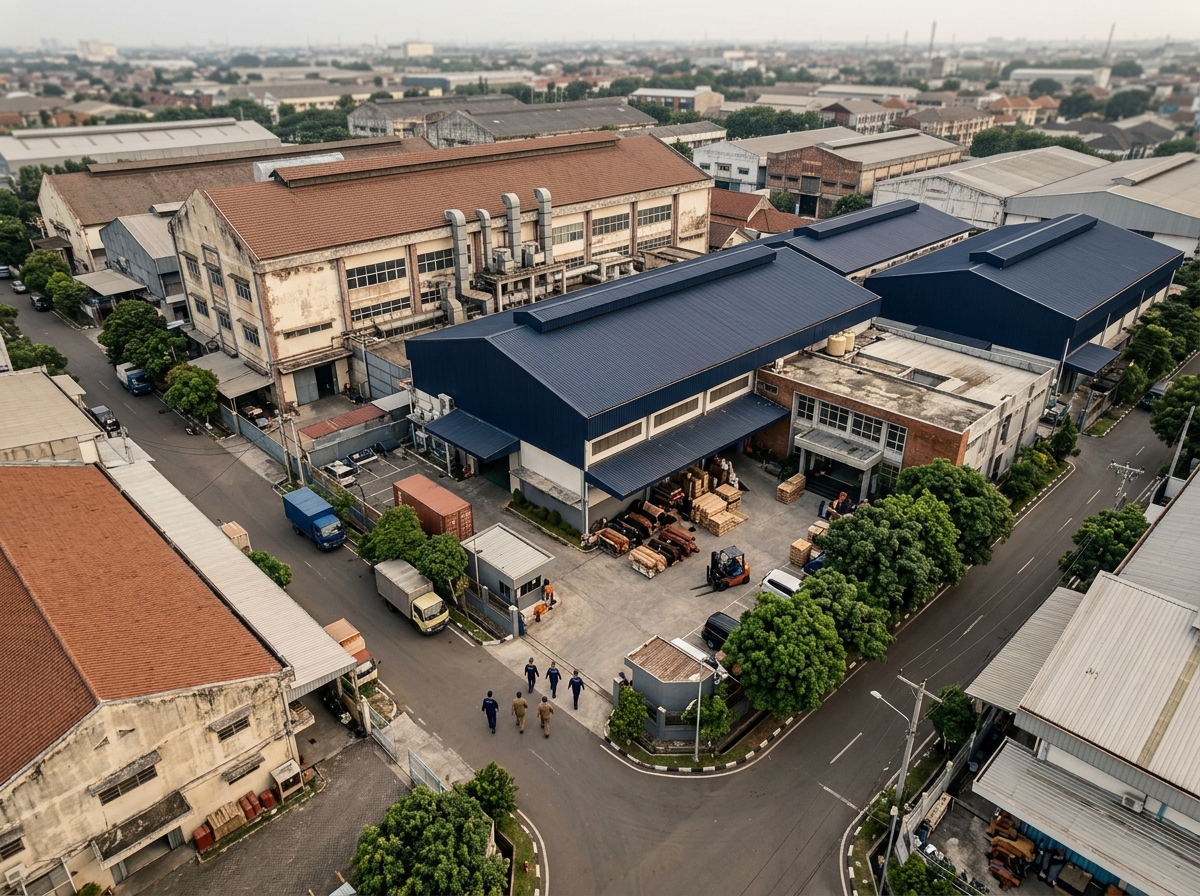
Geography matters in Indonesian footwear sourcing. Factory specializations, logistics access, and cost structures vary significantly by region.
Tangerang: Indonesia's Athletic Footwear Capital
Tangerang, in Banten province west of Jakarta, is the primary hub for large-scale athletic and branded sports footwear. Factories here — including major players like Panarub Industry and KMK Global Sports — are engineered for high-volume athletic production. They run sophisticated quality systems, employ thousands of workers, and hold the certifications required by global brand codes of conduct. If your product is performance athletic footwear and your annual volume supports brand-tier MOQs, Tangerang is the starting point for your factory search.
East Java: Mid-Volume Casual, Safety, and Leather Dress
East Java — specifically Sidoarjo, Surabaya, and Mojokerto — hosts a dense cluster of mid-tier and SME factories. These facilities specialize in casual footwear, safety boots, and leather dress shoes. MOQs are more flexible than Tangerang brand-tier factories. Sampling is generally faster. This cluster is well-suited for US importers targeting private label programs, mid-price casual lines, or occupational footwear categories.
Surabaya's port, Tanjung Perak, provides direct export access — a logistics advantage for East Java–based production.
Bandung and Bali: Artisan and Lifestyle Categories
Bandung (West Java) has a distinct artisan and heritage footwear scene. Small workshops producing handmade boots, welted constructions, and heritage-style leather shoes operate here. Quality can be exceptional, but scalability is limited. Bali hosts small-batch sandal and resort footwear producers suited to lifestyle brands with lower volume requirements.
Factory Tier Landscape: How to Match Indonesian Shoe Manufacturers to Your Volume and Brand
Understanding factory tiers is the foundation of effective Indonesia footwear sourcing. Mismatching volume and tier is the most common early mistake US buyers make.
| Factor | Brand-Tier | Mid-Tier | SME / Artisan |
|---|---|---|---|
| Typical MOQ (pairs/style) | 3,000–10,000+ | 500–3,000 | 300–500 |
| Certifications | ISO 9001, BSCI, SMETA, OEKO-TEX | ISO 9001, often BSCI | Variable, often none |
| Sampling lead time | 45–60 days | 20–35 days | 15–25 days |
| Private label capability | Limited (brand-dedicated lines) | Strong | Strong |
| Construction range | Full range, automated | Cemented, strobel, basic welt | Handmade, welt, vulcanized |
| Best fit for | Licensed brands, large retail programs | Growing brands, private label | DTC niche, heritage, handmade |
Brand-Tier Factories
Brand-tier factories in Tangerang operate dedicated production lines for global clients. They require high MOQs, demand full tech pack submissions, and enforce compliance audits. Factories like Adis Dimension Footwear and Panarub Industry are examples of this category — publicly verified, globally recognized, and not accessible to small-volume buyers.
Mid-Tier Factories
Mid-tier factories — concentrated in East Java and parts of Tangerang — offer the best balance of capability, compliance, and flexibility for most US importers. They typically hold core certifications, run their own sampling departments, and can accommodate private label programs. Exclusivity clauses are negotiable at this tier; request an NDA and product exclusivity agreement before submitting designs.
SME and Artisan Producers
SME factories and artisan workshops in Bandung and Bali offer handmade quality and niche category depth. They are not scalable for retail programs exceeding a few thousand pairs annually but are highly valuable for premium DTC brands building a craft narrative.
Footwear Construction Capabilities Mapped Across Indonesian Manufacturing Regions
Construction method determines which factories can produce your product. Specifying this incorrectly in your RFQ wastes time on both sides.
Construction Capability Matrix by Region
| Construction Method | Primary Application | Tangerang | East Java | Bandung | Bali |
|---|---|---|---|---|---|
| Cemented (direct attach) | Casual, athletic, everyday | ✓ Strong | ✓ Strong | ✓ Available | ✓ Limited |
| Strobel | Lightweight athletic, running | ✓ Strong | ✓ Available | — | — |
| Vulcanized | Canvas sneakers, heritage | ✓ Available | ✓ Available | ✓ Available | — |
| Blake stitch | Dress shoes, leather casual | — | ✓ Strong | ✓ Strong | — |
| Goodyear welt | Heritage boots, dress | — | ✓ Available | ✓ Strong | — |
Cemented and Strobel Construction
Cemented construction — upper bonded directly to outsole — is the most widely available method across all Indonesian clusters. It suits casual and athletic categories and produces a durable product when adhesive standards are maintained. Strobel construction, where the upper is sewn to a sock lining before lasting, is concentrated in Tangerang athletic factories with automated lasting equipment.
Vulcanized and Welt Construction
Vulcanized production — requiring autoclave ovens for canvas sneaker styles — is available at select factories in Tangerang and East Java. Goodyear welt machinery is most reliably found in Bandung and specialist East Java factories. When submitting your tech pack, specify the construction method explicitly under the sole attachment section. Do not assume the factory will infer it from the style reference.
MOQ Tiers, Pricing Benchmarks, and Total Landed Cost Breakdown for US Importers
Factory Gate Price Ranges by Category
These are approximate FOB price bands based on category and factory tier. Actual pricing depends on material specs, construction complexity, and order volume.
| Category | SME FOB Range | Mid-Tier FOB Range | Brand-Tier FOB Range |
|---|---|---|---|
| Basic canvas sneaker | USD 8–14 | USD 12–20 | USD 18–30+ |
| Casual cemented shoe | USD 10–18 | USD 15–25 | USD 22–35 |
| Leather dress shoe | USD 18–32 | USD 28–45 | USD 40–65 |
| Athletic/running shoe | USD 20–35 | USD 30–55 | USD 45–80+ |
| Work / safety boot | USD 22–38 | USD 35–55 | USD 50–75 |
All price ranges are approximate and should be validated through RFQ at time of sourcing.
Hidden Cost Factors
US importers frequently underestimate the true cost of Indonesia sourcing at the development stage.
- ✓Mold and tooling fees: typically USD 800–3,000 per outsole mold
- ✓Proto sample charges: USD 150–500 per pair, often non-refundable
- ✓Fit and pre-production sample rounds: 2–3 rounds common
- ✓Air freight for sample returns
- ✓Third-party inspection fees: approximately USD 250–400 per inspection day
- ✓Freight forwarder and customs brokerage fees
- ✓US import duties (see below)
US Import Duties and HTS Code Guidance
This is an area most sourcing guides ignore. Indonesian footwear is not subject to Section 301 tariffs. Standard US Most Favored Nation (MFN) duty rates apply. Rates vary significantly by HTS code:
- Leather dress shoes (HTS 6403.xx): typically 8.5–10% - Athletic footwear with rubber/plastic outer sole (HTS 6404.11): approximately 20% - Canvas sneakers (HTS 6404.19): approximately 12.5% - Rubber/plastic casual footwear (HTS 6402.xx): approximately 6–37.5% depending on subheading
Confirm applicable HTS subheadings with your licensed customs broker before finalizing pricing models. Small classification differences produce large duty swings in footwear.
Product Development Timeline From Tech Pack Submission to First Shipment
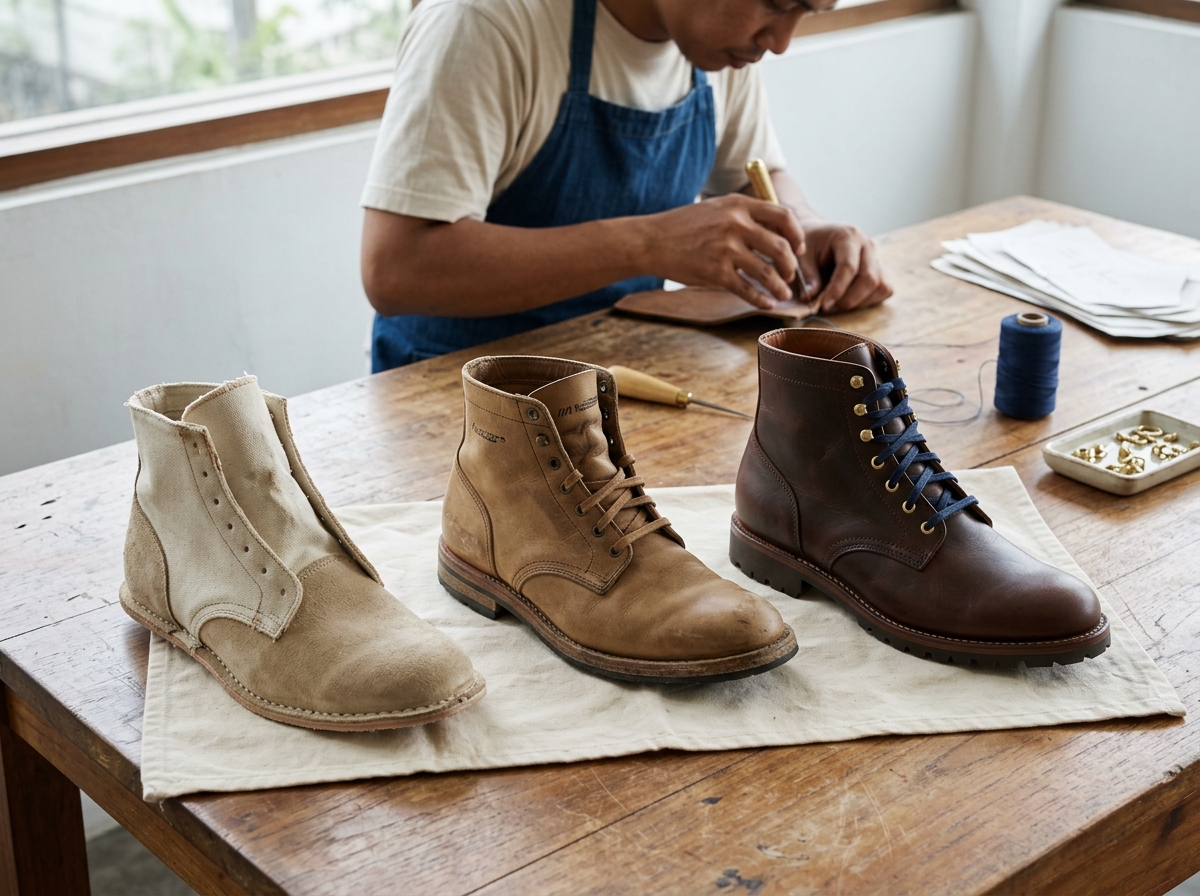
Stage-by-Stage Timeline Breakdown
A new footwear development from scratch typically requires 120–180 days end-to-end. Repeat or minor-revision programs can compress to 90– approximately 120 days.
| Stage | Typical Duration |
|---|---|
| Tech pack submission and factory review | 1–2 weeks |
| Proto sample development | 4–6 weeks |
| Proto review and correction | 1–2 weeks |
| Fit sample | 3–4 weeks |
| Fit approval and pre-production sample | 3–4 weeks |
| Pre-production approval | 1–2 weeks |
| Bulk production | 4–8 weeks (volume-dependent) |
| Pre-shipment inspection | 3–5 days |
| Ocean freight to US West Coast | 22–30 days |
Seasonal Booking Windows
Indonesian factories — particularly brand-tier and mid-tier facilities — operate on forward-booked production calendars. For US spring/summer retail deliveries (shelf date March–April), factories typically need bulk order confirmation by August–September of the prior year. For US fall/winter (shelf date September–October), confirm by February–March.
Missing booking windows forces buyers into lower-priority production slots, extending lead times by 3–6 weeks.
How to Find, Vet, and Qualify Indonesian Shoe Manufacturers
Sourcing Channels
- Trade shows: IFMAC & WOODMAC (Jakarta), API Expo (footwear-specific Indonesian trade event), and international fairs where Indonesian factories exhibit. - B2B platforms: Use with caution. Verify factory status independently; platform badges do not substitute for audit. - Sourcing agents: Agents working on 3–10% FOB commission can provide access and translation, but confirm they are factory-independent. - Operational sourcing partners: A sourcing partner working on a transparent service model — rather than factory commission — provides unbiased factory matching and ongoing production oversight.
Factory Vetting Checklist
- ✓Confirm factory is a direct manufacturer, not a trading company
- ✓Request factory registration documents and export license
- ✓Verify certifications (ISO 9001, BSCI, SMETA) with issuing bodies directly
- ✓Ask for a current client reference list — active global brands are a strong signal
- ✓Review machinery list: lasting machines, stitching lines, sole-press equipment
- ✓Confirm in-house sampling department and dedicated development staff
- ✓Request photos and video of current production floor
- ✓Ask about subcontracting policy — confirm no unauthorized outsourcing
- ✓Clarify exclusivity and NDA terms before sharing designs
- ✓Conduct or commission an on-site third-party audit before placing trial order
Red Flags During Initial Outreach
- Factory cannot provide certification documentation within 5 business days - RFQ responses quote prices without requesting a tech pack or material specs - No dedicated sampling team — samples produced by production line workers only - Unwillingness to sign an NDA before design file submission - References are all small or unverifiable brands
Compliance, Certifications, and Social Responsibility Standards for the US Market
Key Certifications to Require
| Certification | What It Covers | Required For |
|---|---|---|
| ISO 9001 | Quality management system | All tiers — baseline requirement |
| BSCI or SMETA | Social audit, labor standards | US brand codes of conduct |
| OEKO-TEX Standard 100 | Restricted substance testing in textiles | Footwear with textile uppers |
| REACH compliance | Chemical restrictions | EU-bound product; adopted by many US brands |
| California Proposition 65 | Chemical disclosure, US market | Required for California retail distribution |
US Customs Documentation Requirements
- Country of Origin Declaration: Required on all commercial invoices. Indonesia origin must be substantiated by substantial transformation in Indonesia. - Material declarations: Leather, synthetic, textile, rubber content must be declared accurately by component. - CA Proposition 65: If distributing in California, assess lead, cadmium, and phthalate content in PVC components. Request factory test reports from an accredited third-party lab.
Environmental compliance is increasingly scrutinized in tannery-adjacent supply chains. If your product uses Indonesian leather, confirm the tannery has wastewater treatment systems and does not use restricted azo dyes.
Logistics and Shipping From Indonesia to the United States
Indonesia's two primary export ports serve different production clusters efficiently.
- Tanjung Priok (Jakarta): Serves Tangerang, Bandung, and West Java factories. Largest container port in Indonesia by volume. - Tanjung Perak (Surabaya): Serves East Java factories in Sidoarjo, Mojokerto, and greater Surabaya. Shorter inland transport for East Java production.
Ocean freight transit time to US West Coast ports (Los Angeles / Long Beach) is approximately 22–30 days. US East Coast transit adds roughly 7–10 days. These are approximate sailing times; port congestion, transshipment routing, and carrier schedules affect actual delivery windows.
FCL vs LCL guidance:
- Full Container Load (FCL) becomes cost-efficient at approximately 15+ CBM cargo volume. Most US importers doing trial orders below 500 pairs will ship LCL. - LCL consolidation adds 5–10 days to effective transit time and introduces minor risk of co-loading damage. Pack footwear in master cartons with adequate inner-box protection.
Incoterms guidance:
- FOB (Tanjung Priok or Tanjung Perak): Recommended for US importers with an established freight forwarder relationship. You control freight cost and carrier selection. - CIF: Convenient for first shipments but removes cost visibility and carrier control. Avoid for ongoing programs.
Step-by-Step Action Plan for US Buyers Beginning Indonesia Footwear Sourcing
This four-phase approach structures the Indonesia sourcing process into manageable, sequential decisions.
Phase 1 — Define Your Brief - Finalize product category, construction method, and target FOB price band - Establish annual volume projection (this determines which factory tier you can access) - Identify US retail season delivery requirements and work backward to production start dates
Phase 2 — Shortlist Factories - Match required factory tier, regional cluster, and construction capability using the matrices in this guide - Use the shoe manufacturers Indonesia sourcing guide criteria to filter initial candidates - Target 4–6 factories for initial RFQ
Phase 3 — RFQ, Sampling, and Negotiation - Issue RFQ with tech pack, target FOB, annual volume, and timeline requirements - Request NDA before sharing final designs - Evaluate proto samples against a written QC checklist — not subjective impression - Negotiate tooling amortization, sample cost, and payment terms before committing
Phase 4 — Trial Order and Scale - Place a trial order of 300–1,000 pairs before committing to full-season volumes - Commission a third-party pre-shipment inspection - Review results against QC spec before approving container release - Scale based on verified performance, not factory promises
Frequently Asked Questions: Indonesia Footwear Sourcing for US Buyers
What is the minimum order quantity for shoe factories in Indonesia? SME and artisan factories typically accept 300–500 pairs per style. Mid-tier factories require approximately 500–3,000 pairs. Brand-tier factories generally start at 3,000–10,000+ pairs per style per colorway.
How does Indonesian footwear quality compare to China and Vietnam? At brand-tier and mid-tier levels, Indonesian factories producing for global athletic and casual brands are fully comparable to Chinese and Vietnamese peers. The skill base in athletic construction — particularly strobel and cemented — is deep. Quality variance occurs at the SME level, as it does in all sourcing countries.
Which construction methods are most commonly available in Indonesian shoe factories? Cemented construction is available across all clusters and tiers. Strobel construction is concentrated in Tangerang athletic factories. Vulcanized production is available at select facilities in Tangerang and East Java. Blake stitch and Goodyear welt are strongest in Bandung and specialist East Java producers.
What certifications should I require from an Indonesian shoe manufacturer? At minimum: ISO 9001, BSCI or SMETA audit, and OEKO-TEX Standard 100 (if textile uppers are used). For California distribution, request Prop 65 chemical test reports. For restricted substance compliance, request REACH documentation even if your primary market is the US.
How long does product development take with an Indonesian shoe factory? New development from tech pack to first shipment typically runs 120–180 days. Repeat programs with minor changes can compress to 90– approximately 120 days. The largest variable is sample round iterations.
Are there trade agreements that reduce US import duties on Indonesian footwear? There is no active US-Indonesia free trade agreement. Indonesia was graduated from GSP eligibility. Standard MFN duty rates apply. Rates range from approximately 6% to 37.5% depending on the HTS subheading. Verify the applicable subheading with your customs broker before finalizing landed cost models.
Indonesia offers US footwear importers a proven, scalable sourcing base with genuine advantages in labor cost, construction capability, and tariff position relative to China. The key to successful sourcing here is matching your volume, category, and compliance requirements to the right factory tier and regional cluster — and vetting rigorously before committing capital to a trial order.
You now have the framework to evaluate Indonesia with the same analytical rigor you would apply to any major sourcing decision. The logical next step is converting that framework into a verified factory shortlist.
You have the sourcing framework. Now match it to factories that have been verified for your category, construction method, and volume tier. Request a curated shortlist of Indonesian shoe manufacturers matched to your specific program requirements.
Request Your Factory Shortlist →Need eyes on the ground in Indonesia?
MTS is an execution partner — supplier verification, manufacturing management, quality control and export logistics across Indonesia, Vietnam and China.
Related services
Receive furniture sourcing insights across Asia.
One email per week. No spam.