Sneaker Athletic Footwear Factories Indonesia: A Sourcing Guide for Brands
14 min read
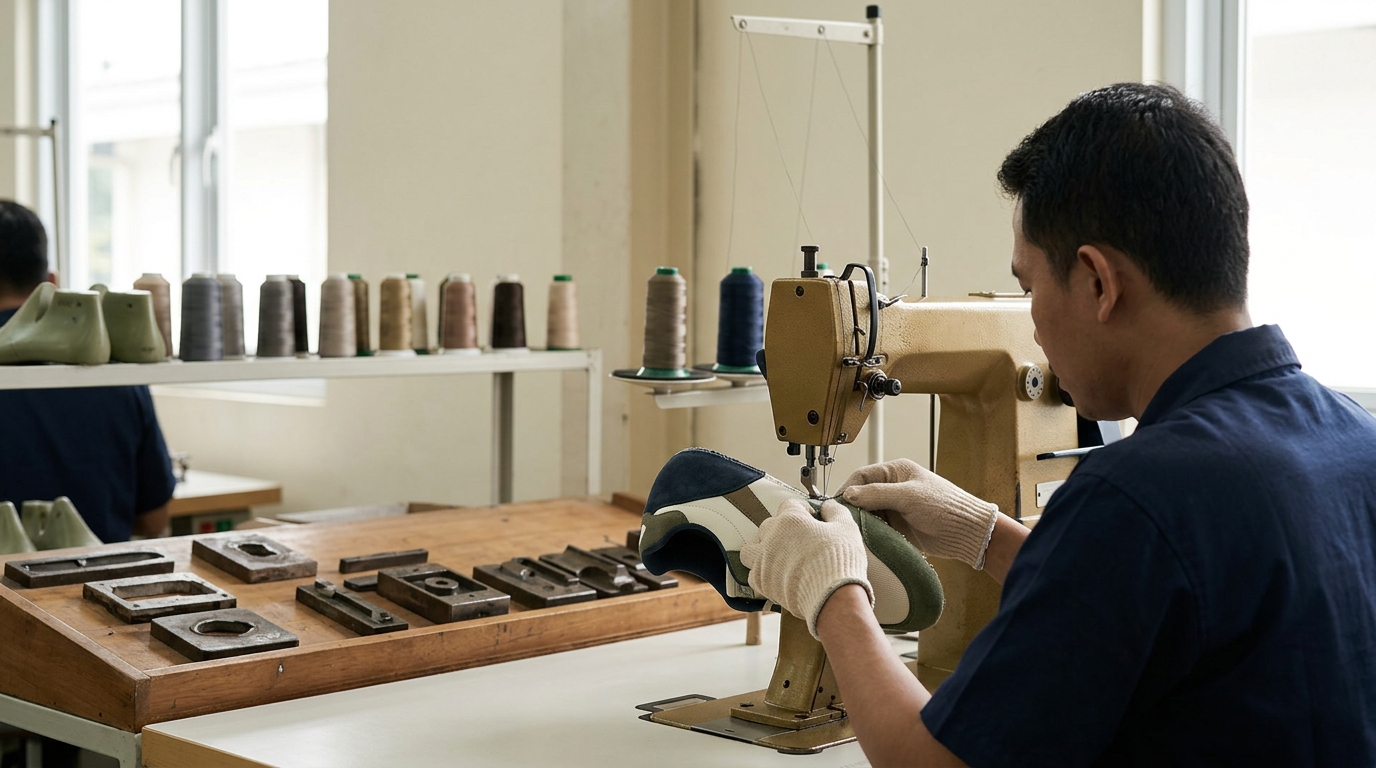
Sourcing athletic footwear from Indonesia is not a simple vendor search. It is a supply chain architecture decision. The factories you access, the construction methods they support, the tooling economics they offer, and the MOQs they require vary dramatically depending on which tier you are…
Sourcing athletic footwear from Indonesia is not a simple vendor search. It is a supply chain architecture decision. The factories you access, the construction methods they support, the tooling economics they offer, and the MOQs they require vary dramatically depending on which tier you are targeting and how you approach the market.
Indonesia consistently ranks among the world's top three footwear exporters by volume. The country's athletic footwear manufacturing base is deep, technically capable, and structured around decades of producing for Nike, Adidas, and their tier-1 contract partners. That legacy has created industry-wide quality standards and a skilled workforce.
This guide is written for sourcing managers, founders, and product directors at emerging-to-mid-tier brands evaluating sneaker athletic footwear factories in Indonesia. It covers regional manufacturing hubs, construction technology capabilities, tooling and mold cost ranges, realistic MOQ bands by factory tier, compliance requirements for US import, and how to vet factories before committing.
The goal is to give you enough operational clarity to walk into an RFQ conversation with an Indonesian factory and ask the right questions.
Why Indonesia Is a Tier-One Country for Athletic Footwear Manufacturing
Indonesia's position in global footwear is not accidental. The country has built a competitive manufacturing base over four decades, anchored by consistent investment from the world's largest athletic footwear brands.
Labor, Supply Chain Depth, and Export Infrastructure
Indonesia offers a combination of skilled footwear labor and a mature sub-supplier network that few countries can match. Wage competitiveness remains favorable relative to China, though Vietnam has narrowed the gap in recent years.
Port infrastructure in Tanjung Priok (Jakarta) and Tanjung Perak (Surabaya) supports high-volume export. Most tier-1 and tier-2 factories are experienced with FOB and CIF shipments to US importers.
Government Policy and US Trade Context
Indonesia has pursued free-trade agreements and preferential trade arrangements that affect landed cost calculations for US buyers. The Generalized System of Preferences (GSP) has historically provided tariff benefits on certain footwear categories, though US GSP status for Indonesia has shifted over time and should be verified with a customs broker before building cost models.
How Nike and Adidas Elevated the Whole Ecosystem
The presence of mega-brand contract manufacturers in Indonesia has had a structural effect on factory standards across the country. Factories that have produced — or audited suppliers for — Nike and Adidas have internalized process discipline, QC documentation, chemical compliance protocols, and lean manufacturing concepts.
Indonesia's Regional Manufacturing Hubs and What They Produce
Geography matters in Indonesian footwear sourcing. Factory clusters in different regions have distinct specializations, sub-supplier ecosystems, and logistics profiles.
West Java: The Athletic Performance Core
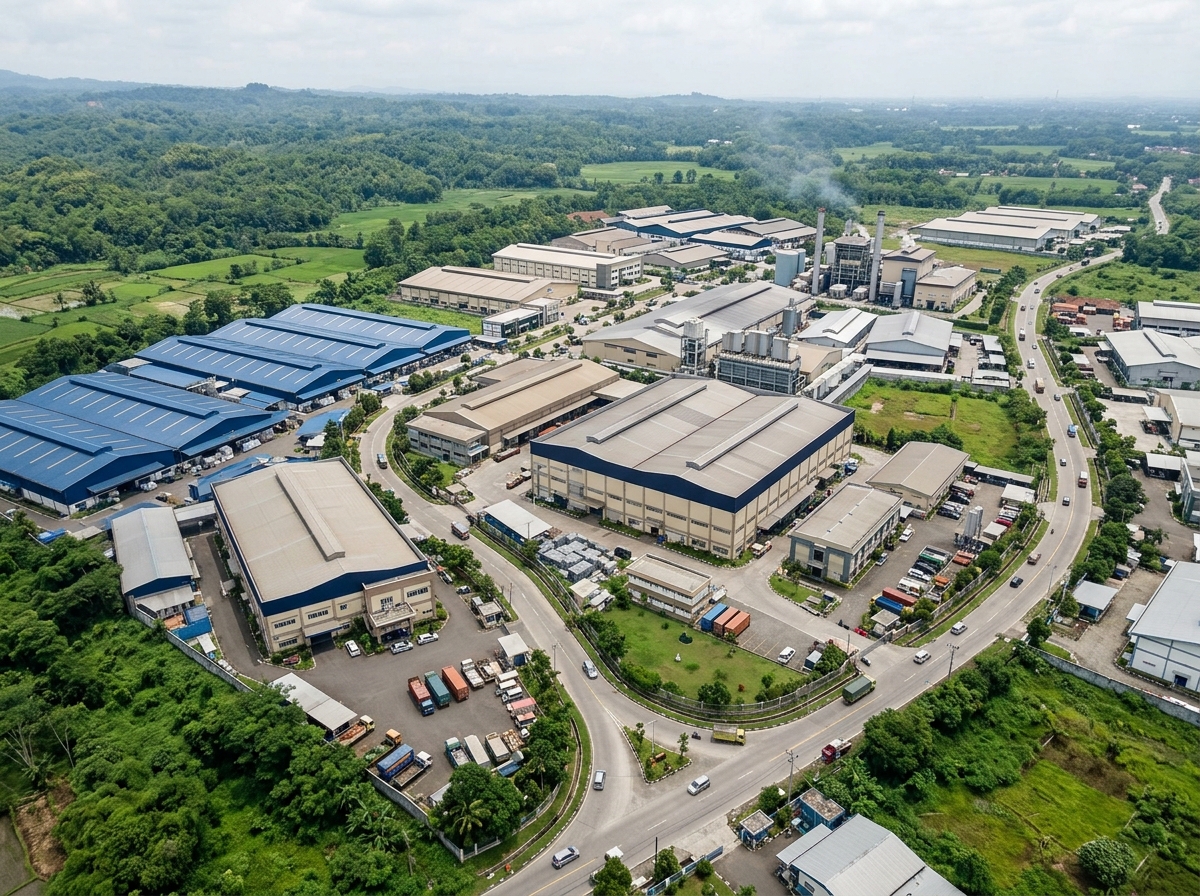
West Java is the dominant hub for sneaker athletic footwear factories in Indonesia. The cluster spans Bandung, Bogor, Cianjur, Karawang, and Sukabumi. This region houses the highest concentration of athletic and performance-focused factories, including tier-1 Nike and Adidas contract manufacturers.
Karawang and Bogor attract large-scale operations with foreign investment. Bandung has a strong base of mid-tier and smaller factories with athletic construction capabilities. Sub-supplier access in West Java is excellent — EVA compounders, mesh and synthetic textile suppliers, outsole rubber mills, and hardware vendors are all within practical logistics range.
East Java: Broader Mix, Strong Volume Capacity
East Java — centered on Sidoarjo, Mojokerto, Malang, and Jombang — handles a broader footwear category mix including athletic, casual, and work footwear. Factories here often have strong volume capacity and competitive pricing. Sub-supplier density is lower than West Java, which can add days to component lead times. Tanjung Perak in Surabaya provides direct container export access.
Banten and Majalengka: Emerging Capacity
Banten province, adjacent to Jakarta, and Majalengka in West Java are growing as factory locations — partly due to land cost pressure in established clusters. Majalengka benefits from the Kertajati Airport logistics zone. Some newer facilities here carry more modern equipment and have been positioned toward performance and lifestyle athletic categories.
| Region | Specialization | Key Cities | Logistics Hub |
|---|---|---|---|
| West Java | Athletic / performance | Bandung, Karawang, Bogor | Tanjung Priok (Jakarta) |
| East Java | Mixed athletic / casual | Sidoarjo, Malang, Mojokerto | Tanjung Perak (Surabaya) |
| Banten | Performance / mid-tier | Tangerang, Serang | Tanjung Priok (Jakarta) |
| Majalengka | Emerging performance | Majalengka | Kertajati |
The Nike and Adidas Ecosystem: What It Means for Smaller Brands Sourcing in Indonesia
Several of Indonesia's largest athletic footwear manufacturers produce directly for Nike and Adidas. Understanding these factories — and their limits for smaller brands — is essential context.
The Tier-1 Contract Manufacturers
Panarub Industry is one of Indonesia's most prominent Nike contract manufacturers. Based in Tangerang (Banten), Panarub has produced high-specification Nike performance footwear for decades, including technically complex knit-upper styles. Its manufacturing standards, chemical compliance systems, and QC protocols are among the most rigorous in the country.
KMK Global Sports operates large-scale facilities producing Nike footwear at volume. KMK has been a consistent Nike supplier and maintains the compliance infrastructure that Nike's factory standards require.
Adis Dimension Footwear has historically produced for Adidas. The factory brings the same level of process documentation and material compliance that Adidas mandates from its supply base.
These three names represent the upper end of Indonesia's athletic footwear factory tier. They are benchmark operations. They are not realistic partners for brands ordering under approximately 20,000–50,000 pairs per style.
Overflow Capacity and Sub-Contract Opportunities
Tier-1 factories do experience seasonal capacity windows. During off-peak periods — typically Q1 and parts of Q3, depending on brand order cycles — some capacity becomes available. In practice, accessing this capacity as a small brand is difficult. These factories have compliance, documentation, and margin requirements that make small orders economically unattractive for them.
A more realistic pathway is through factories that have trained staff from tier-1 operations. Many mid-tier West Java factories employ production engineers, QC managers, and sample developers who previously worked at Panarub, KMK, or similar facilities. This is where the quality inheritance is practically accessible for smaller brands.
Construction Technologies Available at Indonesian Athletic Footwear Factories
Indonesia's factory base covers a wide range of athletic footwear construction methods. Capability varies by factory tier. Understanding what each method requires operationally is essential before issuing an RFQ.
Cupsole Construction
Cupsole construction — where the outsole wraps up the sides and bonds to the upper — is well-supported across mid-tier and larger Indonesian factories. It is the dominant construction method for basketball, training, and classic athletic styles. It requires precise lasting, adhesive process control, and quality outsole tooling. Most export-grade factories in West Java handle cupsole construction competently.
EVA and Phylon Compression-Molded Midsoles
EVA (ethylene-vinyl acetate) and Phylon (a compression-molded EVA foam) midsole production is a genuine strength of Indonesian athletic footwear manufacturing. Factories with compression molding equipment can produce lightweight, cushioned midsoles at commercial quality levels. Die-cut EVA is a lower-cost alternative — sheets of EVA are cut to shape rather than molded — and is available at smaller-scale factories with lower tooling investment.
| Midsole Type | Process | Tooling Required | Typical Factory Tier |
|---|---|---|---|
| Phylon / compression EVA | Compression molding | Aluminum mold | Tier-1 / Tier-2 |
| Injection EVA | Injection molding | Steel mold | Tier-1 / Tier-2 |
| Die-cut EVA | Cutting die | Simple steel rule die | Tier-2 / Tier-3 |
Cemented and Direct-Injection Construction
Cemented (cold-cement) construction is the most common method across all factory tiers. The upper and outsole are bonded with adhesive under heat and pressure. It is versatile and cost-effective. Direct injection — where the outsole is molded directly onto the lasted upper — requires specialized injection equipment and is available at fewer Indonesian factories, primarily larger tier-1 and tier-2 operations.
Upper Material Capabilities
Synthetic leather, mesh, and woven textile uppers are standard across export-grade Indonesian factories. Knit uppers — comparable to Nike Flyknit or Adidas Primeknit — require specialized flat-knitting machinery. This capability exists in Indonesia, primarily at larger facilities or through dedicated upper manufacturers that supply factories. If your design requires engineered knit uppers, verify in-house capability explicitly during factory qualification.
Tooling, Mold Costs, and Last Development for New Brands
Tooling investment is frequently the largest upfront cost surprise for new brands entering athletic footwear manufacturing. Indonesia is neither the cheapest nor the most expensive tooling market in Asia.
Outsole Mold Costs
Outsole molds are typically aluminum (faster to machine, lower cost, shorter tool life) or steel (more durable, higher cost). Approximate cost ranges for Indonesian factories:
- Aluminum outsole mold: approximately USD 1,500–4,000 per size run (half sizes included), depending on complexity and number of cavities - Steel outsole mold: approximately USD 4,000–10,000 per size run for comparable complexity
These are approximate figures; actual quotes vary by factory, design complexity, and whether the factory machines in-house or outsources to a mold shop. A full men's size run (US 6–13, including half sizes) typically requires 8–15 mold cavities.
Phylon Midsole Compression Molds
Phylon midsole compression molds are a separate investment from outsole molds. Expect approximately:
- Phylon compression mold: USD 800–2,500 per size, or USD 6,000–18,000 for a full size run
Die-cut EVA eliminates this mold investment. The trade-off is aesthetics and performance: die-cut EVA cannot replicate the beveled edges, density gradients, or visual complexity of a compression-molded Phylon unit.
Last Development
The last is the foot-shaped form around which the upper is constructed. It determines fit, toe box geometry, heel counter position, and overall silhouette.
- Custom last development: typically USD 150–400 per size, or USD 1,200–3,500 for a graded size run in wood or resin. Lead time: approximately 4–8 weeks from approved foot scan or 2D spec - Stock last programs: many Indonesian factories maintain libraries of existing lasts that brands can use at no or low cost. This significantly reduces upfront investment and lead time. The trade-off is fit differentiation — your shoe fits the same as every other brand using that last
IP Ownership: A Non-Negotiable Contract Point
Mold and last ownership is frequently disputed when brand-factory relationships end. Before paying any tooling invoice:
- Confirm in writing that all molds, lasts, and tooling paid for by your brand are your property - Specify that the factory may not use your tooling for other clients - Include a clause requiring physical transfer or destruction of tooling upon contract termination
MOQ Realities Below Brand Tier: What Emerging Labels Can Actually Negotiate
The MOQ landscape for sneaker athletic footwear factories in Indonesia is more accessible than most sourcing guides acknowledge — if you target the right factory tier.
MOQ Bands by Factory Tier
| Factory Tier | Typical MOQ (pairs/style) | Target Brand Profile |
|---|---|---|
| Tier-1 (Nike/Adidas contractors) | 20,000–50,000+ | Global athletic brands |
| Tier-2 (export-grade, mid-scale) | 3,000–6,000 | Established emerging brands |
| Tier-3 (smaller export factories) | 500–2,000 | Early-stage brands, private label |
| Stock-last / shared-tooling programs | 300–500 | Startups, test programs |
These figures are approximate. Factories negotiate differently based on seasonality, material complexity, and construction method. A simple cemented flat shoe on a stock last will carry a lower MOQ than a complex cupsole basketball shoe requiring custom tooling.
How to Reduce Entry Barriers
Stock-last programs are the most effective MOQ reduction tool for new brands. By using an existing last, you eliminate last development cost and time, and the factory has lower setup risk — which typically translates to lower MOQ requirements.
Shared tooling arrangements — where a factory uses the same outsole mold across multiple brands — are common for basic athletic silhouettes. This is essentially a private label sneaker Indonesia model. The limitation is design differentiation: your outsole will look like other brands using the same mold.
Trading companies can access smaller Indonesian factories on your behalf but add a margin layer (typically 5–15% over factory FOB). For brands without sourcing infrastructure or Bahasa Indonesia capability, a trading company or sourcing agent can reduce operational friction during early development. The risk is opacity: some trading companies represent themselves as factories.
Timing Your RFQ for Better Leverage
Indonesian athletic footwear factories have identifiable capacity windows. The period following Chinese New Year (February–March) and the September–October post-summer window often represent lower factory utilization. Placing RFQs during these windows — targeting production slots 3–4 months out — can yield better MOQ flexibility and pricing.
Quality Control Standards and US Import Compliance Requirements
Factory Certifications to Require
Export-grade Indonesian athletic footwear factories commonly hold one or more of the following:
- BSCI (Business Social Compliance Initiative): social compliance audit covering labor practices, wages, working hours - WRAP (Worldwide Responsible Accredited Production): apparel and footwear social compliance standard - ISO 9001: quality management system certification
Factories supplying Nike, Adidas, or other major US brands are typically required to maintain these certifications. For smaller brands, requesting current audit certificates — and verifying their validity directly with the certifying body — is a baseline due diligence step.
QC Approaches for Sneaker Production
In-line inspection occurs during production: checking materials, stitching, adhesive bonding, and component placement before the shoe is fully assembled. This is the most effective point to catch systematic defects.
Final random inspection (FRI) follows AQL (Acceptable Quality Level) sampling standards applied to finished goods before shipment. AQL 2.5 for major defects and AQL 4.0 for minor defects are common industry benchmarks.
For athletic footwear, in-line inspection is strongly recommended alongside FRI — the bonded constructions used in cupsole and cemented footwear can hide adhesion failures that only appear after units are boxed.
US Import Chemical Compliance
Athletic footwear entering the US market must comply with:
- REACH (EU regulation, but referenced by US brands with global distribution): restricts specific hazardous substances including certain azo dyes, chromium VI, and phthalates in leather and synthetic materials - CPSIA (Consumer Product Safety Improvement Act): applies if any products are marketed to children under 12; sets strict limits on lead content in surface coatings and substrate materials - California Proposition 65: while state-level, it is effectively a national standard for brands with US distribution — restricts DEHP and other phthalates, cadmium, and lead in footwear components
Require factories to provide material safety data documentation and test reports for restricted substances. Reputable tier-2 and above Indonesian factories working with US brands will have this infrastructure in place.
- ✓Confirm factory holds current BSCI or WRAP audit certificate
- ✓Request restricted substance test reports (REACH SVHC list)
- ✓Verify CPSIA compliance if any SKUs target children under 12
- ✓Check Prop 65 compliance for California distribution
- ✓Confirm country-of-origin documentation for CBP entry
- ✓Verify current US tariff classification and GSP eligibility with a licensed customs broker
How to Vet and Shortlist the Right Indonesian Sneaker Factory for Your Brand
Key Qualification Questions
Before requesting samples or pricing, ask prospective factories:
- What athletic footwear construction methods do you run in-house? (cupsole, cemented, direct-injection) - Do you have in-house midsole compression molding, or do you outsource? - What is your current sample lead time for a new development? (benchmark: 4–6 weeks for an initial sample) - Which components do you manufacture in-house versus source from sub-suppliers? - Can you provide current export data or references from US brand clients? - What certifications do you currently hold, and can you share current audit reports?
Red Flags to Watch For
Verifying Export History
US Customs import data is publicly available through commercial trade data platforms. Searching for Indonesian footwear exporters shipping to the US reveals actual shipment history, volume, and consignee names. This verification step takes under 30 minutes and can confirm or contradict a factory's claimed client relationships and export experience.
Frequently Asked Questions About Indonesian Athletic Footwear Manufacturing
Which major sneaker and athletic shoe brands are manufactured in Indonesia? Nike, Adidas, New Balance, Asics, Puma, and Timberland all have production in Indonesia through contract manufacturers. Indonesia is one of the primary production bases for global athletic footwear alongside Vietnam and China.
Are Nike shoes manufactured in Indonesia, and which factories produce them? Yes. Panarub Industry and KMK Global Sports are among the best-documented Nike contract manufacturers in Indonesia. Both operate large-scale facilities in the greater Jakarta area and West Java. Nike also works with other Indonesian suppliers for components and sub-assembly.
Does Adidas manufacture shoes in Indonesia? Yes. Adis Dimension Footwear has been a documented Adidas production partner in Indonesia. Adidas maintains a meaningful share of its global production in the country alongside Vietnam.
Are Nike Air Jordans made in Indonesia? Some Jordan Brand models have been produced in Indonesia through Nike's contract manufacturing network. Production allocation across styles and factories changes seasonally and by model. There is no single factory dedicated exclusively to Air Jordan production in Indonesia.
What is the minimum order quantity for a smaller brand sourcing from Indonesian sneaker factories? Tier-3 factories and stock-last programs can accommodate orders of approximately 300–500 pairs per style. Tier-2 export factories typically require 1,500–5,000 pairs per style for custom development. These figures are approximate and negotiable based on construction complexity and factory capacity timing.
How much does tooling and mold development cost at an Indonesian athletic footwear factory? Aluminum outsole molds typically cost approximately USD 1,500–4,000 per size run. Steel molds range approximately USD 4,000–10,000. Phylon compression molds add approximately USD 800–2,500 per size. Custom last development runs approximately USD 1,200–3,500 for a full graded size run. These are approximate figures; actual costs depend on complexity and factory.
Indonesia offers emerging brands a genuine path to athletic footwear manufacturing at commercial quality — but only if you enter with accurate expectations about factory tiers, tooling investment, and MOQ thresholds.
You now have a working framework for evaluating sneaker athletic footwear factories in Indonesia: where they are located, what they can build, what tooling will cost, and what compliance requirements your US import program must satisfy.
You understand the factory tiers, construction capabilities, and MOQ realities — the logical next step is matching your specific program to factories that can actually deliver it. Request a vetted shortlist of Indonesian athletic footwear factories matched to your MOQ, construction method, and compliance requirements.
Request Your Factory Shortlist →Need eyes on the ground in Indonesia?
MTS is an execution partner — supplier verification, manufacturing management, quality control and export logistics across Indonesia, Vietnam and China.
Related services
Related articles
Receive furniture sourcing insights across Asia.
One email per week. No spam.