Indonesian Wall Cladding and Facade Systems: Complete Export Guide for US Buyers
13 min read
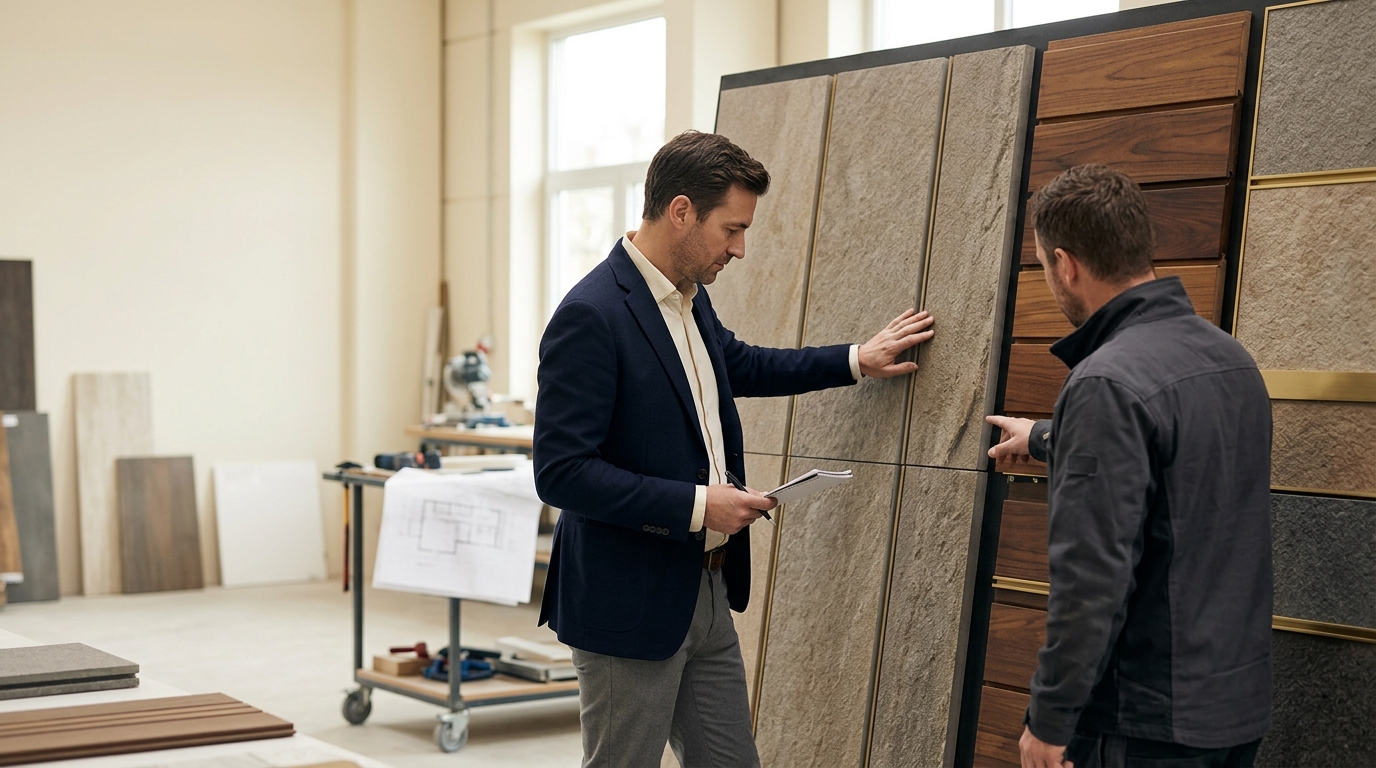
US architects and commercial contractors sourcing wall cladding face a clear problem: too many suppliers, too little verified specification data, and almost no compliance guidance written for the American market. Indonesia exports teak panels, volcanic stone, WPC composites, and fibre cement…
US architects and commercial contractors sourcing wall cladding face a clear problem: too many suppliers, too little verified specification data, and almost no compliance guidance written for the American market. Indonesia exports teak panels, volcanic stone, WPC composites, and fibre cement facade systems at significant scale.
This guide addresses every stage of that decision. It covers material categories with technical performance data, US compliance requirements under ASTM E84 and NFPA 285, a vetted manufacturer directory, procurement logistics from Indonesian ports, and CSI MasterFormat integration guidance. It also includes a direct comparison table to support specification decisions across material types.
One clarification before the first section: facade cladding and wall cladding are often used interchangeably, but there is a technical distinction. Wall cladding refers broadly to any surface-applied material on interior or exterior walls. Facade cladding refers specifically to the exterior building envelope — a subset of wall cladding with stricter weathering, fire, and structural attachment requirements.
Why Indonesia Dominates the Sourcing Market for Exterior Facade Materials
Raw Material Advantages No Other Country Replicates
Indonesia holds a structural raw material advantage in the facade export sector. Teak (Tectona grandis) grown in Java's managed plantation forests produces one of the world's densest, most decay-resistant hardwoods — with natural silica content that resists moisture and insect damage without chemical treatment.
The volcanic geology of Java and Bali produces andesite, lava stone, and Sukabumi green stone — materials with natural surface texture and compressive strength well-suited to exterior cladding applications. Palimanan limestone from West Java offers a lighter, cream-toned alternative to andesite. These stones are quarried and finished by specialist exporters, not aggregated through intermediaries.
Cost and Manufacturing Competitiveness
Indonesian facade manufacturing costs remain significantly below European equivalents for equivalent timber species and stone types. Skilled stone carving and timber milling labor is concentrated in established clusters: Jepara (Central Java) for teak and solid hardwood panels, Semarang for mid-market outdoor and facade products, and Surabaya for stone and composite systems.
FSC-certified teak is available from Indonesian suppliers operating under chain-of-custody certification. Buyers should request the certification number and verify it directly on the FSC certificate database — certificate laundering (presenting expired or misattributed FSC documents) is a documented risk in the Indonesian timber export chain.
Export Infrastructure and US Trade Lanes
Indonesia's primary facade export ports are Tanjung Priok (Jakarta), Tanjung Perak (Surabaya), and Tanjung Emas (Semarang). Regular container services connect these ports to US West Coast destinations (Los Angeles, Long Beach) and East Coast ports (Savannah, New York).
Indonesia and the United States operate under the Generalized System of Preferences (GSP) framework for some product categories, though buyers should verify current GSP status for specific HS codes with a licensed customs broker before finalizing landed cost projections.
Core Material Categories in the Indonesian Wall Cladding Facade Systems Export Market
Teak and Tropical Hardwood Wall Panels
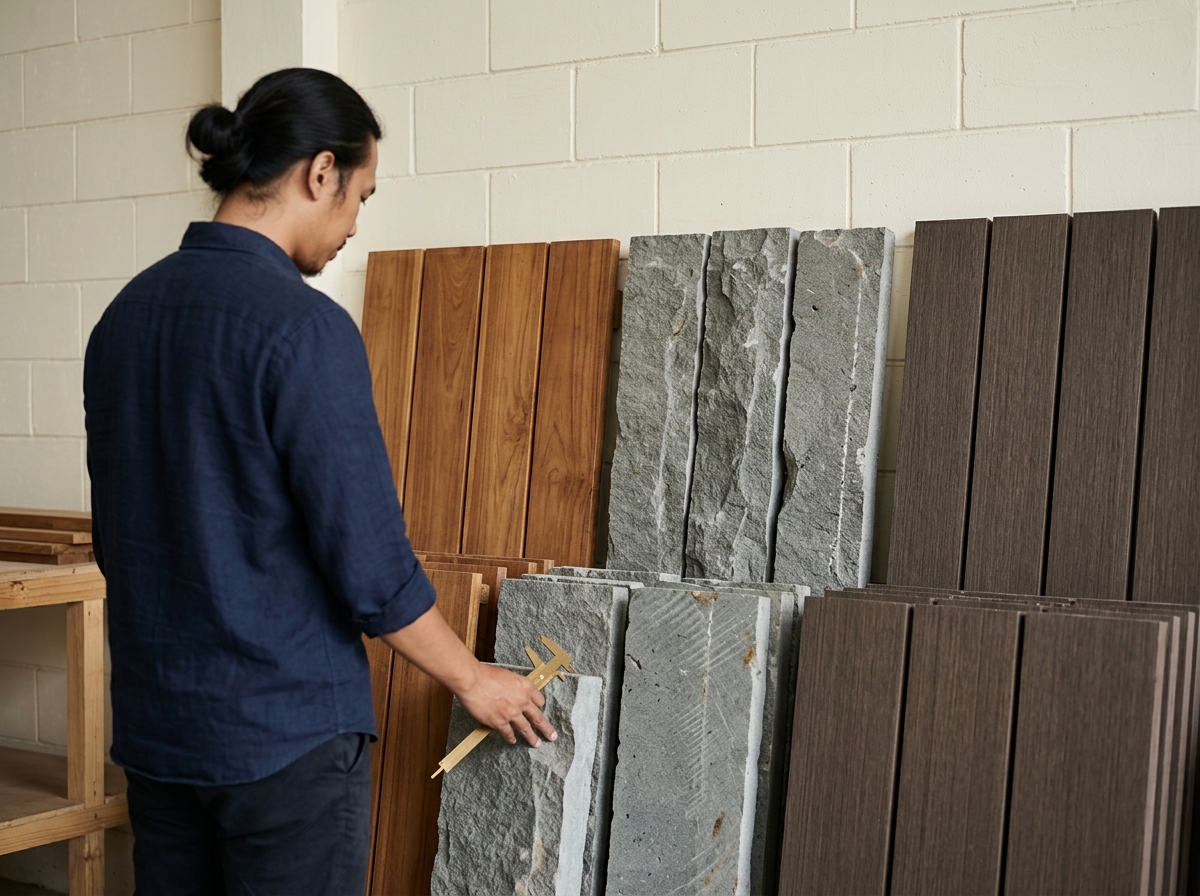
Teak facade panels are the flagship product of Indonesian wood exports. Key specifications US buyers should request:
- Species: Tectona grandis (teak), merbau, bengkirai - Typical panel dimensions: 100–200mm width, 12–25mm thickness, lengths up to 3,600mm - Janka hardness (teak): approximately 1,000–1,155 lbf (varies by source and growth conditions) - Durability class: Class 1 (teak) per European standard EN 350 — relevant as a comparative reference - Finishes: natural oiled, UV-resistant exterior oil, thermally modified, charred (shou sugi ban style)
Natural Stone Facade Cladding
Indonesian volcanic and sedimentary stones available for facade export include:
- Andesite: dark grey, high compressive strength, slip-resistant texture — commonly used on commercial ground-level facades and feature walls - Lava stone: porous volcanic basalt, lighter weight than andesite, used for decorative cladding panels - Palimanan limestone: cream to pale yellow, medium compressive strength, suited to interior facades and sheltered exterior applications - Sukabumi green stone: distinctive green-grey basalt, primarily specified for water features and wet-area facades - Typical panel thickness: 10–30mm for split-face and honed finishes; 30–50mm for stacked stone profiles
WPC Facade Panels
Wood Plastic Composite (WPC) fluted and flat facade panels are an increasingly significant Indonesian export category. WPC panels combine recycled wood fiber (typically 50–70% by weight) with polyethylene or polypropylene binder. Key performance attributes:
- UV stabilizer packages rated for approximately 10–15 years before color fade becomes visible (supplier-specific; request test data) - Moisture absorption rates significantly lower than solid timber - Available in hollow and solid profiles; hollow profiles reduce weight and cost - Surface textures: wood-grain embossed, smooth, brushed
Fibre Cement and Composite Panels
Indonesian suppliers produce fibre cement panels as lightweight, fire-resistant alternatives to stone and timber. Fibre cement panels typically weigh approximately 14–20 kg/m² depending on thickness (6–18mm range). They accept a wide range of surface finishes including stone-look prints and painted textures.
Fire Ratings, Weathering Performance, and US Compliance Standards
ASTM E84 and NFPA 285 Requirements
For US commercial projects, two fire test standards govern exterior wall assemblies:
ASTM E84 (Surface Burning Characteristics) - Tests flame spread index (FSI) and smoke developed index (SDI) on a surface material - Class A: FSI ≤ 25, SDI ≤ 450 - Class B: FSI 26–75 - Class C: FSI 76–200 - Untreated teak and hardwood panels typically test in the Class C range. Fire-retardant treated (FRT) versions can achieve Class A or B — confirm with the specific supplier's test report. - WPC panels vary significantly; some formulations achieve Class A with appropriate additives.
NFPA 285 (Multi-Story Assembly Fire Test) - Required under IBC Section 1408 for combustible exterior wall assemblies on buildings over 40 feet in height - Tests the complete wall assembly, not just the panel material - Indonesian wood and WPC facade suppliers rarely hold NFPA 285 assembly certifications. US contractors must work with a facade consultant and a tested assembly system to achieve compliance. - Stone and fibre cement cladding panels are non-combustible and fall outside NFPA 285 scope when used without combustible substrates.
Weathering and Climate Zone Performance
Performance varies significantly across US climate zones:
| Climate Zone | Teak Panels | WPC Panels | Andesite/Stone | Fibre Cement |
|---|---|---|---|---|
| Humid Subtropical (Southeast US) | Good — annual oiling required | Good — check mold resistance | Excellent | Excellent |
| Pacific Northwest (High moisture) | Moderate — sealing critical | Good with drainage gap | Excellent | Excellent |
| Desert Southwest (UV/thermal) | Good — thermal expansion management needed | Moderate — UV stabilizer grade critical | Excellent | Good |
| Cold-humid (Northeast US) | Moderate — freeze-thaw cycling affects joints | Good if properly sealed | Good — check freeze-thaw rating | Excellent |
Teak's natural oil content provides inherent moisture resistance, but in Pacific Northwest applications, end-grain sealing and a ventilated rainscreen installation gap (typically 25–40mm) are essential to prevent moisture trapping.
Comparing Indonesian Facade System Types: Performance and Application Matrix
| Material | Approx. Weight (kg/m²) | Fire Rating (untreated) | Weathering Rating | Typical Application | Relative Cost |
|---|---|---|---|---|---|
| Teak panels | 8–18 (varies by thickness) | ASTM E84 Class C | High (with maintenance) | Hospitality, luxury residential, retail | Premium |
| WPC panels | 10–16 | Class A–C (formulation-dependent) | Medium–High | Commercial office, retail, multifamily | Mid |
| Andesite/lava stone | 25–60 | Non-combustible | Very High | Commercial ground level, feature walls | Mid–Premium |
| Palimanan limestone | 18–40 | Non-combustible | Medium (porous; needs sealing) | Sheltered facades, interior feature walls | Mid |
| Fibre cement | 14–20 | Non-combustible (Class A typical) | Very High | Any commercial type, high-fire-risk zones | Mid |
| Coconut mosaic | 4–8 | Class C (combustible) | Low–Medium (interior/sheltered) | Boutique hospitality, feature panels | Mid |
Installation complexity: Stone cladding requires structural substrate engineering. Teak and WPC panels are lighter and typically faster to install. Fibre cement panels offer the broadest installation compatibility with standard light-gauge framing systems.
Service life estimates: Teak properly maintained — commonly 25–40 years. WPC with quality UV package — approximately 15–25 years. Andesite and fibre cement — 30–50+ years with minimal maintenance.
Which Exterior Cladding Material Best Suits Your Project Requirements
Decision Framework for US Specifiers
Use this framework before contacting any Indonesian facade supplier:
Budget: Stone and teak carry premium landed costs. WPC and fibre cement offer the lowest total cost of acquisition. However, teak's service life and maintenance simplicity improve long-term TCO.
Fire rating requirements: Non-combustible requirement (IBC Type I/II construction) → specify stone or fibre cement. Class A combustible permitted → specify FRT-treated teak or Class A WPC. Verify at the assembly level for buildings over 40 feet.
Climate zone: High moisture → prioritize ventilated rainscreen installation for all materials. Desert Southwest → UV resistance is the critical filter; ask for UV test data on WPC products. Freeze-thaw exposure → avoid porous limestone in unprotected applications.
Aesthetic requirements: Natural wood grain → teak or WPC with embossed finish. Monolithic stone look → andesite or fibre cement with stone-texture print. Unique/artisan → coconut mosaic or hand-split lava stone for feature panels.
Pros and Cons Summary
| Material | Pros | Cons |
|---|---|---|
| Teak panels | Natural beauty, high durability, FSC available | Combustible, maintenance required, premium cost |
| WPC panels | Low maintenance, versatile, cost-effective | Fire rating varies, UV performance supplier-dependent |
| Andesite/stone | Non-combustible, extremely durable, low maintenance | Heavy — structural engineering required, higher freight cost |
| Fibre cement | Non-combustible, lightweight, low cost | Less distinctive aesthetics, edge detailing critical |
| Coconut mosaic | Unique, sustainable narrative, low weight | Limited weathering durability, niche application |
Vetted Indonesian Wall Cladding and Facade Manufacturers: Supplier Directory
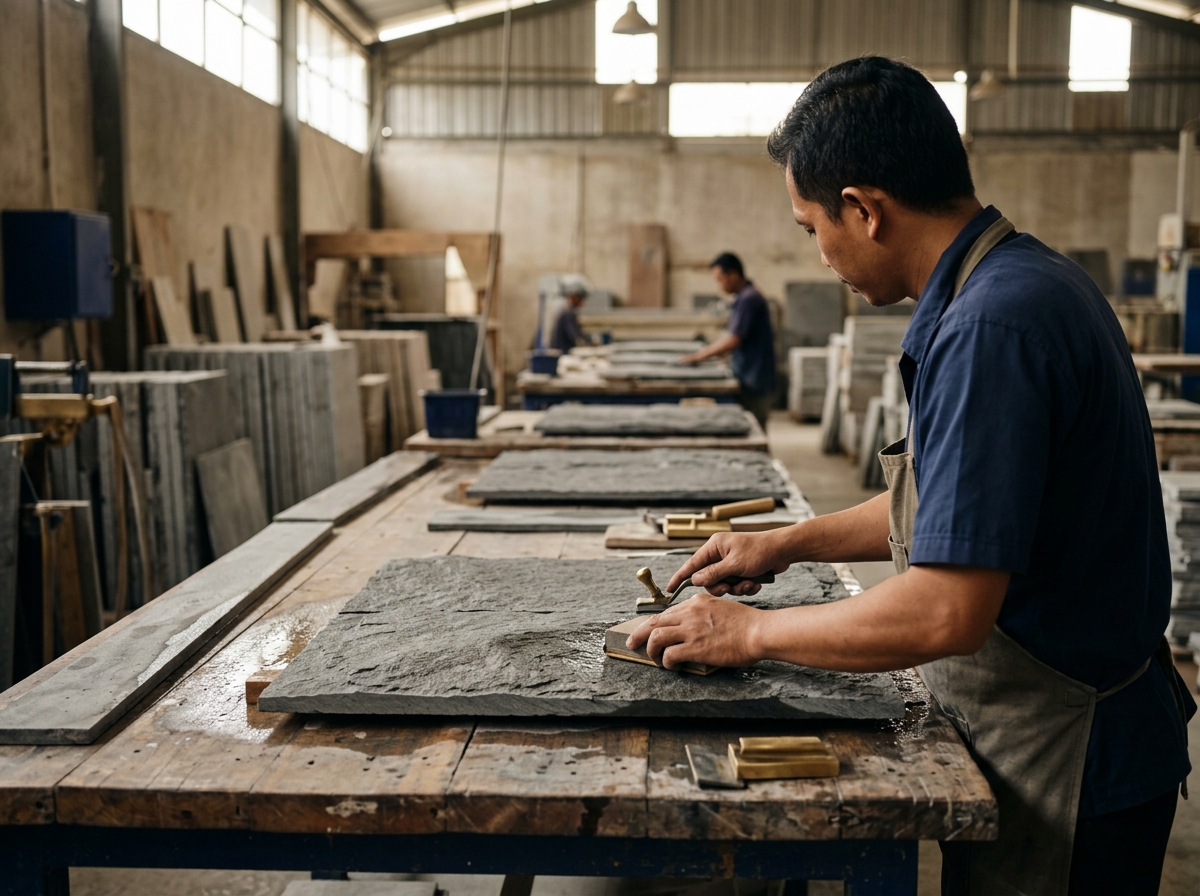
The following exporters appear in Indonesian facade trade channels and public export databases. Buyers should conduct independent verification before placing orders.
Roma Export Established 1999. Exports stone cladding, terrazzo panels, WPC facade panels, and wooden wall cladding. One of the longer-operating Indonesian facade exporters with documented US and European shipment history. Suitable for buyers seeking a multi-material supplier with established export documentation capability.
Vinteak Panels Specializes in premium teak wall panels and teak flooring for export. Relevant for hospitality and high-end residential projects where FSC chain-of-custody documentation is required. Buyers should request the FSC certificate number for direct verification.
MHK Stone Natural stone exporter with documented supply of Sukabumi Green stone and Palimanan limestone. Relevant for facade buyers specifying volcanic or sedimentary stone panels. Confirm compressive strength test data and freeze-thaw cycle ratings for US climate applications.
Indonesia Global Exporter Based in Jepara, Central Java — the primary Indonesian craft and artisan timber cluster. Exports coconut mosaic panels and sustainable natural wall cladding. Appropriate for boutique hospitality and feature wall applications where handcraft narrative adds project value.
- ✓Can you provide the ASTM E84 test report for this specific panel product?
- ✓Is your FSC certificate current and can I verify the certificate number independently?
- ✓What is your export license status and are you the legal entity on the Bill of Lading?
- ✓What is the MOQ for this product and what is the current production lead time?
- ✓Do you supply rainscreen subframe systems or panels only?
- ✓Have you exported to the US market before — can you provide a reference shipment?
- ✓Who conducts pre-shipment quality inspection and can we appoint a third-party inspector?
Export Logistics and Procurement Process for US-Based Buyers
MOQ, Lead Times, and the Sample Request Process
Typical MOQ ranges for Indonesian facade exporters:
- Teak panels: approximately 20–50 m² minimum for standard profiles; custom profiles often require a full container (approximately 1 × 20ft FCL) - Stone cladding: commonly 50–200 m² depending on stone type and cut - WPC panels: often 200–500 linear meters minimum per profile - Fibre cement: typically available in smaller quantities from distributors
Production lead times range from approximately 4 to 12 weeks depending on material type, finishing requirements, and factory capacity at time of order. Stone cutting and teak panel production with FSC documentation tend to require longer lead times than standard WPC products.
Sample requests: most established Indonesian facade exporters supply samples at cost (typically invoiced and credited against first order). Allow approximately 2–4 weeks for sample delivery by air freight from Java.
Shipping Terms and Port Options
| Port | Primary Materials | Typical US Routing |
|---|---|---|
| Tanjung Priok (Jakarta) | Stone, fibre cement, composite | West Coast via Singapore/Kaohsiung |
| Tanjung Perak (Surabaya) | Teak, tropical hardwood, stone | West Coast or East Coast via transshipment |
| Tanjung Emas (Semarang) | Teak (Jepara production), WPC | West Coast via transshipment hub |
FOB Surabaya and FOB Semarang are the most common Incoterms for Indonesian facade exports to US buyers. CIF is available through larger exporters with established freight forwarder relationships.
US Customs, HS Codes, and Import Documentation
Relevant HS code categories (verify with a licensed customs broker for your specific product):
- Wood cladding panels: Chapter 44 (Wood and articles of wood) - Natural stone panels: Chapter 68 (Articles of stone) - WPC panels: Chapter 39 (Plastics) or Chapter 44 depending on composition — classification affects duty rate - Fibre cement: Chapter 68
Required US import documentation for facade panels typically includes: commercial invoice, packing list, bill of lading, certificate of origin (Form SKA for Indonesian timber products), and phytosanitary certificate for timber products. FSC-certified timber shipments require chain-of-custody documentation aligned with the certificate.
Quality Control and Pre-Shipment Verification
The sample bait-and-switch — where a high-quality sample is presented but production is subcontracted to a cheaper facility — is a documented pattern in Indonesian export supply chains. Factory audit and unannounced production visits are the most reliable mitigation. Where in-person audit is not possible, engage an operational partner with Indonesia-based inspection capability.
Design Integration: Specifying Indonesian Facade Systems on US Commercial Projects
CSI MasterFormat Placement
Indonesian facade materials integrate into CSI MasterFormat Division 04 (Masonry) for stone cladding and Division 06 (Wood, Plastics, and Composites) for teak and WPC panels. Fibre cement panels typically fall under Division 07 (Thermal and Moisture Protection) — specifically Section 07460 (Fiber Cement Siding).
For stone panel systems, specify under Section 04430 (Stone Cladding) with performance requirements including compressive strength, water absorption rate, and freeze-thaw resistance. For teak or tropical hardwood facade panels, Section 06400 (Architectural Woodwork) provides the base framework; add fire rating, moisture resistance, and FSC certification requirements as mandatory compliance items.
Rainscreen vs. Direct-Fix Assembly Compatibility
Most Indonesian teak and WPC panel suppliers export panels only — not complete rainscreen assemblies with subframe systems. US buyers must source aluminum or galvanized steel subframe systems locally or from separate suppliers. Verify the following before specifying:
- Panel attachment method: concealed clip, face-fix, or tongue-and-groove - Back-ventilation gap requirement (typically 25–40mm minimum for timber) - Thermal bridging provisions through the subframe
Stone cladding panels exported from Indonesia are commonly supplied with mechanical anchor provisions (kerfs or dowel holes) appropriate for mechanically anchored rainscreen installation. Confirm anchor spacing and substrate requirements with the stone exporter's technical data sheet.
Hospitality and Commercial Project Application Notes
Indonesian teak and volcanic stone have established specification history in US hospitality projects — particularly resort hotels and boutique commercial interiors where natural material authenticity supports the design narrative. For commercial office facades, WPC and fibre cement are more commonly specified due to fire rating flexibility and lower maintenance burden.
Coordinate with the project's weatherproofing subcontractor early. Indonesian facade panels — particularly stone — require a compatible waterproof membrane and joint sealant system specified by a US-based facade consultant familiar with local climate exposure.
Frequently Asked Questions: Indonesian Facade Systems for US Buyers
Which material is best for exterior wall cladding on US commercial buildings? There is no single answer — it depends on fire rating requirements, building height, climate zone, budget, and maintenance tolerance. For non-combustible requirements, specify andesite or fibre cement.
Is facade cladding the same as wall cladding — what is the difference? Wall cladding covers all surface-applied materials on walls, interior or exterior. Facade cladding refers specifically to exterior building envelope applications, which carry stricter fire, weathering, and structural attachment requirements under the International Building Code and local amendments.
What materials are used in external facade systems from Indonesia? The primary Indonesian wall cladding facade systems export categories are: teak and tropical hardwood panels, volcanic stone (andesite, lava stone, Sukabumi green), sedimentary stone (Palimanan limestone), WPC composite panels, fibre cement panels, and coconut mosaic for decorative feature applications.
Do Indonesian facade panels meet US fire rating and building code requirements? Not automatically. Stone and fibre cement are non-combustible and align with the strictest IBC requirements. Teak and WPC panels must be tested to ASTM E84; untreated teak typically achieves Class C.
What are typical lead times and MOQs when importing Indonesian wall cladding? MOQs range from approximately 20 m² (teak standard profiles) to 500+ linear meters (WPC panels). Production lead times typically run 4–12 weeks. Add approximately 18–35 days sea freight transit to US ports. Budget 10– approximately 14 weeks minimum from order to US port arrival for standard orders.
How do I find and verify a legitimate Indonesian facade system exporter? Request the supplier's export license, company registration documents, and the Bill of Lading from a previous US shipment. Verify FSC certificate numbers independently at info.fsc.org. Commission a factory audit for first-time suppliers — online platform profiles and Alibaba gold-supplier status are not substitutes for physical verification.
Indonesian wall cladding facade systems export represents a technically sophisticated supply chain — not a commodity market. Buyers who invest in compliance verification, independent factory audit, and CSI-compliant specification documentation consistently achieve better procurement outcomes than those who lead with price.
You now have the compliance framework, material comparison data, and supplier intelligence needed to move a sourcing decision forward with confidence. The logical next step is direct engagement with verified manufacturers.
Connect with vetted Indonesian facade system exporters who can supply ASTM test data, FSC documentation, and pre-shipment inspection support for your US commercial project.
Request Export Quotes →Need eyes on the ground in Indonesia?
MTS is an execution partner — supplier verification, manufacturing management, quality control and export logistics across Indonesia, Vietnam and China.
Related services
Related articles
Receive furniture sourcing insights across Asia.
One email per week. No spam.