Restaurant Furniture from Indonesia: The Complete US Buyer's Procurement Guide
19 min read
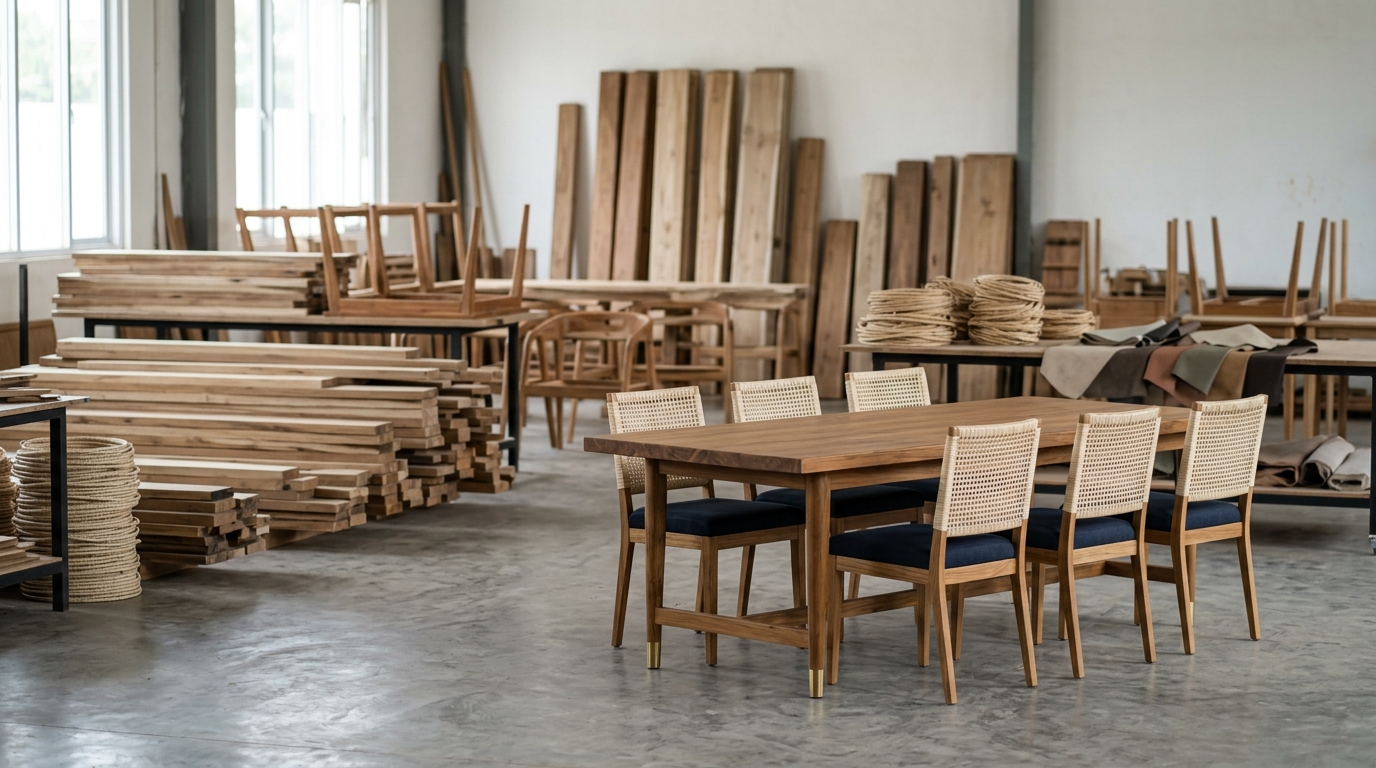
Sourcing restaurant furniture from Indonesia has become a strategic priority for a growing number of US hospitality buyers — and for good reason. As domestic manufacturing costs continue to rise and generic contract furniture floods the mid-market, operators are turning to Indonesian producers to…
Sourcing restaurantfurniture from Indonesiahas become a strategic priority for a growing number of US hospitality buyers — and for good reason. As domestic manufacturing costs continue to rise and generic contract furniture floods the mid-market, operators are turning to Indonesian producers to access distinctive craftsmanship, premium natural materials, and pricing structures that support both independent openings and multi-unit rollouts. The decision, however, involves far more than placing an overseas order. It requires understanding supplier ecosystems, import compliance, total landed cost, and quality verification — all within the compressed timelines that hospitality projects demand.
This guide is written specifically for restaurant chain operators, independent cafe owners, and FF&E contract buyers in the United States who are evaluating Indonesian suppliers for bulk procurement. It covers everything from the material strengths and manufacturing clusters that define Indonesia's furniture industry to US tariff structures, certification requirements, customization workflows, and step-by-step order management. Whether you are furnishing a single flagship location or orchestrating a phased rollout across dozens of properties, the frameworks here will help you make informed, defensible sourcing decisions.
Indonesia sits alongside China and Vietnam as one of the world's top furniture-exporting nations, yet its competitive edge is distinct: a deep tradition of artisan woodworking, unmatched access to plantation teak and sustainably harvested rattan, and a manufacturing base that spans everything from small Bali workshops to large-scale contract factories in Cirebon and Surabaya. Understanding how to navigate that ecosystem — and how to protect your investment along the way — is where this guide begins.
Why US Restaurant Operators Are Choosing Indonesian Furniture Over Domestic Alternatives
The cost and craft equation that domestic sourcing cannot match
US-made commercial furniture carries a premium that is difficult to justify at scale. Labor costs, domestic timber pricing, and overhead structures at American factories typically produce price points that are multiples of what equivalent pieces cost when manufactured in Indonesia — particularly for solid wood and rattan categories. For a restaurant group furnishing fifty or a hundred seats per location across multiple sites, that differential compounds quickly into a meaningful capital advantage.
But cost alone does not explain the shift. Indonesian furniture carries a global reputation for quality that is earned, not marketed. The country's woodworking tradition — particularly in teak — stretches back centuries, and that craft knowledge is embedded in the manufacturing workforce at every scale. Buyers who have sourced from Indonesia consistently report that the quality of joinery, finish, and material selection at mid-tier Indonesian factories often rivals or exceeds what domestic or European producers deliver at higher price points.
Design differentiation as a competitive advantage for restaurant interiors
Restaurant operators increasingly recognize that interior design is a brand asset. In a market where consumers photograph and share dining environments as frequently as they do food, generic contract furniture from a domestic catalog supplier is a liability. Indonesian manufacturers — especially those in Bali and Jepara — produce pieces with visual character that is difficult to replicate through mass-market channels.
Reclaimed teak dining tables, hand-woven rattan chairs, and carved wood accents signal authenticity and intentionality to guests. For concepts built around sustainability, natural living, coastal aesthetics, or artisan food culture,furniture from Indonesiais not merely a procurement choice — it is a storytelling tool. This is a dimension of value that pure cost comparisons fail to capture, and it is driving demand from independent cafes and upscale restaurant chains alike.
Indonesia's position as one of the world's leading furniture-exporting nations also means that the supplier ecosystem is mature and experienced at working with US buyers. Exporters understand container logistics, HTS documentation, and the expectations of American hospitality procurement teams in ways that suppliers in smaller markets often do not.
The Material Strengths Behind Indonesian Restaurant Furniture
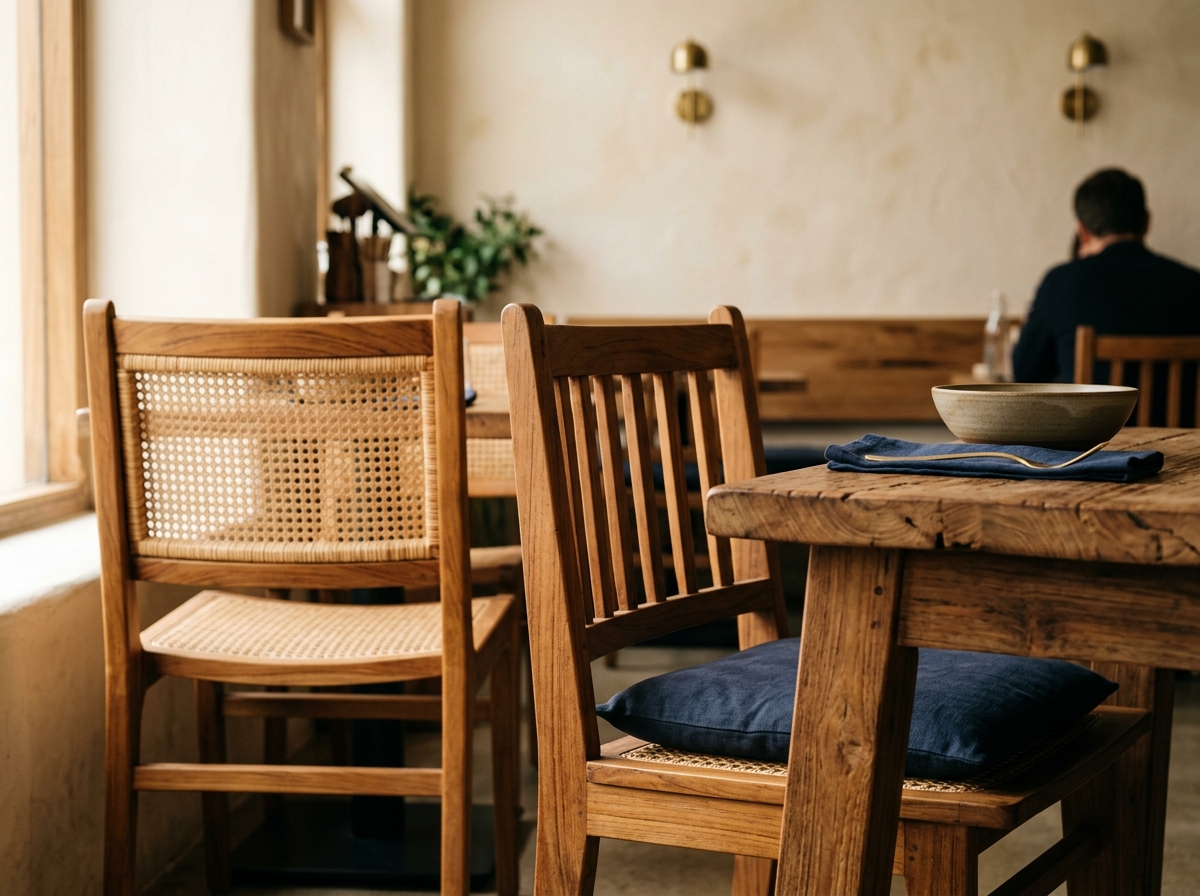
Teak wood: the benchmark for commercial durability
Teak is the material most closely associated with Indonesian furniture exports, and its dominance in the commercial hospitality segment is justified by performance characteristics that few other species match. Indonesian plantation teak contains natural oils that resist moisture, warping, and insect damage without requiring chemical treatment. For restaurant environments — where furniture is subjected to daily cleaning, spills, heavy use, and temperature fluctuations — this durability profile is commercially significant.
From a procurement standpoint, teak furniture from Indonesia carries strong residual value and longevity, meaning that the total cost of ownership over a five-to-ten-year horizon often makes it competitive even when the initial landed cost is higher than alternatives. It is also aesthetically timeless: the warm golden-brown grain of new teak and the silver-gray patina of aged teak both read as premium in contemporary restaurant design.
Buyers should note that plantation teak — grown on managed estates — is the standard for export-compliant Indonesian furniture and is distinct from old-growth teak, which carries different certification requirements. FSC-certified plantation teak is widely available from established Jepara and Semarang manufacturers.
Rattan and bamboo for casual dining and cafe concepts
Rattan is Indonesia's other signature material, and it is experiencing strong demand from the cafe and casual dining segment. Lightweight, flexible, and inherently sustainable, rattan lends itself to chair forms that would require significant weight and cost to replicate in solid wood. Indonesian rattan production is centered primarily in Cirebon, where factories combine hand-weaving traditions with scaled production capability.
For indoor restaurant applications, rattan chairs pair naturally with teak or reclaimed wood tables to create environments that feel curated without appearing designed. For outdoor terraces and rooftop dining areas, synthetic rattan — woven over powder-coated aluminum frames and also produced by Indonesian manufacturers — offers the same aesthetic with enhanced weather resistance.
Bamboo furniture occupies a smaller but growing niche, particularly for concepts emphasizing environmental credentials. Its rapid regeneration cycle makes it one of the most sustainable material options available, though its structural applications in commercial seating are somewhat more limited than teak or rattan.
Reclaimed and antique teak for upscale restaurant concepts
Reclaimed teak — salvaged from old Javanese structures, railway sleepers, or decommissioned agricultural buildings — is among the most visually distinctive materials available from Indonesian suppliers. The aged patina, weathering patterns, and nail-hole textures of reclaimed teak are impossible to replicate artificially, making each piece genuinely unique. For upscale restaurant concepts seeking a narrative around heritage, authenticity, or sustainability, antique restaurant furniture from Indonesia built from reclaimed teak commands genuine design authority.
From a procurement standpoint, reclaimed teak requires closer attention to surface treatment and structural integrity than new plantation teak. Reputable suppliers — such as those operating under brands like Zenddu or Bali Art Furniture, cited here as illustrative examples only — will provide moisture content readings and treatment documentation on request.
Metal and teak combinations for industrial and contemporary hospitality
The industrial-style restaurant aesthetic — raw steel frames, exposed hardware, warm wood surfaces — is well served by Indonesian manufacturers who combine metal fabrication with teak or mango wood components. These hybrid pieces are produced at both artisan scale in Bali and at higher volumes in facilities near Surabaya and Semarang. For buyers seeking a consistent industrial look across multiple locations, Indonesian factories can standardize the steel specification, finish, and wood grain selection to ensure visual coherence at scale.
Indonesia's Key Furniture Manufacturing Hubs and What Each Offers Contract Buyers
Jepara: the carved wood capital for solid teak procurement
Jepara, located in Central Java, is widely recognized as Indonesia's furniture capital. The city and its surrounding districts are home to the highest concentration of solid wood furniture manufacturers in the country, with particular strength in teak, mahogany, and reclaimed wood categories. Jepara producers range from small family workshops to mid-sized factories employing hundreds of workers, and the cluster has decades of experience serving US and European importers.
For restaurant buyers, Jepara is the logical starting point for solid teak dining tables, carved wood chairs, and decorative accent pieces. The region's manufacturers are generally experienced with export documentation, container loading, and the quality expectations of commercial hospitality buyers. Lead times from Jepara factories for standard items typically run eight to twelve weeks, with custom work extending to fourteen weeks or more depending on volume.
Bali: artisan workshops for boutique and resort hospitality
Bali's furniture industry occupies a different market position from Jepara's. Rather than volume production, Bali's workshops — many operating as artisan cooperatives or small design-forward studios — specialize in pieces with strong aesthetic identity and high perceived value. Companies like Warisan, referenced here as an illustrative example, represent the type of design-led manufacturer that Bali has produced for the global luxury hospitality market.
For US restaurant buyers, Bali sourcing is most appropriate for flagship locations, boutique concepts, or smaller orders where design differentiation matters more than per-unit cost. Minimum order quantities from Bali workshops tend to be lower than from industrial factories, but unit pricing is correspondingly higher.
Cirebon: industrial-scale rattan and contract furniture production
Cirebon, also in West Java, is the center of Indonesia's rattan furniture industry. Factories here operate at a scale appropriate for large contract orders — multiple container loads of rattan chairs and tables for restaurant chains requiring consistent volume. Cirebon producers have also expanded into synthetic rattan and mixed-material outdoor furniture, making the cluster relevant for buyers sourcing exterior dining solutions.
Surabaya and Jakarta: logistics infrastructure connecting manufacturers to export
Surabaya and Jakarta function primarily as logistics and commercial hubs rather than production centers. Surabaya's Tanjung Perak port is a major export gateway for furniture produced in East Java, while Jakarta's Tanjung Priok port handles a significant share of exports from West Java and Bali. For buyers managing consolidated shipments from multiple Indonesian regions, understanding these logistics corridors matters for planning realistic delivery windows.
How to Evaluate Indonesian Restaurant Furniture Suppliers Before Placing a Contract Order
- ✓Confirm Nomor Induk Berusaha (NIB) business license and export license
- ✓Verify physical factory presence via audit or third-party inspection
- ✓Request FSC and/or SVLK timber certification documentation
- ✓Confirm ISO 9001 or equivalent quality management certification
- ✓Establish whether supplier is a direct manufacturer, trading company, or merchant exporter
- ✓Review export customs data via services such as ImportGenius or Panjiva
- ✓Request sample order before committing to full production run
- ✓Clarify MOQ, lead time, and payment terms in writing before contracting
Understanding supplier types in the Indonesian ecosystem
The Indonesian furniture export market includes three distinct supplier types that buyers frequently conflate: direct manufacturers, trading companies, and merchant exporters. Direct manufacturers own production facilities, employ their own workers, and control quality at every stage. Trading companies source from multiple factories and resell without owning production capacity. Merchant exporters often aggregate orders from small workshops and handle export logistics on behalf of producers who lack export licenses.
Each type has legitimate uses, but the risk profile differs significantly. A direct manufacturer with FSC certification, an export license, and a verifiable factory floor is a fundamentally different counterparty than a trading company operating from a commercial office. Key verification signals include: the Nomor Induk Berusaha (NIB) business registration number, evidence of an export license, physical inspection of the production facility, and the presence of operational infrastructure such as a lumber yard, kiln-drying chamber, and finishing lines.
Certifications that matter for US commercial buyers
Two certifications are particularly relevant for US buyers sourcing wood furniture from Indonesia. The FSC (Forest Stewardship Council) Chain of Custody certification confirms that wood used in production originates from responsibly managed forests. FSC is internationally recognized and carries weight with US sustainability standards and brand storytelling.
The SVLK (Sistem Verifikasi Legalitas Kayu), Indonesia's national timber legality verification system, is the government-mandated framework ensuring that all Indonesian timber exports originate from legal sources. SVLK compliance is required for Indonesian furniture exported to regulated markets and is the baseline legal standard — FSC represents the premium tier above it.
For quality management, ISO 9001 certification at the factory level indicates systematic quality control processes. BSCI or Sedex SMETA audits provide evidence of ethical labor practices — increasingly relevant for US buyers subject to supply chain due diligence expectations.
Understanding US Import Costs and Indonesia Tariff Considerations for Restaurant Furniture
HTS codes and current US tariff rates on Indonesian furniture
All furniture imported into the United States is classified under the Harmonized Tariff Schedule (HTS). The applicable HTS code determines the base duty rate, and for Indonesian furniture, the relevant chapters are generally Chapter 94 (furniture) with subheadings varying by material and product type. Wooden furniture for non-domestic use — including restaurant seating and tables — typically falls under subheadings within 9403, while rattan and wicker furniture is classified under 9401 or 9403 depending on construction.
Current US tariff rates on Indonesian wooden furniture are generally in a low single-digit percentage range of the customs value, though buyers should verify current rates with a licensed customs broker, as rates and classifications are subject to change. Indonesia has not been subject to the elevated Section 301 tariffs that apply to Chinese-origin goods, which is a material cost advantage for US buyers.
Total landed cost comparison: Indonesia vs. China vs. Vietnam
When evaluating sourcing options, US buyers should compare total landed cost — not factory price alone. The table below provides directional guidance on the cost structure components for each major sourcing origin. Figures are illustrative ranges, not guarantees, and will vary by product category, supplier tier, and freight market conditions.
| Cost Component | Indonesia | Vietnam | China |
|---|---|---|---|
| Base tariff rate (wooden furniture) | Low single digits % | Low single digits % | Higher — Section 301 tariffs apply |
| Section 301 additional tariffs | Not applicable | Not applicable | Applicable (varies by category) |
| Ocean freight (per container, US West Coast) | Moderate–high (longer routing) | Moderate | Moderate |
| Lead time (production + shipping) | Typically 12–20 weeks | Typically 10–16 weeks | Typically 8–14 weeks |
| Material differentiation (teak, rattan) | Strong — unique to region | Limited | Limited |
| Artisan craft quality ceiling | High | Moderate–high | Moderate |
| FSC-certified supply availability | Widely available | Available | Available but less common |
| Risk of tariff escalation | Low currently | Low currently | Elevated |
The indonesia tariff structure currently favors Indonesian sourcing relative to China for buyers who were previously absorbing Section 301 costs. Vietnam offers competitive positioning as well, but lacks Indonesia's depth in natural materials such as plantation teak and hand-woven rattan that are central to differentiated restaurant interiors.
Freight, insurance, and customs brokerage in your landed cost model
Ocean freight from Indonesian ports — primarily Tanjung Perak (Surabaya) or Tanjung Priok (Jakarta) — to US West Coast ports such as Los Angeles or Long Beach typically routes through regional transshipment hubs, adding transit time compared to direct China-US services. Freight costs vary with market conditions and container type; buyers should obtain current quotes from freight forwarders experienced in Indonesian cargo.
Insurance, port handling fees, customs brokerage, and domestic drayage must all be factored into landed cost calculations. Working with a customs broker who has direct experience with Indonesian furniture imports is advisable — Indonesian shipments frequently involve multi-material products that require careful HTS classification to avoid misclassification penalties.
Customization Options Available from Indonesian Factories for Restaurant Chains
Indonesian manufacturers — particularly those operating at factory scale in Jepara and Cirebon — offer meaningful customization capability for restaurant chain buyers. Custom finishes, stains, and lacquer colors can be matched to brand specifications with color reference standards. Upholstery options for seat pads and banquette inserts are available from factories with in-house upholstery workshops, including specification of COM (customer's own material) if the buyer has proprietary fabric requirements.
For chain operators, CAD collaboration is increasingly standard among mid-to-large Indonesian factories. Buyers can submit design files, receive 3D renders and technical drawings for review, and approve prototypes before full production begins. This prototyping workflow adds four to six weeks to the initial order timeline but is essential for ensuring that custom pieces meet commercial specifications before committing to full container volumes.
Outdoor restaurant furniture customization involves different material specifications than indoor pieces. Exterior applications require teak with appropriate oil or UV-resistant finish treatment, powder-coated metal frames rather than painted, and synthetic rattan rather than natural rattan where weather exposure is a factor. Indonesian factories experienced in resort and hotel outdoor furniture are well-equipped to specify these differences correctly.
Step-by-Step Process for Placing and Managing a Bulk Furniture Order from Indonesia
From RFQ to production: the procurement sequence
A well-managed Indonesian furniture procurement follows a defined sequence that experienced hospitality buyers should map against their project timeline before initiating contact with suppliers.
1. Request for Quotation (RFQ): Submit detailed specifications — dimensions, materials, finishes, quantity per SKU, and target delivery date — to shortlisted suppliers. Vague RFQs produce vague quotes and invite scope creep. 2. Sample order: Before committing to production, order physical samples of each piece. Evaluate material quality, finish consistency, joint integrity, and dimensional accuracy against spec. 3. Contract and payment terms: Formalize the order with a written purchase agreement specifying quantities, specifications, delivery terms (Incoterms), payment schedule, penalty clauses for delay, and QC inspection rights. 4. Production monitoring: Arrange for during-production inspection (DUPRO) at a defined milestone — typically when 30–50% of production is complete — to identify defects before they compound across the full order. 5. Pre-shipment inspection: Conduct a final quality check before container loading. This is the last opportunity to reject non-conforming pieces without bearing return freight costs. 6. Shipping and customs clearance: Coordinate with your freight forwarder and customs broker for container booking, bill of lading, and HTS classification. Ensure all timber certification documents (SVLK, FSC) are included in the shipping package.
Payment terms and financial risk management
The most common payment structures for Indonesian furniture orders are Telegraphic Transfer (T/T) and Letter of Credit (LC). T/T is simpler and faster but places more risk on the buyer if paid in advance. A common structure is 30% deposit upon order confirmation and 70% against bill of lading — this balances supplier and buyer exposure reasonably for established relationships.
For first orders with a new supplier, a Letter of Credit provides stronger buyer protection by tying payment release to document compliance. LC fees add cost and processing time, but the financial protection is meaningful on large orders.
Production timelines and delivery management for US locations
Realistic production timelines for Indonesian restaurant furniture — accounting for material procurement, production, quality inspection, and ocean freight — typically run twelve to twenty weeks from order confirmation to US port arrival, depending on order volume and complexity. Custom pieces or large multi-SKU orders sit toward the higher end of that range.
For buyers delivering to multiple restaurant locations across the US, coordinate with your freight forwarder on inland distribution from the port. Full container loads (FCL) to a centralized distribution point, followed by domestic trucking to individual locations, is generally more cost-effective than attempting direct delivery to each site. Bonded warehousing near major ports can provide useful staging flexibility for phased location openings.
Sustainability and Ethical Sourcing Standards in Indonesian Furniture Manufacturing
Indonesian furniture manufacturersoperate within one of the most developed timber legality frameworks in Asia. The SVLK system — a mandatory government requirement for all timber exports — establishes a verifiable chain of custody from forest to finished product. For US buyers, SVLK documentation in the shipping package is both a legal requirement and a baseline due diligence record.
FSC Chain of Custody certification, available from a growing number of Indonesian factories, provides the higher standard that resonates with US consumers and supports restaurant brand sustainability narratives. Reclaimed teak, by its nature, carries an inherent sustainability argument: diverting material from demolition waste streams eliminates the harvesting impact entirely, making it among the most defensible options for buyers with strict environmental sourcing policies.
Fair labor and ethical manufacturing certifications — including BSCI audits and Sedex SMETA reports — are available from larger Indonesian factories serving US and European markets. For restaurant groups with supplier code of conduct requirements or ESG reporting obligations, requesting these audit reports as part of supplier qualification is standard practice.
Sustainability credentials also serve a commercial function beyond compliance. For restaurant concepts built around natural, artisan, or locally-sourced food narratives, furniture provenance that can be communicated authentically — certified Indonesian teak, hand-woven Cirebon rattan, reclaimed Javanese hardwood — creates a coherent brand story that extends from the menu to the room.
Frequently Asked Questions About Sourcing Restaurant Furniture from Indonesia
What is the minimum order quantity for restaurant furniture from Indonesian manufacturers?
Minimum order quantities vary significantly by supplier type and product category. Large contract factories in Cirebon or Semarang typically require minimum orders of one full container load (approximately twenty to forty cubic meters of furniture), which may translate to several dozen chairs or a smaller number of tables depending on piece size. Artisan workshops in Bali or smaller Jepara producers may accept orders as low as ten to twenty pieces per SKU. For restaurant buyers, the practical minimum for cost-effective container shipping generally starts at around one FCL.
How long does shipping from Indonesia to the United States typically take?
Ocean freight from Indonesian ports to US West Coast ports generally takes approximately twenty to thirty days in transit, depending on routing and transshipment schedules. East Coast delivery adds approximately one to two additional weeks. Combined with production time, buyers should plan for a total order-to-delivery window of twelve to twenty weeks for standard items and up to twenty-four weeks for complex custom orders.
Are Indonesian furniture imports subject to US tariffs, and what are current rates?
Yes, Indonesian furniture imports are subject to standard US import duties under the applicable HTS codes in Chapter 94. Wooden furniture for non-domestic use is generally assessed at a low single-digit percentage of customs value. Critically, Indonesian goods are not subject to the additional Section 301 tariffs that apply to Chinese-origin furniture, which represents a meaningful cost advantage. Buyers should confirm current rates with a licensed customs broker, as classifications and rates are subject to change.
How do I verify that an Indonesian furniture supplier is legitimate and certified?
Verification should operate on multiple levels. Request the supplier's Nomor Induk Berusaha (NIB) business registration and export license. Verify FSC or SVLK certification through the issuing body's public registry. Commission an independent factory audit through a third-party inspection firm to confirm physical production capability. Cross-reference the supplier's export history using customs data services. A legitimate manufacturer will welcome DUPRO inspections; reluctance to allow factory access is a significant risk signal.
Can Indonesian manufacturers produce fully custom restaurant furniture to my design specifications?
Yes, custom production is a core capability of mid-to-largeIndonesian furniture manufacturers, particularly in Jepara and Cirebon. Buyers can submit CAD drawings, mood boards, or physical references; factories with sample departments will produce prototypes for approval before full production. Custom finishes, dimensions, upholstery, and branding elements can typically be accommodated. Allow four to six additional weeks for prototyping relative to standard product lead times.
What are the most durable wood types used in Indonesian commercial restaurant furniture?
Plantation teak is the benchmark for commercial durability in Indonesian furniture, valued for its natural oil content, resistance to moisture and insects, and structural stability under heavy use. Mahogany is a commonly used secondary option offering good durability at a lower price point. Reclaimed teak from old-growth structural timbers often exceeds plantation teak in density and hardness due to age. For buyers prioritizing longevity in high-traffic restaurant environments, teak remains the most defensible specification.
Sourcing restaurant furniture from Indonesia at commercial scale is a proven strategy for US hospitality buyers who approach it with the same rigor they apply to any major procurement decision — evaluating suppliers on verifiable credentials, building quality checkpoints into the production process, and accounting for total landed cost rather than factory price alone. The combination of material quality, design differentiation, tariff competitiveness, and supplier experience that Indonesia offers makes it a durable sourcing destination for restaurant groups seeking to build distinctive, durable interiors without domestic manufacturing cost constraints.
Now that you understand the full procurement landscape — from manufacturing clusters and certification requirements to tariff structures and multi-location logistics — the logical next step is to connect with a verified supplier and begin the qualification process.
You now have the framework to evaluate suppliers, understand your import costs, and manage production from RFQ to delivery. Put that knowledge to work by requesting a wholesale quote from a verified Indonesian furniture manufacturer — and let a sourcing specialist match your specifications to the right factory.
Request a Wholesale Quote →Need eyes on the ground in Indonesia?
MTS is an execution partner — supplier verification, manufacturing management, quality control and export logistics across Indonesia, Vietnam and China.
Related services
Related articles
Receive furniture sourcing insights across Asia.
One email per week. No spam.