Rayon Viscose Fabric Manufacturers Indonesia: Complete B2B Sourcing Guide
13 min read
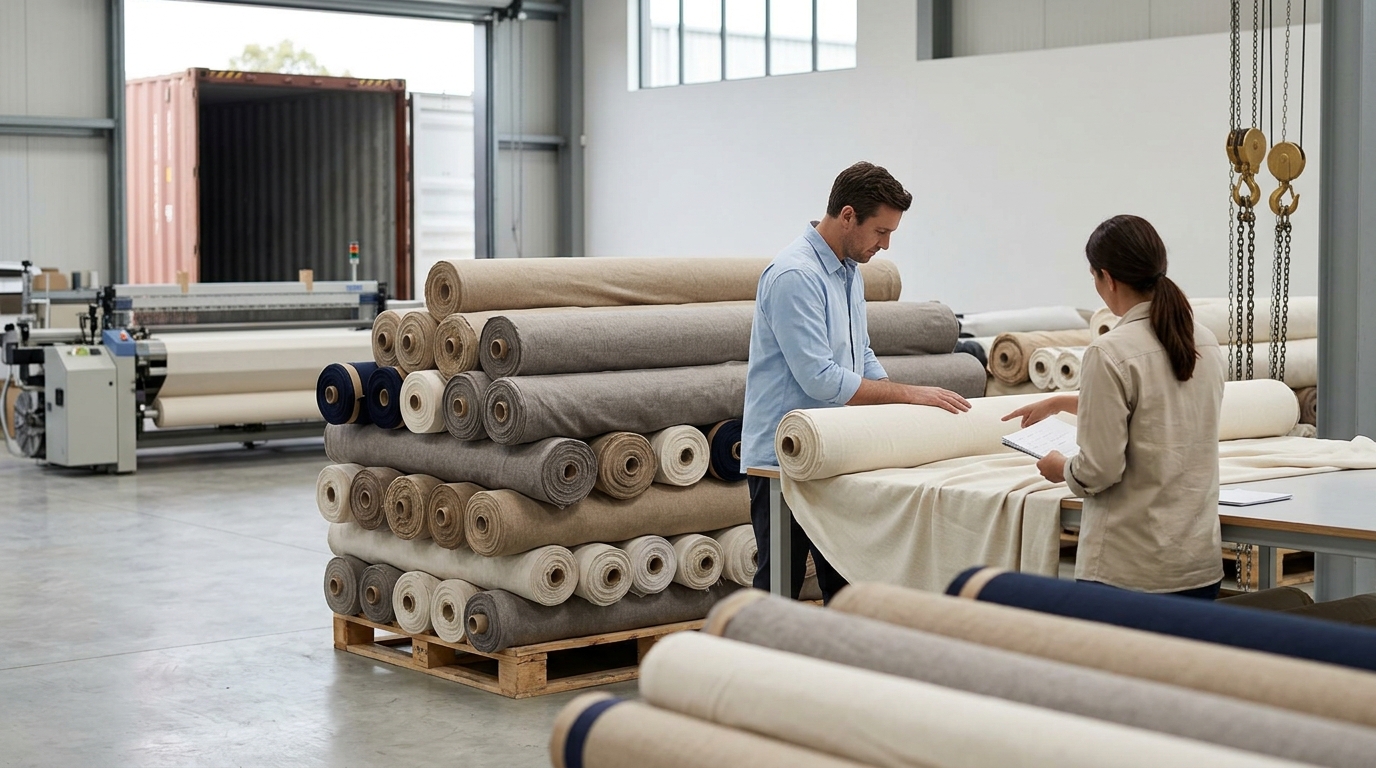
US apparel producers and fabric wholesalers face a specific sourcing decision: which Indonesian suppliers can reliably deliver rayon viscose fabric at container scale, with verified certifications and predictable quality? Indonesia has emerged as one of Asia's most strategically important viscose…
US apparel producers and fabric wholesalers face a specific sourcing decision: which Indonesian suppliers can reliably deliver rayon viscose fabric at container scale, with verified certifications and predictable quality? Indonesia has emerged as one of Asia's most strategically important viscose rayon producers — not simply because of low labor costs, but because of integrated supply chains that run from wood pulp to finished woven fabric.
This guide covers the full sourcing picture for US buyers. You will find manufacturer profiles, GSM specification tables, container logistics data, sustainability certification requirements, HTS tariff context, and a step-by-step supplier vetting checklist. Every section is built around B2B decision criteria, not general fabric education.
Indonesia's viscose sector is anchored by industrial-scale fiber production in Sumatra and supported by a network of mid-size weaving and finishing mills across Java. That combination — upstream fiber security plus downstream fabric conversion — makes Indonesia uniquely capable among rayon viscosefabric manufacturers. The sections below move from macro positioning through to supplier onboarding, so you can act on each layer of the decision.
Why Indonesia Ranks Among the World's Leading Viscose Rayon Producers
Feedstock Advantage and Fiber Output Scale
Indonesia holds a structural advantage in viscose production: abundant, fast-growing wood pulp feedstock. Acacia and eucalyptus plantations — concentrated in Riau Province, Sumatra — supply renewable cellulose at scale. This reduces input costs significantly compared to viscose producers dependent on imported pulp.
Asia Pacific Rayon (APR), located in Riau Province, is the anchor industrial player. APR operates one of the world's largest single-site viscose staple fibre (VSF) facilities, with a production capacity of approximately 240,000 tonnes per year (APR company data, publicly reported). That output places Indonesia among the top global VSF-producing nations alongside China and India.
> "APR's integrated pulp-to-fibre model in Riau Province positions Indonesia as one of the few countries where viscose staple fibre and the wood cellulose feedstock for it are produced on the same landmass."
Cost Structure and US Buyer Implications
Labor costs in Indonesian textile manufacturing remain competitive relative to comparable operations in China and India. For US importers, this translates to favorable FOB pricing on finished viscose woven fabrics — typically in ranges that support mid-market and mass-market apparel price points. Currency dynamics between the Indonesian Rupiah and the US Dollar have historically added additional pricing stability for USD-denominated buyers.
Indonesia's membership in trade frameworks also affects landed cost calculations. Indonesian viscose fabrics generally enter the US under HTS Chapter 54 (man-made filament) or Chapter 55 (man-made staple fibers), depending on yarn construction. Woven viscose staple fabrics commonly fall under HTS 5516 or 5512 subheadings. US buyers should confirm classification with a licensed customs broker, as duty rates vary by fiber blend and weave structure. Indonesia does not currently benefit from GSP-level duty elimination for textiles under standard US trade rules, so duty costs must be factored into landed cost models.
Major Rayon Viscose Fabric Manufacturers in Indonesia You Should Evaluate
Fiber Producers Versus Fabric-Level Suppliers
Understanding the supply chain layer matters before you approach any supplier. APR produces viscose staple fibre — the raw input — not finished fabric. US buyers cannot purchase woven fabric directly from APR. Instead, APR's VSF feeds Indonesian spinning mills, which in turn supply yarn to weaving mills.
Fabric-level suppliers operating in Indonesia include:
- Filamenindo Lestari Textile — a Java-based mill with weaving and finishing capabilities, including viscose wovens for apparel export - Loka Crafta — a supplier active in viscose and rayonfabric wholesale, serving international buyers including those sourcing from platforms like Fabriclore - Alibaba-listed Indonesian mills — numerous mid-size exporters list on Alibaba under categories including "viscose fabric wholesale Indonesia" and "rayon fabric suppliers Indonesia"; these require careful verification (see the vetting section below)
Vertically Integrated Mills Versus Assembly Specialists
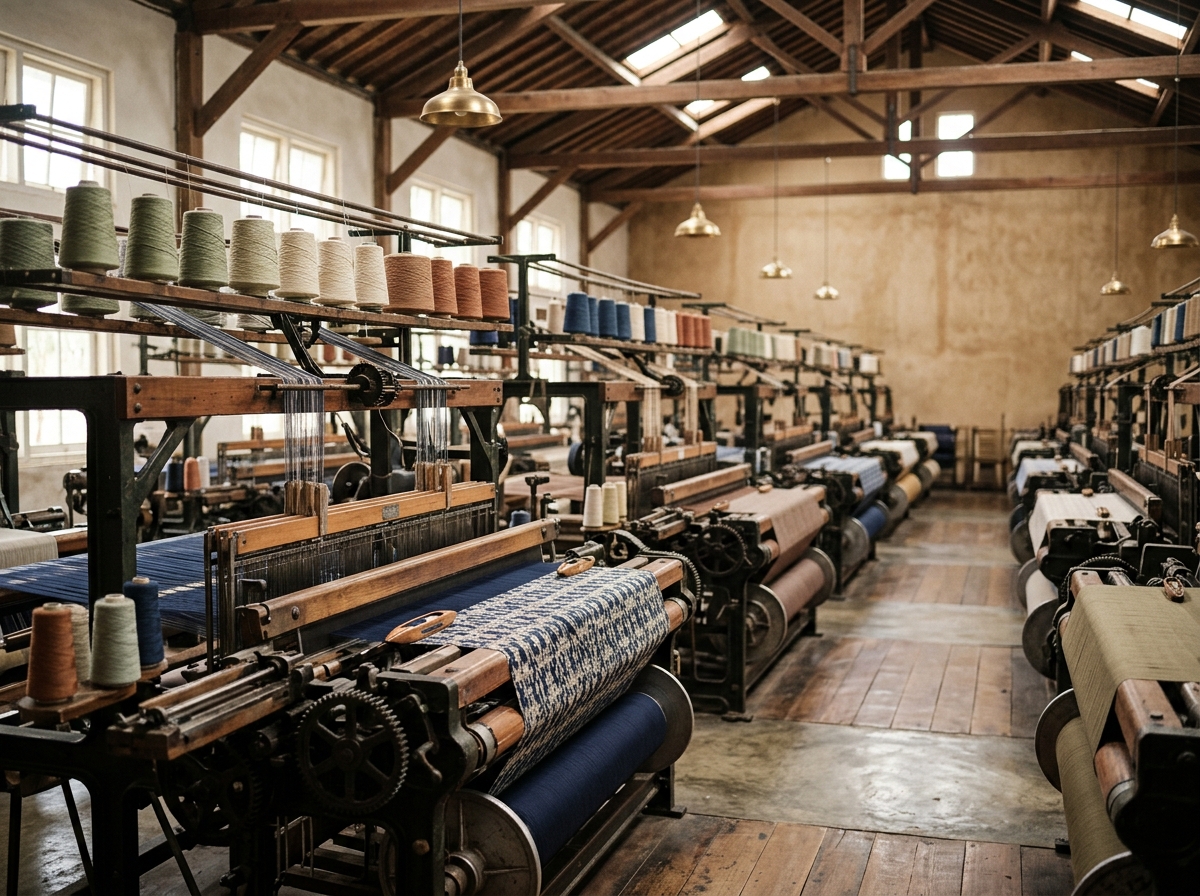
Vertically integrated mills handle spinning, weaving, dyeing, and finishing under one roof. These suppliers offer tighter quality control, faster sampling, and lower per-unit cost at volume. They also carry stronger compliance documentation.
Assembly-only or cut-and-sew specialists purchase greige fabric externally and add value through dyeing and finishing. They offer more flexibility on minimums but less control over fiber origin and greige quality.
For US buyers prioritizing traceability and certification, vertically integrated mills are the lower-risk choice. They can provide chain-of-custody documentation from fiber through finished fabric — a requirement for OEKO-TEX and FSC-certified sourcing.
How to Verify Manufacturer Credentials Before Engaging
Do not rely solely on Alibaba Gold Supplier status or self-reported certifications. Minimum verification steps:
1. Request the factory's business license (SIUP/NIB in Indonesia) 2. Confirm physical factory address and cross-check against Google Maps satellite view 3. Request ISO 9001 or OEKO-TEX certificates with certificate number for independent verification 4. Ask for a recent third-party lab test report (OEKO-TEX, SGS, Bureau Veritas, or Intertek) 5. Request a video walkthrough of the production floor before committing to samples
Fiber-to-Fabric Integration: How Indonesian Mills Build Quality Into the Supply Chain
From Pulp to Finished Fabric
Full-cycle integration in Indonesian viscose manufacturing typically spans: plantation pulp → dissolving pulp → VSF spinning → yarn spinning → weaving or knitting → dyeing → finishing → quality inspection → export.
Not all mills operate every stage. The most capable Indonesian rayon viscose fabric manufacturers control at minimum the yarn-to-finished-fabric stages. Buyers sourcing from mills with in-house dyeing and finishing gain tighter colorfastness control and more consistent hand feel across production runs.
Print, Dye, and Finishing Capabilities
Indonesian mills serving US buyers commonly offer:
- Reactive dyeing — the standard for solid-color viscose with good wash fastness - Screen printing — cost-effective for repeat pattern runs above approximately 1,000 meters - Digital printing — available at select mills for short runs and complex prints; adds cost per meter - Calendering and softening finishes — standard on drapey apparel-grade viscose - Pre-shrinking treatments — critical for viscose, which has inherent shrinkage sensitivity
Customization options available from established Indonesian exporters include fabric weight (GSM), weave structure (plain, twill, satin weave), yarn count, and finish type. Buyers should specify these at the RFQ stage with full technical packs to avoid misaligned samples.
Key Quality Specifications US Buyers Must Evaluate Before Placing Orders
GSM Ranges, End-Use Mapping, and Shrinkage Standards
The table below covers typical GSM ranges available from Indonesian viscose rayon fabric manufacturers, mapped to apparel and home textile end uses.
| GSM Range | Common End Uses | Typical Weave | Notes |
|---|---|---|---|
| 80–100 GSM | Scarves, linings, lightweight blouses | Plain weave | High drape; shrinkage management critical |
| 100–130 GSM | Dresses, resort wear, modest fashion tops | Plain / twill | Most common apparel export weight |
| 130–160 GSM | Shirts, wide-leg trousers, fluid skirts | Twill / satin | Good body with drape |
| 160–180 GSM | Structured dresses, palazzo pants | Twill | Heavier hand; less transparent |
| 180–200 GSM | Soft blazers, home textile uses, linings | Satin / plain | Approaches mid-weight territory |
Shrinkage is viscose's most important handling variable. Indonesian exporters supplying US buyers typically pre-treat fabric to target residual shrinkage below 3–5% (warp and weft combined). Buyers should request pre-shipment lab reports confirming shrinkage performance to AATCC 135 (home laundering) or ISO 6330 standards.
Testing Standards and US Compliance Context
US apparel importers should require fabric test reports covering:
- Colorfastness to washing: AATCC 61 or ISO 105-C06, minimum Grade 3–4 - Colorfastness to rubbing: AATCC 8, minimum Grade 3 dry / Grade 2–3 wet - Tensile strength: ASTM D5034 (grab method), relevant for apparel end use - Pilling resistance: ASTM D3512 or ISO 12945-2 - Formaldehyde content: Oeko-Tex Standard 100 limits; CPSC guidelines apply for children's apparel under 16 CFR regulations
Sustainability Certifications That Responsible US Buyers Should Require
STeP by OEKO-TEX: Factory-Level Compliance
STeP by OEKO-TEX (Sustainable Textile and Leather Production) certifies entire production facilities — not just individual products. It covers chemical management, environmental performance, social responsibility, and quality management.
Asia Pacific Rayon became the first viscose staple fibre producer in Indonesia to achieve STeP certification. This makes APR-sourced VSF a traceable, third-party-verified input for mills building OEKO-TEX supply chains. US buyers who specify OEKO-TEX supply chain compliance should ask Indonesian fabric suppliers whether their VSF input comes from APR or another STeP-certified source.
OEKO-TEX STANDARD 100 for Finished Fabric
OEKO-TEX STANDARD 100 certifies that every component of a finished fabric — fiber, yarn, dye, finish — has been tested for harmful substances. Certificate numbers are publicly verifiable on the OEKO-TEX database.
For US buyers, OEKO-TEX STANDARD 100 on finished viscose fabric provides a defensible compliance position for CPSC substance requirements and retail partner sustainability audits. Require the certificate number and verify it directly.
FSC and PEFC for Wood Pulp Traceability
Viscose is a wood-derived fiber. FSC (Forest Stewardship Council) and PEFC (Programme for the Endorsement of Forest Certification) chain-of-custody certifications verify that the wood pulp used in VSF production originated from responsibly managed forests.
APR holds FSC certification for its plantation-sourced pulp operations in Riau Province. For US buyers subject to EU Due Diligence regulation compliance (relevant if also selling into European markets) or Walmart/Target sustainability requirements, FSC-certified viscose sourcing from Indonesia is achievable today.
| Certification | Scope | Verified By | US Market Relevance |
|---|---|---|---|
| STeP by OEKO-TEX | Production facility processes | OEKO-TEX | Retail sustainability audits |
| OEKO-TEX STANDARD 100 | Finished fabric safety | OEKO-TEX | CPSC compliance support |
| FSC Chain of Custody | Wood pulp origin | FSC International | EU/retail deforestation policy |
| PEFC Chain of Custody | Wood pulp origin | PEFC International | Alternative to FSC; equivalent scope |
| ISO 9001 | Quality management system | ISO-accredited body | Factory audit baseline |
MOQs, Container Logistics, and FOB Pricing for Indonesian Viscose Fabric
Minimum Order Quantities by Supplier Type
MOQ expectations differ significantly by supplier type:
- Large integrated mills (APR fiber downstream): MOQ typically 3,000–5,000 meters per colorway for custom dye; 1,000–2,000 meters for in-stock colors (approximate; confirm per mill) - Mid-size export-oriented factories: MOQ commonly 500–2,000 meters per colorway - Trading companies / Alibaba-listed exporters: MOQ can be as low as 100–300 meters, but prices are higher and traceability lower
For container-level orders, mills generally expect total order volumes of 10,000 meters or more per shipment to optimize per-meter FOB pricing.
Container Capacity Estimates for Rolled Viscose Fabric
| Container Type | Approximate Capacity (rolled fabric) | Suitable For |
|---|---|---|
| 20-foot (20FCL) | Approximately 15,000–20,000 meters (varies by GSM and roll width) | Single-SKU large orders |
| 40-foot (40FCL) | Approximately 30,000–40,000 meters | Multi-colorway or multi-SKU orders |
| 40-foot High Cube | Approximately 35,000–45,000 meters | Preferred for tall roll pallets |
Note: Actual capacity varies by fabric weight (GSM), roll diameter, and packing method. Request packing list estimates from your supplier at the RFQ stage.
FOB Pricing Context and Lead Times
FOB Surabaya and FOB Jakarta are the primary export points for Indonesian textile shipments. Surabaya (East Java) serves mills concentrated in the Java interior textile belt. Jakarta (Tanjung Priok port) serves West Java mills and broader consolidation.
Approximate FOB price ranges for standard viscose woven fabrics (plain weave, solid color, 110–130 GSM):
- Mid-tier mill, reactive dyed, OEKO-TEX certified: approximately USD 1.80–2.80 per meter (indicative; actual pricing depends on GSM, order volume, and finishing) - Trading company / re-export: typically higher per meter with less traceability
Lead times from order confirmation to FOB port:
- In-stock greige with dye-to-order: approximately 30–45 days - Full custom production (weave + dye + finish): approximately 60–90 days - Peak season (pre-Q4) may add 2–3 weeks
How to Vet and Onboard an Indonesian Rayon Viscose Supplier Properly
Required Documentation Checklist
- ✓Business registration certificate (SIUP or NIB, Indonesia)
- ✓Factory address verification (satellite cross-check)
- ✓ISO 9001 certificate with certificate number
- ✓OEKO-TEX STANDARD 100 certificate (verify at oeko-tex.com)
- ✓STeP by OEKO-TEX certificate if claiming facility compliance
- ✓FSC or PEFC chain-of-custody certificate if claiming sustainable pulp
- ✓Third-party lab test reports within 12 months (SGS, Intertek, or Bureau Veritas)
- ✓SMETA audit report (2-pillar or 4-pillar) for social compliance
- ✓Export license and customs registration number
- ✓Sample order with full lab test before bulk order commitment
Red Flags on B2B Platforms
Watch for these warning signals when evaluating Indonesian viscose suppliers on Alibaba or similar platforms:
- Certificate images with no verifiable certificate number - FOB prices significantly below market range (often indicates trading company misrepresentation) - No physical factory address or only a city-level location - Response templates that avoid specific questions about production capacity or lead times - Inability to produce a video walkthrough of the weaving floor
Audit Standards for Factory Compliance
SMETA (Sedex Members Ethical Trade Audit) is the most widely accepted social compliance audit for US retail supply chains. Request a SMETA 2-pillar or 4-pillar audit report dated within 24 months.
ISO 9001 quality management certification signals documented process controls — it does not guarantee product quality, but it indicates the factory operates systematic QC procedures. For Indonesian viscose fabric manufacturers supplying US buyers, ISO 9001 plus OEKO-TEX STANDARD 100 on fabric is a workable minimum compliance baseline.
End Uses and Apparel Applications Where Indonesian Viscose Performs Best
Apparel Categories Driving Export Demand
Indonesian viscose rayon fabric is well-matched to drape-dependent apparel categories. The most active export segments include:
- Womenswear: dresses, blouses, wide-leg trousers, fluid skirts - Modest fashion and abayas: mid-weight viscose (130–160 GSM) with good opacity - Resort and vacation wear: lightweight printed viscose (100–120 GSM), often digitally or screen printed - Activewear linings and inner layers: lightweight plain weave viscose for moisture comfort
International apparel brands with active Indonesian manufacturing relationships include names across fast fashion, contemporary women's, and resort categories. Indonesia's established garment export infrastructure — especially in Java — means viscose fabric sourcing can integrate directly into apparel CMT (cut, make, trim) production in the same country, reducing logistics complexity.
Blended Fabrics and Their Trade-Offs
Indonesian mills also produce blended rayon viscose fabrics. Common blends available from Indonesian viscose rayon fabric manufacturers:
| Blend | Benefit | Trade-Off | Typical End Use |
|---|---|---|---|
| Viscose / Polyester (65/35) | Lower cost, better dimensional stability | Reduced breathability, less eco narrative | Linings, budget womenswear |
| Viscose / Cotton (50/50) | Improved strength, natural fiber story | Heavier hand, higher cost than pure viscose | Casual shirts, home textiles |
| Viscose / Linen (55/45) | Natural texture, premium positioning | Shorter supply, more wrinkling | Resort and luxury casual wear |
| Viscose / Elastane (95/5) | Stretch and recovery | Adds complexity to OEKO-TEX certification | Jersey dresses, comfort wear |
Home Textiles and Non-Apparel Uses
Beyond apparel, Indonesian viscose fabric is used in:
- Lightweight curtain sheers and drapery linings - Bedding components (pillowcases, duvet covers in viscose-cotton blends) - Soft furnishing linings in hospitality projects
Frequently Asked Questions: Sourcing Viscose Rayon Fabric From Indonesia
Where is viscose rayon made, and why is Indonesia a key source? Viscose rayon is produced globally, with China and India as the largest producing nations. Indonesia ranks among the top producers due to APR's large-scale VSF facility in Riau Province, Sumatra, which benefits from integrated pulp and fiber production on-site.
Who is the largest producer of rayon in the world? China accounts for the largest share of global viscose staple fibre production, followed by India. Indonesia, through APR's operations, is a significant producer with one of the world's largest single-site facilities.
What is viscose rayon fabric called in trade and retail contexts? In trade and retail, this fiber is sold interchangeably as viscose, rayon, viscose rayon, or art silk. In US retail labeling, the FTC requires the term "rayon" on care labels. Technically, viscose and rayon refer to the same cellulosic regenerated fiber produced via the viscose process.
Which global clothing brands manufacture in Indonesia? Indonesia's garment and fabric export sector supplies a broad range of international brands across fast fashion, contemporary, and outdoor categories. Due to NDAs and confidentiality norms, specific brand-factory relationships are not publicly confirmed, but Indonesia consistently ranks among the top five apparel export countries to the United States by volume.
What sustainability certifications should I require from Indonesian viscose suppliers? At minimum: OEKO-TEX STANDARD 100 on finished fabric, ISO 9001 for the factory QMS, and SMETA social compliance audit. For supply chain traceability: STeP by OEKO-TEX at the fiber or mill level, and FSC or PEFC chain-of-custody for pulp origin.
What are typical MOQ and container quantities for bulk viscose fabric from Indonesia? Mid-size mills typically require 500–2,000 meters per colorway MOQ. A 40-foot container holds approximately 30,000–40,000 meters of rolled viscose fabric, depending on GSM and roll size. Full-container orders are where FOB pricing becomes most competitive.
Indonesia's combination of industrial-scale VSF production, vertically integrated mill capabilities, and internationally recognized sustainability certifications makes it a credible and competitive source for US buyers requiring both price efficiency and supply chain defensibility. The key is supplier-level due diligence: certifications, audits, and sample testing before any bulk commitment.
You now have the specification benchmarks, logistics parameters, and vetting criteria to move from evaluation to engagement with confidence.
You have the data to evaluate Indonesian rayon viscose fabric suppliers on specification, certification, and logistics terms. The natural next step is getting physical samples against your GSM and colorway requirements, alongside a container-level FOB quote from verified manufacturers. Request a fabric sample pack and wholesale quote from verified Indonesian rayon viscose manufacturers today.
Request Sample Pack and Quote →Need eyes on the ground in Indonesia?
MTS is an execution partner — supplier verification, manufacturing management, quality control and export logistics across Indonesia, Vietnam and China.
Receive furniture sourcing insights across Asia.
One email per week. No spam.