Indonesia Textile Manufacturers Sourcing Guide for US Fabric Importers
14 min read
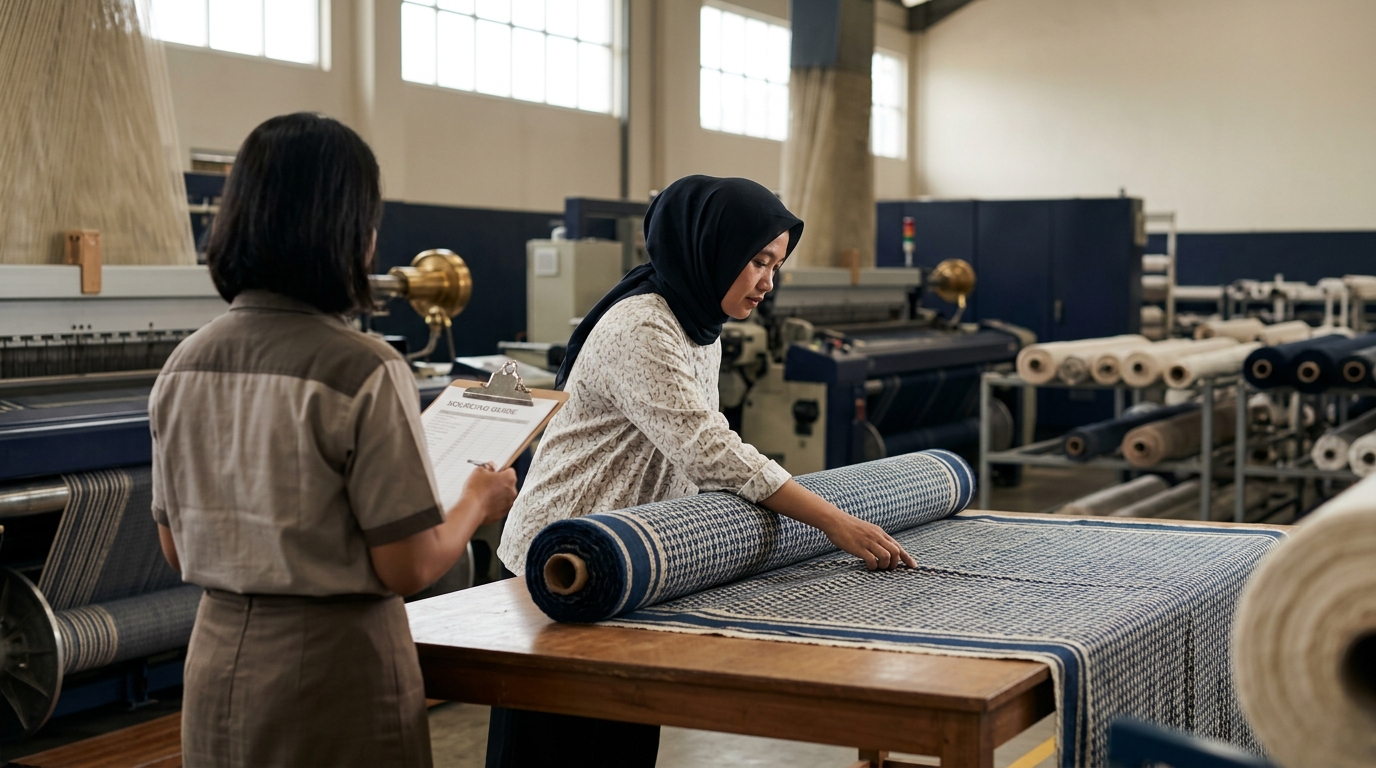
US fabric importers face a real decision: continue concentrating supply in China, or build a diversified sourcing base that can absorb tariff shocks and shipping disruptions. Indonesia has earned its place as a credible alternative. The country's textile and apparel export industry generates…
US fabric importers face a real decision: continue concentrating supply in China, or build a diversified sourcing base that can absorb tariff shocks and shipping disruptions. Indonesia has earned its place as a credible alternative. The country's textile and apparel export industry generates approximately USD 9 billion annually, placing it behind Vietnam and Bangladesh in Asia's export hierarchy but well ahead of most other emerging alternatives.
This indonesia textile manufacturers sourcing guide covers everything a US importer needs to make a confident sourcing decision. You will find geographic cluster breakdowns, product category capabilities, verified supplier identification methods, MOQ and lead time benchmarks, US customs compliance requirements including UFLPA, and a step-by-step procurement workflow. The guide is built for sourcing managers and brand owners evaluating Indonesia for the first time, or deepening an existing relationship with Indonesian mills.
Indonesia's labor cost advantage over China remains meaningful, and the country benefits from a generally favorable trade posture with the United States. Unlike Bangladesh, which concentrates heavily in ready-made garments, Indonesia's textile sector spans raw fiber, yarn, woven fabric, knitted fabric, and finished apparel — making it viable for importers who need fabric, not just finished goods. That structural depth is the sourcing thesis.
Why Indonesia Is a Serious Textile Sourcing Alternative to China
The Export Scale Argument
Indonesia's textile and apparel sector is not emerging — it is established. The approximately USD 9 billion annual export figure reflects decades of mill investment, not a recent pivot. Compare that to Vietnam, which has surpassed Indonesia in total garment exports but remains more dependent on cut-and-sew assembly using imported fabric. Bangladesh dominates ready-made garments but lacks Indonesia's upstream fiber and yarn spinning depth. For US importers sourcing fabric — not finished garments — Indonesia's full-stack production capability is a structural advantage.
The United States is a consistent top-three destination for Indonesian textile exports. That trade relationship means Indonesian mills understand US quality expectations, documentation requirements, and buyer behavior.
The Diversification Case for US Importers
Section 301 tariffs on Chinese textile imports remain in effect, with many fabric categories carrying additional duty burdens. US importers who concentrated supply in China from approximately 2015 to 2020 absorbed significant cost increases. Indonesia is not subject to those tariffs. While the US-Indonesia trade relationship does not include a comprehensive free trade agreement, Indonesian goods have historically benefited from Generalized System of Preferences (GSP) provisions where applicable. Importers should verify current GSP status for specific HTS codes, as program renewals affect eligibility.
Beyond tariff math, supply chain concentration risk is a strategic issue. A single-country sourcing model creates exposure to port congestion, factory shutdowns, and geopolitical friction. Indonesian mills offer geographic diversification with the added benefit of established export infrastructure through major ports including Tanjung Priok (Jakarta) and Tanjung Emas (Semarang).
Indonesia Textile Industry Scale, Key Players, and Market Structure
Indonesia's textile industry is vertically integrated in a way that is rare among developing-economy suppliers. A single supply chain can move from raw cotton or polyester chips through yarn spinning, weaving or knitting, dyeing and finishing, and into finished fabric — all within Java. That integration compresses lead times and reduces cross-border component risk.
Major industry segments:
- Synthetic fiber and filament yarn (polyester, rayon, nylon) - Spun cotton and blended yarn - Woven fabrics: shirting, denim, twill, canvas - Knitted fabrics: jersey, interlock, performance knits - Batik and traditional printed textiles - Home textiles: bed linen, towels, upholstery fabric
Named anchor companies in the sector include:
- PT Sri Rejeki Isman (Sritex) — Central Java-based, one of Southeast Asia's largest integrated textile manufacturers. Produced for military and commercial clients globally before entering financial restructuring. Its scale illustrates what Indonesian mills can achieve in volume. - Indo-Rama Synthetics — a major polyester fiber and yarn producer with significant spinning capacity. - PT Asia Pacific Fibers — produces polyester filament yarn and partially oriented yarn (POY) at industrial scale.
These anchor players anchor a broader ecosystem of mid-size and smaller mills. Most US importers will source from mid-tier mills with 100–500 workers rather than from the largest conglomerates, which typically require very high minimum volumes or operate under long-term contracts.
Geographic Mill Clusters: Where Indonesian Textile Production Actually Lives
Bandung and West Java: The Historic Woven Fabric Hub
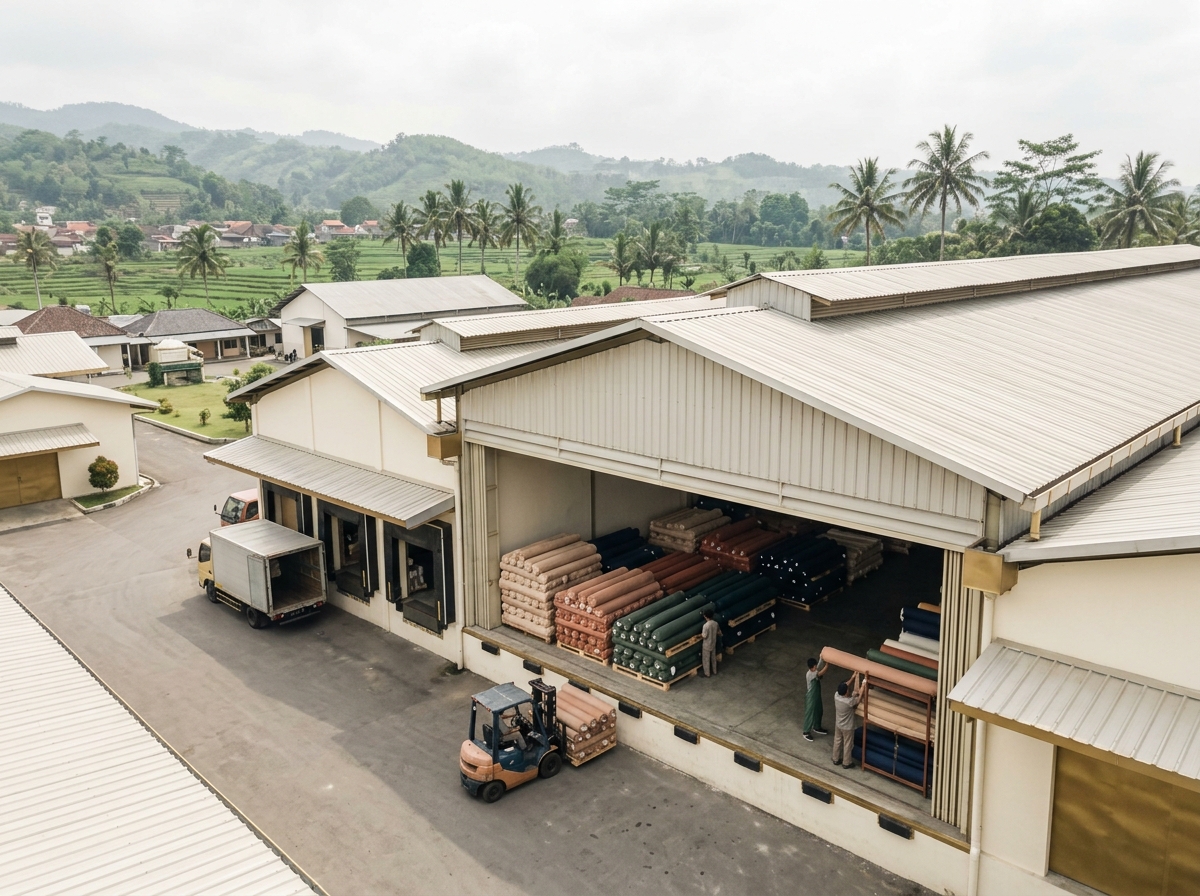
Bandung is Indonesia's most recognized garment and textile city. West Java province concentrates a high density of woven fabric mills, shirting producers, and dyeing and finishing operations. The city's elevation and cooler climate historically supported textile production. Today, Bandung-area mills specialize in shirting fabrics, poplin, twill, and lightweight wovens. Many private label manufacturers and smaller fashion-oriented mills operate here, with greater flexibility on MOQ than the large Central Java operations.
Central Java: Large-Scale Knit and Denim Production
The Solo-Semarang corridor in Central Java is home to high-volume knitting and denim manufacturing. This is where PT Sri Rejeki Isman (Sritex) built its integrated complex. Mills in this corridor typically run large-scale circular knitting machines, shuttle-less looms for denim and canvas, and continuous dyeing ranges. Minimum order quantities here tend to be higher, and production planning cycles are longer — suited to importers placing regular, volume-driven orders.
Greater Jakarta Industrial Zones and East Java
Greater Jakarta's industrial zones (Karawang, Bekasi, Tangerang) house synthetic fiber producers, technical textile mills, and finishing operations. This is where Indo-Rama Synthetics and PT Asia Pacific Fibers operate. Surabaya and East Java offer additional mid-market manufacturing capacity and are worth including in a supplier shortlist for importers seeking alternative sourcing nodes outside the West Java concentration.
Bali: Boutique and Creative Production
Bali supports a smaller creative manufacturing corridor. Mills and workshops here cater to lower-volume, design-driven buyers. MOQs are typically more flexible, and natural fiber and artisan textile capabilities are stronger. It is not suited for commodity fabric programs but works for premium or sustainable product lines.
Full Product Range: From Raw Yarn to Finished Fabric Categories
| Fabric Category | Key Mills Region | Typical MOQ | Lead Time (Production) | Common Certifications |
|---|---|---|---|---|
| Cotton shirting / poplin | Bandung, West Java | 500–1,500 m | 45–60 days | OEKO-TEX, GOTS |
| Denim (indigo, stretch) | Central Java | 1,000–3,000 m | 60–90 days | OEKO-TEX |
| Single jersey / interlock | Central Java | 500–2,000 kg | 45–75 days | OEKO-TEX, Bluesign |
| French terry / fleece | Central Java | 1,000–2,500 kg | 60–90 days | OEKO-TEX |
| Polyester filament woven | Greater Jakarta | 1,000–3,000 m | 45–75 days | OEKO-TEX |
| Batik / traditional print | Bandung, Solo | 300–1,000 m | 30–60 days | Varies |
| Sustainable (GOTS organic cotton) | West Java, select mills | 500–2,000 m | 60–90 days | GOTS, OEKO-TEX |
| Recycled polyester | Central Java, Jakarta | 1,000–3,000 m | 60–90 days | GRS, Bluesign |
Sustainable fabric options have expanded significantly. Mills working with GOTS-certified organic cotton, Lenzing ECOVERO viscose, and recycled polyester (GRS-certified) now operate in Indonesia. These options align with US brand ESG commitments and are increasingly required by retail buyers.
How to Identify and Verify Reliable Indonesian Textile Manufacturers
Finding Mill Candidates
Start with structured sourcing channels:
- Indo Intertex — Indonesia's largest textile trade show, held in Jakarta. Direct mill contact and product sampling in one visit. - Inatex — focused on yarn and fabric, useful for upstream material sourcing. - Texworld (New York and Paris) — Indonesian mills with export capability regularly exhibit here. - Made-in-Indonesia.com and OTEXA databases — useful for initial candidate identification. - Textile Exchange member directories — mills pursuing sustainable fiber standards often list here.
Verifying Export-Readiness
Request the following before engaging any mill:
- Export history: ask for a list of destination countries and approximate annual export volume - Compliance certificates: ISO 9001, OEKO-TEX 100, GOTS, or BSCI audit reports - Factory registration: NIB (Business Identification Number) and export license - Bank reference or trade reference from an existing international buyer
Red flags to reject immediately:
- No verifiable physical address or Google Street View presence for the factory - Refusal to provide any third-party audit documentation - Price quotes significantly below market benchmarks (signals a trader, not a mill) - No sample production capability or sample lead time longer than six weeks
- ✓Confirm physical factory address via satellite or third-party visit
- ✓Request OEKO-TEX or GOTS certificate with validity date
- ✓Obtain at least two international buyer references
- ✓Review export documentation samples (Bill of Lading copies)
- ✓Verify NIB registration number on Indonesia's OSS system
- ✓Request last factory audit report (SMETA, BSCI, or equivalent)
MOQ, Lead Time, and Pricing Benchmarks for Indonesian Textile Orders
Lead Time Structure
- Sample (lab dip or strike-off): 2–4 weeks from approved spec - Bulk production: 45–90 days from approved sample and deposit receipt - Port to US West Coast (sea freight): approximately 18–25 days from Tanjung Priok - Port to US East Coast: approximately 25–35 days
Total cycle from order placement to US port arrival: typically 70–120 days for a first order. Repeat orders with approved samples on file compress this to 60– approximately 90 days.
Pricing Dynamics
FOB pricing from Tanjung Priok (Jakarta) and Tanjung Emas (Semarang) varies by fabric construction, fiber content, and order volume. General benchmarks (indicative ranges only):
- Basic cotton shirting: approximately USD 1.80–3.50 per meter FOB - Stretch denim: approximately USD 3.50–6.00 per meter FOB - Single jersey knit: approximately USD 2.00–4.50 per kilogram FOB - Recycled polyester woven: approximately USD 2.50–5.00 per meter FOB
Volume breaks typically activate at 3,000–5,000 meters or kilograms per colorway. Print run economics for digital or rotary printing depend on repeat complexity and run length. Dyeing minimums per shade are often 300–500 meters for batch dyeing.
Export Documentation, Customs, and Compliance for US Textile Imports
Required Export Documents
Every Indonesian textile shipment to the United States requires:
- Commercial invoice (with HTS code, country of origin, unit price, total value) - Packing list - Bill of Lading (ocean) or Air Waybill - Certificate of Origin (Form A for GSP claims where eligible, or standard CO) - Any applicable certification documents (GOTS, OEKO-TEX, etc.)
HTS Classification and Duty Rates
Textile HTS codes fall primarily in Chapters 50–63. Duty rates vary by fiber content and fabric construction — woven cotton fabrics (Chapter 52) and knitted fabrics (Chapter 60) carry different rates. US Customs and Border Protection (CBP) HTS lookup tools allow importers to verify applicable rates. Indonesia is not subject to Section 301 tariffs, which is a meaningful cost advantage over Chinese-origin goods.
UFLPA Compliance: The Critical US Requirement Most Guides Ignore
The Uyghur Forced Labor Prevention Act (UFLPA), enforced by CBP, creates a rebuttable presumption that goods produced in whole or in part with inputs from the Xinjiang Uyghur Autonomous Region are made with forced labor. While Indonesia is not Xinjiang, US importers must trace the fiber and yarn inputs used by Indonesian mills.
Why this matters for Indonesia sourcing:
Some Indonesian mills source cotton yarn or raw cotton from supply chains that may pass through China. If Xinjiang-origin cotton enters an Indonesian mill's supply chain, the finished fabric is potentially subject to UFLPA detention at US ports.
What to require from Indonesian mills:
- Fiber sourcing declaration: country of origin for raw cotton, polyester chips, or other fiber inputs - Supply chain map from fiber to finished fabric - Preference for mills using certified US cotton, Australian cotton, Brazilian cotton, or GOTS-certified organic cotton with traceable origin - Recycled polyester mills should provide GRS certificates covering the recycled input source
How a Textile Sourcing Partner De-Risks Your Indonesian Orders
What an In-Country Partner Does
An in-country sourcing agent or operational partner performs functions that remote buyers cannot replicate:
- Factory vetting: physical visits, production line assessment, worker headcount verification - Sample management: communicating technical specs in Bahasa Indonesia, managing lab dip approvals - Pre-shipment inspection: AQL 2.5 sampling for fabric defects, shade variation, dimensional stability - Document preparation: ensuring Certificate of Origin, packing list, and invoice align with CBP requirements
Payment Risk Management
Standard payment structures for Indonesian textile orders:
| Stage | Typical Structure |
|---|---|
| Sample order | 100% advance payment |
| First bulk order | 30–50% deposit, balance against Bill of Lading copy |
| Repeat orders (established relationship) | 30% deposit, net 30–60 days |
| Letter of Credit | Available for orders above approximately USD 50,000 |
Avoid approximately 100% advance payment on bulk orders with unverified mills. Escrow services exist but are rarely used in textile trade; a sight LC is the strongest risk mitigation tool for first large orders.
Contract Clauses Specific to Textile Orders
Standard purchase orders should include:
- Shade variation tolerance: typically Delta E ≤ 1.0 against approved standard - Shrinkage tolerance: specify maximum acceptable shrinkage after washing (e.g., ≤3% warp and weft) - Width tolerance: ±1 cm from specified finished width - Delivery penalty clause: percentage deduction per week of delay beyond agreed shipment date - Rejection and replacement terms: procedure for defective rolls discovered post-delivery
Sustainable and Ethical Sourcing in Indonesian Textile Mills
Indonesia's government has published sustainability roadmaps for the textile sector, targeting reduced water consumption and chemical discharge. In practice, progress varies significantly by mill. US brand owners with ESG commitments should focus on verifiable mill-level certifications rather than national policy statements.
Certifications to prioritize:
- Higg Facility Environmental Module (FEM): measures water, energy, and chemical use at mill level - ZDHC Wastewater Guidelines: mills achieving ZDHC compliance demonstrate controlled chemical discharge — increasingly required by European and US retail buyers - OEKO-TEX STANDARD 100: tests finished fabric for harmful substances - GOTS: covers organic fiber content and social criteria through the supply chain - Bluesign: system-level chemical and resource management certification
Fair labor context in Javanese factory zones is complex. Indonesia has active labor unions and a national minimum wage system that adjusts annually by province. Serikat Pekerja union activity is present in larger Javanese mills. US buyers pursuing ethical sourcing should request SMETA (Sedex Members Ethical Trade Audit) or BSCI audit reports rather than relying on mill self-declaration.
Step-by-Step Procurement Workflow for First-Time Indonesia Textile Buyers
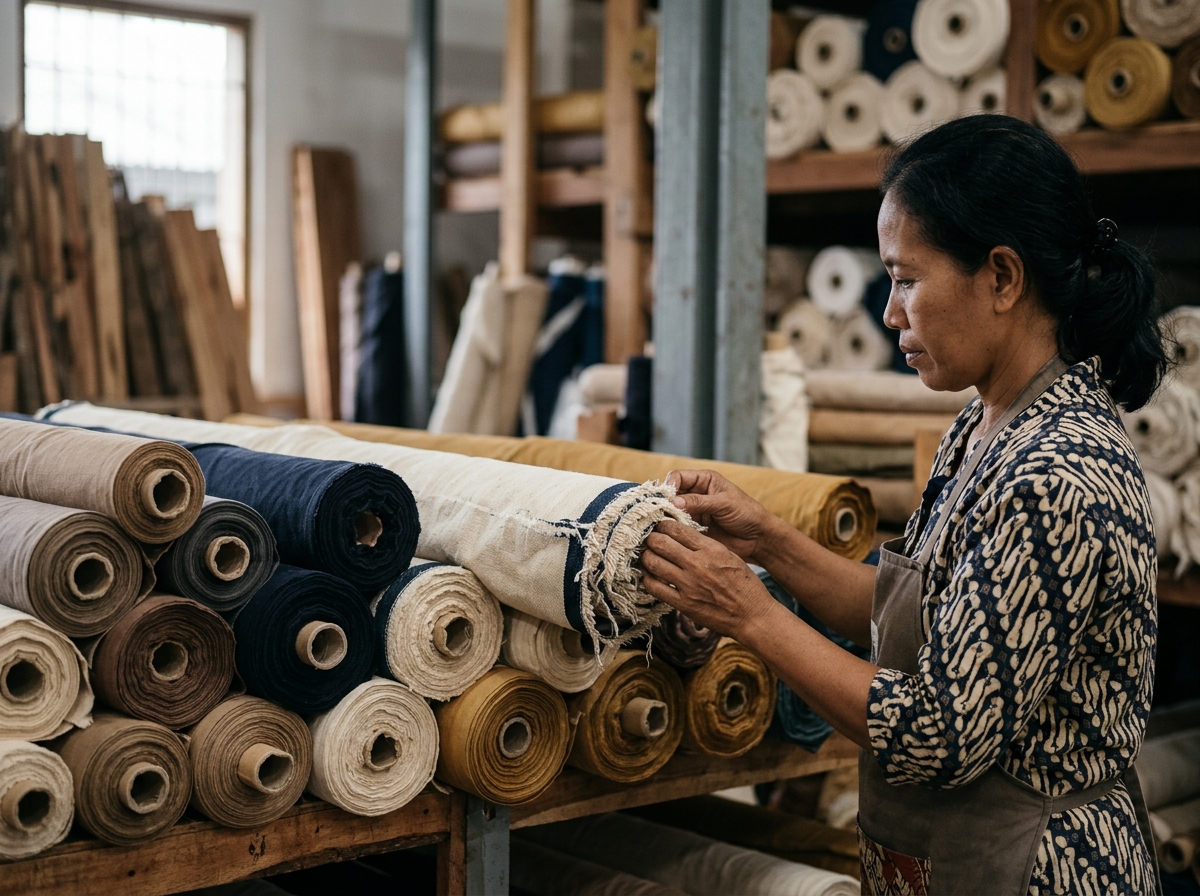
Step 1 — Define your specifications before outreach. Document: fiber content, fabric construction, finished width, weight (GSM), color requirements, required certifications, target FOB price, and annual volume. Without this, mill conversations are unproductive.
Step 2 — Shortlist and qualify mills. Use Indo Intertex exhibitor lists, trade directories, and referrals. Contact five to eight mills. Request capability profiles, export references, and existing certification documents. Eliminate any mill that cannot provide third-party audit documentation.
Step 3 — Order and evaluate samples. Request lab dips (for solid colors) or strike-off samples (for prints). Evaluate against your approved standard for shade, hand feel, weight, and dimensional stability. Allow two to four weeks for this stage.
Step 4 — Negotiate and execute the purchase order. Agree on MOQ, unit price, Incoterms (FOB is standard), payment terms, and delivery schedule. Include the contract clauses outlined above. Sign a purchase order — not just an email confirmation.
Step 5 — Manage production and shipment. Arrange a pre-shipment inspection (PSI) through an independent quality firm when goods are 80–100% complete. Review PSI report before authorizing final payment or balance wire. Book freight with your forwarder from Tanjung Priok or Tanjung Emas. Prepare customs entry documentation with your US customs broker, including fiber origin declarations for UFLPA compliance.
Frequently Asked Questions About Indonesian Textile Sourcing
What is a textile company, and how do Indonesian mills differ from garment factories? A textile company produces fabric — yarn, woven cloth, or knitted material — as its primary output. A garment factory cuts and sews fabric into finished clothing. Indonesian mills are primarily textile producers; some are vertically integrated and produce both fabric and finished garments, but many sell fabric only. US importers sourcing fabric should target mills, not CMT (cut-make-trim) garment operations.
What are the minimum order quantities for Indonesian fabric manufacturers? MOQs range from approximately 300 meters for batik and specialty fabrics to 3,000 meters for commodity wovens or knits from larger mills. MOQ per colorway is often the binding constraint, not MOQ per style. See the product table above for category-specific benchmarks.
How long does it take to import textiles from Indonesia to the United States? Production lead time is 45–90 days from approved sample. Ocean freight from Tanjung Priok to US West Coast ports is approximately 18–25 days. Total cycle from order to US port arrival is typically 70–120 days.
What certifications should I require from an Indonesian textile supplier? At minimum: OEKO-TEX STANDARD 100 for finished fabric safety. For sustainable products: GOTS or GRS. For factory process: ISO 9001 or BSCI. For environmental compliance: Higg FEM or ZDHC. For UFLPA compliance: fiber origin declaration and supply chain map.
Is Indonesia covered by any preferential trade agreement with the United States? Indonesia does not have a bilateral free trade agreement with the United States. However, certain Indonesian goods have historically been eligible under the Generalized System of Preferences (GSP). GSP eligibility and product coverage should be verified for your specific HTS codes with your customs broker, as program status changes.
How do I verify that an Indonesian textile manufacturer is legitimate and export-ready? Request their NIB (Business Identification Number), verifiable through Indonesia's Online Single Submission (OSS) system. Confirm an export track record by requesting Bill of Lading copies from prior shipments. Require at least one third-party audit certificate. Conduct or commission a physical factory visit before placing a bulk order.
Indonesia's textile sector combines industrial scale, geographic cluster specialization, and growing sustainability credentials that make it a durable sourcing destination for US fabric importers. The compliance requirements — particularly UFLPA fiber traceability — are manageable with the right documentation disciplines in place from the first conversation with a mill.
You now understand where Indonesian mills are, what they produce, how to verify them, and how to structure a first order with appropriate risk controls. The next step is matching your specific product category and MOQ to the right mill shortlist.
You have the framework. Now get the right mills. Request a verified Indonesia textile supplier shortlist tailored to your product category, MOQ, and certification requirements — so your first sourcing conversation starts with pre-qualified, export-ready partners.
Request Your Supplier Shortlist →Need eyes on the ground in Indonesia?
MTS is an execution partner — supplier verification, manufacturing management, quality control and export logistics across Indonesia, Vietnam and China.
Related services
Related articles
Receive furniture sourcing insights across Asia.
One email per week. No spam.