Technical Textiles Suppliers Indonesia: The Industrial Buyer's Sourcing Guide
13 min read
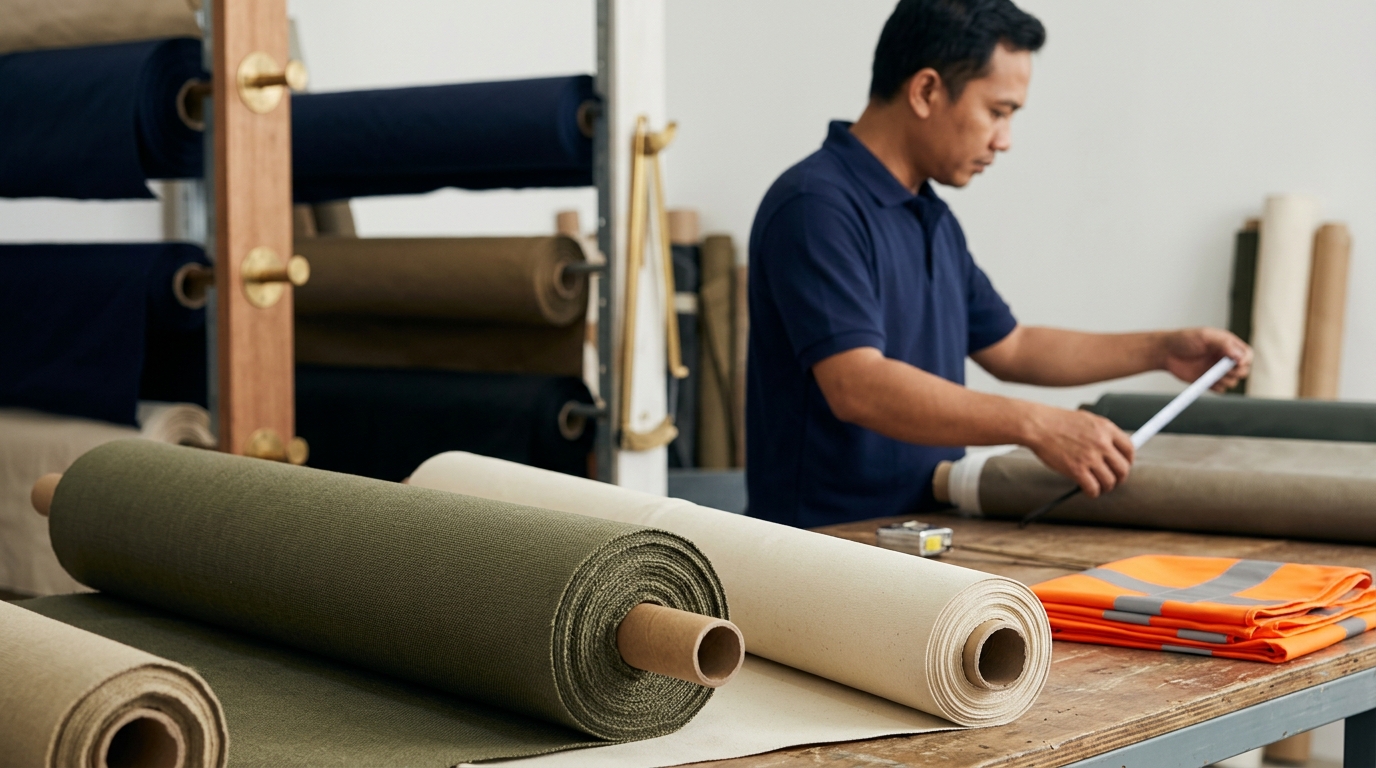
Indonesian technical textiles represent a serious procurement option for US industrial buyers — not a fallback. The country operates large-scale weaving, coating, and nonwoven facilities capable of producing engineered fabrics that meet international performance standards. Yet many procurement…
Indonesian technical textiles represent a serious procurement option for US industrial buyers — not a fallback. The country operates large-scale weaving, coating, and nonwoven facilities capable of producing engineered fabrics that meet international performance standards. Yet many procurement teams still default to China or Vietnam without evaluating Indonesia's specific strengths in geotextiles, coated fabrics, canvas, and functional workwear materials.
This guide addresses the full sourcing decision: which product categories are reliably available, which suppliers are worth qualifying, what certifications to demand, and how to manage logistics and compliance from Indonesian ports to US distribution centers. It also covers two risk signals that most sourcing guides ignore — the collapse of PT Sri Rejeki Isman (Sritex) and the TKDN domestic content framework — both of which carry direct implications for supply chain planning.
If you are evaluating technical textilessuppliers Indonesiafor the first time, or benchmarking existing Indonesian sources against alternatives, the sections below give you the decision framework to move forward with confidence.
Why Indonesia Competes Seriously for Technical Textile Sourcing
Manufacturing Scale and Industrial Clusters
Indonesia's textile industry is one of Southeast Asia's largest by output and employment. The sector spans spinning, weaving, knitting, dyeing, finishing, coating, and nonwoven production. For technical and industrial fabrics specifically, three regional clusters matter most to buyers.
West Java (Bandung and surroundings) hosts a dense concentration of weaving and finishing mills. Many have invested in shuttle-less rapier and air-jet looms capable of producing tight, high-tenacity constructions required for industrial canvas and coated base fabrics.
Central Java (Semarang and Solo) is home to larger integrated producers, including historically Sritex in Solo, and several nonwoven and geotextile specialists near Semarang. This corridor benefits from established logistics links to Tanjung Priok and Tanjung Perak.
East Java (Surabaya corridor) supports mid-market production and has growing capacity in polypropylene-based woven geotextiles and synthetic tarpaulin constructions.
Cost Position Versus Competing Sourcing Destinations
Indonesia's labor cost structure sits below China and broadly comparable to Vietnam for standard industrial fabrics. For heavier constructions — geotextiles above 200 gsm, PVC-coated fabrics, heavy canvas — Indonesian mills can offer meaningful unit cost advantages over Chinese competitors once tariff exposure is factored in. Bangladesh is cheaper for apparel but lacks the technical finishing infrastructure relevant to coated fabrics and geotextiles. Vietnam's technical textile base is narrower, skewed toward apparel and some nonwovens.
Product Categories Available from Indonesian Technical Fabric Manufacturers
Geotextiles
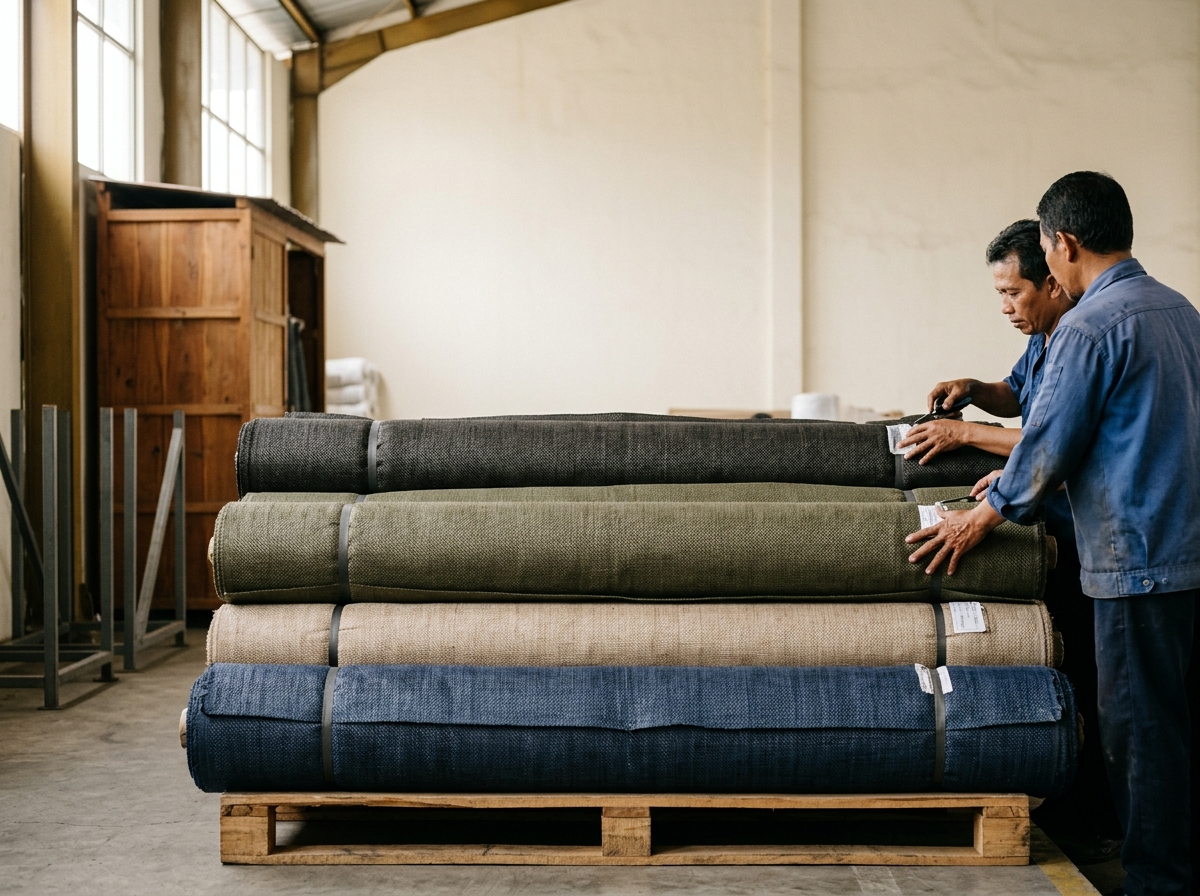
Indonesian manufacturers produce both woven and nonwoven geotextiles in polypropylene and polyester. Woven PP geotextiles for civil engineering — road construction, embankment stabilization, drainage separation — are available across a broad gsm range, typically from around 80 gsm up to 400 gsm and above. Nonwoven needle-punched grades serve filtration and erosion control applications. Suppliers like Trias Spunindo Industri operate dedicated nonwoven lines with capacity relevant to large infrastructure project orders. Buyers should specify ASTM D4595 tensile, ASTM D4751 apparent opening size, and relevant hydraulic conductivity values in their RFQ — not just weight per square meter.
Coated Fabrics
PVC-coated fabrics and PU-coated constructions are produced by several Indonesian mills. PT Filamenindo Lestari Textile and similar producers work with coated and laminated constructions for awnings, truck covers, inflatable structures, and protective barriers. Key technical parameters include coating weight (g/m²), substrate yarn type, tear strength, and temperature resistance. Buyers should distinguish between knife-over-roll coating — common in Indonesia — and calendering, which produces different hand and thickness profiles.
Canvas and Tarpaulin
Heavy cotton duck canvas and synthetic weave tarpaulins are established product categories for Indonesian technical textiles suppliers. Both cotton and polyethylene/polypropylene constructions are available. Specifications to define upfront include thread count, yarn denier, finish type (wax, silicone, or none), and grommet spacing for finished tarpaulins.
FR and High-Visibility Workwear Fabrics
Flame-retardant and hi-vis fabrics are produced by a smaller subset of Indonesian mills with appropriate chemistry and testing capabilities. Delta Hitech Textiles and PT Trisula Corporation have documented capabilities in performance workwear fabrics, including inherent and treated FR constructions. This category requires the most rigorous certification verification — covered in detail below.
Certifications and Standards Every Buyer Must Verify Before Signing
This is the section where sourcing decisions most commonly fail. Indonesian manufacturers vary widely in their actual certification status versus claimed compliance.
The Core Standards Matrix
| Product Category | Required Standard | What It Certifies |
|---|---|---|
| FR fabrics | ISO 11612 | Protective clothing against heat and flame |
| Hi-vis fabrics | EN ISO 20471 | High-visibility warning clothing |
| All categories | ISO 9001 | Quality management system |
| Consumer-facing applications | OEKO-TEX Standard 100 | Harmful substance limits |
| Geotextiles | ASTM D series (4595, 4751, 4833) | Mechanical and hydraulic performance |
| Recycled content claims | GRS (Global Recycled Standard) | Chain of custody for recycled fiber |
| Chemical compliance | REACH | Restricted substances for EU/US markets |
ISO 11612 and EN ISO 20471 in Indonesian Context
ISO 11612 covers protective clothing for workers exposed to heat and flame. It defines performance levels across multiple hazard codes (A1/A2 for flame spread, B for convective heat, C for radiant heat, and others). Indonesian mills producing FR fabrics typically achieve this through either inherent fiber blending (aramid, modacrylic) or durable FR chemical treatment on cotton or cotton-blend bases. Buyers must specify which hazard codes are required and request the actual test report, not just a certificate number.
EN ISO 20471 covers high-visibility clothing. It defines three classes based on minimum background material area and retro-reflective tape area. When sourcing hi-vis fabric from Indonesian technical textiles suppliers, request class-specific test data. Class 2 and Class 3 applications — roadwork, rail, emergency services — have stricter area requirements.
SNI and Third-Party Testing
Indonesian National Standards (SNI) exist for several textile categories but do not always align directly with international equivalents. For US market access, SNI compliance alone is insufficient. Require testing through internationally recognized third-party labs. SGS, Intertek, and Bureau Veritas all operate offices in Indonesia, primarily in Jakarta and Surabaya. Specify that test samples must be taken from production lots, not pre-submitted mill samples.
How to Qualify Technical Textiles Suppliers in Indonesia Step by Step
The RFQ and Audit Framework
A structured qualification process protects against the most common failure modes: subcontracted production, outdated finishing equipment, and absent QC documentation.
- ✓Request ISO 9001 certificate and verify against issuing body registry
- ✓Confirm product-specific certifications (ISO 11612, EN ISO 20471, OEKO-TEX) with test reports
- ✓Ask whether production is fully in-house or partially subcontracted
- ✓Inspect or request photos of coating lines, finishing equipment, and QC lab
- ✓Request last three customer references with verifiable contact details
- ✓Confirm which third-party labs the mill uses and request sample test reports
- ✓Clarify MOQ per construction, colorway, and finish
- ✓Request USD-denominated FOB price sheet with lead time by product
- ✓Confirm export experience to the US and familiarity with US HTS classification
- ✓Ask for MSDS or SDS sheets for any chemical treatments applied
Red Flags to Watch For
Subcontracting is the primary risk. If a mill quotes confidently on ten different product categories but has only two production lines visible during audit, outputs are almost certainly being outsourced to smaller, unqualified facilities. This is common in the Bandung cluster for finishing operations.
Outdated equipment is a legitimate concern for coated fabrics. Knife-over-roll coating machines from the 1990s produce inconsistent coat weights and adhesion. Ask for equipment commissioning dates and maintenance records.
Limited QC documentation — absence of fabric roll inspection logs, batch testing records, or AQL procedures — signals a mill that cannot support claims-based returns or US market compliance requirements.
MOQs, Lead Times, and Payment Terms
Typical MOQs for Indonesian technical fabric categories run approximately as follows:
| Product Category | Approximate MOQ | Typical Lead Time |
|---|---|---|
| Woven geotextile | 5,000–20,000 m² | 45–75 days |
| PVC-coated fabric | 3,000–10,000 linear meters | 45–60 days |
| Canvas / tarpaulin | 3,000–5,000 meters | 30–60 days |
| FR workwear fabric | 3,000–5,000 meters | 60–90 days |
| Hi-vis fabric | 2,000–5,000 meters | 60–90 days |
These are directional estimates. Actual MOQs vary by mill capacity and current order book.
Payment terms most commonly encountered are 30% deposit against order confirmation, balance against copy Bill of Lading. LC at sight is accepted by larger mills. Open account terms are rarely offered to new buyers without credit history.
Sourcing Agents Versus Direct Engagement
First-time buyers sourcing from Indonesian technical textiles suppliers should seriously consider engaging a qualified sourcing partner for the first order cycle. The Indonesian market has fewer English-language-capable commercial staff in technical mills than Vietnam or China. A sourcing agent with direct mill relationships can accelerate qualification, facilitate factory audits, and reduce RFQ turnaround time significantly. Expect agent fees in the range of 3–8% of FOB value. Verify that any agent discloses supplier relationships and does not earn undisclosed commissions from both sides.
Logistics, Import Duties, and Trade Compliance for US Buyers
Export Ports and Transit Times
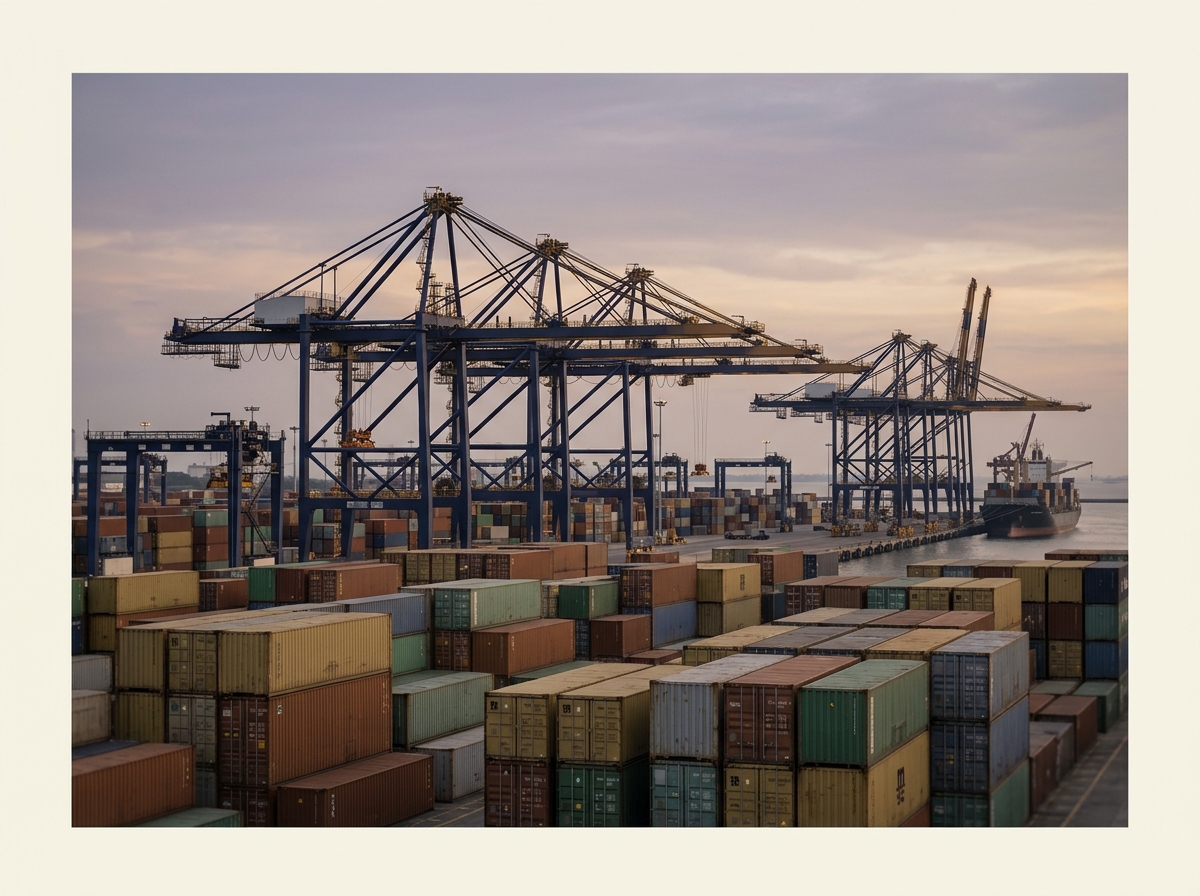
Tanjung Priok (Jakarta, West Java) is Indonesia's primary export port and handles the majority of textile shipments. It offers the widest carrier selection and most frequent US-bound services.
Tanjung Perak (Surabaya, East Java) is the secondary export gateway, more relevant for shipments originating from Central and East Java mills. Transit times to US West Coast ports (Los Angeles/Long Beach) are typically 18–25 days. East Coast ports (New York/Newark, Savannah) add approximately 7–10 days. These are indicative ranges and subject to carrier routing and transshipment points, commonly Singapore or Port Klang.
HS Codes and US Import Duties
Technical textiles span multiple HTS chapters. Key classifications for US customs:
| Product | HTS Chapter | Notes |
|---|---|---|
| Woven geotextile (PP) | 5911 | Technical textile articles |
| Coated fabrics (PVC) | 5903 | Textile fabrics impregnated/coated |
| Canvas / tarpaulin | 6306 | Tarpaulins, awnings, tents |
| FR workwear fabric | 5514 / 5515 | Synthetic woven fabrics |
| Nonwoven geotextile | 5603 | Nonwovens by weight |
Duty rates vary by HTS subheading. Most technical textile categories from Indonesia face duties in the range of approximately 3–12% ad valorem under normal trade relations, but buyers must verify current rates with a licensed customs broker. Indonesia's GSP (Generalized System of Preferences) status has historically provided duty-free access on eligible products, but GSP program renewals are subject to Congressional action. Confirm current GSP eligibility for each HTS subheading before building landed cost models.
TKDN and Its Effect on Procurement Decisions
TKDN (Tingkat Komponen Dalam Negeri — Domestic Component Level) is an Indonesian government scoring system that measures local content in manufactured goods. It primarily affects Indonesian government procurement — projects funded by the Indonesian state must favor suppliers with high TKDN scores. For US buyers sourcing directly, TKDN does not directly restrict purchasing decisions. However, it does affect which mills have invested in domestic raw material integration. High-TKDN mills tend to use Indonesian-spun yarns and locally produced chemicals, which can affect consistency and specification range. If your supply chain requires traceability to raw material origin, ask suppliers for their TKDN documentation — it provides a structured view of their upstream sourcing.
Pricing Benchmarks and Cost Factors for Technical Fabric Categories
Do not enter RFQ negotiations without directional price expectations. Indonesian technical fabric pricing is influenced by substrate complexity, coating weight, certification requirements, and order volume.
Directional price ranges (FOB, approximate):
| Product | Low-end Range | High-end Range | Key Cost Drivers |
|---|---|---|---|
| Woven PP geotextile | Lower complexity | Higher gsm / ASTM tested | Weight, testing surcharges |
| PVC-coated fabric | Standard coating | Heavy industrial grade | Coat weight, adhesion spec |
| Canvas (synthetic) | Basic weave | Treated / finished | Finish type, thread count |
| FR workwear fabric | Treated cotton blend | Inherent FR (aramid) | Fiber type, certifications |
| Hi-vis fabric | Base grade | Class 3 certified | Reflective tape, class spec |
Specific USD/meter or USD/kg figures are not stated here to avoid misrepresentation. Request current FOB price sheets directly from mills or via a sourcing agent.
Currency risk is managed by Indonesian mills almost universally through USD invoicing. Rupiah fluctuation affects mill-side costs — particularly for imported yarn inputs — but buyer-facing pricing is typically quoted and contracted in USD. Build a 5–8% buffer into landed cost models for ancillary charges: color lab dips (typically charged per colorway submitted), custom labeling compliance (especially for FR garment fabrics requiring US-mandated care labeling), and testing surcharges when buyers require third-party lab confirmation rather than mill self-certification.
ESG, Labor Standards, and Supply Chain Risk in Indonesian Textiles
Labor Compliance and Better Work Indonesia
Better Work Indonesia — a joint program of the ILO and IFC — operates in the country's garment and textile sector, conducting factory assessments against core labor standards. Participation is voluntary and not universal. For technical textile mills, coverage is less consistent than in the apparel sector. US buyers with ESG reporting obligations or retailer-facing compliance requirements should request factory audit reports from Better Work Indonesia where applicable, or commission independent social audits through SMETA (Sedex Members Ethical Trade Audit) or equivalent frameworks.
The Sritex Insolvency — A Supply Chain Risk Signal
PT Sri Rejeki Isman Tbk (Sritex), once Indonesia's largest integrated textile manufacturer and a significant producer of workwear and military fabrics, filed for bankruptcy in late 2024 following debt restructuring failures. This is a direct supply chain risk signal for any buyer who had Sritex in their approved supplier list — but its implications are broader.
Sritex's collapse demonstrates that even large, vertically integrated Indonesian mills can fail rapidly when debt structures are misaligned with revenue cycles. The lesson for procurement teams: do not treat mill scale as a proxy for financial stability. Request audited financial statements or, at minimum, trade references from other international buyers before committing to long-term supply agreements with any single Indonesian supplier.
Environmental Certifications
ZDHC (Zero Discharge of Hazardous Chemicals) membership and roadmap compliance is relevant for mills supplying workwear fabrics that require detectable chemical profiles — particularly FR treatments. GRS (Global Recycled Standard) is applicable where buyers specify recycled polyester or recycled PP content in geotextile or nonwoven constructions. Bluesign system participation is rare among Indonesian technical textile mills but is emerging among exporters targeting premium European and US brand accounts. OEKO-TEX Standard 100 certification is more widely held and is a reasonable baseline requirement for fabrics in skin-contact or enclosed-space applications.
Frequently Asked Questions
What types of technical textiles can I reliably source from Indonesia? Woven and nonwoven geotextiles, PVC and PU coated fabrics, heavy canvas and tarpaulin, and treated FR and hi-vis workwear fabrics are all reliably available. Geotextiles and coated fabrics represent the strongest Indonesian manufacturing base for export volume.
Which Indonesian suppliers are certified for FR and hi-vis workwear fabrics? Delta Hitech Textiles and PT Trisula Corporation have documented capabilities in performance workwear fabric production. Certification status must be verified directly — request ISO 11612 and EN ISO 20471 test reports referencing specific constructions and test dates.
What is the minimum order quantity for technical fabrics from Indonesian manufacturers? MOQs vary by category. Woven geotextiles typically require 5,000–20,000 m² minimum. Coated fabrics and canvas run approximately 3,000–10,000 linear meters. FR and hi-vis fabrics often start at 2,000–5,000 meters. First-order MOQs may be negotiable with a sourcing agent intermediary.
How do I verify that an Indonesian technical textile supplier meets US import standards? Require third-party test reports from SGS, Intertek, or Bureau Veritas local offices in Indonesia. Confirm HTS classification with a licensed US customs broker. Verify REACH compliance documentation. Do not rely on self-issued mill test reports for compliance-critical specifications.
What certifications should I require from an Indonesian technical textile supplier? At minimum: ISO 9001 (quality system), product-specific performance certifications (ISO 11612 for FR, EN ISO 20471 for hi-vis), OEKO-TEX Standard 100 for chemical safety, and ASTM compliance documentation for geotextiles. REACH and ZDHC compliance are additionally relevant for US and EU market access.
How does TKDN certification affect sourcing decisions for Indonesian industrial textiles? TKDN directly affects Indonesian government procurement, not US buyer decisions. However, a supplier's TKDN score reveals their upstream integration and raw material sourcing structure. High-TKDN producers use domestically sourced yarns and inputs, which supports traceability claims and can be relevant for GRS or origin-verified supply chains.
Indonesia's technical textile sector offers genuine depth across geotextiles, coated fabrics, canvas, and functional workwear materials — but the quality and compliance gap between mills is wide. Buyers who invest in rigorous supplier qualification, demand third-party certification verification, and diversify across at least two qualified sources will access real cost and performance advantages. The Sritex insolvency and TKDN framework are two factors that sharpen that qualification discipline further.
You now have the product categories, certification requirements, qualification framework, logistics parameters, and risk signals to evaluate technical textilessuppliers Indonesiawith confidence.
You have the qualification criteria — the next step is putting them to work. Connect with vetted Indonesian technical textile manufacturers and request current MOQ sheets, product samples, and certification documentation for your specific fabric categories.
Request Supplier Introductions →Need eyes on the ground in Indonesia?
MTS is an execution partner — supplier verification, manufacturing management, quality control and export logistics across Indonesia, Vietnam and China.
Related services
Related articles
Receive furniture sourcing insights across Asia.
One email per week. No spam.