Denim Fabric Mills Indonesia: Complete Sourcing Guide for US Brands
13 min read
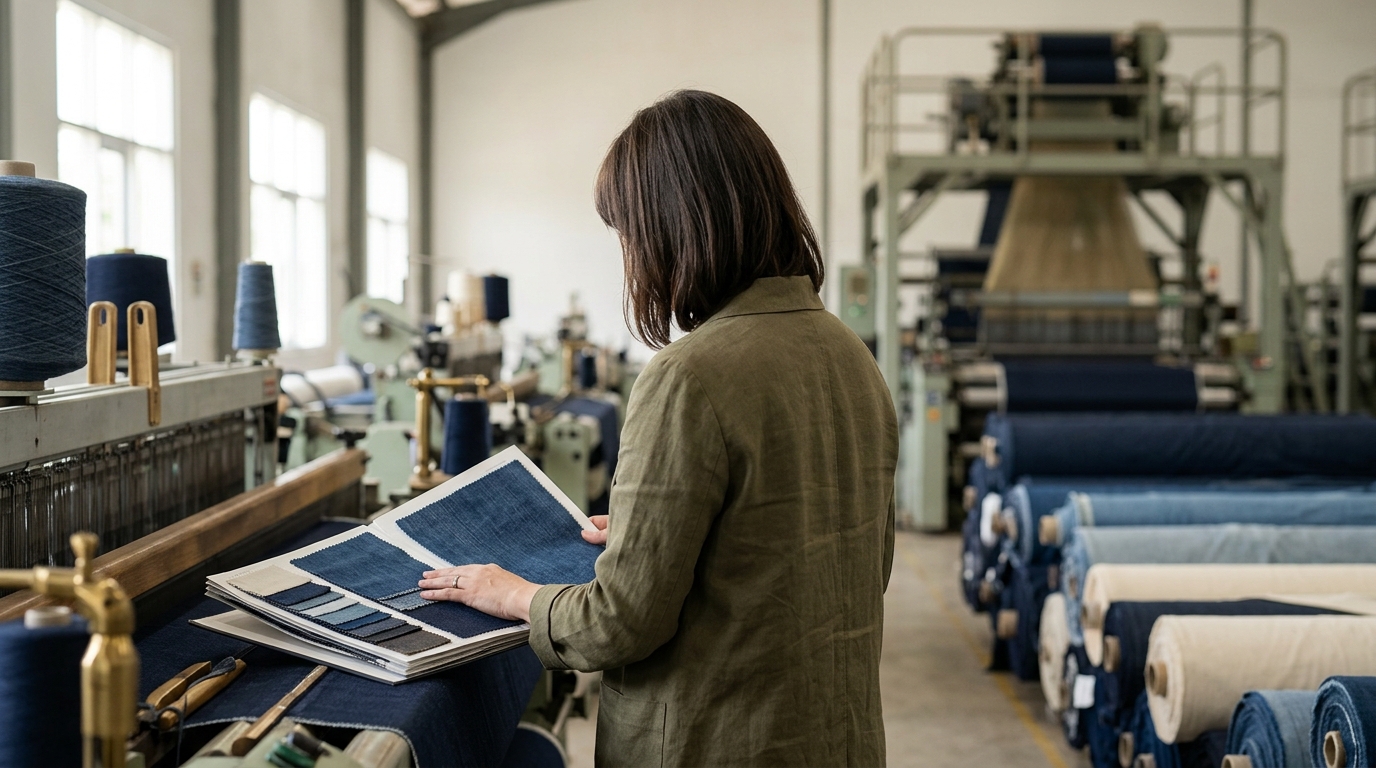
Sourcing denim fabric from Indonesian mills is no longer a niche strategy. It is a deliberate supply chain decision driven by cost, capability, and compliance. Yet many US brands enter Indonesia sourcing without a clear picture of what mills can actually deliver — from construction specs and…
Sourcing denim fabric from Indonesian mills is no longer a niche strategy. It is a deliberate supply chain decision driven by cost, capability, and compliance. Yet many US brands enter Indonesia sourcing without a clear picture of what mills can actually deliver — from construction specs and finishing capabilities to MOQs, audit readiness, and import logistics. Mistakes at this stage are expensive.
This guide addresses that gap. It covers the geographic concentration of Indonesian denim weaving infrastructure, available fabric constructions and weights, finishing services, sustainability certifications, and the full sampling workflow. It also addresses US import duty implications, mill audit criteria, and the practical steps to qualify a supplier before committing to bulk production.
Indonesia's denim sector is concentrated but maturing. Mills range from large, vertically integrated producers to smaller specialty weavers. Both can serve US brands well — if evaluated correctly. The sections below give you the decision criteria to do that.
Why Indonesian Denim Fabric Mills Have Become a Strategic Sourcing Alternative
Indonesia's Position in the Global Denim Supply Chain
Indonesia is not the largest denim producer in the world. China, Pakistan, and Bangladesh hold greater total output. But Indonesia competes on a different set of criteria: established weaving infrastructure, improving vertical integration, competitive labor costs, and growing compliance readiness for Western markets.
Pakistani mills dominate on price for commodity denim. Chinese mills lead on breadth of construction options. Bangladeshi mills have scale but are more apparel-focused than fabric-focused for export. Indonesian denim fabric mills occupy a distinct position — capable of mid-to-premium constructions with finishing services increasingly comparable to Chinese peers, at labor costs that remain competitive.
Investment in Modern Loom Technology
Indonesian mills have invested in rapier and air-jet loom technology over the past decade. Rapier looms are common for selvedge and jacquard denim. Air-jet looms dominate high-speed production of standard open-width denim. This mix gives buyers access to both specialty and volume constructions from the same sourcing region.
US Trade Considerations
Indonesia lost its Generalized System of Preferences (GSP) benefits for most goods in 2020 when the US suspended the program. As of the knowledge cutoff, the program has not been fully reinstated for textile and apparel inputs. US buyers should verify current HTS duty rates at the time of sourcing — denim fabric typically enters under Chapter 52 or 55 of the Harmonized Tariff Schedule, with standard column-one rates applying. This is discussed further in the pricing and logistics section.
The Bandung Denim Cluster: Indonesia's Core Weaving Hub
Geographic Concentration and History
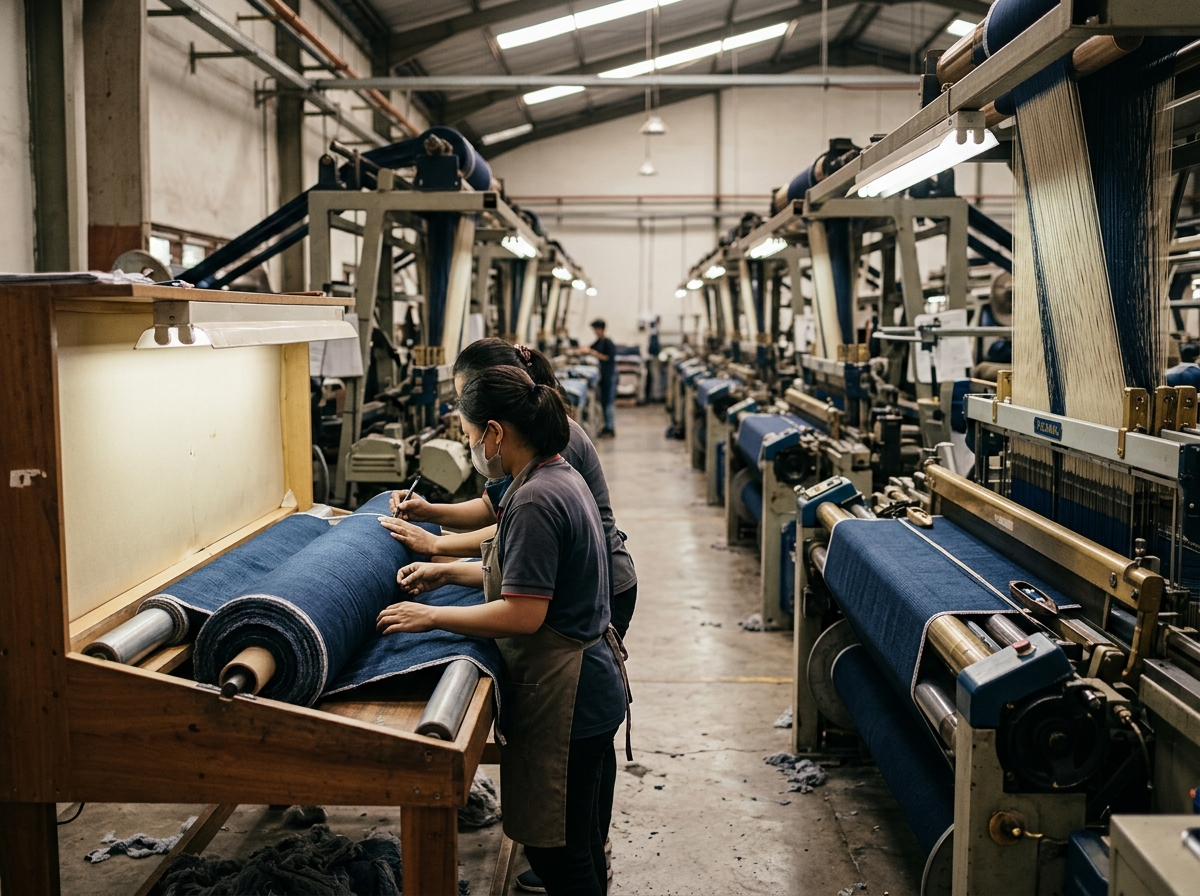
The majority of denim fabric mills in Indonesia are located in and around Bandung, West Java. The city and its surrounding industrial corridors have hosted textile manufacturing since the colonial era. Spinning, dyeing, weaving, and finishing facilities developed in proximity, creating a cluster that reduces input logistics costs for integrated mills.
Bandung's textile cluster is one of Southeast Asia's oldest. Proximity tocotton yarnsuppliers, indigo dye houses, and chemical distributors supports shorter internal supply chains. For buyers, this means mills can control more production steps in-house — a meaningful quality and lead-time advantage.
Mill Types: Integrated vs. Specialty
| Mill Type | Typical Scale | Key Capability | Minimum Order Orientation |
|---|---|---|---|
| Large integrated producer | 5M+ meters/year | Full vertical: yarn, weave, dye, finish | Higher MOQ, 3,000–10,000m+ |
| Mid-size denim weaver | 1–5M meters/year | Weaving + dyeing, outsourced finishing | Moderate MOQ, 1,500–5,000m |
| Specialty selvedge weaver | Under 1M meters/year | Shuttle loom selvedge, custom weights | Lower MOQ possible, 500–1,500m |
Large integrated producers in the Bandung area run full cycles: yarn dyeing, weaving, sanforizing, and finishing. Smaller specialty weavers focus on selvedge constructions or niche fiber blends. Both are viable for US brands, depending on volume and construction requirements.
Logistics: Access to Tanjung Priok
Finished goods move from Bandung-area mills to Tanjung Priok port in Jakarta — approximately 150 kilometers by road. Tanjung Priok is Indonesia's primary container export hub and handles the bulk of textile and apparel exports. Transit time from mill to port is typically one to two days by truck. Ocean freight to US West Coast ports runs approximately 18–25 days depending on routing and carrier. East Coast routing via the Suez Canal adds transit time.
Denim Fabric Weights, Constructions, and Fiber Options Available from Indonesian Mills
Weight Range and Recommended End-Use
| Weight Range | Typical End-Use | Construction Notes |
|---|---|---|
| 5–7 oz/yd² | Lightweight jeans, summer denim, shirts | Often cotton-Tencel or cotton-poly blends |
| 8–10 oz/yd² | Year-round jeans, dresses, skirts | Rigid or low-stretch, versatile construction |
| 11–13 oz/yd² | Standard jeans, workwear, jackets | Most common weight range for US denim brands |
| 14–16 oz/yd² | Heavyweight jeans, raw denim, outerwear | Often 100% cotton, ring-spun or open-end |
Indonesian mills produce across this full weight spectrum. The 11–13 oz range is the most commercially active. Heavyweight constructions above 14 oz are available from mills with appropriate loom tension and yarn sourcing capabilities — not all mills offer this.
Stretch and Rigid Constructions
Rigid denim — approximately 100% cotton, no elastane — remains widely produced. Stretch denim using cotton/spandex blends (typically 1–3% spandex content) is standard across most Bandung-area mills. Super-stretch constructions using higher elastane content or specialized weave structures are available from mills with modern loom configurations.
Fiber blends available from Indonesian denim suppliers include:
- approximately 100% cotton (ring-spun and open-end) - Cotton/spandex (stretch denim) - Cotton/polyester - Cotton/Tencel (lyocell) for softhand and sustainability positioning - Cotton/recycled polyester for brands targeting lower-impact sourcing
Selvedge Denim Capabilities
Selvedge denim is produced on shuttle looms. Several mills in and around Bandung operate narrow-width shuttle looms producing selvedge fabric in the standard 28–32-inch width range. Custom widths and weights are negotiable for development programs with sufficient volume commitment. Selvedge production runs slower and at lower volume than open-width production — buyers should plan MOQs and lead times accordingly.
Washes, Finishing Services, and In-House Mill Capabilities
Dyeing Depth and Indigo Options
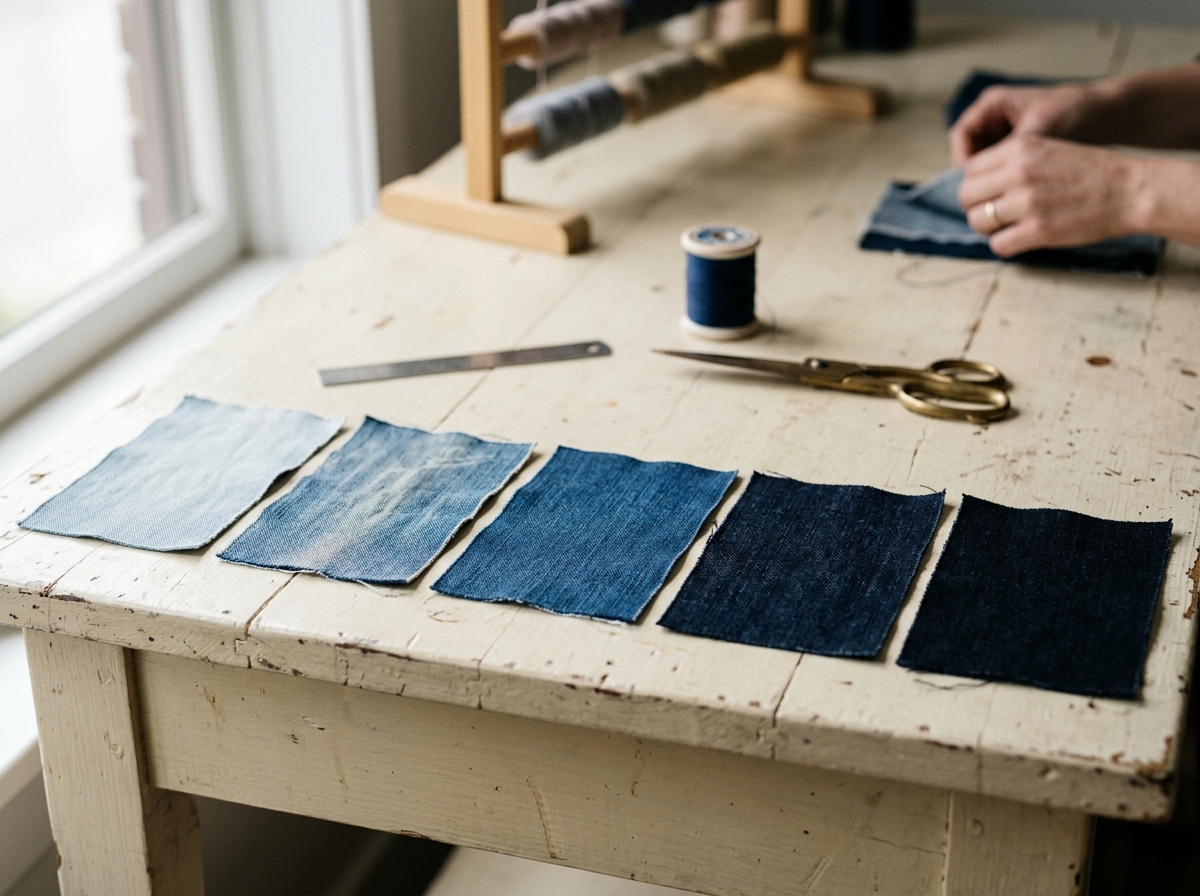
Indigo dyeing in Indonesian mills covers the standard depth range:
- Light indigo (3–5 dips) - Mid indigo (6–8 dips) - Dark indigo (10–12 dips) - Sulfur bottom with indigo overdye for specialty colorways - Sulfur-only dyeing for black, grey, and earth tones
Mills with in-house rope dyeing equipment offer the most consistent shade control. Buyers should request shade bands and confirm colorway repeatability during sampling.
Wet and Dry Finishing
Most large integrated mills in the Bandung cluster offer wet finishing services: stone wash, enzyme wash, acid wash, and bleach wash. Some operate ozone finishing chambers as a lower-water alternative to traditional wet processes.
Laser finishing for whiskers, fades, and surface treatments is less common in Indonesian mills than in Chinese or Turkish facilities. A minority of larger mills have invested in laser equipment, but buyers seeking laser finishing should verify this capability explicitly — do not assume it is standard.
Functional Coatings and Treatments
Select mills offer functional finishes including water-repellent (DWR) coatings, antimicrobial treatments, and stretch-recovery finishes applied post-weave. These are typically outsourced to specialist finishing houses unless the mill is fully integrated. Confirm whether functional finishes are applied in-house or subcontracted — subcontracting adds lead time and reduces quality control visibility.
Sustainable Denim Options: Certifications and Eco Processes in Indonesia
Certification Landscape
Indonesian denim mills vary significantly in certification status. Buyers should not assume certification is standard — verify individually for each supplier.
| Certification | Availability in Indonesia | What It Covers |
|---|---|---|
| OEKO-TEX Standard 100 | Available at select mills | Harmful substance limits in finished fabric |
| GOTS | Limited; requires full supply chain compliance | Organic fiber content and processing standards |
| Bluesign | Rare; requires system partner commitment | Chemical, resource, and consumer safety |
| ZDHC MRSL | Growing adoption at larger mills | Restricted chemical substances in manufacturing |
GOTS certification is particularly demanding because it requires organic fiber sourcing, dye compliance, and chain-of-custody documentation throughout the supply chain. Few Indonesian denim mills currently hold GOTS certification. Brands requiring GOTS must verify organic cotton sourcing traceability from fiber through to finished fabric.
Recycled Content and Water-Saving Technologies
Some mills incorporate post-consumer recycled cotton yarn or recycled polyester into blend constructions. Recycled content claims should be backed by GRS (Global Recycled Standard) certification — ask for the certificate, not just the claim.
Water-saving technologies present in some Indonesian mills:
- Ozone washing chambers - Waterless enzyme application pilots - Closed-loop wastewater recycling systems
Laser finishing adoption remains limited compared to China. Brands with aggressive sustainability targets should ask for water consumption data per meter of fabric and compare against industry benchmarks.
MOQs, Lead Times, and the Sampling Process Step by Step
Typical MOQ Ranges
| Fabric Type | Typical MOQ | Notes |
|---|---|---|
| Greige (undyed) denim | 3,000–5,000m | Lower MOQ possible from mid-size mills |
| Standard indigo open-width | 3,000–10,000m | Varies by construction and mill scale |
| Stretch denim (cotton/spandex) | 3,000–8,000m | Spandex yarn minimum lots affect MOQ |
| Selvedge denim | 500–2,000m | Shuttle loom economics drive higher per-meter cost |
| Finished/washed denim | 5,000–15,000m | Finishing minimums add to base fabric MOQ |
Sampling Timeline
A realistic sampling timeline from first contact to sample approval:
1. Initial inquiry and spec submission — 1–3 business days for mill response 2.Lab dip development (color matching) — 7– approximately 14 days 3.Strike-off / woven sample — 14– approximately 21 days after lab dip approval 4.Sample review and revision — 7– approximately 14 days per round 5.Pre-production sample — 14– approximately 21 days after final spec confirmation
Total time from first contact to approved pre-production sample: approximately 8–14 weeks. Complex constructions or certified organic supply chains add time.
Structuring a Sample Request
Send the following with every initial sample request to avoid delays:
- Target weight (oz/yd²) - Construction (warp/weft count, weave structure) - Fiber composition - Width (open-width or selvedge, finished width in inches) - Colorway (Pantone or physical standard) - Finish required (raw, washed, coated) - Certifications required
Vague requests generate vague samples. Precise specs reduce revision rounds.
Mill Audit Checklist: Verifying Indonesian Denim Suppliers Before Commitment
- ✓Confirm SMETA, SA8000, or WRAP audit status and report date
- ✓Verify ISO 9001 quality management certification
- ✓Check in-house testing lab capabilities: tensile, tear, colorfastness, shrinkage
- ✓Review IPAL (Instalasi Pengolahan Air Limbah) wastewater treatment compliance certificate
- ✓Confirm ZDHC MRSL chemical management policy and restricted substance list
- ✓Assess capacity utilization and peak-season booking lead times
- ✓Clarify subcontracting policy: which processes are outsourced and to whom
- ✓Request last 12 months' on-time delivery data from existing buyers
- ✓Review financial stability signals: years in operation, export client references
- ✓Confirm ownership and factory address match business license documentation
Social Compliance and Environmental Specifics
Indonesian mills are subject to national environmental regulations including mandatory wastewater treatment through IPAL-certified facilities. IPAL (Instalasi Pengolahan Air Limbah) is Indonesia's industrial wastewater treatment system — all mills processing indigo or sulfur dye must operate compliant IPAL systems. This differs from Chinese mills where wastewater compliance is monitored differently. Ask to see the IPAL operational permit and the most recent effluent test report.
Remote and Virtual Audit Guidance
Physical mill visits are ideal. When remote audits are necessary:
- Request a live video walkthrough of production floors, testing labs, and wastewater facilities - Ask the mill to display compliance certificates on camera during the call - Request time-stamped photos of current production — fabric rolls, loom floors, dyeing vats - Cross-reference audit reports from SMETA or equivalent third parties with what you observe - Use a local agent or inspection firm to conduct physical spot checks on your behalf
Remote audits cannot replace third-party physical audits for high-volume or long-term supply relationships.
Pricing, Payment Terms, and US Import Logistics for Indonesian Denim Fabric
FOB Pricing Benchmarks
FOB Tanjung Priok pricing varies by construction, weight, and finish. Approximate ranges:
| Fabric Type | Approximate FOB Range |
|---|---|
| Standard rigid denim, 10–12 oz | $2.50–$4.50/meter |
| Stretch denim, cotton/spandex | $3.50–$6.00/meter |
| Selvedge denim, 13–16 oz | $8.00–$18.00/meter |
| Certified sustainable (OEKO-TEX/GOTS) | 15–30% premium over standard |
These are indicative ranges only. Actual pricing depends on yarn costs (which fluctuate), construction complexity, order volume, and current mill capacity.
US Import Duties: HTS Codes and Rates
Denim fabric imports from Indonesia are classified under the Harmonized Tariff Schedule as follows:
- HTS 5209.42 — Denim fabric, 100% cotton, weighing more than 200 g/m²: standard duty rate approximately 8–9% - HTS 5211.42 — Denim fabric, cotton less than approximately 85%, mixed fibers: duty rates vary by composition - HTS 5512 / 5515 — Synthetic/blended woven fabrics including stretch constructions: rates vary
Indonesia does not currently benefit from GSP duty elimination for these categories. US buyers pay standard MFN (Most Favored Nation) column-one rates. Factor import duties into landed cost calculations alongside ocean freight, port handling, and inland logistics.
Payment Terms
| Term | Typical Use Case |
|---|---|
| T/T 30% deposit, 70% on BL | Standard for new supplier relationships |
| LC at sight | Used for larger orders or first-time transactions |
| Open account (net 30–60) | Reserved for established, long-term buyer-mill relationships |
New buyers should expect T/T deposit or LC terms. Pushing for open account without a track record will be declined by most mills.
How to Identify, Shortlist, and Qualify the Right Indonesian Denim Mill for Your Brand
Finding Candidates
Primary sourcing channels for denim fabric mills in Indonesia:
- Indo Intertex — Indonesia's main textile trade show, held in Jakarta. Indonesian mill participation is strong. Direct mill meetings are possible. - Intertextile Shanghai — Indonesian mills frequently exhibit in the international pavilion. Useful for comparing Indonesian suppliers alongside Chinese competitors. - B2B sourcing platforms — Filter carefully. Verify that listed suppliers are actual mills, not trading intermediaries. Request factory registration documents. - Trade association directories — Indonesia's API (Asosiasi Pertekstilan Indonesia) maintains member directories that include woven fabric producers.
Qualification Questions for Initial Mill Meetings
Ask these questions in first meetings or virtual introductions:
- What percentage of your production is exported to the US or EU? - Which current buyers can provide references? - What certifications are current and can you share reports? - What is your subcontracting policy for dyeing or finishing? - What is your current capacity utilization and booking lead time? - Can you show recent test reports for comparable constructions?
Red Flags to Watch
- Inability to provide third-party audit reports when asked - Inconsistent fabric swatches across repeat requests (shade variation signal) - Vague answers about subcontracting — particularly for dyeing - No in-house testing capability (reliance entirely on external labs with no traceability) - Business license address does not match factory location
Building Long-Term Mill Partnerships
Formalizing a mill relationship protects both parties. Consider:
- NDA covering construction specs and colorway development - Product development agreement outlining exclusivity terms if applicable - Annual volume commitment letters in exchange for pricing stability - Agreed quality inspection protocols before bulk shipment release
Frequently Asked Questions About Indonesian Denim Mill Sourcing
What is the minimum order quantity for denim fabric from Indonesian mills? MOQs typically range from approximately 3,000 to 10,000 meters for standard open-width denim. Selvedge denim MOQs can be lower — around 500 to 2,000 meters — depending on the mill. Certified or sustainable constructions often carry higher minimums due to yarn sourcing constraints.
Do Indonesian denim mills offer GOTS or OEKO-TEX certified sustainable denim? OEKO-TEX Standard 100 certification is available at select mills. GOTS certification is rare and requires full organic supply chain compliance. Bluesign is uncommon. Always request current certificates — not statements of intent.
How do US import tariffs affect the cost of sourcing denim fabric from Indonesia? Standard MFN duty rates apply — approximately 8–9% for 100% cotton denim fabric under HTS 5209.42. Stretch and blended constructions may fall under different chapters with varying rates. Indonesia does not currently benefit from GSP duty-free treatment for these categories. Confirm classification with a customs broker.
Which is better for denim sourcing: Indonesia or Bangladesh? Bangladesh has larger apparel-sector scale but fewer dedicated fabric-export mills serving US brands directly. Indonesian denim fabric mills offer stronger finishing capabilities, better certification infrastructure for Western buyers, and more developed selvedge production. Bangladesh may be more cost-competitive at commodity weights. The right choice depends on construction requirements, compliance needs, and volume.
How long does sampling take at a typical Indonesian denim mill? From initial inquiry to approved pre-production sample: approximately 8–14 weeks. Lab dips take 1–2 weeks. Woven strike-offs take 2–3 weeks after dip approval. Each revision round adds time. Complex constructions or organic-certified supply chains extend timelines.
Can Indonesian mills produce selvedge denim in custom weights and widths? Yes. Several mills in the Bandung cluster operate shuttle looms for selvedge production. Standard finished widths are 28–32 inches. Custom weights across the 8–16 oz range are achievable. Custom development programs require minimum volume commitments and typically longer lead times than standard construction orders.
The Indonesian denim sector offers US brands a credible alternative to China and Pakistan — provided supplier evaluation is rigorous. Mills in the Bandung cluster cover the full construction and weight spectrum, finishing capabilities are maturing, and compliance infrastructure is increasingly aligned with Western buyer requirements. The key variables are certification status, subcontracting transparency, and IPAL wastewater compliance — areas where Indonesian mills differ meaningfully from what buyers may expect from Chinese or Pakistani peers.
You now have the specification framework, audit criteria, and logistics context to evaluate Indonesian denim suppliers with confidence.
With a clear picture of Indonesian mill capabilities, certifications, MOQs, and audit requirements, the logical next step is putting verified suppliers in front of you. Request fabric samples and detailed mill profiles from qualified Indonesian denim suppliers today — matched to your construction specs, weight targets, and compliance requirements.
Request Mill Profiles and Samples →Need eyes on the ground in Indonesia?
MTS is an execution partner — supplier verification, manufacturing management, quality control and export logistics across Indonesia, Vietnam and China.
Related services
Receive furniture sourcing insights across Asia.
One email per week. No spam.