Top Hotel Furniture Manufacturers in Indonesia: A Complete Sourcing Guide for FF&E Buyers
19 min read
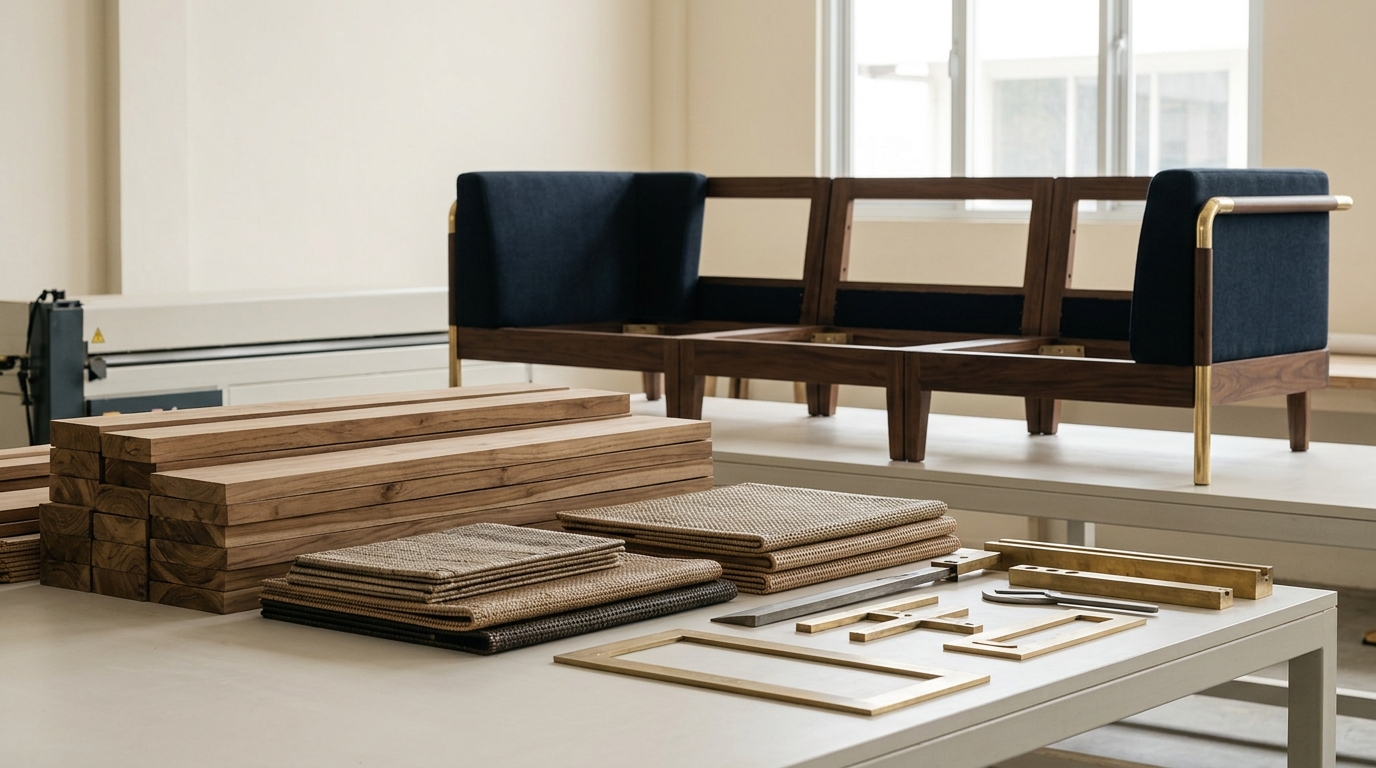
Sourcing hotel furniture at scale requires more than finding a low price — it demands verified production capacity, material compliance, reliable lead times, and a supplier relationship that can sustain a multi-phase FF&E rollout. For US-based hospitality procurement managers and hotel developers,…
Sourcing hotel furniture at scale requires more than finding a low price — it demands verified production capacity, material compliance, reliable lead times, and a supplier relationship that can sustain a multi-phase FF&E rollout. For US-based hospitality procurement managers and hotel developers, hotel furniture manufacturers Indonesia represent one of the most compelling sourcing destinations in the world, offering a rare combination of premium hardwood access, deep craft heritage, and competitive total landed cost.
This guide is written specifically for FF&E project buyers evaluating Indonesian suppliers for the first time or looking to upgrade their current sourcing strategy. It covers why Indonesia holds a structural advantage in the global hospitality furniture supply chain, which manufacturers are worth evaluating, how to vet and qualify suppliers before committing capital, and how to model the true cost of importing from Indonesian ports to a US destination. It also addresses critical compliance topics — including Lacey Act obligations and SVLK timber certification — that most sourcing guides overlook entirely.
Whether you are furnishing a select-service property or a luxury resort, the decisions you make at the supplier qualification stage will determine your project's budget accuracy, delivery reliability, and long-term asset durability. The sections that follow are organized to take you from strategic rationale through operational detail, ending with a framework you can apply immediately to a live sourcing decision.
Why Indonesia Holds a Structural Advantage in the Global Hospitality Furniture Supply Chain
A Timber Resource Base That No Competitor Can Replicate
Indonesia's dominance in natural wood and fiber furniture is not accidental — it is rooted in one of the world's most significant tropical timber ecosystems. The country is among the largest tropical timber producers globally, with commercially important species including plantation teak, mahogany, mango wood, and sustainably harvested rattan. Plantation teak grown in Java is widely regarded as the commercial benchmark for durability in high-traffic hospitality environments, and Indonesia controls a substantial share of the global supply.
This raw material proximity gives Indonesian furniture manufacturers a structural cost advantage that cannot be replicated by Chinese or European alternatives. When a Jepara factory purchases kiln-dried teak from a Central Java plantation, it is sourcing days away rather than months. That supply chain compression translates directly into more predictable pricing and shorter raw material lead times for international buyers.
Cost Positioning Relative to Other Sourcing Origins
For FF&E budgets under pressure, the cost comparison between Indonesia, China, and European manufacturing is material. Indonesian manufacturers typically price solid hardwood case goods meaningfully below comparable European production, while offering quality characteristics — natural teak oils, hand-mortised joinery, artisan finishing — that mass-market Chinese factories at equivalent price points do not routinely match. This is not to suggest Chinese manufacturing is inferior across the board: China dominates in panel goods, upholstered items, and high-volume commodity pieces. But for solid wood, rattan, and natural fiber categories central to resort and boutique hotel projects, Indonesian furniture manufacturers frequently deliver superior value per dollar on a landed-cost basis.
Craft Clusters: Jepara, Cirebon, and Bali
Indonesia's furniture production is geographically concentrated in three craft clusters, each with a distinct specialization relevant to hospitality buyers.
Jepara, in Central Java, is the country's largest furniture manufacturing hub and is internationally recognized for solid teak and mahogany production. The city has produced skilled woodworkers for generations, and its ecosystem includes large export-ready factories alongside smaller workshops capable of bespoke millwork. Furniture manufacturers in Jepara, Indonesia range from 50-worker SMEs to multi-thousand-employee operations with dedicated hospitality project teams.
Cirebon, also in West Java, is the center of Indonesia's rattan and natural fiber industry. For resort properties, boutique hotels, and outdoor furniture specifications, Cirebon-based suppliers offer rattan furniture and woven-fiber pieces at a quality and variety unmatched elsewhere in Asia.
Bali occupies the premium artisan tier. Bali, Indonesia furniture manufacturers typically serve luxury and ultra-luxury hospitality projects, offering hand-carved detailing, bespoke finishing, and high design sophistication. MOQs in Bali tend to be lower, and the narrative value of Balinese craftsmanship is a genuine differentiator for branded hotel properties with high-end positioning.
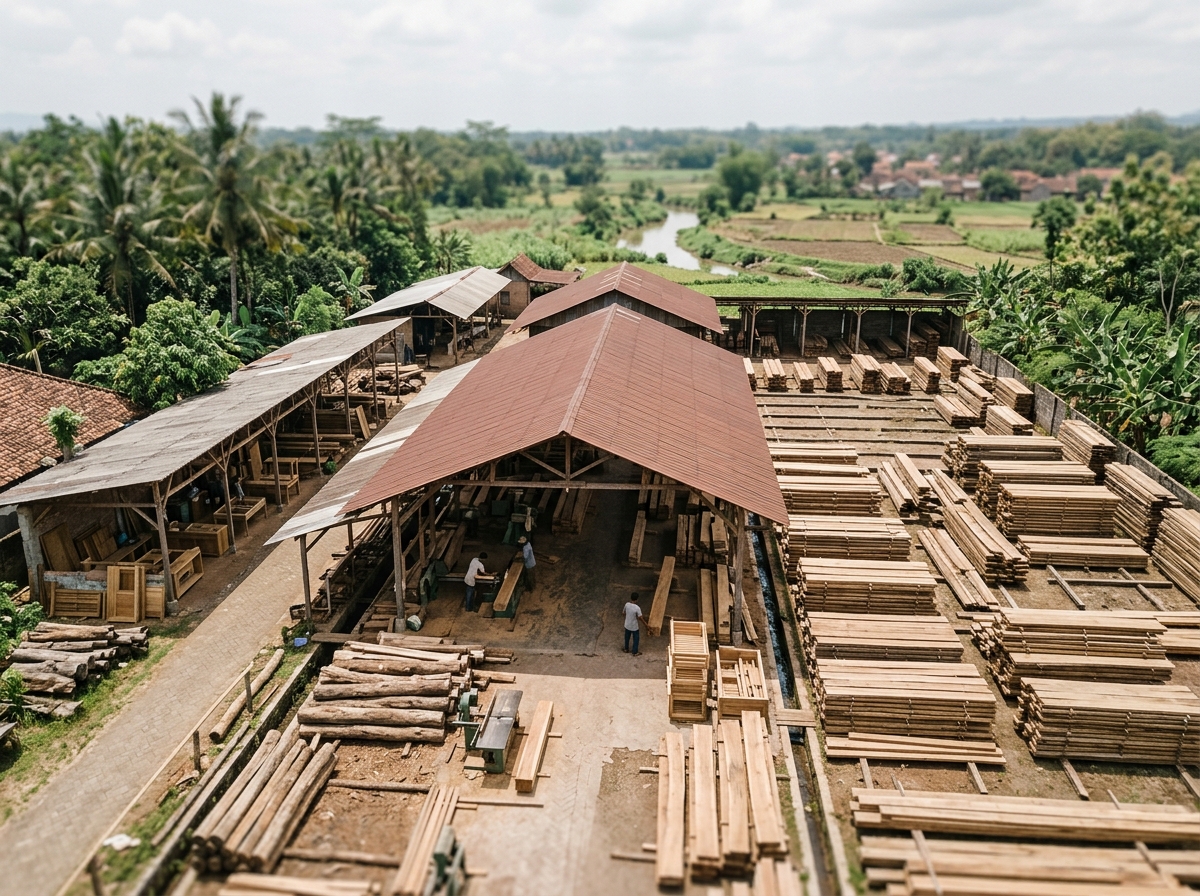
Key Materials Used by Indonesian Hotel Furniture Manufacturers and Their Hospitality Performance
Teak: The Commercial Standard for Durability
Plantation teak from Central Java is the material most closely associated with Indonesian furniture exports. Its high natural oil content makes it highly resistant to moisture, warping, and pest damage — properties that directly translate to lower replacement cycles in hotel environments. Guestroom case goods, outdoor furniture for pool decks, and restaurant seating fabricated from solid teak routinely outperform equivalent pieces made from engineered wood or lower-density species in high-traffic settings. For FF&E buyers modeling total cost of ownership, teak's durability premium is often justified over a standard hotel asset depreciation cycle.
Commercial-grade teak from certified Indonesian plantations is available in kiln-dried form, which is a requirement for US import compliance (more on this under Lacey Act obligations below).
Rattan, Natural Fiber, and the Resort Aesthetic
Rattan furniture manufacturers in Indonesia, predominantly based in and around Cirebon, produce pieces that serve the resort, spa, and boutique hotel market worldwide. Rattan is lightweight, renewable, and visually suited to tropical, coastal, and biophilic design schemes that continue to dominate hospitality interiors. Modern Indonesian rattan production has evolved significantly: leading exporters now offer powder-coated aluminum frames wrapped with synthetic PE rattan for outdoor durability, as well as traditional natural rattan in indoor applications.
For buyers specifying natural rattan, it is important to confirm that the supplier uses kiln-dried or otherwise treated core material, particularly for pieces destined for air-conditioned interior environments where humidity differentials can cause cracking over time.
Solid Mahogany, Mango Wood, and Reclaimed Timber
Beyond teak, Indonesian furniture manufacturers work extensively with plantation mahogany (a lower-cost alternative with good workability), mango wood (valued for its distinctive grain in decorative applications), and reclaimed timber sourced from decommissioned structures. Reclaimed wood appeals strongly to hotel brands with stated sustainability commitments, and several Jepara and Bali manufacturers have developed documented reclaimed-timber supply chains that can support FSC Recycled or equivalent certification claims.
Finishing Standards and Fire Code Relevance
US hospitality projects governed by IBC or NFPA standards require furniture finishes to meet specific flame-spread and smoke contribution requirements. Reputable Indonesian exporters who regularly serve the US market will be familiar with the need to use commercially compliant lacquers and topcoats. Buyers should explicitly request that finish specifications reference applicable fire-rating standards and ask for test documentation from prior US hotel projects as part of the qualification process.
Leading Hotel Furniture Manufacturers in Indonesia Worth Evaluating for Your FF&E Project
The manufacturer landscape in Indonesia spans large-scale export factories, mid-sized hospitality specialists, and boutique custom workshops. The table below provides a structured comparison of manufacturers commonly referenced in the hospitality procurement community.
| Manufacturer | Location | Primary Specialization | Hospitality Experience | Notable Certifications | Approximate MOQ |
|---|---|---|---|---|---|
| Saniharto | Semarang / Central Java | Teak outdoor & indoor case goods | Strong US and European hotel export history | SVLK, FSC | Mid-to-high volume |
| Warisan | Cirebon / Java | Contemporary rattan and natural fiber | Luxury resort and boutique hotel projects | SVLK | Flexible — project basis |
| Wisanka | Solo, Central Java | Teak, mahogany, rattan — broad range | Wide export base including US hospitality | SVLK, FSC | Mid volume |
| Bukit Interiors | Bali | Bespoke luxury hospitality millwork | High-end resort and villa projects | SVLK | Low-to-mid, project basis |
| Mobelindo | Surabaya, East Java | Mid-market solid wood and case goods | Contract hotel export programs | SVLK | Mid volume |
| MPP Furniture | Jepara | Solid teak and mahogany, custom pieces | Export-oriented, US and EU focus | SVLK | Mid volume |
| Scade Concepts | Bali | Design-forward hospitality furniture | Luxury and lifestyle hotel projects | SVLK | Project basis |
| CV Roda Jati | Jepara | Teak garden and indoor furniture | Established export history | SVLK | Mid volume |
Differentiating by Scale and Project Fit
Large export factories such as Saniharto and Wisanka are well suited to high-volume FF&E programs — think 200-key full-service hotels where consistency across hundreds of identical guestroom pieces is paramount. These facilities typically operate dedicated QC departments, maintain sample rooms, and have experience navigating US-specific documentation requirements.
Boutique manufacturers such as Bukit Interiors and Scade Concepts in Bali serve a different need: projects where design differentiation, custom carving, or unique finishing is central to the hotel's identity. Their production capacity is more limited, but their ability to execute against detailed architectural specifications and interior design drawings is often superior to larger commodity-focused factories.
For buyers sourcing a mixed FF&E package — standardized guestroom casegoods plus custom public-area statement pieces — a dual-source strategy across factory scales is worth considering.
How to Vet an Indonesian Hotel Furniture Supplier Before Committing to an Order
The Pre-Commitment Audit Framework
- ✓Request business registration documents and export license verification
- ✓Confirm SVLK timber legality certification is current and covers species being sourced
- ✓Verify FSC chain-of-custody certification if sustainability claims are being made
- ✓Ask for a reference list of prior US or international hotel clients with contact permission
- ✓Review sample lead times — a credible manufacturer can typically turn a finished sample in 4–6 weeks
- ✓Confirm production capacity against your project's total unit count and delivery window
- ✓Inspect QC process documentation: pre-production, in-line, and pre-shipment inspection protocols
- ✓Evaluate MOQ, payment terms (typical structure is 30% deposit, balance before shipment), and tolerance policies
- ✓Request container-load calculations to verify your volume fits standard 20ft or 40ft containers
- ✓Engage a third-party inspection service (e.g., a recognized international QC firm) for DUPRO and pre-shipment inspection
Verifying SVLK and FSC Certification
SVLK (Sistem Verifikasi Legalitas Kayu) is Indonesia's mandatory timber legality verification system, required for all wood product exports from the country. Any legitimate Indonesian wood furniture exporter will hold a current SVLK certificate issued by an accredited verification body. For US buyers, SVLK certification is a foundational compliance requirement — it provides documented evidence of legal timber origin, which directly supports Lacey Act declaration obligations (addressed in detail in a later section).
FSC chain-of-custody certification goes further, verifying that timber has been sourced from responsibly managed forests under internationally recognized standards. Not all Indonesian manufacturers hold FSC certification, but the number doing so is growing as US and European buyers increasingly require it as a condition of purchase.
Protecting Your Design IP When Sharing Custom Specifications
This is one of the most underaddressed risks in Indonesian furniture sourcing. When you share CAD drawings, proprietary design specifications, or brand standard documents with a manufacturer, you are creating intellectual property exposure unless formal protections are in place.
At minimum, execute a mutual non-disclosure agreement (NDA) before sharing detailed drawings. For high-value custom collections, consider registering design copyright or filing design patents in Indonesia prior to beginning production discussions. Reputable export-oriented manufacturers — particularly those with established US client relationships — will accept NDA terms without resistance. A manufacturer that pushes back on an NDA before the commercial relationship is established should be treated as a risk signal.
Additionally, avoid sharing complete specifications with multiple competing suppliers simultaneously. A phased approach — sharing general scope at RFQ stage and detailed drawings only after shortlisting — reduces exposure meaningfully.
Navigating FF&E Procurement Logistics from Indonesia to US Destinations
Realistic Lead Time Planning
For US hospitality projects, procurement managers should plan for the following indicative timeline from purchase order to warehouse delivery:
- Prototype and sample approval: typically 4–8 weeks from design submission, depending on complexity - Production lead time: commonly 8–16 weeks for a standard FF&E hotel order, with custom or high-complexity pieces toward the upper end - Sea freight from Indonesian ports (Surabaya or Semarang to US West Coast): approximately 3–5 weeks - US customs clearance and inland freight: add 1–2 weeks depending on port congestion and destination
Total timeline from confirmed order to US project site: plan conservatively for 16–26 weeks, and build project schedules accordingly. Hospitality project managers frequently underestimate this duration, creating pressure to accept shortcuts on QC or rush production — both of which increase defect risk.
Incoterms: FOB vs. CIF and What It Means for Your Budget
The two most common Incoterms used in Indonesian furniture exports to the US are FOB (Free on Board) at the port of Semarang or Surabaya, and CIF (Cost, Insurance, Freight) to a named US port.
Under FOB, the buyer assumes responsibility and cost from the moment goods are loaded onto the vessel. This gives the buyer more control over freight carrier selection and typically allows more competitive freight rates when working with a specialized freight forwarder. Under CIF, the supplier arranges and prices the freight, which simplifies the transaction but reduces the buyer's visibility and control over transit costs and carrier quality.
For most experienced US procurement teams, FOB Surabaya or FOB Semarang is the preferred structure, as it integrates Indonesian furniture purchases into the buyer's broader freight program and allows direct comparison of landed costs across supplier origins.
| Cost Component | FOB (Buyer Controls) | CIF (Seller Controls) |
|---|---|---|
| Ocean freight | Buyer arranges | Included in seller's price |
| Marine insurance | Buyer arranges | Included in seller's price |
| Port handling at origin | Seller's responsibility | Seller's responsibility |
| US Customs clearance | Buyer's responsibility | Buyer's responsibility |
| US inland freight | Buyer's responsibility | Buyer's responsibility |
| Cost transparency | High | Lower |
Lacey Act Compliance and US-Specific Wood Import Obligations
The US Lacey Act requires importers to declare the genus, species, country of harvest, and quantity of all wood products imported into the United States. This declaration must accompany every shipment, and false or incomplete declarations carry significant legal and financial penalties.
For buyers sourcing from hotel furniture manufacturers in Indonesia, Lacey Act compliance is straightforward when working with SVLK-certified suppliers, because SVLK documentation provides the species and origin verification needed to populate the declaration accurately. However, the importer of record — typically the US buyer or their customs broker — is legally responsible for the declaration's accuracy, not the Indonesian manufacturer.
Buyers should work with a US customs broker experienced in wood product imports and ensure that all purchase orders explicitly require the Indonesian supplier to provide species documentation, SVLK certificate copies, and phytosanitary certificates as part of the shipping documentation package.
Customization Capabilities and Brand Standard Compliance for Flagged Hotel Projects
How Indonesian Manufacturers Handle Bespoke FF&E Specifications
The leading hospitality-focused manufacturers across Jepara, Bali, and Semarang have developed structured processes for handling bespoke FF&E specifications from international hotel clients. The typical workflow begins with receipt of design drawings (AutoCAD or PDF format), followed by a factory-generated shop drawing package for buyer approval, a prototype production phase, and then a buyer sign-off on the approved sample before production release.
Shop drawing turnaround typically runs 1–3 weeks for standard pieces; complex millwork or multi-material assemblies may take longer. Prototype production — including finish samples across the full finish library — is commonly 4–6 weeks. Build prototype approval milestones into your project schedule explicitly; changes requested after production release carry real cost and time penalties.
Managing Brand Standard Compliance for Flagged Properties
For hotel developers working under a franchise or management agreement with a major flag (Marriott, Hilton, IHG, Hyatt, and comparable brands), FF&E must comply with the brand's proprietary design standards. These standards specify dimensions, material grades, finish options, durability testing requirements, and in some cases approved vendor lists.
When working with Indonesian suppliers on flagged projects, the compliance process adds a layer of complexity that must be accounted for in your sourcing timeline. The manufacturer will need to receive the brand's FF&E specification package (typically provided by the brand's design and construction team), and prototype pieces may need to be submitted to a brand-designated testing facility for approval before production.
Experienced Indonesian exporters who have previously produced for US hotel chains understand this process. Ask prospective suppliers specifically whether they have experience with brand standard compliance and request references from specific flagged hotel projects.
Finish Libraries, Upholstery Integration, and Hardware Sourcing
Most mid-to-large Indonesian manufacturers maintain a finish library spanning stain colors, lacquer sheens, and oil finishes. For hospitality projects requiring tight finish consistency across hundreds of pieces, request physical finish samples — not photographs — and evaluate them under hospitality-representative lighting conditions.
Upholstered components (headboards, seating, soft goods) introduce additional supply chain complexity. Many Indonesian wood furniture manufacturers partner with local or regional upholstery workshops rather than handling fabric and foam in-house. Clarify whether upholstery is produced on-site or subcontracted, and if subcontracted, request the ability to audit the upholstery partner as part of your supplier qualification process. COM (customer's own material) programs are available through most established hospitality suppliers, allowing you to specify and supply the fabric directly.
Pricing Benchmarks and Total Landed Cost Modeling for US Hospitality Buyers
Indicative FOB Price Ranges by Category
Specific prices vary significantly based on design complexity, material grade, finish specification, and order volume. The following ranges are indicative and should be treated as a starting framework for budget modeling, not firm quotations.
| Category | Indicative FOB Price Range (per piece) | Notes |
|---|---|---|
| Guestroom teak case goods (dresser, nightstand, desk) | Moderate to upper-moderate range | Higher for hand-carved or complex joinery |
| Solid wood dining chair (hospitality grade) | Lower-to-mid range | Frame only; upholstery adds cost |
| Rattan outdoor lounge chair (natural or synthetic) | Lower-to-mid range | Synthetic PE rattan priced above natural for durability |
| Teak outdoor sun lounger | Mid range | Premium for certified plantation teak |
| Custom headboard (wood frame with upholstery) | Mid-to-upper range | Highly variable by fabric and COM logistics |
Hidden Costs US Buyers Commonly Underestimate
- Packaging and export crating: Custom export crating for fragile or oversized pieces adds real cost and must be specified in advance - Fumigation certificates: Required for solid wood packaging materials entering the US under ISPM 15 regulations; typically a supplier cost but confirm it is included - Third-party inspection fees: Budget for pre-shipment inspection by an independent quality control firm — this cost protects significantly larger amounts - Duty rates: US Customs duty rates for Indonesian wood furniture vary by HTS classification; confirm the applicable rate for each product category with your customs broker before finalizing landed cost models - Currency fluctuation: Indonesian Rupiah pricing for raw materials introduces some exposure; confirm whether your FOB quotation is held for a defined validity period
Risk Mitigation: Deposit Structure, Dual Sourcing, and Third-Party Inspection
For large FF&E programs, a standard payment structure of approximately 30% deposit at order confirmation with the balance paid against pre-shipment inspection documents provides reasonable protection for both parties. Avoid paying large deposits to suppliers who have not been audited or who cannot provide client references.
Dual-sourcing — qualifying two Indonesian manufacturers for the same project, then allocating by product category — reduces single-supplier concentration risk on large programs. This is particularly relevant for projects with tight delivery windows where a single factory quality failure or capacity constraint could delay a hotel opening.
Engaging an independent third-party inspection firm for both during-production (DUPRO) and pre-shipment inspection is one of the highest-return risk mitigation investments available to FF&E buyers. The cost is modest relative to the value of a full container load, and the inspection process creates documented quality evidence that supports warranty claims if issues arise after delivery.
Sustainability and Certification Standards Every US Buyer Should Require
SVLK: Indonesia's Mandatory Timber Legality Framework
SVLK (Sistem Verifikasi Legalitas Kayu) is Indonesia's government-mandated timber legality verification system. It is not optional — all Indonesian wood product exporters are required to hold current SVLK certification as a condition of export. The system tracks timber from harvest through production to export, providing a documented chain of custody that verifies legal origin.
For US buyers, SVLK documentation is the primary tool for populating Lacey Act import declarations accurately. When a manufacturer presents a current SVLK certificate, it provides documented species identification, harvest origin, and legality verification — exactly the information the Lacey Act requires importers to declare.
FSC and PEFC Chain-of-Custody Certification
FSC (Forest Stewardship Council) and PEFC (Programme for the Endorsement of Forest Certification) chain-of-custody certifications go beyond legality to address responsible forest management. Manufacturers holding FSC chain-of-custody certification can provide FSC-labeled products, which is increasingly required by hotel brands with published ESG commitments or sustainability certification programs (LEED, Green Key, and comparable frameworks).
Not every Indonesian manufacturer holds FSC certification, but the number doing so is growing. If your hotel brand or project has FSC requirements, make this a non-negotiable screening criterion in your RFQ process rather than a post-qualification discovery.
Aligning Sustainability Credentials with Hotel Brand ESG Commitments
Major hotel brands have published sustainability commitments that increasingly cascade into their FF&E procurement standards. Developers and owners operating under franchise agreements should review the brand's current sustainability requirements before issuing an RFQ to Indonesian suppliers. Some brands now require suppliers to provide documented environmental certifications as part of the FF&E approval process.
Indonesian manufacturers who have invested in SVLK compliance, FSC certification, and documented reclaimed-timber supply chains are well positioned to support these requirements. The presence of credible sustainability documentation is also a useful proxy signal for overall supplier quality and operational maturity.
Frequently Asked Questions from US FF&E Buyers
What is the minimum order quantity when sourcing hotel furniture from Indonesia?
MOQ varies significantly by manufacturer type and product category. Large export-oriented factories in Jepara or Semarang typically require container-load minimums — often 20 to 40 cubic meters of product per order — which translates to dozens or hundreds of pieces depending on item size. Boutique Bali manufacturers often work on a project basis with lower unit minimums, though per-unit pricing reflects this flexibility. Always confirm MOQ in writing during the RFQ stage, as it is negotiable on large or repeat-order programs.
How long does it take to receive a custom furniture order from Indonesia to the US?
Plan for a total timeline of approximately 16 to 26 weeks from purchase order to US destination, covering prototype approval, production, sea freight, and customs clearance. Complex custom designs or large-volume orders trend toward the upper end. Build this timeline into your project FF&E schedule from day one — attempting to compress it typically increases defect risk or additional cost.
Which Indonesian city is best known for hotel furniture manufacturing — Jepara, Bali, or Cirebon?
Each serves a different market segment. Jepara, in Central Java, is the largest overall manufacturing hub and the center of solid teak and mahogany production at scale. Cirebon dominates rattan and natural fiber furniture. Bali is the premium artisan center, best suited to luxury and boutique hotel projects with design-forward specifications. Most large FF&E programs draw from more than one cluster depending on the product mix.
What certifications should I require from an Indonesian wood furniture manufacturer?
At minimum: a current SVLK certificate (mandatory for all Indonesian wood exporters) and the ability to provide complete species documentation for Lacey Act compliance. For sustainability-committed projects: FSC or PEFC chain-of-custody certification. For quality assurance on large programs: ISO 9001 or evidence of a documented QC management system. For fire-code-sensitive finishes: request test documentation demonstrating compliance with relevant ASTM or NFPA standards.
How do I protect my design IP when working with an Indonesian manufacturer?
Execute a mutual NDA before sharing any detailed drawings or proprietary specifications. For high-value custom collections, consider Indonesian design registration before beginning production discussions. Work with a phased disclosure approach — share general scope at RFQ stage, detailed drawings only after formal shortlisting. Verify that the manufacturer has prior experience with IP-sensitive international hotel clients and ask specifically how they manage design confidentiality internally.
Is Indonesian teak furniture compliant with US Lacey Act import regulations?
Yes, when sourced from a manufacturer holding current SVLK certification and when the importer of record files an accurate Lacey Act declaration covering species, genus, country of harvest, and quantity. SVLK documentation provides the species and origin verification needed to complete the declaration. The legal responsibility for declaration accuracy rests with the US importer, not the Indonesian manufacturer — engage a customs broker with wood import experience before your first shipment.
The combination of world-class hardwood materials, deep craft expertise across Jepara, Cirebon, and Bali, and a growing infrastructure of export-ready manufacturers makes Indonesia a compelling and defensible sourcing destination for US hotel FF&E buyers — provided the qualification process is rigorous and total landed cost is modeled accurately from the outset.
With the vetting frameworks, compliance requirements, and logistics realities covered in this guide, you are equipped to enter supplier conversations with the right questions and the right expectations.
You now have a clear picture of what separates credible hospitality-grade suppliers from the broader Indonesian market. The logical next step is putting that knowledge to work on a real sourcing inquiry. Request a quote from a vetted Indonesian hotel furniture manufacturer today and receive proposals aligned to your FF&E specifications, project volume, and compliance requirements.
Request a Quote →Need eyes on the ground in Indonesia?
MTS is an execution partner — supplier verification, manufacturing management, quality control and export logistics across Indonesia, Vietnam and China.
Related services
Related articles
Receive furniture sourcing insights across Asia.
One email per week. No spam.