Malaysia Semiconductor Manufacturers: A B2B Sourcing Guide
12 min read
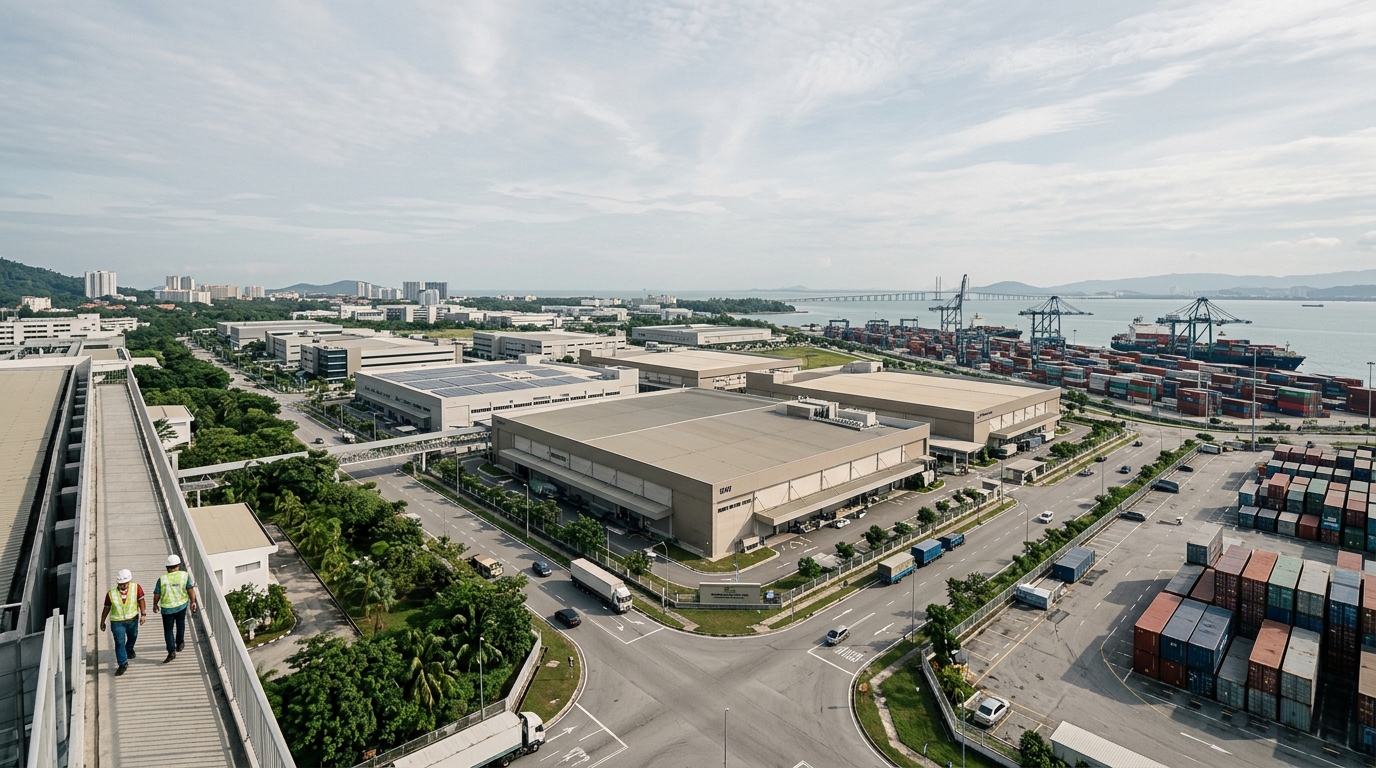
Malaysia hosts one of Southeast Asia's most established semiconductor ecosystems, anchored in Penang, Kulim, and Kedah — offering electronics buyers access to proven OSAT capacity, skilled engineering talent, and a stable trade environment.
Malaysia has been part of the global semiconductor supply chain for more than five decades, and the depth of that history is visible in the infrastructure, workforce, and process capability concentrated around Penang and the surrounding northern corridor. For electronics buyers evaluating a malaysia semiconductor manufacturer, the country's value proposition is primarily in back-end services — assembly, test, and packaging — where it sits alongside Thailand and the Philippines as one of Southeast Asia's most established destinations. What distinguishes Malaysia is the density of its cluster: Penang alone hosts a significant share of the region's OSAT capacity, supported by an engineering workforce that has matured through successive technology generations.
The practical implication for procurement and supply chain teams is that Malaysia offers genuine depth rather than a thin layer of contract assemblers. Supplier relationships here typically involve more sophisticated process conversations, more established quality systems, and more direct access to applications engineering than buyers encounter in lower-cost, earlier-stage manufacturing destinations. That advantage comes with its own considerations — larger OSAT operations have volume thresholds, qualification cycles are rigorous, and capacity allocation during industry upcycles requires contractual attention. This guide is structured to help electronics buyers navigate those realities in a systematic way, from cluster geography through to commercial and IP frameworks.
Malaysia is also a signatory to both RCEP and CPTPP, which gives finished or semi-finished electronics shipped from Malaysia preferential tariff treatment in a broad set of import markets. For buyers whose end-market exposure includes Japan, Australia, Canada, or ASEAN member states, that trade agreement coverage can materially affect landed cost calculations and should be incorporated into the sourcing decision early rather than treated as an afterthought.
Understanding Malaysia's Semiconductor Cluster Geography and Industrial Zones
The northern corridor — anchored by Penang Island and the adjacent mainland — is where the highest concentration of semiconductor activity sits. Penang's Free Industrial Zones, established decades ago to attract multinational investment, remain active and provide streamlined customs treatment for imported components and exported finished assemblies. Most of the globally recognised OSAT names that operate in Malaysia have significant Penang footprints.
Kulim Hi-Tech Park in Kedah, approximately 60 kilometres north of Penang, was purpose-designed for advanced manufacturing and has attracted semiconductor fabs and precision electronics operations. Its infrastructure profile — dedicated power supply, purpose-built industrial plots, and proximity to Penang's supply ecosystem — makes it a practical alternative or complement for buyers whose programs require greenfield capacity or expansion room that Penang's more mature zones cannot easily provide.
The Klang Valley and Selangor host electronics manufacturing as well, though the specialisation in semiconductor assembly and test is less concentrated there. Buyers whose programs extend to printed circuit board assembly, electromechanical sub-assembly, or consumer electronics manufacturing may find the Klang Valley supplier base broader. For core semiconductor packaging and test, the northern cluster is the priority shortlisting geography.
Evaluating OSAT Capabilities: What Malaysian Suppliers Actually Offer
The term OSAT — outsourced semiconductor assembly and test — covers a range of process steps, and buyers need to be specific about which steps their program requires before shortlisting.
Assembly and Packaging Technologies
Wire bonding and leadframe-based packages remain widely available across Malaysian facilities and represent the most broadly accessible entry point. Flip-chip and wafer-level packaging require more specialised facilities; these exist in Malaysia but are concentrated among the larger operators. System-in-package and advanced heterogeneous integration work is available but less common — buyers should expect longer qualification cycles and should confirm process maturity levels with reference customer evidence rather than capability claims alone.
Test Services
Final test — including functional, parametric, and burn-in — is a core strength of the Malaysian OSAT ecosystem. Many facilities operate test floors with a range of handler and prober equipment, and some have invested in engineering teams capable of developing custom test programs. Buyers sourcing test capacity independently from assembly (split OSAT models) should verify handler compatibility with their device geometry and confirm ATE platform availability before committing to a qualification program.
Quality and Certification Baseline
ISO 9001 and IATF 16949 (for automotive-grade work) certifications are common among established Malaysian semiconductor manufacturers. JEDEC packaging standards compliance is typically expected. Buyers targeting automotive, industrial, or medical end markets should ask for application-specific qualification evidence — such as AEC-Q100 test reports for automotive ICs — rather than accepting generic quality certifications as sufficient.
| Capability Area | Availability in Malaysia | Notes for Buyers |
|---|---|---|
| Wire bond packaging | Broad | Available across many facility sizes |
| Flip-chip packaging | Moderate | Concentrated in larger OSAT operators |
| Wafer-level packaging | Moderate | Confirm process generation and yield data |
| System-in-package | Limited | Longer qualification; verify reference programs |
| Final electrical test | Broad | Confirm ATE platform and handler compatibility |
| Burn-in and reliability test | Moderate | Available; verify chamber capacity and protocols |
How to Structure Supplier Qualification for Malaysian Semiconductor Manufacturers
Qualification in semiconductor manufacturing is not a checkbox exercise — it is a structured technical process that should be planned into the project schedule from the outset. For a malaysia semiconductor manufacturer relationship to reach approved production status, buyers typically move through several distinct phases.
Initial supplier selection should involve a formal RFI process that covers process capability, equipment lists, cleanroom class, certifications, quality metrics (defect rates, yield history), and customer reference categories. This narrows the field before any facility visit commitment.
On-site audit scope should address process control documentation, equipment calibration records, ESD controls, materials traceability, and change management procedures. For programs with automotive or industrial reliability requirements, audit scope should extend to statistical process control implementation and corrective action history.
Process qualification runs — often structured as PQ lots or qualification builds — generate the yield and reliability data needed for formal supplier approval. Reliability testing protocols (temperature cycling, humidity exposure, mechanical stress) should be agreed in writing before qualification builds begin, not negotiated after results come in.
IP Protection Realities When Working with a Malaysia Semiconductor Manufacturer
Malaysia's IP framework is grounded in TRIPS-aligned national legislation, and enforcement mechanisms have developed meaningfully over time. For a malaysia semiconductor manufacturer engagement, the formal legal framework is more predictable than in some other Asian manufacturing destinations. That said, buyers should not treat legal framework adequacy as a reason to relax operational IP hygiene.
The standard practice for electronics programs involving proprietary designs is tiered disclosure: each supplier receives only the information required to execute their specific scope of work. A packaging house does not need die design files; a test house does not need packaging process parameters. Structuring information flows this way limits exposure regardless of contractual protections.
Non-disclosure agreements are enforceable under Malaysian contract law. Buyers should ensure that NDAs specify Malaysian law as governing law and include explicit provisions covering mask works, process recipes, and test programs — not just generic confidential information language. For designs where the mask set itself represents core competitive advantage, discuss mask custody arrangements before program start.
Split-sourcing models — where assembly and test are performed by different suppliers — are commonly used by experienced electronics buyers as an additional IP risk management tool. The operational overhead is real, but for high-value designs the separation of process knowledge across suppliers meaningfully reduces single-party exposure.
Trade Agreement Leverage and Cost Structure Considerations
Malaysia's position in both RCEP and CPTPP gives electronics buyers meaningful options for optimising landed cost when shipping to member markets. RCEP covers the ASEAN bloc plus China, Japan, South Korea, Australia, and New Zealand. CPTPP extends preferential access to Canada, Mexico, Peru, and Chile among others. For a buyer whose end markets overlap with these geographies, qualifying Malaysian-origin goods can reduce import duty exposure compared to sourcing from non-member countries.
Qualifying for preferential treatment requires meeting Rules of Origin criteria — typically a change in tariff classification or a regional value content threshold. MITI administers the certificate of origin process in Malaysia, including RCEP Form and ATIGA Form D for intra-ASEAN trade. Buyers should engage a trade compliance specialist to map their specific HS codes against the applicable rules before assuming preferential rates apply.
On the cost structure side, Malaysia is not the lowest-cost assembly location in the region — Vietnam and certain Indonesian locations offer lower direct labour rates for simpler assembly tasks. Malaysia's advantage is competence-per-dollar for technically complex work: the combination of experienced process engineers, established infrastructure, and a stable operating environment means that yield losses, rework costs, and qualification delays are typically lower than at less mature locations. For semiconductor work specifically, that quality-adjusted cost profile often favours Malaysia over destinations that appear cheaper on direct rate comparisons.
For buyers building structured sourcing programs across multiple Asian countries, theBuild a Durable Manufacturing Partnership in Asia That Scalesguide covers the governance and commercial frameworks that underpin multi-country supply chain management.
Commercial Frameworks and Ongoing Supplier Governance
A supplier relationship with a malaysia semiconductor manufacturer should be governed by more than a purchase order terms sheet. For production programs with meaningful volume, buyers should establish formal supply agreements covering capacity allocation commitments, lead time guarantees, engineering change control procedures, material price adjustment mechanisms, and audit rights.
Capacity allocation language is particularly important in semiconductor supply chains, where demand volatility is a structural feature of the industry. Buyers who do not specify minimum allocation guarantees during upcycles often find themselves deprioritised when capacity tightens. Conversely, suppliers will typically require some form of rolling forecast commitment in exchange for allocating capacity — a balance that needs to be negotiated explicitly rather than assumed.
Engineering change control procedures should define who initiates changes, what notification lead time applies, and what re-qualification work is required before a change is reflected in production. For regulated end markets (automotive, medical, aerospace), change control documentation requirements are non-negotiable and should be specified in the supply agreement before production begins.
Ongoing governance — quarterly business reviews, annual facility audits, supplier scorecard tracking — maintains the visibility needed to catch performance trends before they become program risks. Buyers without in-country presence often find this governance layer difficult to sustain without local support. MTS provides structured on-the-ground oversight for electronics sourcing programs across Malaysia; details of the support model are available at/services.
Frequently Asked Questions
What types of semiconductor services are most commonly available from Malaysian manufacturers?
Malaysian facilities predominantly offer back-end semiconductor services: wafer bumping, die attach, wire bonding, flip-chip packaging, final testing, and tape-and-reel. Front-end wafer fabrication capacity exists but is more limited compared to Taiwan or South Korea. Buyers sourcing OSAT services — outsourced semiconductor assembly and test — will find the widest supplier base and deepest process expertise in Malaysia.
How does Malaysia's trade agreement coverage benefit electronics buyers?
Malaysia is a signatory to RCEP and CPTPP, giving buyers preferential tariff treatment when importing finished or semi-finished electronics into markets including Japan, Australia, Canada, and ASEAN member states. Buyers should confirm Rules of Origin requirements with their trade compliance team, as qualifying for preferential rates under RCEP Form or CPTPP certificates requires meeting specific value-added thresholds. MITI administers certificate of origin processes in Malaysia.
Which geographic clusters should electronics buyers prioritise when shortlisting Malaysian suppliers?
Penang is the primary hub, housing a dense concentration of multinational OSAT operations and their local supply chains. Kulim Hi-Tech Park in Kedah is purpose-built for semiconductor and precision electronics manufacturing, with good infrastructure and available land for expansion. Selangor and the Klang Valley offer additional electronics manufacturing capacity, though the semiconductor specialisation there is less concentrated than in the north.
What IP protection considerations should buyers address before engaging a Malaysian semiconductor manufacturer?
Malaysia's IP framework is governed by national legislation aligned with TRIPS obligations, and enforcement has improved materially over the past decade. That said, buyers should still implement tiered disclosure: share only the information a specific supplier needs for their scope of work. Non-disclosure agreements are enforceable under Malaysian contract law, and contract terms should specify jurisdiction. For designs that represent core competitive advantage, consider splitting process steps across more than one supplier or retaining critical mask sets with a neutral IP custodian.
How long does it typically take to qualify a new semiconductor assembly supplier in Malaysia?
Supplier qualification timelines vary by complexity, but buyers should plan for a minimum of three to six months from initial audit to approved production status for standard package types. Complex or application-specific packaging — such as advanced flip-chip or system-in-package work — commonly requires longer qualification cycles. Building audit, process qualification, reliability testing, and first-article review into the project schedule from day one avoids downstream delays.
Are there minimum order or capacity considerations unique to Malaysian OSAT suppliers?
Larger, globally listed OSAT operations in Malaysia typically have minimum volume thresholds that make them less accessible for low-volume or development-stage programs. Mid-tier and specialist Malaysian manufacturers are often more flexible on minimum order quantities, though their process breadth may be narrower. Buyers should clarify capacity allocation policies — particularly how suppliers handle competing demand during industry upcycles — during commercial negotiations.
What role can an execution partner play in semiconductor sourcing from Malaysia?
An on-the-ground execution partner can accelerate supplier identification, coordinate facility audits, manage engineering change communication, and provide continuity when a buyer's internal team lacks regional presence. For electronics buyers without existing Malaysia relationships, a partner familiar with the local supplier landscape reduces the risk of engaging facilities that lack the compliance documentation or process capability the program requires. MTS provides this kind of structured sourcing and oversight support across the Malaysian electronics cluster.
Malaysia's semiconductor ecosystem rewards buyers who engage it systematically — with well-defined scope, disciplined qualification processes, and commercial frameworks that address capacity, change control, and IP from the outset. The cluster's depth means genuine technical partnership is possible, but that depth is only accessible to buyers who approach supplier engagement with the same rigour the best Malaysian manufacturers apply to their own processes. For teams building or restructuring electronics supply chains across Asia, Malaysia belongs in the evaluation set for any program where assembly and test quality, trade agreement positioning, and workforce engineering depth are decision criteria.
Need eyes on the ground in Malaysia?
MTS is an execution partner — supplier verification, manufacturing management, quality control and export logistics across Indonesia, Vietnam and China.
Related services
Related articles
Receive furniture sourcing insights across Asia.
One email per week. No spam.