Malaysia Trade Deals: What CPTPP and RCEP Mean for B2B Sourcing
16 min read
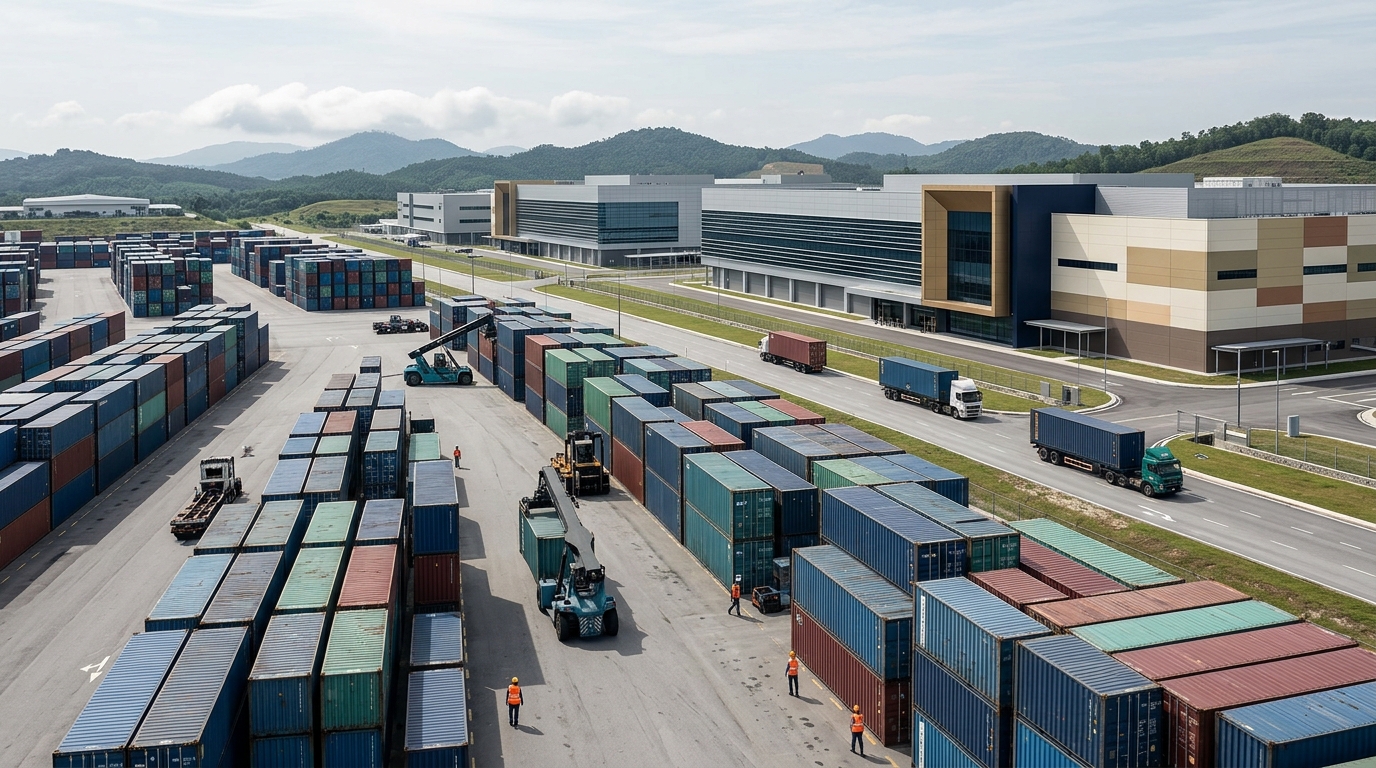
Malaysia's overlapping trade agreements — CPTPP, RCEP, and a network of ASEAN FTAs — create measurable duty advantages for global buyers, but only when rules of origin and documentation are handled correctly. This guide explains how each framework works and where procurement teams should focus.
Few mid-sized manufacturing economies occupy as commanding a position in international commerce as Malaysia does today. The country holds concurrent membership in RCEP — the single largest trade bloc measured by combined member GDP — and in CPTPP, a framework that demands among the most rigorous standards for tariff elimination and commercial discipline of any multilateral agreement outside a bilateral arrangement with the EU or United States. Underpinning these two headline accords is an additional layer of ASEAN-negotiated free trade agreements extending preferential access to Japan, China, South Korea, India, Australia, New Zealand, and Hong Kong. Procurement professionals and brand owners who source components, finished goods, or contract manufacturing capacity through this jurisdiction will find that a deliberately constructed strategy built around Malaysian trade agreements can deliver meaningful reductions in landed cost — provided that rules-of-origin documentation and qualification workflows are executed with rigorous attention to detail.
Preferential treatment under any malaysia trade deal is not automatic — it must be actively claimed and properly substantiated. A surprisingly common scenario sees importers receiving goods from Malaysian suppliers, clearing customs at MFN rates, and walking away unaware that lower preferential duties were within reach. The more costly scenario involves post-clearance reviews, particularly in Japan, Australia, and the United Kingdom, where customs authorities have increasingly scrutinised origin declarations that lack supporting documentation from the supplying party. When such challenges succeed, the financial exposure extends well beyond recovered duties: penalties, accrued interest, and potential disqualification from the relevant preferential program can follow. The fundamental exposure for B2B buyers, in other words, is not that these agreements underdeliver on their stated terms — it is that the savings they offer go uncaptured, or worse, are claimed without the evidentiary foundation needed to defend them.
Supply-chain leads, procurement managers, and trade-compliance officers who are assessing or actively managing sourcing operations through Malaysia will find this piece particularly relevant. The discussion examines how Malaysia's principal trade agreements interconnect, the practical mechanics of rules of origin and cumulation provisions, and the specific documentation obligations that compliance teams must fulfil to capture the preferential tariff advantages each malaysia trade deal makes available. The goal is a clear, actionable framework rather than a surface-level summary.
How RCEP and CPTPP Create Overlapping Duty Opportunities for Malaysian Exporters
Malaysia became bound by RCEP in March 2022, bringing the country into a unified regulatory framework shared across fifteen Asia-Pacific economies. Eight months later, in November 2022, the CPTPP also took effect for Malaysia, extending its preferential network to eleven nations across Asia, the Americas, and the Pacific. Because Japan holds membership in both arrangements, a procurement team sourcing from Malaysia for delivery into Japan faces an interesting strategic decision: either malaysia trade deal framework can be cited at the border, and selecting the one that yields the lowest applicable tariff for a specific HS code becomes a meaningful lever for reducing landed costs.
Accessing these benefits requires deliberate action rather than passive eligibility. An exporter must secure or issue a qualifying certificate of origin aligned to the chosen framework, and the shipment must satisfy the origin criteria that framework specifies. Because RCEP and CPTPP frequently apply distinct product-specific rules to identical tariff classifications, a good that clears the threshold under one malaysia trade deal arrangement may fall short under the other. B2B buyers managing multi-tier supply inputs are therefore advised to conduct a qualification assessment across both agreements for priority product lines before locking in any standard export procedure.
Tariff Elimination Schedules Are Not Always Immediate
Neither the CPTPP nor RCEP abolishes duties in a single step at the moment each agreement takes effect — instead, reductions are graduated across multiple years. For goods such as processed food products, electronics parts, and select textile categories, complete duty removal can take anywhere from a decade to fifteen years to reach zero. Rather than operating under the assumption that preferential rates are already at their floor, B2B buyers sourcing under any malaysia trade deal should consult the specific staging schedule attached to the relevant agreement for their target market and verify the rate that applies in the current calendar year. The RCEP Secretariat and Malaysia's Ministry of International Trade and Industry (MITI) both maintain accessible, regularly updated tariff schedule resources for this purpose.
Understanding Rules of Origin: The Qualification Step That Most Buyers Underestimate
Determining whether goods actually originate in Malaysia under the terms of a relevant malaysia trade deal is a prerequisite for accessing any reduced duty rate — this is not an administrative checkbox but a binding legal requirement. Customs officials in the importing country hold full authority to scrutinize and challenge origin claims, making compliance with rules-of-origin provisions a substantive obligation rather than a procedural one.
Most agreements use one or more of three core criteria:
Three distinct rule-of-origin criteria typically govern whether goods qualify under a malaysia trade deal framework. First, the Change in Tariff Classification requirement demands that the final product fall under a different HS chapter, heading, or subheading than its non-originating components — meaning production activities carried out in Malaysia must be sufficiently transformative to trigger that reclassification. Second, Regional Value Content thresholds mandate that a defined proportion of the product's total value derive from ASEAN member states or partner-country inputs and processing; precise percentages differ by commodity and governing agreement, with ATIGA commonly setting a 35 to 40 percent benchmark and RCEP permitting either a build-up or build-down calculation methodology. Third, Specific Process Rules apply to select product categories — chemicals and certain textile goods chief among them — where a prescribed manufacturing operation must physically take place in the qualifying country, irrespective of how much domestic value content the product already contains.
Each trade agreement's annexes set out product-specific origin criteria that must be verified at the six-digit HS code level — a step no exporter or documentation team should skip. For every shipment, companies need to establish and record precisely how each product satisfies the applicable qualifying criterion, gather supplier declarations covering all non-originating material inputs, and maintain that supporting documentation for a minimum of three to five years, with the exact retention window varying by agreement. This discipline matters because customs authorities conducting post-clearance audits are entitled to look back across that entire period, and gaps in the records can trigger significant compliance exposure.
Cumulation Under RCEP: Why Malaysia Works as a Regional Assembly Hub
For procurement teams overseeing multi-country supply networks, cumulation stands out as one of RCEP's most strategically valuable provisions. The agreement permits inputs sourced from any participating RCEP nation to be counted as Malaysian-originating content when those materials are incorporated into goods that are assembled or further processed within Malaysia. The practical effect is a substantial broadening of the supplier base that manufacturers can draw from while still satisfying origin requirements under the malaysia trade deal framework.
What this translates to operationally is that an electronics manufacturer based in Malaysia can legitimately draw printed circuit boards from China, interconnect components from Japan, and housing assemblies from Indonesia — each of them RCEP signatories — and still have the end product certified as originating from Malaysia under the agreement, so long as the value-addition performed on Malaysian soil satisfies the applicable regional value content threshold. For businesses running supply networks spread across Southeast Asia and Northeast Asia, this dynamic builds a compelling rationale for designating Malaysia as the central node for final assembly and outbound export under any broader malaysia trade deal strategy.
The cumulation rules embedded in CPTPP are more restrictive in scope: only materials sourced from fellow CPTPP signatories qualify for cumulation purposes, meaning components of Chinese origin fall entirely outside this calculation given that China has no membership in the agreement. This distinction carries real operational weight for procurement teams. A buyer routing shipments to Japan, for instance, must carefully audit where each input actually originates before determining whether RCEP or CPTPP certification delivers the stronger preferential outcome under the relevant malaysia trade deal framework.
Certificates of Origin and the Documentation Process for Preferential Claims
Accurate origin paperwork ultimately determines whether a B2B buyer captures available duty reductions or forfeits them at customs. Under each malaysia trade deal framework, exporters based in Malaysia must present distinct certificate formats that correspond to the specific destination market and the governing preferential agreement in force.
When routing goods to ASEAN markets under the ATIGA framework, exporters rely on Form D as the primary certificate of origin, with issuance authority delegated to MITI-accredited organisations — most commonly the Federation of Malaysian Manufacturers (FMM) or the Malaysian International Chamber of Commerce and Industry (MICCI). Upon arrival at the destination country's port, the importing customs authority conducts a verification process that cross-references the declared HS code, applicable origin criterion, and consignment particulars against supporting documentation, including the commercial invoice and bill of lading.
Under RCEP, two distinct pathways exist for proving originating status. Exporters may obtain a formal Certificate of Origin issued by MITI, or — provided an approved-exporter programme has been established — they may instead submit a self-declaration embedded within the commercial invoice or presented as a separate written statement. The self-certification route is accessible only to exporters who have completed registration with MITI and can demonstrate a working understanding of how RCEP origin criteria apply to their goods.
Under the CPTPP framework, exporters who hold certified status are likewise permitted to self-declare origin without relying on a third-party authority. Such a declaration must confirm that the products qualify as originating goods, specify which origin rule applies to them, and provide the registration or certification credentials of the exporter submitting the claim.
For teams managing large volumes or multiple SKUs across different destination markets, maintaining a product origin matrix — mapping each product to its applicable agreement, qualifying criterion, and required certificate type — is a practical way to reduce errors at the point of export. This is particularly relevant for buyers sourcing a product range from a single Malaysian manufacturer who ships to multiple countries under different agreement frameworks.
For a broader view of how documentation fits into the export process, see Import Export Documentation Support for Asia-Origin Shipments.
Malaysia's Manufacturing Hubs and How Location Affects Origin Qualification
Not all of Malaysia's manufacturing capacity is uniform in its trade-compliance infrastructure. The Penang corridor — anchored in semiconductor assembly, electronics manufacturing, and precision components — has a high concentration of export-oriented manufacturers with established FTA documentation processes. The Johor region, particularly in the Iskandar Malaysia development zone near Singapore, hosts a mix of chemical processing, food manufacturing, and logistics-linked assembly. Kuala Lumpur's industrial periphery (Shah Alam, Petaling Jaya, Klang) covers consumer goods, packaging, and light manufacturing.
Suppliers in established export-processing zones and those with ISO 9001-certified quality management systems are generally better positioned to provide the documentation trail — input declarations, bill of materials, cost buildup worksheets — needed to support an origin determination. Buyers evaluating new Malaysian suppliers as part of a malaysia trade deal strategy should include origin-management capability as a due-diligence criterion alongside quality, capacity, and lead time.
For a structured overview of sourcing options across Malaysia's manufacturing landscape, see our sourcing from Malaysia hub, and explore our full sourcing and execution services for in-country support.
Practical Steps for Buyers Looking to Activate Preferential Access from Malaysia
Unlocking tariff preferences under any bilateral or multilateral agreement linking Malaysia to a destination market demands close collaboration across multiple stakeholders—the importing company, its Malaysian manufacturing or trading partner, and the customs compliance function operating at the point of entry. The workflow outlined below reflects how procurement-mature organizations typically structure this process to avoid delays, duty miscalculations, or certificate rejections:
Step 1: Determine the Applicable Agreement
Begin by identifying the target export market and determining which active agreements Malaysia maintains with that jurisdiction. Where a destination country falls under more than one malaysia trade deal simultaneously — Japan and Australia are practical examples of this overlap — retain both options as candidates and proceed to assess origin qualification criteria for each.
Step 2: Classify the Product Correctly
Verifying the correct tariff classification at the six-digit HS code level—or extending to eight or ten digits where the destination country's schedule requires it—is a foundational step that B2B buyers frequently overlook. When goods are misclassified, preferential duty claims are among the first casualties during customs audits, often resulting in denied benefits or retroactive reversals that erode the cost advantages a malaysia trade deal was intended to deliver.
Step 3: Apply the Product-Specific Rule
Begin by identifying the origin rule tied to your specific HS code within the relevant agreement's product annex. From there, assess whether the manufacturing or processing steps your supplier carries out are sufficient to meet the applicable requirement—whether that is a change in tariff classification, a regional value content threshold, or a prescribed production process. Where raw materials or components are drawn from several different countries, each input must be traced and evaluated against the cumulation provisions set out under the malaysia trade deal framework you intend to claim benefits through.
Step 4: Collect and Retain Supporting Evidence
Ensure your Malaysian manufacturing partner provides declarations at the input level, detailing the materials and components used in production. Alongside these, maintain thorough records including cost analyses, bills of materials, and manufacturing documentation. Should any origin determination be challenged during an audit, this body of evidence forms the foundation upon which a valid preferential claim under any malaysia trade deal framework must rest.
Step 5: Obtain or Issue the Correct Certificate
Before goods leave the origin country, coordinate closely with your supplier to confirm that the appropriate proof-of-origin document has been prepared correctly — this means a Form D under ATIGA, either an RCEP Certificate of Origin or a self-declaration under RCEP depending on the arrangement, and a certified-exporter declaration for shipments covered by CPTPP. Regardless of which malaysia trade deal applies, the document must explicitly cite the relevant agreement, the precise tariff classification, and the specific rule of origin that the product satisfies; any discrepancy in these details can result in preferential duty claims being rejected at the border.
Step 6: Declare Preferential Origin at the Port of Import
When goods arrive at the destination market, the designated importer of record bears responsibility for declaring preferential origin at the point of customs clearance and submitting the relevant certificate at that time. Certain jurisdictions do permit buyers to assert the preference after the shipment has already cleared — either through a duty refund claim or by filing an amendment — though pursuing this retrospective route tends to involve considerably greater administrative burden than declaring at entry.
Frequently Asked Questions
Which trade agreements does Malaysia currently participate in?
Among Southeast Asian economies, Malaysia maintains one of the more extensive webs of preferential trade arrangements. Its commitments span multilateral frameworks—RCEP, CPTPP, and the suite of ASEAN-anchored pacts that includes ATIGA, AIFTA, AKFTA, AANZFTA, and AHKFTA—alongside direct bilateral agreements concluded with Japan, Pakistan, Chile, Australia, and New Zealand, with India accessible through the ASEAN channel. For B2B buyers evaluating any malaysia trade deal as a sourcing lever, the critical variables are the destination market and whether the exported goods can satisfy the rules-of-origin criteria specific to whichever agreement governs that particular shipment lane.
What is the difference between RCEP and CPTPP for a buyer importing from Malaysia?
Spanning fifteen economies across the Asia-Pacific region — among them China, Japan, South Korea, Australia, New Zealand, and every ASEAN member state — RCEP tends to be the more consequential framework for buyers managing intra-regional supply chains. CPTPP, by contrast, unites eleven signatory nations, notably Canada, Mexico, and Japan, and imposes comparatively stricter requirements around labour practices and intellectual property protections. When a target market falls under both frameworks, procurement teams can strategically select whichever malaysia trade deal arrangement yields the lower applied duty rate, so long as the shipment satisfies the applicable rules of origin for that specific agreement.
How do rules of origin work for manufactured goods leaving Malaysia?
Under the majority of Malaysia's preferential trade agreements, a product must either originate entirely within the country or undergo a meaningful transformation on Malaysian soil — a standard generally measured through a shift in tariff heading, a regional value content requirement, or a qualifying production process. Before treating any shipment as eligible for reduced duties, B2B procurement teams should consult the product-specific rules set out in the relevant agreement's annex, since assumptions can prove costly. Where finished goods incorporate components drawn from several different countries, the supply chain analysis becomes particularly rigorous: the operation that confers originating status must demonstrably take place in Malaysia, not at an earlier stage in another jurisdiction.
What is cumulation and how can it benefit sourcing from Malaysia?
Regional accumulation provisions permit materials and components originating in fellow member states to be counted toward the origin calculation of a finished good exported under the same agreement. Within RCEP's framework, a Malaysian manufacturer can legitimately incorporate parts sourced from Vietnam, Indonesia, or China into its production process, and the resulting product will still attract preferential duty rates — as long as the aggregate regional value content clears the stipulated threshold. For B2B buyers evaluating a malaysia trade deal strategy, this mechanism positions Malaysia as a compelling final-assembly or value-addition node within broader Asia-Pacific supply chains.
What certificate of origin documents are used for Malaysian preferential shipments?
Which origin document your shipment requires depends on both the destination market and the trade framework being claimed. For consignments moving under ATIGA into ASEAN member states, Form D remains the standard instrument, and it must be issued through a MITI-authorised body in Malaysia. Under RCEP, exporters may present either a formal Certificate of Origin or a self-declaration, provided the exporter holds the necessary approved status. CPTPP-preferential claims follow a similar dual-track approach — a conventional Certificate of Origin is acceptable, but certified exporters may instead submit a self-certification where the agreement expressly allows it. Regardless of which malaysia trade deal underpins the shipment, every origin document must accurately state the specific agreement being invoked, the criterion under which the goods qualify, and the relevant tariff line. Any discrepancy in these fields gives importing-country customs authorities grounds to disregard the preference claim entirely and apply standard MFN duty rates instead.
Can goods be re-exported through Malaysia to gain preferential access — so-called tariff shopping?
Every significant trade framework to which Malaysia is a signatory incorporates direct consignment or non-manipulation provisions, meaning that qualifying goods must travel from Malaysia to the importing country without passing through the commercial channels of any intermediate nation. Where logistical necessity requires routing through a third-country port, the cargo must remain under continuous customs supervision and be accompanied by a through bill of lading or equivalent documentary evidence — only under those conditions is such transshipment considered permissible. B2B buyers and suppliers should understand that using Malaysia as a mere transit point to fabricate Malaysian-origin status constitutes origin fraud under any active malaysia trade deal arrangement, exposing all parties involved to substantial legal and commercial liability.
How should a procurement team start qualifying their product for preferential duty treatment from Malaysia?
A useful first step is to determine the product's six-digit HS classification and then cross-reference the applicable product-specific rule within the relevant agreement's annex. Once that rule is established, buyers should work backwards through the supply chain to verify each input's origin and assess whether the value added or transformation occurring in Malaysian facilities meets the required threshold. In certain circumstances, Malaysia's Ministry of International Trade and Industry can issue binding advance rulings on origin status, giving exporters documented certainty before goods leave the country. Engaging a locally based execution partner who integrates origin recordkeeping directly into the export workflow is an effective way to minimise exposure to retrospective duty recovery claims—a risk that becomes particularly relevant when leveraging any malaysia trade deal that offers preferential tariff treatment.
Malaysia's treaty network is one of the most commercially useful in Southeast Asia, but the benefits are conditional on correct qualification and documentation at every shipment. Procurement teams that invest in understanding which malaysia trade deal applies to their product, which origin criteria their supplier's process satisfies, and which certificate format each destination market requires will consistently outperform those that treat preferential duty as a supplier's problem to solve alone. Getting this right is a repeatable, documentable process — and one that compounds in value as sourcing volumes grow.
Related resources
Read the parent pillar guide onImport & Export Support. Explore the full country hub:Sourcing from Malaysia. Overview of every offering:Manufacturing & Trading Services.
Need eyes on the ground in Malaysia?
MTS is an execution partner — supplier verification, manufacturing management, quality control and export logistics across Indonesia, Vietnam and China.
Related services
Related articles
Receive furniture sourcing insights across Asia.
One email per week. No spam.