Philippines Exports: B2B Buyer's Overview
11 min read
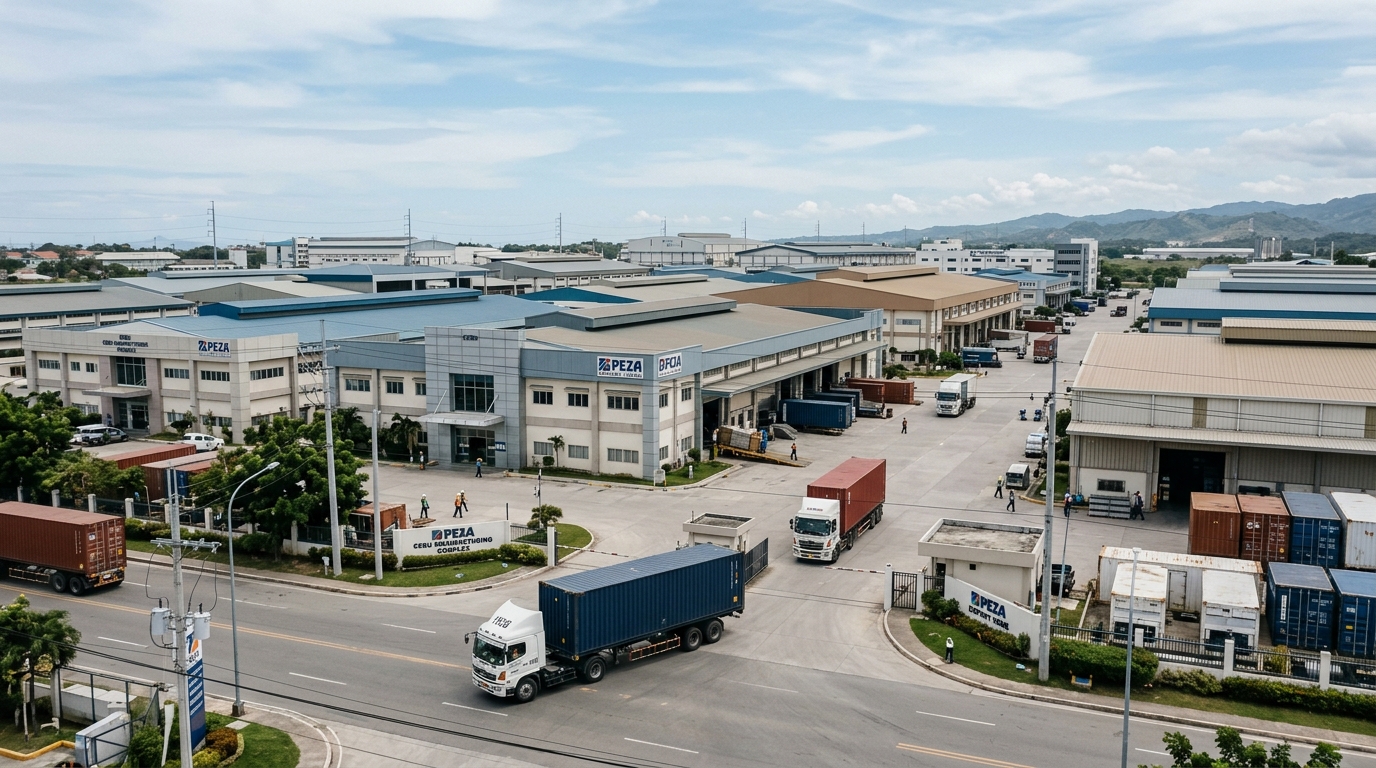
The Philippines is a mid-tier export economy with established strengths in electronics, garments, processed foods, and minerals — and a growing role in RCEP-linked supply chains. This guide helps procurement and sourcing teams understand which categories perform, where complexity concentrates, and how to structure a reliable buying program.
The Philippines occupies a specific and often underappreciated position in Asian supply chains. As an archipelago economy with a large English-speaking workforce, established free trade zone infrastructure, and active participation in ASEAN and RCEP frameworks, it offers procurement teams a credible origin for several discrete product categories. Understanding which categories are genuinely competitive — and where the operational friction lies — is the starting point for any sourcing assessment.
Philippines exports are dominated by electronics and semiconductor components, a legacy of multinational investment that stretches back several decades. Beyond electronics, the country has durable export capacity in garments and woven apparel, processed and canned foods, copper and nickel concentrates, and a range of chemical products. These categories are not equally accessible to all buyer profiles: electronics manufacturing is largely embedded in multinational supplier networks, while garments, processed foods, and mineral-linked products are more open to new buyer relationships.
For procurement managers building or diversifying a supplier base, the Philippines warrants a structured evaluation rather than a blanket inclusion or exclusion. Logistics infrastructure varies significantly between Luzon, Visayas, and Mindanao. Regulatory requirements for certain product categories — particularly food and chemical exports — add steps that affect lead times. And while labor costs remain competitive relative to more industrialized Asian markets, the cost advantage must be weighed against a relatively higher ocean freight baseline driven by the country's island geography and port congestion at peak periods.
This article maps the main export categories, outlines the trade frameworks relevant to buyer decisions, and addresses how organizations typically structure sourcing programs that include the Philippines as one origin among several.
Top Export Categories and Their Relevance to B2B Buyers
Electronics, semiconductors, and related components account for a substantial portion of total Philippine export value — commonly cited as the single largest category. Most of this production occurs inside PEZA-administered special economic zones in Laguna, Cavite, Batangas, and the Cebu corridor, where registered manufacturers operate under fiscal incentive structures that support competitive pricing on volume orders. Buyers in this category are typically dealing with tier-one or tier-two component suppliers embedded in existing global electronics supply chains rather than small independent manufacturers.
Garments and woven apparel represent a more accessible category for mid-market buyers. The Philippines has a long history in cut-and-sew manufacturing, with supplier clusters in Metro Manila, Pampanga, and parts of Cebu. Quality levels vary widely across this segment, and buyers should distinguish between suppliers that hold international social compliance certifications and those operating with minimal third-party oversight. Lead times for garments from the Philippines are generally longer than from Vietnam or Bangladesh, a factor that affects order planning for time-sensitive buying cycles.
Processed and preserved foods — including canned fish, coconut-derived products, tropical fruit preparations, and sugar — form a third meaningful export segment. This category benefits from the Philippines' agricultural base and from DTI and regulatory support for food export programs. Buyers importing food products into regulated markets (the EU, the US, Japan) must confirm that supplier facilities hold the appropriate food safety certifications and that export health certificates are issued by the relevant Philippine government agency.
Copper concentrates, refined copper, and nickel ore are significant by value but are typically transacted through commodity trading structures rather than standard B2B purchase-order frameworks. Buyers in manufacturing who consume refined metals may source Philippine-origin material indirectly through metal traders or smelters.
How RCEP and ASEAN Frameworks Shape Buyer Cost Structures
The Philippines is an ASEAN member and a ratified participant in RCEP, meaning Philippine-origin goods can access preferential tariff rates in ASEAN markets, China, Japan, South Korea, Australia, and New Zealand — provided the goods meet applicable rules of origin. For buyers in those destination markets, this can translate to meaningfully lower import duties compared with sourcing equivalent products from non-member origins.
The operative mechanism is the certificate of origin. Under RCEP, exporters or producers issue a declaration, and the document format follows the RCEP-specific form. Under ASEAN frameworks for intra-ASEAN trade, the ATIGA Form D applies. Buyers should not assume these certificates are automatically generated — the supplier must apply for and obtain them from the relevant issuing authority, and the product must qualify under the applicable value-added or change-in-tariff-heading test.
For buyers whose primary market is the United States, the RCEP framework is not directly relevant — the US is not a party. US buyers rely instead on standard MFN tariff rates for Philippine goods, and in some product categories, eligibility under the Generalized System of Preferences may apply, though GSP program status is subject to periodic legislative renewal and product-specific exclusions.
Destination Markets and Logistics Corridors That Buyers Should Map
The United States, Japan, China, Hong Kong, and Singapore are consistently among the primary destination markets for Philippines exports. These corridors are supported by direct container services from the Port of Manila, Batangas Port, and Cebu International Port, as well as air cargo capacity from Ninoy Aquino International Airport and Mactan-Cebu International Airport.
Buyers shipping to Europe face longer transit times — typically routed through Singapore or Port Klang transhipment hubs — and should build realistic lead-time buffers into their order cycles. Port congestion at Manila has historically been a friction point during peak export periods, and buyers on time-sensitive programs benefit from maintaining buffer stock rather than operating on just-in-time assumptions.
| Destination Region | Typical Ocean Transit from Manila | Preferred Certificate of Origin | Key Consideration |
|---|---|---|---|
| United States | Around 18-25 days (West Coast) | Standard commercial CO | MFN duty rates apply; GSP eligibility varies by product |
| Japan | Around 5-7 days | RCEP Form or AJCEP Form | Preferential rates available; strict phytosanitary rules for food |
| China | Around 4-6 days | RCEP Form | Rules of origin documentation scrutinized closely |
| EU (via transhipment) | Around 25-35 days | EUR.1 or REX statement (where applicable) | Longer transit demands higher safety stock levels |
| ASEAN (intra-regional) | Around 3-10 days depending on port | ATIGA Form D or RCEP Form | Competitive freight rates; port infrastructure varies by destination |
Structuring a B2B Sourcing Program That Includes the Philippines
Buyers adding the Philippines to an existing multi-origin sourcing program need to address several structural questions before issuing purchase orders. The first is supplier selection methodology: given the concentration of Philippine manufacturing in specific industrial zones, on-the-ground sourcing intelligence — or a trading intermediary with established Philippine supplier relationships — is more reliable than directory-based outreach alone.
The second question is contract structure. Philippine suppliers typically transact on FOB Manila or FOB Cebu terms, placing ocean freight and insurance responsibility on the buyer. Buyers who prefer CIF or DDP structures may need to negotiate these terms explicitly or route the transaction through a trading counterparty that can consolidate freight and insurance management. For buyers managing multiple Asian origins simultaneously, consolidating through a single counterparty eliminates the administrative burden of managing separate freight, insurance, and customs documentation stacks per country.
The third question is payment terms and currency exposure. Most Philippine export transactions are denominated in US dollars. Standard payment terms in the market range from 30% advance plus balance against documents, to letters of credit for larger or higher-risk transactions. Open account terms are generally available only after an established transactional history.
For teams that want a single structured counterparty to manage Philippines procurement alongside other Asian origins, the approach is described in detail in ourInternational Trading Services B2B: One Counterparty for Every Cross-Border Tradeguide. MTS also maintains direct sourcing relationships in the Philippines — see ourservices overviewfor category-specific capability.
Regulatory and Compliance Factors Specific to Philippine Export
The Bureau of Customs Philippines administers export declarations and clearances, with documentation submitted through the Philippine Customs Management System. For most manufactured goods, the process is straightforward, but certain product categories require pre-export clearance from sector regulators: the Food and Drug Administration Philippines for food, drug, and cosmetic products; the Fertilizer and Pesticide Authority for agricultural chemical products; and the Mines and Geosciences Bureau for mineral exports.
Buyers importing Philippine-origin goods into the United States must also ensure that their suppliers are aligned with US Customs and Border Protection requirements, including country-of-origin marking, any applicable importer security filing (ISF) requirements, and, for certain product categories, Consumer Product Safety Commission (CPSC) testing and certification obligations.
For food imports into the EU or Japan, phytosanitary certificates, health certificates, and in some cases maximum residue level compliance documentation are required. These documents must be issued by authorized Philippine government agencies, and the process typically adds several working days to the pre-shipment cycle. Buyers should build this buffer into their purchase-order-to-ship timelines.
Frequently Asked Questions
Which export categories from the Philippines are most established for B2B buyers?
Electronics and semiconductors consistently account for the largest share of Philippine export value, followed by garments and textiles, processed and preserved foods, copper concentrates and refined metals, and chemical products. Each category has its own concentration of suppliers — electronics manufacturing is heavily clustered in PEZA-administered economic zones around Metro Manila, Laguna, and Cebu, while garments suppliers operate across Metro Manila and Visayas regions.
How does RCEP affect sourcing decisions for buyers importing from the Philippines?
The Philippines ratified RCEP, giving exporters preferential tariff access to ASEAN partners, China, Japan, South Korea, Australia, and New Zealand under a single framework. For buyers, this matters most when comparing landed costs across origin countries — a Philippine-origin component shipped into a RCEP-member market may carry lower duty than an equivalent product from a non-member origin. Buyers should verify applicable rules of origin and obtain the correct RCEP certificate of origin through their supplier or a licensed customs broker.
What is PEZA and why does it matter when sourcing from Philippines-based manufacturers?
PEZA — the Philippine Economic Zone Authority — administers special economic zones where registered locators benefit from fiscal incentives including income tax holidays and duty-free importation of capital equipment and raw materials. Many of the Philippines' largest electronics and semiconductor exporters operate inside PEZA zones. For buyers, a PEZA-registered supplier signals a degree of government oversight and often indicates more structured compliance with export documentation requirements, though it does not eliminate the need for independent quality audits.
What are the main destination markets for Philippines exports?
The United States, Japan, China, Hong Kong, and Singapore are commonly cited among the top destination markets for Philippine goods. The US is a particularly significant destination for electronics and garments, partly because of longstanding trade relationships and established logistics corridors. Buyers sourcing for European markets should factor in longer transit times from Philippine ports and verify whether their product category benefits from any applicable preferential trade arrangements.
What documentation is typically required to import goods from the Philippines?
Standard export documentation from the Philippines includes a commercial invoice, packing list, bill of lading or airway bill, and certificate of origin. For preferential tariff treatment under RCEP or ASEAN frameworks, buyers need a properly issued RCEP Form or ATIGA Form D. Certain regulated product categories — food products, medical devices, chemicals — require additional permits or certificates from the relevant Philippine regulatory agency, and buyers should clarify these requirements with their supplier or trading counterparty before finalizing purchase orders.
How do buyers typically manage quality risk when sourcing manufactured goods from the Philippines?
Most experienced buyers separate quality assurance from purchasing by engaging independent inspection companies for pre-shipment inspections, particularly on first and second orders with a new supplier. Defining product specifications and acceptable quality limits in writing — attached to the purchase order — is the baseline requirement. For ongoing programs, buyers often negotiate periodic factory audits covering production process controls, worker welfare standards, and subcontracting practices, since some Philippine garments and processed food suppliers use sub-suppliers for specific operations.
Can a single trading counterparty manage Philippines sourcing alongside other Asian origins?
Yes, and for many buyers this is the preferred model when procurement volumes span multiple countries. A structured trading intermediary can consolidate supplier contracts, harmonize documentation across origins, and present the buyer with a single set of commercial terms regardless of whether goods ship from the Philippines, Vietnam, Indonesia, or another market. This approach reduces the buyer's administrative exposure and typically simplifies accounts-payable reconciliation. MTS operates this model directly — you can review the framework in ourInternational Trading Services B2B: One Counterparty for Every Cross-Border Tradeguide.
Philippines exports offer genuine category depth in electronics components, garments, processed foods, and select commodities — but extracting reliable value from those categories requires deliberate supplier qualification, a clear understanding of applicable trade frameworks, and documentation discipline from the point of purchase order through to customs clearance in the destination market. Buyers who treat the Philippines as a complementary origin within a diversified Asian sourcing program, rather than a single-country dependency, tend to manage risk and cost most effectively. Engaging a trading partner with active on-the-ground relationships in the Philippines accelerates that process considerably.
Need eyes on the ground in the Philippines?
MTS is an execution partner — supplier verification, manufacturing management, quality control and export logistics across Indonesia, Vietnam and China.
Related services
Related articles
Receive furniture sourcing insights across Asia.
One email per week. No spam.