Outsourced Manufacturing in the Philippines: A Practical B2B Guide
11 min read
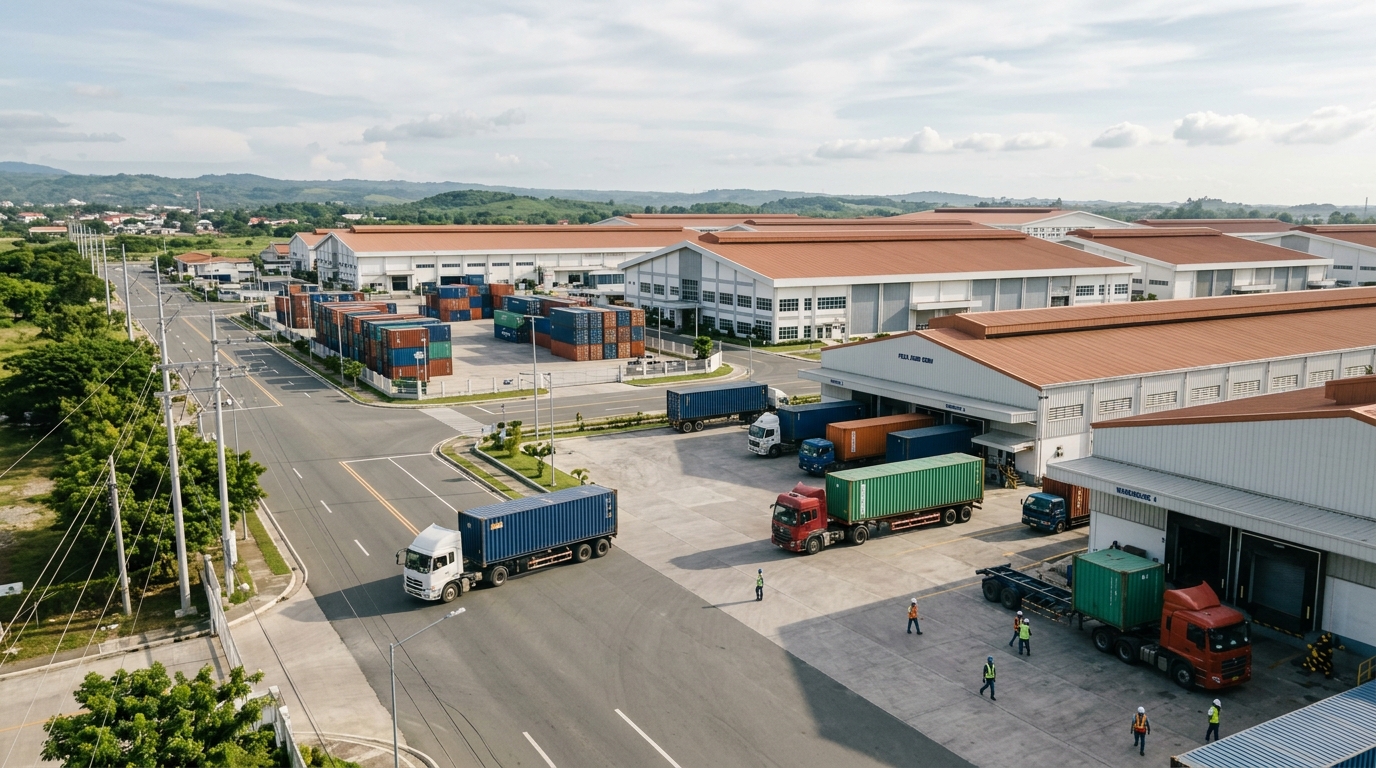
The case for outsourced Philippines manufacturing rests on a combination of factors that are straightforward to evaluate: an English-speaking industrial workforce, a well-established PEZA export-zone framework, competitive labor costs relative to East Asian alternatives, and a supply base in several categories that has been export-oriented for decades. International buyers — particularly those sourcing furniture, apparel, processed food, or electronics assembly — will find a more mature infrastructure than the country's marketing materials typically suggest, alongside limitations that matter just as much to understand before committing to a program.
This guide is written for procurement managers and supply-chain leads who are either evaluating the Philippines as a sourcing destination for the first time or looking to structure a more disciplined manufacturing partnership with an existing supplier. It covers the four primary manufacturing sectors, the geography of production hubs, the PEZA export-zone model, trade agreement access, and the due-diligence sequence that separates successful programs from costly first orders that never repeat.
The Philippines does not compete on pure price across all categories. Where it competes well is on customization capability, English-language communication, product quality in export-oriented sectors, and the regulatory clarity that PEZA and BOI registration provide. Buyers whose sourcing decisions hinge entirely on unit cost will often find lower prices elsewhere in Southeast Asia. Buyers who need reliable execution, manageable communication overhead, and a country risk profile distinct from China or Vietnam will find the Philippines worth a serious evaluation.
For buyers building long-term manufacturing programs rather than one-off orders, the structural question is not just whether Philippine suppliers can produce to specification, but whether the commercial and governance frameworks are in place to scale. That broader question is addressed in depth inBuild a Durable Manufacturing Partnership in Asia That Scales, which covers partner selection, contractual frameworks, and escalation governance across Asian sourcing programs.
The Four Manufacturing Sectors Where the Philippines Is Genuinely Competitive
Understanding where Philippines contract manufacturing has real depth — not just capacity on paper — is the starting point for any sourcing evaluation.
Furniture and Home Décor
Cebu is the country's most recognized furniture export hub, with a concentration of manufacturers producing solid wood, rattan, bamboo, and upholstered furniture for international buyers across North America, Europe, and Australia. Pampanga, in Central Luzon, hosts a secondary cluster with stronger capability in mass production of wooden and metal furniture components. Cebu manufacturers, in particular, have multi-decade experience with export-grade finishing, container-load optimization, and buyer-specified quality documentation.
Buyers sourcing furniture should be aware that many Cebu manufacturers operate as design-and-make workshops rather than pure CMT (cut, make, trim) factories. This means they can contribute to product development, which is an advantage for buyers without in-house design resources, but it also means detailed technical specifications and approved samples are critical before production begins. Disputes over finish interpretation or joint construction tolerances are the most common source of quality issues in first orders.
Garments and Woven Apparel
The Philippines has a long garment-export history, with manufacturing concentrated in Metro Manila's surrounding provinces and in Cebu. The sector is well-suited to mid-volume, higher-complexity production: embroidered workwear, uniforms, branded promotional apparel, and technical garments. It is less competitive for ultra-high-volume commodity basics, where Bangladesh and Vietnam have structural cost advantages.
Philippine garment factories commonly hold WRAP or SMETA certifications and are accustomed to buyer social compliance audits, which reduces administrative friction for buyers with ESG reporting requirements. DTI and BOI registration is standard for export-oriented facilities.
Food Processing and Agro-Industrial Exports
The Philippines is a significant exporter of processed tropical fruits, coconut derivatives, canned goods, and marine products. For international food buyers, the relevant quality infrastructure includes HACCP-certified facilities, Philippine FDA registration for export products, and compliance with the importing country's food safety requirements — which the manufacturer's export documentation should reflect.
Buyers sourcing private-label or contract-manufactured food products should treat Philippine FDA registration as a baseline requirement, not a differentiator. What distinguishes stronger suppliers is documented traceability from raw material sourcing through finished-product lot coding, and a track record of passing third-party audits commissioned by international buyers.
Electronics Assembly and Light Manufacturing
Electronics has been one of the Philippines' largest export categories by value for many years, though much of the sector is dominated by large multinational assemblers in PEZA zones. For international buyers seeking contract electronics assembly — PCB population, cable harness assembly, device testing — there is a mid-tier supplier base in PEZA zones around Metro Manila and in Laguna that serves international buyers at lower volumes than the multinationals require.
Quality standards in this segment typically follow IPC-A-610 for assembly and buyer-specified test protocols. PEZA registration is almost universal among export-oriented electronics manufacturers, making the zone framework particularly relevant here.
How the PEZA Export-Zone Model Works for International Buyers
PEZA — the Philippine Economic Zone Authority — administers designated economic zones where registered enterprises operate under a distinct regulatory and fiscal framework. For international buyers, understanding PEZA has two practical implications.
First, PEZA-registered manufacturers receive duty-free importation of raw materials, components, and capital equipment used in export production. This can reduce input costs meaningfully for manufacturers who rely on imported materials, and those savings may partially flow through to buyer pricing. Second, PEZA registration signals that the manufacturer has completed a formal government accreditation process, which is a useful — if not sufficient — data point in supplier due diligence.
For buyers, the practical due-diligence step is to request the manufacturer's PEZA or BOI certificate and confirm its current status. Lapsed or transferred registrations do occur, and assuming a supplier retains incentive status without verification is a compliance risk.
Trade Agreement Access and Rules of Origin Compliance
The Philippines' membership in ASEAN and RCEP gives Philippine-manufactured goods preferential tariff access in a significant number of destination markets. RCEP, in force for the Philippines, covers preferential rates for exports to China, Japan, South Korea, Australia, New Zealand, and other RCEP parties, subject to rules of origin compliance.
For buyers importing Philippine goods into these markets, the relevant document is the RCEP Form certificate of origin, which the Philippine exporter applies for through the DTI or an authorized issuing body. Buyers should confirm with their customs broker that the specific product's rules of origin can be met given the supplier's actual manufacturing process and material sourcing — particularly for products that use significant imported components, where the value-added threshold matters.
The Philippines also retains GSP (Generalized System of Preferences) access in several markets, though coverage varies and buyers should verify current status for their specific import country and product classification before building duty assumptions into landed cost models.
Due Diligence Sequence for New Philippine Supplier Relationships
The due-diligence process for outsourcing to Philippines-based manufacturers follows a sequence that, when compressed or skipped, reliably produces problems in the first production run.
Step 1 — Document verification. Confirm SEC-PH corporate registration, PEZA or BOI certificate if claimed, product-specific licenses (Philippine FDA for food, cosmetics, or medical products), and any social compliance certifications the buyer requires.
Step 2 — Factory audit. Commission an independent third-party audit covering production capacity, labor practices, fire and building safety, and quality management systems. Do not rely solely on a self-completed supplier questionnaire for first-time engagements.
Step 3 — Reference verification. Request references from at least two international buyers with comparable product categories and order volumes. Contact them directly. Ask specifically about how the supplier handled quality issues and delays, not just whether the relationship was positive.
Step 4 — Sampling and specification sign-off. Provide a detailed technical specification package. Require a sealed approved sample before production begins, and specify that production must match the sealed sample within defined tolerances.
Step 5 — Pre-shipment inspection. For initial orders, include a contractual pre-shipment inspection clause. Define the acceptance criteria in the purchase agreement, not informally. For ongoing programs, inspection frequency can be adjusted based on track record.
Structuring a Scalable Manufacturing Program Rather Than One-Off Orders
The difference between a productive long-term manufacturing relationship in the Philippines and a series of difficult one-off orders is almost always structural, not cultural. Suppliers in any market respond to the commercial frameworks buyers put in place.
For buyers moving beyond initial orders, the key structural elements are: an annual or seasonal volume commitment (even a non-binding forecast) that allows the supplier to plan capacity; a written quality agreement separate from the purchase order that defines inspection rights, defect classification, and remediation timelines; and a named relationship contact on both sides with authority to resolve issues without escalating every decision.
For buyers at the program-design stage, MTS provides on-the-ground execution support for Philippines-based manufacturing partnerships — from supplier identification through ongoing production governance. You can review the scope ofMTS Philippines sourcing servicesto understand how that support integrates with your existing procurement team.
The geographic spread of Philippine manufacturing — Cebu and Pampanga for furniture, Metro Manila provinces for garments and electronics, Mindanao for agro-industrial — means that multi-category buyers may be managing supplier relationships across several regions simultaneously. Consolidating logistics and communication through a local execution partner reduces the overhead that otherwise makes multi-category Philippine sourcing programs administratively heavy.
Frequently Asked Questions
Which product categories are most competitive for outsourced manufacturing in the Philippines?
Furniture and home décor (particularly from Cebu and Pampanga), garments and woven apparel, processed and preserved foods, and electronics assembly are the strongest sectors. Each has established export infrastructure and a supplier base with multi-year experience serving international buyers. Other categories, such as automotive components and medical devices, are growing but typically require more careful supplier qualification before committing to volume.
What is PEZA and how does it benefit international buyers?
PEZA, the Philippine Economic Zone Authority, administers designated export processing zones where registered enterprises receive fiscal incentives including income-tax holidays and duty-free importation of capital equipment and raw materials. For international buyers, sourcing from a PEZA-registered manufacturer can simplify customs procedures and reduce landed costs on inputs. It also signals that the manufacturer has met government registration requirements, which is a basic but useful compliance checkpoint during supplier due diligence.
How does lead time in the Philippines compare with other Asian sourcing destinations?
Lead times vary by sector and order complexity, but Philippine manufacturers commonly quote production lead times comparable to Vietnam for apparel and furniture — generally longer than China for high-volume commodity runs, but competitive on smaller batch sizes and customization. Port efficiency at Manila and Cebu has improved, though it remains a factor to build into delivery planning. Buyers should request milestone-based production schedules rather than single delivery dates, particularly for first orders.
Does the Philippines participate in preferential trade agreements that reduce import duties?
Yes. The Philippines is an ASEAN member and a party to RCEP, which gives Philippine-origin goods preferential tariff treatment in major markets including China, Japan, South Korea, Australia, and New Zealand when accompanied by the appropriate certificate of origin (RCEP Form). The Philippines also benefits from the ASEAN-EU Free Trade Agreement framework under negotiation and retains GSP access in several markets. Buyers should verify current duty rates with their customs broker, as eligibility depends on rules of origin compliance.
What quality assurance infrastructure should I expect from Philippine contract manufacturers?
Established Philippine exporters — especially in furniture and garments — commonly hold ISO 9001 certification or operate under buyer-specified quality management systems. For food processing, compliance with HACCP and Philippine FDA registration is standard for export-grade facilities. Electronics manufacturers in PEZA zones typically follow IPC standards for assembly work. That said, quality systems vary significantly between large export-oriented factories and smaller domestic-market workshops, so independent pre-production and in-line inspections remain important, particularly for new supplier relationships.
Is English proficiency a practical advantage when managing Philippine suppliers?
Yes, and it is one of the more operationally meaningful differentiators compared to some other Asian sourcing destinations. English is an official language of the Philippines, widely used in business correspondence, contracts, and factory floor communication. This reduces the communication overhead that can slow down sampling, specification review, and problem resolution. It does not eliminate the need for clear written specifications and documented change orders, but it does lower the risk of costly misunderstandings.
What due diligence steps are most important before placing a first production order?
At minimum, verify the manufacturer's SEC-PH registration, PEZA or BOI accreditation if applicable, and any product-specific licenses (Philippine FDA for food or cosmetics, for example). Commission an independent factory audit covering capacity, labor compliance, and quality systems before committing to volume. Request and personally verify references from at least two international buyers with comparable order profiles. For the first order, include contractual provisions for pre-shipment inspection and define acceptance criteria in the purchase agreement, not just informally by email.
The Philippines rewards buyers who approach it with the same discipline they would apply to any structured sourcing program: clear specifications, verified supplier credentials, documented quality standards, and governance frameworks that do not depend on goodwill alone. For companies already operating across Asia, adding outsourced Philippines manufacturing to a regional program can diversify both supply risk and category capability — particularly in furniture and food processing, where the country's export infrastructure is among the strongest in Southeast Asia. The structural work of building that program well is the same work that makes any manufacturing partnership scalable.
Need eyes on the ground in the Philippines?
MTS is an execution partner — supplier verification, manufacturing management, quality control and export logistics across Indonesia, Vietnam and China.
Related services
Related articles
Receive furniture sourcing insights across Asia.
One email per week. No spam.