Private Label Furniture Branding Indonesia: A Complete Brand Builder's Guide
21 min read
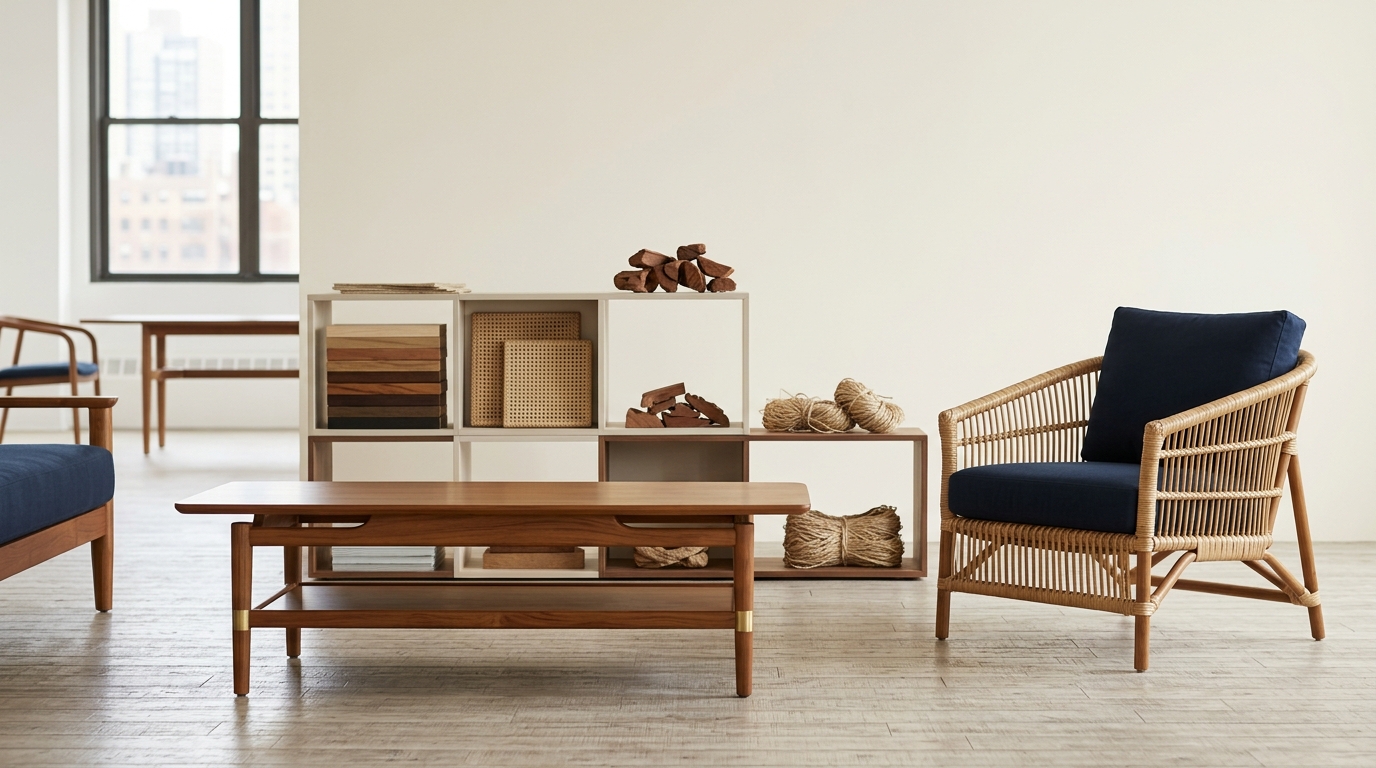
Building a furniture brand from scratch means making one foundational decision before everything else: are you creating a brand, or are you just reselling products? That distinction defines your margins, your customer relationships, and your long-term equity. For e-commerce entrepreneurs and…
Building a furniture brand from scratch means making one foundational decision before everything else: are you creating a brand, or are you just reselling products? That distinction defines your margins, your customer relationships, and your long-term equity. For e-commerce entrepreneurs and retail brand managers who have already answered that question — you are building a brand — the follow-up challenge is sourcing a manufacturer who can execute your vision without diluting it. That is precisely where private label furniture branding Indonesia becomes one of the most powerful strategies available to US-based buyers today.
This guide is structured to lead with brand strategy, not factory capabilities. Too many sourcing articles open with production clusters and MOQ tables. You need to understand what brand control actually means in a furniture context before you ever contact a supplier. From there, this article walks you through why Indonesia's manufacturing ecosystem is a strategic match for private-label ambitions, how to build a cohesive brand identity around Indonesian-made products, which service model fits your growth stage, how to protect your designs legally, and how to scale from a single sample to a retail-ready collection.
Whether you are launching a direct-to-consumer minimalist furniture line or expanding an existing retail assortment into a private-label category, the steps ahead are the same. The brands that win in this space do not just source furniture — they engineer a customer experience from the very first brand touchpoint. That work starts here.
What Private Label Furniture Branding Actually Means for Retailers
Before you approach a single manufacturer, you need clarity on a term that gets used loosely across the industry. Private label, white label, and OEM are not interchangeable — and confusing them leads to misaligned manufacturer relationships, weaker brand differentiation, and missed margin opportunities.
Defining the Three Models: Private Label, White Label, and OEM
A white label product is a finished item manufactured in a standard, generic form that multiple buyers purchase and re-badge with their own name. The product itself does not change. You are essentially renting brand space on a commodity. In furniture, this is common with simple occasional pieces, basic shelving, or accessory items where design differentiation is minimal.
OEM (Original Equipment Manufacturer) refers to a model where you supply the design specifications and the manufacturer builds to your exact requirements. You own the blueprint; the factory owns the production capability. OEM gives you maximum design control but requires that you arrive at the relationship with developed specs, technical drawings, and finish selections already prepared.
Private label sits between these poles and, in practice, is the most versatile model for growing furniture brands. You work with a manufacturer to develop products that are exclusive to your brand — often building on the manufacturer's existing capabilities — and everything from the silhouette to the finish to the packaging is tailored to your identity. The manufacturer may suggest forms; you direct the brand expression. This is the model that defines private label furniture branding Indonesia at its most strategic.
Why Furniture Is One of the Highest-Margin Private-Label Categories
Furniture carries a structural pricing advantage that most private-label categories cannot match. The perceived value gap between a commodity piece and a thoughtfully branded equivalent is enormous — customers routinely pay multiples more for a product that communicates a coherent aesthetic, a material story, and a brand promise. When your sourcing cost from an Indonesian manufacturer reflects skilled handcraft and premium natural materials like teak or rattan, but your retail positioning reflects a design-forward brand identity, the margin expansion can be substantial.
What full brand control looks like end-to-end in this model: you select or co-develop the design, specify every finish and hardware detail, commission your own packaging and unboxing experience, control photography and narrative, and ship under your own brand name. The manufacturer is a production partner, not a brand co-owner.
Why Indonesia Is the Strategic Choice for Private Label Furniture Manufacturing
Indonesia has earned its position as one of the world's premier sources for natural wood furniture, and its relevance to private label furniture branding Indonesia specifically is not accidental. The country's combination of raw material advantages, deep craft traditions, and established export infrastructure creates conditions that are difficult to replicate elsewhere in Asia.
Material Advantages That Support Premium Brand Positioning
Indonesia's access to teak wood is unmatched globally. Teak's natural oils, tight grain, and durability make it one of the most desirable materials in the furniture world — and its association with quality is already built into the material story your brand can tell. Beyond teak, Indonesian manufacturers work extensively with mahogany, rattan, bamboo, and reclaimed wood, giving your brand a range of material narratives to build around. Sustainable sourcing through FSC certification and Indonesia's SVLK (Sistem Verifikasi Legalitas Kayu, or Timber Legality Assurance System) provides the provenance documentation that US buyers increasingly require and that premium brands can use as a differentiator.
Production Clusters and Export Infrastructure
Indonesia's furniture production is concentrated in identifiable clusters, each with its own specialization. Jepara in Central Java is arguably the country's most famous furniture-making region, renowned for solid wood and teak craftsmanship built across generations of artisan workshops. Cirebon dominates rattan and wicker production. Bali hosts a concentration of luxury artisan manufacturers whose output targets high-end hospitality and villa markets. Surabaya serves a broader mid-market segment. These clusters export through established merchant exporters and, in many cases, directly, which means the logistics infrastructure for reaching US ports is mature and well-understood.
How Indonesia Compares to China and Vietnam for Private Label
| Dimension | Indonesia | China | Vietnam |
|---|---|---|---|
| Primary material strength | Teak, rattan, solid wood | Panel goods, upholstery, metal | Solid wood, outdoor, dining |
| Craft differentiation | High — artisan tradition | Low to medium — automation-heavy | Medium — quality improving rapidly |
| Price positioning | Mid-to-premium | Budget to mid | Budget to mid |
| Private label flexibility | High for natural wood categories | High across all categories | High for wood categories |
| US compliance familiarity | Growing; SVLK supports LACEY Act | Well-established | Well-established |
| Design exclusivity culture | Strong in artisan clusters | Variable | Variable |
How to Build a Cohesive Brand Identity Around Indonesian Furniture
Most sourcing guides tell you to find a manufacturer first and then figure out the brand. That sequence is backwards, and it is responsible for most of the undifferentiated private-label furniture that fails to command a price premium. Your brand identity must be defined before your first manufacturer conversation — because that identity is the specification the manufacturer needs to serve.
Defining Your Brand Positioning Before You Contact Anyone
Start with three questions your brand must answer clearly: Who is the customer? What is the emotional promise of the space your furniture creates? And what materials or aesthetics communicate that promise authentically? A DTC brand targeting urban apartment dwellers has a fundamentally different design language than a hospitality-focused line supplying boutique hotels. That difference shows up in every production decision — wood species, finish tone, hardware weight, joinery visibility, and silhouette proportion.
Your brand positioning document does not need to be elaborate, but it needs to answer those questions in a way that a manufacturer can translate into production decisions. Mood boards, competitive reference points, and a defined palette of finishes and materials are the minimum inputs before a productive manufacturer conversation can begin.
Custom Finishes, Hardware, and Silhouette as Brand Differentiation Levers
In Indonesian furniture manufacturing, the levers of brand differentiation are more tactile and visual than in panel-goods manufacturing. Custom finishes — the exact tone, sheen level, and aging effect of a teak stain — become brand signatures that competitors cannot replicate without your specification. Hardware selection (the weight, finish, and form of pulls, hinges, and leg caps) communicates quality signals that customers register subconsciously. A consistent silhouette language across a collection — the way leg profiles, arm proportions, and back heights relate to each other — creates the visual coherence that makes a collection feel like a brand rather than an assortment.
Work with manufacturers who can sample multiple finish options and who will document your approved standards as a golden sample. That golden sample becomes the quality benchmark for every production run.
Packaging, Unboxing, and the Brand Touchpoints Competitors Ignore
Very few articles about private label furniture branding address packaging as a serious brand lever — which means it is an open competitive advantage for brands that get it right. Furniture packaging is typically functional, but the moments when a customer opens a carton, unfolds assembly instructions, or finds a small branded card inside the box are genuine brand-building opportunities. Custom printed boxes or kraft wrapping with your brand mark, hangtags with a material origin story ("Handcrafted from FSC-certified teak in Jepara, Indonesia"), and assembly guides that reflect your brand's tone of voice all contribute to post-purchase satisfaction and the social sharing behavior that drives organic acquisition.
Navigating OEM, ODM, and Private Label Service Models in Indonesia
Understanding which manufacturing service model fits your current business stage prevents costly misalignment with manufacturers and sets realistic expectations for customization depth, lead times, and minimum order requirements.
| Service Model | Who Provides the Design | Best Fit | Typical MOQ Range | Relative Lead Time |
|---|---|---|---|---|
| OEM | You (buyer) | Established brands with developed specs | Low to medium (varies by complexity) | Longer — spec validation required |
| ODM | Manufacturer | Startups and brands testing new categories | Medium | Shorter — existing tooling |
| Full Private Label | Co-developed | Growing brands building exclusive lines | Medium to higher | Medium — customization adds time |
Choosing the Right Model for Your Growth Stage
Startups testing a new furniture category are best served by an ODM approach initially — selecting from a manufacturer's existing designs, applying your brand identity through finish selection, hardware, and packaging, and validating the market before investing in proprietary design development. This keeps your capital exposure low while you gather sales data.
Established retailers building exclusive lines that cannot be replicated by competitors should pursue full private label or OEM relationships, with documented design exclusivity clauses in manufacturer agreements. At this stage, the investment in proprietary design development is justified by the margin protection it creates.
Questions to Ask Indonesian Manufacturers About Customization Depth
When evaluating a potential manufacturing partner, ask specifically: Can you produce a custom finish to our approved golden sample standard? What is your process for documenting and replicating finish specifications across production runs? Do you offer design exclusivity for your ODM catalog pieces? Who owns the tooling for any custom components we develop together? What is your sub-contracting policy, and how do you maintain quality consistency when sub-contracting is used?
These questions reveal the manufacturer's operational sophistication and protect you from the common "sample bait-and-switch" pattern — where a beautiful sample is produced in-house but bulk production is handed to a lower-quality subcontractor.
Quality Control and Compliance Standards That Protect Your Brand
For US importers sourcing from Indonesia, compliance is not optional — it is brand protection. Regulatory failures at the point of import are expensive and reputationally damaging, and they are entirely preventable with the right pre-sourcing framework.
Certifications US Buyers Should Require
FSC (Forest Stewardship Council) certification confirms that wood used in your products comes from responsibly managed forests. For teak and other Indonesian hardwoods, FSC certification is achievable and increasingly expected by US retail buyers and end consumers.
SVLK (Sistem Verifikasi Legalitas Kayu) is Indonesia's mandatory timber legality assurance system. Any Indonesian furniture exporter should be able to provide SVLK documentation, which supports compliance with the US Lacey Act — which prohibits the import of illegally harvested wood products.
CARB (California Air Resources Board) Phase 2 compliance is essential for any composite wood products (plywood, MDF, particleboard) in your furniture. CARB Phase 2 limits formaldehyde emissions and is effectively a national standard for US market access, not just California. Verify that any manufacturer using composite wood components holds current CARB certification — and validate the certificate number directly on the certification body's database.
REACH regulation compliance is relevant for hardware finishes, surface treatments, and adhesives, particularly for brands selling into California or to retail partners with chemical compliance programs.
Writing a Quality Specification Sheet That Holds Manufacturers Accountable
A quality spec sheet (sometimes called a product technical sheet or golden sample spec) should document: approved finish tone with reference swatches, hardware specifications by part number or equivalent, dimensional tolerances, acceptable and unacceptable defect classifications (surface scratches, joint gaps, finish inconsistencies), structural load requirements, and packaging standards. A pre-shipment inspection by a third-party quality control service — conducted against this specification before goods are loaded — is the most cost-effective single investment you can make in supply chain risk management.
- ✓Finish tone matches approved golden sample
- ✓Hardware fits flush with no visible gaps
- ✓Structural joints pass hand-pressure stress test
- ✓Dimensions within specified tolerance
- ✓No surface defects in Class A visible zones
- ✓Packaging integrity and correct labeling
- ✓Certificate documentation included in shipment paperwork
Protecting Your Brand: IP, Exclusivity, and Manufacturer Contracts
Design exclusivity is the legal infrastructure of a defensible private-label furniture brand. Without it, the proprietary silhouette you develop with a Jepara manufacturer today can appear on a competitor's website tomorrow. This risk is manageable — but only if it is addressed contractually before production begins.
Securing Design Exclusivity in Manufacturing Agreements
Your manufacturing agreement should include an explicit exclusivity clause specifying that any design developed to your specifications — including CAD drawings, prototypes, and approved samples — may not be reproduced for any other buyer. Define the exclusivity scope (product category, geographic market, duration) and specify what happens at the end of the exclusivity period. Ensure the clause survives termination of the broader agreement.
Tooling ownership is a related consideration. If custom tooling or jigs are created to produce your designs, your agreement should document who owns those assets. When you pay for tooling development, ownership should vest in you.
Trademark Registration and NDA Essentials
Register your brand name and logo as trademarks in the United States before scaling production. For brands with significant design investment, consider design patent protection for distinctive silhouettes, though this is more practical for signature pieces than full collections. When sharing design files, drawings, or proprietary specifications with potential manufacturers during the vetting phase, use a bilateral NDA that explicitly covers furniture designs and finish specifications.
Scaling Your Private Label Furniture Line From Sample to Retail
The path from initial concept to a retail-ready private-label collection has a predictable shape. Brands that try to collapse this journey — skipping the sample validation phase or launching a full collection without piloting individual SKU clusters — consistently encounter expensive problems at scale.
The Sample Ordering and Evaluation Process
Request a fully finished sample produced to your exact specification before committing to a production order. Evaluate the sample against every dimension of your quality spec sheet. Assess the finish under different lighting conditions. Test structural integrity. Photograph it in the environment your brand photography will use. Share it with a small group of target customers if possible. The sample stage is where specification errors are cheap to correct; production is where they become expensive.
Budget for multiple sample iterations if your design is complex. Lead times for samples from Indonesian manufacturers are typically longer than from Chinese factories — the craft-intensive nature of the work means less automation and more hands-on production time — but the quality ceiling is higher for natural wood and artisan categories.
Phased Scaling: Pilot One SKU Cluster Before Full Rollout
Rather than launching a full collection simultaneously, identify one SKU cluster (for example, a dining chair in two finish variants) and pilot it through a full production and sales cycle. This approach validates your quality spec, your manufacturer's production consistency, your logistics chain, and your market demand assumptions before you commit capital to a full collection. Use the pilot cycle to refine your quality spec sheet, identify any finish or structural issues, and establish a working relationship with your manufacturer before the stakes increase.
Logistics and Freight for Furniture Importing to the US
Furniture ships almost exclusively by sea freight in full container loads (FCL) or less-than-container loads (LCL). Indonesian ports — primarily Tanjung Priok in Jakarta and Tanjung Perak in Surabaya — are well-connected to US West Coast and East Coast ports. Transit times to US ports are typically several weeks, which must be factored into inventory planning cycles.
US import duties for furniture from Indonesia vary by product category and are assessed on customs value. Work with a licensed US customs broker to classify your products correctly under the Harmonized Tariff Schedule before your first shipment. Misclassification is a compliance risk that compounds with volume.
For e-commerce brands, inventory planning should account for the long replenishment cycle inherent in overseas furniture sourcing. Safety stock levels, reorder triggers, and seasonal demand patterns all need to be calibrated for a supply chain measured in months, not weeks.
Real-World Private Label Furniture Branding Lessons and Brand Archetypes
Concrete examples ground abstract strategy. While this guide avoids naming specific companies, the brand archetypes below represent patterns that commonly emerge in private-label furniture and carry predictable lessons.
Three Brand Archetypes and What They Get Right
The DTC Minimalist builds a tight collection around a single material story — often teak or reclaimed wood — with a strictly edited palette and a brand voice that emphasizes craftsmanship and sustainability. This archetype succeeds when the brand identity is established before sourcing, because every product decision (finish, silhouette, packaging) reinforces a consistent message. The risk is margin pressure if the brand fails to communicate the material story convincingly.
The Hospitality-Focused Brand supplies boutique hotels, restaurants, and short-term rental operators with furniture that photographs well and withstands commercial use. Indonesian manufacturers — particularly those in Bali and Jepara — have deep experience with this segment. This archetype benefits from exclusivity contracts, because operators do not want to see the same chairs appearing in competitor properties.
The Mass-Market Retail Brand uses private labeling to differentiate within a crowded retail assortment. Here, the ODM model is often most practical, and the brand differentiation levers are primarily finish, packaging, and in-store presentation rather than original design. This archetype is most vulnerable to white-label commoditization if branding investment is inadequate.
Common Mistakes When Launching a Private Label Furniture Line
Brands most commonly fail by contacting manufacturers before their brand positioning is defined, by skipping design exclusivity clauses because the relationship feels collaborative and trusting, by underestimating quality specification requirements and relying on samples that do not represent production standards, and by planning inventory cycles on assumptions better suited to domestic sourcing.
Indicators That Your Private Label Strategy Is Working
Your private-label strategy is gaining traction when customers reference the brand name rather than the product category when making repeat purchases, when retail buyers ask whether your line is exclusive, when your brand's aesthetic is identifiable without a logo visible, and when your gross margin on private-label SKUs materially exceeds what you earned reselling branded equivalents.
Frequently Asked Questions About Private Label Furniture Branding in Indonesia
What is a private label brand in the furniture industry?
A private label furniture brand is one where a retailer or entrepreneur works with a manufacturer to produce goods that are sold exclusively under the retailer's own brand name. Unlike reselling established brands, private label gives the brand owner control over design, finish, packaging, and pricing — and the ability to build a defensible brand identity rather than competing on someone else's equity.
What is the difference between white label and private label furniture?
White label furniture is a generic product that multiple buyers purchase and badge with their own names — the product itself is unchanged. Private label furniture is developed or customized for a specific brand, often with exclusive design elements, finishes, or packaging that differentiate it from anything else in the market. Private label builds brand equity; white label primarily saves sourcing effort.
How much does it cost to start a private label furniture line in Indonesia?
Startup costs vary widely based on design complexity, order volume, and the manufacturer relationship structure. Expect to budget for sample development (typically several hundred to a few thousand dollars per piece depending on complexity), initial production orders (which depend on MOQ, product type, and finish requirements), quality inspection services, freight and customs, and branding and packaging development. Starting with a single SKU cluster through an ODM relationship is the most capital-efficient entry point. There is no single number that applies universally — build a cost model based on your specific product and volume before making commitments.
What certifications should Indonesian furniture manufacturers have?
For US-market importers, the most important certifications to verify are: FSC certification for wood sourcing, SVLK (Timber Legality Assurance System) documentation for Lacey Act compliance, CARB Phase 2 compliance for any composite wood components, and relevant chemical compliance documentation (REACH or equivalent) for hardware and surface treatments. Always verify certificate numbers directly with the issuing body.
How do I protect my furniture designs when working with an overseas manufacturer?
Protection requires a combination of legal and contractual steps: a bilateral NDA before sharing design files, a manufacturing agreement with explicit design exclusivity and IP ownership clauses, tooling ownership documentation if custom production tooling is developed, and trademark registration in the US for your brand identity. Do not rely on trust alone — even excellent manufacturers operate in competitive markets where unprotected designs create commercial temptation.
What is the typical MOQ for private label furniture orders from Indonesia?
MOQ ranges in Indonesia are more flexible than many buyers expect, particularly in artisan-dominated clusters like Jepara. Smaller workshops may accept initial orders of a relatively modest number of pieces for simple solid wood items, while larger export factories and more complex customized pieces require higher commitments. MOQ is also negotiable when balanced against per-unit price — a willingness to pay slightly above the lowest unit price often unlocks lower volume flexibility. Always discuss sample orders separately from production MOQ negotiations.
Private label furniture branding Indonesia rewards brands that invest in identity before they invest in inventory. The manufacturers, materials, and craft traditions available in Indonesia's production clusters are genuine competitive assets — but only a brand-first approach converts those assets into margin, loyalty, and long-term equity.
You now have the framework: define your brand before you approach a manufacturer, secure your designs contractually, verify every compliance claim independently, and scale through a disciplined pilot process. The next step is connecting with a manufacturer who can execute this vision.
You understand the strategy, the compliance requirements, and the manufacturing landscape. The natural next step is a conversation with a vetted Indonesian private-label furniture manufacturer who can turn your brand vision into production-ready products. Request your free consultation today and get matched with a manufacturer suited to your category, volume, and quality requirements.
Request a Free Consultation →Need eyes on the ground in Indonesia?
MTS is an execution partner — supplier verification, manufacturing management, quality control and export logistics across Indonesia, Vietnam and China.
Related services
Related articles
Receive furniture sourcing insights across Asia.
One email per week. No spam.