Sandals and Flip Flops Manufacturers in Indonesia and Bali: The Complete Sourcing Guide for US Buyers
13 min read
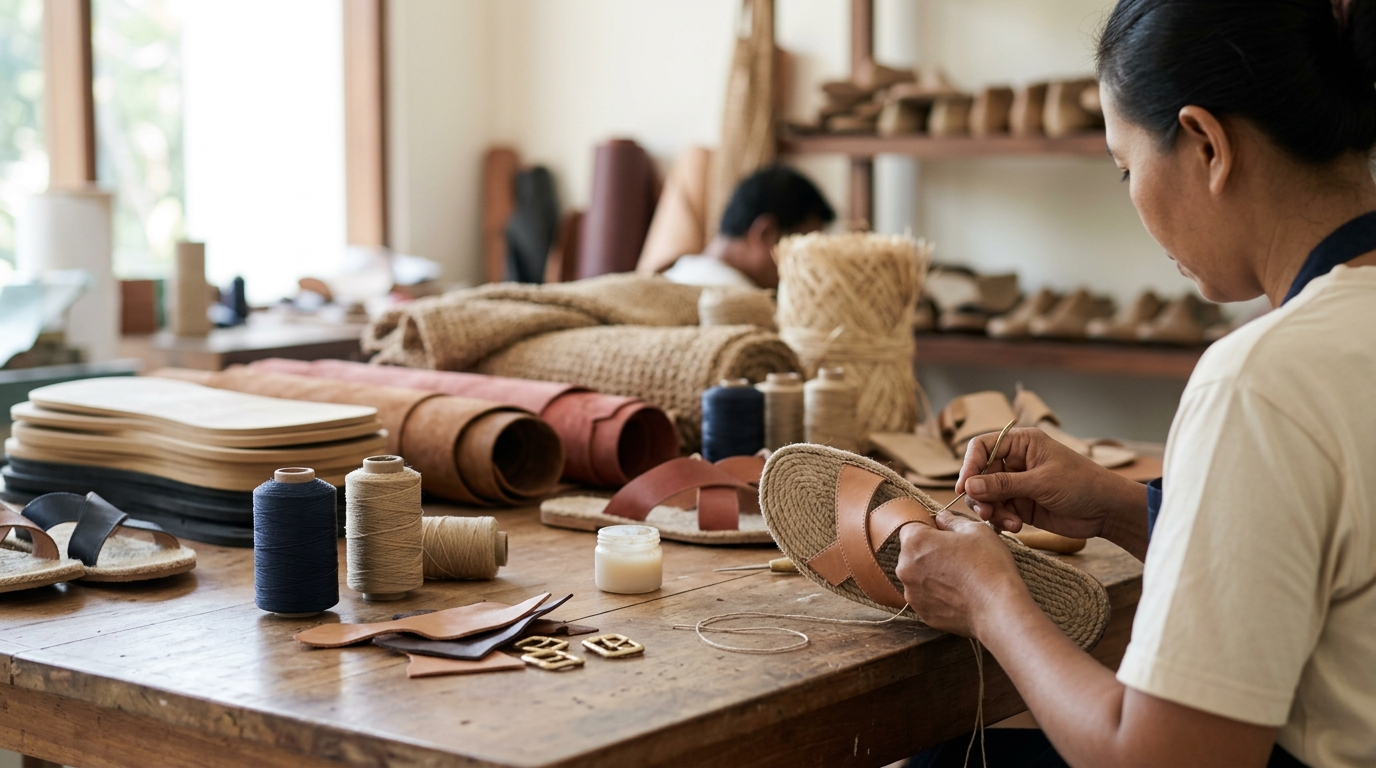
Finding consistent, production-ready sandals flip flops manufacturers in Indonesia and Bali is harder than it looks. The supplier landscape is fragmented. Artisan workshops sit alongside high-volume industrial factories. Trading companies disguise themselves as direct producers. And US compliance…
Finding consistent, production-ready sandals flip flops manufacturers in Indonesia and Bali is harder than it looks. The supplier landscape is fragmented. Artisan workshops sit alongside high-volume industrial factories. Trading companies disguise themselves as direct producers. And US compliance requirements add another layer of complexity that many Indonesian suppliers are not proactively equipped to handle.
This guide cuts through that complexity. It maps the two primary manufacturing clusters — Bali's artisan districts and West Java's industrial zones — and explains which cluster fits which buyer profile. It covers materials, strap constructions, private label workflows, MOQs, pricing benchmarks, and the compliance requirements that matter for US market entry.
Indonesia is one of the world's largest footwear exporters by volume. Its sandal and flip flop category spans everything from handmade vegetable-tanned leather resort sandals to injection-molded EVA beach flip flops. Understanding where each product type is made — and by whom — is the starting point for any serious sourcing strategy.
Why Indonesia and Bali Lead the World in Sandal and Flip Flop Manufacturing
Indonesia's footwear industry ranks among the top five globally by export volume, according to broadly reported trade data. The country combines low labor costs, deep raw material access, and decades of OEM experience. For US buyers, that combination translates into competitive FOB pricing across multiple product tiers.
Bali plays a dual role. It functions as an artisan export hub for handmade leather sandals, beaded straps, and resort-style footwear. It also operates as a design and development center, where small workshops produce samples and limited-run collections for international brands.
West Java, by contrast, is where volume happens. Bandung, Tangerang, and the greater Jakarta industrial belt host factories capable of producing hundreds of thousands of pairs per season. EVA foam injection molding, rubber vulcanization, and high-speed assembly lines are concentrated here. These facilities serve mass-market retail, resort chains, and private label programs that require consistent output at scale.
For US buyers, the cost advantages are real. Labor rates in Indonesian footwear manufacturing remain significantly below those in China or Vietnam for comparable product categories. Combined with Indonesia's established export infrastructure — including Tanjung Priok in Jakarta and Ngurah Rai International Airport in Bali — the logistics pipeline to US ports is well-developed and regularly used.
Key Manufacturing Clusters: Bali Artisan Districts Versus West Java Industrial Zones
Understanding the geographic split is the most important structural decision a US buyer makes when sourcing from Indonesia. The two clusters serve different buyer profiles entirely.
Bali's Craft Villages and What They Produce
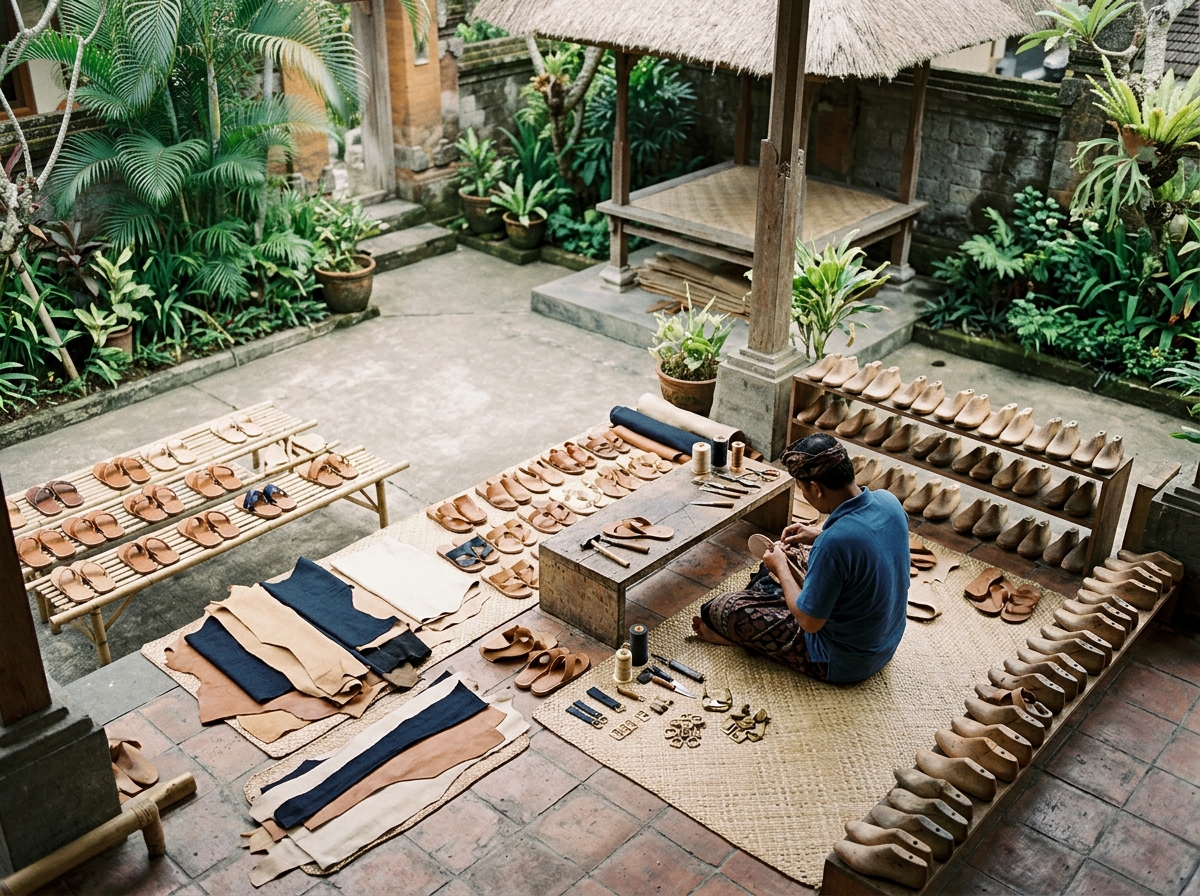
The main sandal-producing areas in Bali include the Kuta belt, Seminyak corridor, and villages around Ubud. Celuk, known primarily for silver craft, overlaps with leather goods and embellished sandal production in the broader artisan network. These workshops specialize in handmade sandals using leather, woven rope, beaded straps, and natural fiber uppers.
Typical workshop size is two to thirty craftspeople. MOQs are low — often 50 to 150 pairs per style. Lead times for production run approximately 30 to 60 days after sample approval. Export is frequently handled through a local freight forwarder or export agent, since many small workshops lack direct export licenses.
Bali artisan producers are best suited for:
- Boutique resort retail buyers - DTC brands building a premium or sustainable narrative - Buyers who need small-batch customization with unique embellishment
West Java Industrial Factories and Their Capabilities
Bandung, Tangerang, and Bogor host mid-to-large footwear factories producing EVA flip flops, rubber sandals, and synthetic upper sandals at scale. These facilities use injection molding, vulcanization presses, and semi-automated assembly lines. They hold export certifications and regularly supply to Asian and European retail chains.
MOQs at industrial facilities typically start at 500 pairs per style and scale to 5,000 or more for standard constructions. Lead times run approximately 45 to 75 days from tech pack confirmation, depending on mold requirements. Port access via Tanjung Priok gives these factories direct container shipping lanes to US West and East Coast ports.
West Java factories are best suited for:
- Resort chains and beach retail buyers ordering by the case - Private label programs with standardized construction - Seasonal volume orders tied to US summer buying cycles
Side-by-Side Comparison for US Buyers
| Factor | Bali Artisan Workshop | West Java Industrial Factory |
|---|---|---|
| MOQ per style | 50–300 pairs | 500–5,000+ pairs |
| Typical lead time | 30–60 days | 45–75 days |
| Primary materials | Leather, rope, beads, natural fiber | EVA, rubber, synthetic upper |
| Branding options | Hand-stamped, embossed | Heat transfer, woven label, insole print |
| Export experience | Often via agent | Direct FOB capability |
| Best for | Boutique, DTC, resort premium | Volume retail, private label, resort chains |
| Port of exit | Ngurah Rai / Denpasar | Tanjung Priok, Jakarta |
| Compliance readiness | Variable | More consistent — ask for certifications |
Materials Used by Indonesian Sandal and Flip Flop Manufacturers
EVA Foam: The Core Material for Beach and Resort Flip Flops
EVA (ethylene-vinyl acetate) foam is the dominant material in Indonesian flip flop production. It is lightweight, waterproof, and injection-moldable into virtually any footbed shape. West Java factories produce EVA flip flops across density ranges — from soft resort-grade footbeds to firmer sport-style soles. EVA is fully compatible with custom color matching, logo debossing on the footbed, and printed insole branding.
For US resort retail buyers, EVA is the practical default. It withstands poolside and beach conditions. It cleans easily. And FOB pricing for basic EVA flip flops from Indonesian factories is competitive across moderate to high volumes.
Natural and Synthetic Rubber: Durability for Water and Outdoor Use
Rubber sandals — both natural and synthetic — are produced primarily in West Java. Natural rubber offers superior grip and flexibility. Synthetic rubber reduces cost and improves color consistency. Both materials are appropriate for water sandals, sport-adjacent styles, and outdoor resort footwear.
Leather: Premium Options from Bali's Artisan Producers
Full-grain and vegetable-tanned leather sandals are Bali's signature export product in the footwear category. Vegetable tanning — a slower, more environmentally grounded process — produces leather with a natural patina and durability profile appropriate for premium resort retail. Bali workshops source leather domestically and from regional suppliers.
Brands like Indosole have demonstrated that Indonesian producers can combine sustainable material sourcing with export-scale production. Their model — using recycled tire rubber for soles — represents a broader movement in Bali and West Java toward upcycled and low-impact materials.
Sustainable and Upcycled Materials
Beyond tire-derived rubber, Indonesian sandal manufacturers increasingly work with:
- Recycled ocean plastic for strap webbing and insole lining - Natural latex for cushioned footbeds as an EVA alternative - Raffia and natural fiber for woven strap constructions - Reclaimed leather offcuts for patchwork and embellished uppers
These materials are more commonly available from Bali artisan producers and specialist export workshops than from high-volume West Java factories. If sustainability claims are part of your brand positioning, verify material sourcing documentation before including it in marketing copy.
Strap Constructions and Design Options Available from Indonesian Sandal Manufacturers
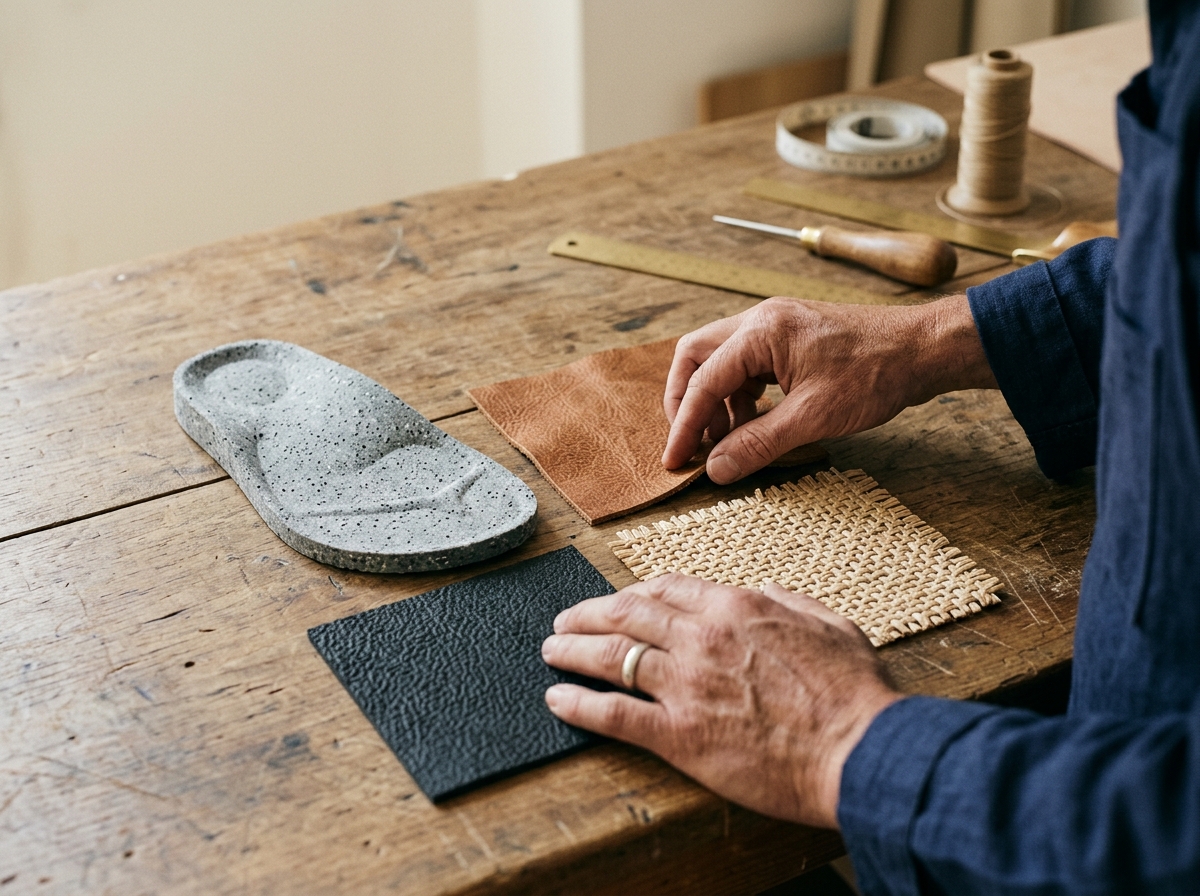
Bali's workshop ecosystem offers the widest range of strap construction and embellishment options in Southeast Asia for handmade sandals. The key configurations available include:
- Thong / toe-post: standard for EVA and rubber flip flops; available from both artisan and industrial suppliers - Ankle strap: common in resort and dress sandal styles; usually constructed in leather, webbing, or braided cord - Slide strap: single or double band across the vamp; popular in luxury resort and hotel retail - T-strap and cross-strap: more complex constructions requiring skilled lasting; typically Bali artisan production
Finishing techniques from Bali workshops include woven rope straps, braided leather, beaded embellishment, and sequined overlays. Hardware options include brass rivets, shell accents, resin beads, and hand-painted buckles.
Sample development from a Bali workshop typically follows this sequence:
1. Tech pack or reference sample submitted by buyer 2. Workshop produces a pre-production sample — approximately 10 to 21 days 3. Buyer reviews and requests revisions 4. Revised counter-sample — approximately 7 to 14 additional days 5. Sample approval triggers production booking and deposit
Total sample-to-approval lead time is commonly 3 to 5 weeks for straightforward constructions. Complex embellishment or new mold requirements extend this timeline.
Custom Branding, Private Label, and Packaging for Your Sandal Line
OEM vs. ODM Manufacturing Models in Indonesia
Indonesian sandal manufacturers operate under both OEM (Original Equipment Manufacturer) and ODM (Original Design Manufacturer) models.
- OEM: You supply the design, tech pack, and material specifications. The factory produces to your exact requirements. Common with both Bali artisan workshops and West Java factories. - ODM: The factory offers existing designs or construction templates that you select and brand as your own. Lower development cost and faster turnaround. Suitable for buyers entering the category without in-house design resources.
Branding and Insole Customization Options
Available branding techniques from Indonesian sandal manufacturers include:
- Logo embossing or debossing on leather footbeds and straps - Heat transfer printing on EVA insoles and synthetic uppers - Woven labels sewn onto ankle strap linings - Custom insole printing — full-color or single-color - Outsole mold engraving for logo or brand identifier
Retail-Ready Packaging for US Market
Indonesian factories and export workshops can supply US retail-ready packaging including polybags with suffocation warnings, printed shoeboxes, and hang tags. Specify US retail requirements upfront — UPC barcodes, country of origin labeling, and care label content are mandatory for US retail floor placement. Request packaging samples alongside product samples to avoid delays at the final QC stage.
Minimum Order Quantities, Pricing, and Seasonal Volume Planning
MOQ and FOB Price Benchmarks
| Product Type | Supplier Type | Typical MOQ | Approximate FOB Price Range |
|---|---|---|---|
| Basic EVA flip flops | West Java industrial | 500–1,000 pairs | Low-to-mid price band |
| Rubber sport sandals | West Java industrial | 500–2,000 pairs | Low-to-mid price band |
| Handmade leather sandals | Bali artisan | 50–150 pairs | Mid-to-premium price band |
| Embellished resort sandals | Bali artisan | 100–300 pairs | Premium price band |
| Private label EVA + custom mold | West Java industrial | 1,000–5,000 pairs | Mid price band + mold tooling fee |
FOB prices vary significantly based on material grade, construction complexity, branding requirements, and order volume. Obtain itemized quotations from at least three suppliers per product type before benchmarking.
Seasonal Production Calendar for US Buyers
US resort and beach retail peaks in June through August. Holiday resort buying — covering destinations like Florida, Hawaii, and the Caribbean — creates a secondary window in November through January.
Working backward from a US summer floor date:
- January–February: Confirm designs, submit tech packs, initiate sampling - March: Approve samples, place production deposit - April–May: Production window — 30 to 60 days depending on complexity and volume - Late May–June: FOB shipment from Tanjung Priok or Ngurah Rai - June–July: US port arrival, domestic distribution
For holiday resort orders, shift the entire calendar forward by approximately six months.
Splitting Orders Across Supplier Types
Experienced buyers often split seasonal orders between artisan and industrial suppliers. A practical approach: place volume EVA flip flop orders with West Java factories for core SKUs, and use Bali artisan workshops for differentiated, higher-margin leather or embellished styles. This hedges lead-time risk while giving your line commercial depth.
Quality Control, Compliance, and US Import Standards for Indonesian Sandals
US Compliance Requirements
Sandals and flip flops imported into the United States must meet specific regulatory requirements:
- CPSC (Consumer Product Safety Commission): Governs children's footwear specifically. If any portion of your line targets children, CPSC testing and a General Certificate of Conformity are mandatory. - REACH compliance: Relevant for buyers also selling into the EU or via EU-aligned retailers. Restricts specific chemical substances in leather treatments and adhesives. - ASTM standards: ASTM F2412 and F2413 cover performance requirements for protective footwear. Less commonly required for casual sandals, but relevant for any closed-toe or work-adjacent style. - HTS tariff codes: Indonesian sandals typically enter under HTS Chapter 64. Confirm the correct subheading based on upper material and sole construction with your customs broker. Note that US tariffs on Indonesian footwear are generally lower than on Chinese-origin goods — a meaningful landed cost advantage.
Common Defects to Inspect
Third-party inspection agencies active in Bali and West Java regularly check for:
- Delamination between sole and upper at the bond line - Strap pull-out strength — particularly at thong post insertion points - Colorfastness under wet and dry rubbing - Dimensional consistency across size run - Hardware corrosion resistance on metal rivets and buckles
Certifications to Request from Indonesian Suppliers
| Certification | What It Covers | Applicable Supplier Type |
|---|---|---|
| BSCI | Social compliance audit — labor conditions | Industrial factories |
| ISO 9001 | Quality management system | Industrial factories |
| REACH test reports | Chemical substance compliance | Both artisan and industrial |
| CPSC General Certificate of Conformity | Children's product safety | Any supplier targeting children's market |
- ✓Confirm HTS subheading with customs broker before PO issuance
- ✓Request REACH test reports for leather adhesives and dyes
- ✓Obtain CPSC GCC for any children's sandal styles
- ✓Verify BSCI or equivalent social compliance certificate from factory
- ✓Confirm country of origin marking on product and packaging
- ✓Check suffocation warning on polybag for US retail requirements
- ✓Request pull-out strength test data for strap constructions
How to Vet and Shortlist Sandals Flip Flops Manufacturers in Indonesia and Bali
Supplier Vetting Criteria That Matter
When evaluating sandals flip flops manufacturers in Indonesia and Bali, apply these criteria in order:
1. Direct manufacturer versus trading company: Confirm whether the entity owns production capacity. Ask for factory address, registration documents, and production photos. Suppliers unwilling to share these details carry elevated risk. 2. Export track record: Request evidence of prior US or EU shipments — bill of lading copies or customer references. Established exporters understand US documentation requirements. 3.
Where to Find Verified Suppliers
- IFHS (International Footwear and Handbag Show) Jakarta: The primary domestic trade event for Indonesian footwear manufacturers. Exhibitors are typically direct producers or legitimate export companies. - B2B sourcing platforms: Look for suppliers with verified factory status, audit badges, and documented export history. Do not accept supplier-reported statistics as the only verification layer. - Sourcing agents in Bali or West Java: Independent agents charge typically 3 to 10% of FOB value and can provide on-the-ground vetting, quality inspection, and logistics coordination. This model differs from a full-service operational partner that manages the entire project lifecycle — from tech pack to shipment.
Red Flags When Dealing With Indonesian Sandal Suppliers
- No factory address or facility photos available - MOQ and price shift significantly after initial quote - No sample capability — supplier only shows catalog images - Claims to produce both handmade leather and high-volume EVA without separate facility explanations - No certifications but claims compliance to all US standards
Frequently Asked Questions: Sourcing Sandals and Flip Flops from Indonesia
Which types of shoes and sandals are manufactured in Indonesia? Indonesia produces a wide range of footwear for export. The strongest categories include EVA and rubber flip flops, leather sandals, woven and embellished resort sandals, rubber-soled outdoor sandals, and sports-adjacent sandal styles.Athletic footwearis also manufactured, though primarily for global brands with established factory partnerships.
Can I buy flip flops wholesale directly in Bali as a foreign buyer? Yes. Foreign buyers can place wholesale orders directly with Bali manufacturers and export workshops. However, many small workshops in Bali do not hold direct export licenses. In practice, you may work through a local export agent or freight forwarder who handles export documentation on the workshop's behalf.
What is the typical lead time for a custom sandal order from Bali? For a new style with custom embellishment, expect 30 to 60 days from sample approval to production completion. Add 15 to approximately 25 days for ocean freight to US ports. Air freight from Ngurah Rai reduces transit time significantly but increases per-unit shipping cost. Allow additional time if Ramadan falls within your production window.
What sandal materials and constructions are best suited for resort retail? EVA footbeds with leather or woven straps are the most commercially versatile choice for resort retail. They are lightweight, moisture-resistant, and aesthetically adaptable. Full leather sandals work well for upscale boutique resort retail where premium price points are supported.
How do Indonesian sandal manufacturers handle custom branding and private label? Most established Indonesian sandal manufacturers — both in Bali and West Java — offer OEM and ODM services. Logo embossing, insole printing, heat transfer branding, and hang tag customization are standard capabilities. Provide a complete tech pack with branding specifications in your initial inquiry.
Sourcing sandals flip flops manufacturers in Indonesia and Bali rewards buyers who match their order profile to the right cluster, material, and supplier type before sending the first inquiry. The Bali artisan ecosystem and the West Java industrial base are genuinely complementary — not competing — when approached strategically.
You now have a clear map of the Indonesian sandal manufacturing landscape, the compliance checkpoints that protect your import, and the vetting signals that separate reliable producers from risky intermediaries.
You have identified your target cluster, material requirements, and compliance needs. The next step is getting accurate FOB quotes from manufacturers who have been verified against the criteria outlined in this guide. Request a free quote from verified Indonesian sandal and flip flop manufacturers today and move your sourcing from research to production.
Request a Free Quote →Need eyes on the ground in Indonesia?
MTS is an execution partner — supplier verification, manufacturing management, quality control and export logistics across Indonesia, Vietnam and China.
Related services
Related articles
Receive furniture sourcing insights across Asia.
One email per week. No spam.