Teak Parquet Flooring Suppliers Indonesia: The Complete Sourcing Guide
14 min read
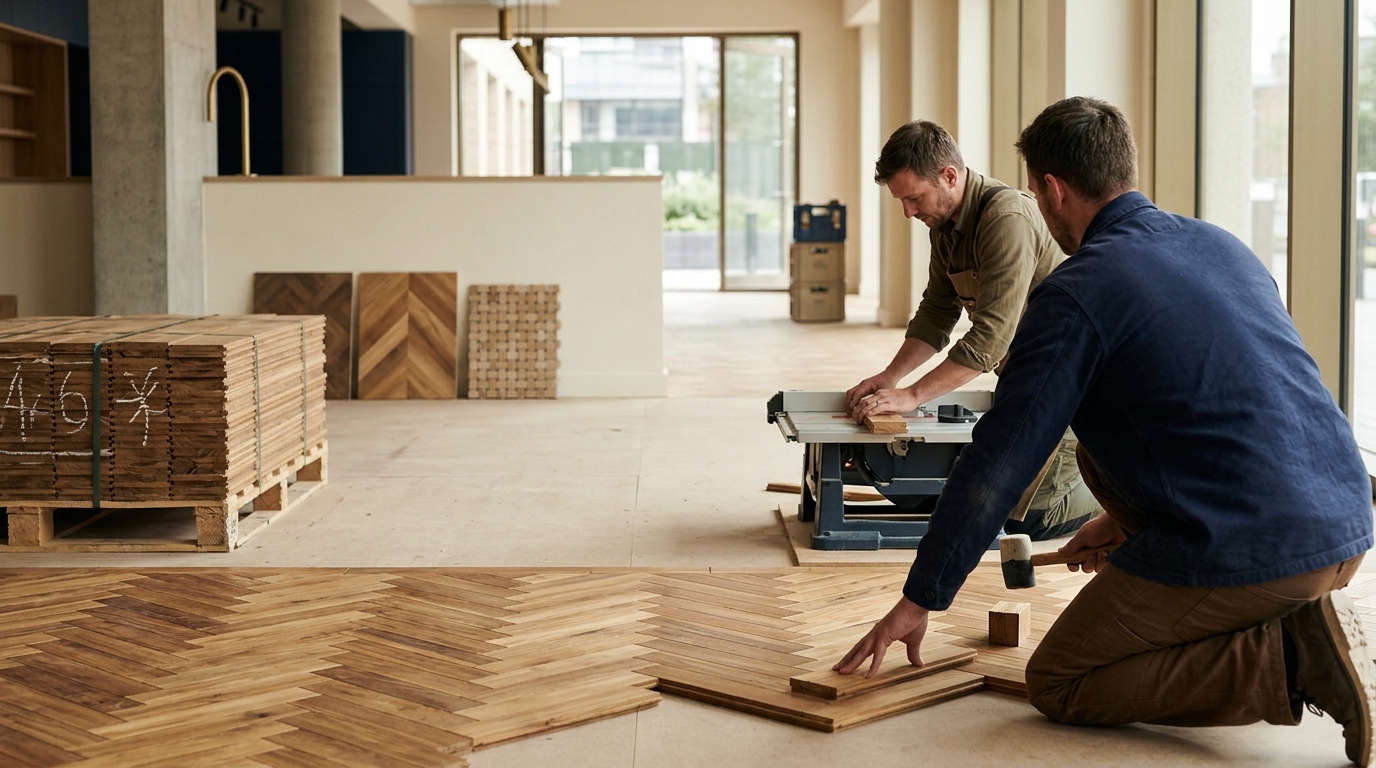
Procurement managers sourcing teak parquet face a specific problem: Indonesia produces some of the world's finest Tectona grandis, yet navigating grades, moisture specs, certification requirements, and export logistics from the United States is genuinely complex.
Procurement managers sourcing teak parquet face a specific problem: Indonesia produces some of the world's finest Tectona grandis, yet navigating grades, moisture specs, certification requirements, and export logistics from the United States is genuinely complex.
This guide gives wholesalers and commercial contractors the exact decision criteria they need. It covers solid versus engineered construction, herringbone and chevron format specifications, grading tiers, kiln-drying requirements, container yields, and payment structures.
Indonesia's position as the dominant global source of teak parquet flooring is not accidental. It reflects decades of plantation investment, manufacturing cluster development, and export infrastructure that no competing origin currently matches at scale.
Why Indonesia Leads the Global Teak Parquet Supply Chain
Indonesia is the world's largest legal exporter of plantation teak (Tectona grandis). Java in particular has cultivated managed teak forests for over 150 years, primarily through Perum Perhutani, the state forestry enterprise.
Production Hubs and Their Specializations
- Java: Highest concentration of finished parquet manufacturers. Jepara is the center for solid teak blocks and custom formats. Semarang is the primary export port cluster for Central Java output. - Sumatra: Plantation teak from Sumatra feeds raw timber into Java's processing facilities. Direct parquet manufacturing is less common here. - Kalimantan: Supplies older-growth and reclaimed teak timber for premium rustic grades. Environmental scrutiny is higher; SVLK documentation is especially critical for Kalimantan-origin timber.
Supplier clusters in Bali cater predominantly to the hospitality and villa segment — so-called bali flooring suppliers typically handle smaller luxury orders rather than container-load wholesale volumes.
Cost Position Versus Competing Origins
Indonesian plantation teak consistently undercuts alternative origins on landed cost:
| Origin | Relative Cost Position | Key Risk |
|---|---|---|
| Indonesia (plantation) | Baseline | Certification gaps at smaller mills |
| Myanmar | Significantly higher; sanctions complicate import | OFAC compliance exposure |
| Brazil (Teca) | Higher freight; smaller export volumes | Lacey Act documentation gaps |
| European processed teak | Highest landed cost | No primary production; re-processing only |
Legal Timber Compliance: SVLK and FLEGT
Indonesia operates SVLK (Sistem Verifikasi Legalitas Kayu), a government-mandated timber legality verification system. SVLK-certified exporters can access FLEGT (Forest Law Enforcement Governance and Trade) licenses, which the European Union and many international buyers treat as proof of legal origin.
Solid vs. Engineered Teak Parquet Blocks: What Wholesalers Must Know
The choice between solid and engineered teak parquet is a structural specification decision, not a preference question. Each product has a defined performance envelope.
Construction Differences
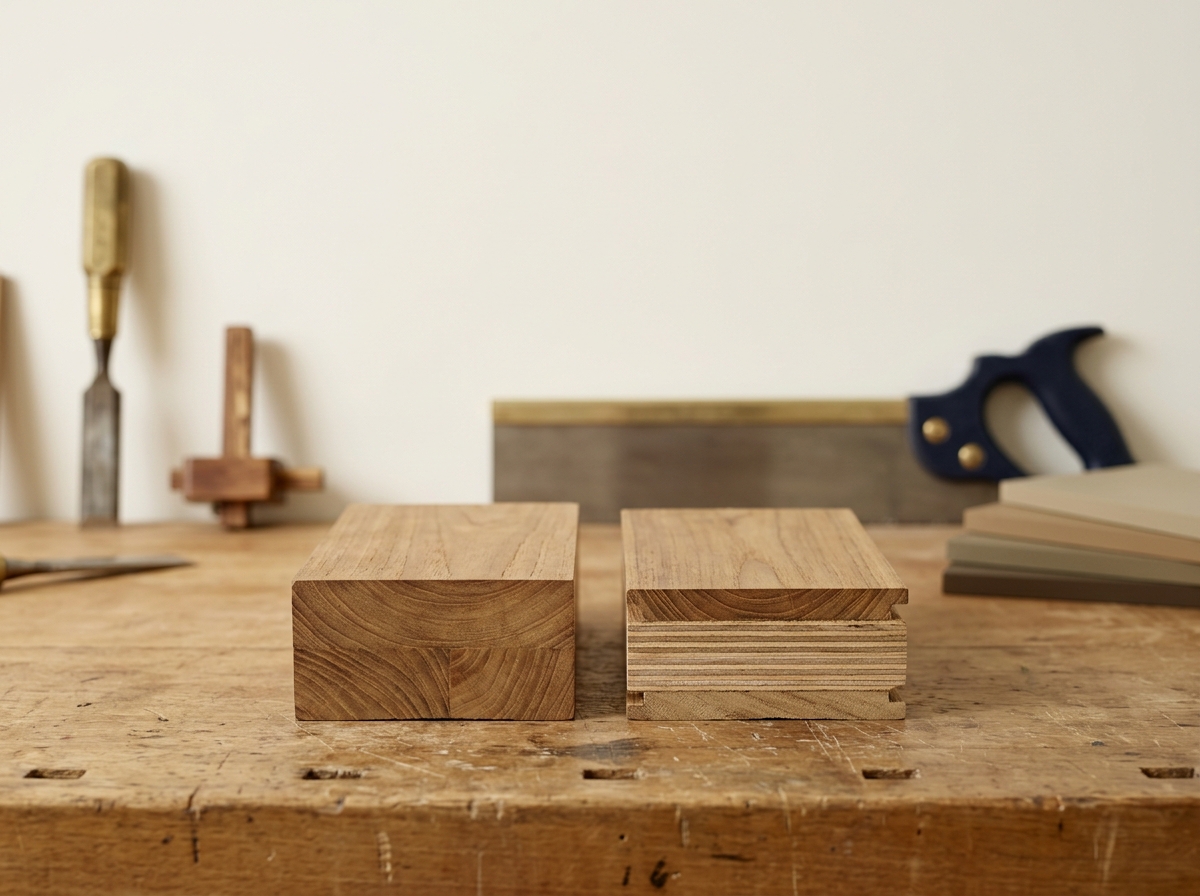
Solid teak parquet blocks are cut from a single piece of Tectona grandis. Standard thicknesses run approximately 20–22 mm. They carry the full teak density profile — natural oils, silica content, and dimensional movement characteristics.
Engineered teak parquet uses a 2–4 mm teak wear layer bonded to a multi-ply core, typically 9–15 mm total thickness. Core materials vary: hardwood ply, HDF, or poplar ply are common. Total construction is typically 12–18 mm depending on supplier specification.
Moisture Performance by US Climate Zone
This is the specification table most sourcing guides omit entirely.
| Construction | Target MC at Factory | Recommended US Climate Zone | Radiant Heat Compatible |
|---|---|---|---|
| Solid 20–22 mm | 6–8% | Zones 4–7 (moderate humidity variation) | Limited; check species MC equilibrium |
| Engineered 12–15 mm | 7–9% | Zones 1–8 (broad range) | Yes, manufacturer-dependent |
| Engineered 15–18 mm | 7–9% | Zones 1–8 | Yes |
Solid teak blocks are more sensitive to humidity swings typical in northeastern and midwestern US climates. Engineered construction is the lower-risk specification for HVAC-controlled commercial interiors.
Cost and Volume Comparison
At project quantities (approximately one full container), solid teak parquet blocks typically carry a higher price per square meter than engineered equivalents in the same grade. The gap narrows when comparing high-grade engineered (thick wear layer, hardwood ply core) against mid-grade solid.
Best-Use Scenarios
- Solid 20–22 mm: Boutique hotels, high-end residential where refinishing longevity justifies premium. Lower appropriateness for ground-floor slabs or radiant-heat systems. - Engineered 12–15 mm: Commercial offices, retail, hospitality where dimensional stability under HVAC cycling is the primary risk. Suitable for most radiant-heat applications with verified MC specs.
Parquet Formats From Indonesian Factories: Herringbone, Chevron, and Mosaic
Indonesian teakparquet flooring suppliers produce all three major parquet formats at factory scale. Format selection affects both price and lead time.
Herringbone Block Specifications
Standard herringbone blocks from Indonesian factories typically run:
- Length: 200–500 mm (250 mm and 300 mm are most common) - Width: 50–70 mm - Thickness: 20–22 mm (solid) or 14–18 mm (engineered) - Angle: 90° interlocking by definition
Tongue-and-groove profiles are standard on most factory outputs. Square-edge blocks are available but less common for herringbone. Confirm profile spec in the purchase order.
Chevron Format and Cutting Tolerances
Chevron differs from herringbone in that the block ends are cut at an angle — typically 45°, though 60° cuts are also produced. Tighter cutting tolerances are required for chevron than herringbone because the angled ends must align precisely.
Specify: - End-cut angle (45° or 60°) - Tolerance: ±0.2 mm on length is a reasonable commercial standard - Tongue-and-groove vs. click profile
Mosaic and Finger-Block Panels
Mosaic panels (finger-block assemblies) are small teak strips — typically 160–200 mm × 20–25 mm × 8–10 mm — bonded to a kraft paper or mesh backing. They ship as panels rather than individual blocks, reducing site labor. Backing material affects compatibility with certain adhesives; confirm with the factory before ordering.
Custom Sizing and MOQ Thresholds
Most Indonesian parquet factories will produce custom sizes on orders of approximately 500–1,000 m² minimum, though this varies by factory scale. Custom chevron angle cuts typically require higher MOQs than standard herringbone due to tooling setup time.
Indonesian Teak Parquet Grading Standards Every Buyer Should Understand
Grading directly determines price per container. Indonesian mills use several tier systems; understanding what each permits is essential before evaluating quotes.
Common Grade Tiers
| Grade | Knots | Sapwood | Color Variation | Typical Use |
|---|---|---|---|---|
| Select / FAS | None or minimal | Not permitted | Tight, uniform | Premium residential, luxury hospitality |
| AB | Small, sound knots permitted | Minimal | Moderate | Commercial offices, mid-market hospitality |
| ABC | More knots, minor defects | Some permitted | Wider | Value commercial projects |
| Rustic / CD | Character knots, open defects | Permitted | Wide | Feature floors, reclaimed aesthetic |
How Grading Affects Container Pricing
Select-grade teak parquet commands a meaningful premium over ABC grade — the gap can be substantial at container volumes, though exact differentials shift with timber market conditions.
Visual vs. Structural Grading
Visual grading addresses aesthetics: knots, color, sapwood. Structural grading addresses integrity: checks, splits, delamination risk. Reputable factories separate the two. Require both a visual grade certificate and a structural inspection report for commercial project orders.
Third-Party Grading Verification
Pre-shipment inspection by SGS, Bureau Veritas, or equivalent agencies should include grading verification alongside MC testing. Specify grading criteria in the inspection scope — do not leave it to the inspector's discretion.
Moisture Content and Kiln-Drying Specifications for US Import Compliance
Moisture content (MC) is the single most consequential specification for teak parquet destined for US interiors. Getting it wrong produces cupping, gapping, and warranty claims.
Target MC Range
For solid teak parquet blocks shipped to US interiors, the broadly accepted target MC at point of shipment is 6–9%. The lower end of this range (6–7%) is more appropriate for centrally heated US interiors in drier climate zones.
Kiln-Drying Methods
- Conventional kilns: Steam or hot-air kilns operating over days to weeks. Widely used. Effective if properly controlled. Risk of case-hardening if schedules are rushed. - Vacuum kilns: Faster cycle times, lower risk of surface checking for dense hardwoods like teak. Less common in smaller Indonesian mills but available at larger export-oriented factories.
Ask suppliers specifically which kiln type they operate and what their standard drying schedule is for teak. A factory that cannot answer this question in detail is a risk signal.
ISPM-15 Compliance
All wood packaging materials (pallets, crating) in export shipments to the United States must comply with ISPM-15 phytosanitary standards — heat treatment or fumigation with official marking.
Verifying MC Compliance
- Require a kiln-drying certificate from the mill specifying the drying schedule and final MC reading. - Third-party pre-shipment inspection should include random MC testing using a calibrated pin or pinless meter at multiple points per lot. - Specify acceptable MC range in the purchase order as a contractual pass/fail criterion.
Finishing Options Offered by Indonesian Teak Parquet Suppliers
Most Indonesian teak parquet flooring suppliers offer both unfinished and pre-finished product. The right choice depends on project logistics and specification requirements.
Unfinished vs. Pre-Finished
Unfinished (raw sanded): Ships at lower cost, allows site finishing to project specification. Requires on-site sanding, dust management, and curing time. More appropriate when custom stain colors or seamless repairs are required.
Pre-finished: Factory-applied finish reduces site labor and drying time. Quality varies significantly by factory — inspect finish samples under raking light before approving.
Finish System Options
| Finish Type | Durability | Repairability | VOC Profile | Popular Application |
|---|---|---|---|---|
| UV-cured oil | High | Good (spot repair) | Low | Residential, boutique hospitality |
| Hardwax oil | Moderate-high | Excellent | Low | High-traffic commercial |
| Polyurethane lacquer | Very high | Poor (full refinish) | Moderate-high | Heavy commercial, retail |
Texture and Surface Options
Brushed surfaces (wire-brushed to accentuate grain) and hand-scraped textures are in consistent demand from US hospitality and upscale residential projects. These are available from most mid-to-large Indonesian factories. Confirm texture depth specification — light brushing versus deep scraping affects both aesthetics and wear layer thickness on engineered product.
Custom Stain Colors
Custom stain tinting on engineered teak surface layers is widely available. Most factories use penetrating oil stains rather than pigmented lacquers. Request a stain sample on actual production material — teak's natural oils can affect stain penetration and color consistency.
Export Packing, Container Loading, and Lead Times for Large Project Orders
Container Yield Calculations
Container capacity determines your minimum viable order quantity. Here are approximate loading yields by format — treat these as planning estimates, not guarantees.
| Container | Approximate Capacity | 250×50×20mm Solid Blocks | 300×70×15mm Engineered |
|---|---|---|---|
| 20-foot | ~25–28 CBM usable | Approximately 900–1,100 m² | Approximately 1,100–1,300 m² |
| 40-foot | ~55–60 CBM usable | Approximately 2,000–2,400 m² | Approximately 2,400–2,800 m² |
Block dimensions, packing density, and carton configuration all affect final yield. Request a packing list simulation from your supplier for your specific format and size before confirming container count.
Standard Packing Configuration
- Individual blocks or panels packed in 5-ply corrugated cartons - Shrink-wrapped bundles within cartons for moisture protection during transit - Cartons stacked on ISPM-15-certified pallets - Carton labels should include: grade, MC reading, dimensions, finish type, and batch number
Lead Times
- Stock items (standard herringbone, common sizes): Approximately 20–30 days from order confirmation - Custom formats (chevron, non-standard dimensions, custom stain): Typically 45–60 days - High-volume custom orders (full 40-foot container, special finish): Allow 60–75 days plus 25–35 days ocean transit to US West Coast ports; 30–40 days to East Coast ports
Port of Origin Options
- Tanjung Priok (Jakarta): Primary port for West Java and Jakarta-area suppliers. Highest container throughput in Indonesia. - Port of Semarang (Tanjung Emas): More efficient for Central Java production clusters, including Jepara. Shorter inland trucking distance for most parquet manufacturers.
Project-Quantity Pricing, MOQs, and Payment Terms From Indonesian Suppliers
MOQ Structures
| Order Type | Typical MOQ | Notes |
|---|---|---|
| Full container (FCL) | One 20-foot container (~900–1,100 m² solid) | Best per-unit pricing |
| Consolidated (LCL) | Often 50–200 m² minimum | Higher per-unit freight cost |
| Custom format/color | 500–1,000 m² minimum | Tooling and setup cost applies |
Indicative Price Benchmarks
These are approximate market ranges only — actual pricing depends on grade, finish, format, volume, and market conditions at time of order.
| Format | Grade | Approx. FOB Range (per m²) |
|---|---|---|
| Solid herringbone 250×50×20mm | Select/FAS | Higher end of market |
| Solid herringbone 250×50×20mm | AB | Mid-range |
| Engineered herringbone 300×70×15mm | AB | Slightly below solid equivalent |
| Chevron (solid, custom angle) | AB | Premium over standard herringbone |
| Mosaic/finger block panels | ABC | Lower per-m² due to format efficiency |
Treat any supplier quote significantly below the general market range with caution — it often signals downgraded material being sold as a higher grade.
Payment Terms
- TT (telegraphic transfer) advance: Typically 30–50% deposit, balance before shipment or against bill of lading. Standard for new buyer relationships. - LC at sight (Letter of Credit): Preferred for larger orders; provides documentary protection for both parties. Some smaller Indonesian factories do not work with LCs — this itself is a qualification signal. - Escrow: Occasionally used on first orders through trade platforms. Less common for direct factory relationships.
Volume discount thresholds and annual contract pricing are available from most established exporters. Frame your initial RFQ to include annual volume projections — this typically unlocks better per-unit pricing than single-order negotiations.
How to Vet and Qualify Teak Parquet Suppliers in Indonesia
Factory Audit Checklist
- ✓Active SVLK certificate from accredited verifier — visible and verifiable online
- ✓Kiln capacity sufficient for order volume; drying schedule documentation available
- ✓Grading room with documented grade definitions and physical reference samples
- ✓Finishing line appropriate to ordered finish type (UV, oil, lacquer)
- ✓QC documentation: in-process MC testing logs, defect rate records
- ✓Export packing line: ISPM-15-certified pallet stock on site
- ✓Business registration and export license current
- ✓Bank reference or trade reference from at least two existing international buyers
Certifications to Require
- SVLK: Non-negotiable for US Lacey Act compliance. Verify the certificate number directly with Indonesia's Ministry of Environment and Forestry online registry. - FSC (Forest Stewardship Council): Chain-of-custody certification. Required by environmentally focused US buyers and some commercial project specifications. Fewer Indonesian parquet factories hold FSC than SVLK. - ISO 9001: Indicates documented quality management systems. Useful indicator of process consistency at manufacturing scale.
Role of Third-Party Inspection
SGS and Bureau Veritas are the most widely recognized pre-shipment inspection agencies operating in Indonesia. Specify the following in the inspection scope: MC testing (random sample), grading verification against purchase order specification, dimensional tolerance check, finish quality visual inspection, and packing/marking verification including ISPM-15 compliance.
Red Flags in Supplier Qualification
- Inconsistent MC readings across a single batch (more than ±2% variation) - SVLK certificate that cannot be independently verified - Vague grade definitions ("premium quality" without reference to specific knot and sapwood allowances) - No physical grade reference samples available - Inability to provide kiln drying schedules or kiln capacity data - Payment terms that require full advance payment with no LC option on large orders
Sustainability and Legal Compliance: Teak Sourcing Regulations for the US Market
US Lacey Act Requirements
The Lacey Act (as amended in 2008) requires US importers of wood products to declare the country of harvest, species, and quantity on a Plant and Plant Product Declaration form. Importers must also exercise due diligence to verify the legal origin of imported wood.
Lacey Act enforcement is complaint-triggered and risk-based, but the consequences of violation — seizure, fines, and reputational exposure — are significant enough that documentation discipline is non-negotiable for commercial buyers.
How SVLK and FLEGT Satisfy Lacey Act Requirements
SVLK-certified Indonesian exporters can issue FLEGT licenses for shipments to countries participating in Indonesia's Voluntary Partnership Agreement with the EU.
FSC chain-of-custody certification adds an additional layer: FSC requires documented timber origin at each supply chain stage, which further strengthens Lacey Act due diligence records.
Plantation Teak vs. Old-Growth Sourcing
Plantation teak (Tectona grandis) grown in managed Indonesian forests — primarily Perhutani concessions in Java — is the environmentally and legally lower-risk source. Old-growth teak from natural forests carries higher deforestation risk, greater SVLK scrutiny requirements, and potential reputational exposure with US buyers who screen supply chains.
Reclaimed teak parquet — recovered from demolished Indonesian colonial-era structures and repurposed as flooring — commands a premium in sustainability-conscious US markets. Verify reclaimed provenance claims carefully; documentation requirements are specific, and "reclaimed" labeling is not uniformly regulated.
Frequently Asked Questions
What moisture content should Indonesian teak parquet have before shipping to the United States? Target 6–9% MC for solid teak parquet. The lower end of this range (6–7%) suits drier US climate zones and centrally heated interiors. Engineered teak is slightly more tolerant at 7–9%.
What is the difference between solid and engineered teak parquet blocks for commercial projects? Solid blocks (20–22 mm) are single-species throughout and offer more refinishing cycles.
How do I verify that an Indonesian teak supplier holds valid SVLK or FSC certification? SVLK certificates issued by accredited verification bodies can be checked directly through Indonesia's Ministry of Environment and Forestry public registry. FSC certificates are verifiable through the FSC certificate search at info.fsc.org.
What is the typical MOQ for a container of teak herringbone parquet from Indonesia? One 20-foot container is the standard FCL MOQ for most established exporters. This equates to approximately 900–1,100 m² for solid 250×50×20 mm herringbone blocks.
How long does it take to receive a custom teak parquet order from Indonesia to a US port? Custom format production typically takes 45–60 days from order confirmation. Add approximately 25–35 days ocean transit to US West Coast ports and 30–40 days to East Coast ports.
Is Indonesian plantation teak parquet compliant with the US Lacey Act? Yes, provided the importer maintains proper documentation. SVLK certification and FLEGT licensing from Indonesian exporters provide the documented chain of custody and legality verification that supports Lacey Act due diligence.
Sourcing teak parquet from Indonesia at commercial scale is a process-driven decision, not a product search. The buyers who execute it successfully maintain clear grade specifications, contractual MC requirements, verified SVLK documentation, and pre-shipment inspection protocols on every order.
You now have the grading definitions, format specs, container yields, compliance framework, and audit criteria to evaluate Indonesian teak parquet suppliers with confidence. The logical next step is putting specific project requirements in front of qualified manufacturers.
You have the specifications — grade tier, format, MC requirement, container volume, and compliance documentation. Connect with verified teak parquet flooring suppliers in Indonesia who can meet them. Submit your project brief and receive factory-direct pricing benchmarked to your exact requirements.
Request Supplier Quotes →Need eyes on the ground in Indonesia?
MTS is an execution partner — supplier verification, manufacturing management, quality control and export logistics across Indonesia, Vietnam and China.
Related services
Related articles
Receive furniture sourcing insights across Asia.
One email per week. No spam.