Failed Pre-Shipment Inspection: Your Step-by-Step Response Guide
9 min read
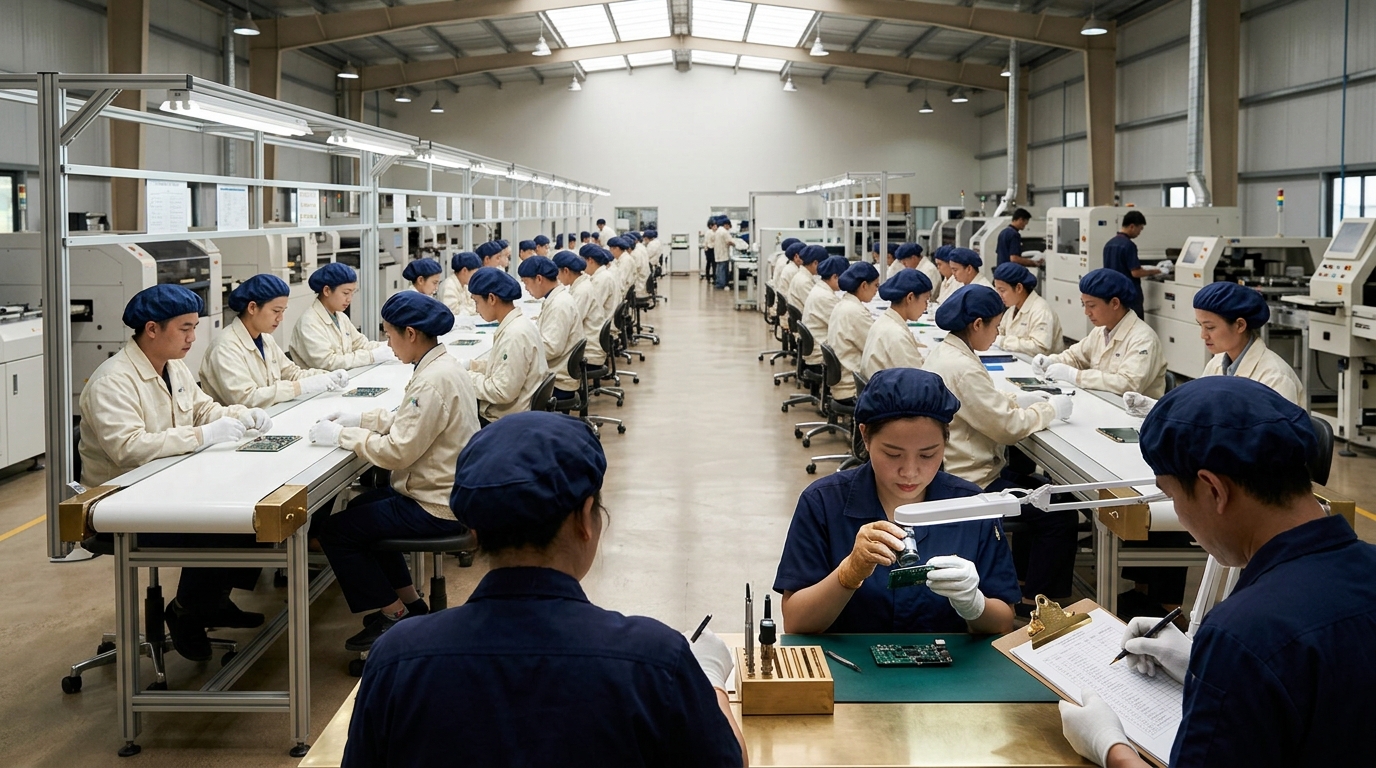
A failed pre-shipment inspection is one of the most time-pressured situations in import logistics. The goods are packed, the booking is made, and the factory is insisting everything is fine — but your third-party report says otherwise. What you do in the next 24 to 72 hours determines whether you recover the order, renegotiate the terms, or absorb a costly delay. The decision is rarely simple, and the wrong move in either direction — shipping defective goods or pulling the plug prematurely — carries real commercial consequences.
The first thing to understand is that a failed pre-shipment inspection is a documented event, not just a conversation. The inspection report, the defect classifications, the AQL tables, and the photographic evidence are legal and commercial records. They shift the burden of proof toward the supplier and give you a basis for whatever action you take next. Without that documentation, you are negotiating on goodwill alone. With it, you have leverage.
This guide is structured as a decision tree. Work through it in sequence. Each stage narrows your options and clarifies the right path based on the severity of the failure, your delivery constraints, and the nature of your relationship with the supplier. If you want to understand how pre-shipment inspections fit into a broader quality programme — including pre-production and in-line checks that catch problems before this point — seethe Quality Control pillar guide.
Not every failed inspection represents the same risk. The report will classify defects as critical, major, or minor, and it will present the findings against an AQL threshold — commonly AQL 2.5 for major defects and AQL 4.0 for minor defects under ISO 2859-1 / ANSI/ASQ Z1.4. Before you do anything else, you need to know which defect categories drove the failure.
Critical defects
Critical defects — those that pose a safety risk to the end user, create a regulatory violation, or render the product entirely non-functional — require an immediate stop. There is no renegotiation path for a safety failure. The goods cannot ship under any commercial arrangement that exposes your customers or your brand to that risk. Document the finding, notify the supplier in writing, and move to the rejection or remediation protocol described later in this guide.
Major defects
Major defects are the most common reason for a failed pre-shipment inspection. They affect product function, appearance, or conformance to spec in ways your customer would notice and reject. Whether you can recover depends on the defect rate, the nature of the defect, and whether it is correctable at the factory.
Minor defects
A failure driven purely by minor defects exceeding the AQL threshold warrants a different response. Minor defects — cosmetic issues that a typical buyer would accept with awareness — may be grounds for a price concession rather than a hold, depending on your end market and retail customer requirements.
Step Two: Determine Whether the Defect Is Correctable at Origin
If the failure involves major defects that are physically correctable — loose threads, mislabelled cartons, missing hangtags, incorrect folding, packaging that does not match your spec — the question becomes whether the factory can sort, rework, or repack within your shipment window.
Get three pieces of information from the factory, in writing, before agreeing to anything:
1. What specifically will be done — sort and remove defective units, rework the affected components, or replace. 2. How long it will take — expressed as a firm date, not an estimate. 3. Who bears the cost — rework at origin is a supplier liability when the defects represent a breach of the purchase order specification.
If the factory agrees to correct and the timeline is workable, schedule a re-inspection. Do not release the shipment on the factory's verbal assurance that the issue is fixed. A re-inspection after a failed pre-shipment inspection is not optional — it is the only way to close the loop with documentation.
Step Three: Evaluate the Partial Shipment Option
When only a portion of the production run failed — for example, a specific colour, size range, or production batch — a partial shipment may be worth considering. This approach lets you ship the conforming units on schedule while the non-conforming units are held for rework or negotiation.
Partial shipment works best when:
- The conforming units are sufficient to meet your minimum stock requirements or retail commitments. - The non-conforming units represent a discrete, identifiable subset of the order. - Your purchase order and the relevant Incoterms allow for partial delivery without triggering penalty clauses. - You have a clear written agreement with the factory on how and when the remaining units will be resolved.
Partial shipment does not work when the defect is systemic across the entire production run, when the non-conforming units are mixed with conforming units and cannot be reliably separated without a full sort, or when your buyer requires a complete shipment for a planogram or promotional launch.
Step Four: Renegotiate — But Only From a Documented Position
A failed pre-shipment inspection gives you documented grounds to renegotiate price, lead time, or both. Suppliers generally prefer renegotiation to outright rejection, which creates leverage for the buyer. Common outcomes include:
| Renegotiation Lever | When It Applies |
|---|---|
| Unit price reduction | Defects are minor or cosmetic; goods are still saleable with disclosure or markdown |
| Extended payment terms | Delay caused by inspection failure has disrupted your cash flow |
| Free replacement units in next order | Factory agrees defects are their error but cannot rework within the current window |
| Freight cost sharing | Late shipment caused by rework forces a switch from sea to air freight |
All renegotiated terms must be confirmed in writing before you release any payment or authorise the shipment. A verbal agreement made under time pressure is not enforceable. Reference the specific inspection report number and defect findings in any written amendment to the purchase order.
Step Five: Know When Full Rejection Is the Right Call
Rejecting a shipment is the hardest decision commercially, but sometimes it is the correct one. Full rejection is appropriate when:
- Critical defects are present and cannot be corrected without full remanufacture. - The defect rate is so high that rework would cost more than reordering. - The factory has already reworked once and a second re-inspection has also failed. - Shipping the goods would expose you to regulatory non-compliance in your destination market — for example, product safety regulations in the EU or US that carry recall liability. - Your retail customer's vendor compliance programme would result in chargebacks that exceed the value of the order.
When you reject, do so in writing, citing the specific clauses in the purchase order or quality agreement that the supplier has breached, and attaching the inspection report as the supporting evidence. If you have paid a deposit, your path to recovery depends on the payment terms, the jurisdiction, and the quality agreement you have in place. This is a situation where the existence of a pre-shipment inspection report — rather than a verbal complaint — makes a material difference to any subsequent dispute.
Step Six: Use the Failure to Fix the Upstream Process
A failed pre-shipment inspection is a signal that something earlier in the production process was not caught in time. Pre-shipment inspection is the last line of defence — it is not designed to be the only line of defence. If you are consistently reaching the PSI stage only to find defects that could have been identified during production, the programme needs to be redesigned.
The standard three-stage structure addresses this directly:
- Pre-production inspection (PPI): Verifies raw materials, components, and bulk fabric or substrate before manufacturing begins. Catches input problems before they become output problems. - In-line inspection (ILI): Conducted when a portion of production — typically around 20% — is complete. Catches process deviations early enough to correct without scrapping the full run. - Pre-shipment inspection (PSI): Conducted on finished, packed goods when the full production run is complete and ready to ship.
If your current quality programme starts at the PSI stage, you are absorbing all of the risk at the point where it is most expensive to recover. Adding upstream inspections is not a cost — it is a reduction in the cost of failure.Our Quality Control servicecovers all three stages across manufacturing hubs in China, Vietnam, Bangladesh, India, and Indonesia.
How Your Inspection Partner Affects Every Outcome
The quality of the inspection report is not a secondary consideration — it determines what you can do with it. A report that uses standardised defect classification, references the correct AQL table, includes photographic evidence keyed to specific defect categories, and is delivered within a defined turnaround window gives you a document you can act on immediately. A report that is vague, inconsistently formatted, or missing photographic evidence gives the factory room to dispute the findings and slows every subsequent step.
When evaluating whether your current inspection provider is giving you actionable reports, look at whether the report:
- States the sample size and AQL level applied. - Classifies each defect as critical, major, or minor with a count. - Provides photographs of each defect type, not just summary photos. - References your specific purchase order and approved sample. - Includes a clear pass/fail verdict against each criterion.
If the report does not include all of these elements, you are not getting the documentation you need — either to act on a failure or to defend your position if the supplier disputes the outcome. Seeour Quality Control servicefor the reporting format MTS uses across all inspection types.
A failed pre-shipment inspection is a defined problem with a defined set of responses. The importer who treats it as a crisis rather than a documented decision point loses time, leverage, and often money. The importer who reads the report correctly, works through the decision sequence methodically, and keeps every communication in writing almost always achieves a better outcome — whether that means recovering the shipment, renegotiating the terms, or rejecting and rebuilding. The inspection report is your starting point. What you do with it is what matters.
Need eyes on the ground in Indonesia?
MTS verifies suppliers, audits factories and runs AQL-based inspections at every production milestone — reported in writing.
Related services
Related articles
Receive furniture sourcing insights across Asia.
One email per week. No spam.