Factory Auditing in Vietnam: What Buyers Shifting Production Must Know
9 min read
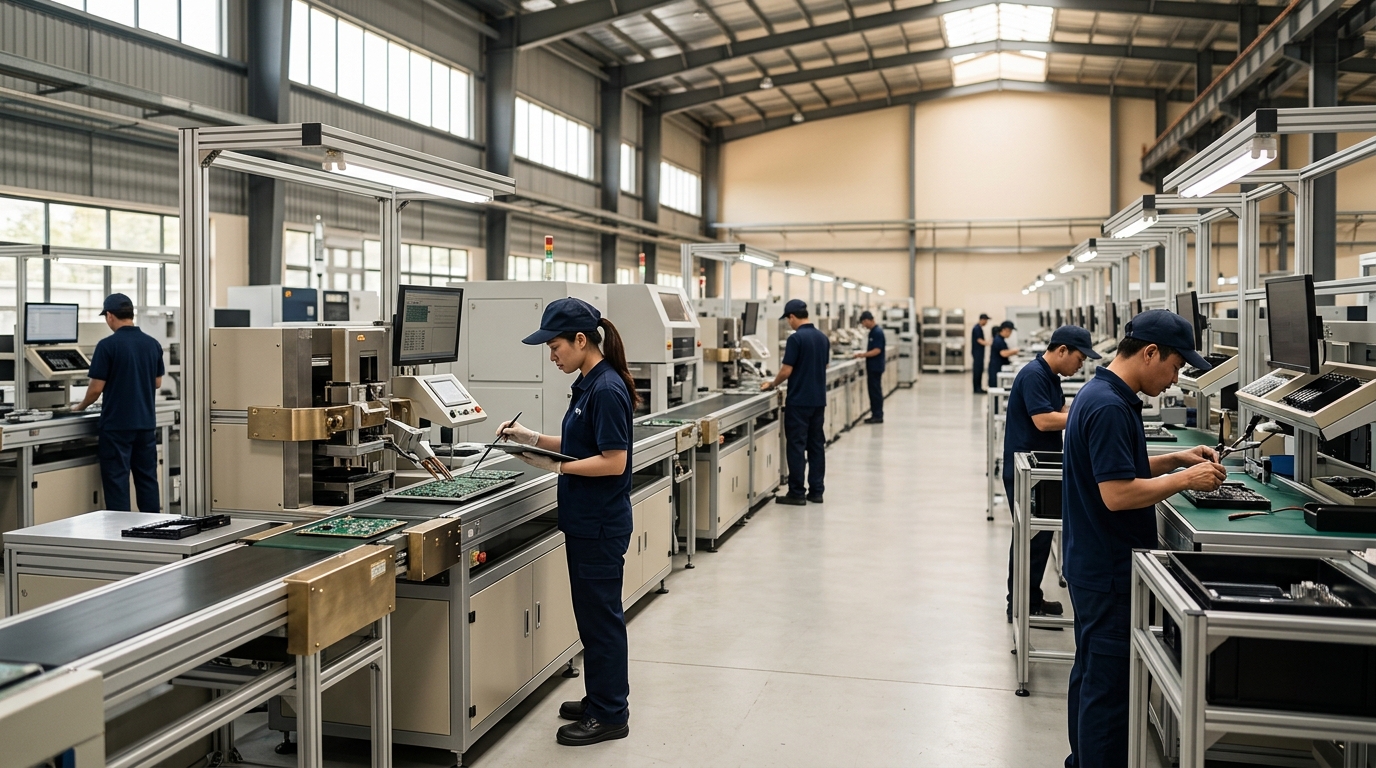
Conducting a factory audit Vietnam-side has become an increasingly urgent priority as buyers shift production away from China's Guangdong, Zhejiang, and Jiangsu corridors toward Vietnamese facilities producing garments and footwear, electronics, furniture, and consumer goods. That strategic diversification is defensible on supply chain grounds, but it introduces a compliance environment that differs meaningfully from what most buyers already know. Applying the same checklist used in Guangzhou will not transfer cleanly; the statutory framework, enforcement culture, and on-the-ground documentation practices in Vietnam have their own character, and auditors unfamiliar with them will miss things that matter.
Vietnamese labour law has developed substantially over the past decade, with the 2019 Labour Code — which took effect in 2021 — introducing changes to working hours, multiple-employer contracts, and collective bargaining rights. For buyers whose programmes reference frameworks such as SMETA, BSCI, SA8000, or WRAP, understanding how those international standards map onto Vietnamese statute is essential before the first audit is commissioned. Gaps between what a factory's documentation claims and what local law actually requires are a persistent source of non-conformances, particularly for buyers entering the country for the first time.
This article is intended to give procurement managers, responsible sourcing leads, and founders the localised context they need before engaging an audit provider. It complementsthe Factory Inspection pillar guide, which covers methodology, scope selection, and how to interpret audit outputs across Asian sourcing regions more broadly.
Vietnam operates a civil-law system with a codified Labour Code that is comparatively detailed on individual employment rights. Unlike some neighbouring jurisdictions where enforcement is light and documentation practices informal, Vietnamese factories — particularly those in export processing zones — are accustomed to government labour inspections and, increasingly, to buyer-commissioned third-party audits.
Key statutory provisions that bear directly on audit scope include:
- Working hours: The standard working week is 48 hours, with overtime capped at a statutory annual ceiling. Factories in certain sectors can apply for higher overtime allowances, but these require government approval and documentation. Buyers auditing against SMETA or SA8000 will find that the international standards often set tighter hour limits than Vietnamese statute in some respects and looser ones in others — auditors must apply the more stringent standard. - Minimum wage: Vietnam uses a regional wage zoning system with four zones carrying different minimum rates. Zone 1 covers Hanoi and Ho Chi Minh City; Zone 4 covers rural provinces. A factory located in a Zone 3 province is not legally obliged to pay Zone 1 rates, but buyers sourcing for European retail may face pressure from frameworks that require wages sufficient to meet basic needs regardless of the statutory floor. - Social insurance: Employers are legally required to register workers for social, health, and unemployment insurance and to make contributions. Unregistered workers — including those on short-term contracts — represent one of the more common findings in Vietnamese factory audits. - Freedom of association: Vietnam does not permit independent trade unions outside the Vietnam General Confederation of Labour. This is a structural point auditors flag on SMETA and SA8000 reports; buyers should understand it is a systemic national condition, not a correctable factory-level non-conformance.
The Most Common Non-Conformances Found in Vietnamese Factories
Across social compliance audits in Vietnam, certain findings appear with enough regularity that buyers should treat them as baseline risk areas rather than surprises.
Overtime Documentation and Hour Limits
Perhaps the most frequent finding is excessive or poorly documented overtime. Factories running peak-season orders often exceed statutory annual overtime ceilings, and payroll records do not always reflect actual hours worked. Auditors cross-referencing time-attendance records, payroll data, and worker interviews frequently identify discrepancies. Buyers should request that their audit scope explicitly includes payroll reconciliation and multi-source hour verification rather than accepting time records at face value.
Social Insurance Registration Gaps
Short-term and probationary workers are sometimes excluded from social insurance registration, either to reduce employer costs or because of administrative gaps. This is a non-conformance under Vietnamese law and under most international social compliance frameworks. Corrective action typically requires the factory to bring all eligible workers into the scheme and demonstrate backdated or prospective compliance.
Fire Safety and Emergency Preparedness
Fire safety deficiencies are common, particularly in older factory buildings and in facilities that have expanded production without upgrading fire suppression systems, evacuation routes, or staff training records. Auditors assessing against SMETA's health and safety pillar or WRAP standards will examine fire drill records, extinguisher maintenance logs, and emergency exit accessibility. Blocked exits and out-of-date drill records appear frequently.
Chemical and Hazardous Material Handling
Factories producing goods that involve dyes, adhesives, solvents, or surface treatments are assessed on storage, labelling, ventilation, and worker PPE compliance. The Higg Index is increasingly referenced by brands sourcing from Vietnamese textile and footwear factories; even where formal Higg verification is not required, buyers should expect chemical management to be a scrutinised area.
Employment Contracts and Worker Documentation
Written employment contracts are a legal requirement in Vietnam. Auditors commonly find contracts that are missing, expired, or that contain terms inconsistent with current law — for example, probationary periods that exceed the statutory maximum. In factories with high seasonal labour turnover, documentation often lags behind actual workforce composition.
How International Audit Frameworks Apply in a Vietnamese Context
Buyers commonly specify SMETA (a Sedex Members Ethical Trade Audit), BSCI, SA8000, or WRAP when commissioning a factory audit in Vietnam. Each framework carries particular requirements that interact with local law in ways worth understanding before briefing your audit provider.
| Framework | Pillar Structure | Key Consideration in Vietnam |
|---|---|---|
| SMETA 2-Pillar | Labour + Health & Safety | Most widely requested by European buyers; maps well to Vietnam Labour Code but requires local wage context |
| SMETA 4-Pillar | + Environment + Business Ethics | Adds environmental checks relevant for textile, footwear, and electronics factories |
| BSCI | Single code covering similar topics | Common for German and broader European retail supply chains; findings feed into the amfori platform |
| SA8000 | Certification standard with management system requirements | Higher bar than audit-only frameworks; requires worker awareness of rights and a functioning grievance mechanism |
| WRAP | Primarily US market; 12 principles | Frequently used in apparel; includes customs compliance and security provisions relevant to US import requirements |
No single framework covers everything. Buyers with ESG reporting obligations to investors or retail partners should confirm with their audit provider which framework output will satisfy their specific disclosure requirements — whether that is SEDEX platform upload, a board-level ESG annex, or evidence for a retail onboarding questionnaire.
What a Credible Audit Scope Looks Like for Vietnamese Suppliers
A factory audit in Vietnam that produces actionable evidence needs to go beyond a document review and a walkthrough. Credible scope elements include:
Worker interviews: Conducted in Vietnamese, privately, and covering wages, hours, freedom from coercion, and awareness of grievance channels. Interview samples should be representative of production workers, not limited to department supervisors.
Payroll and attendance reconciliation: Cross-referencing time-attendance system data against payroll records, insurance contribution records, and production output logs to identify hour inflation or wage manipulation.
Management system review: Evaluating whether corrective action from previous audits has actually been implemented. A factory with a history of repeat non-conformances on the same findings is a meaningful risk signal.
Physical facility inspection: Fire systems, chemical storage, ventilation, structural condition, canteen and sanitation facilities, and dormitory conditions where workers are housed on-site.
Environmental spot checks: Wastewater discharge points, chemical inventory against production volumes, and waste disposal documentation — particularly relevant for wet-process textile factories.
For buyers new to the country,our Factory Inspection serviceis structured to cover these elements with auditors who have direct in-country experience and operate in Vietnamese.
Interpreting Audit Findings and Driving Supplier Corrective Action
An audit report is only as useful as the corrective action it generates. A common frustration for procurement managers is receiving a non-conformance report (NCR) with findings categorised as minor, major, or critical — without clear guidance on what the factory must do and by when.
Effective CAPA (Corrective Action and Preventive Action) management requires the audit report to specify:
- The specific legal or framework clause that has been breached - The evidence basis for the finding (document reviewed, worker statement, observation) - A realistic remediation timeline differentiated by severity - The evidence required to close the finding (revised policy, payroll records, photographic evidence of physical remediation)
Buyers should build CAPA closure verification into their supplier agreements, not treat it as optional follow-up. Factories that understand findings will be re-verified are more likely to treat corrective action as a genuine compliance obligation rather than a paper exercise.
For buyers managing suppliers across multiple Asian countries — including Vietnam alongside sourcing in Bangladesh, India, or Indonesia — consistent CAPA methodology is essential for meaningful cross-supplier comparison. This is particularly relevant for enterprise category managers standardising supplier onboarding.
Timing, Frequency, and Unannounced Audit Considerations
Audit timing affects findings. Announced audits — where the factory has advance notice — allow management to prepare documentation and, in some cases, to adjust working conditions temporarily. Unannounced or semi-announced audits (where the factory is notified within a narrow window) are more likely to reflect actual operating conditions.
For initial supplier qualification, most buyers accept announced audits, treating them as a baseline. For ongoing monitoring of higher-risk suppliers — particularly those with previous major findings — unannounced or semi-announced audits are a stronger evidence basis.
Audit frequency depends on finding severity and order volume. A first-time supplier with no previous audit history typically warrants an initial audit before commercial orders are placed, with a follow-up within the first year of trading. Suppliers with open major non-conformances should not be considered qualified until CAPA closure is verified.
How Vietnam's Trade Position Affects Compliance Expectations
Vietnam's participation in RCEP, the EU-Vietnam Free Trade Agreement (EVFTA), and the CPTPP means that export factories — particularly in garments, electronics, and footwear — are operating under increasing regulatory scrutiny from importing markets. The EVFTA's trade and sustainable development chapter creates explicit expectations around labour standards and environmental practice that buyers sourcing for European markets should understand.
This does not mean every factory is compliant; it means that Vietnamese export factories are, on average, more familiar with audit processes than factories in some other regional markets. That familiarity can be an asset — factories are more likely to maintain systematic documentation — but it also means that document preparation for audits is well-practised. Independent verification through worker interviews and physical inspection remains essential.
Buyers considering Vietnam as a primary or secondary sourcing base should build compliance assessment into supplier selection, not treat it as a post-contract obligation. Engaging an independent audit provider before commercial commitments are made is the most effective way to ensure that what the factory presents in its sales process reflects what happens on the production floor.
A well-scoped factory audit in Vietnam, conducted by auditors with genuine in-country experience and language capability, gives buyers the evidence base to make sourcing decisions they can defend to investors, retail partners, and ESG committees. That is the standard buyers should hold their audit providers to.
Need eyes on the ground in Vietnam?
MTS is an execution partner — supplier verification, manufacturing management, quality control and export logistics across Indonesia, Vietnam and China.
Related services
Related articles
Receive furniture sourcing insights across Asia.
One email per week. No spam.