Incoterms 2020 for Importers: Which Terms Actually Protect You
10 min read
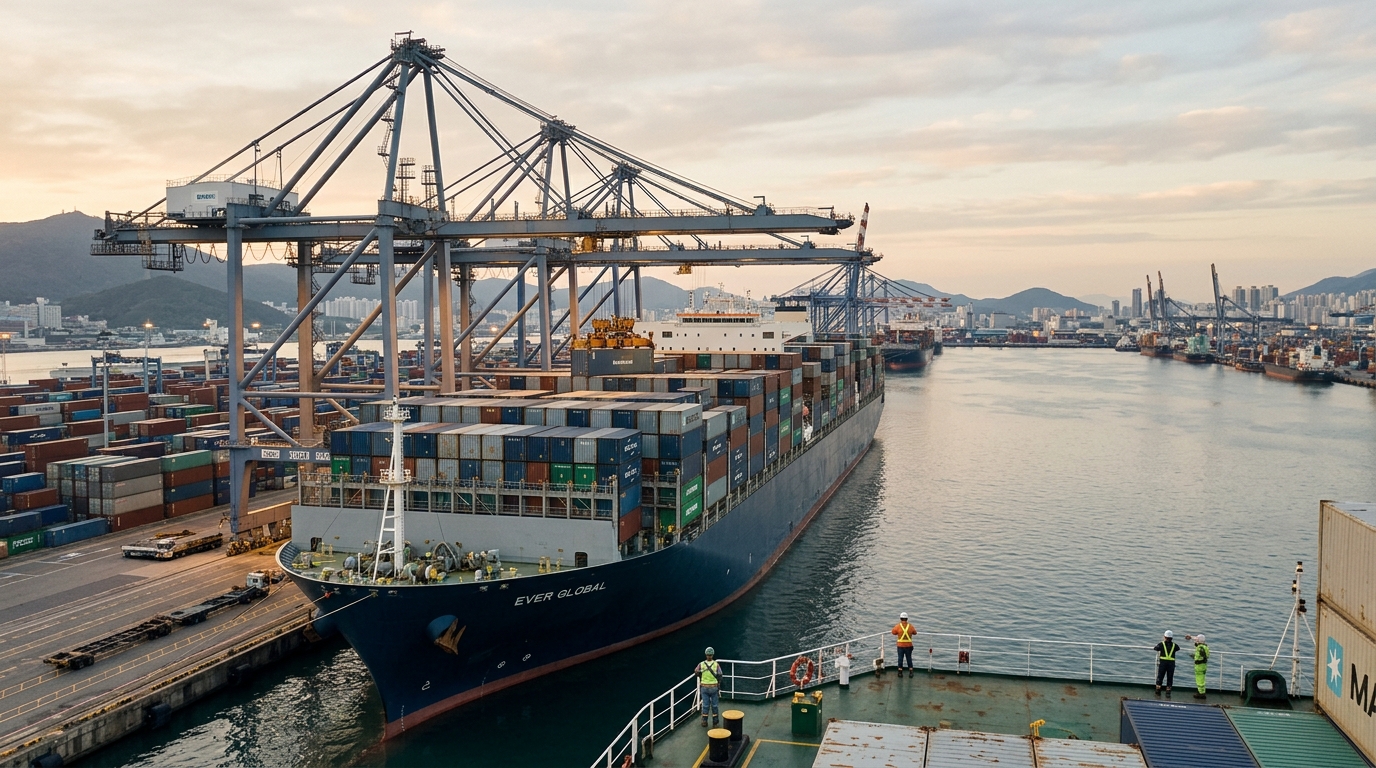
When goods move from Asia under an import contract, an Incoterm — a three-letter code — determines which party covers freight costs, which party bears risk while cargo is in transit, and which party is liable when a container arrives damaged, delayed, or detained at customs. For buyers sourcing from China, Vietnam, India, or Bangladesh, selecting the right term goes well beyond paperwork. It is a commercial decision that carries direct consequences for landed cost, cash flow, and legal exposure. Despite this, the majority of importers either accept whichever term the supplier puts forward or rely habitually on a single term without fully understanding what that agreement entails.
This incoterms 2020 guide for importers is not a glossary. It does not list all eleven terms or explain the difference between maritime-only and all-mode rules in the abstract. It focuses on the three terms that govern the overwhelming majority of Asian manufactured goods trade — FOB, CIF, and DDP — and gives you a clear framework for deciding which one to use based on your operational capability, risk tolerance, and the specific trade lane you are working with.
The ICC updated Incoterms to their 2020 version to reflect changes in modern logistics practice, including the explicit recognition that buyers may use their own or a nominated carrier under FCA, and clearer allocation of insurance obligations under CIF and CIP. If your contracts still reference Incoterms 2010, you are not necessarily operating under the wrong rules, but you may be missing protections that the 2020 revision introduced. Any new contract should specify Incoterms 2020 explicitly.
For a broader view of how trade terms fit into structured cross-border execution, thethe Trading Services pillar guidecovers how a single counterparty can manage incoterms, documentation, and settlement across multiple Asian origins simultaneously.
Why the Choice of Incoterm Is a Risk Allocation Decision, Not a Price Decision
The most common mistake importers make is treating Incoterms as a cost variable rather than a risk variable. A supplier quoting CIF appears to offer a higher-priced shipment than one quoting FOB for the same goods. But the CIF price bundles freight and insurance that the supplier controls — which means the buyer has no say in which carrier is used, what insurance coverage is arranged, or what happens when the supplier's nominated freight agent underperforms.
Risk transfer under Incoterms 2020 occurs at a specific point in the logistics chain. Under FOB, risk transfers to the buyer once goods are loaded on board the vessel at the origin port. Under CIF, the same risk transfer point applies — the difference is that the seller arranges and pays for freight and insurance to the destination port, but the buyer still bears the risk of loss or damage during the main voyage. This is a point many importers miss: CIF does not mean the seller is responsible if the goods arrive damaged at your port. It means the seller has arranged insurance on your behalf, often to a minimum coverage level that may not reflect the actual value of your cargo.
FOB: The Importer's Default and Why It Is Usually the Right One
With FOB (Free on Board), all costs and risks remain the seller's responsibility up to the moment the goods are placed aboard the designated vessel at the port of origin, after which the buyer takes on those obligations — covering freight, insurance, and onward delivery to the end destination. Across Asian export transactions, FOB stands as the dominant trade term, and for importers with substantial experience it functions as the appropriate standard choice.
The commercial logic for preferring FOB is control. When you appoint your own freight forwarder and arrange your own marine insurance, you choose the carrier, negotiate the freight rate, and specify the coverage level. You also have a direct commercial relationship with your logistics provider, which matters when you need to resolve a dispute or expedite a shipment.
When FOB works well
- You have a freight forwarder you trust and use regularly - You are shipping full container loads (FCL) where you can negotiate competitive rates - You are sourcing from a single origin country, making freight consolidation straightforward - You want full visibility into the logistics chain and all associated costs
When FOB creates problems
FOB becomes complicated when you are sourcing from multiple factories across different origin ports. Coordinating a single shipment that consolidates goods from a factory in Guangdong, a second in Ho Chi Minh City, and a third in Dhaka requires either a freight forwarder with strong multimodal capability or a trading counterparty who can aggregate the shipments under a single commercial arrangement. Buyers who try to manage this themselves often find that the administrative overhead of coordinating multiple freight bookings, bills of lading, and insurance certificates negates the cost savings of controlling freight.
CIF: When You Are Paying for Convenience You May Not Be Getting
Under CIF (Cost, Insurance, and Freight), suppliers retain direct control over the freight relationship, a structural advantage they often exploit to earn a margin on the logistics portion of the transaction. Buyers, for their part, are drawn to the arrangement because it collapses multiple charges into a single consolidated price covering delivery to the destination port.
The difficulty lies in the fact that simplicity and protection represent two distinct concepts. As outlined earlier, under CIF the risk transfers at the origin port, not at the destination. The buyer carries transit risk yet holds no authority over the insurance policy that is supposed to cover them. In practice, this produces the following outcomes:
- The insurance is arranged by the seller, often through a domestic Chinese or Vietnamese insurer, with policy terms the buyer has not reviewed - Claims must typically be filed in the country of origin, adding complexity and delay - The freight forwarder is the seller's agent, not yours — their loyalty is to the shipper, not the consignee - Any dispute about freight rates, vessel selection, or transit time is the seller's to manage, not yours
CIF is reasonable in a limited set of circumstances: when you are buying smaller quantities (LCL shipments) and the cost of arranging your own freight and insurance exceeds the margin the seller is earning on the logistics, or when you are dealing with a supplier relationship where freight consolidation at origin genuinely reduces your cost.
DDP: Maximum Convenience, Maximum Counterparty Risk
DDP (Delivered Duty Paid) places the maximum obligation on the seller. The seller is responsible for delivering goods to the buyer's named destination, cleared through customs, with all duties and taxes paid. For the buyer, it looks like the cleanest possible arrangement.
In practice, DDP from Asian origins carries significant risks that importers often underestimate.
The customs compliance problem
When a seller arranges customs clearance in the destination country, they are acting as the importer of record. This creates a structural conflict: the seller's incentive is to minimise the declared value or misclassify the HS code to reduce duty liability. If customs authorities in your country challenge the entry, the liability may fall on the buyer regardless of who arranged the clearance — particularly if you are the beneficial owner of the goods.
For importers in heavily regulated markets, DDP also means you lose visibility into the documentation trail. You cannot verify that the commercial invoice, packing list, and certificate of origin are correctly prepared until the goods are already cleared — at which point errors are difficult to correct without drawing regulatory scrutiny.
When DDP is acceptable
DDP holds up best legally and operationally when the seller is a large, established manufacturer with genuine experience operating as an importer of record in your destination market, and when you have reviewed and approved the customs documentation in advance. A second scenario where DDP can function effectively is when a structured trading company acts as intermediary — one that takes legal title to the goods, manages the incoterm on your behalf, and provides you with a full documentation package regardless of the underlying logistics arrangement.
Our Trading Services serviceis designed precisely for this structure: MTS takes the counterparty role, manages the incoterm and documentation package, and ensures the buyer receives a clean, auditable trade record without carrying the customs compliance risk of a DDP arrangement with an unknown overseas seller.
Comparing FOB, CIF, and DDP Across Key Risk Dimensions
| Dimension | EXW | FOB | CIF | DDP |
|---|---|---|---|---|
| Freight control | Buyer | Buyer | Seller | Seller |
| Risk transfer point | Factory gate | Origin vessel load | Origin vessel load | Destination delivery |
| Insurance arranged by | Buyer | Buyer | Seller (minimum) | Seller |
| Customs clearance at destination | Buyer | Buyer | Buyer | Seller |
| Buyer visibility into logistics | Full | Full | Partial | Low |
| Complexity for multi-origin sourcing | High | Moderate | Low | Low |
| Recommended for SME importers | No | Yes (with freight partner) | Situational | Caution |
EXW (Ex Works) is included here for completeness. It places all obligations on the buyer from the factory gate, including export clearance in the origin country. For importers without an in-country logistics agent, EXW is generally inadvisable — obtaining export clearance as a foreign entity in China, Vietnam, or India is operationally complex and often not legally straightforward.
How Trade Lane Affects the Right Term Choice
The practical risk profile of each Incoterm varies by origin country. An incoterms 2020 guide for importers that ignores trade lane specifics is incomplete.
China remains the highest-volume origin for most B2B importers. FOB from a major port (Shanghai, Ningbo, Shenzhen, Guangzhou) is well-supported by freight infrastructure, and buyers have access to competitive freight rates through established forwarders. DDP from Chinese suppliers carries additional scrutiny given customs valuation practices.
Vietnam has seen substantial growth as an alternative origin, particularly for garments, footwear, electronics assembly, and furniture. FOB from Ho Chi Minh City or Hai Phong is the norm. Buyers should verify that their supplier has genuine export capability — some Vietnamese factories are still building export logistics infrastructure, and FOB obligations may be difficult for smaller manufacturers to meet without a local freight agent.
India offers strong manufacturing capability in textiles, pharmaceuticals, engineering components, and chemicals. FOB from major ports (Nhava Sheva, Chennai, Mundra) is standard. India-origin shipments often involve more complex documentation requirements, including certificates of origin for preferential duty schemes under agreements such as RCEP or bilateral FTAs, which need to be factored into the documentation checklist regardless of the Incoterm used.
Bangladesh is the dominant origin for ready-made garments. FOB Chittagong is the industry standard. Given port congestion patterns at Chittagong, buyers should build lead time buffers and confirm that their bill of lading terms are consistent with their letter of credit requirements if trade finance is involved.
Documentation Alignment: The Incoterm Alone Is Not Enough
Choosing the right Incoterm is necessary but not sufficient. Every import shipment requires a set of documents that must be internally consistent and aligned with the Incoterm stated on the commercial invoice. Common documentation errors include:
- Commercial invoice stating FOB but freight charges included in the unit price, creating a valuation discrepancy at customs - Certificate of Origin issued under a preferential scheme that the HS code does not qualify for - Bill of lading consignee details inconsistent with the letter of credit terms - Packing list dimensions and weights that do not match the bill of lading, triggering customs holds
These errors are not hypothetical. They are among the most common causes of customs clearance delays on Asian import shipments. A structured trading counterparty who manages the full documentation package — not just the commercial terms — substantially reduces the frequency of these errors.
[[BLOCK:TIP title="Specify Incoterms 2020 explicitly in your purchase orders" body="Write 'FOB [named port], Incoterms 2020' on every purchase order and commercial invoice. Leaving the version year unspecified creates ambiguity if a dispute arises, since Incoterms 2010 and 2020 differ on insurance obligations and FCA terms."]]
Building a Consistent Incoterm Policy Across Your Supplier Base
For supply chain directors and procurement managers sourcing from multiple Asian factories, inconsistent Incoterms across the supplier base is a genuine operational problem. When some suppliers quote FOB, others quote CIF, and one insists on EXW, your freight costs become unpredictable, your insurance coverage is patchwork, and your finance team cannot produce a consistent landed cost model.
Standardising on a single Incoterm — typically FOB — across all suppliers is achievable but requires either direct negotiation leverage with each factory or a trading intermediary who can impose consistent commercial terms on the supply side while presenting a single, standardised set of terms to the buyer. This is one of the structural advantages of working through a trading company rather than managing direct factory relationships across multiple origins.
This is the model described in detail inthe Trading Services pillar guide: a single counterparty who handles the commercial interface with each Asian supplier, standardises the Incoterm and documentation requirements, and presents the buyer with one contract, one invoice, and one documentation package per shipment regardless of how many factories or countries are involved.
The choice of Incoterm is ultimately a question of where you want control to sit and what you are prepared to manage internally. For importers with established freight relationships and good logistics infrastructure, FOB is the right anchor. For those scaling quickly across multiple origins without an in-country presence, the operational overhead of managing FOB across several trade lanes often makes a structured counterparty model more practical than attempting to control every element directly.
Shipping goods from Indonesia?
MTS coordinates consolidation, export documentation and freight across suppliers — one accountable partner from factory to port of destination.
Related services
Related articles
Receive furniture sourcing insights across Asia.
One email per week. No spam.