Finished Leather Suppliers and Tanneries in Indonesia: A Complete Sourcing Guide
14 min read
Sourcing finished leather from Indonesia requires more than a supplier list. Buyers need to evaluate tanning methods, grading standards, certification levels, and import documentation before committing to container volumes. The wrong supplier decision means inconsistent hide quality, failed…
Sourcing finished leather from Indonesia requires more than a supplier list. Buyers need to evaluate tanning methods, grading standards, certification levels, and import documentation before committing to container volumes. The wrong supplier decision means inconsistent hide quality, failed customs compliance, or rejected shipments at US ports of entry.
This guide covers the critical decision criteria for finished leather suppliers tanneries Indonesia: tannery clusters by region, hide types and thickness specs by end-use, LWG certification verification, environmental compliance under REACH and ZDHC, and the complete US import documentation checklist. It also compares Indonesia against Morocco and India on key sourcing metrics, and maps wet-blue and crust formats that most sourcing guides overlook entirely.
Whether you are placing your first sample order or qualifying a new tannery for container-volume production, the intelligence below is structured for procurement teams and material buyers operating at scale. The strongest starting point is understanding why Indonesia holds a structural advantage in the global finished leather supply chain.
Why Indonesia Holds a Structural Advantage in the Global Finished Leather Supply Chain
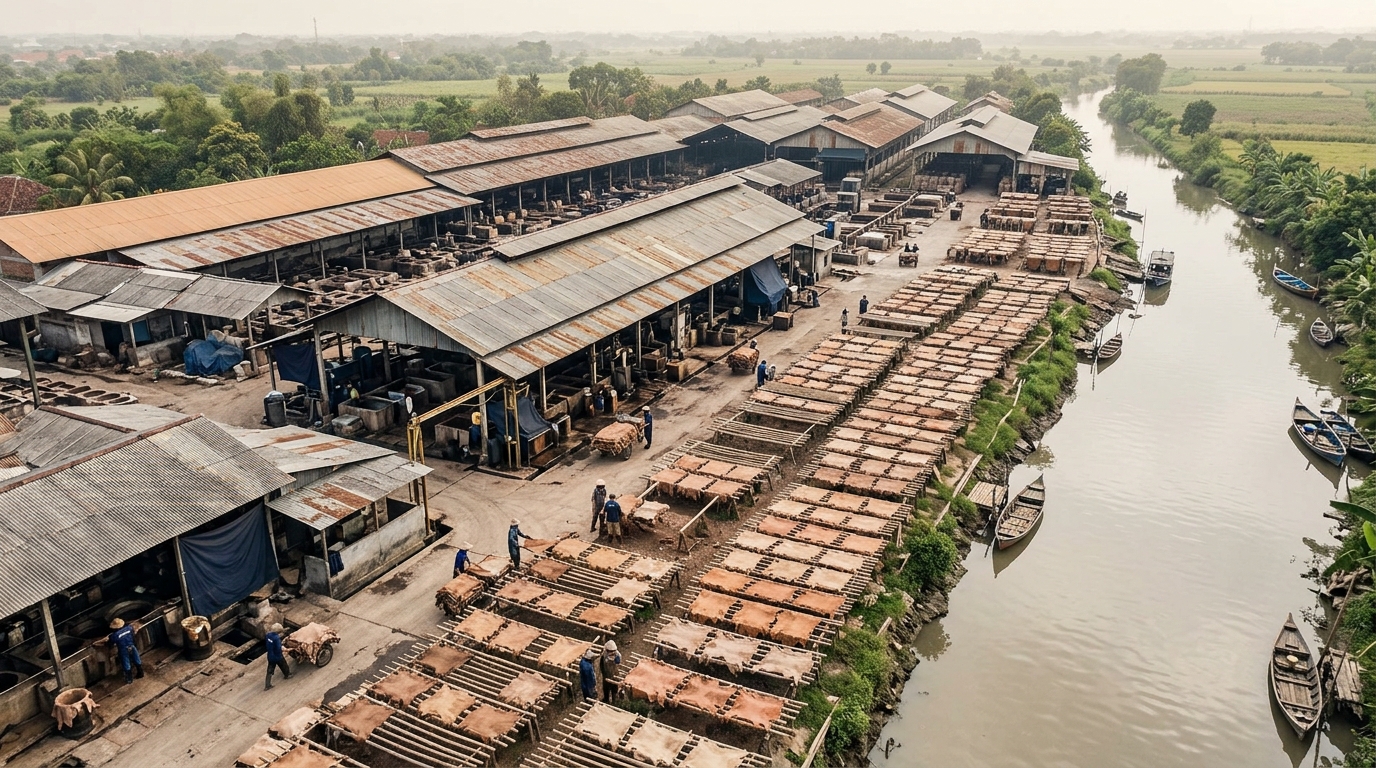
Indonesia ranks among the top ten leather-producing countries globally, measured by both raw hide availability and finished leather export volume. The country benefits from a large domestic livestock population, a skilled tanning workforce, and well-established tannery clusters located in proximity to port infrastructure.
The Main Tannery Clusters
Three regions account for the majority of finished leather production:
- East Java (Sidoarjo and Kediri): The largest cluster. Sidoarjo hosts both large integrated tanneries and mid-scale operations. Export infrastructure through Surabaya's Tanjung Perak port is efficient for FCL sea freight to US and EU destinations. - Yogyakarta (Special Region): Concentrated in goat and sheep leather. Budi Makmur Tannery operates here. The region has approximately four decades of track record in small-to-medium hide processing. - West Java (Sentul, Bogor Regency): Home to internationally-owned facilities including Gruppo Mastrotto Indonesia. Proximity to Jakarta's Tanjung Priok port accelerates sampling and air freight dispatch.
Indonesia vs. Competing Origins
The table below compares Indonesia against Morocco and India on criteria that matter for US-based buyers.
| Criterion | Indonesia | Morocco | India |
|---|---|---|---|
| LWG-certified tanneries | Multiple (Gold and Silver rated facilities present) | Limited LWG penetration | Moderate LWG presence, concentrated in Tamil Nadu |
| Primary hide type strength | Bovine, goat, sheep | Goat, sheep | Buffalo, goat |
| Chrome-tanned lead time (approx.) | 4–6 weeks bulk | 4–7 weeks bulk | 5–8 weeks bulk |
| REACH/ZDHC compliance infrastructure | Established at larger facilities | Partial | Variable |
| Proximity to US West Coast (sea freight) | Approximately 18–22 days | Approximately 22–28 days | Approximately 25–30 days |
| IPAL wastewater regulation | Mandatory under Indonesian law | Less formalized | Varies by state |
Morocco, often referenced alongside leather tanneries Morocco destinations, excels in artisan-finish goat leather but lacks the industrial scale and environmental audit infrastructure found at Indonesia's larger facilities. India competes on buffalo leather volume but environmental compliance and grading consistency remain buyer concerns. For buyers sourcing bovine finished leather indonesia at container scale with LWG documentation requirements, Indonesia offers a stronger overall compliance profile.
Types of Finished Leather Available from Indonesian Tanneries
Indonesian tanneries produce across all three major hide categories. Understanding the grain structure, thickness range, and finish type for each is essential before specifying a purchase order.
Bovine Finished Leather
Bovine hides sourced from Indonesian cattle and imported wet-blue form the backbone of industrial-scale output. Key specifications:
- Full-grain bovine: Natural surface retained. Used for premium bag uppers, footwear outsides, and upholstery panels. Typical area per hide: 35–55 square decimeters, varying by cattle breed. - Top-grain bovine: Surface lightly buffed to remove major blemishes. Preferred for mid-market handbags and shoe uppers. - Split leather (bovine): Lower layer separated from full-grain. Used for linings, secondary panels, and lower-grade footwear applications. - Specialty finishes available: Pull-up (oil-wax), nubuck (buffed surface), patent (high-gloss lacquer), aniline (transparent dye), and pigmented (opaque coating).
Goat and Sheep Finished Leather
Indonesia is a significant source for goat and sheep leather indonesia, particularly from Yogyakarta and East Java.
- Goat leather: Tighter grain, naturally firm yet flexible. Full-grain goat is preferred for gloves, small leather goods, and garments. Typical thickness: 0.5–0.9 mm for garment applications. - Sheep leather: Softer, more open grain. Used for garment linings, softer handbag panels, and bookbinding leathers. - Grading: Goat and sheep hides are graded in smaller area increments (square decimeters) due to the smaller hide size compared to bovine.
Tanning Methods Used by Indonesian Finished Leather Suppliers and Tanneries
Tanning method directly determines hand feel, color consistency, chemical footprint, and end-use suitability. Indonesian tanneries operate across all major methods.
Chrome Tanning
Chrome tanning uses trivalent chromium salts. It is the dominant method at scale-producing finished leather suppliers tanneries indonesia for footwear and bag markets.
- Process time: Wet-blue stage typically complete within 1–2 days. Post-tanning finishing adds 2–4 weeks. - Result: Soft hand, uniform color uptake, high water resistance. - REACH relevance: Chrome VI (hexavalent chromium) is a restricted substance under REACH Annex XVII. Compliant tanneries must demonstrate Chrome VI content below 3 mg/kg in finished articles. LWG-audited facilities track this through ZDHC MRSL chemical management.
Vegetable Tanning
Indonesian tanneries use local bark sources including quebracho and mimosa extracts, sometimes supplemented with imported tannin concentrates.
- Result: Firmer hand, natural tan color, develops patina over product lifespan. - End-uses: Belt blanks, sole leather, structured bag bases, saddle components. - Lead time: Longer than chrome — vegetable tanning pits require 3–6 weeks for full penetration on thick bovine hides.
Combination (Semi-Chrome) Tanning
Semi-chrome processes apply a short chrome pre-tan followed by a vegetable retanning stage. This produces hybrid performance: moderate softness with improved aging characteristics.
Wet-Blue and Crust as Intermediate Export Formats
Most sourcing guides omit this. Indonesian tanneries export two intermediate formats in addition to finished leather:
- Wet-blue: Chrome-tanned hides, not yet dried or finished. Exported in brine or packed wet. Lower per-unit cost. Requires finishing at destination. - Crust leather: Dried but unfilled, unfinished hides. Can be finished to specification by the buyer or a local finisher.
Both formats offer cost advantages for buyers who control their own finishing operations. US HTS classification differs for wet-blue versus finished leather — confirm with a customs broker before ordering.
Thickness Standards and Grading Criteria Every Buyer Should Specify
Thickness by End-Use Application
Indonesian tanneries calibrate hides using band-splitting machines. Standard thickness ranges by application:
| Application | Typical Thickness Range | Common Grain Level |
|---|---|---|
| Garment leather | 0.5–0.8 mm | Top-grain, full-grain |
| Bag panels (soft) | 0.9–1.2 mm | Top-grain, full-grain |
| Bag panels (structured) | 1.2–1.6 mm | Full-grain, corrected |
| Footwear uppers | 1.2–1.8 mm | Top-grain, full-grain |
| Belt blanks | 2.5–4.0 mm | Full-grain, veg-tan |
| Soling leather | 4.0–6.0 mm | Split, veg-tan |
Tolerances are typically ±0.1 mm at calibration. Specify your tolerance range in the purchase order to avoid disputes at goods receipt.
Grading Systems
Indonesian tanneries commonly use an A/B/C grading system:
- Grade A: Minimal surface defects. Fewer than a defined number of healed scars, insect bites, or vein marks per hide. Highest usable area yield. - Grade B: Moderate defects. Acceptable for panels where the defect zone is cut away. Lower net yield. - Grade C: Significant defect concentration. Suitable for split backing, lining applications, or heavily corrected pigmented finishes.
Area is measured and invoiced in square decimeters (sq dm). One square foot equals approximately 9.29 sq dm. Confirm whether your tannery invoices in sq dm or sq ft and standardize before ordering.
Environmental Compliance and Certification Standards at Indonesian Tanneries
LWG Certification Levels Explained
The Leather Working Group (LWG) is the primary environmental audit standard recognized by US and EU brand buyers. Three performance levels exist:
- Gold: Highest compliance level. Covers chemical management (ZDHC MRSL alignment), wastewater treatment, energy use, and traceability. Required by many major European footwear and apparel brands. - Silver: Strong compliance with minor gaps. Acceptable for most mid-market US buyers. - Bronze: Entry level. Indicates basic audit engagement. Some US importers require Silver or Gold before approving a tannery.
PT. ECCO Tannery Indonesia and Gruppo Mastrotto Indonesia have pursued LWG audits. LWG gold rated leather from Indonesian facilities is available. Verify current certification status directly on the LWG website (leatherworkinggroup.com) by searching the tannery name in the public member database. Do not accept a certificate copy alone — audit results can lapse.
IPAL Wastewater Requirements
Indonesian environmental law mandates that tanneries operate an IPAL (Instalasi Pengolahan Air Limbah — industrial wastewater treatment plant). IPAL compliance is monitored by regional environmental agencies (BPLHD/DINAS). Tanneries without functioning IPAL infrastructure risk operating permit revocation.
When qualifying a tannery, request their most recent IPAL discharge test report (Laporan Uji Efluen). Results should show compliance with BOD, COD, TSS, chromium, and sulfide limits under Government Regulation PP No. 22/2021 (approximately).
REACH and ZDHC MRSL Compliance for US and EU Import
For US importers, REACH is an EU regulation but increasingly referenced by US brands sourcing globally. ZDHC MRSL (Manufacturing Restricted Substances List) is the chemical management framework aligned with LWG audits.
Key restricted substances relevant to finished leather imports:
- Chrome VI: Must be below 3 mg/kg in finished articles (REACH Annex XVII) - Azo colorants: Restricted above specific amine thresholds - Formaldehyde: Restricted for skin-contact leather in several target markets - PCP/TeCP (preservatives): Restricted under REACH
Request a current test report from an accredited third-party laboratory (SGS, Intertek, Bureau Veritas) confirming compliance with the applicable MRSL version. LWG-certified tanneries conducting ZDHC Gateway chemical uploads are the most straightforward to verify.
- ✓Confirm LWG certification status on leatherworkinggroup.com
- ✓Request current IPAL discharge test report
- ✓Request third-party REACH/ZDHC test report (SGS, Intertek, or Bureau Veritas)
- ✓Verify Chrome VI test results below 3 mg/kg
- ✓Check ZDHC Gateway chemical upload status for LWG-audited suppliers
Key Finished Leather Tanneries and Suppliers in Indonesia Worth Evaluating
PT. ECCO Tannery Indonesia
Located in East Java, PT. ECCO Tannery Indonesia is one of the largest bovine leather producers in Southeast Asia. It operates as part of the ECCO Group's vertically integrated supply chain. The facility has undergone LWG auditing and is oriented primarily toward footwear-grade bovine finished leather indonesia. Third-party buyers should confirm current availability and MOQ thresholds directly, as internal supply chain commitments may limit spot market access.
Gruppo Mastrotto Indonesia
The Sentul, West Java facility of Gruppo Mastrotto (Italian ownership) produces bovine hides for footwear, automotive, and leather goods applications. European ownership means the facility operates to EU chemical compliance standards, which simplifies REACH documentation for US buyers supplying European downstream customers. This is one of the more accessible facilities for international buyers seeking chrome tanned leather indonesia at scale.
Budi Makmur Tannery
Based in Yogyakarta, Budi Makmur is a well-established mid-scale tannery with approximately four decades of operational history in goat and sheep leather. It represents a primary source for goat sheep leather indonesia in the region. Buyers sourcingvegetable tanned leather indonesiain small-to-mid volumes, or garment-weight goat leather, should include Budi Makmur in their qualification process.
Indonesian Tanners Association (APKI)
APKI (Asosiasi Penyamak Kulit Indonesia) maintains a membership of approximately 120 tanneries across Indonesia. APKI membership lists serve as an initial vetting filter. They do not certify quality, but APKI member status confirms that a tannery is registered and engaged with industry standards bodies. Use APKI as a starting point to expand beyond the three named facilities above.
How Sample Hide Programs and Minimum Order Volumes Work in Practice
Sample Program Structure
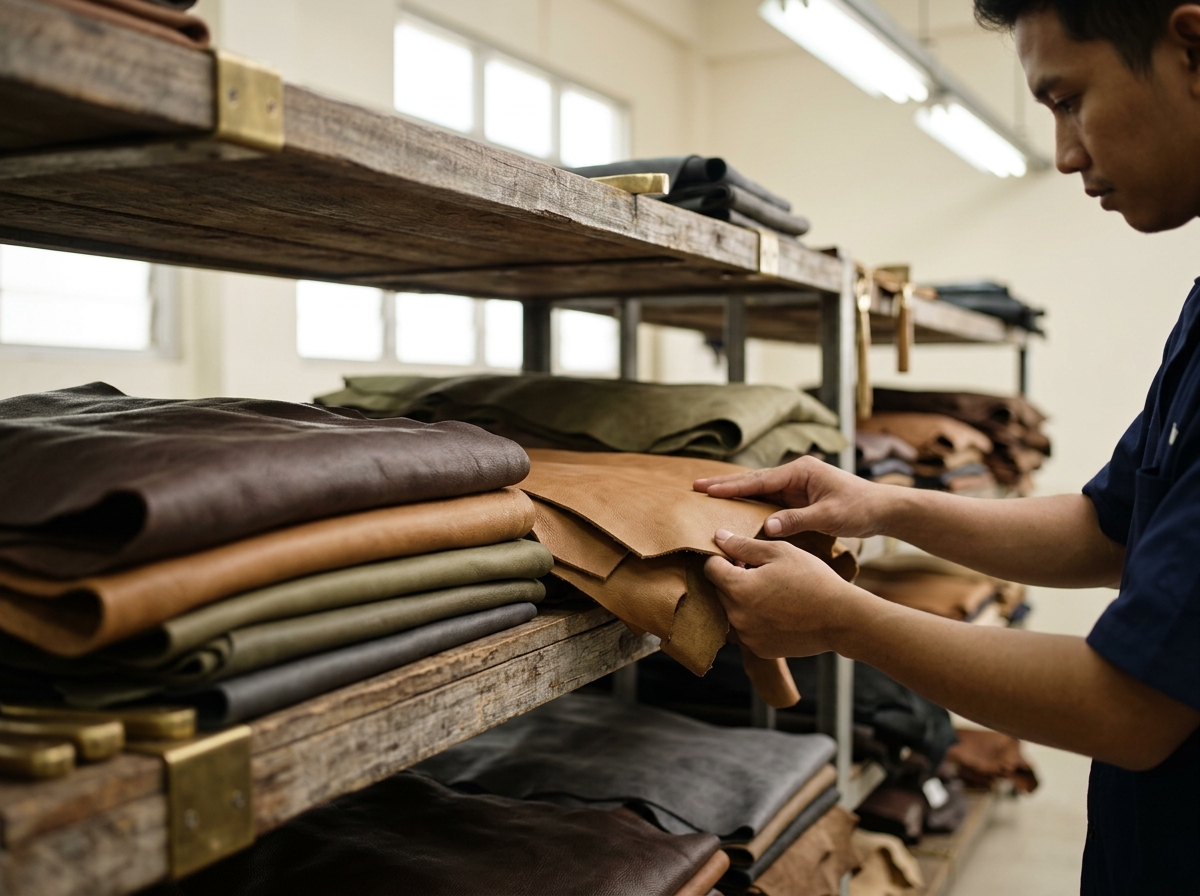
Typical tannery sample programs in Indonesia operate in three tiers:
- Swatch pack: Color and finish swatches only. Usually sent free of charge or at nominal cost. No hide yield information. - Half-hide sample: Approximately 15–25 sq dm per piece. Allows grain inspection, thickness measurement, and basic hand feel assessment. Cost typically passed to buyer (approximately USD 30–80 per half-hide depending on grade). - Full-hide pack: 2–5 full hides across grades. Enables yield calculation and production planning. Lead time from request to air freight dispatch: approximately 2–4 weeks.
Sampling lead times do not reflect bulk production lead times. Always confirm production queue status before approving a sample.
Minimum Order Quantities and Container Volumes
| Order Format | Typical MOQ | Approx. Volume |
|---|---|---|
| Cut yardage / open stock | 200–500 sq dm | Air freight parcel |
| Small production run | 1,000–5,000 sq dm | LCL sea freight |
| 20-ft FCL | Approximately 15,000–20,000 sq dm | Approx. 18–20 MT finished bovine leather |
| 40-ft FCL | Approximately 30,000–40,000 sq dm | Approx. 20–24 MT finished bovine leather |
Container weight and volume figures are approximate and vary significantly by leather thickness, moisture content, and packing method. Confirm gross weight with the tannery before booking ocean freight — finished leather is dense cargo and weight limits often apply before volume limits on FCL shipments.
Packing and Labeling Standards
Air freight samples: Individual hides wrapped in kraft paper, boxed with a packing list referencing hide number, grade, area, and thickness. Facilitates customs clearance and internal QC logging.
Sea freight containers: Hides typically packed flat on pallets or rolled and bundled. Ensure that each bundle is labeled with hide count, total sq dm, grade, tannage type, and color reference. This labeling directly feeds the commercial invoice and packing list required for US Customs entry.
Practical US Import Documentation Checklist for Indonesian Finished Leather
Required Documentation Set
- ✓Commercial invoice (FOB or CIF value, unit price per sq dm, total sq dm)
- ✓Packing list (bundle count, hide count per bundle, gross and net weight, dimensions)
- ✓Certificate of Origin (Form E for ASEAN preferences, or standard Indonesian CO from KADIN/trade ministry)
- ✓LWG certificate copy (if buyer requires certified supply chain documentation)
- ✓Third-party chemical test report (REACH/ZDHC compliance, Chrome VI result)
- ✓IPAL compliance documentation (if required by buyer CSR policy)
- ✓Phytosanitary or veterinary certificate if required by USDA APHIS for specific hide types
US Customs HTS Code References
Finished leather from Indonesia is classified under Chapter 41 of the Harmonized Tariff Schedule (HTS). Key subheadings (verify current rates with a licensed customs broker):
- 4107.11: Full-grain unsplit bovine leather - 4107.12: Grain splits, bovine - 4107.19: Other bovine leather - 4105.10: Sheep or lamb leather, vegetable pre-tanned - 4106.21: Goat or kid skin leather, vegetable pre-tanned
Payment Terms Common in the Indonesian Tannery Sector
- TT (Telegraphic Transfer): Most common for established relationships. Typically 30% deposit, 70% balance against copy Bill of Lading. - LC (Letter of Credit): Used by larger tanneries for new buyer relationships. Provides payment security on both sides. - DP (Documents against Payment): Less common; used in some mid-scale tannery relationships.
Red Flags to Watch for When Qualifying Suppliers
- Grading inconsistency between sample and bulk production hides - Inability to provide current IPAL test reports (not just a certificate of operation) - LWG certification copy that cannot be verified on the LWG public database - No ZDHC MRSL chemical test documentation for dyes and finishing chemicals - Refusal to allow pre-shipment inspection - MOQ requirements that significantly exceed stated production capacity (possible trader, not direct tannery)
Frequently Asked Questions
What is the difference between LWG Gold, Silver, and Bronze certified tanneries in Indonesia?
Gold is the highest rating. It requires demonstrated compliance across chemical management (including ZDHC MRSL), wastewater treatment, energy and water use efficiency, and supply chain traceability. Silver indicates strong performance with minor gaps. Bronze signals entry-level audit engagement. For US buyers supplying European brand customers, Gold or Silver is typically the minimum accepted level.
How thick should finished cow leather be for leather bag production?
For soft bag panels: 0.9–1.2 mm. For structured panels requiring body without added stiffener: 1.2–1.6 mm. Specify tolerance of ±0.1 mm in your purchase order. Discuss end-use construction details with the tannery — calibration capability varies.
Can Indonesian tanneries produce REACH-compliant leather for the US and EU markets?
Yes, the larger LWG-audited facilities — including PT. ECCO Tannery Indonesia and Gruppo Mastrotto Indonesia — operate with chemical management systems aligned to REACH and ZDHC MRSL. Buyers should request current third-party lab test reports to confirm compliance rather than relying on tannery self-declaration.
What is the typical minimum order quantity for finished leather from an Indonesian tannery?
Open-stock or cut-yardage programs typically start at 200–500 sq dm. Container-volume orders begin at approximately 15,000–20,000 sq dm for a 20-ft FCL. Mid-scale tanneries may negotiate smaller production runs of 1,000–5,000 sq dm at a premium per-unit price.
How do I request a sample hide program from an Indonesian leather supplier?
Contact the tannery's export sales department directly. Specify: hide type (bovine, goat, sheep), tannage method (chrome, vegetable, combination), finish type, target thickness, and intended end-use. Provide a reference color or finish if applicable. Expect a swatch pack within one to two weeks, and a half-hide or full-hide sample within two to four weeks, shipped by air freight at buyer's cost.
What tanning method produces the softest goat leather for garment applications?
Chrome tanning produces the softest hand in goat leather. A short chrome tanning cycle followed by fat-liquoring with synthetic or natural fatliquors yields the supple drape required for garment applications. Vegetable-tanned goat leather is firmer and better suited to structured small goods or belt applications.
Indonesia's position as a finished leather sourcing destination is supported by industrial-scale tannery capacity, a maturing environmental compliance infrastructure, and a broad range of hide types across all major tannage methods. Buyers who verify LWG certification status, specify thickness and grading tolerances precisely, and obtain the correct US import documentation set will avoid the most common sourcing failures in this market.
You now have the specification framework, supplier landscape, and compliance checklist to evaluate Indonesian tanneries with confidence.
You have the sourcing criteria — the next step is getting leather in your hands. Connect with verified finished leather suppliers tanneries Indonesia to request a structured sample hide pack covering your target hide type, tannage method, and thickness range.
Request Sample Hide Pack →Need eyes on the ground in Indonesia?
MTS is an execution partner — supplier verification, manufacturing management, quality control and export logistics across Indonesia, Vietnam and China.
Related services
Related articles
Receive furniture sourcing insights across Asia.
One email per week. No spam.