Sourcing Furniture from Indonesia: The Complete B2B Importer's Guide
20 min read
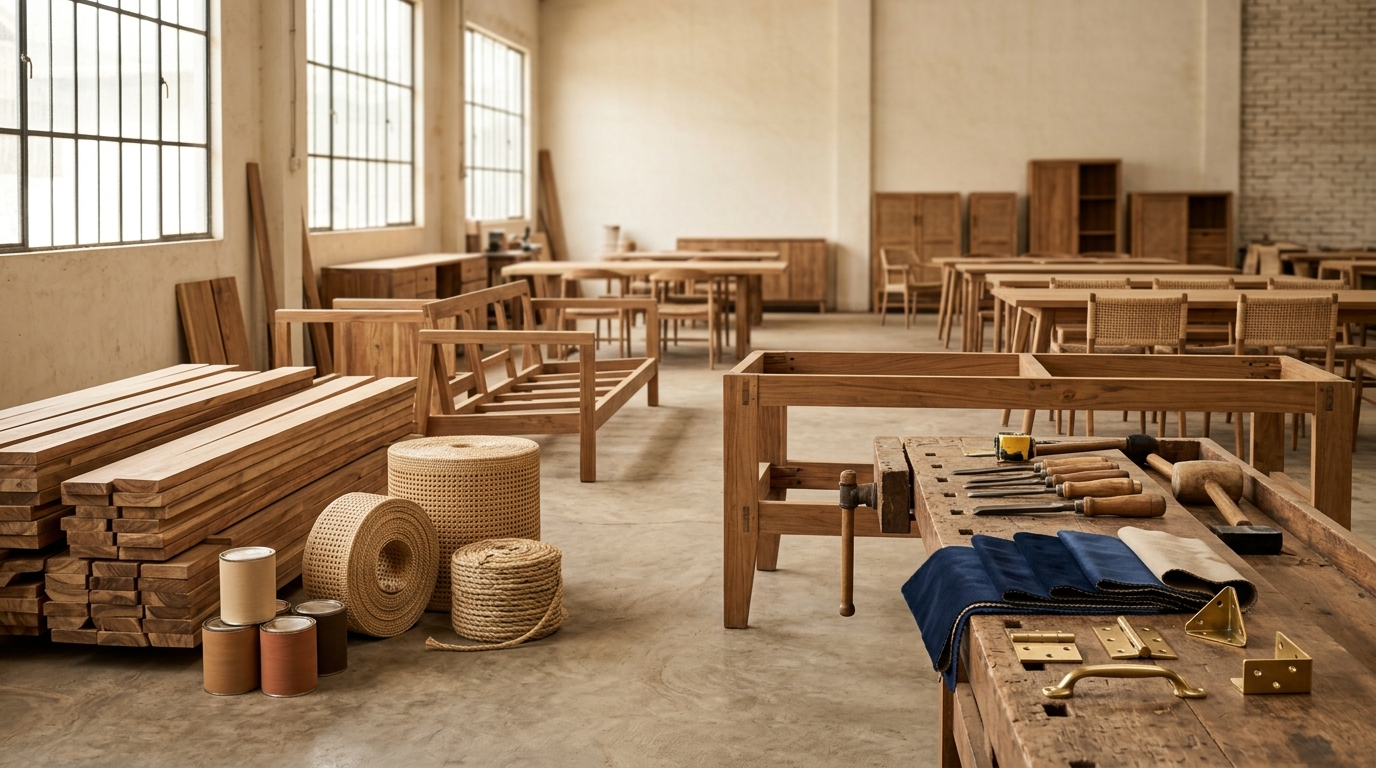
Indonesia consistently ranks among the world's top five furniture exporters by value, shipping billions of dollars' worth of wood, rattan, and upholstered goods to markets across North America, Europe, and Australia every year. For US-based wholesale buyers, retail chains, and interior design…
Indonesia consistently ranks among the world's top five furniture exporters by value, shipping billions of dollars' worth of wood, rattan, and upholstered goods to markets across North America, Europe, and Australia every year. For US-based wholesale buyers, retail chains, and interior design firms, that export strength represents a mature, scalable supply base — one that offers genuine competitive advantages over many alternative sourcing destinations. Yet the gap between a profitable Indonesian furniture program and a costly one often comes down to decisions made before a single container is booked.
This guide is written for B2B importers who are either establishing a new sourcing relationship in Indonesia or looking to professionalize an existing one. You will find actionable guidance on every stage of the process: evaluating production hubs, vetting suppliers, understanding wood-legality law, negotiating terms, managing quality control, and clearing US customs. Where competitors offer surface-level overviews, this article goes deeper — particularly on legal compliance topics such as the US Lacey Act, HTS code selection, and SVLK certification, which create real financial liability when ignored.
Whether you are sourcing furniture from Indonesia for the first time or scaling an established program, the sections that follow address the decisions that most directly affect your margins, your lead times, and your legal standing as a US importer of record.
Why Indonesia Dominates the Global Furniture Export Market
Indonesia's position at the top of the tropical hardwood furniture industry is not accidental. The country sits on one of the world's largest remaining reserves of plantation-grown teak and other commercial timbers, and it has developed a concentrated, highly skilled manufacturing workforce around that raw material advantage over several decades. Lower labor costs relative to European or North American alternatives remain a significant factor, but experienced importers know that Indonesia's real edge is the depth of craft knowledge embedded in its production clusters — knowledge that is genuinely difficult to replicate elsewhere.
The Four Major Production Hubs and What They Specialize In
Understanding regional specialization is essential when sourcing furniture from Indonesia, because supplier capability varies considerably by geography.
Jepara, Central Java is the undisputed capital of Indonesian wood furniture manufacturing. The city and its surrounding district are home to thousands of workshops and factories producing carved teak and mahogany pieces — bedroom sets, dining tables, decorative consoles, and custom architectural millwork. Jepara's craftspeople have refined joinery and hand-carving techniques over generations, making it the default destination for buyers seeking detailed woodwork.
Bali specializes in a different aesthetic: resort-influenced furniture with strong artisanal character, often blending teak, reclaimed wood, natural fiber, and mixed-material designs. Bali furniture manufacturers typically produce smaller runs with higher design sophistication, making the island particularly attractive to boutique hotel buyers, interior designers, and lifestyle retailers.
Surabaya and the broader East Java corridor host larger-scale factory operations oriented toward efficiency and volume. Upholstered furniture, flat-pack components, and rattan-frame pieces are common outputs. Buyers with high-volume, standardized SKU requirements often find their best cost-per-unit performance in this region.
Greater Jakarta and West Java serve primarily as finishing, consolidation, and export coordination hubs, though a number of mid-to-large integrated manufacturers operate in the surrounding industrial zones.
How Indonesia Compares with Vietnam, China, and India
The table below provides a practical side-by-side comparison to help importers contextualize their sourcing options.
| Factor | Indonesia | Vietnam | China | India |
|---|---|---|---|---|
| Primary material strength | Teak, mahogany, rattan | Acacia, rubber wood, MDF | Engineered wood, metal, upholstery | Sheesham, mango wood, upholstery |
| Craft/customization depth | Very high | Moderate–high | Moderate | Moderate–high |
| Typical FOB cost index | Moderate | Moderate–low | Low–moderate | Moderate |
| US tariff exposure | Low (MFN rates apply) | Elevated (Section 301 tariffs on some categories) | Elevated (Section 301 tariffs) | Low (MFN rates apply) |
| Wood legality framework | SVLK mandatory | VPA/FLEGT in progress | Variable | Variable |
| Lead time (production + port) | Typically 60–120 days | Typically 45–90 days | Typically 30–75 days | Typically 60–120 days |
| Minimum order flexibility | Moderate–high | Moderate | Low–moderate | Moderate–high |
One dimension the table cannot fully capture is tariff risk. Many wood furniture categories imported from China currently carry Section 301 additional duties that can substantially erode landed cost advantages. Indonesia, as a non-targeted country under current US trade policy, benefits from standard Most Favored Nation (MFN) tariff rates, making a cost-per-container comparison increasingly favorable for buyers who have historically relied on Chinese supply chains.
What B2B Buyers Should Realistically Expect from Indonesian Furniture Quality
Quality in Indonesian furniture is real, but it is not uniform. Understanding where variation originates — and how to control it — is one of the most valuable skills an importer can develop.
Materials: Grades, Species, and What They Mean for Your Product
Teak is Indonesia's flagship export timber. Plantation teak grown in Java has a tighter, more uniform grain than old-growth equivalents and is available in certified legal supply chains. Grade A teak is typically characterized by minimal knots, consistent color, and high natural oil content. Lower grades are still structurally sound for many applications but may require more finishing work. Always specify the grade in your purchase order.
Mahogany (primarily African mahogany grown under plantation conditions in Indonesia) offers a cost-effective alternative with excellent workability and a refined appearance. It is widely used in dining and bedroom furniture.
Rattan and bamboo are harvested from sustainably managed areas across Kalimantan, Sulawesi, and Sumatra. These materials are increasingly important in the contract hospitality market. Quality assessment here centers on wall thickness, curing method, and joint construction.
Reclaimed wood — salvaged from old buildings, railway sleepers, and boat timber — has strong commercial appeal in North American lifestyle retail. Verify the chain-of-custody documentation carefully, as reclaimed material requires its own legality paper trail.
Common Quality Issues and How Experienced Importers Prevent Them
The most frequently reported quality failures in Indonesian furniture imports involve moisture content, finishing defects, and dimensional inconsistency. Wood that has not been kiln-dried to the appropriate moisture level for the destination climate will warp, crack, or delaminate after delivery. Specify target moisture content in writing — typically between 8% and 12% for indoor furniture destined for US climates — and request kiln-drying certificates with your pre-shipment documentation.
Finishing defects (uneven stain penetration, paint drips, hardware misalignment) are almost always traceable to inadequate in-process inspection. Dimensional inconsistency — where pieces in the same SKU vary measurably — typically reflects a lack of jigs and templates in the production process, a warning sign about a factory's manufacturing discipline.
Quality also varies significantly by factory tier. A first-tier exporter with a dedicated export compliance team, in-house QC staff, and experience with US retail account requirements will operate very differently from a small workshop subcontracting work out to individual craftspeople. Neither is inherently wrong for your business, but they require different management approaches and quality control investments.
How to Find and Vet Verified Indonesian Furniture Suppliers
The Indonesian furniture supplier landscape ranges from world-class integrated manufacturers to informal workshops with no export infrastructure. Knowing where to look — and how to filter — determines the quality of your supplier pipeline before you invest significant time or capital.
Sourcing Channels Worth Prioritizing
IFEX Jakarta (Indonesia International Furniture Expo) is the country's premier furniture trade event and the single most efficient venue for meeting vetted exporters face-to-face. Exhibitors at IFEX have typically already demonstrated a baseline of export readiness. The event draws serious buyers from North America, Europe, and Australia, and the exhibitor mix covers every major category and region.
B2B platforms such as Alibaba and IndoTrading carry large numbers of Indonesian suppliers, but the signal-to-noise ratio requires patience. Use these platforms for initial discovery and category mapping, not as a substitute for factory verification.
Sourcing agents based in Indonesia provide local intelligence, language capabilities, and existing supplier networks. For buyers who cannot make regular in-country visits, a well-credentialed agent significantly reduces the time and risk associated with supplier qualification. The tradeoff is an additional cost layer and the need to vet the agent themselves.
Industry associations including ASMINDO (the Indonesian Furniture and Craft Industry Association) publish member directories and can provide referrals to regional cluster representatives in Jepara and Bali.
Supplier Verification Steps That Matter
A credible supplier verification process for Indonesian furniture manufacturers should include: confirmation of business registration (NIB and SIUP documents), a review of their active export history (ask for past bill of lading references or buyer referrals), a factory audit — either in person or through a third-party inspection firm operating in Indonesia — and a review of current certifications. Request sample orders before committing to production quantities.
- ✓Confirm valid NIB (business registration) and SIUP documents
- ✓Request at least two verifiable US or EU buyer references
- ✓Commission a factory audit (in-person or third-party)
- ✓Review current SVLK certificate and FSC certificate if applicable
- ✓Place a sample order before bulk production commitment
- ✓Confirm export port experience and freight forwarder relationships
Red Flags That Signal Supplier Risk
Be cautious of suppliers who cannot provide legality certification documentation on request, who push for large advance payments before samples are approved, who are unable to name their primary freight forwarder, or who quote lead times that are implausibly short for custom production. Factories that subcontract the majority of their production without disclosing it are a particular risk, as quality control becomes almost impossible to manage.
When a Local Sourcing Agent Adds Real Value
If your annual import volume from Indonesia is below a threshold where a dedicated in-house team is justifiable, a local sourcing agent typically delivers a positive return on their fee through better supplier access, faster problem resolution, and cultural fluency that improves negotiation outcomes. For buyers operating above that threshold and managing multiple suppliers, direct relationships supported by periodic factory visits are generally more cost-effective and give you more supply chain visibility.
Wood Legality, SVLK Certification, and US Lacey Act Compliance
This is the section most sourcing guides underserve, and it is the area that creates the most serious legal exposure for US importers. Understanding your compliance obligations is not optional — it is a condition of doing business.
The SVLK Framework: Indonesia's Mandatory Legality Guarantee System
SVLK (Sistem Verifikasi Legalitas Kayu), which translates as the Timber Legality Assurance System, is Indonesia's government-mandated framework for verifying that wood products are sourced from legally harvested timber. All Indonesian wood furniture exporters are required to hold a valid SVLK certificate. The certificate covers the chain of custody from forest to finished product and is verified by accredited third-party auditors.
For US importers, the SVLK matters for two reasons. First, it demonstrates that your supplier has been audited against a recognized legal framework, which reduces the risk that your products contain timber harvested in violation of Indonesian law. Second, it provides a documentation trail that supports your Lacey Act due-diligence obligations.
FSC Certification: What It Adds Beyond SVLK
FSC (Forest Stewardship Council) certification covers not only legality but also environmental and social management standards in forest operations. FSC-certified Indonesian furniture commands a premium in markets where sustainability credentials are a purchasing criterion — particularly US contract hospitality, corporate interiors, and premium retail. Not every supplier will carry FSC certification, but for buyers with sustainability commitments or retail partners who require it, FSC chain-of-custody documentation from your Indonesian supplier is essential. Verify the certificate number directly on the FSC certificate database before relying on a supplier's claim.
The US Lacey Act: Your Legal Obligation as Importer of Record
The Lacey Act is US federal law that prohibits the import, export, transport, or sale of plants — including timber and wood products — that were harvested in violation of the laws of their country of origin. As the US importer of record, you carry legal responsibility for exercising due diligence to ensure the wood in your furniture was legally harvested.
Lacey Act enforcement requires importers to file a Plant and Plant Product Declaration (PPQ Form 505) for covered wood products at the time of entry. The declaration must identify the scientific name of the wood species, the country of harvest, the quantity, and the dollar value. Errors, omissions, or inaccurate species declarations — even inadvertent ones — can result in seizure of goods, civil penalties, or criminal prosecution in serious cases.
Practical steps to manage Lacey Act risk include: requiring suppliers to provide species-specific material declarations with scientific names for every wood component in your products, incorporating Lacey Act compliance warranties into your supplier agreements, and using your pre-shipment inspection process to visually verify species consistency where possible.
Requesting and Verifying Certification Documentation
Do not accept copies of certificates at face value. For SVLK, cross-reference the certificate number against the official Indonesian Ministry of Environment and Forestry registry. For FSC, use the FSC certificate database. Request updated certificates at least annually and before each production run, as certifications have expiration dates and can be suspended following audit findings.
Negotiating Pricing, MOQs, and Payment Terms That Work in Your Favor
Indonesian furniture manufacturers are experienced exporters with well-established commercial expectations. Understanding the norms gives you a more productive starting position.
Typical minimum order quantities for bulk wholesale orders from Indonesian furniture manufacturers range from around 1 to 3 full 20-foot container equivalents for established factory suppliers, though smaller workshops in Jepara and Bali may accept mixed-container orders at lower volumes, particularly for first-time buyers. MOQs for custom designs with carved or upholstered elements are generally higher, reflecting the tooling and setup investment required.
Standard payment structures in the Indonesian furniture trade follow a deposit-plus-balance model. A common arrangement involves a deposit of around 30% to 40% upon order confirmation, with the balance paid against shipping documents or before container release. Letters of credit (L/C) are accepted by most larger exporters and offer the strongest protection for both parties on large orders. Escrow arrangements through third-party platforms are increasingly available and can be appropriate for new supplier relationships before a track record has been established.
Pricing discussions should account explicitly for customization scope, packaging requirements, and labeling. Volume discounts are standard, but the more impactful negotiation lever is often lead time flexibility — suppliers will frequently offer better unit pricing in exchange for longer production windows that fit their scheduling.
All pricing should be agreed in USD to eliminate currency ambiguity. While the Indonesian Rupiah fluctuates, most Indonesian exporters quote and invoice in USD, which is the norm across the industry. If a supplier insists on IDR-denominated contracts, factor in hedging costs or negotiate a fixed exchange rate clause.
Quality Control and Pre-Shipment Inspection Processes That Protect Your Orders
Effective quality control when sourcing furniture from Indonesia is a multi-stage process, not a single inspection event.
Three Inspection Stages and What Each Covers
In-production inspection (IPI) takes place when approximately 20% to 40% of an order is complete. The goal is to catch construction defects, material substitutions, and specification deviations early enough to correct them without delaying shipment. For custom or complex products, IPI is strongly recommended.
Pre-shipment inspection (PSI) occurs when production is complete and at least 80% of goods are packed. A qualified inspector checks a statistically valid sample against your approved specifications, tests functionality (drawers, hinges, joints), measures dimensions, and evaluates finishing quality.
Container loading supervision (CLS) is the third stage, verifying that the correct goods are loaded, packed to prevent transit damage, and that the container seal is documented accurately.
Engaging Third-Party Inspection Companies
Several internationally recognized inspection companies operate throughout the major Indonesian furniture production regions, including in Jepara, Surabaya, and Bali. Engaging an inspection company that employs local inspectors with furniture-specific technical knowledge — rather than generalist field inspectors — is worth the modest premium. Provide inspectors with your product specification sheet, approved samples, and a clear defect classification rubric (critical, major, minor) before each inspection.
Building a Product Specification Sheet That Prevents Problems
A well-constructed product specification sheet (PSI document) is the single most effective quality management tool available to importers. It should specify: exact dimensions with tolerances, species and grade of each wood component, moisture content range, finish type and color reference (including a physical sample swatch where possible), hardware specifications, packaging method, and carton markings. Suppliers who resist working from a detailed spec sheet are demonstrating something important about their quality culture.
Handling defective goods requires a pre-agreed protocol documented in your supplier contract. Specify acceptable defect rates, the process for rework versus replacement, and the allocation of costs for each scenario. Leaving these terms to post-shipment negotiation is consistently more expensive than establishing them upfront.
Shipping, Logistics, and US Customs Compliance for Indonesian Furniture Imports
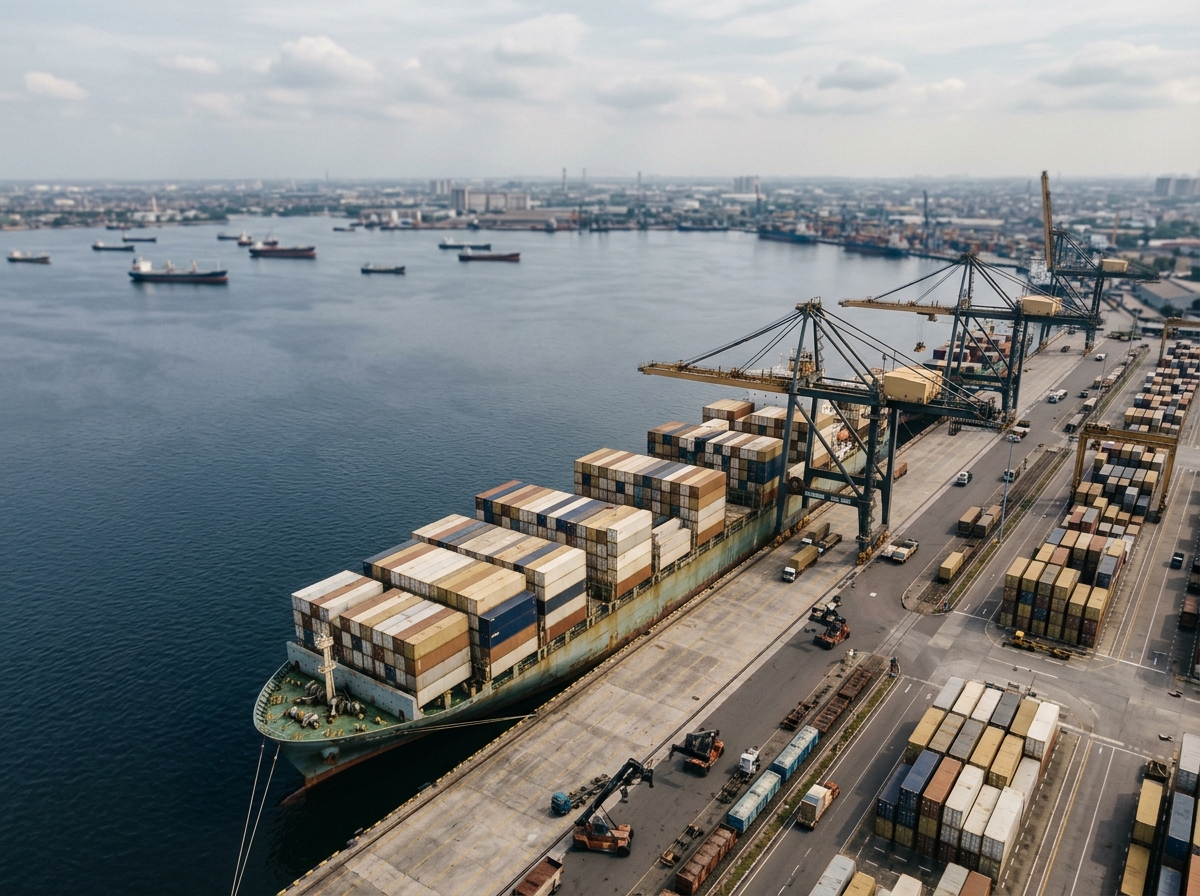
Indonesia's three primary export ports for furniture are Tanjung Priok in Jakarta (the largest and most commonly used for Jepara and West Java production), Tanjung Perak in Surabaya (the natural port for East Java manufacturers and some Central Java freight), and Benoa in Bali (used for Bali furniture manufacturers and smaller consolidated shipments).
FCL vs. LCL: Choosing the Right Shipping Structure
Full Container Load (FCL) shipments — typically 20-foot or 40-foot containers — offer the lowest cost per cubic meter and minimize the risk of transit damage from co-loading. For orders above approximately 15 to 20 cubic meters, FCL is almost always the better choice. Less than Container Load (LCL) consolidation makes sense for sampling, initial trial orders, or supplementary replenishment shipments, but the per-unit freight cost is materially higher and transit time is often extended by consolidation dwell time.
HTS Codes and US Tariff Rates for Indonesian Furniture
Correct HTS (Harmonized Tariff Schedule) code selection is a compliance obligation, not an optimization exercise. Common HTS headings applicable to Indonesian wood furniture include 9403.30 (wooden furniture of a kind used in offices), 9403.40 (wooden furniture of a kind used in the kitchen), 9403.50 (wooden furniture of a kind used in the bedroom), and 9403.60 (other wooden furniture). Rattan furniture typically falls under 9401 or 9403 depending on its primary function.
Under current MFN rates, most wooden furniture from Indonesia enters the United States at duty rates in the low-to-mid single-digit percentage range, though specific rates vary by HTS subheading. This compares favorably with the elevated effective rates many Chinese furniture categories currently carry under Section 301 tariffs, which have in some cases more than doubled the landed cost disadvantage for China-sourced goods.
Documentation Checklist for US Customs Entry
Every Indonesian furniture shipment entering the United States requires a complete documentation package. Missing or inaccurate documents are among the most common causes of customs delays and demurrage costs.
- ✓Commercial invoice (itemized by HTS code, unit value, and species)
- ✓Packing list (carton count, dimensions, gross and net weight)
- ✓Bill of lading or airway bill
- ✓Certificate of origin (Form A or standard COO for GSP eligibility assessment)
- ✓SVLK certificate copy
- ✓Phytosanitary certificate (issued by Indonesian quarantine authority)
- ✓Lacey Act PPQ Form 505 (filed at entry)
- ✓Fumigation certificate if solid wood packing materials are used (ISPM 15 compliance)
Work with a licensed US customs broker who has experience with wood furniture entries. The intersection of species declarations, phytosanitary requirements, and Lacey Act filing creates enough complexity that errors by inexperienced brokers are common and costly.
Building Long-Term Supplier Relationships That Scale Your Sourcing Program
The operational leverage in a mature Indonesian furniture sourcing program comes not from any single transaction but from the compounding advantages of deep, trusted supplier relationships. Factories allocate production capacity, prioritize quality attention, and share new product development resources with buyers they consider long-term partners.
Structuring Preferred-Supplier Agreements
Once you have validated a supplier through two or three successful orders, formalizing the relationship with a preferred-supplier agreement creates a shared framework for expectations on both sides. These agreements typically cover rolling forecasts, priority capacity allocation during peak periods, quality standards and inspection rights, intellectual property protections for proprietary designs, and escalation procedures for disputes. They do not need to be lengthy legal documents to be effective — a well-structured letter of intent reviewed by counsel in both jurisdictions is often sufficient.
Communication, Culture, and the Reality of Javanese and Balinese Business Norms
Indonesian business culture, particularly in the Javanese context that characterizes most Jepara manufacturers, places significant value on relationship harmony and face-saving in commercial interactions. A supplier who says "yes, we can do that" is not always confirming operational capability — they may be signaling goodwill and a desire to avoid conflict. This is not deception; it is a culturally embedded communication style that experienced importers learn to work with by asking clarifying questions, requesting written confirmation of commitments, and building relationships where honest feedback flows comfortably in both directions.
Balinese business culture shares these relational values but operates with slightly more exposure to international buyer interaction, particularly in the design and hospitality furniture space. In both contexts, treating factory visits as relationship investments rather than audit events produces meaningfully better long-term outcomes.
Managing the time zone differential — Indonesia is 12 to 13 hours ahead of US Eastern time — is a practical constraint. Establishing a regular communication cadence (weekly video calls, agreed response-time windows for written queries) reduces the ambiguity that often underlies quality and lead-time problems.
Technology Tools for Managing Remote Supplier Pipelines
The increasing availability of digital QC platforms — which allow real-time photo and video documentation of production stages, inspection reports, and defect tracking — has substantially improved the ability of US-based buyers to manage Indonesian supplier relationships without constant travel. Some importers integrate these platforms with their ERP or inventory management systems, creating a single data environment for purchase orders, production status, inspection outcomes, and shipping milestones. This level of visibility was largely unavailable a decade ago and represents a genuine capability advantage for buyers willing to invest in the infrastructure.
Frequently Asked Questions About Sourcing Furniture from Indonesia
Is furniture made in Indonesia good quality for commercial buyers?
Yes, with appropriate supplier selection and quality control. Indonesia has a multi-decade track record of supplying furniture to major US retailers, hotel chains, and design firms. The key variable is factory tier: established exporters with dedicated QC teams and certification credentials produce work that consistently meets commercial standards. Smaller workshops can also produce excellent work but require more hands-on oversight from the buyer's side. Specifying materials, moisture content, and finish standards in writing — and commissioning pre-shipment inspections — are the primary tools for ensuring consistent commercial quality.
Where can US buyers purchase Indonesian furniture at wholesale prices?
The most reliable channels are direct relationships with Indonesian manufacturers sourced through IFEX Jakarta, ASMINDO's member network, or vetted sourcing agents operating in Jepara, Bali, or Surabaya. B2B platforms such as Alibaba and IndoTrading allow initial discovery but should be followed up with factory verification before any production commitment. Direct FOB purchasing from verified manufacturers — rather than buying through intermediary trading companies — typically yields the best wholesale pricing, though it requires more diligence on the buyer's side.
How do you find and verify reliable suppliers in Indonesia?
Start with trade show participation or sourcing agent introductions, then follow a structured verification process: confirm business registration documents, request verifiable buyer references, commission a factory audit (in person or through a third-party inspection firm), review current SVLK and FSC certifications, and place a sample order before committing to production volume. Suppliers who cannot complete this process transparently should be deprioritized regardless of their quoted pricing.
Can you ship furniture from Bali directly to the United States?
Yes. Bali has its own export port (Benoa) with regular container service, and Bali furniture manufacturers routinely export directly to the United States. For larger orders, some Bali exporters consolidate freight through Tanjung Priok in Jakarta, which offers more frequent sailings to major US West Coast and East Coast ports. Transit times from Bali to US West Coast ports are typically in the range of 20 to 30 days by sea, with additional time for inland trucking and customs clearance.
What certifications should Indonesian furniture suppliers have for US import compliance?
At minimum, your supplier should hold a valid SVLK certificate (mandatory for all Indonesian wood furniture exporters). FSC chain-of-custody certification is additionally required if your buyers or sustainability commitments demand it. From a US compliance standpoint, the supplier's documentation must support your Lacey Act PPQ filing with accurate wood species and country-of-harvest information. Phytosanitary certification from the Indonesian quarantine authority is required for solid wood content. A certificate of origin is needed for customs entry and potential preferential tariff treatment.
How do US import tariffs affect the cost of sourcing furniture from Indonesia?
Indonesian wooden furniture generally enters the United States under MFN tariff rates in the low-to-mid single-digit percentage range, depending on the specific HTS subheading. This is substantially lower than the effective rates currently applicable to comparable Chinese furniture categories under Section 301 additional duties, which has made Indonesia an increasingly attractive cost-competitive alternative for buyers who previously relied on Chinese supply chains. Always verify current rates through the USITC HTS database or your customs broker before finalizing landed-cost models, as rates can change.
Sourcing furniture from Indonesia at a professional level requires combining supply chain discipline with legal compliance awareness and genuine relationship investment. The importers who build the most durable programs are those who treat certification, quality control, and supplier partnership as structural commitments rather than one-time tasks — and who stay current on the regulatory environment that governs US timber imports.
You now have a working framework for every stage of the process, from hub selection and supplier verification through Lacey Act compliance and long-term relationship management. The logical next step is converting that framework into a qualified, verified supplier shortlist.
You now have a clear picture of what a professional Indonesian furniture sourcing program looks like. The next step is connecting with manufacturers who have already been verified against the standards outlined in this guide. Request your curated shortlist today and start your next import cycle with confidence.
Request Your Supplier Shortlist →Need eyes on the ground in Indonesia?
MTS is an execution partner — supplier verification, manufacturing management, quality control and export logistics across Indonesia, Vietnam and China.
Related services
Related articles
Receive furniture sourcing insights across Asia.
One email per week. No spam.