How to Conduct a Factory Capability Audit Before Your First Large Order
10 min read
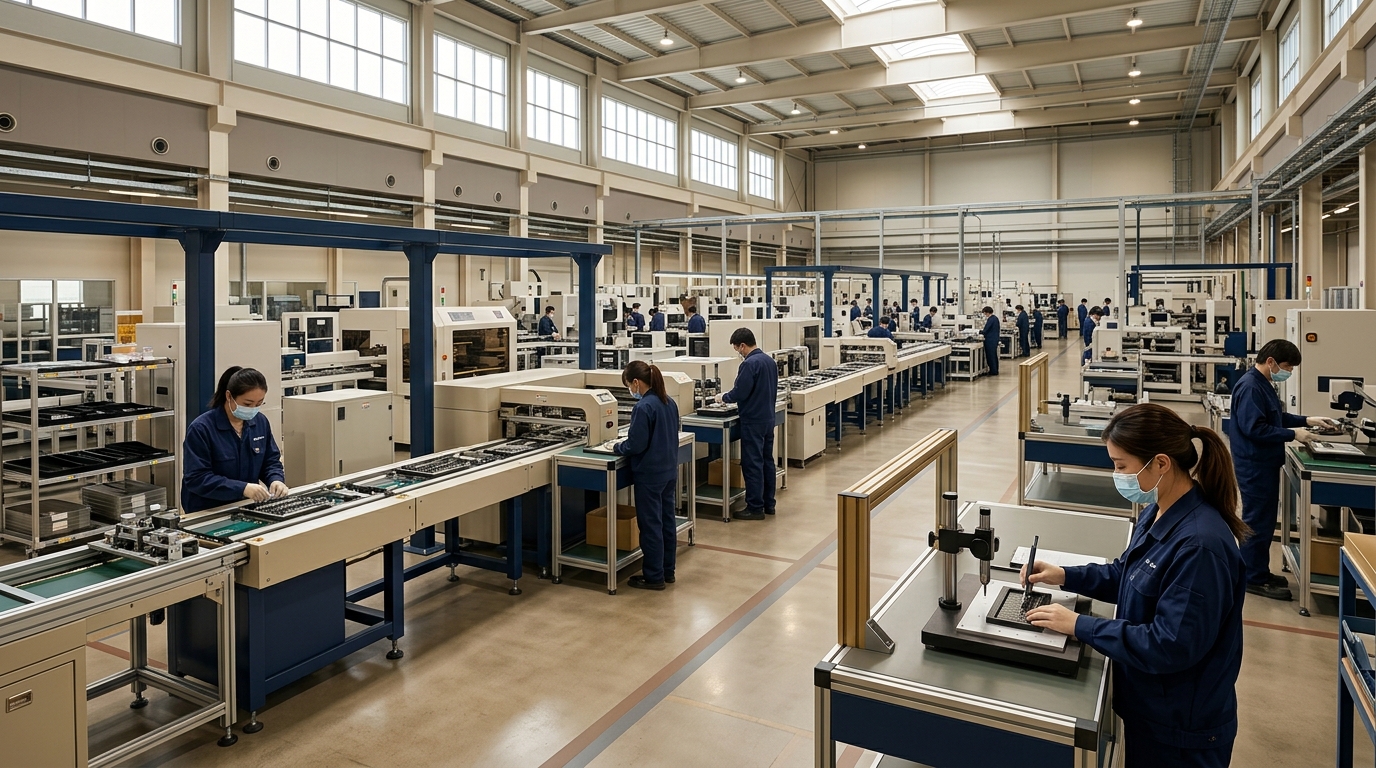
Placing a large order with an unfamiliar supplier is one of the higher-risk decisions in sourcing. Sales decks look polished, certifications arrive as PDFs, and factory tours run on a curated schedule. A factory capability audit cuts through that managed presentation by sending an independent assessor to verify what equipment actually runs, how quality controls operate in practice, and whether stated capacity has any grounding in reality. Done before a purchase order is signed, this assessment converts a supplier relationship from a leap of faith into a calculated commitment.
The scope of a capability audit differs from a social compliance audit or a product inspection. Where a SMETA or BSCI audit focuses on labour conditions, wages, and worker welfare, a capability assessment is primarily concerned with operational and technical competence: machinery, processes, quality management systems, and production throughput. The two are often conducted together as part of a broader supplier qualification programme, but conflating them means neither gets the depth it deserves. Understanding the distinction helps you commission the right scope from the outset.
Importers who have been burned by suppliers typically describe the same sequence: the factory passed a basic checklist review, the first small trial order went smoothly, and the problems emerged at volume. Capacity that looked adequate for a sample run stretched to breaking point under a real order. Quality controls that functioned during the visit were quietly bypassed on the production floor weeks later. A structured factory capability audit is specifically designed to surface these vulnerabilities before money changes hands, not after.
This guide covers the core domains a capability audit should address, the red flags that most consistently signal downstream risk, and the steps to take once findings are in hand.
What a Factory Capability Audit Actually Measures Across Key Domains
A credible capability assessment organises its findings around several distinct domains. Treating each as a separate lens prevents the common mistake of a factory scoring well on equipment while hiding critical weaknesses in process documentation or management stability.
Production Capacity and Equipment
The assessor verifies whether the machinery on-site matches what was declared, whether it is operational or in various states of disrepair, and whether the factory's stated daily or monthly output is plausible given shift patterns and machine counts. Capacity claims are frequently overstated. An experienced auditor cross-references machine logs, energy consumption records, and staffing numbers to triangulate realistic throughput figures.
Key questions at this stage include: Is critical equipment owned or leased? Is there redundancy for bottleneck machines? Does the factory use subcontractors for any production stage, and if so, are those subcontractors disclosed and auditable?
Quality Management Systems and Process Controls
This domain examines whether the factory has a functioning quality management system, not merely an ISO 9001 certificate. Certificates can be current while the underlying system has degraded. An assessor reviews documented procedures, checks that in-process inspection records exist and are actually used, and interviews line supervisors to assess practical understanding of quality standards.
Specific checks include: Are incoming raw materials inspected against specifications? Does the factory maintain acceptable quality limit (AQL) sampling plans and know how to apply them? Is there a system for recording and resolving non-conformances? Can management produce corrective action and preventive action (CAPA) records from recent quality incidents?
A factory that produces documentation on request but cannot demonstrate that documentation is used in daily operations is carrying significant quality risk, regardless of what certifications appear on the wall.
Management Systems and Organisational Stability
Production capability is only as reliable as the management that maintains it. High turnover in quality management roles, unclear ownership of production scheduling, or a single technical expert who holds all institutional knowledge are organisational risks that often precede delivery failures.
The assessor maps key roles, reviews how production planning is communicated across departments, and assesses whether the factory has functional systems for handling order changes or material delays. Factories that rely entirely on verbal instructions, with minimal written procedures, typically struggle to maintain consistency at scale.
Raw Material and Supply Chain Controls
A factory's output quality depends partly on the quality of what goes into it. The audit should examine how raw materials are sourced, whether suppliers are qualified, and how incoming material variability is detected and managed. In categories such as electronics, garment manufacturing, or food-contact goods, material traceability is particularly critical for both compliance and quality outcomes.
For buyers sourcing from regions such as Guangdong, Zhejiang, or Jiangsu in China, or from Vietnam and Indonesia, material supply chains are often multi-tiered and involve a network of smaller processors. Understanding how many tiers are visible to the factory itself is a meaningful data point.
The Red Flags That Carry the Highest Downstream Risk
Not every audit finding has equal weight. Some non-conformances are administrative and correctable within days. Others signal structural problems that no corrective action plan can resolve in a reasonable timeframe. Experienced auditors distinguish between these categories; buyers should ask their audit provider to do so explicitly.
The following findings typically warrant serious reconsideration of supplier qualification:
- Capacity gap between claimed and verified output of more than around 30 percent, particularly when the factory has committed to aggressive lead times - Absence of documented quality procedures combined with high defect rates in recent production samples - Falsified or expired certifications, including ISO 9001, social compliance certificates, or test reports that do not match the products being manufactured - Key person dependency where a single individual controls quality, technical knowledge, or supplier relationships without succession or documentation - Undisclosed subcontracting at any production stage - Evasive or obstructed access during the audit — auditors being steered away from certain production areas, records unavailable without explanation, or employees visibly coached before interviews
How to Structure the CAPA Process After Audit Findings
A factory capability audit that produces a report and nothing further is a sunk cost. The value is in what happens next. A corrective action and preventive action (CAPA) process gives the supplier a structured path to close non-conformances, with timelines and verification steps built in.
For each finding, the CAPA should specify: what the root cause is, what action the supplier will take, who is responsible, and by what date completion is expected. The buyer or their audit provider then verifies closure, either through documentary evidence or a follow-up visit.
Not all non-conformances should be treated equally in the CAPA timeline. Critical findings — falsified records, structural safety issues, undisclosed subcontracting — typically warrant a hold on order placement until verification is complete. Major findings may allow order placement to proceed conditionally, with CAPA verification required before shipment release. Minor findings can often be tracked through the normal production oversight process.
For buyers managing multiple supplier relationships across China, Vietnam, India, or Bangladesh, a standardised CAPA framework prevents the situation where different suppliers are held to different standards depending on who manages the relationship internally.
How Capability Audits Relate to Social and Environmental Compliance Assessments
For brand owners and retailers facing ESG reporting requirements or retail partner standards such as SEDEX, BSCI, or SA8000 alignment, a capability audit is typically one component of a broader supplier qualification programme rather than a standalone exercise.
Social compliance audits examine labour conditions, wages, working hours, health and safety, and worker welfare. Environmental audits assess waste management, chemical handling, energy use, and increasingly, alignment with frameworks such as the Higg Index for apparel and textile supply chains. Capability audits examine operational and technical competence. Each addresses a distinct category of supply chain risk.
Running all three in a coordinated visit reduces disruption to the factory and allows cross-domain observations. An assessor visiting to review quality systems may observe labour conditions that warrant a more detailed social compliance audit. A social compliance audit team may notice chemical storage practices that indicate environmental compliance gaps. Coordinated scoping captures these interactions in ways that siloed assessments miss.
For buyers who need audit evidence that will satisfy an ESG committee, an investor, or a retail partner, it is worth confirming upfront which frameworks the audit output will align to, whether findings will be logged in SEDEX or a similar platform, and whether the audit methodology meets the evidentiary standard required by your specific stakeholder.
The Factory Inspection pillar guidecovers the full range of audit types MTS conducts across Asia, including social compliance and environmental assessments alongside capability work.
Choosing the Right Audit Scope for Your Sourcing Situation
Audit scope should match the level of risk in the supplier relationship, not default to the most comprehensive or least expensive option available.
| Situation | Recommended scope |
|---|---|
| New supplier, first large order, no prior relationship | Full capability audit covering capacity, QMS, management systems, and material controls |
| Existing supplier being scaled up significantly | Focused capability re-assessment on capacity and QMS, plus subcontractor mapping |
| New supplier in a regulated product category (electronics, food-contact, medical) | Capability audit plus technical compliance review and test report verification |
| Supplier onboarding under ESG or retail partner requirements | Combined capability and social compliance audit with SEDEX or BSCI-aligned output |
| Annual supplier review, stable relationship | Abbreviated process maturity review with CAPA follow-up from previous audit |
Scope decisions also depend on geography. Factories in Guangdong manufacturing electronics carry different risk profiles from garment producers in Bangladesh or furniture manufacturers in Vietnam. A good audit provider will adjust assessment emphasis based on product category, regulatory environment, and the specific compliance frameworks relevant to your market.
What to Expect from the Audit Report and How to Use It
A useful factory capability audit report is actionable, not simply descriptive. It should tell you what was found, how significant each finding is, and what the supplier needs to do to address it. Reports that list observations without grading their severity, or that produce narrative descriptions without structured findings, make it harder to prioritise follow-up and harder to hold suppliers accountable.
Look for a report structure that includes: an executive summary with an overall assessment, domain-by-domain findings with severity ratings, photographic evidence where relevant, and a structured CAPA section that can be sent directly to the supplier as a formal requirement.
For category managers and sourcing leads standardising supplier onboarding across multiple countries or product lines, report consistency matters as much as report content. If your audit provider uses different formats, grading scales, or finding categories depending on the auditor or the country, comparison across suppliers becomes difficult and CAPA management becomes fragmented.Our Factory Inspection serviceuses a consistent methodology and report format across MTS's operating regions to support exactly this kind of standardised supplier programme.
The report should also be written for multiple internal audiences. A procurement manager needs the operational detail. A risk officer or ESG lead needs the compliance framing. A founder or category director needs the executive summary to make a go or no-go call. A well-structured report serves all three without requiring separate deliverables.
Conducting Audits Across Asia: Regional Considerations That Affect Findings
The mechanics of a factory capability audit are consistent across regions, but the context in which findings occur varies meaningfully. In China's Pearl River Delta, factory subcontracting networks are dense and often informal; undisclosed subcontracting is a persistent finding that requires specific verification steps. In Vietnam, rapid capacity expansion in recent years means some factories have physical infrastructure that outpaces management system maturity. In Bangladesh, particularly in garment manufacturing, structural safety and fire safety remain audit-critical domains alongside the standard capability scope. In India, supply chain fragmentation and multi-tier raw material sourcing can make material traceability harder to establish.
These are not reasons to avoid sourcing from any particular region. They are reasons to ensure that audit scope and auditor experience are calibrated to the specific context, not applied generically.
A factory capability audit conducted by an assessor with direct regional experience will surface findings that a remote desk review or a generic checklist will miss. The value of independent, on-the-ground assessment is precisely that it captures what the managed factory presentation is designed to conceal.
Used consistently as part of supplier qualification and ongoing monitoring, capability audits convert supplier selection from a judgment call into a repeatable, evidence-based process — one that protects purchase capital, supports compliance obligations, and gives your supply chain the operational foundation it needs to scale reliably.
Need eyes on the ground in Indonesia?
MTS verifies suppliers, audits factories and runs AQL-based inspections at every production milestone — reported in writing.
Related services
Related articles
Receive furniture sourcing insights across Asia.
One email per week. No spam.