Indonesia Quality Control: B2B Inspection Playbook
12 min read
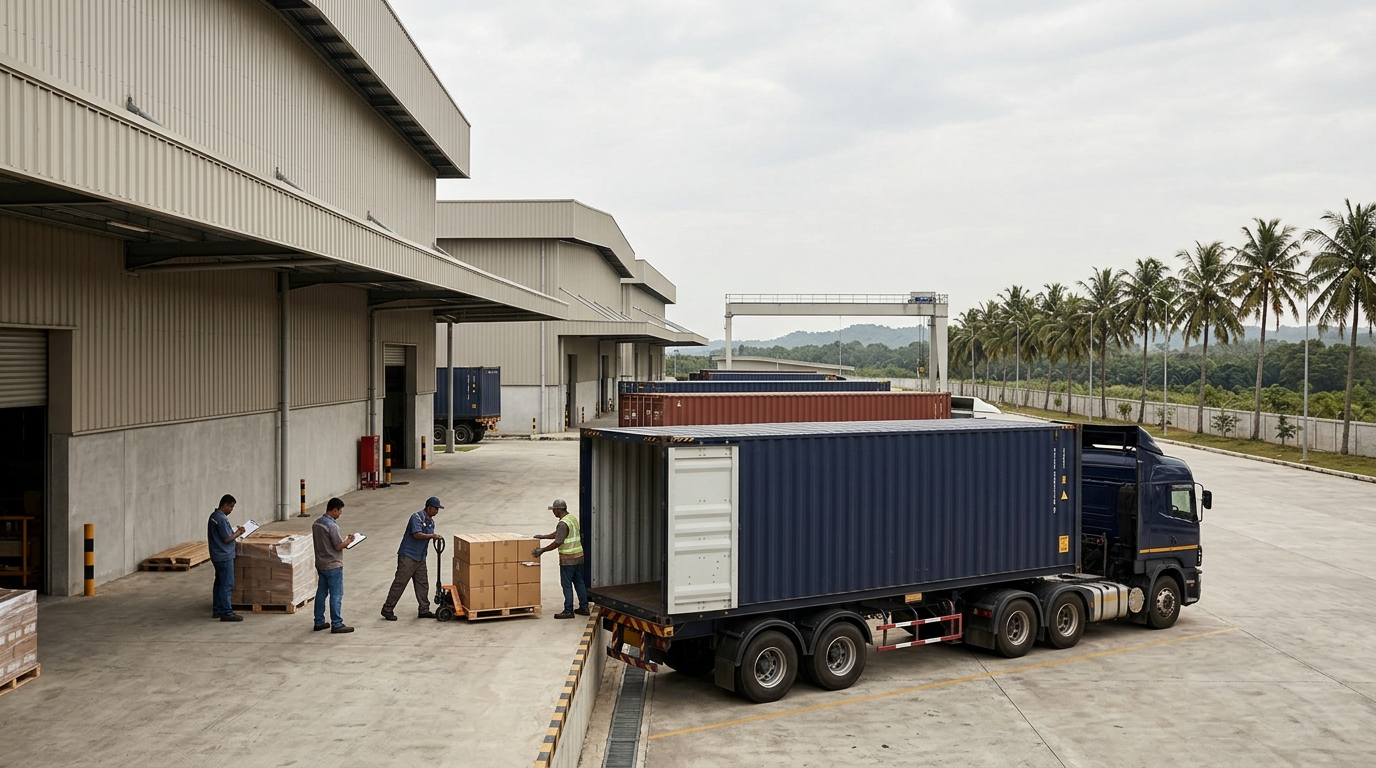
Indonesia's manufacturing sector spans furniture, home goods, textiles, and food — each with distinct defect risks and regulatory requirements. This playbook covers AQL-driven inspection protocols from pre-production through final random inspection, so buyers know exactly what to verify and when.
Indonesia is one of Southeast Asia's most diversified manufacturing exporters, producing everything from solid-wood furniture in Central Java to processed food in Sumatra and garments across the Greater Jakarta corridor. That diversity is an advantage for buyers building a multi-category supply chain from a single country, but it also means that indonesia quality control requirements vary considerably by product type, factory maturity, and end-market regulation. A textile mill in Bandung carries different defect risks than a rattan workshop in Cirebon or a seafood processor in Surabaya, and a single inspection template applied across all three will miss category-specific failure modes.
The practical consequence of skipping or under-specifying inspections is usually discovered at the worst possible moment: after goods have cleared Indonesian customs, arrived in a destination port, and been distributed to a retailer or warehouse. At that stage, chargebacks, returns, and reputational damage accumulate faster than any rework cost would have. Structured quality control — anchored in internationally recognized AQL sampling standards and executed at the right production milestones — shifts defect detection to a point in the process where correction is still commercially viable.
This playbook is written for procurement managers and brand owners who are either beginning to source from Indonesian suppliers or who want to tighten an existing inspection program. It covers the three core inspection types, the defect categories most commonly found across Indonesia's major export product sectors, and the practical decisions buyers need to make before an inspector walks into a factory. For the broader framework across Asia sourcing, see theQuality Control Inspection Services in Asia: Pre-Production to Pre-Shipmentguide, which covers inspection strategy at the regional level.
Understanding the AQL Framework Before You Inspect Anything
AQL — Acceptable Quality Limit — is a statistical sampling method that defines how many defects in a random sample are acceptable before an entire lot is rejected. It does not guarantee that every unit in a shipment is defect-free; it gives buyers a statistically defensible basis for accepting or rejecting a lot without inspecting every piece.
The two variables buyers must set before any inspection are the inspection level and the AQL threshold for each defect class.
Inspection Levels
ISO 2859-1 (which most third-party inspectors use as the reference standard) defines General Inspection Levels I, II, and III. Level II is the default for most consumer goods. Level I reduces the sample size and is appropriate for low-risk reorders with a proven supplier. Level III increases the sample size and is used when historical data shows a higher defect rate or when a product carries elevated safety or liability risk.
Defect Classification
Defects are typically classified as:
- Critical — renders the product unsafe or non-compliant with mandatory regulations. Critical defects commonly result in a zero-tolerance threshold (AQL 0). - Major — affects function, durability, or appearance in a way that would cause a consumer complaint or return. AQL 2.5 is a widely used threshold for major defects. - Minor — small workmanship imperfections that do not affect function or salability. AQL 4.0 is a common threshold.
These thresholds are starting points, not universal rules. Buyers selling into markets with strict liability regimes — the EU, the United States, or Australia — often tighten major defect thresholds to AQL 1.0 for relevant product categories.
Pre-Production Inspection: Catching Problems Before They Are Built In
A pre-production inspection takes place before bulk manufacturing begins, typically after raw materials have arrived at the factory but before cutting, assembly, or processing has started. It is the least dramatic inspection type and the one most frequently skipped — which is why it is also the one that would have prevented the most expensive failures.
For indonesian suppliers, pre-production inspections commonly check:
- Material conformance — does the timber species, fabric composition, hardware grade, or food ingredient match what was specified in the purchase order or tech pack? - Component dimensions — are panels, hardware, trims, or packaging blanks cut to the correct tolerances? - Approved sample comparison — does the factory's production sample match the counter-sample held by the buyer or the specifications in the approved tech pack? - Supplier readiness — is the correct equipment set up and calibrated, and does the production team understand the key quality checkpoints?
In furniture manufacturing — particularly in Jepara, which produces a significant share of Indonesia's wood furniture exports — pre-production inspection of timber moisture content and wood species verification is particularly important. Substitution of timber grades or species is a documented risk in the sector, and it is far easier to address before the wood has been machined.
During Production (DUPRO) Inspection: Early Signal on Defect Trends
A DUPRO inspection is conducted when approximately 20–40% of the order quantity has been produced and packed. The logic is simple: if a defect is present in early production, it will almost certainly be present throughout the run. Finding it at 20–30% completion leaves the factory with enough remaining production to correct the process and potentially rework early units without delaying the shipment.
For textile and garment orders, DUPRO inspections typically assess seam strength, stitch density, color consistency across dye lots, and print registration accuracy. For furniture, inspectors check joint integrity, surface finish consistency, and hardware fitment. For food products, DUPRO may involve verifying fill weights, labeling accuracy, and packaging seal integrity.
Final Random Inspection: The Pre-Shipment Gate
The final random inspection (FRI) — sometimes called a pre-shipment inspection — is conducted when at least 80% of the order quantity is finished and packed in export cartons. It is the most widely used inspection type and serves as the buyer's last checkpoint before goods leave the factory.
A standard FRI for Indonesian consumer goods covers:
- Quantity verification — confirming that the number of packed cartons matches the purchase order - Carton and labeling checks — verifying shipping marks, country of origin, barcodes, and any regulatory markings required by the destination market - Product sampling — opening a statistically defined sample of cartons and units for workmanship, function, and appearance checks - Measurement and specification checks — confirming dimensions, weights, and any performance attributes relevant to the product - Safety and function tests — where applicable, checking for sharp edges, small parts, flammability labels, or food packaging seal integrity
Indonesia's INSW system consolidates export documentation and customs clearance. Having a clean, detailed FRI report supports faster processing and provides documented evidence of the product's condition at the point of departure, which is important if a dispute arises at the destination port.
Common Defect Categories Across Indonesia's Major Export Sectors
Defect profiles differ meaningfully by product category. The following covers the most frequently encountered failure modes across Indonesia's primary export manufacturing sectors.
Furniture and Wood Products
Indonesia is among the world's leading exporters of wooden and rattan furniture. Common defects include: surface finishing inconsistencies (uneven lacquer, visible sanding marks, finish bleed), joint failures at mortise-and-tenon or dowel connections, timber cracking linked to insufficient kiln drying, hardware misalignment or wrong grade, and assembly tolerances that fall outside specification. For export furniture, moisture content of timber is a recurring issue — wood dried to tropical equilibrium moisture content will typically shrink or crack in temperate destination markets.
Home Goods and Decorative Products
Ceramics, woven baskets, metal homeware, and candles all present distinct defect risks. For ceramics, warping and glaze defects are most common. For woven products, inconsistency in weave tension and color lot variation are typical issues. Metal homeware often shows surface rust at uncoated edges or welding porosity. Candle products are assessed for fragrance consistency, wick placement, and compliance with destination-market labeling requirements.
Textiles and Garments
Garment and textile production is concentrated in Greater Jakarta, Bandung, and surrounding West Java districts. Frequent defects include: seam slippage under tension, uneven stitch density, color shading differences between cut panels from different dye lots, mislabeled fiber content, and incorrect sizing. Buyers selling into the EU or US must also verify that fabric compositions and care labels comply with local textile labeling laws — a regulatory requirement that goes beyond workmanship.
Processed Food and Agricultural Products
Indonesia exports a wide range of processed food products including palm oil derivatives, seafood, spices, cocoa products, and snack foods. Quality control for food products involves both physical and regulatory dimensions. Common issues include: fill weight variation, packaging seal failures that compromise shelf life, labeling that does not meet destination-country food standards, and microbial or allergen contamination risks that require laboratory testing rather than visual inspection alone.
Building a Supplier Quality Agreement Before Production Starts
An inspection program is only as strong as the quality standards it references. Without a signed supplier quality agreement that specifies defect classifications, AQL thresholds, approved samples, and the consequences of a failed inspection, the buyer has limited contractual leverage when defects are found.
A practical supplier quality agreement for Indonesian suppliers should include:
| Element | What to Specify |
|---|---|
| Approved sample reference | Sample ID, date approved, who holds counter-sample |
| Defect classification table | Critical, major, and minor defects defined for the product |
| AQL thresholds | Per defect class, per inspection type |
| Inspection access | Factory must allow third-party access at agreed milestones |
| Failed inspection protocol | Rework, re-inspection, and cost responsibility |
| Regulatory markings | CE, CPSC, country of origin, SNI where applicable |
Having this agreement in place before purchase order issuance transforms a subjective quality discussion into a documented contractual standard. It also signals to the supplier that the buyer is organized and will follow through on inspection commitments — which itself tends to improve factory compliance.
How MTS Structures Indonesia Quality Control Programs
MTS operates indonesia quality control programs as integrated engagements rather than one-off inspection bookings. Our inspectors are resident in or regularly deployed to Jepara, Greater Jakarta, Surabaya, Bandung, and Medan, covering the full range of Indonesian export manufacturing sectors.
For new supplier relationships, we typically recommend a pre-production inspection combined with at least one DUPRO before the first FRI, building a quality baseline that informs how much oversight subsequent orders require. For established supplier relationships with a clean track record, FRI-only programs are often sufficient, with DUPRO reintroduced when a product changes significantly or when the factory's defect rate begins to trend upward.
All inspection reports are generated in a structured format that documents sample sizes, defect counts by classification, photographs of each defect, and a clear pass/fail determination against the buyer's stated AQL. Reports are delivered within 24 hours of inspection completion as standard.
If your sourcing from Indonesia spans multiple product categories, ourIndonesia sourcing servicescan be structured to cover the full procurement and quality lifecycle, from supplier identification through to pre-shipment release. For buyers evaluating Indonesia as a new sourcing country, thesourcing from Indonesia hubprovides additional context on factory landscape, lead times, and trade compliance.
Frequently Asked Questions
What AQL level should I specify for furniture sourced from Indonesia?
Most buyers apply AQL 2.5 for major defects and AQL 4.0 for minor defects when inspecting furniture. If your product carries a safety function — structural load-bearing frames, for example — some buyers tighten the major defect threshold to AQL 1.0. The right level depends on your end-market requirements, retailer chargebacks, and the complexity of the product; your inspection partner should help you calibrate this before the first production run.
How early in production should a pre-production inspection be scheduled?
A pre-production inspection is most useful before bulk materials are cut or committed — typically within the first week after raw materials arrive at the factory. At this stage an inspector can verify that fabrics, hardware, panels, or food-grade packaging match the approved specifications. Catching a material substitution before production starts costs a fraction of what a rework or rejection costs after goods are packed.
Which Indonesian manufacturing hubs see the highest inspection volumes for home goods and furniture?
Jepara in Central Java is the recognized center for wooden furniture and rattan manufacturing, and inspection activity there is correspondingly high. Greater Jakarta and Surabaya handle diversified production including textiles, garments, and consumer goods. Medan in North Sumatra is a growing hub for rubber-based and plantation-derived products. Your inspection provider should have resident or quickly deployable inspectors in all three regions.
Does Indonesia have a mandatory pre-shipment inspection requirement for imported goods?
Indonesia operates the Indonesia National Single Window (INSW) system, which consolidates customs and import permit data. Certain product categories — including some food, electronics, and textiles — require SNI (Standar Nasional Indonesia) certification or import approval before clearance. Pre-shipment inspection by a third party does not replace regulatory compliance, but having documented inspection records supports smoother INSW processing and reduces the risk of holds at Indonesian ports of entry.
What is a DUPRO inspection and when does it make sense for Indonesian suppliers?
A During Production (DUPRO) inspection takes place when roughly 20–40% of the order quantity has been completed and packed. It gives buyers an early signal on whether defect patterns are emerging — surface finish inconsistencies in furniture, seam integrity in textiles, or fill-weight variation in food products — while there is still time to correct the production process. DUPRO is especially valuable for first orders with a new factory, high-value shipments, or products with complex assembly steps.
Can inspection reports be used as evidence in a supplier dispute?
Yes, provided the report documents defects with photographs, measurement data, and the sample size and acceptance criteria used. A report generated against a defined AQL standard and linked to an approved sample or tech pack carries significantly more weight in a dispute than a general complaint. MTS inspection reports are structured to include all of this information, and we retain records that can be referenced if a dispute arises months after shipment.
How do I handle a failed final random inspection without delaying my shipment deadline?
The first step is to determine whether the failure is caused by a systemic production issue or an isolated packing problem. If defects are confined to a specific batch or carton range, a partial sorting and re-inspection may be sufficient. If the failure reflects a process problem, a rework and re-inspection is required before release. Communicating the failure to your supplier in writing immediately, with the inspection report attached, establishes a clear record and activates any contractual remediation obligations.
A well-structured indonesia quality control program is not an overhead cost — it is the mechanism that keeps supplier relationships commercially viable over time by creating shared, objective standards for what acceptable production looks like. Buyers who invest in pre-production and DUPRO inspections on new supplier relationships consistently report fewer final random inspection failures and lower total remediation costs across their supply chains. The protocols in this playbook are a starting point; the specifics should always be calibrated to your product category, destination market, and supplier maturity.
Need eyes on the ground in Indonesia?
MTS is an execution partner — supplier verification, manufacturing management, quality control and export logistics across Indonesia, Vietnam and China.
Related services
Related articles
Receive furniture sourcing insights across Asia.
One email per week. No spam.