Indonesia Factory Audit: A Capability Assessment Playbook
12 min read
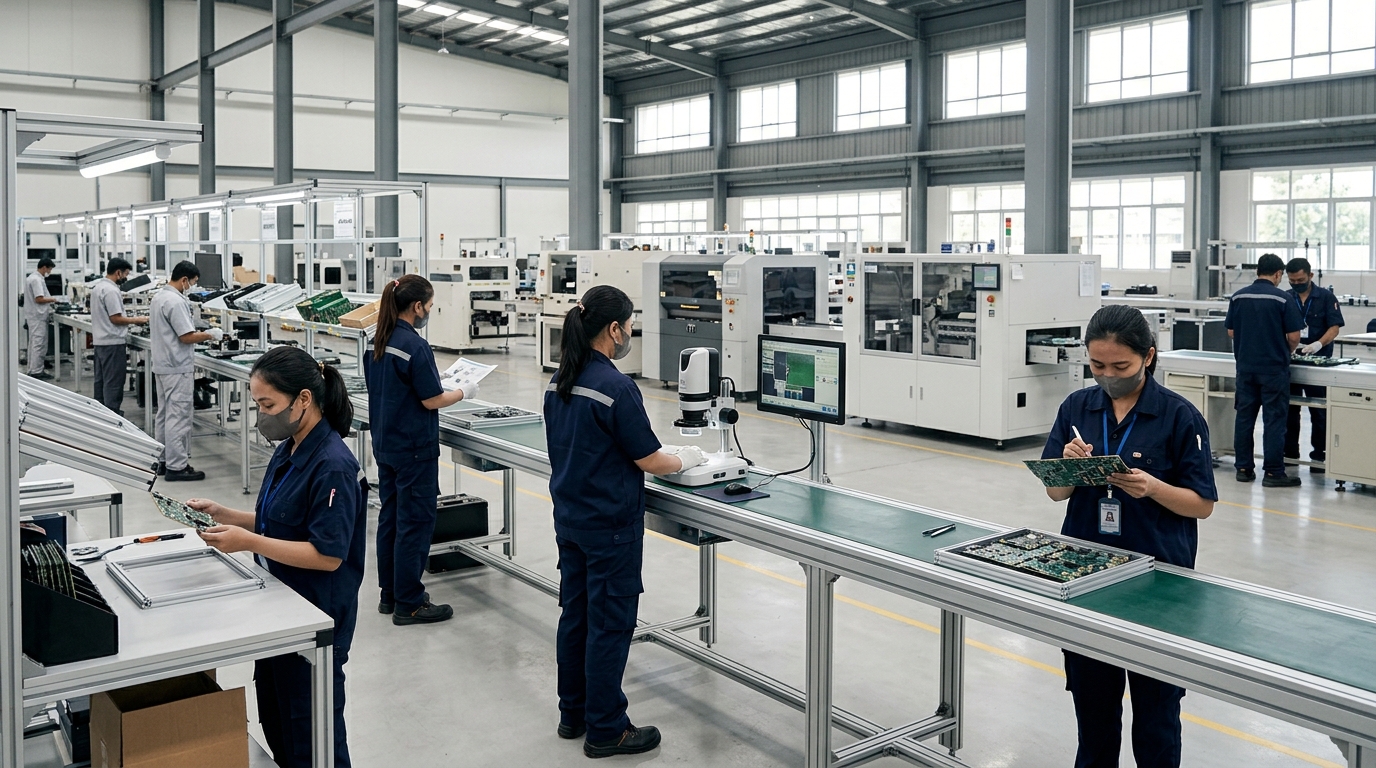
Commissioning an Indonesia factory audit before placing a first production order is one of the most straightforward ways to avoid expensive surprises. Indonesia's manufacturing sector spans a wide range of industries — garments, footwear, electronics assembly, furniture, food processing, and automotive components — and the factories serving these sectors vary considerably in management maturity, equipment condition, and regulatory standing. A supplier who presents well in a video call may be operating beyond their licensed capacity, using machinery that cannot hold your required tolerances, or carrying environmental and labour liabilities that would embarrass your brand.
The purpose of a structured capability assessment is to replace optimistic assumptions with documented evidence. This means physically verifying production capacity against stated output figures, inspecting machinery age and maintenance records, confirming that the correct permits are in place under Indonesian law, checking environmental compliance instruments, and reviewing employment practices against the Indonesian labour framework. Each of these areas has country-specific requirements that differ materially from audit criteria applied in China, Vietnam, or Bangladesh.
Indonesia's regulatory environment for manufacturing has become more structured following the introduction of the Online Single Submission (OSS) system, which consolidates business registration, sector-specific licences, and environmental permits into a single digital record accessible to auditors. That consolidation makes permit verification more reliable than it was a decade ago, but it also means that gaps — an expired licence, a facility expansion that was never registered — are more clearly visible to anyone who knows where to look.
This guide walks through each phase of a thorough audit: pre-visit preparation, on-site capability and machinery assessment, permit and regulatory verification, environmental compliance review, and labour welfare evaluation. It is written specifically for procurement managers and brand owners approaching Indonesian supply chains for the first time. For broader context on independent auditing methodology across the region, seeFactory Inspection Services in Asia: Independent Audits That Produce Actionable Evidence.
Preparing for an Indonesia Factory Audit Before the Site Visit
Effective audits begin well before an auditor steps onto the factory floor. The pre-visit stage establishes the audit scope, identifies the documents that must be requested in advance, and flags any sector-specific risks that will shape the on-site agenda.
Define Scope Against Your Category
The depth of each audit dimension should match the risk profile of what you are buying. A buyer sourcing injection-moulded plastic components will weight machinery condition, tooling maintenance, and quality control equipment more heavily than a buyer sourcing woven textiles. Furniture exporters operating from Java or Sulawesi will require specific attention to timber legality documentation (the SVLK timber legality assurance system). Food and beverage manufacturers require BPOM (National Agency of Drug and Food Control) registration checks alongside the standard IUI and environmental permits.
Request Documents in Advance
Ask the factory to provide the following before the site visit:
- NIB (Nomor Induk Berusaha) — the master business identification number from the OSS platform - IUI (Izin Usaha Industri) — the production licence specifying authorised products and volume - Environmental instrument: AMDAL decision letter or UKL-UPL approval, with the most recent periodic monitoring report - BPJS Ketenagakerjaan and BPJS Kesehatan contribution receipts (social security proof) - Most recent machine maintenance logs - Organisational chart and headcount breakdown by employment type - Sample employment contracts for permanent and contract workers
Pre-screening these documents remotely allows the on-site auditor to focus on verification rather than discovery, which is a better use of factory-floor time.
Assessing Production Capacity and Machinery Condition On Site
A factory's claimed monthly output is one of the figures most frequently misrepresented — not always deliberately, but because stated capacity often reflects a theoretical maximum rather than sustainable, repeatable production. A practical indonesia factory audit tests this in several ways.
Capacity Verification Methods
- Headcount-to-output cross-check. Verify the number of direct production workers against the factory's stated output. For labour-intensive categories like garments or footwear, output-per-worker benchmarks are reasonably well understood within specific product types. A significant mismatch warrants follow-up. - Production records review. Request actual shipment records or production logs covering the past six to twelve months. Consistent monthly volumes close to stated capacity are credible; highly variable records require explanation. - Floor layout and line balance observation. Walking the production floor during working hours reveals whether all stated lines are staffed and running, whether WIP inventory levels are consistent with claimed throughput, and whether bottleneck stations exist.
Machinery Age, Condition, and Maintenance
For categories where machinery quality directly affects product quality — electronics assembly, precision metalwork, plastics, and packaging — auditors should document equipment make, model, approximate age, and visible condition. Key indicators of poor maintenance include:
- Absence of machine-specific maintenance schedules or logbooks - Calibration stickers that are expired or missing on measurement equipment - Improvised repairs or bypassed safety guards - Excessive tooling wear without replacement records
Verifying Indonesian Industrial Permits and Business Licences
Permit verification is a non-negotiable component of any indonesia factory audit. Operating without valid licences exposes buyers to supply chain disruption if the factory faces regulatory action, and can create documentation problems at import clearance.
The IUI Production Licence
The IUI (Izin Usaha Industri) is the primary industrial operating licence in Indonesia, issued under Ministry of Industry regulations. It specifies:
- The product categories the factory is authorised to manufacture (using KBLI industrial classification codes) - Investment value thresholds that determine whether the facility is classified as small, medium, or large industry - The physical address(es) covered by the licence
Auditors should confirm that the KBLI codes on the IUI match the products actually being manufactured. A factory producing garments under an IUI coded for textile weaving is operating outside its licensed scope. Similarly, a significant expansion of floor area or new product lines that postdate the original IUI without an amendment is a red flag.
Cross-Referencing with OSS
Indonesia's OSS platform allows auditors to cross-reference the NIB and associated permits against the government's own records. This is one of the more reliable verification steps available in the region: it is harder for a factory to present a plausible-looking but invalid document when the authoritative digital record is independently accessible. Permit validity, scope, and any suspension notices are visible in the system.
Evaluating Environmental Compliance: AMDAL and UKL-UPL
Indonesia's environmental permitting framework requires industrial facilities to hold an appropriate environmental instrument before operating. The two primary instruments are:
| Instrument | Applicability | Key Requirement |
|---|---|---|
| AMDAL | Larger or higher-impact facilities (thresholds vary by sector and scale) | Full environmental impact assessment; approval from the Ministry or regional environment agency |
| UKL-UPL | Smaller or lower-impact facilities below AMDAL thresholds | Environmental management and monitoring plan; approved by the relevant regional authority |
During an indonesia factory audit, environmental verification involves three steps. First, confirm which instrument applies to the facility given its size and sector, and that the factory holds the correct one — not a lower-tier instrument for a facility that should require AMDAL. Second, review the most recent periodic environmental monitoring report (typically required semi-annually or annually depending on the instrument). Third, conduct a physical walkthrough of waste handling, wastewater discharge points, chemical storage, and emissions sources to check alignment between the documented plan and actual practice.
For buyers in categories with higher environmental impact — textiles, dyeing, leather tanning, electronics with chemical processes — auditors may recommend third-party laboratory sampling of effluent discharge points rather than relying solely on the factory's self-reported monitoring data.
Reviewing Labour Practices Against Indonesian Law
Worker welfare assessment during a factory audit in Indonesia requires auditors who understand the specific provisions of Indonesia's labour framework, primarily Law No. 13 of 2003 on Manpower as amended by the Job Creation Law (Omnibus Law), along with provincial and district minimum wage regulations.
Key Audit Points Under Indonesian Labour Law
- Minimum wage compliance. Indonesia sets minimum wages at the provincial level (UMP) and, in many regions, at the district or city level (UMK). The applicable rate depends on the factory's location. Auditors should verify that the lowest-paid direct workers are receiving at least the relevant UMK, including allowances counted toward wage calculations. - Overtime calculation. Indonesian law prescribes specific formulas for calculating overtime pay based on the worker's regular hourly rate. Piece-rate and mixed-pay structures are common in garment and footwear factories and are a frequent source of effective underpayment relative to legal requirements. - Employment contract types. Fixed-term contracts (PKWT) are restricted under Indonesian law: they cannot be used for permanent or core production roles, and renewal is limited. Excessive use of PKWT for roles that are clearly ongoing is a compliance risk. - BPJS enrolment. All eligible workers must be enrolled in both BPJS Ketenagakerjaan (work accident and pension cover) and BPJS Kesehatan (health insurance). Request contribution receipts and cross-reference the number of enrolled workers against the actual workforce headcount. - Working hours and rest periods. Standard working time under Indonesian law is seven hours per day for a six-day week or eight hours per day for a five-day week. Mandatory weekly rest and annual leave entitlements should be documented in work regulations (Peraturan Perusahaan) that have been registered with the local manpower office.
Auditors should conduct confidential interviews with a representative sample of workers — across different departments and employment types — to corroborate document findings. Interview findings that contradict payroll records or management statements are a material finding regardless of the documentary position.
Structuring Audit Findings into Actionable Supplier Decisions
An audit report that lists observations without structuring them for a sourcing decision wastes the effort invested. Findings should be classified by severity and mapped to clear next steps.
A practical classification for capability and compliance findings:
- Critical (C): Issues that present immediate legal, safety, or reputational exposure — unlicensed production, falsified permits, serious wage theft, or dangerous working conditions. These require resolution before any order is placed. - Major (MA): Material capability or compliance gaps that affect reliability or brand risk — machinery incapable of holding specification, expired environmental instrument, systematic BPJS non-enrolment. These require a documented corrective action plan with timelines before awarding significant volume. - Minor (MI): Process or documentation weaknesses that do not immediately affect quality or compliance but indicate management maturity gaps. These should be included in supplier development discussions.
For first-time buyers, MTS recommends re-auditing corrective action on Major findings within ninety days of the initial report before confirming production orders. A supplier's response to audit findings is itself a strong signal of management quality. You can review the range offactory inspection and supplier audit servicesMTS conducts across Indonesia to understand how assessment programmes are structured for different categories and risk profiles.
Indonesia's manufacturing geography also matters for risk calibration. Industrial estates in Karawang, Bekasi, and Cikarang operate under estate-level environmental and infrastructure management that introduces an additional layer of oversight. Standalone factories in peri-urban or rural areas around Surabaya, Semarang, or Bandung may have weaker local regulatory oversight, making independent audit verification correspondingly more important. For a broader view of sourcing across the country, theIndonesia sourcing hubprovides useful sector and regional context.
Frequently Asked Questions
How long does an Indonesia factory audit typically take to complete?
A single-site capability audit commonly takes one to two full working days on the factory floor, plus two to three days for document review and report preparation. More complex assessments — covering multiple production lines, environmental sampling, or multi-site operations — often extend to four or five days. Remote document pre-screening before the site visit can compress the on-site portion significantly.
What is an IUI production licence and why does it matter in a factory audit?
The Izin Usaha Industri (IUI) is the core industrial business licence issued under Indonesia's Ministry of Industry framework. It specifies the product categories, production volume thresholds, and facility locations a manufacturer is legally authorised to operate. During an audit, verifying the IUI confirms that the factory is producing within its licensed scope — a discrepancy signals unlicensed capacity expansion, sub-contracting risk, or regulatory non-compliance that can affect import documentation and buyer liability.
What is the difference between AMDAL and UKL-UPL in Indonesian environmental compliance?
AMDAL (Analisis Mengenai Dampak Lingkungan) is a full environmental impact assessment required for larger or higher-risk industrial facilities, while UKL-UPL (Upaya Pengelolaan Lingkungan Hidup dan Upaya Pemantauan Lingkungan Hidup) is a simplified environmental management and monitoring plan for operations with lower environmental impact. During an audit, the relevant instrument depends on the facility's scale and sector. Checking that the correct instrument is in place — and that monitoring reports are current — is a critical compliance step.
Can an Indonesia factory audit be conducted entirely remotely?
A partial remote audit — covering document review, management interviews via video, and production planning records — is feasible and useful for initial screening. However, physical verification of machinery condition, actual floor layout, storage practices, and worker welfare cannot be reliably assessed without on-site presence. Most buyers use a remote pre-screen to shortlist facilities, followed by a physical audit before awarding significant volume.
Which Indonesian labour law provisions are most commonly flagged in factory audits?
Auditors frequently identify issues around overtime payment calculation under Law No. 13 of 2003 (as amended by the Job Creation Law), minimum wage compliance against the relevant provincial or district rate, proper employment contracts for contract workers, and accurate social security (BPJS Ketenagakerjaan and BPJS Kesehatan) enrolment. Piece-rate and commission payment structures in garment and footwear factories are a common source of minimum wage underpayment findings.
How does Indonesia's Online Single Submission (OSS) system affect permit verification during an audit?
Indonesia's OSS platform centralises business and environmental permits into a single digital licence called the NIB (Nomor Induk Berusaha) and associated sectoral approvals. During an audit, cross-referencing the factory's NIB, IUI, and environmental instrument against OSS records gives auditors a reliable way to detect expired, suspended, or incorrectly scoped permits without relying solely on paper documents presented by the factory.
What manufacturing hubs in Indonesia are most commonly audited by international buyers?
Greater Jakarta (Jabodetabek), including the industrial estates of Karawang, Bekasi, and Cikarang, handles the largest concentration of electronics, automotive components, and consumer goods manufacturing. Surabaya and East Java are significant for footwear, furniture, and food processing. Bandung and West Java host a large garment and textile cluster. Batam, as a free-trade zone close to Singapore, is a common audit location for electronics sub-assembly and light manufacturing serving export markets.
A well-executed indonesia factory audit does not just screen out bad suppliers — it produces the evidence base for a productive, long-term manufacturing relationship. Factories that pass a rigorous first audit and respond constructively to findings tend to be the partners that sustain quality and compliance over multiple production cycles. The investment in structured verification at the outset is consistently less costly than managing the consequences of discovering critical gaps after your first production run.
Need eyes on the ground in Indonesia?
MTS is an execution partner — supplier verification, manufacturing management, quality control and export logistics across Indonesia, Vietnam and China.
Related services
Related articles
Receive furniture sourcing insights across Asia.
One email per week. No spam.