Indonesia Production Management: The Oversight Playbook
13 min read
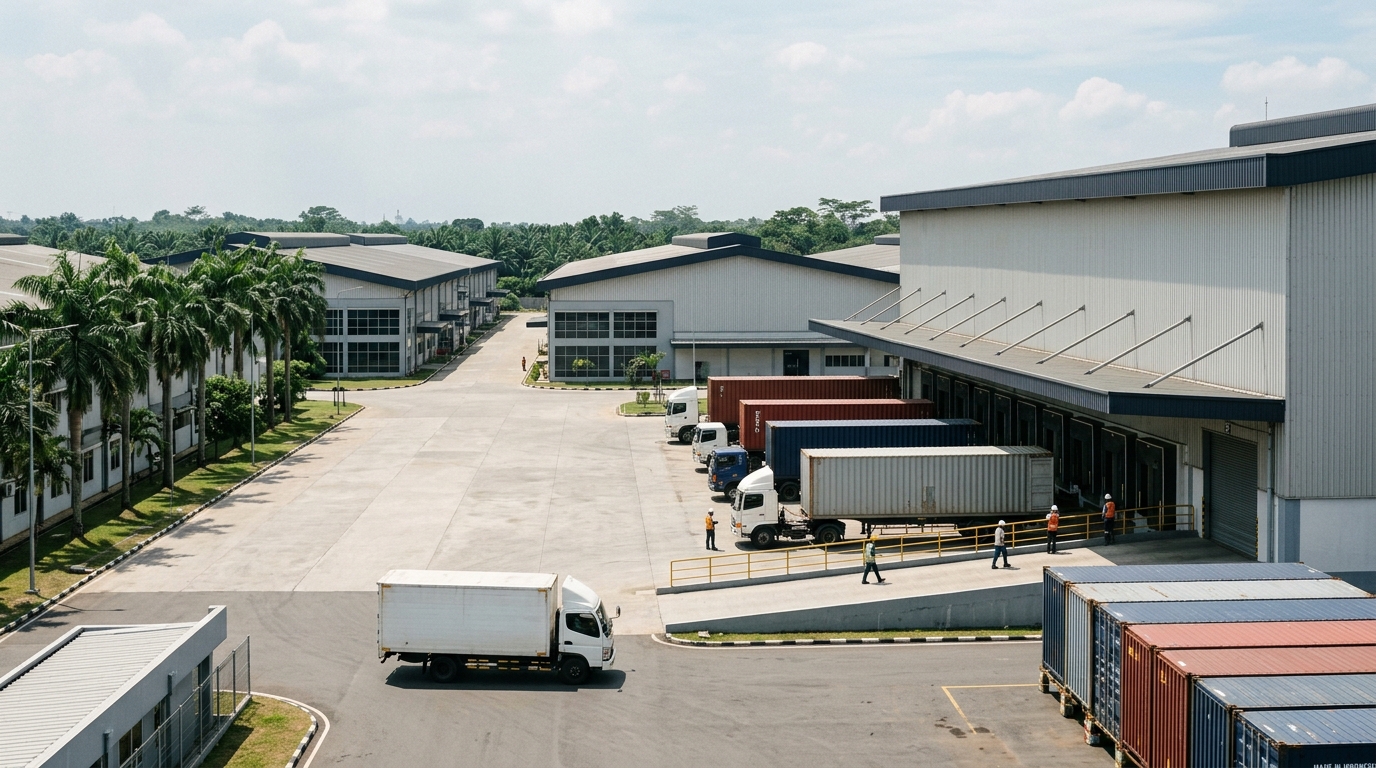
Managing production across Indonesia from a headquarters in Europe, the United States, or Australia is a structural challenge, not merely a logistical one. The country's manufacturing capacity for wood furniture, rattan goods, batik textiles, and home accessories is concentrated in geographically distinct clusters — Jepara in Central Java for solid-wood furniture, Cirebon in West Java for rattan and wicker, Yogyakarta for carved wood and finishing — and each cluster operates with its own workshop culture, supplier networks, and lead-time norms. Without dedicated indonesia production management infrastructure in place before an order begins, buyers commonly discover problems only when a container is being packed.
The core issue is information latency. A factory in Jepara will rarely proactively report that timber is still air-drying and machining will start two weeks late. A finishing workshop in Yogyakarta will not typically flag that the stain batch from a new supplier reads warmer than the approved sample until three hundred units are already coated. By the time a buyer receives photographs during what should be a loading inspection, the cost of correction — or the cost of accepting a compromised shipment — is already locked in. Structured oversight breaks this latency cycle by placing accountable people at the right stages, with defined authority to escalate or halt production.
This playbook sets out the practical mechanics of indonesia production management for overseas buyers: how to structure visit cadence, what milestone gates to enforce for wood-drying and finishing, and how to coordinate when your order spans more than one factory cluster. It draws on the operational patterns that consistently produce on-time, on-specification shipments rather than on theoretical quality frameworks.
For broader context on how production management operates across the region, seeProduction Management Services in Asia: Keep Every Order on Plan.
Why Indonesian Manufacturing Clusters Demand a Differentiated Oversight Approach
Indonesia's furniture and home-goods manufacturing is not organized around large integrated facilities. It is organized around ecosystems of small and medium workshops, where a single export order may involve a primary factory for structural components, a separate specialist for upholstery or weaving, a lacquer or paint shop for finishing, and a packaging supplier for carton and foam. This is particularly pronounced in Jepara, where the furniture industry comprises thousands of workshops ranging from ten to several hundred workers, many of which operate as informal subcontractors to the primary exporter.
This structure has genuine advantages — flexibility, craft depth, competitive pricing — but it transfers coordination risk to whoever is buying. When a buyer places an order with a Jepara exporter, they may believe they are dealing with one entity but are in practice depending on a chain of four or five workshops, none of which the buyer has vetted or communicated with directly. Effective indonesia production management in this environment means understanding the full subcontracting map before production begins and building oversight touchpoints at each node, not just at the exporter's premises.
Structuring Your Visit Cadence Across a Standard Production Run
For a typical furniture order with a production window of eight to fourteen weeks, a four-gate visit structure provides adequate oversight without creating a supervisory burden that strains the supplier relationship.
Gate 1: Pre-Production Confirmation (Week 1–2)
This visit — or verified third-party inspection — confirms that raw materials are on-site and meet specification before cutting begins. For solid wood orders, this means checking species, grade, and moisture content. For rattan or woven goods, it means checking raw material quality and dye lot consistency. Any deviation discovered here costs hours to resolve. The same deviation discovered at Gate 3 costs weeks.
Gate 2: In-Process Structural Check (Week 4–6)
This gate covers machined components and structural assemblies before surface preparation begins. Joinery fit, dimensional accuracy, and any laminated or veneered panels should be checked here. Defects in structure are effectively unrecoverable after finishing has been applied — a loose mortise joint cannot be re-glued and refinished without visible evidence.
Gate 3: Pre-Finishing Approval (Week 7–10)
This is the highest-stakes gate for wood furniture orders. The finishing workshop must have an approved golden sample on-site, and the first production units to be finished should be reviewed against it before the full batch proceeds. Color, sheen level, coverage consistency, and grain fill should all be evaluated under standardized lighting. For remote buyers, this gate may involve a physical production sample being shipped for approval — slower, but necessary for complex or high-value finishes.
Gate 4: Pre-Shipment Inspection (Final Week)
Random inspection of completed units before container loading, covering cosmetic condition, packaging integrity, carton marking, and count verification. This gate should follow a defined sampling protocol — commonly AQL 2.5 for general and critical defects — and the result should be documented in a written report that the buyer receives before authorizing container loading.
Wood-Drying and Finishing: The Two Milestones That Make or Break Furniture Quality
Of all the process steps in Indonesian furniture production, wood drying and surface finishing generate the highest proportion of quality failures for export orders. Both are invisible to a buyer reviewing photographs of finished goods, and both require milestone intervention well before the finishing stage.
Timber Drying: Specifying and Verifying Moisture Content
Tropical hardwoods — teak, mahogany, sungkai, acacia — are commonly harvested and processed with moisture content well above what is appropriate for export to markets with dry winters and heated interiors. Wood that arrives at a buyer's warehouse in North America or Northern Europe at 15–18% moisture content will crack, check, and distort as it acclimates to an interior environment of 30–45% relative humidity.
Buyers should specify target moisture content in their purchase order — typically around 8–12% for solid-wood furniture destined for temperature-controlled retail or residential environments — and require verification with a calibrated pin or pinless meter at the pre-production gate. Kiln drying is preferable to air drying for export orders because it achieves consistent results within a predictable schedule. However, some smaller Jepara workshops still rely primarily on air drying, which introduces schedule variability depending on seasonal humidity.
If a factory cannot demonstrate that its kiln capacity and drying schedule are consistent with your target moisture content and your production start date, factor in a buffer or consider whether the factory is the right choice for your specification.
Surface Finishing: Golden Samples, Batch Control, and Approval Authority
Finishing failures — color variation, lap marks, thin coverage over end grain, blush in lacquer — are consistently the leading cause of buyer rejections at final inspection for Indonesian furniture. They are also almost entirely preventable if the pre-finishing gate is taken seriously.
The golden sample is the foundation. It should be produced and formally approved — ideally with the buyer's signature and date on a label affixed to the piece — before any production finishing begins. It should be stored at the finishing workshop, not at the exporter's showroom. When the finishing run begins, the first units produced should be compared directly against the golden sample, not against the buyer's memory of an emailed photograph.
Batch control matters because finishing materials — stains, pigments, lacquers — can vary between deliveries from the same supplier. A new batch of stain should be tested on scrap from the same timber lot before application to production units.
Coordinating Multi-Factory Orders Across Jepara, Cirebon, and Yogyakarta
When a single purchase order draws on manufacturing capacity in more than one Indonesian cluster, the coordination layer becomes essential rather than optional. A bedroom set might involve Jepara for the solid teak frames, Cirebon for a woven rattan headboard insert, and a Yogyakarta specialist for hand-carved decorative panels. Each component has its own lead time, its own inspection requirements, and its own dependency on the components from the other clusters.
| Coordination Risk | Single-Factory Order | Multi-Cluster Order |
|---|---|---|
| Timeline dependency between components | Low | High |
| Subcontractor visibility | Moderate | Complex |
| Defect traceability | Straightforward | Requires documented hand-off records |
| Physical oversight effort | Lower | Significantly higher |
| Escalation complexity | Single contact point | Multiple contact points |
The most effective structure for multi-cluster indonesia production management is a single coordinator with physical access to all sites and a shared master schedule that all factories have confirmed. Hand-off points — where a component produced in one cluster is received by a factory in another — should be documented with a simple goods receipt that captures condition, count, and date. This creates a chain of custody that makes defect traceability possible if a problem surfaces at final inspection.
Navigating Indonesian Regulatory and Documentation Requirements
Overseas buyers should understand the key compliance and documentation requirements that affect export clearance and market access, particularly for wood and natural-fiber products.
Indonesia's INSW (Indonesia National Single Window) is the unified portal for export documentation, including the Pemberitahuan Ekspor Barang (PEB) export customs notification. For buyers importing under RCEP — which provides preferential tariff access across a broad set of Asian and Pacific markets — the supplier must be able to issue a valid RCEP Certificate of Origin. This requires that the product meets RCEP rules of origin, including regional value content or change-in-tariff-heading criteria depending on the product category.
For timber and rattan products, Indonesia's SVLK (Sistem Verifikasi Legalitas Kayu) timber legality verification system is mandatory for exporters. SVLK-certified exporters can self-declare legality on export documentation, which is a requirement for access to the European Union under the EU Timber Regulation and its successor framework. Buyers sourcing wood furniture or flooring from Indonesia should verify their supplier's SVLK certification status before order placement — it is not a process that can be expedited after the fact.
For more detail on how MTS coordinates sourcing and compliance across Indonesian manufacturing, visit/services.
Building a Realistic Escalation Protocol Before Problems Arise
Every production run in Indonesia will encounter at least one deviation from the plan. The question is not whether a problem will occur but whether you have an escalation protocol in place that allows it to be resolved before it becomes a shipment-threatening event.
An effective escalation protocol specifies three things: what constitutes an escalation trigger, who has authority to act on it, and what the response timeline is. Triggers should include moisture content out of specification at Gate 1, structural defects at Gate 2, finish rejection at Gate 3, and AQL failure at Gate 4. Authority to hold production or reject a shipment lot should be clearly assigned to a named individual — either your on-the-ground representative or your production management partner. Response timelines should be defined: for example, a Gate 3 rejection requires a root-cause explanation from the factory within 48 hours and a corrective action plan within 72 hours.
Without this structure, escalation defaults to email chains, delayed responses, and eventual acceptance of substandard goods because the shipment window has passed and re-work is no longer practical.
Frequently Asked Questions
How often should an overseas buyer visit Indonesian factories during an active production run?
Visit frequency depends on order complexity and factory track record, but for a standard furniture order running eight to fourteen weeks, buyers or their representatives typically conduct three to four structured visits: pre-production confirmation, mid-production material and joinery check, pre-finishing inspection, and a final random inspection before container loading. Ad-hoc visits triggered by milestone deviations are separate and should be built into your oversight budget from the outset.
What is the typical wood moisture content target for export-grade furniture from Jepara?
For solid teak, mahogany, and other tropical hardwoods destined for markets with controlled interior climates — North America and Northern Europe in particular — exporters commonly target a moisture content of around 8–12% before machining. Kiln-drying schedules vary by species and board thickness, so buyers should specify their target moisture content in the purchase order and verify it with a calibrated meter at the pre-production gate, not at finishing.
How does coordinating across multiple Indonesian clusters — Jepara, Cirebon, Yogyakarta — differ from a single-factory order?
Multi-cluster orders introduce timeline dependency risks that single-factory orders do not carry. If a Jepara factory supplying frames runs behind, a Cirebon weaving supplier producing the seat panels cannot productively continue, and a Yogyakarta lacquer finishing workshop may sit idle. Effective multi-cluster coordination requires a shared master schedule, a single coordination contact with physical access to all sites, and explicit buffer weeks built into the plan at each hand-off point between clusters.
Which Indonesian regulatory or customs systems should buyers be aware of for export clearance?
Indonesia's national single window for trade, INSW (Indonesia National Single Window), is the primary portal through which export documentation — including the Pemberitahuan Ekspor Barang (PEB) customs notification — is processed. Buyers sourcing under RCEP should also confirm their supplier can issue a valid RCEP Certificate of Origin, which requires that value-addition and processing rules are met. Timber and rattan exporters additionally need to comply with Indonesia's SVLK (Sistem Verifikasi Legalitas Kayu) timber legality verification system, which is required for EU and certain other market access.
What are the most common defect categories in Indonesian furniture production, and when do they appear?
The most common defect categories in Indonesian wood furniture are moisture-related cracking (caused by insufficient drying), surface finishing inconsistencies (lap marks, thin coverage, color variation), joinery fit problems (loose mortise-and-tenon or dowel joints), and hardware misalignment. Moisture and joinery defects originate early in production and are only visible by the time finishing is applied, which is why milestone gates before and during machining — not just at final inspection — are essential to catching them while rework is still practical.
Can a local Indonesian trading company replace a dedicated production management partner?
A local trading company can handle order placement and basic logistics, but their commercial incentive is typically aligned with the factory, not the buyer. A dedicated production management partner operates as an extension of the buyer's team, with accountability for milestone adherence, defect escalation, and honest reporting — including stopping a production run when quality thresholds are not met. These are structurally different roles, and conflating them is a common source of oversight gaps for overseas buyers.
How should buyers handle finishing approvals when they cannot travel to Indonesia?
The most effective remote finishing approval process combines a pre-approved finish sample (a golden sample) held at the factory, a standardized photo protocol shot under consistent lighting conditions, and a short video of the piece in motion to reveal surface texture. When color fidelity is critical — for stained or painted furniture — buyers should also request a physical production sample to be shipped before the full run proceeds to finishing. Digital approval alone is not sufficient for complex or high-value finishing specifications.
Indonesia's manufacturing clusters offer genuine depth of craft, material access, and pricing that few other sourcing destinations can replicate for wood furniture and natural-fiber goods. The challenge is not the capability of Indonesian factories — it is the information gap between a buyer's specification and what actually happens on the workshop floor across a twelve-week production run. Structured indonesia production management, with defined gates, assigned authority, and a coordinator who has physical presence across all relevant clusters, closes that gap consistently. The buyers who ship on time and on specification from Indonesia are not the ones who got lucky; they are the ones who built the oversight infrastructure before their first container sailed.
Need eyes on the ground in Indonesia?
MTS is an execution partner — supplier verification, manufacturing management, quality control and export logistics across Indonesia, Vietnam and China.
Related services
Related articles
Receive furniture sourcing insights across Asia.
One email per week. No spam.