Outdoor Daybeds and Cabanas Wholesale Indonesia: The Complete Buyer's Guide from Materials to Container
14 min read
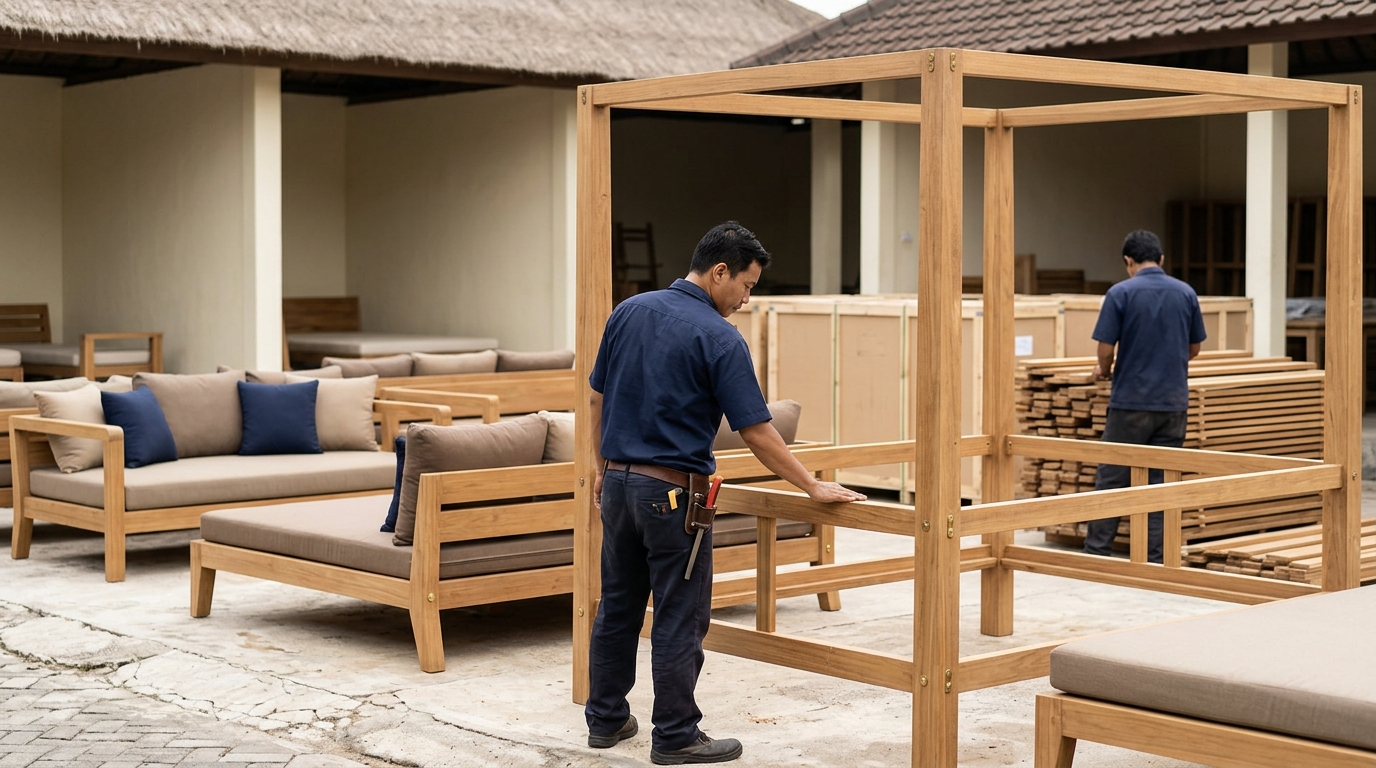
Procurement managers sourcing outdoor daybeds, cabanas, and pool loungers face a fragmented information landscape. FOB prices appear on supplier websites. Certifications get mentioned in sales decks. But the full sourcing journey — material selection through to landed cost, container loading, and…
Procurement managers sourcing outdoor daybeds, cabanas, and pool loungers face a fragmented information landscape. FOB prices appear on supplier websites. Certifications get mentioned in sales decks. But the full sourcing journey — material selection through to landed cost, container loading, and supplier verification — rarely appears in one place.
Indonesia holds a structurally different position from China or Vietnam in the outdoor furniture market. Its advantage is not price alone. It is the combination of domestically sourced certified teak, a deep rattan and reclaimed-wood supply chain, generational craft skill, and export infrastructure scaled specifically for hospitality buyers.
This guide covers every decision layer that hospitality procurement managers and FF&E buyers face when placing wholesale orders for outdoor daybeds, cabanas, and pool furniture from Indonesian manufacturers. That includes frame materials and specifications, canopy and cushion standards, FOB pricing bands, container logistics math, and supplier vetting criteria.
The sections below follow the actual sequence of a sourcing decision. Start with material selection and work forward to QC and compliance — or navigate directly to the section most relevant to your current stage.
Why Indonesia Dominates the Wholesale Outdoor Daybed and Cabana Market
Sourcing outdoor daybeds cabanas wholesale Indonesia is not simply a cost decision. It is a supply-chain decision. Indonesia's manufacturing ecosystem is vertically integrated in ways that competing countries cannot replicate quickly.
Raw Material Sovereignty
Teak (Tectona grandis) grows commercially in Central Java under SVLK-certified plantation management. Rattan is harvested domestically, with Indonesia accounting for a large share of global raw rattan supply. Reclaimed boat wood, mahogany, and plantation-grown alternatives are all processed within the archipelago.
Manufacturing Hub Specializations
Each major hub produces distinct product categories:
- Jepara (Central Java): The center of solid-wood furniture manufacturing in Southeast Asia. Specializes in teak and mahogany construction. Best suited for structural teak daybed frames, carved cabana posts, and dense-wood pool furniture requiring Janka-hardness performance. - Cirebon (West Java): Rattan and synthetic-rattan weaving capital. Manufacturers here produce PE rattan over aluminum armatures at scale. Best matched to synthetic rattan daybeds and woven cabana side panels. - Bali: Luxury artisan production for villa and boutique resort clients. Lower output volume, higher unit value, strong design capability. Appropriate for bespoke cabana sets where aesthetic differentiation justifies longer lead times and higher per-unit cost. - Semarang / Surabaya: Mid-market production and export logistics hubs with direct container port access at Tanjung Emas and Tanjung Perak respectively.
Labor and Craftsmanship Compared to Alternatives
Indonesian labor costs remain competitive relative to comparable skill levels in China. More importantly, the woodworking and weaving skill base in Jepara and Cirebon has accumulated over multiple generations.
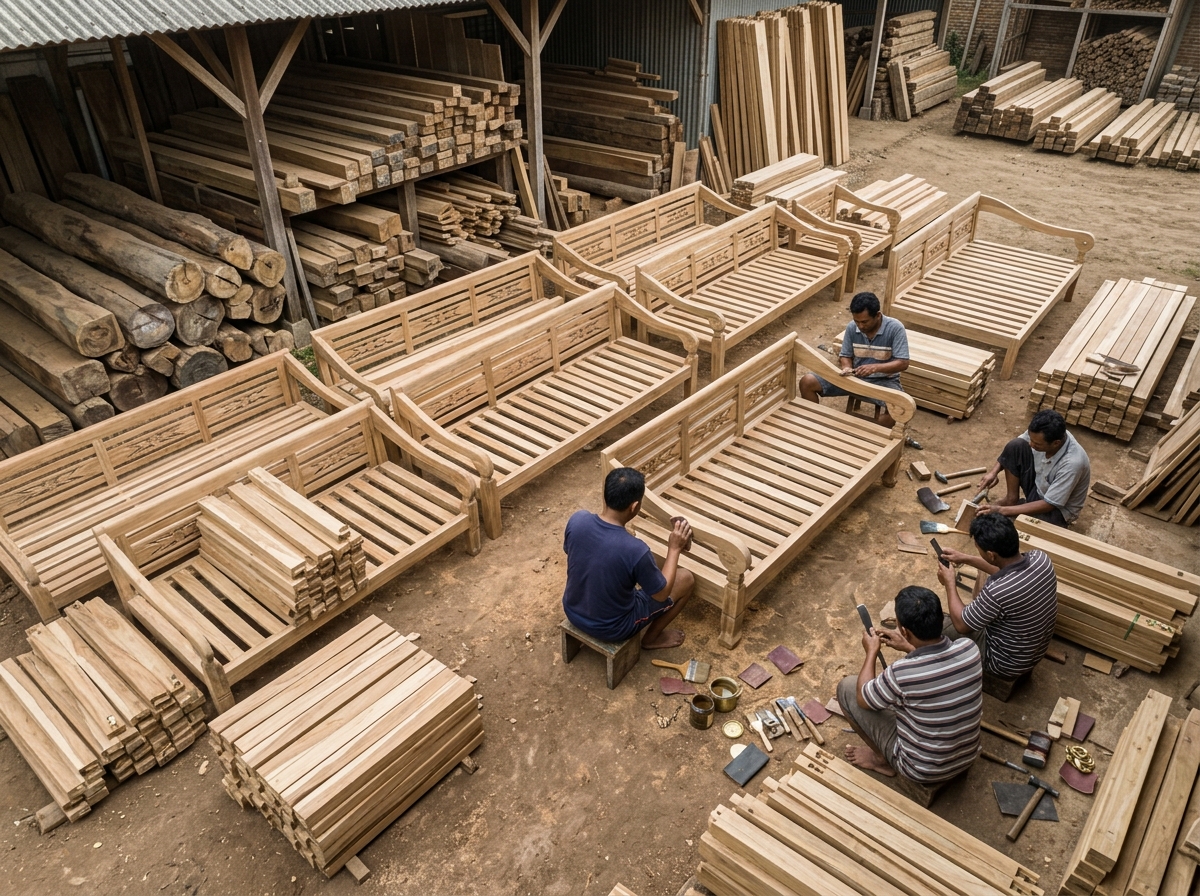
Frame Material Selection: Teak, Aluminum, and Synthetic Rattan Side by Side
The frame material decision affects total cost of ownership more than any other single specification. The comparison below reflects indicative FOB estimates and typical field performance — not manufacturer warranties.
| Frame Material | Durability (Years, Poolside) | Weight (Approx. per Unit) | Indicative FOB Price/Unit | Corrosion Resistance | Best Application |
|---|---|---|---|---|---|
| Grade-A Teak | 20–30+ years | 35–60 kg | $400–$800 | Naturally high (teak oils) | Fixed cabana structures, premium loungers |
| Marine-Grade Aluminum (powder-coated) | 15–25 years | 12–22 kg | $180–$380 | Excellent (zero rust if unscratched) | High-rotation pool loungers, stackable designs |
| Synthetic Rattan over Aluminum | 8–15 years | 15–28 kg | $180–$350 | Good (UV-grade PE rattan + aluminum core) | Modular daybeds, cabana side chairs |
| Reclaimed Teak / Boat Wood | 15–25 years | 40–70 kg | $500–$1,200 | High (inherent oils) | Boutique resort statement pieces |
Grade-A Teak Specifications
Grade-A teak sourced from SVLK-certified Javanese plantations is cut from the heartwood of mature Tectona grandis. Heartwood density and natural silica content give it a Janka hardness rating approximately double that of common softwoods. Finish options include natural oil, teak sealer, or painted lacquer.
Marine-Grade Aluminum Frames
Powder-coated marine-grade aluminum (typically 6061 or equivalent alloy) suits high-humidity, chlorine-adjacent poolside environments. The coating must be applied electrostatically and cured at temperature for genuine corrosion protection. Specify minimum powder coat thickness of 60 microns.
Synthetic Rattan Over Aluminum Armatures
PE (polyethylene) rattan outperforms natural rattan in outdoor environments by a significant margin. UV-stabilized PE rattan rated for outdoor use typically carries a manufacturer-stated UPF equivalence and color-fastness rating. Specify UV-grade PE rattan, not standard PE, for poolside applications.
Canopy Systems and Shade Structures for Wholesale Poolside Cabanas
Canopy specification is the most frequently under-specified element in cabana wholesale orders. Buyers focus on the frame and cushion, then accept whatever fabric the supplier proposes. This is a procurement error.
Fabric Options and Performance Ratings
Three fabric categories dominate wholesale cabana production from Indonesia:
- Solution-dyed acrylic (Sunbrella-comparable grade): The benchmark for outdoor performance. Solution dyeing means color runs through the fiber, not just on the surface. Expect bleach-cleanability, mold resistance, and fade resistance exceeding 500 hours in accelerated UV testing. Sunbrella is the dominant brand reference; Indonesian suppliers can source equivalent solution-dyed acrylic from regional mills. Specify the yarn construction method, not just the brand name. - Polyester with PU coating: Lower cost, acceptable for covered or semi-shaded installations. PU coating degrades under sustained UV exposure — typically within 3–5 years in full-sun poolside environments. Not recommended as a primary canopy fabric for US resort specifications. - HDPE shade cloth: Suited to fixed pergola-style overhead panels rather than articulated canopy systems. Offers UPF 50+ ratings and excellent airflow. Less suitable for custom-color branding.
Fixed vs. Retractable Canopy Hardware
Fixed canopy systems use rod-pocket construction slid over fixed poles or welded frame arms. They are simpler, more durable, and easier to replace. Retractable systems use track channels, tension cables, or spring-loaded roller mechanisms. Retractable hardware adds mechanical complexity and potential failure points in a high-use resort environment.
Specify: rod pocket diameter compatibility with supplier's frame arm diameter. A 38mm rod pocket on a 40mm frame arm is a common fit problem discovered only on arrival.
Wind Load and UV Ratings
Specify UPF 50+ for any canopy fabric in sun-exposed poolside positions. Wind load certification is less standardized at the manufacturer level — ask suppliers to state the maximum sustained wind speed the canopy hardware is designed for, and whether that rating has been tested or is a design estimate.
Custom Branding for Resort Identity
Indonesian manufacturers — particularly in Bali and Jepara — routinely produce custom-printed canopy fabric panels, color-matched piping, and branded cushion covers. Minimum quantities for custom-print fabric panels vary by supplier but typically start at enough fabric for a single container order.
Cushion and Foam Specifications for Commercial Outdoor Use
Quick-Dry Foam vs. Standard Polyurethane
This is one of the most commonly asked questions by hospitality buyers sourcing outdoor daybeds cabanas wholesale Indonesia. The difference is structural.
Standard polyurethane foam is a closed-cell or semi-open structure. When wet, it retains water. In a pool environment, a soaked standard polyurethane cushion can take 24–48 hours to dry, creating mold and mildew growth conditions inside the cushion casing.
Reticulated (open-cell) foam has a skeletal structure with large interconnected voids. Water passes through rather than being retained. Drainage rates are dramatically faster — typically allowing a soaked cushion to drain within minutes and air-dry within hours. Specify reticulated foam for any cushion that will be used directly at poolside.
Density specification matters for durability. For commercial hospitality use, specify foam density in the range of approximately 30–40 kg/m³. Lower-density foam compresses and deforms under repeated commercial use faster than the frame or fabric will wear.
Outdoor Fabric Grades for Cushion Covers
| Fabric Type | Abrasion Resistance | Bleach-Cleanable | UV Fade Resistance | Relative Cost |
|---|---|---|---|---|
| Solution-dyed acrylic | High (Martindale 30,000+) | Yes | Excellent | Higher |
| Olefin (polypropylene) | Medium-High | Yes (dilute) | Good | Medium |
| PVC-coated polyester | High | Yes | Good | Medium |
| Standard polyester | Medium | No | Fair | Lower |
Specify solution-dyed acrylic or olefin for cushion covers on commercial outdoor daybeds. Both are bleach-cleanable, which is a practical requirement in poolside environments. PVC-coated polyester is acceptable for back cushions and bolsters with lower abrasion exposure.
Construction Standards for Commercial Durability
- Welted (piped) seams add structural integrity at the cushion edge — the highest-stress point under repeated sitting. - Zipper hardware should be stainless steel or marine-grade brass. Standard steel zippers corrode in poolside environments within one season. - Double-stitched corners using polyester thread (not cotton) prevent unraveling under UV and chlorine exposure. - Foam thickness options of 8 cm, 12 cm, and 15 cm are standard from most Indonesian suppliers. Specify 12 cm minimum for primary daybed cushions in hospitality settings.
Fire-Retardancy Compliance
US commercial hospitality procurement increasingly requires cushion foam and fabric to meet fire-retardancy standards. Relevant references include California Technical Bulletin 117 (TB117) for foam and NFPA 701 for fabric. Verify with your supplier whether their foam and fabric suppliers can provide compliant materials, and request documentation — not just verbal assurance.
Modular Daybed Configurations That Hospitality Buyers Actually Order
Standard catalog configurations from Indonesian manufacturers typically include:
- Single daybed: One sleeping surface, approximately 200cm × 90cm, with or without canopy frame - Double daybed (king): 200cm × 200cm or similar, designed for two guests, typically with integrated canopy structure - L-shaped chaise configuration: Modular sections that reconfigure between chaise and sofa orientation — common in boutique resort pool deck layouts - Cabana set (matched ensemble SKU): One double daybed, two individual loungers, and a coffee table finished and upholstered as a matched set
Add-on modules available from most mid-to-large Indonesian manufacturers include integrated side tables, planter box inserts, privacy screen panels (fabric or slatted wood), and towel bar attachments.
Managing SKU Variants Without Inflating MOQ
Custom finish and fabric variants multiply SKU complexity rapidly. A single frame design offered in four wood finishes and six fabric colors represents 24 SKUs. Indonesian manufacturers typically manage this through a base-frame MOQ (for the structural component) and a separate cushion MOQ (for the upholstered components).
Confirm the supplier's variant management policy before finalizing specifications — it directly affects whether a custom project is commercially viable at your target order size.
FOB Pricing, MOQs, and Landed Cost Modeling for Wholesale Orders
Indicative FOB Price Bands
The following are indicative FOB Semarang or Surabaya estimates for standard hospitality-grade product. Actual quotes will vary by specification, finish complexity, and order volume.
| Product Category | FOB Price Range (Per Unit/Set) |
|---|---|
| Entry-level synthetic rattan daybed | $180–$350 |
| Mid-range teak single daybed | $400–$650 |
| Mid-range teak double daybed | $600–$1,000 |
| Premium teak cabana set (daybed + 2 loungers + table) | $1,200–$3,500 |
| Bespoke Bali artisan cabana ensemble | $2,000–$5,000+ |
Minimum Order Quantities
Typical MOQs for catalog-style products are approximately 20–50 units per SKU. Custom projects — new frame designs, non-catalog finishes, or branded canopy systems — typically require a minimum of one 20-foot container to be commercially viable for the manufacturer.
Payment Terms
Standard Indonesian B2B export payment structure: approximately 30% T/T deposit against order confirmation, 70% T/T against copy of Bill of Lading. Some manufacturers accept Letters of Credit for large orders. Advance payment beyond approximately 30% before production completion is a negotiating point — not a fixed requirement.
Landed Cost Calculation
FOB price is not your cost. Build the full landed cost:
1. FOB price (supplier quote) 2. Ocean freight (approximately $3,000–$6,000 per 40ft HC container, West Coast US, varies significantly by market conditions) 3. US import duty: Outdoor furniture under HTS code 9401.69 typically attracts a duty rate — verify the current rate with a licensed customs broker before finalizing, as rates can change.
Dividing total landed cost by number of units gives your true cost per piece — often 30–50% above the FOB unit price depending on freight market conditions and destination.
Container Loading, Packaging, and Logistics for Oversized Outdoor Furniture
This is the section most sourcing guides omit entirely. Container economics determine whether a wholesale order is profitable to ship.
Dimensional Engineering: KD and Flat-Pack
Standard double daybeds with canopy frames cannot ship assembled in meaningful quantities. Experienced Indonesian manufacturers engineer knock-down (KD) versions of every oversized SKU.
As a concrete planning reference: approximately 16–20 KD double daybeds typically fit in one 40ft HC container, depending on frame design, packaging method, and whether cushions ship in the same container. Confirm CBM calculations with your supplier before booking freight.
Packaging for 30-Day Ocean Transit
Export-grade packaging for outdoorfurniture from Indonesiatypically includes:
- Export-grade plywood crating for framed pieces or canopy hardware - Corrugated cardboard with foam corner guards for flat-pack bundles - Anti-humidity silica desiccant packets inside sealed poly wrap (important for 30-day ocean transit crossing high-humidity equatorial zones) - Stretch wrap and banding over all exterior surfaces
- ✓Confirm KD dimensions and CBM per unit with supplier
- ✓Verify export-grade plywood crating for hardware and structural pieces
- ✓Check silica desiccant specification for container transit duration
- ✓Confirm foam corner guards on all finished surfaces
- ✓Request container loading photos before seal
Port of Departure and Transit Times
- Tanjung Emas (Semarang): Primary export port for Jepara production. Connects to major transhipment hubs. - Tanjung Perak (Surabaya): Primary export port for East Java and Bali production.
Approximate ocean transit times to the US West Coast (Los Angeles / Long Beach) are typically 18–25 days via major shipping lines, subject to routing and transhipment schedules. US East Coast destinations add approximately 7–10 days. Allow additional buffer for port congestion, which has varied significantly in recent years.
Supplier Vetting, Certifications, and Quality Control for Wholesale Cabana Orders
Wood Certifications You Must Require
- SVLK (Sistem Verifikasi Legalitas Kayu): Indonesia's mandatory timber legality verification system. Any Indonesian wood product exporter should hold SVLK certification. Verify the certificate number directly on the Indonesian Ministry of Environment and Forestry's verification portal — do not accept a PDF copy alone. - FSC Chain of Custody: Forest Stewardship Council certification applies to specific product lines, not the factory as a whole. Verify the certificate scope covers the specific product you are ordering. Cross-check the certificate number on the FSC certificate database (info.fsc.org).
Factory Audit Checklist
A credible Indonesian outdoor furniture manufacturer for wholesale cabana orders should demonstrate:
- Physical factory address verifiable via satellite imagery and in-person visit - Finishing room with consistent ambient humidity and temperature control - Joint tightness on sample pieces (no rocking or flex in mortise-and-tenon connections) - Hardware grade — confirm stainless steel specification on bolts, brackets, and canopy fittings (not zinc-coated carbon steel) - Foam density testing capability or documented supplier specification sheets - Clear production capacity relative to your order volume and timeline
Third-Party Inspection
SGS and Bureau Veritas both operate in Java and Bali and offer pre-shipment inspection (PSI) services for furniture exports. A standard PSI checks finished goods against the approved golden sample for visual consistency, dimensional accuracy, and packaging integrity. Request inspection at the 100% production-complete stage, before container loading.
DUPRO (during production inspection) at approximately 20–30% production completion catches defects early enough to correct them without delaying shipment.
Red Flags Specific to Indonesian Wholesale Suppliers
- ✓Catalog uses only stock photography with no factory or workshop images
- ✓No verifiable physical factory address (Google Maps, satellite view)
- ✓Certificate PDFs provided without verification portal reference
- ✓Payment terms demanding more than 30% deposit before production start
- ✓Unwillingness to allow third-party pre-shipment inspection
- ✓MOQ stated as unusually high (possible trader inflating to force intermediary role)
- ✓Bill of Lading shipper name does not match the company you contracted with
The "ghost factory" pattern — where a trading company presents another manufacturer's facility as its own — is a documented risk in the Indonesian export market. An unannounced factory visit or a third-party audit conducted independently of the supplier's own guided tour is the most reliable countermeasure.
Frequently Asked Questions: Wholesale Outdoor Furniture from Indonesia
What is the minimum order quantity for wholesale outdoor daybeds from Indonesia? For catalog-style products, typically 20–50 units per SKU. Custom designs or non-catalog specifications generally require enough volume to fill at least one 20-foot container, which functions as the practical commercial floor for custom production.
How long does shipping take from Indonesia to the United States for large outdoor furniture? Approximately 18–25 days ocean transit to the US West Coast from Tanjung Emas or Tanjung Perak. US East Coast adds roughly 7–10 days.
What wood certifications should I require from Indonesian outdoor furniture suppliers? Require SVLK as a baseline for any wood component. For projects with sustainability reporting requirements, specify FSC chain-of-custody certification and verify the scope covers your specific product. Verify both certifications independently using the issuing body's public database.
Can Indonesian manufacturers produce custom canopy colors and branded cabana designs? Yes. Manufacturers in Jepara and Bali routinely produce custom-color canopy fabric panels, branded embroidery, and color-matched hardware. Confirm Pantone-referenced color matching and request physical strike-off samples before approving production runs.
What is the difference between quick-dry foam and standard polyurethane for outdoor cushions? Reticulated (quick-dry) foam has an open skeletal structure that allows water to drain through rather than being retained. Standard polyurethane retains moisture, creating mold-growth conditions in poolside use.
Which Indonesian manufacturing hub is best for teak daybeds versus rattan cabanas? Jepara is the established center for solid teak and hardwood daybed construction. Cirebon specializes in rattan and synthetic rattan weaving over aluminum frames.
Sourcing outdoor daybeds and cabanas wholesale from Indonesia rewards buyers who approach it as an engineering decision — specifying materials, certifications, foam densities, and container logistics with the same rigor applied to any capital procurement.
Now that you have the full framework — from frame material TCO through to container loading math and supplier red flags — the logical next step is to put it to work on your specific project.
You now have the specification framework and vetting criteria to evaluate Indonesian manufacturers with confidence. Connect with verified outdoor furniture producers in Jepara, Bali, and Cirebon to request itemized FOB quotes, CBM calculations, and a container loading plan matched to your project volume.
Request a Wholesale Quote →Need eyes on the ground in Indonesia?
MTS is an execution partner — supplier verification, manufacturing management, quality control and export logistics across Indonesia, Vietnam and China.
Related services
Related articles
Receive furniture sourcing insights across Asia.
One email per week. No spam.