Pre-Shipment vs In-Line Inspection: Which One Actually Protects You?
10 min read
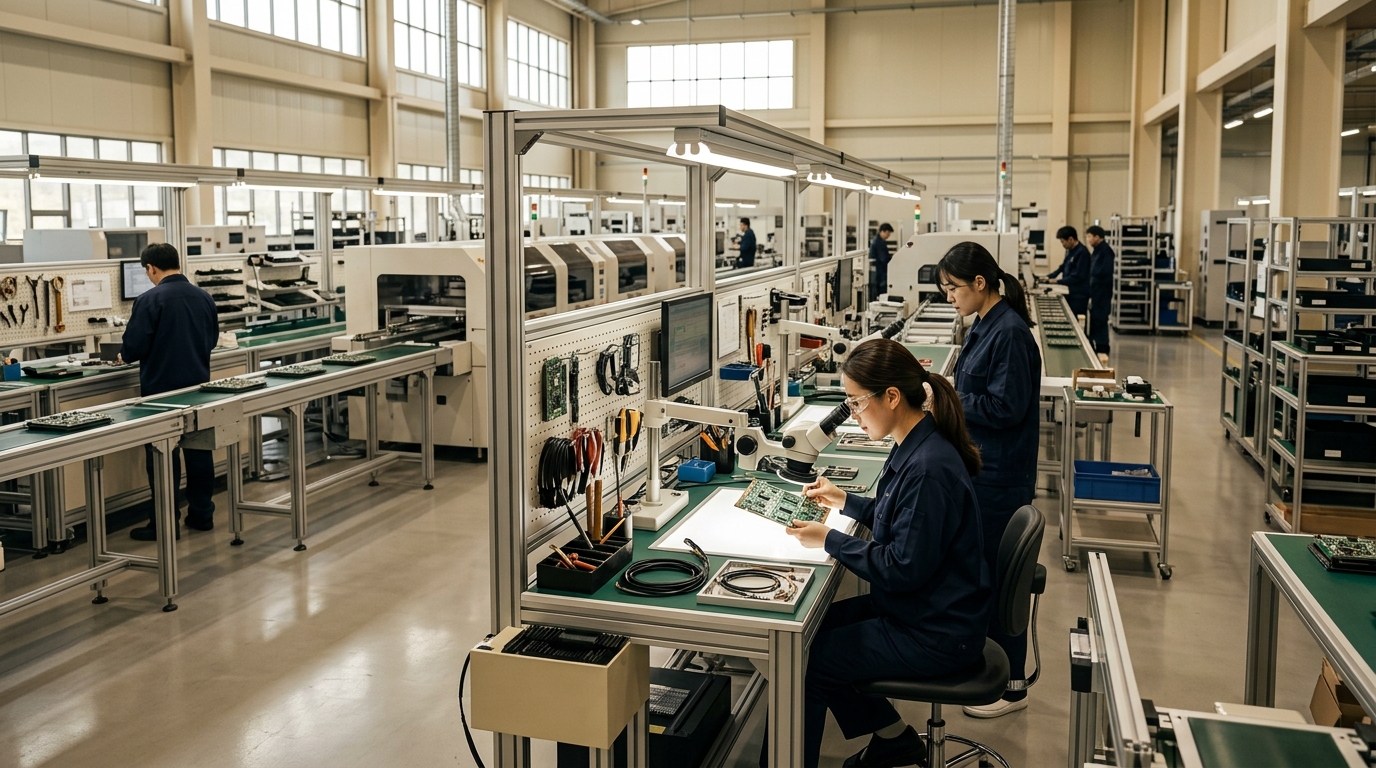
Most buyers who source manufactured goods from Asia have a pre-shipment inspection written into their purchase orders. It sits at the end of production, it follows AQL sampling tables under ISO 2859-1 or ANSI/ASQ Z1.4, and it gives a clear pass or fail before cargo is loaded. For a one-off order or a new supplier relationship, that logic is sound. But for buyers running recurring production — seasonal replenishments, growing SKU counts, or multi-factory programmes across China, Vietnam, Bangladesh, or Indonesia — the pre-shipment vs in-line inspection question deserves a harder look. The two checkpoints serve different purposes, catch different failure modes, and carry very different costs when things go wrong.
The core issue with relying exclusively on a pre-shipment inspection is timing. By the time an inspector walks the finished-goods warehouse and pulls a statistical sample, the entire production run is complete. Any systemic defect — a colour deviation introduced in week two of a four-week run, a component substituted mid-batch, a stitching or assembly fault that crept in after the first few hundred units — is already baked into every unit in the shipment. You face a binary choice: accept goods that fall short of your approved specification, or hold the shipment and absorb the delay while the factory attempts rework. Neither outcome is clean, and rework on finished goods is notoriously unreliable.
In-line inspection addresses the problem earlier, while production is still in motion. An inspector visits the production floor at a defined stage — commonly when around ten to thirty percent of the order quantity has been completed — checks workmanship, materials, and conformity to your approved sample, and issues findings while the factory still has capacity to correct them. The lever is straightforward: catching a defect during production is almost always cheaper and faster to resolve than catching it after the run closes. When framed this way, the pre-shipment vs in-line inspection debate is less about which one is better and more about where in the production timeline your quality risk is actually concentrated.
A pre-shipment inspection (PSI) is the most widely used quality checkpoint in international trade. It is typically conducted when at least eighty percent of the order is finished and packed, allowing the inspector to draw a statistically meaningful sample from the finished goods. The inspector checks product against your approved sample and specification sheet, classifies any deviations as critical, major, or minor defects, and issues a pass or fail result against your stated AQL thresholds.
For many product categories — hardgoods, electronics, furniture, accessories — the PSI is effective precisely because the defects it is designed to catch are visible at the finished-goods stage: dimensional tolerances, labelling accuracy, barcode scans, carton markings, and packaging integrity. A well-structured PSI report, including photographic evidence, also serves a second purpose: it creates the documentation trail you need to support chargeback disputes or insurance claims if substandard goods reach a retail customer.
The limitation is structural, not procedural. A PSI is a sampling exercise conducted on completed goods. It cannot reach back and inspect the production process that created those goods. If a factory substituted a lower-grade raw material in week one, the inspector in week four will find the symptom — a failed function test, a surface finish that does not match the approved sample — but the root cause is already embedded across the entire batch. Corrective action at that stage typically means full rework, partial replacement, or a negotiated price reduction, none of which recovers lost time.
What In-Line Inspection Catches That a PSI Cannot
An in-line inspection (ILI) — sometimes called a during-production inspection or DUPRO — is conducted while the production run is active. The inspector assesses work-in-progress against your specification, checking the process as much as the product. This is the key distinction: an ILI can identify whether a factory is following the correct assembly sequence, using the approved components, and producing to the agreed workmanship standard before the problem scales across the entire order.
Common findings that an in-line inspection surfaces and a PSI would miss include:
- Process drift: assembly or sewing stations that have gradually deviated from the approved method since production began - Component substitution: a raw material or sub-component that differs from the approved Bill of Materials, introduced mid-run - Early-batch bias: factories sometimes front-load quality effort on the first units, knowing inspections often focus on early samples — an ILI visit later in production tests whether standards have been maintained - Packaging and labelling errors: catching these mid-run means the factory can correct tooling or print files before the full quantity is packaged
Because findings are issued while the factory still has open production capacity, corrective action is practical rather than theoretical. A process adjustment can be made, verified, and reflected in the remaining output. The cost of correction is a fraction of what it would be at the finished-goods stage.
Comparing the Two Checkpoints Side by Side
The table below sets out the practical differences importers should weigh when deciding how to structure their inspection programme.
| Criterion | Pre-Shipment Inspection (PSI) | In-Line Inspection (ILI) |
|---|---|---|
| Timing | After ≥80% of order is finished | During production (typically 15–30% complete) |
| What is inspected | Finished and packed goods | Work-in-progress and production process |
| Defect types caught | Product defects in completed units | Process deviations, component issues, early drift |
| Corrective action window | Narrow — rework or hold shipment | Wide — factory can adjust remaining production |
| Sampling standard | AQL per ISO 2859-1 / ANSI/ASQ Z1.4 | AQL or process-audit hybrid |
| Documentation output | Pass/fail report, photos, AQL result | Findings report, corrective action log |
| Best suited for | One-off orders, new suppliers, final gate | Recurring orders, complex products, high-risk categories |
| Cost of late failure | High — rework, delay, or acceptance of substandard goods | Low — process correction while production is open |
The table makes the trade-off visible: an ILI adds a visit and associated cost earlier in the timeline, but it reduces the probability — and the severity — of a failed PSI. For buyers with recurring production relationships, the net cost of a combined ILI-plus-PSI programme is commonly lower than the cost of a single PSI that results in a hold and rework cycle.
When Each Inspection Type Makes Sense on Its Own
Pre-Shipment Inspection Alone
A PSI-only approach is reasonable when the order is a one-time purchase, the product is simple and low-risk, or the buyer has an established track record with a specific factory and is primarily looking for a final documentation checkpoint rather than active defect prevention. It is also the appropriate tool when an in-line visit was conducted and returned clean findings — the PSI then serves as confirmation and evidence generation rather than primary quality assurance.
For buyers whose retail customers require documented quality evidence — a photographic inspection report, an AQL result, or a third-party sign-off — the PSI is often the specific deliverable being required. Its value in those cases is partly compliance documentation, not just product protection.
In-Line Inspection Alone
Some buyers with deep factory relationships and highly standardised products run ILI visits without a formal PSI, relying on the corrective feedback loop during production and a final walkthrough by factory QC. This approach suits experienced sourcing teams who have already validated the factory's own quality system and are primarily using the ILI to maintain process discipline rather than to catch unknown failure modes. It carries more residual risk than a combined programme and is not appropriate for new factories or categories where finished-goods verification is required by a downstream customer.
Why Buyers with Recurring Production Runs Get More ROI from In-Line Inspection
The pre-shipment vs in-line inspection comparison shifts materially when you are placing repeat orders with the same factory. A PSI on every shipment treats each production run as if the factory is unknown — it catches defects but does not prevent them, and it generates no process intelligence that improves the next run.
An in-line programme, run consistently across multiple orders, builds a different kind of value. Inspection findings, tracked over time, reveal whether a factory's quality process is stable or drifting. Corrective actions logged across runs become the basis for a supplier scorecard. Patterns in defect types can point to specific process or materials improvements worth raising in a supplier review. For a Supply Chain Director trying to standardise quality across multiple Asian factories, or a Growth-Stage Brand Owner scaling SKU count without adding headcount, this data layer is the output that a PSI-only programme cannot deliver.
In-line inspection also distributes quality risk more evenly across the production calendar. A failed PSI close to a vessel cut-off forces a difficult choice under time pressure. An ILI finding issued three weeks earlier, when production is still running, gives the buyer and factory time to resolve the issue without a shipment crisis.
How Pre-Production Inspection Completes the Picture
Both PSI and ILI operate within the production run. A pre-production inspection (PPI) sits upstream of both, verifying that raw materials, components, and factory readiness meet your requirements before the first unit is produced. For buyers managing complex or high-specification products, a PPI is the checkpoint that prevents the most expensive category of defect: one that is systemic to the entire run because it originated in the input materials rather than the production process.
The three-stage model — PPI to confirm inputs, ILI to monitor the process, PSI to verify finished goods — represents the full coverage approach described inthe Quality Control pillar guide. Not every order requires all three stages, but understanding what each stage protects against allows buyers to allocate inspection budget where the actual risk sits rather than defaulting to the easiest-to-book option.
Structuring Your Inspection Programme Across Multiple Factories
For buyers sourcing across several countries — a common configuration for consumer goods companies with apparel from Bangladesh, electronics from China, and hardgoods from Vietnam or Indonesia — consistent inspection standards matter as much as the choice between PSI and ILI. An inspection programme that applies different AQL levels, defect classification criteria, or reporting formats across different factories generates data that cannot be meaningfully compared. Supplier scorecards built on inconsistent inputs produce unreliable conclusions.
The practical solution is to define your quality standard once — AQL thresholds, defect classification schema, report format, photographic requirements — and apply it across all factories and all inspection types. This is the model thatour Quality Control serviceis structured around: consistent methodology, consistent documentation, applied across Asia regardless of country or factory. When a Category Manager is trying to hold on-shelf dates across a seasonal range, or a Global Procurement Manager needs audit-ready reports for a vendor scorecard, consistency in the inspection programme is what makes the data actionable.
For buyers who also need visibility into factory capability before committing to a new supplier, pairing a quality inspection programme with afactory auditprovides the upstream context that inspection data alone cannot supply.
Choosing the Right Combination for Your Risk Profile
The pre-shipment vs in-line inspection decision is ultimately a question of where your quality risk is concentrated and how much room you have to absorb a late-stage failure. Buyers placing one-off orders with verified factories face different risk profiles than buyers running monthly replenishments across five or six suppliers in different countries. The inspection structure that is appropriate for each is correspondingly different.
As a working principle: treat the PSI as the minimum standard for any order where you require documented quality evidence or have limited visibility into the factory. Add an ILI whenever the order is large enough that a mid-production failure would be materially costly, or whenever the product category, factory, or origin market carries elevated process risk. Move to a full three-stage programme — PPI, ILI, PSI — for complex products, new factory relationships, or categories where input-material quality is a primary risk driver.
Quality control in Asian sourcing is not a binary choice between one inspection and another. It is a risk-management architecture, and the most durable programmes are the ones built around where defects actually originate, not around which checkpoint is easiest to schedule.
Need eyes on the ground in Indonesia?
MTS verifies suppliers, audits factories and runs AQL-based inspections at every production milestone — reported in writing.
Related services
Related articles
Receive furniture sourcing insights across Asia.
One email per week. No spam.