Thailand Customs and Import Permits
12 min read
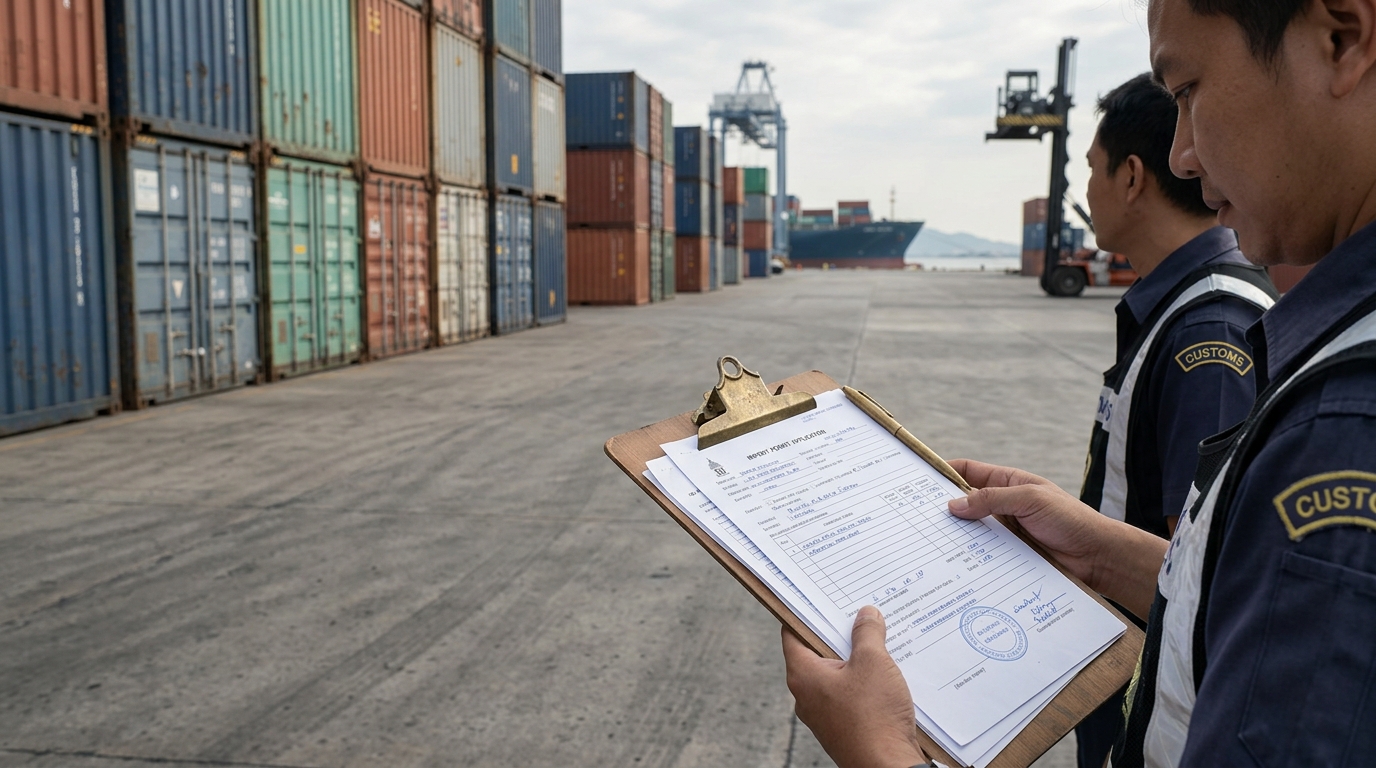
Navigating Thailand customs requires accurate documentation, an understanding of permit requirements for restricted goods, and a working knowledge of RCEP and ASEAN preferential duty frameworks. This guide covers the practical compliance steps that procurement teams and importers need before goods move.
Thailand sits at the centre of several major regional trade corridors, connecting manufacturing output from industrial clusters in the Eastern Economic Corridor (EEC) — which spans Chachoengsao, Chonburi, and Rayong provinces — with buyers in ASEAN, Greater China, the EU, and North America. For procurement teams and logistics managers, that position is an advantage, but it comes with a compliance framework that requires careful attention. Thailand customs enforcement has become more data-driven in recent years, with electronic pre-screening, customs value benchmarks, and stricter document verification becoming standard practice rather than the exception.
The Thailand Customs Department operates under the Customs Act B.E. 2560 (2017), which extended the legal basis for post-clearance audits, increased penalties for undervaluation, and strengthened the authority to deny release of goods pending correct documentation. For importers, this means that errors that may have been corrected informally in the past are now more likely to result in formal examination, financial penalties, or cargo seizure. The practical implication is clear: documentation accuracy and pre-shipment permit verification are not administrative formalities — they are material business risk factors.
This guide covers the key elements of the Thailand customs process that B2B importers and exporters need to understand: the declaration and classification framework, how to use preferential origin schemes including RCEP and ATIGA, the permit landscape for restricted goods, the role of the ASEAN Single Window in reducing document friction, and the mechanics of e-Customs filing. For a broader view of documentation preparation across multiple Asian sourcing origins, see theImport Export Documentation Support for Asia-Origin Shipmentsguide, which covers the full document set MTS coordinates on behalf of buyers.
Understanding where your specific commodity sits within these frameworks — before a purchase order is placed — is the most effective way to protect margins and maintain reliable delivery timelines.
How Thailand Customs Classification and Valuation Work in Practice
Every import and export declaration filed through Thailand customs requires an HS code assigned under the ASEAN Harmonised Tariff Nomenclature (AHTN), which Thailand adopts with national extensions at the 8-digit level. Classification errors are the single most common trigger for customs examination, and they arise in two typical scenarios: goods are described generically on commercial invoices without sufficient technical detail, or the exporter's HS code from the country of origin does not map directly to the correct Thai import code.
Customs value in Thailand is assessed using the WCO transaction value method as the primary basis. Thailand Customs maintains internal reference price databases for certain commodity groups — particularly consumer goods, textiles, electronics, and food products — and declarations that fall materially below those reference ranges are flagged for review. Importers should ensure that commercial invoices reflect actual transaction prices and that any related-party transactions are disclosed and supported by a transfer pricing justification.
Practical Steps for HS Code Verification
Before a first shipment of a new product line, importers should obtain a binding tariff ruling from the Thailand Customs Department or work with a qualified customs broker to confirm classification. Material descriptions on the commercial invoice should match the technical characteristics that drive classification — for example, the composition percentage of a textile, the processor speed of a device, or the active ingredient concentration in a chemical formulation.
RCEP Form D and ATIGA: Claiming Preferential Duty Rates
Thailand is a party to both the ASEAN Trade in Goods Agreement (ATIGA) and the Regional Comprehensive Economic Partnership (RCEP). Both agreements provide preferential import duty rates for qualifying goods, but they operate under different rules of origin and use different certificates.
ATIGA Form D applies to trade between ASEAN member states. For Thai-origin goods exported to other ASEAN destinations, or for ASEAN-origin goods imported into Thailand, Form D issued by an authorised body — in Thailand, the Department of Foreign Trade under the Ministry of Commerce — allows the importer to claim the ATIGA preferential tariff rate, which is often significantly lower than the MFN (most-favoured-nation) rate.
RCEP Form D extends similar benefits to trade with RCEP partners outside ASEAN: China, Japan, South Korea, Australia, and New Zealand. For procurement teams sourcing Thai-manufactured goods and re-exporting to these markets, or importing components from those markets into Thailand for further processing, RCEP preferential rates can meaningfully reduce duty costs. Rules of origin under RCEP are typically assessed on a change in tariff heading basis or a regional value content threshold — commonly around 40 percent regional value content, though the specific rule varies by product.
ASEAN Single Window Integration
The ASEAN Single Window (ASW) enables electronic exchange of ATIGA Form D data between ASEAN customs authorities. When a Thai exporter submits a Form D through Thailand's National Single Window, that data can be transmitted directly to the importing country's customs system, eliminating the need for a physical certificate in participating corridors. This reduces the risk of document discrepancies, speeds up clearance, and provides a verifiable audit trail. Not all ASEAN corridors have fully activated ASW Form D exchange, so importers should confirm the current status for their specific trade lane with their customs broker.
Thailand Import Permits and Licences for Restricted Goods
A substantial range of goods require import permits or licences before they can legally enter Thailand. The permit requirement is separate from the customs declaration process — goods can be correctly classified and valued but still be held if the required licence has not been obtained or is not presented at the time of import.
Key restricted categories include:
| Category | Primary Controlling Authority |
|---|---|
| Food, beverages, food additives | Food and Drug Administration (FDA Thailand) |
| Pharmaceuticals and medical devices | Food and Drug Administration (FDA Thailand) |
| Telecommunications equipment | National Broadcasting and Telecommunications Commission (NBTC) |
| Controlled chemicals and hazardous substances | Department of Industrial Works |
| Agricultural products and seeds | Department of Agriculture |
| Firearms, ammunition, explosives | Ministry of Interior |
| Used machinery and vehicles | Various, depending on category |
Licence application timelines vary considerably by category and by the completeness of the application submitted. For regulated products such as medical devices or food supplements, the review process can take weeks or months, and importers should factor that into their procurement lead times. Importing restricted goods without the required permit typically results in customs seizure and may lead to formal legal proceedings.
Filing Import Declarations Through Thailand's e-Customs System
Thailand Customs requires import and export declarations to be submitted electronically through the e-Customs platform. Most importers engage a licensed customs broker to file on their behalf, as direct trader input requires system registration and technical capability. The declaration must include the correct HS code, customs value, country of origin, and all relevant permit or licence reference numbers before submission.
Once filed, the system's risk management module assigns the shipment to one of three processing channels:
- Green Channel: Documentary release — goods are released without physical examination. - Yellow Channel: Document review — customs officers verify submitted documents before release. - Red Channel: Physical examination — goods are inspected and documents verified before release.
Channel assignment is not static. A shipment from an importer with a strong compliance history importing a well-established commodity may consistently receive Green Channel clearance. A first-time importer bringing in a new product category, or a shipment flagged for value discrepancy, is more likely to be assigned Yellow or Red. Consistently accurate filings build a compliance profile that reduces examination frequency over time.
Managing Documentation to Prevent Customs Delays
The most preventable cause of Thailand customs delays is incomplete or inconsistent documentation. Discrepancies between the commercial invoice, packing list, bill of lading, and certificate of origin — whether in weight, quantity, description, or value — are reliably flagged during document review and often result in queries that stall release.
For B2B importers managing volume, the following documentation disciplines reduce clearance risk:
- Ensure invoice descriptions align with the level of technical detail needed for HS classification. - Confirm that the declared country of origin on the invoice matches the certificate of origin being presented. - For multi-item shipments, verify that packing list line items correspond exactly to invoice line items. - Confirm permit reference numbers are valid and not expired before filing the declaration. - Where preferential origin certificates are being used, ensure the certifying body details and issuance date are correct.
For importers sourcing across multiple Asian countries, documentation standards and permit requirements differ by country. MTS coordinates the complete documentation set across sourcing origins — details are available at/services.
Practical Considerations for Exporters Shipping Thai-Origin Goods
For companies manufacturing in Thailand or sourcing Thai-origin goods for export, customs compliance obligations run in both directions. Export declarations must be filed through e-Customs, and certain categories of goods — including some agricultural products, cultural artefacts, and controlled materials — require export licences or approvals before departure.
For buyers in RCEP or ATIGA partner countries, ensuring that the certificate of origin is correctly issued and that the goods genuinely meet the applicable rules of origin is critical. Certificate fraud — whether intentional or through inadequate origin verification — carries serious consequences in both Thailand and the destination country, including denial of preferential treatment on all future shipments and potential exclusion from the preferential scheme.
Companies with manufacturing operations in Thailand's Eastern Economic Corridor may also benefit from specific customs facilitation measures and bonded warehouse arrangements designed to support export-oriented production. Understanding which facilities and privileges apply to a given production model is part of the due diligence that should be completed before committing to a sourcing or manufacturing structure. For more detail on manufacturing and sourcing within Thailand, see/blog/sourcing-from-thailand-hub.
Frequently Asked Questions
What documents are required for a standard import declaration in Thailand?
A standard Thailand customs import entry typically requires a commercial invoice, packing list, bill of lading or airway bill, insurance certificate, and the customs import declaration form (Kor Sor 99/1 for imports). Depending on the goods, additional documents such as a certificate of origin, import licence, or product safety approval may be required before customs will release the shipment.
How does RCEP Form D reduce import duty when sourcing from Thailand?
RCEP Form D is the certificate of origin issued under the Regional Comprehensive Economic Partnership, and it allows importers in participating countries to claim preferential tariff rates on qualifying Thai-origin goods. To be valid, the form must be issued by an authorised body in Thailand — commonly the Department of Foreign Trade — and the goods must meet the applicable rules of origin, which are typically based on change in tariff classification or a regional value content threshold. Importers should verify the applicable preferential rate with their customs broker before shipment to confirm the savings are material.
Which categories of goods require a specific import licence or permit in Thailand?
Thailand restricts or controls imports across a wide range of categories including certain food products, pharmaceuticals and medical devices, chemicals, firearms and ammunition, telecommunications equipment, and some agricultural commodities. Licences are typically issued by the relevant line ministry — for example, the Food and Drug Administration for food and health products, or the Industrial Works Department for certain chemicals. Importing controlled goods without the correct permit typically results in seizure and may carry financial penalties, so permit status should be confirmed before placing purchase orders.
What is the ASEAN Single Window and how does it affect Thailand customs filing?
The ASEAN Single Window (ASW) is a regional platform that allows trade documents — primarily certificates of origin — to be exchanged electronically between the customs authorities of participating ASEAN member states. For exporters using Thai-origin preferential certificates, the ASW reduces manual document handling and the risk of certificate discrepancies at the destination port. Thailand's National Single Window feeds into the ASW, meaning digitally submitted Form D or ATIGA certificates can be validated by the importing country's system without physical copies in many corridors.
How does Thailand's e-Customs system work for importers?
Thailand Customs operates the e-Customs platform, which requires import and export declarations to be filed electronically through licensed customs brokers or direct trader input systems. The system assigns a risk-management channel — Green, Yellow, or Red — that determines whether the shipment is released immediately, subject to document review, or physically inspected. Filing accuracy directly influences channel assignment, so correct HS codes, declared values, and supporting documents are critical to avoiding examination queues.
Can BOI-promoted companies receive Thailand customs privileges?
Yes. Companies with investment promotion certificates issued by Thailand's Board of Investment (BOI) can qualify for exemptions or reductions on import duties for machinery, raw materials, and components used in promoted activities. These privileges are tied to the specific promotion certificate and are typically subject to usage tracking, re-export requirements for unused materials, and periodic audits by both BOI and Thailand Customs. Misapplying BOI privileges — for example, using duty-free materials for non-promoted production — can trigger retrospective duty assessments.
What are the most common reasons Thailand customs holds or rejects an import shipment?
The most common causes of customs holds in Thailand are HS code mismatches between declared and audited classifications, undervaluation of goods compared to customs reference prices, missing or expired import licences for restricted categories, and certificate of origin irregularities that disqualify a preferential duty claim. Shipments arriving without complete documentation — particularly for food, cosmetics, or regulated equipment — are routinely placed in a controlled area while the importer obtains missing approvals, and storage and demurrage costs accumulate during that period.
Thailand customs compliance is not a one-time exercise — it is an ongoing discipline that covers classification accuracy, valuation integrity, permit management, and origin documentation, all of which interact with the risk-scoring logic of the e-Customs system. Companies that invest in getting these elements right from the first shipment build a clearance track record that reduces delays and lowers the administrative cost of each subsequent import cycle. For procurement teams managing complex, multi-origin supply chains across Asia, the documentation coordination required to achieve that consistency is significant — and the cost of getting it wrong is material.
Need eyes on the ground in Thailand?
MTS is an execution partner — supplier verification, manufacturing management, quality control and export logistics across Indonesia, Vietnam and China.
Related services
Related articles
Receive furniture sourcing insights across Asia.
One email per week. No spam.