Thailand Factory Audit: BOI Compliance & Capability Checklist
12 min read
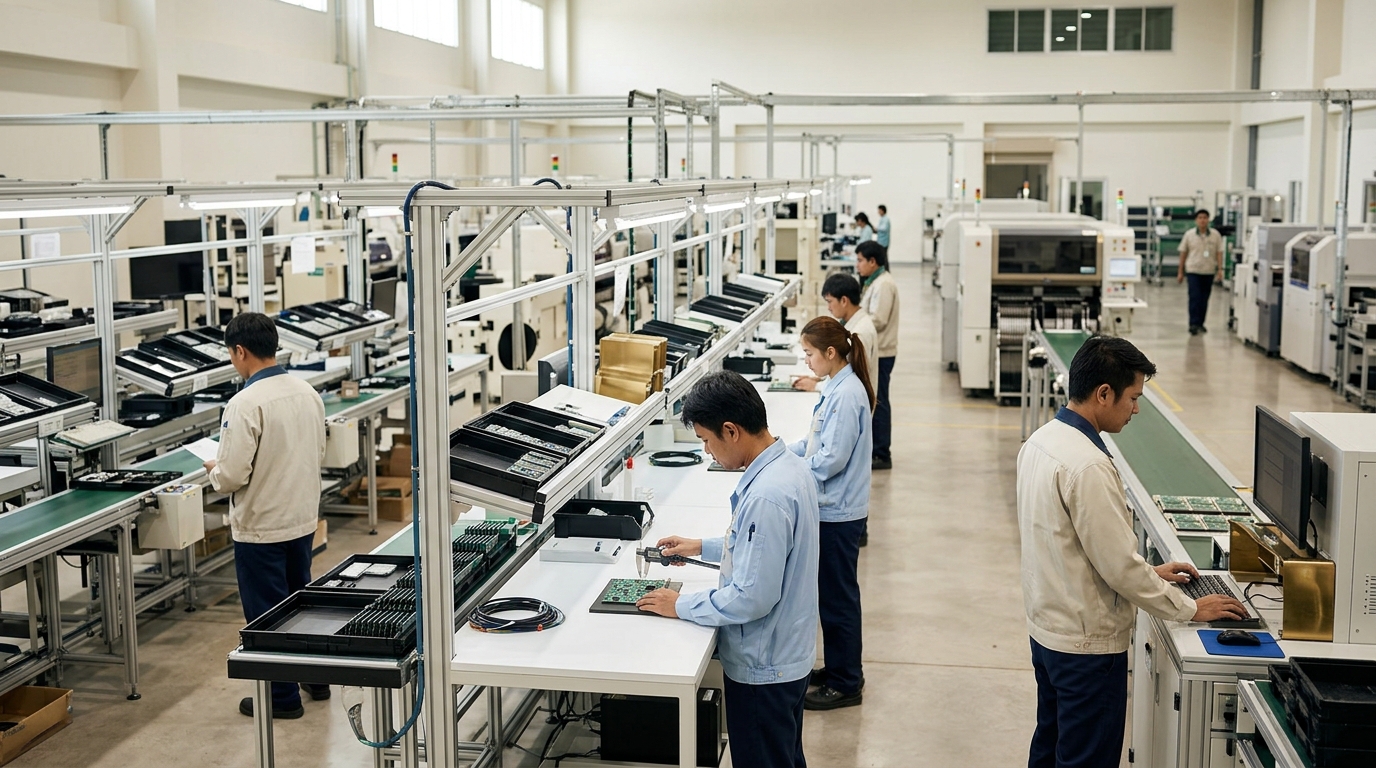
Auditing a Thai factory requires more than a walkthrough — it means verifying BOI incentive status, permit validity, environmental obligations, and real production capacity before you commit purchase capital.
Thailand is one of Southeast Asia's most established manufacturing destinations, with strong clusters in automotive parts, electronics, food processing, medical devices, and packaging across provinces such as Chonburi, Rayong, Pathum Thani, and Samut Prakan. That depth of industrial infrastructure is an asset, but it also means supplier complexity. A credible thailand factory audit is not a simple checklist run — it involves reconciling what a factory claims about its legal standing, environmental practices, labour conditions, and production capacity with what the physical evidence on site and in the document register actually shows.
Buyers are often surprised to learn that BOI incentive status, one of the most commonly cited competitive advantages by Thai factories, can lapse or be partially withdrawn if a facility fails to meet the conditions attached to its promotion certificate. Similarly, environmental and factory operating permits are subject to renewal, and gaps in the renewal cycle are not unusual. Catching these issues before a purchase order is issued is far less costly than discovering them after production has begun.
This guide is structured around the five core areas that a thorough thai factory inspection in Thailand should cover: BOI incentive verification, permit and legal standing, environmental compliance, worker safety and labour law, and production capability mapping. Each section describes what to look for, what documentation to request, and what patterns should prompt a deeper investigation. For the broader framework governing independent audits across the region, seeFactory Inspection Services in Asia: Independent Audits That Produce Actionable Evidence.
If you are at an earlier stage of evaluating Thailand as a sourcing destination, the/blog/sourcing-from-thailand-hubresource covers industrial zone selection and supplier identification before audit work begins.
Verifying BOI Incentive Status and Promotion Certificate Conditions
Thailand's Board of Investment grants promotion certificates to qualifying manufacturers that typically carry a package of benefits: corporate income tax exemptions for defined periods, import duty reductions on machinery and raw materials, and in some cases land-ownership rights for foreign-majority entities. For a buyer, these privileges matter because they underpin a factory's cost model. A factory quoting on the assumption of duty-free raw material imports that it no longer legally receives is, in effect, offering you an unsustainable price.
What to Request and Check
Ask the factory for its current BOI promotion certificate and the attached conditions schedule. Key fields to review include:
- Activity category and zone classification. BOI divides Thailand into investment zones (Zone 1, 2, 3, and special promotion areas). The zone determines the duration and depth of tax privileges. - Corporate income tax exemption period and start date. Confirm whether the exemption is still active or has expired. - Conditions on local sourcing, export ratios, or minimum investment. BOI certificates commonly attach conditions that must be met annually. Ask whether the factory has submitted its annual compliance reports to the BOI on time. - Machinery import duty exemptions. If the factory is importing components under duty exemption, verify that its import records are consistent with its declared production volumes.
If the factory operates within an industrial estate — such as those managed by the Industrial Estate Authority of Thailand (IEAT) — it may hold zone-specific privileges in addition to or instead of a standard BOI certificate. These require separate verification.
Checking Factory Operating Licences and Legal Permit Status
Beyond BOI, a Thai manufacturer must hold a valid factory operating licence under the Factory Act, administered by the Department of Industrial Works (DIW). Factories are classified by type and size, and the licence specifies the permitted production activities, installed machinery capacity, and sometimes the maximum number of workers.
Documents to Review On Site
| Permit Type | Issuing Authority | What to Verify |
|---|---|---|
| Factory operating licence (Ror Ngor 4) | DIW | Activity scope, renewal date, any conditions attached |
| BOI promotion certificate | Board of Investment | Validity period, conditions compliance |
| Hazardous substance licence | DIW / relevant ministry | Chemical types permitted, storage limits |
| Building and construction permit | Local authority | Consistency with current facility footprint |
| Special zone operating approval | IEAT or SEZ authority | Zone-specific obligations |
A mismatch between the activities listed on the operating licence and what is physically occurring in the factory is a material finding. It can indicate unlicensed production expansion — a risk for the factory's operating continuity and therefore for your supply chain.
Assessing Environmental Compliance Obligations and Records
Environmental compliance is an area where documentation gaps are common, particularly in mid-sized facilities that have grown quickly. Thailand's principal environmental legislation for manufacturers includes the Factory Act provisions on pollution control and the Enhancement and Conservation of National Environmental Quality Act. Together, these impose discharge limits for wastewater, emissions standards for air quality, and waste handling requirements.
Practical Audit Steps
Wastewater treatment. If the factory produces process wastewater — common in food processing, textile dyeing, electroplating, and chemical manufacturing — inspect the on-site treatment plant for operational condition and ask for the most recent effluent quality test reports submitted to the DIW. Irregularly dated reports or results that sit suspiciously close to legal limits warrant follow-up.
Solid and hazardous waste. Request the waste disposal manifests for the prior six months. Confirm that the licensed waste contractor used is listed on the DIW's approved contractor register. Unlicensed disposal is both an environmental violation and a liability that can attach to the customer brand.
Air emissions. For factories with combustion equipment, solvent use, or spray painting operations, check whether air emission monitoring is being conducted at the required frequency and whether results are filed with the DIW.
For factories subject to Environmental Impact Assessment requirements — typically larger facilities or those in sensitive locations — confirm that the EIA approval is current and that ongoing monitoring commitments are being fulfilled.
Auditing Worker Safety Systems and Labour Law Compliance
A thailand factory audit that skips labour and safety compliance is incomplete, regardless of how clean the production floor looks. Two pieces of Thai legislation set the minimum standard: the Labour Protection Act and the Occupational Safety, Health and Environment Act (commonly referenced as OSHA-TH). Both are enforced by the Department of Labour Protection and Welfare, though DIW also has inspection authority over workplace safety in factory settings.
Key Areas to Verify
Wage and working time records. Request payroll records for a sample of workers and cross-reference with the declared workforce headcount and the factory operating licence. Examine overtime records — Thailand's Labour Protection Act sets daily and weekly limits, and systematic exceedance is both a compliance risk and a signal of understaffing.
Safety officer appointments. Factories employing above a defined headcount threshold are legally required to appoint qualified safety officers at both the supervisory and professional levels. Ask to see appointment records and training certificates.
Fire safety and emergency procedures. Inspect fire extinguisher service records, exit route signage, and evacuation drill logs. A factory that cannot produce drill records for the past twelve months is unlikely to be operating a functioning safety programme.
Worker welfare. Review facilities for adequate sanitation, potable water access, canteen conditions (where provided), and dormitory standards (where workers are housed on site). Social audit protocols aligned with common international frameworks — such as those used by brands requiring supplier social compliance — can be applied at this stage.
Mapping Real Production Capacity Against Your Programme Requirements
Capacity verification is where a thai factory inspection most often reveals the gap between a supplier's marketing position and operational reality. Factories pitching for new business have every incentive to present headline capacity figures. An independent capability audit establishes what is actually available for your programmes.
Structured Capacity Assessment
Equipment inventory and condition. Walk the production floor with a focus on machinery age, maintenance logs, and current utilisation. Ask which lines are running, which are idle, and why. Idle capacity is not always available capacity — machines may be reserved for other customers or awaiting repair parts.
Shift structure and workforce scheduling. A factory running two shifts with full headcount has a different effective capacity than one running the same machines on a single shift. Obtain the current shift schedule and verify it against electricity consumption data, which is a reliable proxy for actual operating hours.
Order book and customer concentration. Request a production planning summary for the next sixty to ninety days. This is often available in aggregate without revealing commercially sensitive customer details. Understanding how your planned volumes sit relative to existing commitments tells you whether lead times and priority commitments will be honoured.
Sub-supplier dependency. Many Thai factories outsource specific processes — heat treatment, electroplating, screen printing, specialised assembly — to nearby sub-suppliers. Map these dependencies and assess whether the sub-suppliers introduce quality or compliance risks that your audit should extend to cover.
| Capacity Indicator | Reliable Signal | Unreliable Signal |
|---|---|---|
| Machine logs and maintenance records | Yes | No |
| Stated floor space alone | No | — |
| Electricity consumption records | Yes | No |
| Sales deck capacity slide | No | — |
| Shift schedules cross-referenced with payroll | Yes | No |
Using Audit Findings to Structure Supplier Agreements and Ongoing Monitoring
A thailand factory audit produces value only if its findings are acted on. Audit reports that are read once and filed deliver little beyond a sense of procedural comfort. The more productive use is to convert findings — both gaps and confirmed strengths — into contractual provisions and a monitoring calendar.
For BOI and permit-related findings, include a contractual obligation for the factory to notify you in advance of any change in permit status, BOI certificate conditions, or licence scope. This is a standard provision that credible Thai manufacturers accept without resistance. For environmental and safety gaps, agree on a corrective action plan with specific deadlines and a follow-up verification mechanism. Capability gaps — particularly sub-supplier dependency or constrained capacity — should inform your volume commitment strategy, safety stock levels, and lead-time buffers.
If your sourcing programme spans multiple countries, theMTS Thailand services pagecovers how independent audit programmes can be structured alongside quality inspection and logistics coordination for Thai suppliers specifically.
A well-executed audit of a Thai facility is not a one-time gate check. It is the foundation of a monitoring relationship that keeps BOI compliance, environmental obligations, and operational capability visible as your supplier grows and your programme evolves.
Frequently Asked Questions
What is BOI status, and why does it matter in a Thailand factory audit?
BOI stands for Thailand's Board of Investment, the government body that grants tax incentives, import duty exemptions, and land-ownership rights to qualifying manufacturers. During a Thailand factory audit, verifying BOI status matters because those incentives directly affect a factory's cost structure and, in turn, the prices it can sustainably offer you. A factory that loses BOI privileges — through non-compliance with conditions or failure to meet production targets — may quietly absorb rising costs or pass them on unexpectedly.
Which Thai government permits should an auditor check on site?
Auditors should request and cross-reference the factory operating licence issued under the Factory Act (administered by the Department of Industrial Works, DIW), any BOI promotion certificate with its attached conditions, environmental impact permits where applicable, and hazardous substance handling licences if chemicals are used in production. Some facilities in special economic zones or industrial estates also hold zone-specific operating approvals that carry their own compliance obligations.
How do Thai environmental regulations affect manufacturing suppliers?
Thailand's Factory Act and the Enhancement and Conservation of National Environmental Quality Act place discharge, emissions, and waste-handling obligations on manufacturers. Factories in regulated size categories must submit periodic environmental reports to the DIW and, for larger operations, to the Office of Natural Resources and Environmental Policy and Planning. An auditor looking at a Thai supplier should inspect effluent treatment records, chemical storage registers, and waste disposal manifests — not just ask whether permits exist.
What labour and worker safety standards apply to Thai factories?
Thai factories are governed by the Labour Protection Act, which sets rules on working hours, overtime limits, minimum wage compliance, and leave entitlements. The Occupational Safety, Health and Environment Act (OSHA-TH) requires factories above certain employee thresholds to appoint qualified safety officers and maintain written safety programmes. Auditors should verify payroll records match declared headcount, check fire evacuation procedures, and review any recent DIW or labour department inspection reports.
How can I verify a factory's actual production capacity versus its claimed capacity?
Claimed capacity figures in sales decks are frequently theoretical maximums rather than sustainable output. During a capability audit, ask for machine logs, shift schedules, electricity consumption records, and recent production planning reports. Cross-referencing order intake from other customers — often visible through shipping records or warehouse observations — against stated available capacity gives a clearer picture of how much bandwidth genuinely exists for your programmes.
Does CPTPP or RCEP membership affect how I should audit a Thai supplier?
Thailand is a signatory to RCEP, which means goods produced there can qualify for preferential tariff rates when exported to other RCEP members — but only if rules of origin are genuinely satisfied. During an audit, it is worth confirming that the factory can produce RCEP Form or equivalent origin documentation backed by verifiable local value-addition and a compliant bill of materials. Inflated local-content claims are a compliance risk for the importer, not just the factory.
How long does a thorough Thailand factory audit typically take?
A single-day audit is sufficient for a focused capability or social compliance check at a small-to-medium facility, but a comprehensive audit covering BOI verification, environmental permits, worker safety systems, and capacity mapping commonly requires two full days on site. Complex facilities — those with multiple production lines, chemical handling, or sub-contractor dependencies — may require additional document review time off site before a final report can be issued.
A structured approach to auditing Thai suppliers — one that treats BOI status, permits, environmental obligations, safety systems, and capacity as interconnected evidence rather than separate boxes to tick — gives procurement teams the factual basis they need to negotiate terms, manage risk, and build durable supply relationships in Thailand's manufacturing sector. The effort invested in a thorough pre-commitment audit is consistently less than the cost of resolving compliance failures or supply disruptions after production has started.
Need eyes on the ground in Thailand?
MTS is an execution partner — supplier verification, manufacturing management, quality control and export logistics across Indonesia, Vietnam and China.
Related services
Related articles
Receive furniture sourcing insights across Asia.
One email per week. No spam.