Indonesian Furniture Merchant Exporters: A First-Time Buyer's Complete Guide
16 min read
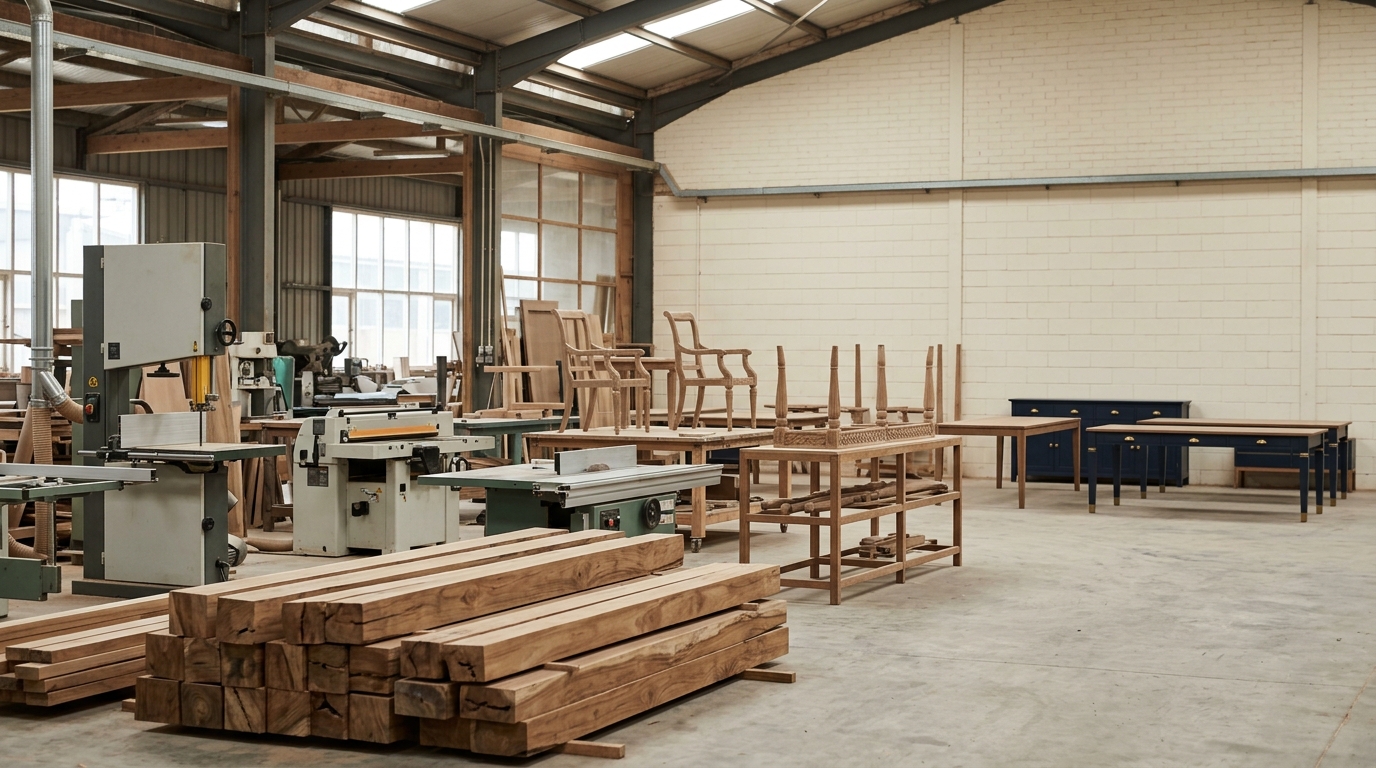
Indonesia consistently ranks among the world's leading furniture exporters, with the United States standing as one of its largest and most valuable destination markets. The country ships billions of dollars' worth of furniture annually to American buyers, ranging from solid teak dining sets to…
Indonesia consistently ranks among the world's leading furniture exporters, with the United States standing as one of its largest and most valuable destination markets. The country ships billions of dollars' worth of furniture annually to American buyers, ranging from solid teak dining sets to hand-woven rattan lounge chairs — making Indonesian furniture merchant exporters a highly competitive sourcing option for importers at virtually every budget level.
If you're a first-time buyer exploring this supply channel, the opportunity is genuine, but so are the risks. Without a clear framework for vetting suppliers, understanding local regulations, and managing logistics, a single procurement mistake can erase the savings you came for. This guide is built specifically for US-based buyers who are in the research or early-negotiation phase of their sourcing journey.
In the sections that follow, you'll find a practical breakdown of Indonesia's key furniture-producing regions, a structured approach to qualifying exporters, a plain-English explanation of the legal compliance requirements that govern wood imports into the US, and a walkthrough of the logistics process from factory floor to your warehouse. You'll also find honest guidance on red flags that frequently trip up first-time buyers — and how to avoid them.
By the time you finish reading, you'll have the context to move from "interested" to "informed," and a clear next step for connecting with verified suppliers who already work with American buyers.
Why Indonesian Furniture Merchant Exporters Dominate Global Markets
Indonesia's outsized presence in global furniture trade is not accidental. It is the product of geography, natural resources, and generations of craft tradition reinforcing one another in a single supply ecosystem.
Raw Materials That No Other Country Matches at Scale
Indonesia sits atop some of the world's most commercially significant timber reserves. Teak — prized globally for its density, natural oils, and resistance to weathering — grows extensively across Java. Rattan, bamboo, mahogany, and reclaimed tropical hardwoods are harvested or sourced domestically at a scale that gives Indonesian manufacturers a structural cost advantage over competitors in Vietnam, Malaysia, or Eastern Europe. For a US importer, this means raw material proximity translates directly into more competitive FOB pricing.
A Skilled Artisan Workforce Concentrated in Dedicated Clusters
Unlike countries where furniture production is spread thinly across industrial zones, Indonesia has developed dense manufacturing clusters where knowledge passes generationally. Jepara in Central Java, often called the "furniture capital of the world," is home to tens of thousands of artisans and workshops specializing in carved wooden and teak furniture. Surabaya in East Java functions as both a commercial manufacturing hub and a major port city. This clustering means buyers can evaluate multiple suppliers, finishes, and production capabilities within a short radius — a practical advantage during sourcing trips or agent-based audits.
Rising Compliance with International Quality and Sustainability Standards
A concern that used to hold some US buyers back — whether Indonesian suppliers could meet international quality benchmarks — has become less relevant as the industry has matured. Many established Indonesian furniture merchant exporters now hold ISO-recognized quality management certifications, participate in SVLK (Indonesia's Timber Legality Verification System), and produce to specifications that satisfy EU and US retail buyers. ASMINDO, the Association of Indonesian Furniture and Handicraft Industries, plays a central role in coordinating these standards and serves as a useful credentialing signal when evaluating suppliers.
The Key Indonesian Furniture Export Regions Every Buyer Should Know
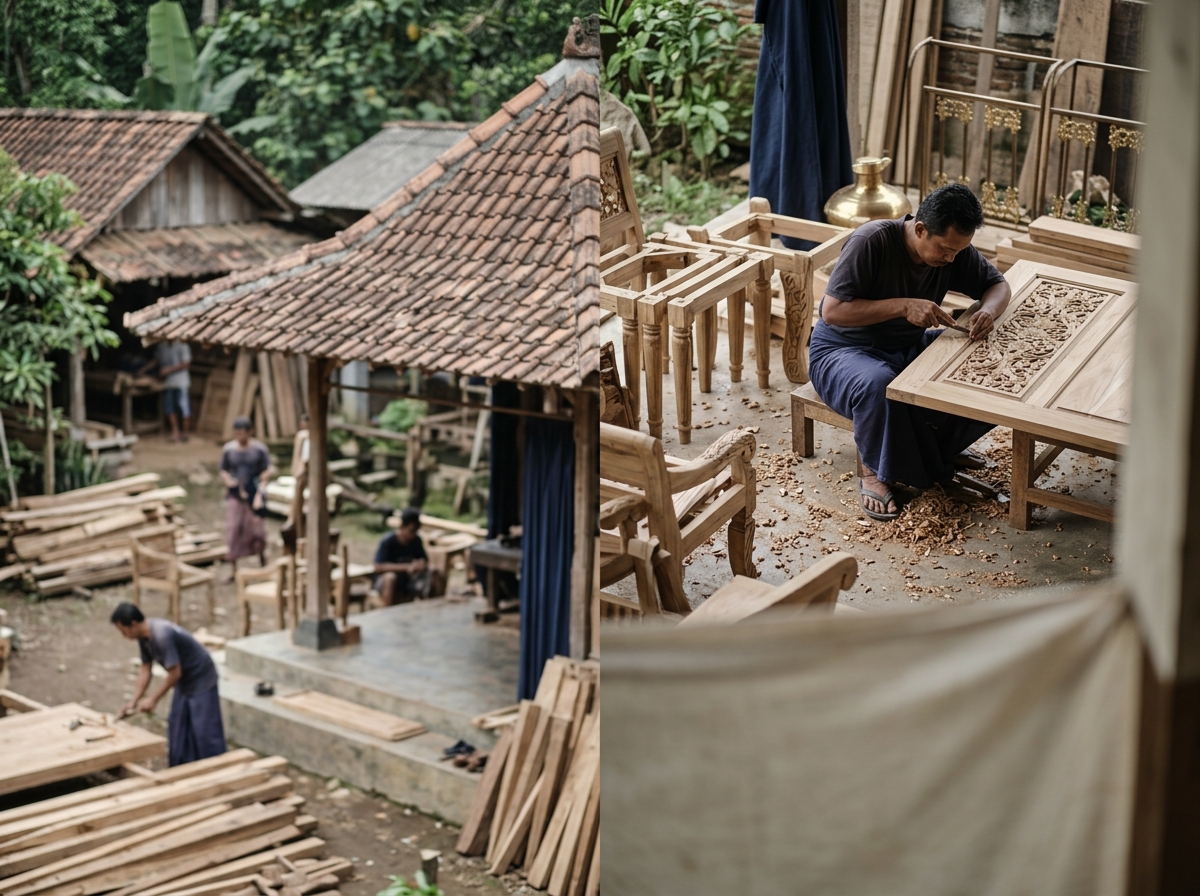
Understanding where furniture comes from inside Indonesia is not just trivia — it tells you what product categories a supplier is likely to do well, what their logistics chain looks like, and how competitive their pricing will be.
Jepara, Central Java is the starting point for most buyers sourcing teak, mahogany, or intricately carved wooden furniture. The concentration of workshops here creates price competition that benefits buyers, and most experienced exporters in this city have worked with US or EU buyers before.
Surabaya, East Java serves a dual function: it is home to a significant commercial furniture manufacturing cluster, and it hosts Tanjung Perak Port, one of Indonesia's busiest cargo terminals. For buyers ordering from East Java suppliers, shorter factory-to-port distance can reduce inland freight costs and compress lead times.
Bali is best known for decorative, resort-style, and rattan furniture with a distinct design aesthetic. Hospitality buyers — hotels, boutique resorts, and high-end rental properties — frequently source from Bali-based exporters because the design language aligns well with luxury and tropical interior briefs.
Cirebon, located in West Java, has become the dominant center for rattan and wicker export furniture. If your product category includes natural fiber seating, storage, or accent pieces, Cirebon suppliers should be on your evaluation list. Many carry SVLK and sustainability-linked certifications relevant to eco-conscious retail buyers.
How to Vet and Qualify Indonesian Furniture Merchant Exporters Properly
Checking Legal Registration and Trade Licenses
The first verification step for any serious buyer is confirming that a supplier is legally registered to export. Indonesian exporters engaged in international trade are required to hold a SIUP (Surat Izin Usaha Perdagangan, or Trading Business License) and a NIB (Nomor Induk Berusaha, or Business Identification Number) issued under the Online Single Submission system. Reputable exporters will share these documents without hesitation. If a supplier deflects or provides photocopies that cannot be cross-referenced, treat it as a hard stop.
Factory Audits, Third-Party Inspections, and Client References
Licensing confirms that a business exists legally — it does not confirm production capability or quality consistency. Request factory audit reports from recognized third-party inspection firms. If the supplier has never been audited, you can arrange one through international inspection services that operate in Indonesia before committing to an order. Equally valuable: ask for references from US or EU buyers who have completed at least two or three shipment cycles with this supplier. A legitimate exporter with export history will have these available.
ASMINDO Membership as a Credibility Signal
ASMINDO membership does not guarantee quality, but it does signal that a supplier participates in an industry body that promotes international trade standards, sustainability practices, and professional business conduct. Cross-referencing a supplier's claimed membership against ASMINDO's publicly available records adds a low-effort credibility check to your vetting process.
Merchant Exporters vs. Direct Factory Exporters: Knowing the Difference
One distinction that most sourcing guides skip is the difference between a merchant exporter and a direct factory exporter. A merchant exporter acts as a trading intermediary — they aggregate products from multiple factories, handle export documentation, and sell to international buyers under their own commercial identity. A direct factory exporter manufactures the goods themselves and exports directly.
For a first-time buyer, merchant exporters often offer lower complexity: one point of contact, consolidated logistics, and broader category coverage. The trade-off is typically a markup over factory-direct pricing. As your order volumes grow and your supplier relationships solidify, transitioning to direct factory relationships can reduce per-unit costs — but requires more due diligence at the factory level.
Understanding the Full Range of Product Categories Available from Indonesia
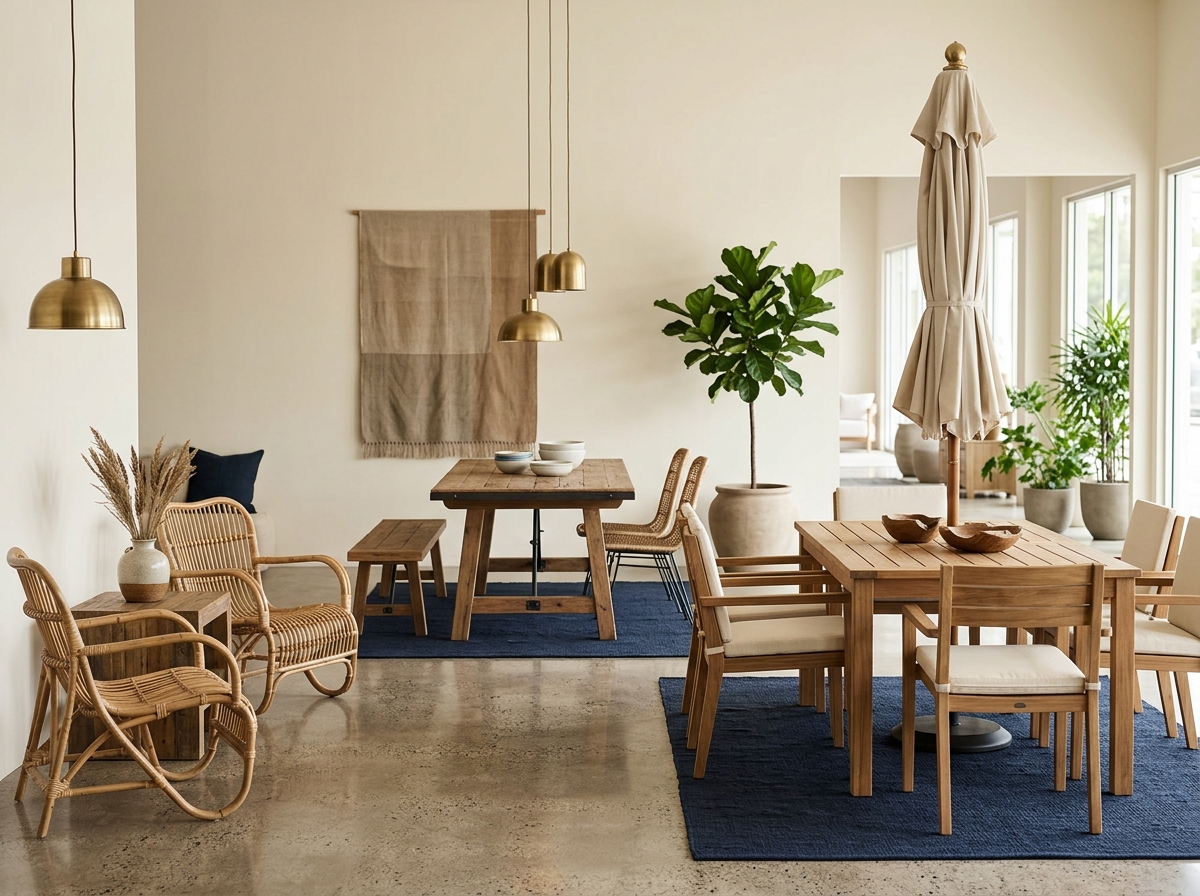
Indonesia's furniture export catalog is broader than many first-time buyers realize. Solid teak outdoor and indoor furniture remains the most exported category to the US, favored for its durability, weather resistance, and premium aesthetic. Dining tables, benches, steamer chairs, and garden sets in teak represent a large share of container loads from Jepara.
Rattan and bamboo furniture has seen growing demand from US buyers in the hospitality sector and from eco-conscious retail brands. These materials are renewable, relatively lightweight for shipping, and carry strong design appeal in coastal, bohemian, and resort-influenced interior categories.
Reclaimed wood furniture — built from salvaged timber, often teak or railroad wood — is popular in the rustic and industrial interior segments. It carries an inherent sustainability narrative that resonates with US consumers, though it requires careful documentation to satisfy Lacey Act sourcing requirements (discussed below).
Upholstered furniture represents a smaller but growing share of Indonesian furniture exports. Capabilities vary significantly between factories, so buyers in this category should request physical samples and upholstery specifications before committing to production runs.
Navigating Minimum Order Quantities and Pricing Structures for US Buyers
Understanding how Indonesian exporters structure pricing and volume requirements before you send your first inquiry will save you significant back-and-forth and prevent sticker shock.
Typical MOQ Structures Across Supplier Types
Minimum order quantities among Indonesian furniture merchant exporters typically range from one 20-foot container to a minimum of 50 units per SKU, depending on the supplier type and product complexity. Merchant exporters, who consolidate across multiple factories, often offer more flexible MOQs than direct factories. Some will allow mixed-container orders — combining multiple SKUs to fill a single container — which is particularly useful for buyers who want to test a range before committing to volume.
FOB Pricing and What It Actually Covers
FOB (Free On Board) is the dominant Incoterm used by Indonesian furniture exporters. Under FOB terms, the supplier is responsible for the cost of goods and inland logistics up to the point the cargo is loaded onto the vessel at the named port — typically Tanjung Priok (Jakarta) or Tanjung Perak (Surabaya). From that point, the buyer assumes responsibility for ocean freight, insurance, and destination-side costs including customs duties and delivery.
Understanding FOB pricing is critical because comparing quotes that use different Incoterms (some suppliers may quote CIF or EXW) without adjusting for what's included leads to misleading cost comparisons.
Price Tier Comparison: Merchant Exporters vs. Direct Factory Exporters
| Supplier Type | Typical MOQ | Price Per Unit | Lead Time | Documentation Support | Best For |
|---|---|---|---|---|---|
| Merchant Exporter | Flexible (mixed containers acceptable) | Moderate (markup included) | Shorter (stock often available) | High (experienced with US buyers) | First-time buyers, small businesses |
| Direct Factory Exporter | Higher (full production runs) | Lower (no middleman margin) | Longer (made to order) | Variable (depends on factory) | Experienced buyers, higher volumes |
| Trading Company (Domestic) | Varies | Moderate to high | Variable | Moderate | Niche or specialty categories |
Import Regulations, Tariffs, and US Compliance Requirements Explained
This is the section that most first-time buyers underestimate — and where regulatory missteps can result in cargo holds, fines, or shipment refusals at the US port of entry.
US Customs HS Codes and Import Duty Rates
Wood furniture imported from Indonesia into the United States is classified under Chapter 94 of the Harmonized Tariff Schedule. Duty rates vary by product subcategory — wooden bedroom furniture, wooden seats, and other wooden furniture each carry their own applicable rate. Most Indonesian wood furniture enters the US at relatively modest duty rates, but the applicable rate depends on the correct HTS code classification. An error in classification can trigger underpayment of duties, which carries its own penalties. Working with a licensed US customs broker who has experience with furniture imports is not optional — it is a practical necessity.
The Lacey Act: What Indonesian Wood Furniture Buyers Must Know
The Lacey Act is US federal law that prohibits the import of plants and plant products — including timber and wood furniture — that were harvested or traded in violation of the laws of the source country or jurisdiction. For Indonesian furniture buyers, this means your supplier must be able to provide documented evidence of legal timber sourcing for every wood species used in your order.
A practical Lacey Act compliance checklist for Indonesian furniture imports should include:
- ✓Obtain a Plant and Plant Product Declaration (PPQ 505 form) from your supplier
- ✓Confirm scientific name and country of harvest for each wood species
- ✓Request SVLK certification documents (see below) as supporting evidence
- ✓Verify that your customs broker files the declaration at time of import entry
- ✓Retain all sourcing documentation for a minimum of five years
- ✓For reclaimed wood, request documentation of original timber source where traceable
SVLK Certification: What It Is and Why It Matters for US Buyers
SVLK (Sistem Verifikasi Legalitas Kayu — Timber Legality Verification System) is Indonesia's government-mandated framework for verifying that timber and wood products are legally harvested and traded. Indonesian exporters of wood products are required to hold SVLK certification to export legally.
For you as a US buyer, SVLK serves two functions. First, it provides corroborating documentation for your Lacey Act declaration — a supplier with valid SVLK certification has already passed a legality audit conducted by an accredited Indonesian verification body. Second, it is a useful due diligence filter: an exporter who cannot produce current SVLK documentation either lacks proper certification or is not a legitimate wood-product exporter. Do not accept expired certificates.
TSCA and CARB Compliance for Composite and Upholstered Products
If your order includes furniture made with composite wood panels — MDF, plywood, particleboard — you will need to confirm that the products comply with the Toxic Substances Control Act (TSCA Title VI) and the California Air Resources Board (CARB) Phase 2 standards for formaldehyde emissions. Even if you are not selling into California, CARB Phase 2 has become the de facto national standard that major US retailers require. Ask your supplier for test reports demonstrating compliance before placing production orders.
Shipping, Lead Times, and Logistics from Indonesia to Your US Warehouse
Ocean Freight Transit Times and Port Options
Ocean freight from Indonesia to the US West Coast typically takes approximately 18 to 25 days from Tanjung Priok (the main port serving Jakarta) or Tanjung Perak (Surabaya). Transit to East Coast ports via the Panama Canal adds roughly an additional week to ten days. These are sailing times only — factor in inland trucking to the port, customs clearance at the Indonesian export side, and US customs clearance at the destination port, and total door-to-door lead time for a straightforward order is commonly in the range of six to ten weeks from production completion.
LCL vs. FCL: Choosing the Right Shipment Method
For buyers who cannot fill a full 20-foot container (FCL), Less-than-Container Load (LCL) consolidation allows you to share container space with other shippers. LCL is more expensive on a per-cubic-meter basis than FCL and carries a higher risk of handling damage since cargo is loaded and unloaded multiple times. As a general rule, once your order volume consistently fills at least half a 20-foot container, shifting to FCL will produce better economics and lower damage rates.
Working with Freight Forwarders and Customs Brokers
A freight forwarder based in Indonesia (or with a strong Indonesia office) can manage the export-side logistics: booking vessel space, coordinating container loading, obtaining the Bill of Lading, and handling export customs documentation including SVLK certificates. On the US side, a licensed customs broker handles the import entry, HTS classification, duty calculation, and release of cargo. These are two separate service providers, and using experienced professionals in both roles substantially reduces the risk of delays, holds, or compliance errors.
Red Flags and Critical Mistakes That First-Time Buyers Must Avoid
A Hypothetical Walkthrough: What Can Go Wrong
Consider a first-time US buyer — let's call her Maria, a boutique furniture retailer in Austin — who finds an Indonesian supplier on a B2B marketplace, exchanges a few emails, receives a competitive FOB quote, and wires a 30% deposit to a personal bank account she was given by the sales contact. No factory audit was conducted. No SVLK documentation was requested. No pre-shipment inspection was arranged.
Four months later, a container arrives. A quarter of the pieces are finished in a different color than the approved sample. Several teak items show signs of moisture damage from improper packaging. And when Maria's customs broker requests Lacey Act documentation at entry, none is available — triggering a US Customs hold and potential seizure of the entire shipment.
Maria's experience is not unusual. It is, however, entirely preventable.
The Specific Red Flags to Watch For
No legal timber documentation. Any Indonesian wood furniture exporter who cannot produce current SVLK certification and support your Lacey Act declaration filing should be removed from your shortlist immediately. This is not a negotiable item.
Wire transfers to unverified or personal accounts. Payments should go to the verified corporate account of the registered exporting entity — the same entity named on the SIUP and NIB documents. For first-time transactions, consider using an escrow service or a Letter of Credit through your bank, which releases payment only when shipping documents confirming the order terms are presented.
Skipping pre-shipment inspection. A third-party pre-shipment inspection — conducted at the factory before the container is sealed — is among the highest-value investments a first-time importer can make. It catches finish defects, dimensional inaccuracies, and packing failures before cargo leaves Indonesia.
Misreading payment terms. A common Indonesian exporter payment structure is 30% deposit at order confirmation and 70% before shipment. Some buyers interpret "before shipment" as "after I receive the inspection report." Clarify in writing exactly what milestone triggers the balance payment — and confirm that your inspection window falls before that trigger.
Frequently Asked Questions About Sourcing from Indonesian Furniture Exporters
What is the minimum order quantity when buying from Indonesian furniture exporters?
MOQs vary by supplier type and product category. Merchant exporters often accept mixed-container orders with no fixed per-SKU minimum, while direct factories typically require between 20 and 50 units per SKU or a full container commitment. Negotiating a paid sample order before your first commercial shipment is standard practice and is widely accepted by reputable exporters.
How do I verify that an Indonesian furniture exporter is legitimate?
Request their NIB (Business Identification Number) and SIUP trading license, verify ASMINDO membership where claimed, ask for SVLK certification documentation, and request references from US or EU buyers who have completed recent orders. Cross-reference company details with the supplier's bank account name on any payment instructions — discrepancies are a serious red flag.
What certifications should Indonesian furniture have for US import?
For wood furniture: SVLK certification from the exporter, and a completed Lacey Act Plant and Plant Product Declaration filed at US customs entry. For composite wood products: CARB Phase 2 compliance test reports and TSCA Title VI conformance documentation. Quality certifications such as ISO-aligned quality management standards are a bonus, though not legally mandated.
How long does shipping from Indonesia to the United States take?
Ocean freight transit from Tanjung Priok or Tanjung Perak to US West Coast ports is typically 18 to 25 days. Add US East Coast routing via Panama Canal and total door-to-door time commonly reaches six to ten weeks when you include production completion, export clearance, and US customs processing.
What are the import duties on Indonesian furniture in the United States?
Duty rates depend on the HTS subheading that applies to your specific product. Wooden furniture categories under Chapter 94 of the Harmonized Tariff Schedule carry varying rates. A licensed US customs broker will classify your goods correctly and calculate the applicable duty before your shipment arrives — engaging one early in your sourcing process is strongly recommended.
What is SVLK certification and do I need it as a US buyer?
SVLK (Timber Legality Verification System) is Indonesia's mandatory export certification system for wood products, confirming that timber was legally sourced and harvested. As a US buyer, you do not apply for SVLK — your Indonesian supplier holds it. However, you should request a copy of their current SVLK certificate to support your Lacey Act declaration. An exporter without valid SVLK cannot legally export wood products from Indonesia.
Sourcing furniture from Indonesian furniture merchant exporters offers US buyers a genuine combination of material quality, manufacturing depth, and competitive pricing — but that advantage is only captured when you approach the process with the right compliance framework, supplier vetting discipline, and logistics knowledge. Verifying SVLK documentation, understanding the difference between merchant and factory exporters, and protecting your payments from the first transaction are the three practices that separate buyers who succeed from those who spend months recovering from avoidable mistakes.
You now have the framework — the logical next step is connecting with suppliers who have already been evaluated against the criteria in this guide.
You've done the research — now put it into action. Request a free shortlist of verified Indonesian furniture merchant exporters matched to your product category, order volume, and compliance requirements, and start sourcing with confidence.
Request My Free Supplier Shortlist →Need eyes on the ground in Indonesia?
MTS is an execution partner — supplier verification, manufacturing management, quality control and export logistics across Indonesia, Vietnam and China.
Related services
Related articles
Receive furniture sourcing insights across Asia.
One email per week. No spam.