Jepara Furniture Manufacturers: The Complete B2B Importer's Guide
18 min read
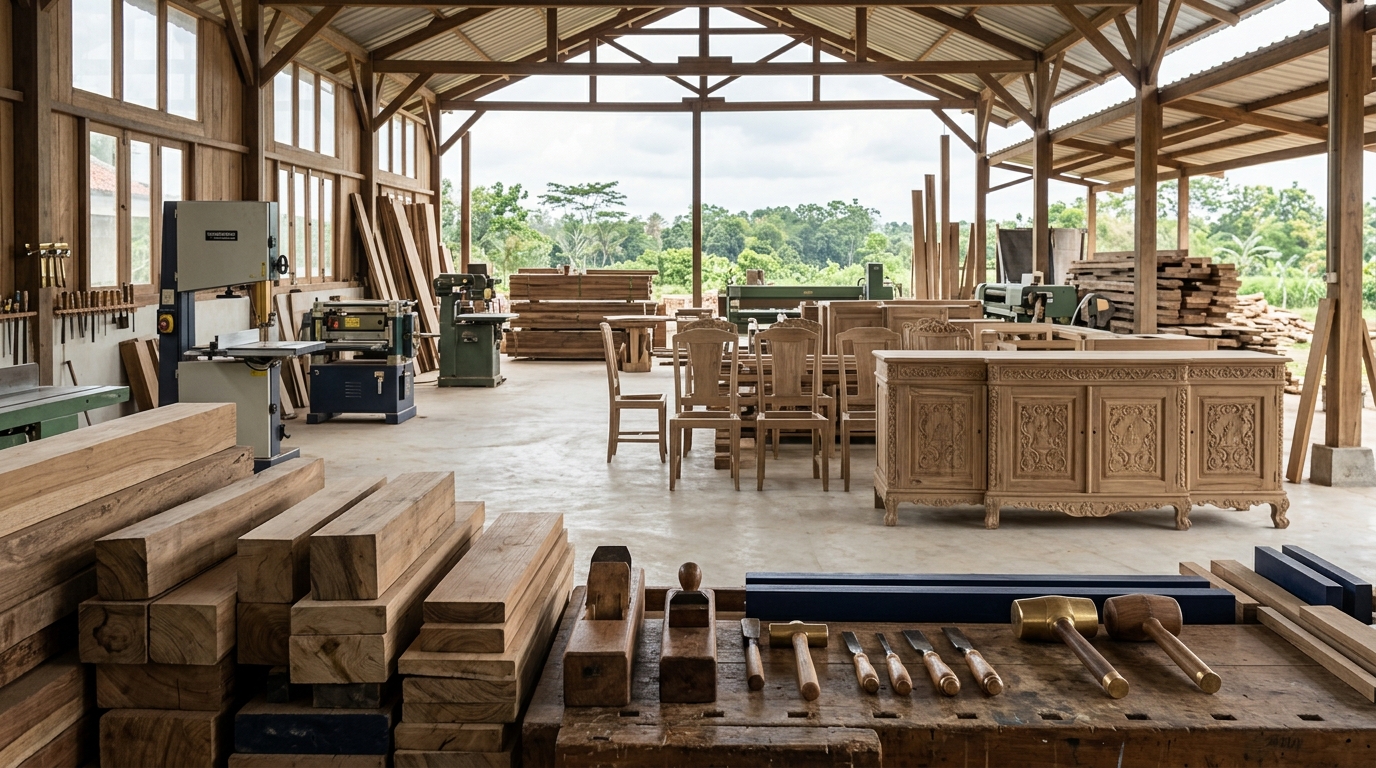
If you are a US-based buyer, wholesaler, or retail procurement manager evaluating Indonesian wood furniture as a supply chain option, the decision starts and ends with one name: Jepara. Positioned in Central Java, Indonesia, this coastal city has built a global reputation for producing…
If you are a US-based buyer, wholesaler, or retail procurement manager evaluating Indonesian wood furniture as a supply chain option, the decision starts and ends with one name: Jepara. Positioned in Central Java, Indonesia, this coastal city has built a global reputation for producing high-quality teak, mahogany, and reclaimed timber furniture at competitive landed costs. But reputation alone is not a sourcing strategy. The real challenge for international importers is knowing how to verify quality, navigate compliance obligations, manage logistics, and build a relationship that survives beyond a single container order.
This guide addresses every dimension of that challenge from a US importer's perspective. You will find practical guidance on evaluating Jepara furniture manufacturers by business size and capability, understanding Indonesian timber certifications that affect your compliance under US law, benchmarking freight costs from Tanjung Emas Port to American coasts, and structuring an initial sourcing engagement that protects your business. Unlike manufacturer-facing content that leads with aesthetics and craftsmanship, this article leads with due diligence, compliance, and commercial realism — because that is what procurement decisions actually require.
Whether you are placing your first trial order or renegotiating an existing supplier relationship, the sections that follow give you a structured framework to assess Central Java furniture manufacturers on the criteria that matter most to your operation. By the time you finish reading, you will know not only what to look for, but exactly how to find it.
Why Jepara Is the World's Foremost Hub for Wood Furniture Manufacturing
A Woodworking Culture Built Over Centuries
Jepara's furniture industry is not a product of modern industrialization — it is the continuation of a craft tradition that predates formal export trade by centuries. The region's woodworking heritage is deeply embedded in its social and economic fabric, with skills passed across generations in family-owned workshops that still operate alongside large export factories today. This cultural depth translates into a workforce with genuine technical mastery of joinery, carving, and finishing that is difficult to replicate in regions without the same accumulated knowledge base.
Central Java's proximity to teak-producing plantation forests has historically made Jepara the natural center of Indonesia's wood furniture industry. Teak grown under Indonesia's government-managed plantation system provides a consistent, legally traceable supply of the world's most commercially valued furniture timber. Alongside teak, producers in the region work extensively with mahogany and reclaimed teak salvaged from demolished colonial-era structures and retired agricultural equipment — each with its own grain character and appeal to specific buyer segments.
Scale, Export Reach, and Why Importers Choose Jepara
The scale of the Jepara furniture cluster is substantial. The district hosts thousands of workshops and registered exporters, ranging from cottage-level artisan operations to vertically integrated factories capable of producing full container loads each week. Indonesia as a whole consistently ranks among the world's largest wood furniture exporters, and Jepara accounts for a significant share of that output — particularly in the carved, solid-wood, and outdoor teak categories that command premium pricing in Western markets.
International importers specifically seek out Jepara-based furniture factories over other Indonesian regions for several compounding reasons. The concentration of suppliers creates competitive pricing pressure, which benefits buyers. The density of skilled workers means custom production capabilities are widely available, not limited to a handful of top-tier factories. And decades of export experience have produced a supplier ecosystem that includes freight forwarders, finishing specialists, quality inspectors, and buying agents who are all familiar with the requirements of US, European, and Australian markets.

The Full Range of Products Jepara Furniture Manufacturers Supply for Export
Indoor Furniture Categories With Strong US Market Demand
Indonesian furniture manufacturers in the Jepara region produce a comprehensive range of indoor furniture across every major residential and hospitality category. Dining room collections — including solid teak dining tables, extension tables, and matching chair sets — represent one of the highest-volume export categories, particularly for US retailers operating in the mid-to-upper price segments. Bedroom furniture encompassing bed frames, wardrobes, nightstands, and dressers is equally well established, with manufacturers skilled in both traditional joinery and modern flatpack-friendly engineering.
Living room pieces including sideboards, console tables, entertainment units, and occasional chairs round out the indoor offering. A growing number of Central Java furniture manufacturers are also producing upholstered pieces that combine solid wood frames with fabric or leather seating components, expanding their relevance to buyers who previously sourced upholstery from separate regions.
Outdoor Teak Furniture: Jepara's Highest-Profile Export Category
Outdoor and garden furniture is arguably the category that first put Jepara on the global B2B map. Teak patio dining sets, Adirondack chairs, steamer loungers, garden benches, and folding bistro sets are produced by a wide range of suppliers at pricing that consistently undercuts comparable products from European manufacturers. The natural durability of plantation teak — its high oil content, resistance to moisture, and structural stability — makes it particularly well suited to outdoor applications, and this functional advantage is well understood by US buyers sourcing for garden retailers, hospitality groups, and outdoor lifestyle brands.
Custom, OEM, and Private-Label Production Capabilities
For buyers interested in developing proprietary product lines, Jepara's manufacturing base offers meaningful OEM and private-label capabilities. Many mid-size and larger exporters can work from buyer-supplied CAD files, technical drawings, or even physical samples. Some have in-house design teams capable of developing specifications from mood boards or reference images. This flexibility makes Indonesian wood furniture producers attractive not just for catalog sourcing but for brand-building programs where differentiation matters.
The balance between traditional and contemporary design offerings has shifted noticeably over the past decade. While ornate carved furniture remains a specialty of the region, a substantial portion of today's production targets clean-lined, Scandinavian-influenced, and transitional aesthetics that perform well in the US residential and contract markets. Buyers should not assume a Jepara manufacturer only produces traditional styles — design capability varies significantly by factory, and a direct conversation about your aesthetic requirements is always warranted.
How to Evaluate and Vet a Jepara Furniture Manufacturer Before Committing
Certifications That Signal Legal and Environmental Compliance
For US importers, certification verification is not optional — it is a compliance necessity. Two certifications are particularly critical when sourcing from Indonesian furniture manufacturers.
SVLK (Sistem Verifikasi Legalitas Kayu) is Indonesia's mandatory timber legality verification system. It confirms that wood used in production has been legally harvested and traded in accordance with Indonesian forestry law. SVLK documentation is what Indonesian exporters use to demonstrate compliance to international trade partners, and it is the primary mechanism through which Indonesian furniture is positioned as compliant with the US Lacey Act — federal legislation that prohibits the import of products made from illegally sourced wood. Any Jepara-based factory exporting to the United States should be able to provide current SVLK documentation. A supplier that cannot produce this documentation is a compliance risk to your import program.
FSC (Forest Stewardship Council) certification goes further than SVLK by independently verifying that timber is sourced from responsibly managed forests according to international standards. FSC-certified teak is available from Jepara manufacturers who source from FSC-certified plantation operations. While FSC is not legally required for US import, it is increasingly requested by US retailers with environmental commitments and can support premium pricing in certain market segments.
ISO certifications — particularly ISO 9001 for quality management systems — signal that a manufacturer has formalized its production processes, which correlates with more consistent product quality and more reliable delivery performance.
Factory Audit Checklist for Remote Vetting
Not every US buyer can conduct an in-person factory visit before placing an initial order. A structured remote vetting process can meaningfully reduce risk:
- ✓Request a copy of current SVLK certificate and verify its validity date
- ✓Request FSC chain-of-custody certificate if applicable to your product category
- ✓Ask for evidence of recent export experience: shipping records or client references from US or EU buyers
- ✓Review production capacity documentation: how many containers per month can the factory ship?
- ✓Request photos and video walkthrough of the production floor and finishing areas
- ✓Confirm minimum order quantities in writing and ask whether they apply per SKU or per order
- ✓Ask for lead time commitments in writing, including what happens if materials are delayed
- ✓Obtain a signed quality control agreement or inspection protocol before production begins
- ✓Order a sample set before committing to bulk production — non-negotiable for new supplier relationships
Red Flags When Sourcing Remotely or Through Intermediaries
Working through trading companies or brokers is common in the Jepara supplier ecosystem, but it introduces risks. Trading companies may represent multiple factories with inconsistent quality standards and often have less direct control over production timelines. Key red flags include: an unwillingness to disclose the actual manufacturing facility, vague answers about production capacity, a refusal to provide certifications, and pricing that seems significantly below the market rate without a clear explanation. Unusually low quotes often indicate either substandard materials, hidden charges to be added later, or a supplier who is brokering your order to a factory they do not control.
Pricing, MOQs, and Lead Times: What US Buyers Should Realistically Expect
Understanding the commercial structure of Jepara's manufacturing base requires recognizing that suppliers are not homogeneous. A cottage workshop, a mid-size exporter, and a large vertically integrated factory operate under fundamentally different commercial terms and suit different buyer profiles.
| Supplier Type | Typical MOQ | Average Lead Time | Customization Capability | Best Suited For |
|---|---|---|---|---|
| Cottage Workshop (under 20 workers) | Low — often per-piece or small sets | 6–14 weeks depending on complexity | High for carving and handcraft; limited for system furniture | Boutique retailers, sample development, artisan product lines |
| Mid-Size Exporter (20–150 workers) | Moderate — typically 1 container minimum | 8–14 weeks standard; 12–18 weeks for full custom | Strong — can work from CAD files and client specs | Growing wholesalers, private-label buyers, multi-SKU programs |
| Large Exporter (150+ workers) | Higher — often multi-container programs | 10–16 weeks; may have stock programs available | Full OEM capability including design development | High-volume retailers, hospitality procurement, national chains |
Pricing benchmarks for Jepara furniture are typically quoted on FOB Semarang terms, with the buyer responsible for ocean freight, insurance, and US customs clearance from that point. CIF pricing to US ports is available from some exporters and factors in ocean freight and insurance to a named US port — commonly Los Angeles, Long Beach, or East Coast hubs such as New York or Savannah. The difference between FOB and CIF quotes can be meaningful, so always compare on a consistent Incoterm basis.
Payment terms from Jepara manufacturers most commonly involve a deposit — often around 30 to 50 percent — at the time of order confirmation, with the balance payable against shipping documents or before container release. Letters of credit are accepted by larger exporters with established banking relationships, and some buyers use escrow-style trade finance platforms for added protection. Wire transfer in US dollars is the dominant transaction method.
Shipping and Logistics: Moving Jepara Furniture From Indonesia to US Ports
Export Ports and Container Options
The primary export gateway for Jepara furniture is Tanjung Emas Port in Semarang, the main seaport of Central Java. Many shipments from Jepara are loaded directly at Semarang, though some larger consignments transit through Tanjung Priok in Jakarta when connecting to specific carrier services. Working with a freight forwarder who has established operations in Semarang — rather than one operating only out of Jakarta — simplifies coordination with Jepara factories and reduces inland transport complexity.
For container loading, buyers choose between LCL (Less than Container Load) and FCL (Full Container Load) based on order volume. LCL is appropriate for sample orders, initial trial shipments, or buyers who are consolidating smaller volumes from multiple suppliers. FCL — either a 20-foot or 40-foot container — becomes cost-effective once order volume justifies it, and most mid-size to large exporters in Jepara are structured around FCL shipping programs. A standard 40-foot container can accommodate a significant volume of flat-packed or assembled furniture, and experienced exporters will provide container loading plans to maximize cubic utilization.
US Customs, HTS Codes, and Duty Considerations
US import duties on Indonesian wood furniture are assessed under the Harmonized Tariff Schedule (HTS). The applicable HTS chapter for most wood furniture is Chapter 94, with specific classifications depending on furniture type — for example, wooden bedroom furniture, dining room furniture, and office furniture each have distinct subheadings. Duty rates vary by classification and are typically in the low-to-mid single-digit percentage range on the dutiable value, though buyers should verify current rates with a licensed customs broker given periodic schedule updates.
Indonesia has not been subject to the broad Section 301 tariffs applied to Chinese furniture imports, which has made Indonesian suppliers increasingly attractive to US buyers who restructured supply chains away from China in recent years. This tariff differential is a meaningful landed-cost advantage that procurement teams should quantify explicitly when building sourcing comparisons.
Customs clearance requires accurate commercial invoices, packing lists, bills of lading, and Lacey Act import declarations. SVLK documentation supports the wood species and origin information required for Lacey Act compliance. A customs broker experienced in wood furniture imports will be familiar with these requirements and can help ensure declarations are completed accurately.
Key Criteria for Selecting the Best Jepara Furniture Manufacturers for Your Business
Years of documented export experience are one of the most reliable proxies for supplier reliability. A manufacturer that has been exporting to the US or European markets for a decade or more will have navigated quality disputes, logistics disruptions, and regulatory changes — and will have developed systems for managing these challenges. Ask specifically about their US client base and request references from buyers in your market segment.
The presence of a dedicated export team — including English-speaking account managers, export documentation specialists, and quality control personnel — significantly affects day-to-day working experience. Communication gaps between US buyers and Indonesian production teams are a common source of errors in custom orders. A factory that treats international communication as a core operational function, not an afterthought, reduces that risk substantially.
Participation in international trade events such as the High Point Market in North Carolina or regional trade shows signals a manufacturer's seriousness about the US market. Similarly, manufacturers who exhibit at IFMAC (Indonesia International Furniture, Machinery and Chemicals Expo) or the Indo Furniture Expo are generally engaging with a professional export-oriented community. Trade show participation is not a guarantee of quality, but it does indicate investment in market development and exposure to international buyer standards.
The ability to support custom design workflows — including working from CAD files, technical drawings, or mood boards — distinguishes manufacturers who are genuine manufacturing partners from those who simply supply from a fixed catalog. For buyers developing proprietary lines or private-label programs, this capability is non-negotiable. Ask for examples of previous custom projects and the format in which they prefer to receive design briefs.
After-sales support — how a manufacturer handles quality claims, replacement parts, or production defects discovered after delivery — is rarely discussed during initial negotiations but often determines the longevity of the relationship. Ask directly about their claims process and request a written statement of their defect policy before placing a first order.
Sustainability and Legal Timber Sourcing: What US Importers Need to Know
SVLK and the Lacey Act Explained for US Buyers
The Lacey Act amendments of 2008 made it illegal to import into the United States any plant product — including wood furniture — that was harvested, transported, or sold in violation of the laws of the country of origin. This means US importers bear legal responsibility for the timber legality of products they bring into the country, regardless of where they purchased them.
Indonesia's SVLK system (the Indonesian acronym for Timber Legality Verification System) is a government-mandated framework that verifies legal compliance at every point in the timber supply chain — from forest to finished product. SVLK-certified exporters issue a V-Legal document that accompanies shipments, confirming legal compliance. For US importers, sourcing from SVLK-certified Jepara manufacturers is the foundational step in demonstrating Lacey Act due diligence.
FSC Certification, Reclaimed Teak, and Responsible Sourcing Practices
FSC certification provides an additional, independently verified layer of supply chain assurance. FSC-certified teak originates from plantation forests managed according to FSC's Principles and Criteria, which cover environmental management, worker rights, and community relations. Buyers supplying retailers with sustainability commitments — including major US home goods chains and outdoor furniture retailers — will find FSC certification increasingly expected rather than optional.
Reclaimed teak presents a compelling alternative sustainability narrative. Sourced from demolished Dutch colonial structures, retired plantation infrastructure, and old-growth timber recovered from legal demolition projects, reclaimed teak requires no new forest harvest. Its aged grain character also appeals to the design market. Leading Central Java furniture manufacturers have developed dedicated reclaimed timber lines, and some offer chain-of-custody documentation for reclaimed material sourcing.
Fair labor practices within Jepara's furniture cluster vary by operation, as they do in any large manufacturing ecosystem. Larger, export-oriented factories are more likely to have formalized HR policies, consistent wage structures, and documented worker safety protocols — factors that matter to buyers whose retail customers are tracking supply chain ethics. Requesting a factory's labor compliance documentation alongside environmental certifications is a reasonable and increasingly standard due diligence step.
A Practical Roadmap for Starting Your Jepara Furniture Import Program
Step-by-Step Sourcing Process From First Contact to First Container
A structured approach to engaging Indonesian furniture manufacturers reduces the risk of costly errors on your first order:
1. Define your product requirements and target price architecture before contacting any supplier. Know your target FOB price range, required certifications, design specifications, and minimum acceptable quality standards. 2. Identify candidate suppliers using a combination of trade platforms — Alibaba, Global Sources, and Indonesia-specific directories such as IndoTrading — along with trade show exhibitor lists and referrals from freight forwarders or buying agents active in Jepara. 3. Issue a shortlist inquiry to five to ten manufacturers covering your product requirements, certifications needed, estimated order volume, and request for a product catalog and capability statement. 4. Evaluate responses on communication quality, certification documentation, production capacity, and willingness to provide references. 5. Request samples from your top two or three candidates. Pay for samples — manufacturers who insist on charging for samples are not disqualifying themselves; it is a normal commercial practice that filters out non-serious inquiries. 6. Inspect samples against your specifications and conduct reference checks with provided US or European buyer contacts. 7. Negotiate commercial terms including FOB price, payment structure, lead time, and quality control process before issuing a purchase order. 8. Place an initial trial order — preferably a single container — before committing to a multi-container program. Use this order to validate production quality, lead time accuracy, and communication throughout the production cycle.
The Role of Buying Agents and Sourcing Companies in Jepara
For buyers who cannot invest in in-person supplier development, Jepara-based buying agents and sourcing companies offer a practical alternative. These firms — typically staffed by bilingual professionals with established factory relationships — can conduct factory audits, manage quality inspections, consolidate shipments from multiple suppliers, and serve as an on-the-ground operational arm for international buyers. Their fees vary by service scope but are often offset by the errors and rework costs they prevent. When evaluating a buying agent, ask specifically about their experience with US market compliance requirements, including SVLK documentation and Lacey Act declarations.
Frequently Asked Questions From US Buyers Sourcing Jepara Furniture
What makes Jepara furniture different from other Indonesian furniture regions? Jepara's distinction lies in the combination of deep craft heritage, a concentrated supplier ecosystem, and decades of export-oriented production experience. While other Indonesian regions produce furniture, Jepara offers the broadest range of solid wood capabilities — particularly in teak carving, joinery, and outdoor furniture — alongside the largest concentration of FSC and SVLK-certified exporters. The region's infrastructure of freight forwarders, quality inspectors, and buying agents is also more developed than in other Indonesian manufacturing clusters.
Is teak furniture from Jepara legally sourced and compliant with US import laws? Teak furniture from SVLK-certified Jepara manufacturers is produced within Indonesia's legal timber verification framework and supports compliance with the US Lacey Act. However, US importers retain independent legal responsibility for Lacey Act declarations. Always obtain SVLK documentation from your supplier, verify certificate validity independently, and ensure your customs broker completes accurate import declarations including wood species and country of harvest.
What is the typical minimum order quantity when buying from a Jepara manufacturer? MOQs vary significantly by factory size. Cottage workshops may accept small mixed orders — sometimes as few as a handful of pieces — while mid-size exporters commonly work with minimum orders structured around one container load. Large exporters often expect multi-container programs for ongoing relationships. If your initial volume is below a manufacturer's stated MOQ, a buying agent who consolidates orders across multiple buyers may offer a viable alternative.
How long does it take to receive furniture shipped from Jepara to the United States? Production lead times typically range from approximately eight to sixteen weeks depending on factory size, order complexity, and seasonal workload. Ocean transit from Tanjung Emas Port in Semarang to US West Coast ports commonly takes around three to four weeks; transit to East Coast ports via Suez adds additional time. Total time from order confirmation to delivery on US soil is commonly in the range of fourteen to twenty-two weeks under normal conditions. Major Indonesian national holidays can extend production timelines.
Can Jepara manufacturers produce furniture to my custom designs or private label? Yes — custom and private-label production is a well-established capability among mid-size and large Jepara-based exporters. Most can work from CAD files, technical drawings, or detailed reference materials. Some have in-house design teams. Establishing this capability requires a direct conversation about the format in which the manufacturer accepts design briefs, their prototyping process, and the minimum order volume required to justify custom tooling or setup costs.
How do I verify that a Jepara furniture manufacturer is legitimate and reliable? Verification starts with documentation: request SVLK certificates, business registration documents, and export licenses, then verify their authenticity independently. Ask for client references from US or European buyers and contact them directly. Review their participation in recognized trade shows. If possible, commission a third-party factory audit through a quality inspection firm with operations in Central Java. For new relationships, treating the first order as a paid vetting exercise — rather than a fully committed supply chain move — is the most practical risk management approach available to remote buyers.
Sourcing furniture from Jepara requires more than identifying a supplier with an attractive product catalog — it demands a structured approach to compliance verification, commercial negotiation, and logistics management that protects your business across the full import lifecycle. Buyers who invest in due diligence before the first container ship rather than after are the ones who build durable, profitable supplier relationships with Indonesian wood furniture producers.
With the right vetting framework, a clear understanding of Indonesian timber certifications, and realistic commercial expectations calibrated to factory size, US importers can access one of the world's most capable and cost-competitive furniture manufacturing ecosystems.
Now that you have a clear picture of how Jepara's manufacturing landscape operates — from certification compliance to container logistics — the next logical step is getting product-level details and production capabilities from verified suppliers who match your sourcing profile.
Connect with SVLK-certified, export-experienced Jepara furniture manufacturers who are actively supplying US importers. Request factory profiles, certifications, and current product catalogs to begin your supplier evaluation today.
Request Manufacturer Profiles →Planning a sourcing project in Asia?
MTS is an execution partner — supplier verification, manufacturing management, quality control and export logistics across Indonesia, Vietnam and China.
Related services
Related articles
Receive furniture sourcing insights across Asia.
One email per week. No spam.