Top Bali Furniture Manufacturers for Interior Designers and Luxury Retailers
20 min read
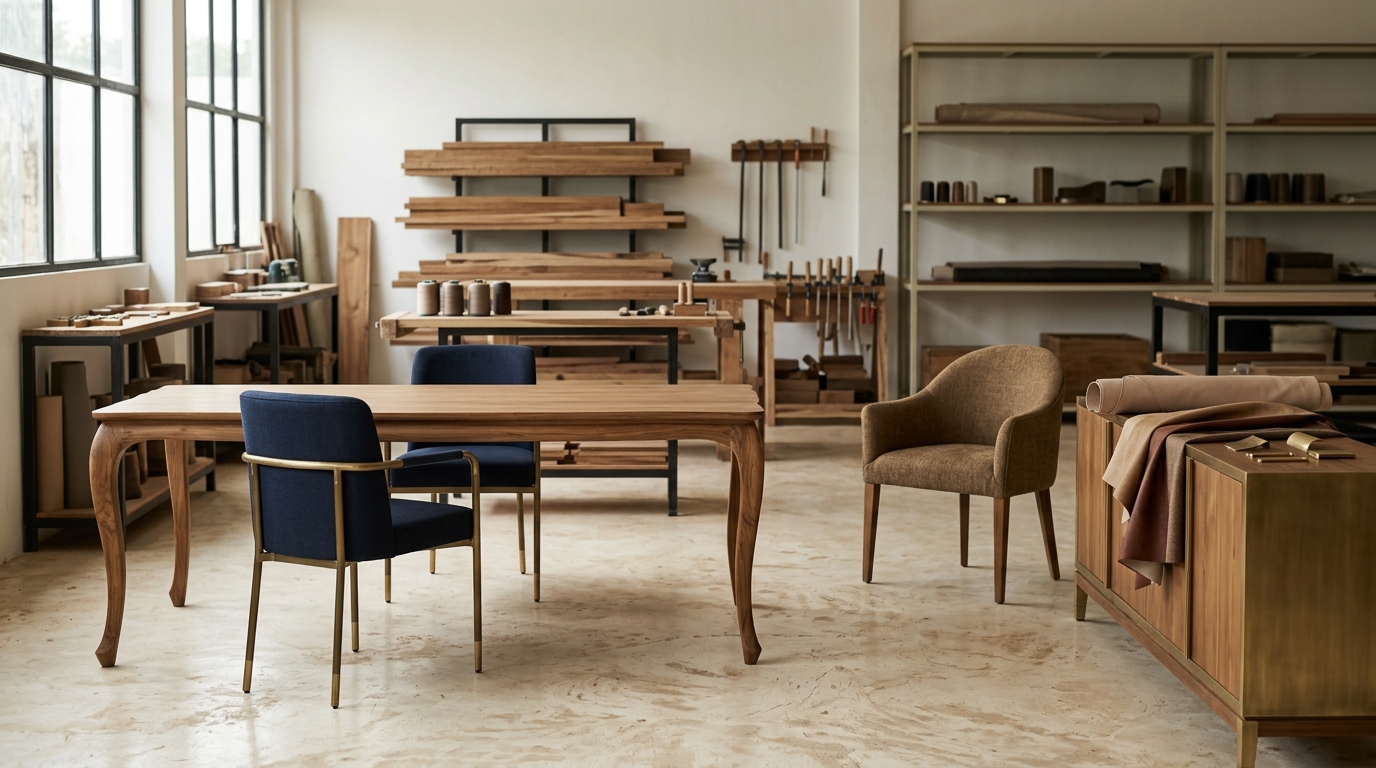
Sourcing furniture from Bali is no longer a niche strategy reserved for independent boutique owners — it has become a primary procurement channel for US-based interior designers, hospitality brands, and luxury retailers who need distinctive, high-quality pieces at margins that Western…
Sourcing furniture from Bali is no longer a niche strategy reserved for independent boutique owners — it has become a primary procurement channel for US-based interior designers, hospitality brands, and luxury retailers who need distinctive, high-quality pieces at margins that Western manufacturing simply cannot match. But navigating the supplier landscape requires more than a Google search and a hopeful email. The difference between a successful container shipment and a costly compliance headache often comes down to knowing which questions to ask before placing an order.
This guide is written specifically for procurement professionals and design-industry buyers in the United States. It covers how to evaluate and vet Bali furniture manufacturers, which materials and certifications matter most for export-quality production, how to structure a realistic landed-cost calculation, and what red flags to watch for when reviewing supplier proposals. It also addresses the logistics detail that most sourcing guides skip entirely: US import duty rates, relevant HTS codes, Indonesian timber legality certification, and how to protect your capital through proper payment terms and third-party quality control.
Whether you are outfitting a boutique hotel in Nashville, stocking a luxury interiors showroom in Los Angeles, or specifying custom case goods for a residential development, the practical frameworks in this article will help you move from initial supplier research to a confirmed purchase order with confidence. The starting point is understanding why Bali has earned its position as one of the world's most respected furniture-manufacturing regions.
Why Bali Has Become a Global Furniture Manufacturing Hub for Serious Buyers
Bali's reputation in the global furniture trade is not the product of marketing. It is the result of centuries of artisan tradition combined with deliberate investment in export infrastructure and access to some of the finest natural materials available in Southeast Asia.
Deep Artisan Heritage Meets Modern Production Capacity
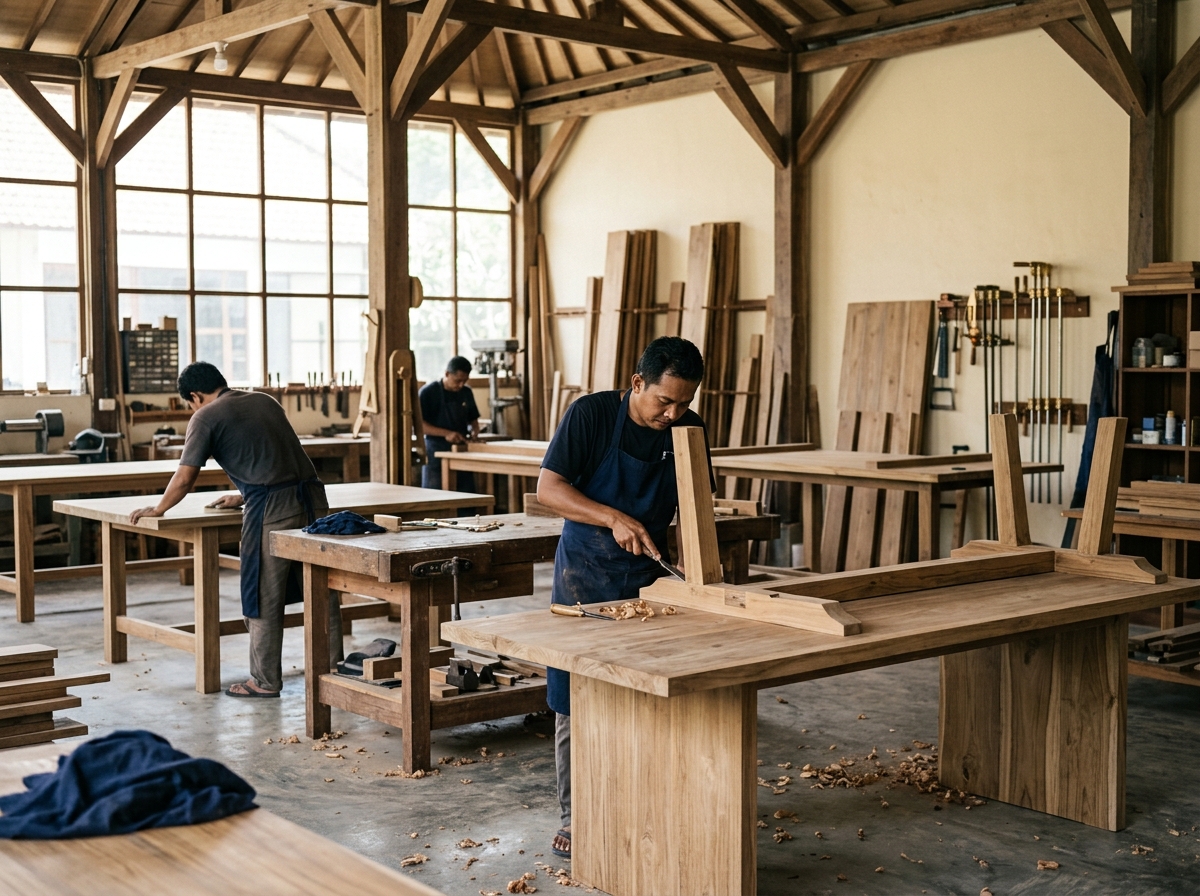
Balinese woodworking and rattan-weaving traditions date back generations, and the skills associated with hand-joinery, carving, and natural fiber work are passed through family and community networks in ways that formal manufacturing training rarely replicates. This means that even mid-scale production workshops maintain a level of craft detail — hand-finished surfaces, mortise-and-tenon joinery, woven rattan inlay — that would command a significant premium if produced in the United States or Europe.
Over the past two decades, many established Bali furniture manufacturers have layered modern production management onto this artisan base. CNC routing, precision kiln-drying facilities, and structured quality control processes now sit alongside traditional handwork in the better factories, giving buyers the consistency of industrial production without sacrificing material quality or finish character.
Access to Premium Raw Materials at the Source
Indonesia sits at the center of one of the world's richest timber and natural fiber belts. Teak wood — arguably the most globally traded tropical hardwood — is grown on government-regulated plantations primarily in Java, with supply chains running directly into Bali's manufacturing workshops. Suar wood (also called monkeypod or rain tree) offers wide slabs and distinctive grain patterns well suited to live-edge dining tables and accent furniture. Mahogany provides a straight-grained, workable hardwood favored for bedroom and dining collections. Rattan — both natural and high-density polyethylene synthetic variants — is harvested and processed within the Indonesian archipelago, keeping supply chains short and material costs competitive.
For US buyers, proximity to raw materials translates directly into lower input costs, faster material sourcing for custom orders, and the ability to work with genuinely rare natural specimens — wide teak slabs, book-matched suar panels — that are difficult to source in the West.
Cost and Export Infrastructure Advantages
Labor and overhead cost structures in Bali remain significantly lower than in the United States, the European Union, or Australia, even after factoring in freight and import duties. For buyers purchasing at wholesale volume, this differential typically enables landed-cost margins that support both competitive retail pricing and healthy project budgets.
Bali's export infrastructure has matured considerably. The port of Tanjung Perak in Surabaya and Benoa Harbor in Bali handle regular container shipments to US West Coast and East Coast ports, with established freight forwarding networks experienced in furniture-specific packing, fumigation compliance, and export documentation. Major freight forwarders operating Indonesia-to-US routes understand the specific requirements of wooden furniture, including phytosanitary certificates and ISPM-15 packaging standards.
The Materials That Define Export-Quality Furniture from Indonesian Manufacturers
Understanding the primary materials used by Bali furniture manufacturers is essential for specifying correctly, avoiding post-import defects, and communicating intelligently with suppliers during the sampling phase.
Teak Wood: Durability, Grain Quality, and Certification
Teak remains the flagship material for Indonesian furniture exports, and for good reason. Its natural oil content makes it highly resistant to moisture, insects, and weathering — properties that make it suitable for both indoor and outdoor applications. Grade A teak, cut from the heartwood of mature plantation trees, displays a tight, even grain and a rich golden-brown color that deepens with age. Lower grades incorporate more sapwood and are appropriate for painted or heavily stained finishes where grain visibility is less critical.
For US buyers, FSC (Forest Stewardship Council) certification is an increasingly important procurement requirement, particularly for hospitality brands with sustainability commitments and retailers supplying LEED-certified projects. Reputable Bali furniture manufacturers sourcing plantation teak can typically provide FSC chain-of-custody documentation. Ask for the specific FSC certificate number and verify it directly on the FSC certificate database before placing large orders.
Rattan, Suar Wood, and the Case for Kiln-Drying
Natural rattan is lightweight, flexible, and visually warm — properties that make it a perennial choice for lounge chairs, dining chairs, and accent pieces in hospitality and residential settings. Outdoor-rated synthetic rattan (HDPE wicker) offers comparable aesthetics with significantly greater resistance to UV exposure and moisture, making it the preferred specification for pool decks, terraces, and restaurant patios in US climate zones with high humidity or sun exposure. When reviewing rattan furniture samples, ask specifically whether the frame beneath the weave is kiln-dried hardwood or untreated timber — the frame material is where moisture-related warping most commonly originates.
Suar wood's appeal lies in its natural slab widths, organic edge profiles, and the distinctive dark figuring that runs through its lighter grain. It is a fast-growing species, which gives it a sustainability advantage over slow-growth hardwoods. Mahogany remains valued for its workability, dimensional stability, and receptiveness to a wide range of stains and lacquer finishes.
Kiln-drying is non-negotiable for export-quality furniture. Timber that has not been properly dried to an equilibrium moisture content suitable for the destination climate will shrink, crack, or warp once it acclimates to the lower humidity of an air-conditioned US interior. Reputable manufacturers kiln-dry their timber to approximately 8–12% moisture content before production and should be able to provide a kiln-drying certificate for each production batch. This single specification requirement eliminates a large proportion of post-delivery quality complaints.
How to Evaluate and Vet Bali Furniture Manufacturers Before Your First Order
The due-diligence process for sourcing furniture from Bali follows a logical sequence: verify legal and certification credentials first, assess production capability second, and evaluate commercial terms third. Rushing any stage creates downstream risk.
Certifications That Signal Export Readiness
FSC Certification confirms that wood raw materials have been sourced from responsibly managed forests and that chain-of-custody documentation exists at each step of the supply chain. It is the standard most recognized by US retail buyers and hospitality procurement teams.
SVLK (Sistem Verifikasi Legalitas Kayu) is Indonesia's mandatory timber legality verification system, administered under the Indonesian Ministry of Environment and Forestry. All Indonesian wood furniture exporters are required to hold a valid SVLK license, which certifies that the timber used in their products has been legally harvested and processed. For US buyers, SVLK compliance is particularly important in the context of the Lacey Act, which prohibits the import of wood products derived from illegally harvested timber. Verify a manufacturer's SVLK status through the SILK (Sistem Informasi Legalitas Kayu) online database maintained by the Indonesian government.
ISO 9001 certification signals that a manufacturer operates a documented quality management system — relevant for buyers placing large hospitality or retail contracts where consistency across production batches is critical.
Sampling, MOQ, and Production Capacity Assessment
Request physical samples before committing to a production order. A credible manufacturer will offer sample production at a defined cost (often applied as a credit against the first order) and will ship samples via air freight so you can assess material quality, finish, joinery, and dimensional accuracy. Review samples under the same lighting and in the same context as the final installation environment where possible.
Minimum order quantities vary by manufacturer type and product category. Catalog items from established export manufacturers typically carry MOQs in the range of a single container load (roughly 20–25 cubic meters for an LCL or FCL shipment), while fully custom production runs may require larger commitments to justify tooling and setup costs. Clarify MOQ at the inquiry stage, not after sampling costs have been incurred.
For hospitality or large retail contracts, ask for a production capacity statement: how many units per category can the factory produce per month, and what is their current order backlog? A factory that cannot demonstrate capacity for your volume within your timeline is not a viable supplier regardless of price or quality.
- ✓Confirm valid SVLK license via SILK database
- ✓Request FSC chain-of-custody certificate number and verify independently
- ✓Review kiln-drying certificate for timber raw materials
- ✓Request physical samples with dimensional specifications
- ✓Clarify MOQ for both catalog and custom production
- ✓Assess monthly production capacity vs. your order volume
- ✓Review export history: prior US, EU, or Australia shipments
- ✓Confirm packaging standards: fumigation compliance and ISPM-15 crating
- ✓Obtain at least two trade references from prior buyers
- ✓Clarify payment terms: deposit, balance, and escrow options
Top Bali Furniture Manufacturers Serving US Buyers and Hospitality Brands
The Bali furniture manufacturing sector spans a wide range of business models, from large integrated export factories with in-house design teams to smaller artisan workshops specializing in a single material or technique. Understanding these categories helps US buyers match supplier type to project requirements.
The table below summarizes the primary manufacturer categories active in the Bali export market, differentiated by specialty, material focus, typical buyer profile, and export readiness indicators:
| Manufacturer Type | Primary Materials | Typical Buyer | Custom Capability | White-Label Available | Export Readiness |
|---|---|---|---|---|---|
| Large integrated export factory | Teak, mahogany, mixed | Hospitality brands, large retailers | Full custom, design collab | Yes | High — regular US/EU container shipments |
| Rattan and wicker specialist | Natural rattan, synthetic HDPE | Interior designers, boutique hotels | Moderate — frame and weave variations | Often | Medium-high — established for EU, growing US |
| Artisan suar/live-edge workshop | Suar wood, reclaimed timber | Luxury residential, design studios | High craft customization | Limited | Medium — may need freight forwarder support |
| Mixed-media outdoor specialist | Teak + aluminum, synthetic rattan | Hospitality F&B, resort procurement | Moderate | Yes | High — experienced with US outdoor furniture market |
| OEM/white-label manufacturer | Teak, rattan, upholstered | Retail brands, contract furnishers | Full specification control | Yes — primary model | High — documentation-ready |
When evaluating specific manufacturers, prioritize those with a verifiable export history to the United States or other regulated markets (EU, Australia), as this demonstrates familiarity with phytosanitary requirements, ISPM-15 packaging, and the documentation standards that US Customs and Border Protection requires.
Manufacturers offering white-label or OEM services can produce furniture to your brand specifications — custom hang tags, branded packaging, and proprietary finish names — which is particularly valuable for luxury retailers building a private-label furniture collection and hospitality brands maintaining design exclusivity across properties.
Custom Order Capabilities: What Bali Manufacturers Can Actually Build for You
The customization depth available from experienced Bali furniture manufacturers is one of the sector's most underappreciated advantages. It extends well beyond selecting a finish color from a swatch card.
Scope of Customization Available
Established export manufacturers can accommodate modifications across nearly every production variable: overall dimensions and scale, wood species and grade selection, joinery technique (mortise-and-tenon, dowel, floating panel), surface finish (natural oil, water-based lacquer, pigmented paint, ceruse or liming effects), upholstery fabric and foam specification, hardware finish, and leg profile. For rattan furniture, frame dimensions, weave pattern, and backing material are all adjustable.
Provide technical drawings in CAD or PDF format where precise dimensions are required. For projects where aesthetic direction is more important than exact specification, mood boards with reference images, material swatches, and finish samples are a practical starting point. Most experienced manufacturers have in-house design teams capable of developing production drawings from mood board direction — a service that is particularly useful for interior designers who have a visual concept but lack the technical furniture drawing capability.
Lead Times for Custom vs. Catalog Production
Catalog items from manufacturers with standing inventory can ship within a few weeks of order confirmation. Custom production runs — new designs, non-standard dimensions, or unique finish combinations — typically require a lead time of approximately eight to sixteen weeks from approved sample to shipment-ready production, depending on order complexity and factory backlog at the time of ordering. Add approximately four to six weeks for sea freight transit time to US ports, plus customs clearance processing.
Hospitality procurement teams should factor these timelines into FF&E schedules and build a buffer for sample revision rounds. A first-time custom order almost always requires at least one sample revision cycle before production sign-off.
Common Use Cases in the US Market
Boutique hotels and resort properties represent the largest hospitality segment for Bali furniture export, with outdoor lounge collections, restaurant dining sets, and guest room case goods among the most frequently specified categories. Restaurant fit-outs — particularly those with a tropical, coastal, or organic design aesthetic — are a growing market. Luxury residential developers and interior designers sourcing for high-end private clients use Bali manufacturers for statement dining tables, custom bedroom furniture, and accent pieces where the natural material character of teak or suar wood is a deliberate design element.
Shipping Bali Furniture to the United States: A Practical Logistics Guide
International logistics is where many first-time Bali furniture buyers encounter unexpected costs and delays. A working knowledge of freight options, Incoterms, and US import requirements is essential before finalizing supplier pricing.
Sea Freight vs. Air Freight
Sea freight is the standard mode for furniture shipments from Bali to the United States. Full Container Load (FCL) shipments — typically in 20-foot or 40-foot containers — offer the lowest per-cubic-meter cost and are appropriate for large orders. Less than Container Load (LCL) consolidation is available for smaller shipments but carries higher per-unit freight costs and slightly longer transit variability due to consolidation and deconsolidation handling. Transit time from Bali or Surabaya to US West Coast ports (Los Angeles, Long Beach) is typically in the range of three to four weeks; US East Coast ports add approximately one additional week.
Air freight is viable for urgent sample shipments or small, high-value pieces where time sensitivity justifies the cost premium, but it is not economically practical for production container quantities.
Understanding Incoterms When Buying from Indonesian Manufacturers
FOB (Free on Board) is the most common Incoterm used in Indonesian furniture export. Under FOB, the manufacturer's responsibility ends when the goods are loaded onto the vessel at the Indonesian port of origin. The buyer (or their freight forwarder) assumes responsibility for ocean freight, insurance, destination port handling, and customs clearance from that point. FOB pricing gives US buyers control over freight provider selection and insurance terms.
CIF (Cost, Insurance, and Freight) includes ocean freight and basic insurance in the manufacturer's price. While it appears simpler, it can obscure freight markups and limits your ability to negotiate freight rates independently.
DDP (Delivered Duty Paid) places all logistics costs, including US import duties and customs clearance, on the manufacturer or their agent. It is the most turnkey option but typically the most expensive and least transparent for buyers who want to understand their full cost structure.
US Import Duties, HTS Codes, and CITES Compliance
Wooden furniture imported from Indonesia into the United States is classified under Chapter 94 of the Harmonized Tariff Schedule (HTS). The applicable subheadings depend on the furniture type and primary material:
| Furniture Category | Typical HTS Subheading Range | General Duty Rate |
|---|---|---|
| Wooden bedroom furniture | 9403.50 | Varies — commonly free to low single digits % |
| Wooden dining/living room furniture | 9403.60 | Varies — commonly free to low single digits % |
| Rattan/wicker furniture (natural) | 9401.50 / 9403.81 | Varies by subheading |
| Outdoor wooden furniture | 9401.69 / 9403.60 | Varies by subheading |
Indonesian furniture does not currently face the additional Section 301 tariff surcharges applied to Chinese furniture imports, which represents a meaningful cost advantage for US buyers who have previously sourced from China.
For teak wood specifically, CITES (the Convention on International Trade in Endangered Species) does not currently list plantation teak under its appendices, meaning standard export documentation is sufficient. However, buyers working with any potentially listed species (certain rare rosewoods, for example) should confirm CITES compliance with their freight forwarder before shipping.
The Lacey Act requires US importers to declare the species, country of harvest, and quantity of plant materials in imported wood products. A manufacturer's valid SVLK certification substantially supports Lacey Act compliance, but the importer of record bears ultimate legal responsibility and should maintain supporting documentation.
Calculating Your True Landed Cost
Landed cost = Manufacturer FOB price + Ocean freight + Marine insurance + Destination port handling + Customs broker fees + US import duty + Inland delivery to warehouse
Failing to model all of these components before comparing supplier prices is one of the most common sourcing errors. A lower FOB price from a less-experienced manufacturer with non-standard packaging may result in a higher landed cost once freight inefficiencies, repacking charges, or customs delays are factored in.
Red Flags That Should Stop You From Ordering with a Bali Manufacturer
The Bali furniture export sector includes manufacturers of genuinely exceptional quality alongside operators who lack the capability, documentation, or ethics to serve professional US buyers reliably. Knowing the warning signs protects both your capital and your project timeline.
No verifiable export history. A manufacturer that cannot provide documented evidence of prior container shipments to regulated export markets (US, EU, Australia, Japan) may lack the practical experience to manage export documentation, packaging compliance, and freight coordination. Ask for bill of lading copies or shipping records — not just claims.
Inability to provide kiln-drying certificates. This is a direct predictor of post-import quality failures. If a manufacturer is resistant or unable to provide batch-level kiln-drying documentation, assume the timber has not been adequately dried and price in the risk of warping, cracking, or joint failure accordingly.
Vague or asymmetric payment terms. Be cautious of manufacturers requiring full payment upfront with no milestone structure, or conversely, those unwilling to accept any deposit before production. Standard practice involves a deposit (typically 30–50%) upon order confirmation, with the balance payable against pre-shipment inspection or bill of lading. Trade finance instruments such as letters of credit (LC) offer additional protection for large orders.
Overpromised lead times. A manufacturer who quotes shorter lead times than the realistic production schedule for your order volume is either misrepresenting their capacity or planning to subcontract your order to unvetted workshops. Cross-reference quoted lead times against their stated monthly production capacity.
No access for third-party inspection. Reputable manufacturers welcome pre-shipment inspection by an independent third-party quality control firm. Refusal or significant resistance to third-party QC access is a serious red flag for large orders.
Pricing Benchmarks and MOQ Expectations for Wholesale Buyers
Establishing realistic pricing expectations before entering supplier negotiations prevents both overpaying and the false economy of selecting underpriced suppliers who cannot sustain quality at the quoted level.
Indicative Price Ranges by Material Category
Pricing from Bali furniture manufacturers is quoted FOB, meaning it excludes freight, insurance, duties, and agent fees. As a general orientation for US wholesale buyers:
- Teak wood dining and living furniture (chairs, tables, case goods) tends to sit at a mid-to-upper price tier relative to other Indonesian wood categories, reflecting the raw material cost of plantation teak and the finishing labor involved. - Rattan and wicker seating and accent furniture typically occupies a lower-to-mid price tier for natural rattan and a mid tier for HDPE synthetic rattan frames with more complex weave patterns. - Suar wood slab tables and statement pieces vary widely based on slab width, figuring, and finish complexity, with genuinely exceptional specimens priced accordingly. - Upholstered pieces with teak or hardwood frames carry premium pricing due to the combined material and labor content.
For specific FOB price benchmarks, request a catalog price list from at least three manufacturers for direct comparison, ensuring the specifications are identical before drawing conclusions.
MOQ Ranges and Volume Pricing
For catalog items, many established export manufacturers set MOQs at a practical shipping threshold — typically enough product to fill a portion of a container — rather than at a per-SKU unit level. This means a buyer can mix multiple catalog SKUs to reach the container MOQ rather than ordering a single item in large quantities.
Full custom production runs typically carry higher MOQ requirements, as the setup costs for new tooling, sample production, and finish trials need to be amortized across the production run. Discuss MOQ flexibility for custom orders at the sampling stage, before committing to development costs.
Long-term supplier relationships and consistent order volume create meaningful pricing leverage. Manufacturers allocate production capacity to buyers who provide reliable, predictable orders — and they price accordingly. Buyers who position themselves as repeat-order partners rather than one-time samplers typically access better pricing, priority scheduling, and more flexible MOQ terms over time.
Frequently Asked Questions About Sourcing from Bali Furniture Manufacturers
How do I find reputable Bali furniture manufacturers that ship to the US?
Start with manufacturers who have a documented export history to US, European, or Australian buyers. Trade directories specific to Indonesian furniture exports, referrals from US-based interior designers or hospitality procurement professionals, and participation in Indonesian furniture trade fairs (including their international buyer programs) are reliable sourcing channels. Always verify SVLK certification status and request trade references before ordering.
What is the typical lead time for custom furniture orders from Bali?
Custom production typically requires approximately eight to sixteen weeks from final sample approval to shipment-ready production, depending on design complexity and the manufacturer's current order backlog. Add sea freight transit time (typically three to five weeks to US ports) and customs clearance processing. Plan your FF&E or retail receiving schedule around a total lead time of approximately four to six months from initial design brief to goods in your warehouse.
Are Bali furniture manufacturers able to produce FSC-certified or sustainable pieces?
Yes. Many established Bali furniture manufacturers source plantation teak with FSC chain-of-custody certification and can provide the supporting documentation required for sustainability reporting. SVLK certification — Indonesia's mandatory timber legality system — also supports Lacey Act compliance for US importers. Request the specific FSC certificate number and verify it independently through the FSC certificate database.
What is the minimum order quantity when buying wholesale from Bali?
MOQ varies by manufacturer and product type. For catalog items, many export manufacturers work with buyers at LCL (Less than Container Load) quantities, which can be as low as a few cubic meters of product. Full custom production runs typically carry higher minimums to justify development costs. Clarify MOQ requirements at the initial inquiry stage.
How does international shipping and import duty work for Bali furniture?
Most Bali furniture is shipped FOB, meaning the buyer arranges and pays for ocean freight, insurance, and US import clearance. Indonesian wooden furniture is classified under HTS Chapter 94 and is generally subject to low to zero MFN (Most Favored Nation) duty rates, without the additional Section 301 tariffs applied to Chinese furniture. Engage a licensed US customs broker to confirm the correct HTS classification for your specific product types before calculating landed costs.
Can Bali manufacturers create branded or white-label furniture for retailers?
Yes — white-label and OEM production is a well-established business model for many Bali furniture manufacturers, particularly those serving larger retail brands and hospitality groups. This typically includes custom hang tags and labeling, branded packaging, proprietary finish names, and design exclusivity agreements. Clarify intellectual property terms and exclusivity scope in your commercial contract before beginning sample development.
Bali furniture manufacturers offer US buyers a rare combination of craft skill, material quality, and cost competitiveness — but realizing that value requires applying the same due diligence you would to any significant supply chain relationship. The buyers who succeed in this market are those who invest in proper vetting, build in realistic logistics timelines, and treat supplier relationships as long-term partnerships rather than transactional exchanges.
Now that you understand the certification landscape, the landed-cost framework, and the red flags to avoid, the logical next step is engaging directly with manufacturers who meet your quality and compliance standards.
You now have the framework to evaluate suppliers, calculate true landed costs, and protect your order from the most common sourcing risks. Request a wholesale quote or custom sample from a vetted Bali furniture manufacturer today — and move your next project from mood board to production with confidence.
Request a Wholesale Quote →Shipping goods from Indonesia?
MTS coordinates consolidation, export documentation and freight across suppliers — one accountable partner from factory to port of destination.
Related services
Related articles
Receive furniture sourcing insights across Asia.
One email per week. No spam.