Modest Fashion Manufacturers Indonesia: Complete Sourcing Guide for Brands
13 min read
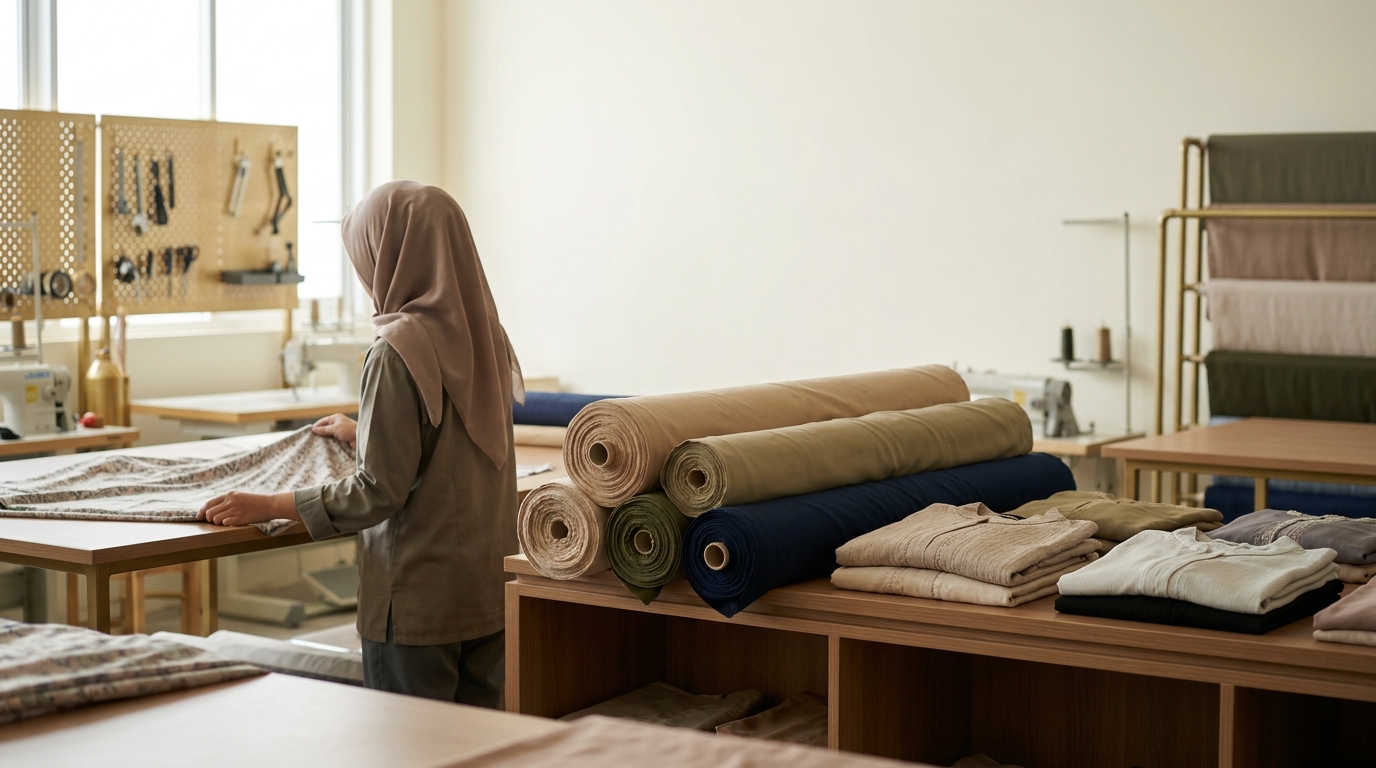
Sourcing modest fashion from Indonesia is a serious manufacturing decision. You need to match factory capabilities to your product category, understand MOQ structures, and verify certifications before committing to a production run. The stakes are high: a misaligned factory partner means sizing…
Sourcing modest fashion from Indonesia is a serious manufacturing decision. You need to match factory capabilities to your product category, understand MOQ structures, and verify certifications before committing to a production run. The stakes are high: a misaligned factory partner means sizing failures in Gulf markets, fabric complaints from Middle Eastern buyers, or ethical audit gaps that block retail entry in Europe and the US.
This guide gives you a city-level breakdown of Indonesian manufacturing capabilities, fabric expertise specific to modest silhouettes, MOQ and pricing frameworks, and a practical certification checklist. It also covers sizing conversion realities for Middle Eastern and US markets, export logistics from Indonesia's main ports, and a structured vetting process. Whether you are launching a private label hijab line or scaling an abaya and kaftan collection for wholesale, the intelligence here is built for sourcing professionals, not consumers.
Indonesia is not just a low-cost alternative. It is the world's largest Muslim-majority country, with deep domestic demand for modest apparel and decades of export-grade manufacturing experience. That combination of cultural fluency and industrial capacity is rare. No other single market offers it at Indonesia's scale.
Why Indonesian Factories Dominate Global Modest Fashion Manufacturing
Indonesia's position in modest fashion manufacturing is structural, not coincidental. The country has approximately 240 million Muslims — the largest Muslim population of any nation globally. That means designers, pattern makers, fabric buyers, and factory operators all have firsthand understanding of modest coverage requirements. This cultural fluency reduces development errors that plague sourcing from non-Muslim-majority countries.
The Scale of Indonesia's Modest Apparel Export Industry
Indonesia consistently ranks among the top exporters of Muslim fashion globally, competing with Turkey, Bangladesh, and Pakistan across different modest apparel categories. The domestic market is enormous, which means factory infrastructure evolved to serve real demand — not just as an export afterthought.
Key export destinations include the Gulf Cooperation Council (GCC) countries, Malaysia, Singapore, and increasingly the United States and United Kingdom. Western modest-wear brands — serving Muslim consumers as well as modest-by-choice customers — have been expanding Indonesian sourcing relationships since approximately 2018.
Manufacturing Cities and Their Specializations
Indonesia's garment manufacturing is concentrated in four cities. Each has a different specialization profile.
| City | Primary Specialization | Factory Scale | Notable Strength |
|---|---|---|---|
| Bandung (West Java) | Hijab, jersey knit, chiffon modest tops | Small–medium SME clusters | Low MOQ, fast sampling |
| Solo (Central Java) | Batik, printed modest apparel, kaftan | Small–medium craft-industrial | Hand-print differentiation |
| Surabaya (East Java) | Export-grade CMT, abaya, cut-and-sew | Medium–large export factories | Volume capacity, compliance |
| Jakarta | Private label, full-package development | Large full-cycle and agents | Brand development services |
| Bali | Modest activewear, resort modest wear | Small boutique factories | Design-led, DTC-ready |
Bandung is the most accessible entry point for emerging modest brands. Factory clusters in West Java specialize in knit and woven hijab production with lower MOQs than Surabaya's export-grade facilities.
Core Product Categories Where Indonesian Modest Fashion Manufacturers Excel
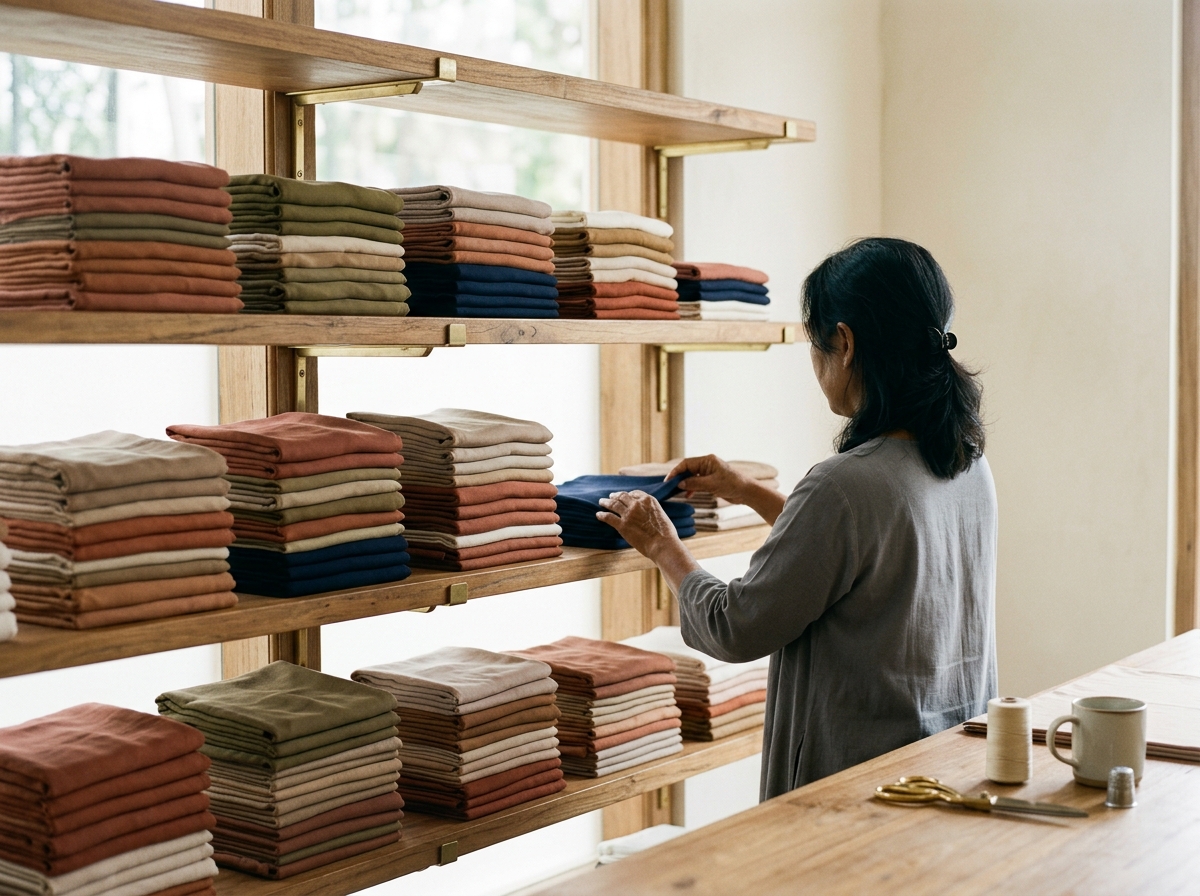
Hijab and Headscarf Production
Indonesian factories produce hijab in three primary constructions:
- Jersey hijab — 4-way stretch, typically cotton-modal or polyester-spandex blends. High domestic volume. Widely available from Bandung SMEs. - Chiffon and georgette hijab — fluid drape, often in polyester or viscose chiffon. Most export demand comes from Gulf buyers. - Instant hijab (pre-sewn) — structured styles with integrated bonnet or inner cap. Requires precise sewing and sizing alignment.
Production runs for hijab can start as low as 300–500 pieces per colorway at boutique Bandung studios. Export-grade factories in Surabaya typically require 1,000–3,000 pieces per style.
Abaya and Kaftan Cut-and-Sew Capabilities
Abaya production demands drape-focused construction: fluid silhouettes, clean seam finishing, and consistent length grading across sizes. Indonesian factories — particularly in Surabaya and Jakarta — have worked with Gulf buyers long enough to understand these requirements.
Kaftan production overlaps with abaya capabilities. Both rely on similar fabric weights and construction methods. Indonesian manufacturers excel here because the garments share DNA with domestic traditional dress, including the baju kurung and telekung.
Regional Modest Garment Specializations
- Baju Kurung — traditional Malay-Indonesian women's garment. Strong production clusters in Sumatra and Riau for export to Malaysia and Singapore. - Telekung (prayer garment) — a specialized modest garment requiring full coverage. Produced mainly for Southeast Asian and Gulf markets. - Modest activewear — an emerging category. Bali-based boutique factories are developing modest swim and sport silhouettes using recycled polyester and UPF-rated fabrics.
Fabric Expertise That Gives Indonesian Modest Apparel Its Edge
Fabric selection is where Indonesian modest fashion manufacturers demonstrate real depth. The country's textile mills — concentrated in West Java — produce rayon, viscose, and woven fabrics that are foundational to modest silhouettes.
Rayon and Viscose: The Drape Advantage
Rayon and viscose are critical fabrics for abaya, kaftan, and wide-sleeve modest tops. They drape cleanly, breathe well in hot climates, and move without revealing body shape — a core requirement for Middle Eastern markets. Indonesian mills produce both fabric types at scale. Proximity between mills and garment factories in West Java reduces fabric lead times significantly compared to sourcing these materials from China.
Chiffon, Georgette, and Crepe Sourcing
Chiffon and georgette are primary hijab fabrics. Indonesian factories source them from both domestic mills and regional suppliers in South Korea and China. High-end export factories often use Korean chiffon for its color consistency and hand-feel quality. Crepe-back satin and matte crepe are increasingly used for luxury abaya production targeting Gulf retail buyers.
Oeko-Tex, Anti-Bacterial Finishes, and Halal Fabric
Oeko-Tex Standard 100 certification is available among mid-to-large Indonesian garment exporters. It signals that fabrics have been tested for harmful substances — relevant for US and European buyers. Anti-bacterial fabric finishes are increasingly requested by Middle Eastern buyers for daily-wear modest garments. Confirm at the fabric specification stage, not during production.
Batik and Hand-Printed Textiles as a Brand Differentiator
Solo-based manufacturers offer something no mass-production facility can easily replicate: authentic batik and hand-stamped (cap) textile production. For modest fashion brands targeting premium positioning, a batik-print kaftan or abaya-length modest dress carries significant brand story value. Minimum quantities for hand-printed batik modest wear are typically higher per colorway due to the dyeing process, but the margin opportunity justifies it for boutique brands.
Understanding MOQ Programs and Pricing Tiers for Modest Brands
MOQ Tiers by Factory Type
| Factory Type | Typical MOQ per Style | Price Tier | Best For |
|---|---|---|---|
| Boutique SME (Bandung) | 100–500 pcs | Low–mid | Emerging brands, sampling |
| Mid-scale export factory (Surabaya, Jakarta) | 500–1,500 pcs | Mid | Growing brands, wholesale |
| Large CMT export factory (Surabaya) | 1,500–5,000+ pcs | Competitive | Established brands, retail |
| Private label studio (Jakarta, Bali) | 50–300 pcs | Premium | DTC brands, low-volume launch |
MOQ is not fixed. Factories negotiate. A boutique studio may accept 100-piece orders on core styles if you commit to multiple styles in a single order. Large export factories occasionally offer lower MOQs for new clients on trial orders, particularly if your brand shows growth potential.
Private Label vs. Custom Development Pricing
Private label production — using a factory's existing block patterns with your branding — is cheaper and faster than custom development. Expect to pay approximately 20–40% less on unit cost for private label versus fully customized construction. Custom development involves your tech pack, your grading, and often your fabric specifications. It requires more factory time, sampling rounds, and upfront development costs.
What to Negotiate Upfront
- Sample fee credit terms - Price breaks at volume thresholds - Fabric sourcing flexibility (your fabric vs. factory-sourced) - Packaging and labeling specifications - Payment terms (typically 30% deposit, 70% before shipment for new relationships)
Sizing Conventions and Fit Standards for Global Modest Fashion Markets
This is one of the most common sourcing failures. Indonesian domestic sizing does not map directly to Middle Eastern, US, or Malaysian size grading — especially for modest silhouettes that require longer body lengths, extended sleeve lengths, and wider torso coverage.
Indonesian Domestic vs. Export Sizing
| Size Reference | Indonesian Domestic | US Women's | Middle Eastern | Malaysian |
|---|---|---|---|---|
| S | Fits approx. 155–160 cm | US 4–6 | GCC S (often runs larger) | Malaysian S |
| M | Fits approx. 160–165 cm | US 8–10 | GCC M | Malaysian M |
| L | Fits approx. 165–170 cm | US 12–14 | GCC L | Malaysian L |
| XL–3XL | Extended domestic range | US 16–24 | GCC XL–3XL (full-coverage grading) | Extended |
How to Prevent Sizing Miscommunications
Supply a complete tech pack. Include:
- Finished garment measurements at every size point - Coverage checkpoints (wrist length, ankle length, neckline height) - Grading increments per size, not just for the base size - Fit model reference: height, bust, waist, hip measurements - Fabric stretch allowance if using knit constructions
Modest-specific grading must be written explicitly. Factories cannot infer it from standard apparel patterns.
Certifications, Ethics, and Compliance Standards to Require From Indonesian Factories
Environmental and Chemical Certifications
- Oeko-Tex Standard 100 — tests fabrics and finished garments for harmful substances. Widely recognized by US and European buyers. Available among mid-to-large Indonesian exporters. - GOTS (Global Organic Textile Standard) — required if you are using organic cotton. Less common among Indonesian modest wear factories but available through certified mills in West Java.
Ethical Production Audits
- BSCI (Business Social Compliance Initiative) — widely used by European buyers. Audits working conditions, wages, and labor practices. - SEDEX / SMETA — another ethical audit standard, common for UK buyers and large retail chains. - SA8000 — the most rigorous social accountability standard. Relatively rare among Indonesian SMEs but present in larger export factories.
Halal Certification
For GCC retail compliance, confirm whether the factory's fabric suppliers hold Halal certification. This is not a universal requirement, but Gulf-based distributors and department store buyers increasingly ask for it. The Indonesian Ulema Council (MUI) issues Halal certification relevant for this purpose.
- ✓Oeko-Tex Standard 100 (fabric or finished garment level)
- ✓GOTS (if organic cotton is specified)
- ✓BSCI or SEDEX audit report (within last 2 years)
- ✓SA8000 (for larger factory tiers, US/EU retail compliance)
- ✓Halal fabric certification (for GCC export markets)
- ✓Business registration and export license verification
- ✓Factory audit report from independent third party
How to Vet and Shortlist Modest Fashion Manufacturers in Indonesia
Key Questions to Ask Before Requesting a Sample
- What is your core product category? (hijab, abaya, kaftan, activewear?) - Do you produce CMT only, or do you offer full-package including fabric sourcing? - What is your minimum order quantity per style and per colorway? - Can you share references from current export clients? - Do you hold BSCI, SEDEX, or Oeko-Tex certifications? - What is your current production lead time from approved sample to shipment?
Red Flags in Factory Profiles
- No physical address or verifiable registration - Refuses to allow a third-party factory audit - Claims MOQ of 10–20 pieces with full-custom development (unsustainable at factory level) - Cannot provide fabric composition certificates - Vague on payment terms or pushes for full upfront payment
Trade Show and Platform Sourcing
Inacraft (Jakarta) — Indonesia's largest handicraft and textile trade show. Relevant for artisan-oriented modest brands. Indo Intertex — Indonesia's primary textile and garment manufacturing trade show. Most directly relevant for B2B sourcing.
Virtual sourcing platforms (including regional B2B directories) can supplement trade show sourcing, but treat online profiles as a starting point only. Physical or agent-verified factory visits remain the standard for production partnerships above approximately 1,000 units.
Using Third-Party Quality Control in Indonesia
Independent inspection agents operating in West Java and East Java can perform:
- Pre-production fabric and trim inspection - During production (DUPRO) inspection - Final random inspection (FRI) before shipment
Budget approximately USD 250–400 per inspection day for independent QC agents. For modest apparel, specify that inspectors check coverage measurements — neckline height, sleeve length, hem length — at final inspection.
Export Logistics and Lead Times From Indonesia to Key Markets
Sea Freight From Indonesian Ports
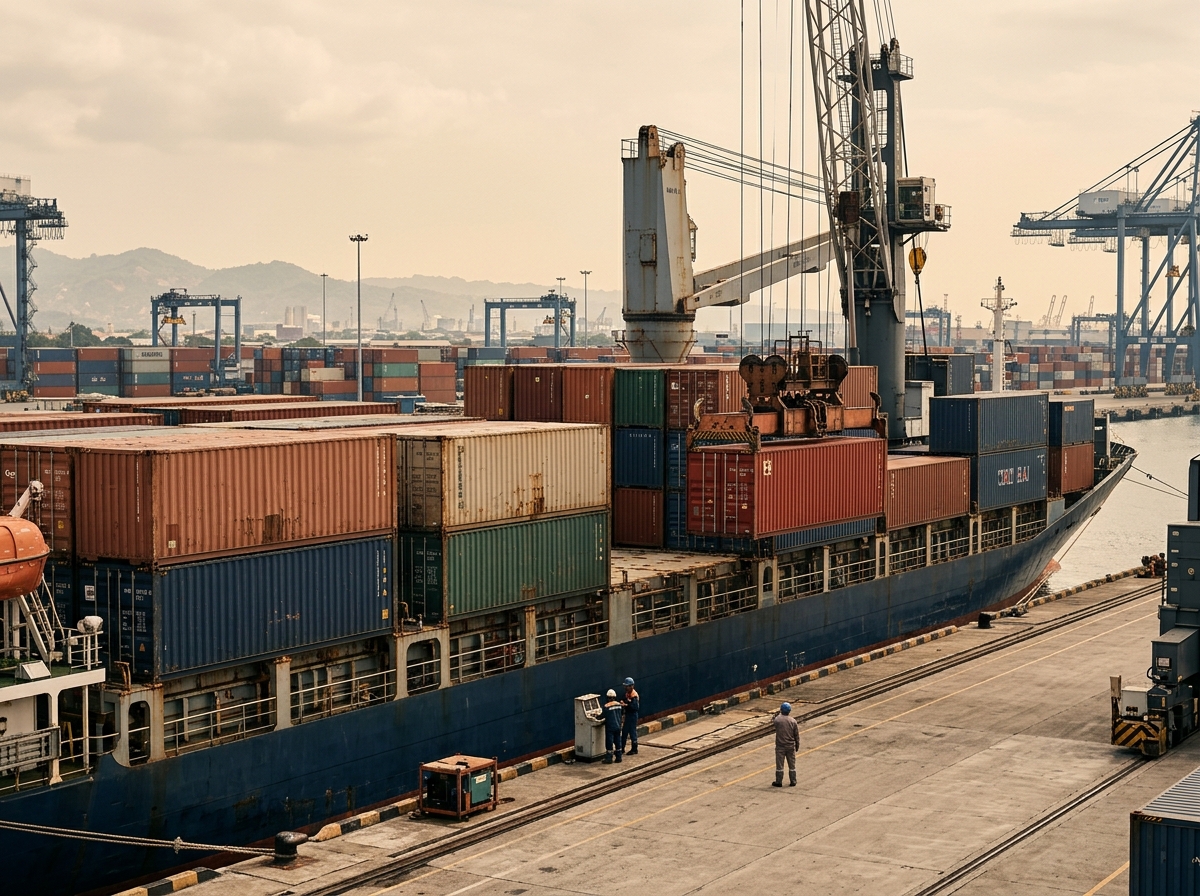
The two primary export ports for garment shipments are Tanjung Priok (Jakarta) and Tanjung Perak (Surabaya).
| Destination | Port | Approximate Transit Time | Typical Incoterm |
|---|---|---|---|
| US West Coast | Tanjung Priok | 18–24 days | FOB / CIF |
| US East Coast | Tanjung Priok | 25–32 days | FOB / CIF |
| UAE / Saudi Arabia | Tanjung Priok | 14–20 days | FOB |
| Malaysia | Tanjung Priok | 3–5 days | FOB |
| Germany / Netherlands | Tanjung Priok | 22–28 days | FOB / CIF |
Transit times are approximate and subject to carrier schedules and port congestion. Allow buffer time for customs clearance at destination.
Air Freight for Small-Batch and Seasonal Orders
Air freight from Jakarta to the US typically takes 3–5 days. Costs are significantly higher than sea freight — often 6–10x per kilogram. Air freight is viable for:
- Sample shipments (standard for development) - Seasonal urgency orders (Ramadan collection drops) - Small first orders under 50 kg
Customs Documentation for Modest Apparel Exports
Standard documents required for Indonesian garment exports:
- Certificate of Origin (Form E for ASEAN trade, Form D for ASEAN-specific preferences) - Commercial Invoice and Packing List - Bill of Lading or Air Waybill - HS Code classification — modest apparel falls under HS Chapter 62 (woven) or Chapter 61 (knitted), with sub-classifications by garment type
Work with an Indonesian freight forwarder experienced in apparel exports. Errors in HS code classification can trigger customs delays or duty miscalculations at US and EU entry points.
Frequently Asked Questions About Sourcing Modest Fashion in Indonesia
What is the minimum order quantity for modest fashion manufacturing in Indonesia? MOQ varies by factory type. Boutique studios in Bandung and Jakarta accept orders from approximately 100–300 pieces per style. Mid-scale export factories typically require 500–1,500 pieces. Large CMT factories in Surabaya may require 1,500 pieces or more. Private label programs using existing factory blocks can start as low as 50–100 pieces.
Which Indonesian city is best for abaya and hijab production? For hijab: Bandung. It has the deepest concentration of knit and chiffon hijab producers with flexible MOQs. For abaya and kaftan: Surabaya and Jakarta, where export-grade cut-and-sew factories have experience with Gulf buyer requirements and drape-focused construction.
Can Indonesian manufacturers produce modest fashion to Middle Eastern sizing standards? Yes, but only if you supply a detailed tech pack with explicit coverage specifications and size grading instructions. Factories do not automatically apply Middle Eastern sizing conventions. Gulf sizing tends to run larger and requires longer length grading. Specify this clearly at the development stage.
What certifications should I require from an Indonesian modest-wear factory? At minimum: Oeko-Tex Standard 100 and a BSCI or SEDEX audit report. For GCC export: ask about Halal fabric certification from MUI-accredited suppliers. For US and European retail entry: GOTS (if organic claims are made) and SA8000 for larger factory tiers.
How long does it take to develop and produce a modest fashion collection in Indonesia? Development and sampling: approximately 4–8 weeks per style, depending on complexity. First production run after sample approval: typically 6–12 weeks. Total timeline from initial contact to shipment-ready goods: approximately 3–5 months for a new supplier relationship. Established partners with approved patterns can compress this to 8–10 weeks.
Is it possible to do private label modest fashion production in Indonesia with low MOQs? Yes. Jakarta and Bali have private label studios offering programs starting at 50–150 pieces per style using pre-built blocks for hijab, abaya, and kaftan silhouettes. Unit costs are higher than custom development at volume, but the entry point is significantly lower. These programs suit DTC brands testing a market before committing to full custom development.
Indonesia offers a genuinely differentiated sourcing environment for modest fashion brands: cultural expertise embedded in the manufacturing base, strong fabric infrastructure for drape-focused modest silhouettes, and a tiered factory ecosystem that serves both emerging brands and high-volume wholesale buyers. The key execution variables — sizing alignment, certification verification, and factory vetting — are manageable with the right process and the right documentation standards.
You now have the sourcing framework. The next step is to put it into practice by requesting samples from verified Indonesian modest fashion manufacturers who match your product category, MOQ requirements, and certification standards.
You have the sourcing criteria, the certification checklist, and the city-level factory breakdown. Connect with verified modest fashion manufacturers in Indonesia to request samples aligned to your abaya, hijab, or kaftan specifications — and validate fit, fabric, and compliance before committing to production.
Request Manufacturer Samples →Need eyes on the ground in Indonesia?
MTS is an execution partner — supplier verification, manufacturing management, quality control and export logistics across Indonesia, Vietnam and China.
Related services
Related articles
Receive furniture sourcing insights across Asia.
One email per week. No spam.