Thailand Garment Manufacturers: B2B Sourcing Playbook
12 min read
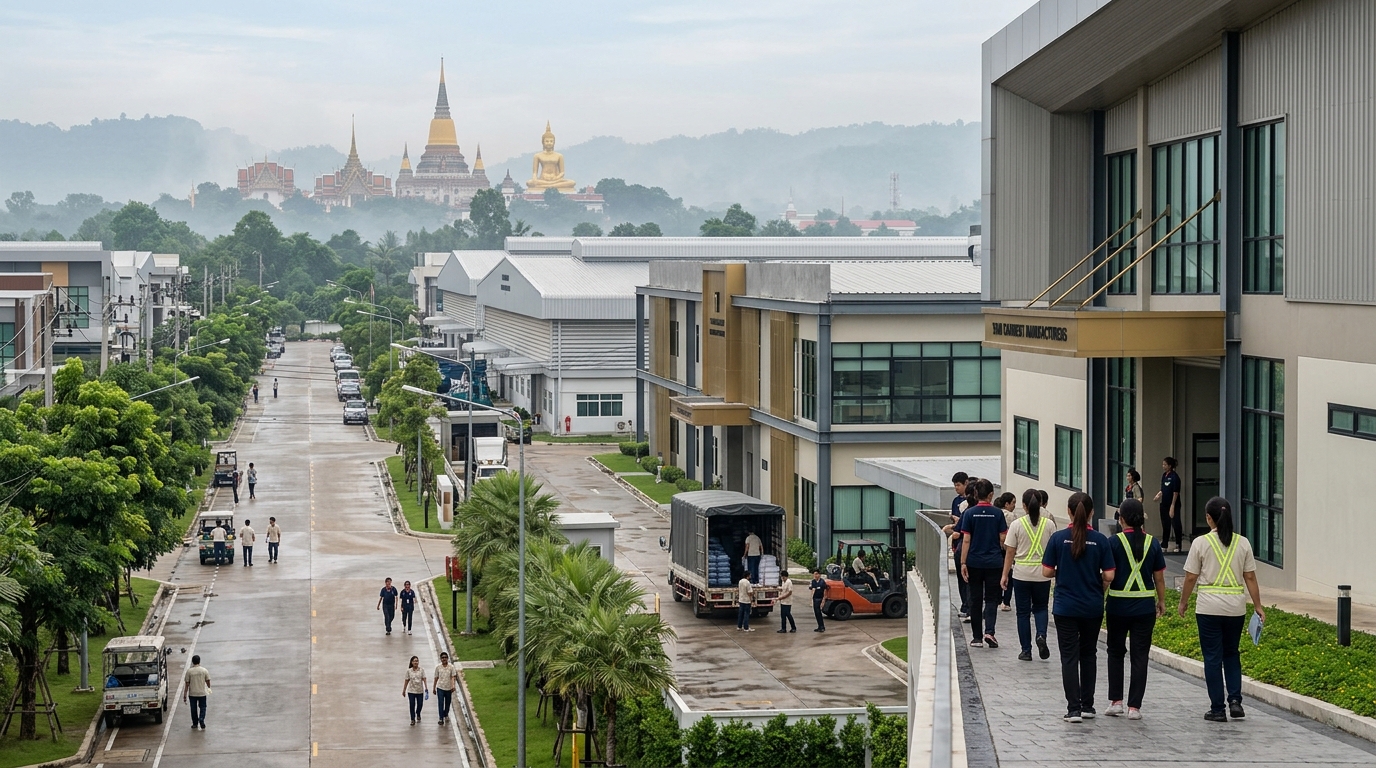
Thailand's apparel manufacturing sector offers apparel brands a proven combination of vertical mill capacity, reliable quality systems, and trade agreement access — but navigating it requires knowing where to look and how to structure engagement from the first inquiry.
Thailand has been a significant apparel exporting country for decades, and while global attention frequently drifts toward Vietnam or Bangladesh on cost grounds, Thailand garment manufacturers occupy a distinct and defensible position in the market. The sector is characterised by a relatively mature factory base, meaningful vertical integration in textiles and trims, and a workforce with deep cut-and-sew experience across categories including woven sportswear, resort and casual wear, workwear, and performance fabrics. For brands that prioritise quality consistency, development capability, and supply chain transparency alongside unit economics, Thailand deserves a serious place in any Southeast Asia sourcing strategy.
The manufacturing landscape is not monolithic. You will find large integrated mills with their own yarn spinning, weaving or knitting, dyeing, and garment assembly under one roof sitting alongside smaller, agile cut-and-sew operations that focus exclusively on assembly using buyer-supplied or trader-sourced fabric. Understanding which factory type fits your programme — and at what stage of your growth — is the first structural decision in building a Thai sourcing relationship. Brands entering Thailand for the first time often underestimate how different the commercial logic is between these two factory profiles, and misalignments on MOQ, lead time, and development capacity are the most common reasons early engagements stall.
This playbook is written for procurement managers and brand sourcing leads who are either evaluating Thailand for the first time or looking to move an existing Thai relationship from transactional to programmatic. It covers the main production hubs, factory types, baseline commercial terms, quality expectations, and the trade framework that affects landed cost. For a broader view of how to structure durable Asian manufacturing partnerships at scale, seeBuild a Durable Manufacturing Partnership in Asia That Scales.
Understanding the Main Production Hubs Across Thailand
The majority of export-grade apparel manufacturing in Thailand is concentrated in and around Bangkok and its surrounding provinces, particularly in the industrial corridors to the east and north of the city. The Eastern Economic Corridor (EEC) — which covers Chonburi, Rayong, and Chachoengsao — has attracted significant industrial investment, and while it is more associated with automotive and electronics manufacturing, some larger textile and apparel operations have established or expanded there, drawn by infrastructure quality and logistics connectivity through Laem Chabang port.
Bangkok itself and the greater metropolitan area remain the centre of gravity for private-label development and mid-to-large garment factories. Proximity to the city supports faster sample turnarounds, easier access to fabric and trim markets, and the presence of buying offices, freight forwarders, and compliance auditors.
Chiang Mai in northern Thailand has developed a more specialised cluster, particularly in premium casual wear, resort wear, artisan finishing, and smaller-run private-label production. Factories in this region often work with natural fibres including cotton and linen, and some have built capacity in hand-finishing techniques that are difficult to replicate at scale. MOQs in Chiang Mai workshops tend to be lower, which makes the region accessible to emerging brands, though logistics to port adds time and cost that needs to be factored into lead time calculations.
Vertical Integration and What It Means for Your Sourcing Programme
One of the more significant structural advantages available through Thailand apparel manufacturing is access to vertical mills — factories that control multiple stages of the supply chain, from fibre or yarn through to finished garment. Vertical integration matters commercially for several reasons.
First, it compresses the supply chain. When a single facility handles fabric production, dyeing and finishing, and cut-and-sew assembly, there are fewer handoffs where quality variance is introduced and fewer parties through whom lead time can accumulate. Second, it can provide cost predictability on fabric, particularly for programmes where you are ordering against a proprietary or developed fabric specification rather than a stock construction. Third, it simplifies traceability documentation, which is increasingly relevant for brands operating in markets where supply chain due diligence requirements are tightening.
Not all programmes need or benefit from a vertically integrated partner. If your brand uses a diverse range of fabrics sourced from multiple origins, or if your order volumes are below the minimums that make a vertical mill commercially interested, a specialised cut-and-sew factory working with your nominated fabric suppliers may be more appropriate. The two models are not mutually exclusive — some brands run their core volume through a vertical partner and use focused cut-and-sew factories for category extensions or limited-edition runs.
Fabric and Trim Sourcing Within Thailand
Thailand has an established domestic textile industry covering cotton and synthetic wovens, knitted fabrics, and a range of specialty constructions. Bangkok's fabric and trim markets are accessible to factory technical teams and buying agents, and several Thai factories have longstanding supplier relationships that allow them to source and quality-approve fabric on a buyer's behalf. This arrangement can work well for brands that lack the in-country presence to manage fabric approval directly, provided you establish clear material specifications, approved supplier lists, and pre-production fabric sign-off procedures in the purchase order terms.
Typical MOQs, Lead Times, and Pricing Structures in Thai Apparel Factories
Commercial terms in the Thai apparel sector follow patterns common to the broader Southeast Asian market, with some Thailand-specific characteristics worth noting.
| Factory Profile | Typical MOQ per Style | Development Lead Time | Production Lead Time |
|---|---|---|---|
| Large vertical mill | 1,000+ units per colourway | 10-16 weeks | 10-14 weeks ex-fabric |
| Mid-size cut-and-sew | 300-800 units per style | 8-14 weeks | 8-12 weeks ex-fabric |
| Small specialist workshop | 100-400 units per style | 6-10 weeks | 6-10 weeks ex-fabric |
These are indicative ranges. Actual terms depend on category complexity, fabric sourcing lead time, current factory capacity, and your relationship history with the supplier. First-time buyers should plan for the longer end of these ranges until the factory has visibility into your processes, tech pack quality, and responsiveness during sample approval.
Pricing in Thailand is generally quoted FOB Bangkok or FOB Laem Chabang. For programmes where the factory sources fabric, you will commonly see CMT (cut, make, trim) and FOB price structures quoted separately, which is useful for benchmarking your fabric costs independently. Payment terms for new relationships typically follow a 30/70 structure — 30% on order confirmation and 70% against shipping documents — as described in the FAQ section below.
Quality Baselines, Compliance Audits, and Certification Expectations
Thailand garment manufacturers at the export tier generally operate to quality management systems aligned with ISO 9001 principles, and many hold formal certification. Inline inspection and end-of-line AQL inspection are standard practice in factories accustomed to working with European and North American buyers. The specific AQL level — commonly 2.5 for major defects and 4.0 for minor defects — should be written into your purchase order terms rather than assumed.
For brands with chemical compliance obligations in the EU or US markets, OEKO-TEX Standard 100 certification at the fabric or finished garment level is achievable within the Thai supply chain, though not universal. Ask for current certificates and check the scope — certification at the fabric stage does not automatically cover dyes or trims used in garment assembly.
Social compliance audits are widely conducted in Thai export factories. BSCI and SMETA two-pillar audits are the most commonly encountered frameworks among international buyers. Thailand has its own labour law framework and minimum wage structures, and BOI-promoted factories are subject to additional regulatory oversight. Audit reports are typically available to serious buyers under NDA, and factories that decline to share recent audit results warrant additional scrutiny.
Trade Agreements and How They Affect Your Landed Cost Model
Thailand's participation in RCEP and the ASEAN Free Trade Area (AFTA) provides preferential tariff access to a broad set of markets, including Japan, South Korea, Australia, New Zealand, China, and all ASEAN member states. For apparel brands selling primarily into these markets, sourcing from Thailand can yield meaningful duty savings relative to sourcing from countries outside the agreement framework, provided rules of origin requirements are satisfied. The standard RCEP certificate of origin and ATIGA Form D are the primary instruments used.
Exports to the United States are subject to standard MFN tariff rates, as there is no US-Thailand free trade agreement currently in force. EU-bound exports similarly do not benefit from the same preferential access available to countries under the EU GSP framework for lower-income nations. Brands with significant US or EU distribution should model the duty impact carefully before making a final sourcing market decision, as this can materially affect the cost comparison with alternative origins.
For a full view of how tosource from Thailandwithin a broader multi-country strategy, including regulatory registration and logistics setup, MTS provides on-the-ground guidance across the region. You can also review ourThailand manufacturing servicesto understand how we structure supplier identification, qualification, and ongoing programme management.
Building a Programmatic Relationship Beyond the First Order
The most common failure mode in apparel sourcing is treating each season as a discrete transaction rather than building toward a structured programme. This matters in Thailand because the factories with the strongest quality track records and most capable development teams have choices about which international customers to prioritise. A buyer who places consistent forward orders, provides clear technical documentation, and pays reliably will access better capacity allocation, tighter lead times, and greater willingness from the factory to absorb development costs.
Practically, this means moving toward annual or seasonal capacity agreements that give the factory visibility into your volume expectations, even if specific styles and quantities are confirmed order by order. It means establishing a clear escalation path for quality issues so that problems are resolved at the factory level before they become shipment disputes. And it means investing in periodic in-person visits — or engaging an on-the-ground partner who can maintain the relationship between your own travel.
Thailand's garment manufacturing sector rewards buyers who approach it as partners rather than as interchangeable commodity suppliers. The factories that have sustained export programmes for ten or twenty years have done so by being selective, and they apply the same logic in reverse when evaluating whether a new international buyer is worth developing a relationship with.
A well-structured programme with the right Thai supplier can provide brands with reliable production capacity, credible compliance documentation, and the development agility to respond to market changes — all within a trade framework that supports competitive landed costs in key Asian markets. The work is in building the commercial and operational foundation from the first engagement rather than retrofitting it after problems emerge.
Frequently Asked Questions
What minimum order quantities do Thailand garment manufacturers typically require?
MOQs vary considerably by factory type. Cut-and-sew workshops focused on private label often accept orders starting around 300 to 500 units per style, while larger vertically integrated mills typically set minimums at 1,000 units or higher per colourway. Brands bringing their own fabric can sometimes negotiate lower thresholds on garment assembly alone. It is worth confirming whether the stated MOQ applies per size run or per total order, as this materially affects entry-level commitment.
How do lead times from Thai apparel factories compare with other Southeast Asian markets?
For repeat production orders with approved samples and pre-sourced fabric, lead times from Thai factories commonly run eight to fourteen weeks from purchase order to shipment. First-time orders requiring development samples and fabric sourcing through the factory can extend to sixteen to twenty weeks. These figures are broadly comparable with Vietnam and slightly shorter than some Indonesian counterparts, though Thailand's advantage is often consistency rather than raw speed.
Does Thailand benefit from preferential tariff access for garment exports?
Thailand is a signatory to RCEP and has bilateral and ASEAN-framework free trade agreements that provide preferential rates into major markets including Japan, Australia, and ASEAN member states. Exports to the European Union do not currently benefit from GSP preferences at the same level as some lower-income Southeast Asian countries, so EU-bound brands should verify applicable duty rates with their customs broker before finalising the landed cost model. RCEP Form certificates of origin are issued through Thai authorities and are widely accepted.
What quality certifications should I expect from serious Thai apparel suppliers?
Most export-focused factories in Thailand operate to ISO 9001-based quality management systems, and many hold certifications relevant to their target markets, including OEKO-TEX Standard 100 for chemical safety and, for brands requiring it, GOTS for organic fibre chains. Social compliance audits aligned to BSCI or SMETA are common among factories serving European and North American buyers. Asking for audit reports covering the most recent twelve months is a reasonable baseline request during supplier qualification.
Is Thailand a viable option for private-label product development, not just volume production?
Yes, and product development is arguably one of Thailand's clearer competitive advantages. Several Bangkok-area factories maintain in-house design and technical pattern rooms, and are accustomed to working from brand-provided tech packs or from concept briefs. Smaller specialist workshops in Chiang Mai have built reputations in premium casual and resort wear development. The key is identifying factories whose sampling capacity matches your development cadence — some cap development slots to a fixed number of new styles per season.
How should I structure payment terms when working with a new Thai factory?
A common starting structure is 30% deposit upon purchase order confirmation and 70% against shipping documents or bill of lading. More established relationships may shift toward letter of credit terms or extended payment windows, but factories working with new international buyers will almost always require a meaningful deposit before cutting. Avoid agreeing to payment terms that link the final balance to your receipt of goods rather than to documented shipment, as this can create friction at the port and is not standard practice in the Thai market.
What role does the BOI play in Thailand's garment manufacturing sector?
Thailand's Board of Investment promotes and supports investment in manufacturing activities that meet specific criteria around value-add, technology, or export orientation. Some Thai garment factories operate under BOI-promoted status, which can affect their cost structure through tax incentives and, in some cases, their ability to employ certain categories of skilled or technical labour. For buyers, BOI status is generally a positive signal about the factory's scale and compliance posture, though it is not a substitute for your own quality and social compliance due diligence.
Thailand offers apparel brands a sourcing option that combines manufacturing depth, trade agreement access, and private-label development capability in a single market. The path to capturing those advantages runs through careful factory selection, clearly structured commercial terms, and a sourcing programme designed from the outset to scale rather than to test. Getting those foundations right from the first engagement is what separates programmes that compound value over time from those that reset with every season.
Need eyes on the ground in Thailand?
MTS is an execution partner — supplier verification, manufacturing management, quality control and export logistics across Indonesia, Vietnam and China.
Related services
Related articles
Receive furniture sourcing insights across Asia.
One email per week. No spam.