Uniform Workwear Manufacturers Indonesia: A B2B Sourcing Guide for Corporate Buyers
14 min read
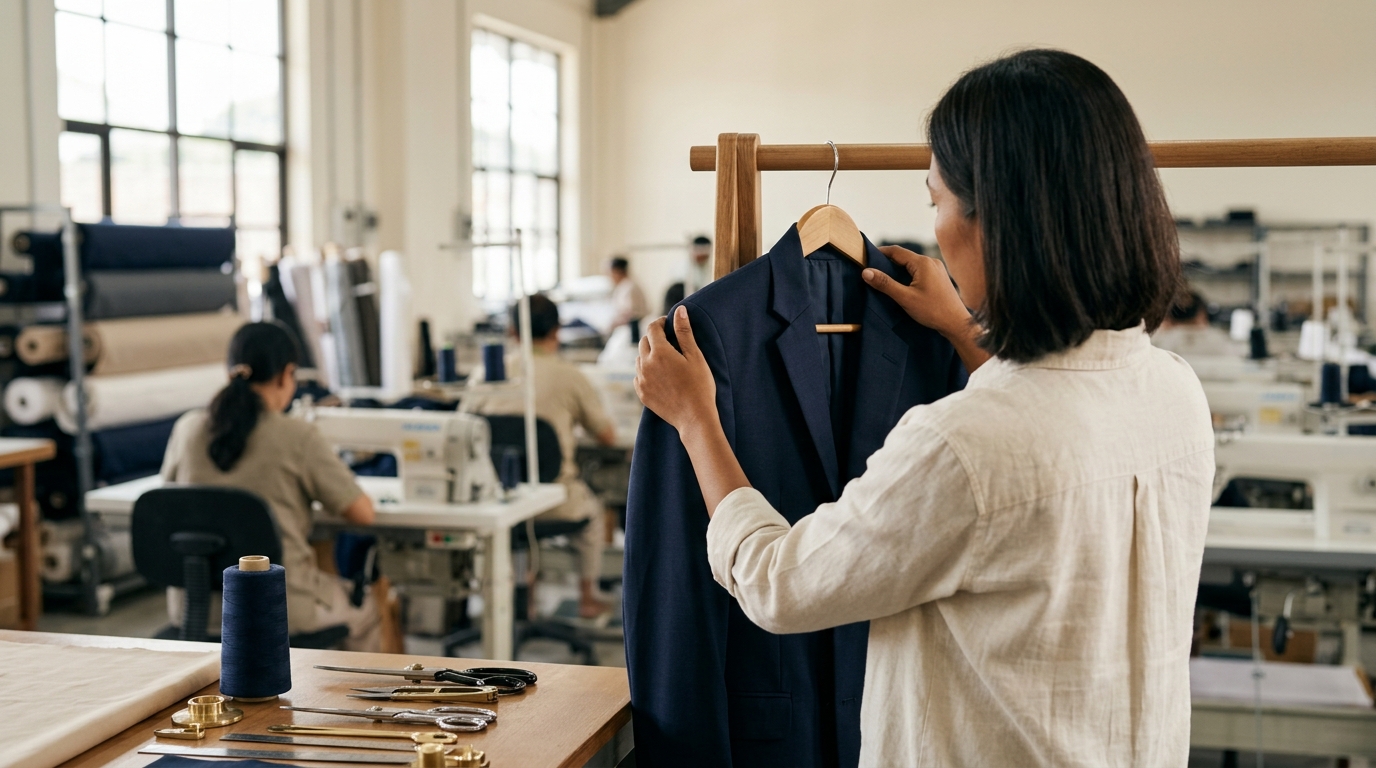
Corporate procurement teams evaluating uniform programs in Asia face a clear fork in the road: choose a lower-cost country with limited vertical integration, or select a manufacturing base that combines competitive labor, textile depth, and export infrastructure. Indonesia sits at that…
Corporate procurement teams evaluating uniform programs in Asia face a clear fork in the road: choose a lower-cost country with limited vertical integration, or select a manufacturing base that combines competitive labor, textile depth, and export infrastructure. Indonesia sits at that intersection for workwear sourcing. The country's garment sector spans corporate dress uniforms, hospitality liveries, medical scrubs, and heavy industrial FR garments — all within a single sourcing corridor.
This guide is built for US procurement managers, hospitality group purchasing officers, and workwear distributors who need more than a factory list. You will find fabric and safety specifications, FR compliance requirements under US standards, social audit frameworks, MOQ and lead-time benchmarks, and logistics structures for multi-site rollout programs. Cost comparisons against Vietnam and Bangladesh are included to anchor your supplier negotiations.
The sections that follow move in the order a buyer actually works: sourcing rationale, factory evaluation, specifications, branding services, compliance audits, commercial terms, logistics, and contract structure. Use the checklist and comparison tables as working tools, not background reading.
Why Indonesia Delivers a Strategic Advantage for Large-Scale Uniform Programs
Indonesia's garment export sector is one of the most vertically integrated in Southeast Asia. Several major groups control spinning, weaving, dyeing, and cut-and-sew under one roof. That integration compresses lead times and reduces inter-supplier quality variance — both critical for large uniform programs requiring consistent color matching across thousands of units.
Labor costs in Indonesia remain competitive relative to China and, in many product categories, comparable to Vietnam. The country's government has invested in textile industrial zones, particularly in West Java and Central Java, creating concentrated supplier clusters with shared export logistics.
Trade Framework Considerations for US Buyers
Indonesia does not currently hold a bilateral free trade agreement with the United States. US importers pay standard MFN tariff rates on most apparel categories, typically in the 12–32% range depending on HS code. The Generalized System of Preferences (GSP) program, which previously benefited Indonesian exporters, has been subject to periodic US Congressional review.
Despite the tariff environment, total landed cost from Indonesia frequently remains competitive versus China on duty-inclusive calculations, particularly for cotton-rich workwear categories where Chinese tariff exposure has increased under recent US trade actions.
Product Breadth Across Uniform Categories
Indonesian manufacturers collectively cover:
- Corporate and office uniforms — blazers, trousers, polo shirts, receptionist dress uniforms - Hospitality liveries — hotel front-of-house, F&B, housekeeping, and spa uniforms - Medical workwear — scrubs, lab coats, patient gowns, and sterile-area coveralls - Industrial workwear — coveralls, FR-rated garments, hi-vis vests, and mining-sector PPE
Leading Indonesian Uniform and Workwear Manufacturers Worth Evaluating
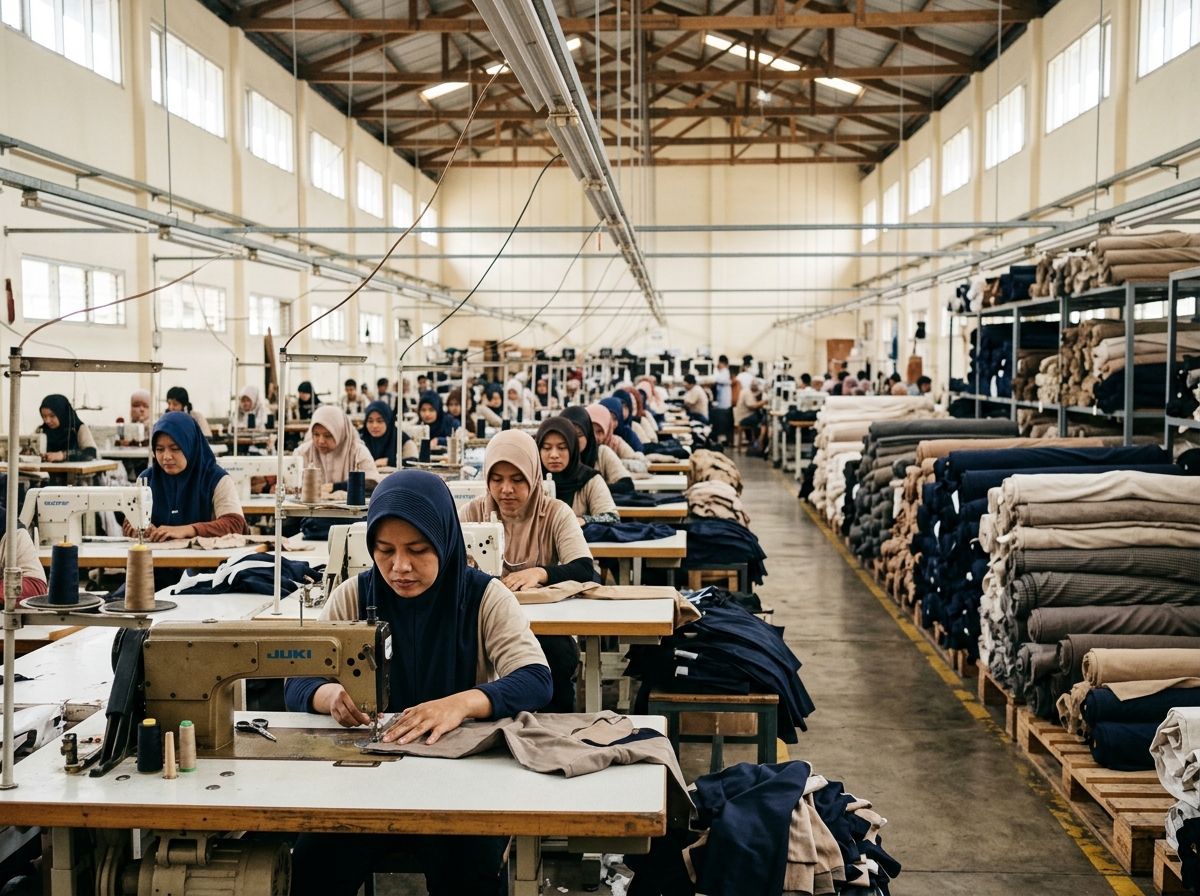
Large Integrated Mills
Sritex (PT Sri Rejeki Isman Tbk) is one of Indonesia's most recognized vertically integrated textile and garment manufacturers. The company operates spinning, weaving, finishing, and garment production lines. Its military and workwear divisions have supplied government and industrial clients. Sritex has held certifications including OEKO-TEX Standard 100 and has worked with international compliance standards. Note: buyers should conduct current due diligence on Sritex's operational status, as the company has faced financial restructuring in recent years.
Busana Apparel Group operates multiple garment factories across Indonesia, supplying international brands with large-volume cut-and-sew production. The group's scale suits buyers needing uniform programs above 50,000 units annually.
PT Trisula Textile Industries specializes in uniform fabrics and finished uniforms, serving both domestic corporate clients and export markets. Trisula is particularly relevant for buyers sourcing polyester-viscose and polyester-cotton suiting fabrics for corporate dress uniforms.
Dan Liris (a subsidiary of the Batik Keris Group) operates spinning-through-garment production in Central Java. Dan Liris serves both fashion and uniform segments and holds multiple social compliance certifications relevant to US buyers.
Argo Manunggal Group rounds out the major integrated producers, with textile manufacturing capabilities across synthetic and blended fabrics used in workwear applications.
Specialization Mapping by Category
| Category | Recommended Factory Tier | Key Capability Signal |
|---|---|---|
| Corporate dress uniform | Large integrated mill or mid-size specialist | Suiting fabric weaving + in-house tailoring |
| Hotel / hospitality livery | Mid-size specialist | Color consistency, wash-fastness testing |
| Medical scrubs / lab coats | Mid-size with medical export history | OEKO-TEX certification, anti-microbial fabric options |
| Industrial coverall (non-FR) | Large mill or industrial specialist | Heavy-weight fabric, reinforced stitching |
| FR-rated workwear | Specialist with NFPA-tested fabric sourcing | NFPA 2112 / ASTM F1506 documentation |
Certifications to Require
Credible Indonesian uniform factories typically hold one or more of the following:
- ISO 9001 — quality management system - OEKO-TEX Standard 100 — chemical safety of finished textile products - WRAP (Worldwide Responsible Accredited Production) — factory-level social compliance - BSCI or SEDEX/SMETA — supply chain social audit frameworks
Always request current, unredacted audit reports. Certificate images posted on a website are insufficient for due diligence.
Fabric Specifications, Durability Standards, and FR Compliance Requirements
Core Fabric Types for Uniform Programs
Indonesian factories work with a broad range of uniform fabrics. The most common for US export programs:
- Polyester-cotton (65/35 or 80/20 blend) — the workhouse fabric for corporate and hospitality uniforms. Balances durability and comfort. - Ripstop polyester-cotton — reinforced weave for industrial and maintenance uniforms. - 100% treated cotton — used in applications requiring breathability and FR treatment compatibility. - Polyester-viscose suiting — standard for corporate dress uniforms and hotel front-of-house. - FR-treated cotton or inherently FR fabrics — required for oil, gas, electrical, and petrochemical applications.
FR Workwear Compliance with US Standards
This is the specification area most Indonesian sourcing guides skip entirely. US buyers procuring flame-resistant workwear for industrial applications must insist on garments compliant with:
- NFPA 2112 — Standard on Flame-Resistant Clothing for Protection of Industrial Personnel Against Short-Duration Thermal Exposures from Fire - ASTM F1506 — Standard Performance Specification for Flame Resistant and Arc-Rated Textile Materials for Wearing Apparel
Indonesian factories sourcing inherently FR yarns (such as Nomex-equivalent meta-aramid or modacrylic blends) or applying durable FR treatments can produce NFPA 2112-compliant garments. The critical requirement is documented third-party garment testing — not just fabric certification. Ask specifically: which accredited lab issued the test report, and what wash cycles were tested?
Hospitality Uniform Durability Standards
For hotel and F&B uniform programs, specify:
- Minimum wash cycles before color degradation (typically 50+ industrial washes) - Colorfastness to laundering: ISO 105-C06 rating of 4 or above - Dimensional stability: less than 3% shrinkage after wash - Pilling resistance: Martindale rating appropriate to end use
Sustainable Fabric Options
Several Indonesian mills now offer recycled polyester (rPET) fabrics sourced from post-consumer plastic bottles. OEKO-TEX Standard 100 certification covers chemical safety for these materials. GRS (Global Recycled Standard) certification is available from some mills and supports US buyers' ESG reporting requirements.
Branding Services: Embroidery, Screen Printing, and Private Label at Production Scale
Most mid-to-large Indonesian uniform factories offer in-house embroidery and printing. However, capability depth varies significantly.
In-House vs. Third-Party Embroidery
Factories with dedicated embroidery departments typically operate multi-head Barudan or Tajima machines and can handle chest logo embroidery, sleeve badges, and woven label production. Verify:
- Maximum embroidery area dimensions - Thread color matching capability (Pantone-referenced) - Digitizing files accepted (DST, PES, or similar formats)
Smaller factories often outsource embroidery to local service providers. This adds a quality control variable. Request embroidery samples at the sampling stage, not after bulk production begins.
MOQ Thresholds for Branded Programs
| Program Type | Typical MOQ per Style/Color | Notes |
|---|---|---|
| Unbranded / stock uniform | 200–500 units | Lower MOQ available at some mid-size factories |
| Embroidered logo only | 300–600 units | Includes digitizing setup fee |
| Full private label + custom fabric | 1,000–3,000 units | Requires fabric minimum from mill |
| Screen-printed hi-vis or industrial | 500–1,000 units | Per design per color |
These figures are approximate and vary by factory scale and product category.
Woven Labels, Hangtags, and Private Label Packaging
Corporate uniform programs for US buyers typically require:
- Custom woven neck labels (care + brand + country of origin) - Size tabs (sequential sizing for rapid issue to employees) - Branded polybag or garment bag packaging - Optional hangtag with care instructions in English
Woven label production is usually handled by local Indonesian label suppliers and integrated into the factory's production flow. Confirm label lead time does not sit on the critical path for your first production run.
Consistency Across Multi-SKU Programs
Large corporate uniform programs — covering multiple job roles, genders, and climate zones — routinely involve 15–40 SKUs. Assign a dedicated style sheet with fabric color codes, trim specifications, and approved sample photographs for every SKU. Factories without structured tech-pack management systems will introduce variance across SKUs. Require a pre-production approval sign-off for each style before cutting begins.
Vetting Indonesian Uniform Factories: Audits, Certifications, and Compliance
- ✓Request ISO 9001 certificate — confirm it is current and covers garment production
- ✓Request most recent BSCI, SEDEX/SMETA, or WRAP audit report — full report, not summary
- ✓Verify OEKO-TEX Standard 100 certification covers the fabric and product category you are buying
- ✓Ask for three trade references from current US or EU customers — contact them directly
- ✓Request factory profile: headcount, production lines, annual output capacity
- ✓Order a paid sample run (10–20 units) before placing any bulk purchase order
- ✓Confirm FR test reports come from accredited third-party labs if sourcing FR workwear
- ✓Check whether the factory owns its production facility or subcontracts — subcontracting adds risk
- ✓Verify export registration and ability to provide correct certificates of origin
Social Compliance Audit Landscape in Indonesia
US buyers should specifically require one of the following social compliance frameworks:
- BSCI (Business Social Compliance Initiative) — widely used by European and US importers. Reports are accessible via the amfori platform. - SEDEX/SMETA — Supplier Ethical Data Exchange. SMETA 4-pillar audits cover labor, health & safety, environment, and business ethics. - SA8000 — more rigorous social accountability standard, less common but highest credibility. - WRAP — strong presence in Indonesian garment sector, particularly relevant for factory-level certification.
Red Flags in Factory Communications
Watch for these warning signs during initial supplier conversations:
- Refusal to disclose whether they manufacture in-house or subcontract - Unable to provide current, unredacted audit certificates - Sample turnaround longer than 4 weeks for a standard style - Pricing significantly below market — often signals subcontracting or material substitution - Communication routed through a trading company when you requested a direct manufacturer
MOQ Ranges, Lead Times, and Cost Benchmarks vs. Competing Countries
MOQ and Lead Time Reference Table
| Category | Typical MOQ | First Production Lead Time | Reorder Lead Time |
|---|---|---|---|
| Corporate dress uniform | 300–1,000 units | 60–90 days | 45–60 days |
| Hospitality livery | 500–1,500 units | 75–90 days | 50–60 days |
| Medical scrubs / lab coats | 300–800 units | 60–75 days | 40–55 days |
| Industrial coverall (non-FR) | 500–2,000 units | 60–90 days | 45–60 days |
| FR-rated workwear | 1,000–3,000 units | 90–120 days | 60–90 days |
Lead times are approximate and assume tech packs and approved samples are in hand before production begins. FR garments require additional time for third-party lab testing.
Indonesia vs. Competing Sourcing Countries
| Factor | Indonesia | Vietnam | Bangladesh | China |
|---|---|---|---|---|
| Labor cost index | Moderate | Moderate–High | Low | Moderate–High |
| Vertical integration | High (major mills) | Moderate | Low–Moderate | Very High |
| FR workwear capability | Available (specialist factories) | Limited | Limited | Wide availability |
| Social compliance audit density | Moderate–High | High | High | Moderate |
| US tariff exposure | Standard MFN | Standard MFN | Standard MFN | Elevated (many categories) |
| Minimum order flexibility | Moderate | Moderate | High | High |
| English communication | Moderate | Moderate | Good | Good–Variable |
China's elevated tariff exposure on apparel under recent US trade actions has meaningfully shifted total landed cost calculations in Indonesia's favor for certain uniform categories. Bangladesh offers the lowest labor costs but has limited FR workwear capability and a narrower fabric base for technical uniform applications.
Logistics, Multi-Site Rollouts, and Reorder Programs for US Enterprise Buyers
Shipping Routes from Indonesian Ports
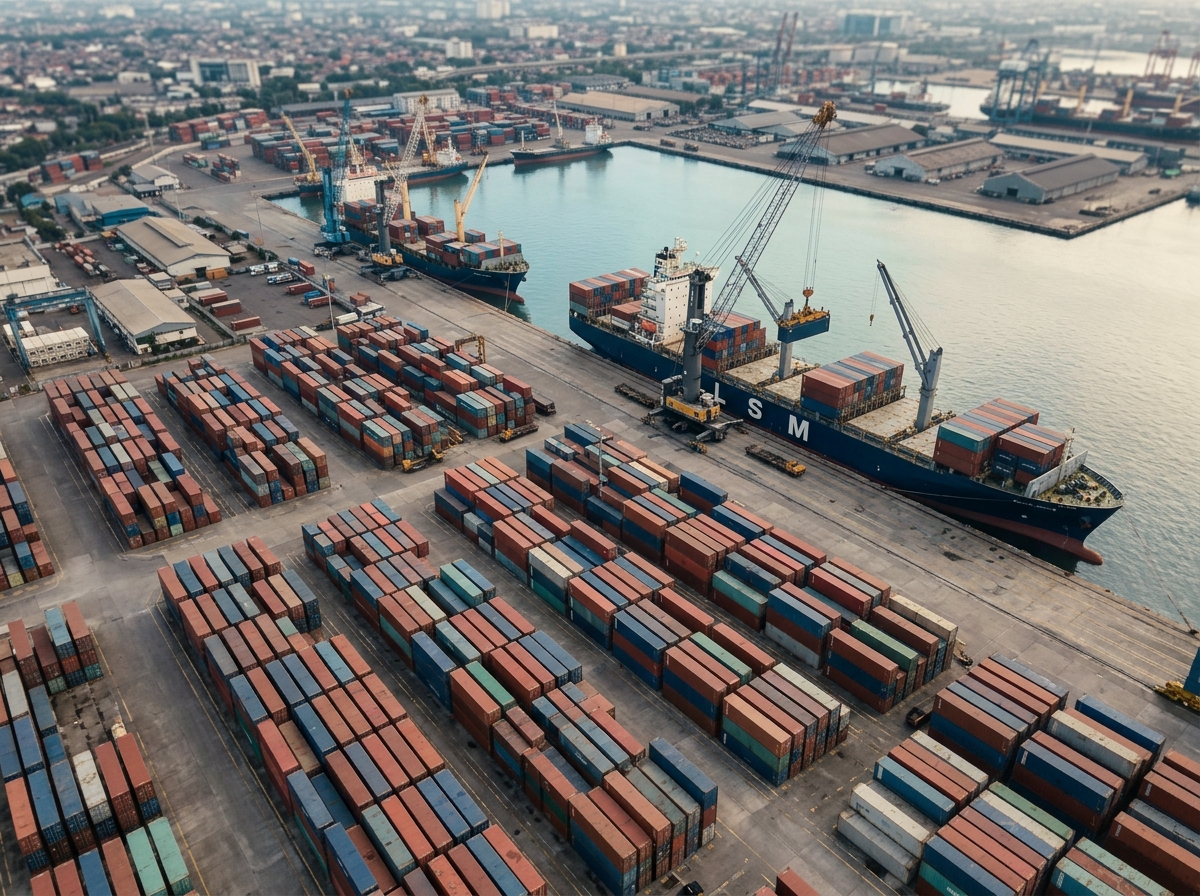
Tanjung Priok (Jakarta) handles the majority of Indonesia's garment exports. Transit times to US West Coast ports (Los Angeles, Long Beach) run approximately 18–22 days via direct or single-transshipment services. East Coast transit via Suez typically adds 10–14 days.
Tanjung Perak (Surabaya) serves Central and East Java factory clusters. Transit times are broadly similar to Tanjung Priok once consolidated into main lane shipping.
Most uniform shipments move on FCL (Full Container Load) 20ft or 40ft containers for large programs. LCL (Less than Container Load) consolidation is viable for smaller reorder quantities.
Structuring Multi-Site Rollout Programs
US enterprise buyers rolling out uniforms across 50–500+ locations face a distribution challenge, not just a procurement challenge. Two common models:
1. Warehouse-in-Indonesia model: Factory holds finished inventory under a bonded or pre-position stock arrangement. US buyer issues call-off orders against a blanket PO. Reduces per-shipment setup costs but requires trust in factory storage conditions and inventory accuracy.
2. US 3PL distribution model: Full production runs ship to a US third-party logistics provider. The 3PL handles individual site packs, size run distribution, and employee-level kit fulfillment. Higher domestic logistics cost but greater control and faster domestic replenishment.
For multi-site rollouts, define the following before issuing a purchase order:
- Size curve by site (historical size distribution data reduces over/under-stock risk) - Site-specific branding requirements (different logo variants, department color coding) - Labeling and packing list requirements for each destination - Returns and exchange policy for size replacements
Blanket POs and Rolling Reorder Programs
A blanket purchase order with quarterly call-off releases is the most effective structure for ongoing uniform programs. Key terms to define:
- Total annual volume commitment (activates better pricing) - Minimum call-off quantity per release - Price hold period (typically 12 months, subject to fabric cost adjustment clauses) - Lead time commitment from the factory for each call-off release - Safety stock requirement (factory holds X weeks of cut fabric ready to sew)
Negotiating Contracts and Building Durable Supplier Relationships in Indonesia
Key Contract Clauses for Uniform Programs
Every initial contract with an Indonesian uniform factory should cover:
- IP and design exclusivity: prohibits factory from selling your branded or proprietary uniform designs to competing buyers - Defect remediation: defines acceptable AQL level (typically AQL 2.5 for major defects), factory responsibility for rework or replacement, and timeline - Lead-time penalty: financial remedy if factory misses confirmed ship date beyond an agreed tolerance window - Material substitution: requires buyer approval before any fabric, trim, or component change - Audit rights: buyer or nominated third party may conduct factory inspections with reasonable notice
Piloting Before Full Program Commitment
Run a pilot order of one or two styles before committing full program volumes. A pilot order of approximately 300–500 units per style generates enough production data to assess:
- Color consistency across the production run - Dimensional accuracy against approved samples - Embroidery registration and thread quality - Packing accuracy and documentation compliance
A factory that performs well on a pilot under scrutiny will typically maintain standards at scale. A factory that struggles on a small, watched order will not improve when volumes increase.
Communication and Time-Zone Management
Indonesia is UTC+7 (Western Indonesia Time). The gap to US Eastern Time is 11–12 hours. Effective communication practices:
- Designate a single point of contact at the factory with email authority for production decisions - Use shared project management tools (shared spreadsheets, project tracking boards) to reduce dependence on real-time calls - Schedule weekly video calls during overlap hours (early morning US, late afternoon Indonesia) - Document every specification change in writing — verbal changes during calls frequently cause production errors
Frequently Asked Questions from US Buyers
What is the typical minimum order quantity for custom uniforms from Indonesian manufacturers? MOQs vary by category and factory scale. Corporate dress uniforms and medical scrubs typically start at 300–500 units per style. Industrial coveralls and FR workwear commonly require 1,000 units or more. Fully customized programs with private-label fabric often carry higher minimums tied to fabric mill requirements.
Do Indonesian workwear factories produce FR-rated garments compliant with US NFPA standards? Yes, but capability is concentrated in specialist factories rather than general uniform producers. Compliance with NFPA 2112 and ASTM F1506 requires documented third-party garment testing from an accredited laboratory. Always request test reports — not fabric data sheets alone — before approving FR garments for industrial use.
How long does it take to receive a first production run from an Indonesian uniform manufacturer? First production lead times range from approximately 60 to 120 days, depending on category complexity and whether FR testing is required. The clock starts from approved tech packs and confirmed samples, not from initial inquiry.
Which Indonesian factories are certified for social compliance audits like BSCI or SEDEX? Major producers including Dan Liris, Busana Apparel Group, and PT Trisula Textile Industries have worked within international social compliance frameworks. However, certification status changes. Always request the most recent audit report directly and verify its currency through the issuing body's platform (amfori for BSCI, SEDEX for SMETA reports).
Can Indonesian manufacturers handle embroidery and private label branding in-house? Most mid-to-large factories offer in-house embroidery. Private label woven labels and custom packaging are standard services at the factory's connected supplier network. Confirm in-house versus outsourced embroidery during factory vetting, and always approve embroidered samples before bulk production.
How do US companies manage reorder logistics and size replenishments from Indonesian suppliers? The most effective model combines a blanket purchase order with quarterly call-off releases and a US-based 3PL for domestic distribution. For multi-site programs, pre-defined size curves by location significantly reduce replenishment complexity. Some factories offer bonded stock programs for high-volume clients.
Indonesia offers US corporate buyers a mature, vertically integrated uniform manufacturing base with genuine capability across corporate, hospitality, medical, and FR industrial categories. The key differentiators — FR compliance documentation, structured reorder programs, and multi-site logistics planning — separate successful long-term programs from one-time orders that stall on quality or replenishment issues.
You now have the specification framework, audit criteria, and commercial benchmarks to evaluate Indonesian suppliers against a consistent standard. The logical next step is connecting with factories that have already been verified against those criteria.
You understand the capability landscape, certification requirements, and program structures. Request verified quotes from Indonesian uniform workwear manufacturers that have been pre-screened for your category, volume, and compliance requirements.
Request Verified Quotes →Need eyes on the ground in Indonesia?
MTS is an execution partner — supplier verification, manufacturing management, quality control and export logistics across Indonesia, Vietnam and China.
Related services
Related articles
Receive furniture sourcing insights across Asia.
One email per week. No spam.