Denim Jeans Manufacturers Indonesia: A Complete Sourcing Guide
13 min read
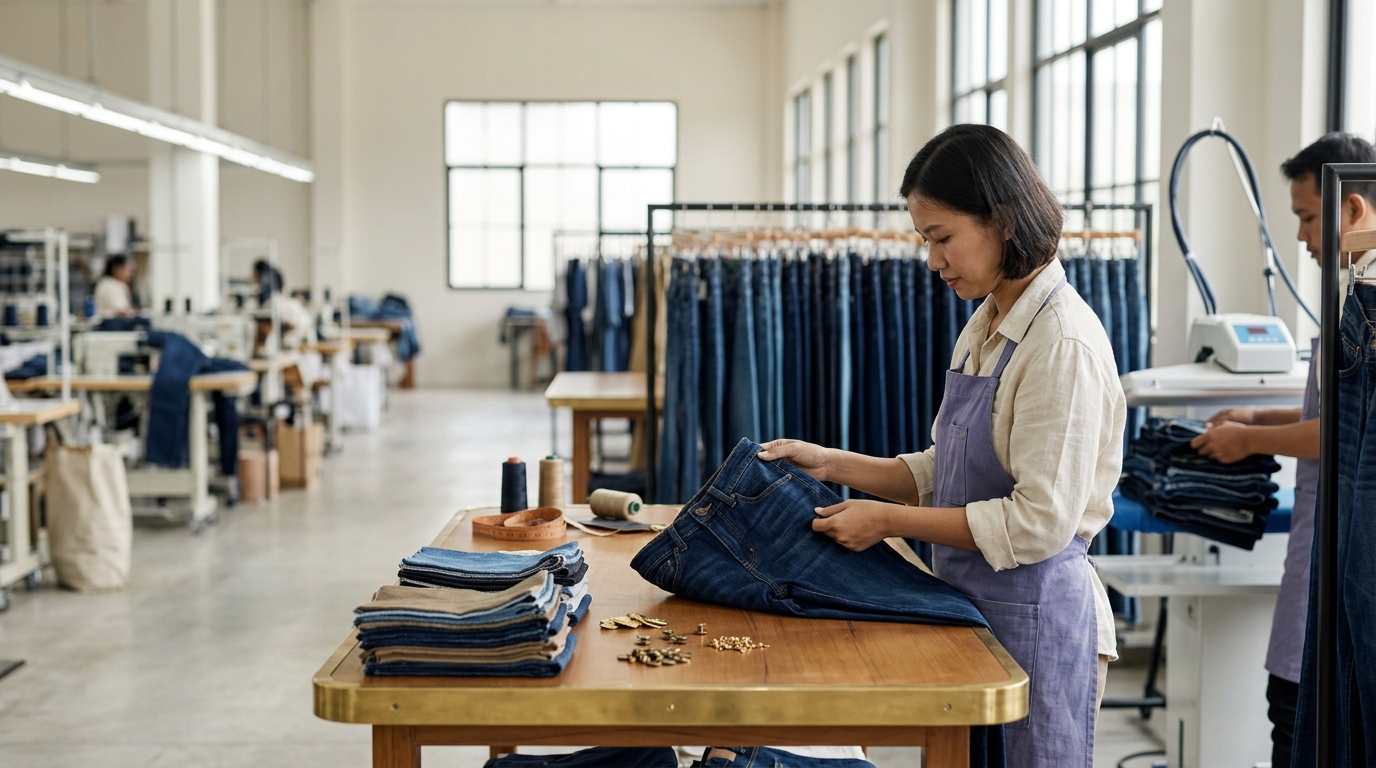
US brand founders evaluating denim jeans manufacturers Indonesia face a specific decision: which country, which factory tier, and which supply chain structure delivers the best combination of quality, cost, and compliance. Indonesia belongs in that conversation. Its garment manufacturing base has…
US brand founders evaluating denim jeansmanufacturers Indonesiaface a specific decision: which country, which factory tier, and which supply chain structure delivers the best combination of quality, cost, and compliance. Indonesia belongs in that conversation. Its garment manufacturing base has matured well beyond low-cost commodity production, and its denim ecosystem has a structural advantage that Bangladesh and Vietnam cannot replicate easily.
That advantage is geographic integration. Bandung, West Java, sits at the center of a vertically connected supply chain where fabric mills, wash houses, and cut-make-trim factories operate within the same regional cluster. This proximity compresses lead times, lowers fabric minimums, and gives buyers meaningful visibility into the full production sequence. No other major sourcing country outside China offers this kind of denim-specific cluster density at comparable price points.
This guide covers every decision layer a US sourcing manager needs: fabric sourcing, wash and finishing capabilities, fit and grading standards, sustainability certifications, MOQ tiers, vetting criteria, and landed cost structure. It is written for brands already past the "should we source from Asia" question and now asking "how do we do it in Indonesia specifically."
The integrated supply chain is the right place to start.
Indonesia's Integrated Denim Supply Chain: The Bandung Advantage
How Vertical Integration Works in West Java
Bandung, the capital of West Java province, is not just a garment hub. It is a vertically integrated denim cluster. Fabric mills, garment factories, and wash houses operate in close proximity. A brand sourcing from Bandung can, in many cases, move from greige fabric to finished, washed jeans without the fabric ever leaving the region.
This matters for lead time and cost. Importing denim fabric from China or Japan adds transit time and minimum order requirements at the fabric level. Sourcing locally from Bandung mills allows garment factories to pull fabric on shorter runs. That reduces the practical MOQ for finished garments.
Key Fabric Producers in the Indonesian Denim Ecosystem
Two names appear consistently in the mid-to-large fabric tier. Duniatex Group is one of Indonesia's largest integrated textile manufacturers, with operations spanning spinning, weaving, and dyeing. PT Cipta Adhyabusana, known in trade as DUST, is a specialist denim fabric producer with a range covering ring-spun, open-end, and stretch constructions.
Both supply local garment factories directly. For US buyers, this means a full-package factory in Bandung can offer fabric traceability without the complexity of a multi-country supply chain.
Selvedge, Ring-Spun, and Open-End: What's Available Locally
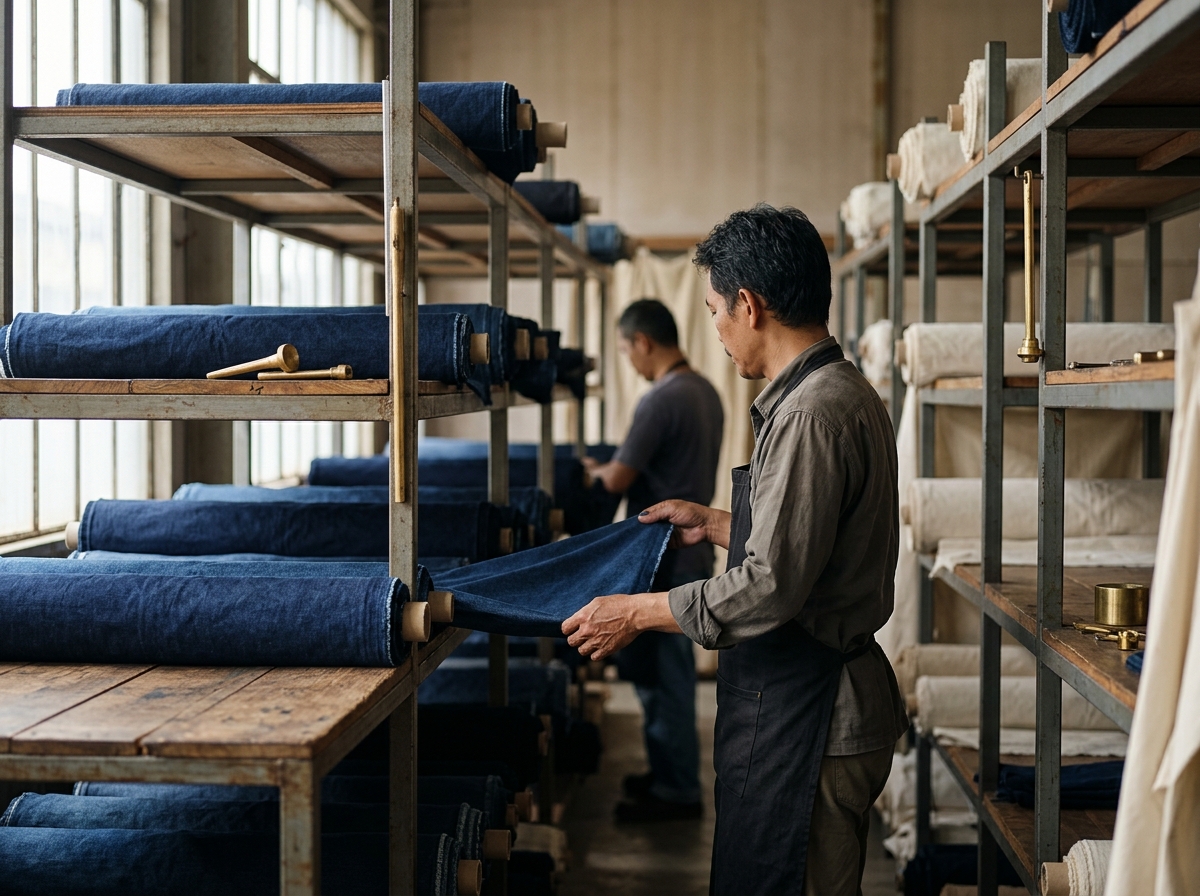
Indonesian mills produce all three major denim fabric constructions.
- Selvedge denim is available from specialist producers. This is an emerging niche in Indonesia, increasingly relevant for premium and heritage-style denim brands. Volumes are lower and lead times longer than for standard constructions. - Ring-spun denim is widely available in weights from approximately 10 oz to 14 oz. It delivers cleaner fading characteristics and is preferred for premium mid-market positioning. - Open-end (OE) denim is the most cost-efficient option. It is suitable for value-tier programs and basics.
Stretch and bi-stretch constructions using elastane blends are also locally available, relevant for fitted and performance denim categories.
Why Indonesia Competes with Bangladesh, Vietnam, and China for Denim Production
Indonesia is not always the cheapest option. It is, however, frequently the best value option when total landed cost, quality capability, and compliance profile are considered together.
| Factor | Indonesia | Bangladesh | Vietnam | China |
|---|---|---|---|---|
| Fabric integration (denim) | High (Bandung cluster) | Low (mostly imported) | Low (mostly imported) | High |
| CMT labor cost | Moderate | Low | Moderate | High (rising) |
| Wash and finishing capability | High | Moderate | Moderate | High |
| Selvedge denim availability | Emerging | Very limited | Limited | Available |
| Sustainability certifications | Broad availability | Available | Available | Available |
| US tariff exposure (approx.) | Moderate | Lower (GSP-dependent) | Moderate | High (Section 301) |
| Min. order flexibility | Moderate to flexible | Low flexibility | Moderate | Low flexibility |
China carries elevated tariff exposure under Section 301 duties, which have pushed US buyers toward Southeast Asia since approximately 2018. Bangladesh's cost advantage is real, but its denim supply chain depends heavily on imported fabric, which adds lead time and reduces flexibility at lower volumes.
Vietnam's garment sector has grown significantly but faces similar fabric import dependency for denim. Indonesia's Bandung cluster is the closest equivalent to China's Pearl River Delta model for denim, at a meaningfully lower tariff burden.
Major Denim Manufacturing Clusters and Factory Regions Across Indonesia
Bandung: The Primary Hub
Bandung and its satellite areas in West Java account for the largest concentration of denim jeansmanufacturers in Indonesia. The cluster includes large CMT factories serving global brands, mid-size full-package producers, and specialist wash houses. Factory density means buyers can audit multiple facilities in a single trip.
Jakarta Satellite and West Java Secondary Markets
Factories in and around Jakarta, including areas of Bekasi and Tangerang, serve as overflow capacity for Bandung-based brands. Some larger operations have split facilities, with fabric processing near Bandung and garment assembly closer to Jakarta's port infrastructure. This can reduce domestic logistics time before export.
Bali-Based Manufacturers for Boutique and Low-MOQ Programs
Bali hosts a smaller but distinct segment of denim manufacturers. These factories typically serve independent labels, boutique brands, and designers who need lower MOQs and more collaborative development. Production capacity is smaller. Quality capabilities vary more widely than in Bandung. Buyers in this tier should expect more hands-on sampling involvement.
Wash and Finishing Capabilities Inside Indonesian Denim Factories
Wash is where Indonesian denim factories differentiate from basic CMT operations in lower-cost countries. The Bandung cluster includes dedicated wash houses and garment factories with in-house finishing departments capable of a full range of treatments.
Available Wash Techniques
- Stone wash: Traditional pumice stone wash remains widely available. It produces classic denim character and is cost-efficient at scale. - Enzyme wash: Cellulase enzyme treatments achieve a softer hand feel and controlled fading without the fabric damage associated with aggressive stone wash. - Acid wash: Available at most mid-to-large factories. Used for high-contrast bleaching effects. - Ozone wash: Increasingly available in the Bandung cluster. Ozone technology reduces water consumption significantly compared to conventional bleach processes, supporting sustainability positioning. - Eco-wash / closed-loop systems: Some factories have invested in water recycling systems. These reduce effluent output and appeal to brands with environmental commitments.
Laser Finishing
Laser finishing for whiskers, fades, and graphic distressing is available at better-equipped Indonesian factories. Laser eliminates the need for potassium permanganate (PP spray) hand-sanding, which has known worker health risks. Brands with sustainability programs should specifically ask factories whether their distressing is done by laser or by hand with chemical treatments.
- ✓What wash techniques are available in-house vs. subcontracted?
- ✓Do you have laser finishing equipment on-site?
- ✓What is your daily wash capacity in units?
- ✓What water treatment and recycling systems are in place?
- ✓Can you provide ozone or eco-wash certifications or process documentation?
- ✓What is the turnaround time from garment assembly to finished wash?
Fit Libraries, Grading, and Technical Development Services at Indonesian Factories
US Sizing and Block Libraries
Leading full-package factories in Indonesia maintain fit block libraries for US, European, and Asian sizing. US-market blocks typically reflect a longer rise, wider hip-to-thigh ratio, and specific inseam grading compared to Asian domestic sizing. Buyers should ask factories directly whether their base blocks are developed for US sizing or adapted from Asian or European standards.
Factories experienced with US-market clients will often have established blocks for straight, slim, skinny, relaxed, and bootcut fits. Custom block development is available but adds time to the first sampling round.
Grading and Tech Pack Standards
Indonesian factories working with US brands typically accept tech packs in Adobe Illustrator, PDF, and common PLM export formats. Grading rules should be supplied by the buyer for the first development. Factories can apply grading from a base size if the buyer provides full grade rules.
Size runs for US wholesale programs commonly cover sizes 28–38 waist for men's jeans and 24–32 waist for women's. Extended sizing is available at larger factories with the grading infrastructure to support it.
Sampling Rounds and Timelines
A standard development sequence runs:
1. Proto sample: Based on tech pack, approximately 3–4 weeks from tech pack submission 2. Fit sample: Revised to buyer comments, approximately 2–3 weeks after proto approval 3. Pre-production (PP) sample: Confirms bulk fabric, wash, and trim, approximately 2–3 weeks after fit approval 4. Bulk production: Begins after PP approval
Total development time before bulk cut typically runs 8–12 weeks for a new style from scratch. Factories with existing blocks for similar styles can compress this.
Sustainable Denim Programs Available From Indonesian Manufacturers
Certifications Present in the Indonesian Ecosystem
Certification availability varies by factory tier. Buyers should verify current certificate status directly with the certifying body — never accept a photocopy without cross-referencing the certificate number online.
- GOTS (Global Organic Textile Standard): Available at select mills and garment factories working with organic cotton denim. Requires chain-of-custody certification across the full supply chain. - Oeko-Tex Standard 100: More broadly available across Indonesian mills and garment factories. Certifies against harmful substance limits in finished textiles. - Bluesign: Available at some fabric mill level for responsible chemical and resource management in dyeing and finishing. - WRAP (Worldwide Responsible Accredited Production): Relevant for garment factory social compliance. Available at a number of mid-to-large Indonesian factories. - SEDEX / SMETA: Social audit membership and audit-sharing platform. Increasingly requested by US brand buyers from their Indonesian suppliers.
Recycled and Organic Fabric Options
Recycled cotton denim and organic cotton denim fabrics are available within the Indonesian supply chain, though at premium prices compared to conventional options. Buyers should confirm whether the recycled content certification (e.g., GRS — Global Recycled Standard) covers the specific fabric lot being ordered.
Waterless and Closed-Loop Wash Systems
Ozone wash and waterless finishing technologies are present in the Bandung cluster. Some factories operate closed-loop water recycling on their wash lines. These systems reduce water consumption per garment substantially compared to conventional wet processing. Buyers building sustainability narratives should request specific water consumption data per garment wash cycle, not just a general claim.
MOQ Requirements and Realistic Production Timelines by Factory Type
US buyers need to match their program size to the right factory tier. Mismatching — asking a large CMT for 100-unit runs, or asking a boutique factory for 5,000 units — wastes time for both parties.
| Factory Type | Typical MOQ (per style/wash) | Fabric MOQ Impact | Proto-to-Bulk Timeline | Best Suited For |
|---|---|---|---|---|
| Large CMT (500+ workers) | 500–1,000 units | Requires mill minimums (~500 m approx.) | 16–22 weeks | Established brands, wholesale programs |
| Mid-size full-package (100–500 workers) | 150–500 units | Can work with local mill MOQs | 14–18 weeks | Growing brands, 3–10 styles |
| Boutique / Bali-based (under 100 workers) | 50–150 units | May require fabric pre-purchase by buyer | 12–16 weeks | Small labels, development-stage brands |
Rush production (defined here as bulk delivery in under 12 weeks from PP approval) is possible but carries a cost premium — typically 10–20% above standard pricing, depending on factory loading at the time of the order. Buyers should confirm rush availability before scheduling, not after order placement.
How to Vet and Audit Denim Jeans Manufacturers in Indonesia Effectively
Compliance Certifications to Request
Before engaging any factory, request current copies of:
- WRAP, SEDEX/SMETA audit, or SA8000 for social compliance - Oeko-Tex Standard 100 or GOTS for product safety and organic claims - Any ISO 9001 or equivalent quality management certification - Environmental permits for wash and effluent treatment
Cross-reference all certificates on the issuing body's online registry. An outdated or misattributed certificate is a red flag.
Factory Audit Checklist
A credible factory audit for an Indonesian denim manufacturer covers:
- Worker headcount vs. stated capacity - Equipment age and maintenance records for sewing lines and wash machinery - Subcontracting disclosure (is any process — embroidery, laser, wash — done off-site?) - Effluent treatment infrastructure - Fire safety and emergency egress compliance - Wage records and working hour documentation
Unannounced visits and DUPRO (during production) inspections are more reliable than pre-announced audits. A factory that resists unannounced visits warrants caution.
Red Flags in Remote Sourcing
- Factory cannot provide a valid business registration document - Certificates presented are issued to a different legal entity - Wash capabilities claimed verbally but no equipment visible on a video call or visit - Requests for large upfront deposits before sample approval - Unwillingness to disclose whether any processes are subcontracted
Platforms such as Foursource can surface Indonesian factory profiles and facilitate initial contact, but they do not replace independent verification. Directory listings are a starting point, not due diligence.
Cost Breakdown: What US Buyers Should Budget for Indonesian Denim Production
Cost varies significantly by specification, volume, and factory tier. The figures below are indicative ranges based on market patterns — buyers must obtain factory-specific quotes.
Fabric Cost
- Standard ring-spun denim from Bandung mills: approximately USD 2.50–4.50 per yard (varies by weight, finish, and construction) - Imported Japanese selvedge denim: significantly higher, often USD 8–15+ per yard - Organic or recycled cotton denim: typically a 15–30% premium over conventional equivalents
CMT vs. Full-Package Pricing
- CMT (cut, make, trim): Buyer supplies fabric and trims; factory charges labor only. Lower per-unit cost but higher buyer complexity. - Full-package (FP): Factory sources fabric, trims, wash, and delivers finished garment. Higher per-unit cost but lower buyer operational burden. Preferred by most US brands below the scale of a dedicated sourcing team.
Additional Cost Components
- Wash and finishing: typically USD 1.50–4.00 per unit depending on technique (stone wash at the lower end, multi-process laser + ozone programs at the higher end) - Hangtags, labels, and packaging: USD 0.30–0.80 per unit depending on spec - Freight (FOB Tanjung Priok or Tanjung Perak to US West Coast): varies with container rates; buyers should model current market rates with a licensed freight forwarder - US import duty: MFN rate for woven cotton trousers is approximately 16.6% on FOB value (confirm current rate with a customs broker before finalizing landed cost models)
Frequently Asked Questions About Indonesian Denim Sourcing
What is the minimum order quantity for denim jeans manufacturers in Indonesia? MOQs range from approximately 50 units per style at boutique factories to 500–1,000 units at large CMT operations. The fabric MOQ from Bandung mills is a secondary constraint that buyers must factor into the total volume calculation.
How long does it take to produce a private-label denim order from Indonesia? A standard proto-to-bulk delivery timeline runs approximately 14–22 weeks depending on factory tier, style complexity, and wash requirements. Rush programs are possible but carry a cost premium.
Which Indonesian factories offer sustainable or eco-certified denim production? Certifications including GOTS, Oeko-Tex Standard 100, Bluesign, WRAP, and SEDEX are available within the Indonesian denim ecosystem. Coverage is uneven — buyers must verify each factory's current certificate status independently through the issuing body's registry.
Can Indonesian manufacturers produce selvedge denim jeans? Yes. Selvedge denim production in Indonesia is an emerging niche. Specialist fabric producers supply selvedge cloth, and select garment factories have experience with the construction requirements. Volumes are lower and lead times longer than for standard denim.
What wash and finishing techniques are available in Indonesian denim factories? Stone wash, enzyme wash, acid wash, ozone wash, laser finishing, and closed-loop eco-wash systems are all available within the Bandung cluster. Capability varies by factory. Buyers should audit wash departments directly rather than relying on factory claims.
How does sourcing denim fabric from Bandung mills affect lead times and cost? Local fabric sourcing reduces lead time by eliminating international fabric transit. It also lowers the risk of fabric delays disrupting production schedules. The trade-off is that Bandung mill MOQs set a minimum volume floor. Below that floor, the cost-per-unit economics shift unfavorably.
Indonesia's combination of integrated fabric supply, wash and finishing depth, and a maturing compliance infrastructure makes it a credible primary sourcing destination for US denim brands at multiple volume tiers. The Bandung cluster's vertical integration is its defining structural advantage over Bangladesh and Vietnam. Buyers who map their program volume to the right factory tier and invest in proper audit processes will find reliable, scalable production partners.
You now have a clear picture of what Indonesian denim manufacturing can deliver and what due diligence it requires. The natural next step is matching your specific program — MOQ, fit, wash requirement, and sustainability standard — to a factory that has already been verified against those criteria.
You have done the research. Now connect with factories that have been audited for capability, compliance, and capacity. Request a curated shortlist of vetted Indonesian denim manufacturers matched to your brand's MOQ, wash requirements, and certification needs.
Request Your Factory Shortlist →Need eyes on the ground in Indonesia?
MTS is an execution partner — supplier verification, manufacturing management, quality control and export logistics across Indonesia, Vietnam and China.
Related services
Related articles
Receive furniture sourcing insights across Asia.
One email per week. No spam.