Why Boutique Buyers Source Rattan Furniture from Cirebon Indonesia
18 min read
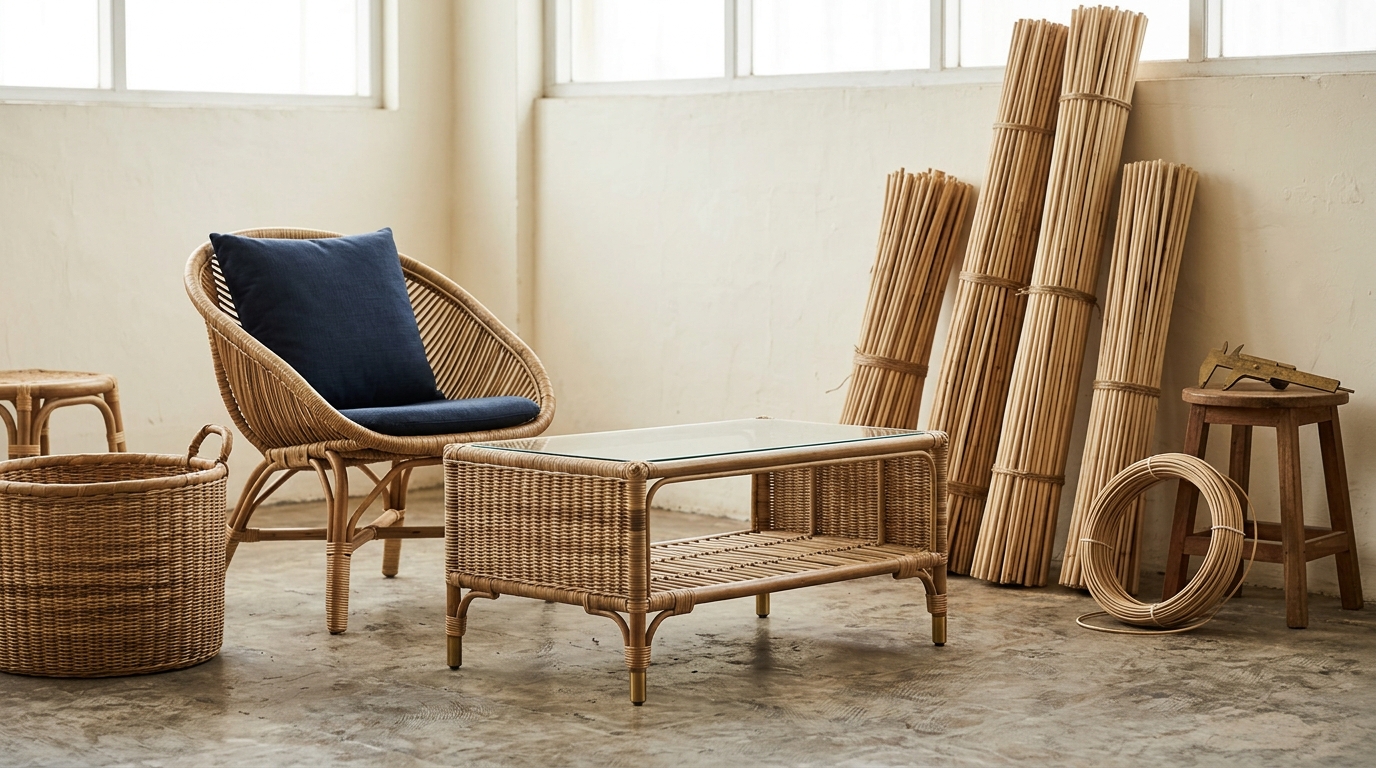
Sourcing the right furniture manufacturer overseas is one of the most consequential decisions a boutique retailer, DTC home goods brand, or hospitality procurement team will make. Get it right and you gain access to handcrafted quality, competitive landed costs, and a compelling origin story that…
Sourcing the right furniture manufacturer overseas is one of the most consequential decisions a boutique retailer, DTC home goods brand, or hospitality procurement team will make. Get it right and you gain access to handcrafted quality, competitive landed costs, and a compelling origin story that resonates with today's sustainability-conscious consumer. Get it wrong and you face delayed containers, inconsistent quality, and margin erosion that can take seasons to recover from. For buyers evaluating natural and synthetic woven furniture, the question is rarely whether to source from Indonesia — it is where within Indonesia, and how to do it with confidence.
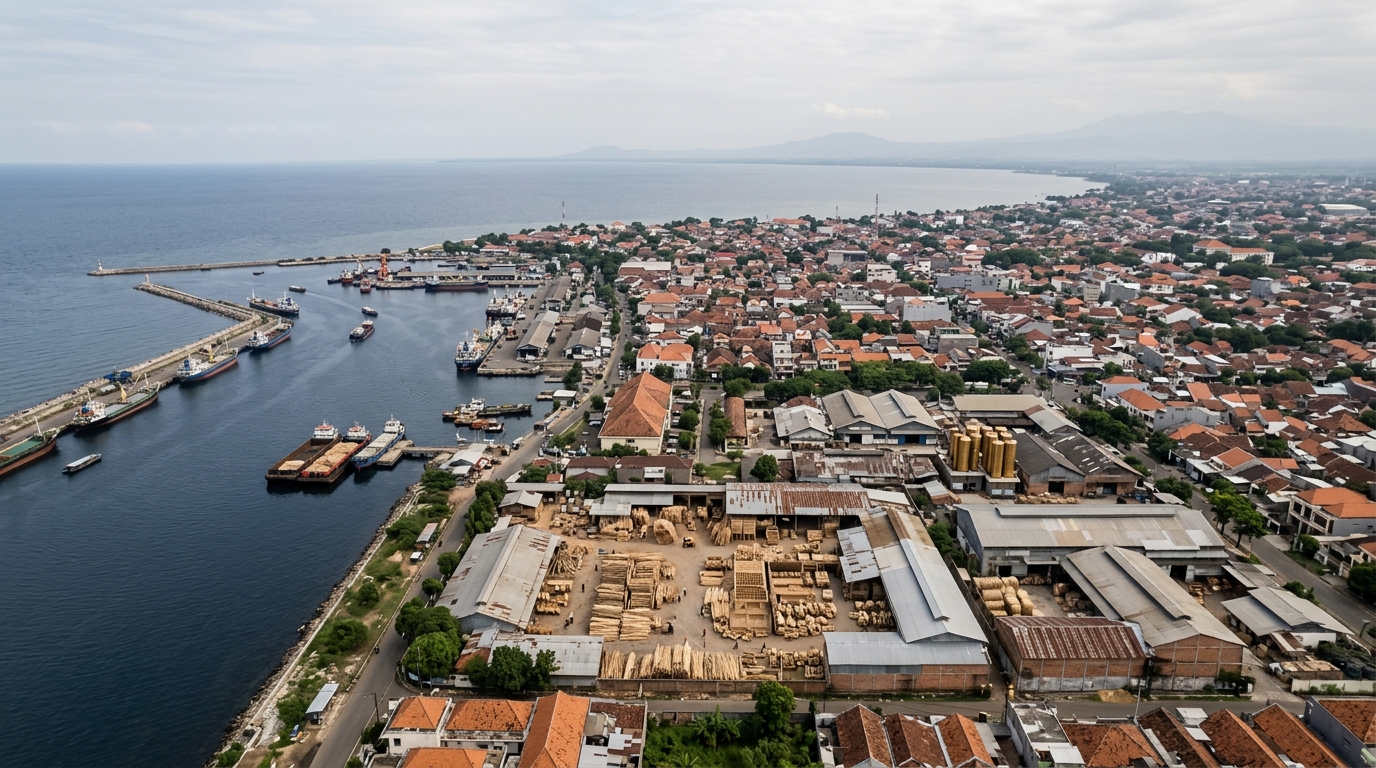
Rattan furniture from Cirebon Indonesia has emerged as the benchmark answer to that question. Cirebon, a port city on the northern coast of West Java, is home to the world's densest concentration of rattan furniture exporters, artisan workshops, and trade-ready manufacturers. The city's production ecosystem is not a recent development; it has been built over generations, supported by government trade infrastructure, and refined through decades of shipping to buyers in the United States, Europe, and Australia. For a US buyer who is ready to move beyond browsing supplier directories and wants to place a real order, understanding what makes Cirebon distinct — and how to navigate its supply chain — is the essential starting point.
This guide covers every stage of that evaluation: the geographic and economic reasons Cirebon dominates global rattan supply, how to choose between natural and synthetic materials, what product categories are available, how to qualify and audit a manufacturer, what logistics and pricing actually look like in USD, what customization is possible for private label brands, and how to build a credible sustainability narrative around your sourcing decision. A schema-ready FAQ section addresses the most common questions buyers ask before placing their first container order.
Why Cirebon Is the World's Most Competitive Source of Rattan Furniture
Geographic Advantage and Raw Material Access
Indonesia produces the majority of the world's raw rattan, with the bulk of it harvested from the rainforests of Kalimantan and Sulawesi. Cirebon sits in West Java at a strategic midpoint: close enough to Jakarta's Tanjung Priok Port — Indonesia's largest and most export-capable seaport — and well-connected by road and rail to the processing facilities that transform raw rattan poles and peel into usable furniture-grade material. This proximity to both raw supply and export infrastructure means manufacturers in Cirebon can move from harvest to finished product to container faster, and at lower logistics cost, than factories in regions farther from the supply chain or the port.
For US buyers, this matters in a practical way: shorter internal supply chains translate into more predictable lead times and fewer points of failure before goods reach Tanjung Priok for loading.
Generational Craftsmanship and Workforce Depth
Cirebon's rattan furniture industry is not a factory-floor operation that can be replicated overnight in another city. It is built on a generational workforce of artisans who learned weaving, bending, and finishing from family members who did the same work before them. This depth of craft knowledge is embedded in the labor pool in a way that keeps quality consistent even as order volumes scale.
The region supports a tiered production structure: larger certified export factories handle volume orders and quality control systems, while networks of smaller workshops and home-based weavers produce individual components that feed into finished assemblies. This distributed model keeps labor costs competitive while preserving the handmade quality characteristics that differentiate Indonesian rattan furniture from machine-extruded alternatives.
Export Infrastructure and Cluster Economics
Cirebon hosts a critical mass of rattan exporters, finishing suppliers, hardware vendors, hardware and accessory importers, and freight forwarders who all operate within a compact geographic cluster. The cluster effect is economically significant: manufacturers can source cushion fabric, metal hardware, lacquer finishes, and packaging materials locally, reducing the per-unit cost of inputs. Competition among suppliers within the cluster also exerts downward pressure on pricing without sacrificing quality — a dynamic that buyers from China-dominant sourcing backgrounds will find favorable on landed cost comparisons.
Indonesia's government has also invested in trade facilitation for the rattan sector, including the SVLK (Sistem Verifikasi Legalitas Kayu) timber legality verification framework, which applies to wood and natural material exports and helps factories document compliance for US and EU buyers. Certified Cirebon exporters are accustomed to the documentation requirements that American importers face at customs, which reduces friction at the port of entry.
Natural Rattan vs. Synthetic Rattan: Choosing the Right Material for Your Market
Understanding the Core Material Difference
Natural rattan is a climbing palm harvested from tropical forests, primarily in Kalimantan and Sulawesi. Once harvested, it is processed into poles, split peel, or core, each used in different furniture applications. Natural rattan poles form structural frames; rattan peel or webbing creates woven surfaces. The material is lightweight, strong relative to its weight, and produces a warm, organic aesthetic that photographs exceptionally well for lifestyle-oriented retail brands.
Synthetic rattan — commonly manufactured from HDPE (high-density polyethylene) or PE rattan weave — is an extruded plastic strand engineered to mimic the appearance of natural rattan. It is wound over powder-coated aluminum or steel frames and is specifically designed to resist conditions that would degrade natural fibers: prolonged UV exposure, rain, humidity, and poolside chemical splash.
Cirebon manufacturers produce both materials at scale, and many factories carry product lines in each category, which means a single supplier relationship can serve both your indoor natural collection and your outdoor synthetic range.
Application Guidance by Retail Environment
For boutique furniture retailers and DTC brands focused on indoor living, natural rattan remains the preferred choice. It offers texture variation, warmth, and authenticity that synthetic alternatives cannot fully replicate at the same price point. Natural rattan accent chairs, daybeds, and shelving units align with the organic modern and coastal aesthetic trends that have driven sustained demand in US home goods markets.
For hospitality procurement — hotel lobbies, resort pool decks, outdoor restaurant dining areas — synthetic rattan furniture from Indonesia is typically the operationally correct choice. HDPE and PE weave materials withstand the wear cycles, cleaning protocols, and weather exposure that commercial environments demand. Synthetic pieces also tend to require less maintenance instruction and produce fewer warranty claims for hospitality clients.
Durability, Price, and Margin Implications
Natural rattan furniture, when properly finished and sealed, performs well indoors for many years under normal residential use. It is, however, sensitive to prolonged direct sun, high humidity without ventilation, and poolside conditions. For outdoor residential use in humid or coastal US markets, synthetic rattan furniture from Indonesia is a more defensible recommendation to end consumers.
On pricing, natural rattan pieces typically carry lower raw material costs but higher skilled labor costs per unit due to the manual weaving and bending work involved. Synthetic rattan products often carry higher material input costs (HDPE/PE strand is more expensive than raw rattan peel) but can be produced with somewhat more standardized processes. In practice, retail price points for natural and synthetic pieces at equivalent quality tiers tend to be comparable, but the margin structure differs. Buyers should model both options against their retail price architecture before committing to a category.
The Full Range of Products Cirebon Manufacturers Offer to US Importers
Cirebon's production ecosystem covers a far broader product range than most supplier directories communicate. For US buyers building a multi-category assortment, a single manufacturer relationship — or a small cluster of two to three vetted suppliers — can supply the majority of a rattan-focused product line.
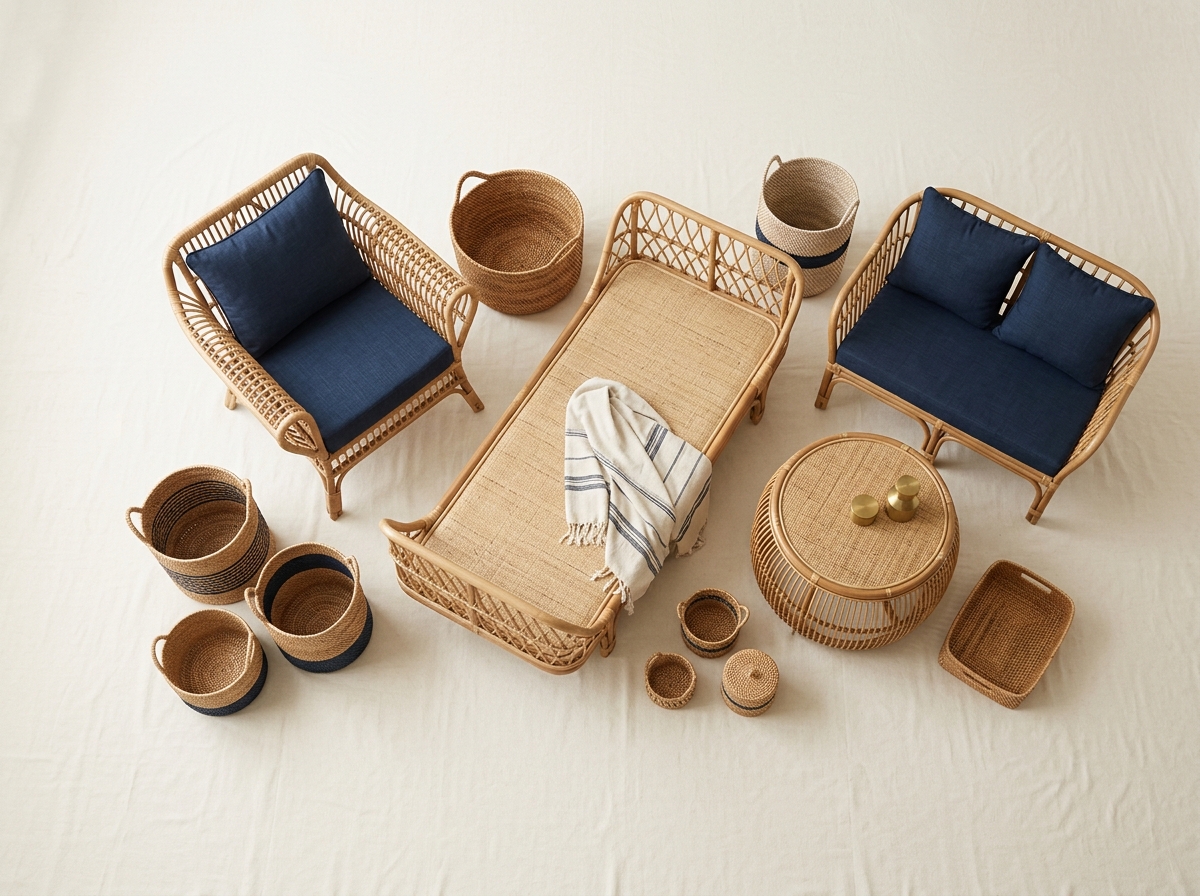
Indoor furniture is the category with the deepest SKU development in Cirebon. Accent chairs, peacock chairs, papasan chairs, side tables, console tables, daybeds, ottomans, and wall-mounted shelving units are all standard production categories. Many factories maintain sample showrooms with dozens of active indoor SKUs and can produce new designs from technical drawings or inspiration images within a standard sampling lead time.
Outdoor and garden collections span dining chairs, lounge chairs, sectional sofa sets, coffee tables, bar stools, and sun loungers, predominantly in synthetic rattan over aluminum frames. These products are engineered for container efficiency — flat-pack or knock-down assembly options are common — which directly affects your per-unit shipping cost and is worth specifying at the RFQ stage.
Hospitality-specific SKUs are a meaningful differentiator for Cirebon manufacturers compared to general home goods factories. Lobby seating, poolside lounge sets, restaurant dining chairs with commercial-grade frame gauges, and banquet-compatible side chairs are all produced by experienced exporters in the region. Hotel and resort procurement teams structuring an RFQ should request hospitality specification sheets that document frame gauge, weight ratings, and commercial finish durability — serious Cirebon factories will have these on hand.
Complementary categories including rattan baskets, woven storage solutions, rattan-framed mirrors, woven handbags, and decorative accessories are available from many of the same manufacturers or through neighboring workshops in the cluster. For DTC brands building a cohesive rattan aesthetic, the ability to source decorative accessories alongside furniture from the same origin reduces logistics complexity and strengthens brand storytelling.
How to Qualify a Rattan Supplier from Cirebon Before Your First Order
Certifications That Signal a Credible Exporter
When evaluating Indonesian rattan furniture manufacturers, the following credentials are the minimum documentation benchmark for a US commercial buyer:
- SVLK (Sistem Verifikasi Legalitas Kayu): Indonesia's national timber legality verification system. While primarily designed for wood products, SVLK-certified exporters demonstrate government-audited compliance with legal sourcing standards, which is increasingly relevant for US buyers with ESG commitments or retail partner requirements. - BSCI (Business Social Compliance Initiative): An internationally recognized social compliance audit framework. BSCI-audited factories have been assessed for labor practices, working conditions, and management systems — relevant for US brands with ethical sourcing policies or retailer vendor compliance programs. - ISO compliance: Factories with ISO 9001 quality management certification have documented, auditable production processes. Not all Cirebon rattan factories carry ISO certification, but it is a meaningful positive signal for buyers placing large or repeat orders.
Factory Audit Checklist for Serious Buyers
Before committing to a container order, buyers with the budget and timeline to conduct a factory visit — or to hire a third-party inspection service — should evaluate the following:
- ✓Production capacity per month documented in writing
- ✓Dedicated quality control team and inspection process
- ✓Finishing room with climate or dust control
- ✓Sample consistency: do three samples of the same SKU match?
- ✓Export documentation history: B/L copies, commercial invoices
- ✓SVLK and BSCI certificates current and verifiable
- ✓Minimum order quantity and lead time confirmed in writing
- ✓Post-production inspection access or third-party inspection acceptance
Evaluating Sample Quality Before Committing
Sample evaluation is the most actionable quality gate available to buyers who cannot visit Cirebon in person. When reviewing rattan furniture samples, focus on:
Joint construction: Rattan-to-rattan and rattan-to-frame connections should be tight, with no visible gaps, raw edges, or adhesive residue. Loose joints are the primary source of post-import structural complaints.
Weave tightness and consistency: Run your hand across any woven surface. Tight, even weaving indicates a skilled workforce and disciplined production management. Irregular spacing or loose strands suggest inconsistent quality control.
Surface treatment: Lacquer or oil finishes should be even, with no drips, bare patches, or surface blooming. Natural rattan pieces should feel smooth to the touch without splintering; synthetic rattan weave should have no exposed cut ends or fraying.
Post-import quality risk mitigation: A pre-shipment inspection (PSI) conducted by an accredited third-party inspection company at the Cirebon factory, after production is complete and before container loading, is the single most effective way to catch quality issues before they become your problem in a US warehouse. Budget for this service on every significant order.
Pricing, MOQs, and Container Logistics for US Buyers: A Practical Breakdown
Minimum Order Quantities and Cost Structure
The standard entry point for rattan furniture from Cirebon Indonesia is a single 20-foot container (1×20FCL). Most certified exporters set their MOQ at this level, which typically accommodates approximately 40 to 60 pieces of furniture depending on dimensions, packaging, and stacking configuration. Larger factories may negotiate smaller pilot orders — sometimes as few as 20 to 30 pieces — for first-time buyers with demonstrated order potential, but this is not the default, and pricing per unit will be less favorable at sub-container quantities.
FOB (Free On Board) pricing from Tanjung Priok is the most commonly quoted Incoterm from Cirebon suppliers. CIF (Cost, Insurance, Freight) to US West Coast or East Coast ports is available from experienced exporters but requires the buyer to confirm the freight forwarder relationship and destination port clearly in the RFQ.
Estimated FOB price ranges for natural rattan accent chairs commonly fall in the range of approximately $30 to $120 USD per unit at factory level, depending on complexity, materials, and finish. Outdoor synthetic rattan lounge sets can range more broadly from approximately $80 to $350 USD per set FOB. These are general industry reference ranges — actual quotes will depend on design complexity, material specification, order volume, and current raw material costs.
FCL vs. LCL: Choosing the Right Container Strategy
| Shipping Method | Full Container Load (FCL) | Less Than Container Load (LCL) |
|---|---|---|
| **Minimum Volume** | 20FCL (~25–30 CBM usable) or 40FCL | As low as 1–5 CBM |
| **Cost Efficiency** | Lower per-CBM rate at volume | Higher per-CBM rate; consolidation fees apply |
| **Lead Time** | Typically 25–35 days to US West Coast | Add 5–10 days for consolidation and deconsolidation |
| **Best For** | Established buyers with known inventory needs | Boutique buyers testing new SKUs or ordering samples at scale |
| **Risk** | Higher upfront commitment | Cargo may share container; minor damage risk higher |
| **Customs Entry** | Single ISF and entry | Still single entry but consolidation adds complexity |
For boutique retailers placing their first order from Cirebon, LCL can reduce upfront financial exposure while validating supplier quality and product-market fit. Once a product line performs, transitioning to FCL ordering typically recovers the margin differential within one to two container cycles.
Lead Times and Seasonal Constraints
Standard production lead times for a confirmed order from a Cirebon rattan manufacturer typically run approximately 45 to 75 days from deposit payment to factory-ready goods, depending on order complexity and the manufacturer's current capacity. Add approximately 25 to 35 days for sea freight to the US West Coast (Los Angeles/Long Beach) or 30 to 40 days to East Coast ports (Savannah, New York).
Peak production periods to plan around include the months surrounding major religious holidays in Indonesia — most significantly Eid al-Fitr (Lebaran), during which factory output drops significantly for two to four weeks. Buyers with Q2 or Q3 US delivery windows should account for this when issuing purchase orders.
Customization and Private Label Options That Give DTC Brands a Competitive Edge
One of the most underutilized advantages of sourcing rattan furniture from Cirebon Indonesia is the depth of OEM and ODM capability available at factories that have served export markets for decades. For DTC brands competing in a crowded home goods market, this capability is a meaningful strategic asset.
OEM (Original Equipment Manufacturer) orders allow brands to supply their own technical drawings, 3D renderings, or physical reference samples and have Cirebon factories produce the design to specification. Custom dimensions, proprietary weave patterns, and unique silhouettes are all achievable at MOQs that are accessible to established boutique brands. Expect a sampling lead time of approximately three to six weeks and sample costs that are sometimes deductible against the first production order.
ODM (Original Design Manufacturer) customization allows buyers to select from a factory's existing design library and modify dimensions, finish colors, cushion specifications, or weave density. This is the faster and lower-cost path to a differentiated product line for brands that want exclusivity without the full design development investment.
Finish and color customization is a standard capability across most experienced Cirebon exporters. Natural honey, whitewash, grey wash, dark walnut stain, black lacquer, and painted finishes are commonly available. For synthetic rattan, frame powder coat color and PE strand color can both be specified, which allows outdoor collections to be matched to a brand's existing color system.
Private label packaging — including hangtags, care instruction inserts, branded tissue wrapping, and custom box printing — is available from factories with export experience. For DTC brands, the ability to receive goods shelf-ready or e-commerce-ready from the factory is a meaningful operational efficiency.
Sustainability and ESG Storytelling: What US Buyers Need to Know About Cirebon Rattan
Rattan is one of the most genuinely sustainable materials available in the global furniture market. It is a fast-growing climbing palm that reaches harvestable maturity in approximately five to seven years — significantly faster than most timber species. Harvesting does not require felling the host tree, and rattan cultivation in managed forest systems can support biodiversity rather than diminishing it. For US retailers and DTC brands operating sustainability programs or serving ESG-conscious consumers, this origin story is both accurate and commercially useful.
Supplier certifications relevant to US ESG buyers include SVLK for legal sourcing verification, BSCI for social compliance, and, for brands requiring third-party environmental claims, supplier-level documentation of sustainable sourcing practices. ISO 14001 environmental management certification is available at some larger Cirebon factories, though it is not yet universal.
Fair trade and community sourcing narratives are grounded in Cirebon's production reality: much of the weaving work is performed by skilled artisans — many of them women — working in home-based or community workshop settings. For brands that want to build a maker story around their sourcing, this is an authentic narrative that can be documented through factory visits, supplier photography, and written attestations of working conditions and wage structures.
Communicating sustainability to end consumers and retail partners is most effective when grounded in specifics rather than broad claims. The most credible approach is to document what you can verify: the material's fast-growth properties, the supplier's SVLK or BSCI certification status, and the artisan workforce context. Avoid making claims about carbon footprint or forest impact that your supplier cannot substantiate with documentation — US retail partners with vendor compliance programs are increasingly asking for evidence behind sustainability claims.
Frequently Asked Questions About Sourcing Rattan Furniture from Cirebon Indonesia
What is the minimum order quantity for rattan furniture from Cirebon Indonesia?
Most established Cirebon rattan exporters set a minimum order equivalent to one 20-foot container (1×20FCL). Depending on the furniture pieces selected — their dimensions, packaging configuration, and whether knock-down assembly options are used — this typically translates to approximately 40 to 60 individual pieces. Some factories will negotiate smaller trial orders for new buyers, often with a per-unit price premium. LCL (less than container load) shipments are also possible for very small initial orders, though the per-CBM logistics cost is higher.
What is the difference between natural and synthetic rattan furniture for outdoor use?
Natural rattan is a plant-based material that performs well indoors under normal residential conditions but is susceptible to UV degradation, prolonged moisture exposure, and poolside chemical contact. Synthetic rattan — made from HDPE or PE rattan weave — is specifically engineered for outdoor environments and resists UV fading, rain, humidity, and repeated cleaning. For outdoor residential use or any commercial hospitality setting, synthetic rattan furniture from Indonesia is the appropriate specification. For indoor boutique and residential applications, natural rattan offers superior aesthetic warmth and authenticity.
How long does shipping take from Cirebon to the United States?
Production lead time from a confirmed and deposited order is typically approximately 45 to 75 days, depending on order complexity and factory capacity. Sea freight from Tanjung Priok Port to the US West Coast (Los Angeles/Long Beach) typically takes approximately 25 to 35 days. Freight to US East Coast ports such as Savannah or New York typically takes approximately 30 to 40 days. Total time from order placement to US port arrival should be planned at approximately 10 to 16 weeks under normal conditions.
Are Cirebon rattan manufacturers able to produce custom or private label designs?
Yes. OEM and ODM capabilities are widely available among experienced Cirebon exporters. Custom dimensions, proprietary weave patterns, exclusive silhouettes, custom finish colors, and private label packaging — including branded hangtags, care instruction inserts, and custom carton printing — are all standard offerings at factories with US export experience. Sampling lead times for custom designs are typically approximately three to six weeks, with sample costs sometimes credited against the first production order.
What certifications should I look for when sourcing rattan from Indonesian suppliers?
The three most important certifications for US buyers are SVLK (Indonesia's timber and natural material legality verification), BSCI (Business Social Compliance Initiative, covering labor and social compliance), and ISO 9001 (quality management systems). For brands with specific environmental claims, ISO 14001 environmental management certification is an additional positive indicator. Always request current certificate copies and verify expiration dates — certificates should be valid at the time of order placement, not just at initial inquiry.
How do I find a reliable rattan furniture exporter in Cirebon?
The most reliable approach combines multiple verification methods: start with Indonesian government trade directories and established B2B sourcing platforms that list verified exporters; cross-reference supplier listings against certification databases for SVLK and BSCI status; request factory profile documents and reference lists from previous US buyers; order paid samples before committing to a production order; and commission a pre-shipment inspection from an accredited third-party inspection service on your first container. Attending trade exhibitions where Indonesian furniture manufacturers exhibit is also an effective way to meet factory representatives and evaluate product quality in person before traveling to Cirebon.
Cirebon's combination of geographic advantage, generational craft expertise, material access, and export infrastructure makes it the most defensible sourcing decision for US buyers serious about building a rattan furniture category with strong margins, consistent quality, and a credible sustainability story. The buyers who extract the most value from this supply chain are those who invest in supplier qualification upfront — certifications, samples, and pre-shipment inspection — and treat their first container as the foundation of a multi-year supplier relationship rather than a one-time transaction.
You now have a clear picture of what makes rattan furniture from Cirebon Indonesia the right sourcing decision — the next step is connecting with certified manufacturers who can deliver against your specific product, MOQ, and logistics requirements. Request a wholesale catalog and factory quote from verified Cirebon rattan manufacturers today to compare product ranges, pricing, and lead times before your next buying season.
Request a Factory Quote →Need eyes on the ground in Indonesia?
MTS is an execution partner — supplier verification, manufacturing management, quality control and export logistics across Indonesia, Vietnam and China.
Related services
Related articles
Receive furniture sourcing insights across Asia.
One email per week. No spam.