Freight Forwarder vs. Documentation Operator: Why You Need Both
10 min read
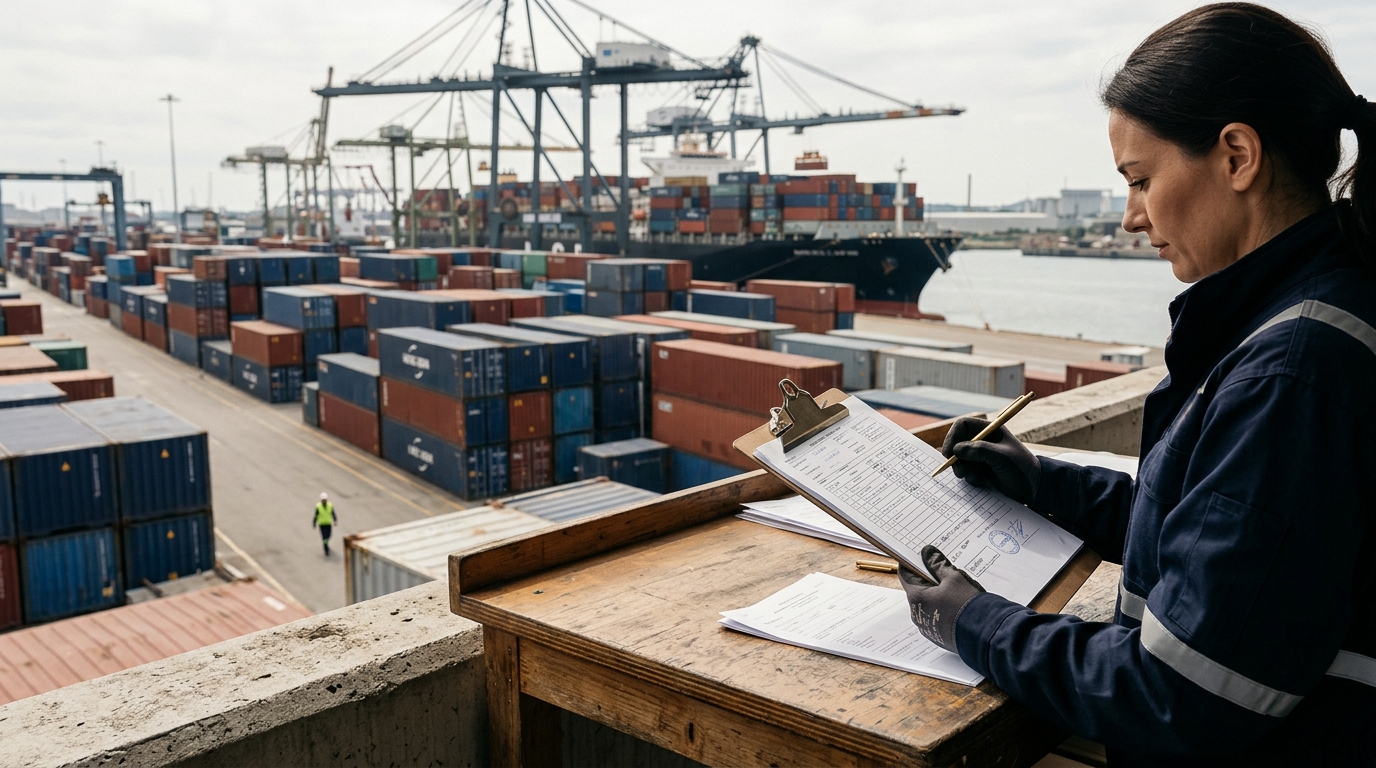
Most importers assume that once a freight forwarder is appointed, the documentation is handled. That assumption is the single most common cause of avoidable customs holds, unexpected duty bills, and rejected entries. Freight forwarder documentation responsibilities are real but narrowly defined: forwarders transmit and coordinate documents; they do not independently verify that those documents are accurate, compliant, or consistent with the goods in the container. The gap between what a forwarder does and what accurate documentation actually requires is where costly errors accumulate.
This distinction matters most on Asia-origin shipments, where documentation is generated by multiple parties across different jurisdictions — a factory in Guangdong, a trading company in Ho Chi Minh City, a consolidator in Chennai — before a forwarder ever touches the file. Each party produces documents according to its own systems, conventions, and incentives. By the time the commercial invoice, packing list, bill of lading, and certificate of origin reach the forwarder, the errors are already embedded. The forwarder's job is to move cargo, not to audit supplier-generated paperwork.
Understanding this division of responsibility is not an academic exercise. Customs authorities in the US, EU, UK, and Australia increasingly flag inconsistencies between declared values, HS codes, and country-of-origin claims. Anti-dumping duty regimes, rules of origin requirements under RCEP and CPTPP, and tightened enforcement around preferential tariff claims all mean that documentation that was acceptable a few years ago may now trigger a formal query or penalty. The cost of a single misclassified shipment — in detention charges, amended entries, and potential back-duties — commonly exceeds what a year of proper documentation oversight would cost.
This article defines both roles precisely, shows where each begins and ends, and explains the operator layer that bridges them. For a complete view of how MTS manages the full document set on Asia-origin shipments, seethe Import & Export Support pillar guide.
What a Freight Forwarder Actually Does with Your Documents
A freight forwarder is a logistics intermediary. Its core function is to arrange the physical movement of goods: booking vessel space, coordinating inland transport, managing consolidation, and filing the transmission documents that carriers and port authorities require. In practice, freight forwarder documentation responsibilities include:
- Issuing or endorsing the Bill of Lading (B/L) or Air Waybill on behalf of the carrier - Filing export customs declarations in the origin country, typically by inputting data the shipper or exporter provides - Transmitting the commercial invoice, packing list, and certificate of origin to the destination customs broker - Coordinating Letter of Credit (LC) documentation sets where the shipment is on LC terms - Providing freight certificates, cargo insurance documents, and port health certificates where required
Notice what is absent from that list: independent verification that the HS code is correct, that the declared value matches the actual transaction value, that the certificate of origin meets the rules of origin criteria for a claimed FTA preference, or that the product description on the commercial invoice will satisfy the importing country's customs authority. These are documentation accuracy functions, and they require a different kind of expertise operating upstream of the forwarder.
Where Freight Forwarder Documentation Responsibilities End
Forwarders operate on instructions. When a shipper sends a booking with an HS code, the forwarder uses that code. When a factory issues a commercial invoice with a product description, the forwarder transmits it. This is not a criticism of freight forwarders — it reflects how the role is structured commercially and legally. Under most standard freight forwarder terms and conditions (including FIATA standard trading conditions), the forwarder's liability for documentation errors is limited to errors it directly introduced, not errors inherited from the shipper's data.
This creates a structural accountability gap that many importers only discover after a customs examination or a penalty notice. The factory prepared the documents. The forwarder transmitted them. Customs has questions. Who is responsible for the answer?
| Function | Freight Forwarder | Documentation Operator |
|---|---|---|
| Book vessel space and arrange transport | Yes | No |
| Issue or endorse Bill of Lading | Yes | No |
| File export customs declaration | Yes (on shipper data) | Prepares and validates data |
| Verify HS code classification | No | Yes |
| Review commercial invoice for accuracy | No | Yes |
| Validate certificate of origin vs. rules of origin | No | Yes |
| Cross-check packing list against PO and invoice | No | Yes |
| Coordinate corrections before goods are loaded | No | Yes |
| Manage FTA preferential tariff documentation | Rarely | Yes |
| Maintain auditable document archive | No | Yes |
What a Documentation Operator Does That a Forwarder Cannot
A documentation operator sits upstream of the freight forwarder. Its function is to prepare, review, and coordinate the document set before it is handed to the forwarder for transmission and before goods are loaded. This is where the accuracy work happens.
HS Code Classification and Verification
HS codes determine the duty rate, any applicable anti-dumping or countervailing duties, import licensing requirements, and eligibility for preferential tariff treatment under agreements like RCEP, CPTPP, or the Generalized System of Preferences (GSP). A six-digit HS code that looks plausible is not necessarily the correct binding classification for a specific product in a specific destination market. A documentation operator applies classification methodology — examining the product's composition, function, and applicable section and chapter notes — and validates the code against the destination country's tariff schedule, not just the origin country's export schedule.
Commercial Invoice and Packing List Reconciliation
The commercial invoice must align with the purchase order, the packing list, the bill of lading description, and the customs declaration. On Asia-origin shipments produced by factories unfamiliar with destination-country requirements, discrepancies are common: units of measure that differ between the PO and invoice, product descriptions that are too vague or use internal factory codes, declared values that do not reflect Incoterms correctly, or consignee details that do not match the import entry. A documentation operator cross-checks all of these before the forwarder receives the file.
Certificate of Origin Compliance
A certificate of origin is only valuable if it is accurate and credible. For preferential certificates issued under RCEP or CPTPP, the rules of origin criteria — whether the goods satisfy a change-in-tariff-classification rule, a regional value content threshold, or a specific process rule — must be met and documented. Customs authorities are increasingly sophisticated at identifying certificates of origin that do not hold up against the underlying production records. A documentation operator reviews the basis on which the certificate is issued and flags claims that cannot be substantiated.
Coordination Across Multiple Suppliers
For importers sourcing across multiple Asian countries — a common pattern for brands scaling across product categories — the documentation operator maintains consistency. A packing list format that works for a supplier in Vietnam may differ structurally from one produced by a supplier in India. Incoterms declared on an invoice from a Chinese trading company may not match the Incoterms agreed in the purchase contract. The documentation operator standardises these inputs so that the forwarder receives a coherent, consistent file regardless of which supplier generated the originating documents.
Why the Misconception Persists — and What It Costs
The freight forwarder is the most visible party in the import transaction. They communicate shipment status, issue freight invoices, and coordinate delivery. It is natural for importers to treat the forwarder as the single point of contact for everything documentation-related. Freight forwarders often accept this role in the sense of being willing to chase suppliers for missing documents — but chasing for documents is different from verifying their accuracy.
The cost of the misconception appears in predictable ways:
- Customs examinations triggered by vague product descriptions or HS codes that do not match the goods - Anti-dumping duty exposure where an incorrect origin claim or HS code places goods in a duty order - Rejected FTA preferential claims where the certificate of origin cannot be verified against production records - Demurrage and detention charges while amended documents are produced and resubmitted - Internal audit findings where the documentation trail does not reconcile with PO and financial records
For corporate procurement and supply chain teams, the accountability gap also creates an internal compliance problem. When customs exceptions occur, the question of whether the error originated with the supplier, the forwarder, or the importer's own team is difficult to answer without a documentation audit trail that sits outside the forwarder's systems.
How MTS Fills the Documentation Operator Role
Our Import & Export Support servicepositions MTS as the documentation operator layer between Asian suppliers and the appointed freight forwarder. In practice, this means MTS prepares, reviews, and coordinates the complete document set — commercial invoice, packing list, bill of lading instructions, certificate of origin, and any product-specific compliance certificates — before the file is released to the forwarder.
Because MTS operates as a B2B execution partner embedded in Asia, this function is not a remote document-checking service. MTS works directly with factories and trading companies to obtain source documents, identifies discrepancies against the purchase order and destination-country requirements, and coordinates corrections before goods are loaded. The forwarder receives a verified file. The importer receives a document set that is consistent, auditable, and prepared for customs scrutiny.
Practical Implications for Different Importer Profiles
SME Importers and Brand Founders
For smaller importers who rely heavily on supplier-generated documents, the priority is establishing a baseline document standard — specifying exactly what each supplier must produce, in what format, and by when — and then having those documents reviewed against a consistent compliance checklist before they reach the forwarder. This is more achievable with an operator partner than by trying to build the capability internally.
Corporate Procurement and Supply Chain Teams
For larger organisations, the documentation operator function also serves the internal audit requirement. An auditable document archive, reconciled against PO data and customs entries, provides the evidence trail that trade compliance teams need. It also creates the basis for duty drawback claims, inward processing relief applications, and bonded warehouse management where applicable.
Scaling Brands Adding New Product Lines
Every new product category from a new Asian supplier is a classification event. The HS code must be determined correctly before the first shipment, not corrected after the first customs examination. A documentation operator who reviews new product lines before they enter the supply chain prevents the pattern of paying incorrect duties for months before the error is identified.
Selecting the Right Arrangement for Your Supply Chain
The right arrangement is not a choice between a freight forwarder and a documentation operator — it is recognising that both functions are necessary and that they are structurally different. A forwarder who is also asked to perform documentation accuracy functions is being asked to do something outside their operational model. Accountability for document accuracy belongs with a party who has the mandate, the methodology, and the access to source documents to perform it.
When evaluating whether your current import arrangement has this covered, the test is straightforward: who in your supply chain is responsible for verifying that the HS code on the commercial invoice is correct for the destination market, that the certificate of origin meets the applicable rules of origin, and that the document set is internally consistent before the forwarder files the customs declaration? If the answer is the freight forwarder by default, the documentation operator layer is missing.
Cleaning up this structural gap is the most direct action an importer can take to reduce customs exceptions, achieve more predictable landed costs, and build a supply chain that scales without accumulating compliance risk at every new supplier or product line added. For a full account of how MTS structures documentation support across the Asia-origin shipment lifecycle,the Import & Export Support pillar guidecovers the complete framework.
Shipping goods from Indonesia?
MTS coordinates consolidation, export documentation and freight across suppliers — one accountable partner from factory to port of destination.
Related services
Related articles
Receive furniture sourcing insights across Asia.
One email per week. No spam.