Indonesian Black Candi Lava Stone Suppliers: A Complete Sourcing Guide
13 min read
Sourcing black candi lava stone from Indonesia is not a simple catalog purchase. Architects, pool builders, and stone importers in the United States face a layered decision: choosing between stone types, qualifying suppliers across multiple Javanese quarry regions, understanding porosity and…
Sourcing black candi lava stone from Indonesia is not a simple catalog purchase. Architects, pool builders, and stone importers in the United States face a layered decision: choosing between stone types, qualifying suppliers across multiple Javanese quarry regions, understanding porosity and sealing requirements, and navigating US import logistics. A wrong decision at any stage increases project risk and landed cost.
This guide addresses the full sourcing chain for lavastone suppliers Indonesiablack candi. It covers mineralogy, quarry geography, product formats, surface finishes, sealing chemistry, supplier qualification, and US import tariffs. Each section is written for B2B professionals who need specifications and decision criteria, not general descriptions.
Indonesian volcanic stone has grown steadily in demand for resort pools, spa interiors, and temple-style landscape architecture. That demand is outpacing buyer knowledge of how to source it correctly. Understanding the material's properties and the supplier landscape before issuing a purchase order protects your project timeline and budget.
Black Candi Lava Stone Defined: Mineralogy, Texture, and Architectural Value
What Separates Candi Stone from Basalt-Lava and Andesite
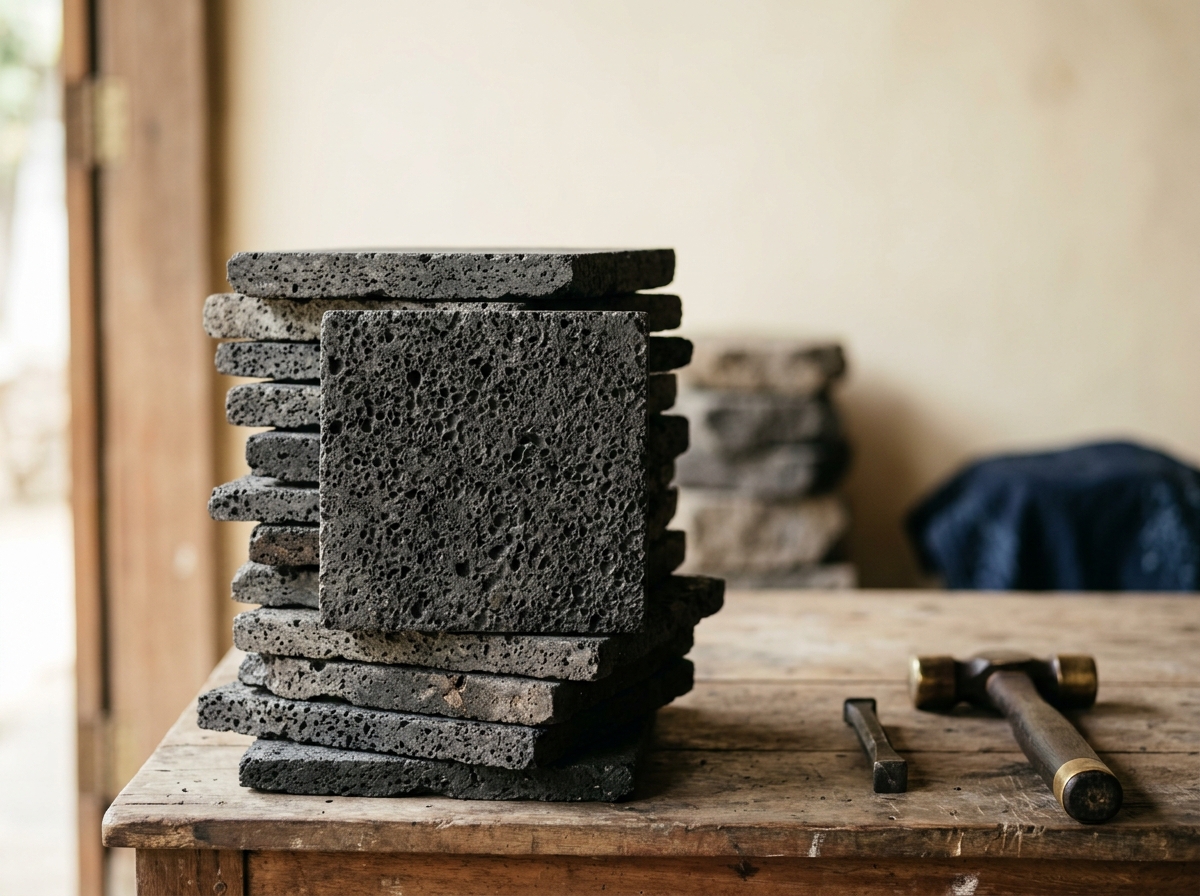
Black candi stone is a volcanic basalt-lava quarried primarily in Java, Indonesia. It forms from rapidly cooled lava flows associated with the island's active volcanic belt. The result is a fine-to-medium grained stone with a characteristically dark grey-to-black coloration and a porous, open-cell surface structure.
Three stone types from Indonesia are frequently confused:
| Property | Black Candi (Basalt-Lava) | Grey Basalt-Lava | Andesite |
|---|---|---|---|
| Origin | Java volcanic flows | Java / Bali volcanic flows | Java / Sumatra pyroclastic |
| Color | Dark black to charcoal | Mid-grey to blue-grey | Light grey to buff |
| Porosity | High (open-cell texture) | Moderate to high | Low to moderate |
| Density | Moderate | Moderate to high | Higher |
| Surface feel | Rough, cellular | Smoother cell structure | Dense, tight grain |
| Typical use | Cladding, pool coping, spa | Pool coping, paving | Paving, structural elements |
| Water absorption | High (approx. 5–15% by weight) | Moderate | Lower |
Andesite is denser and harder. It weathers differently and behaves more predictably in freeze-thaw cycles. Grey basalt-lava sits between the two. Black candi is the most porous of the three and requires the most careful sealing management in US installations.
Why Architects and Resort Designers Specify Candi Stone
The porous surface of candi stone creates a visual texture that no manufactured tile replicates. Light interacts with the open cell structure differently at different times of day. Wet and dry appearances contrast sharply, which is a deliberate design element in pool surrounds and spa walls.
The material carries cultural weight. Candi is the Indonesian word for temple. The stone has been used in Javanese and Balinese temple construction for centuries. Resort architects specifying Balinese or Javanese aesthetic styles use authentic candi stone to anchor that language in a project.
Primary Quarry Regions Producing the Best Indonesian Lava Stone
East Java: Kediri and Malang as the Core Supply Zones
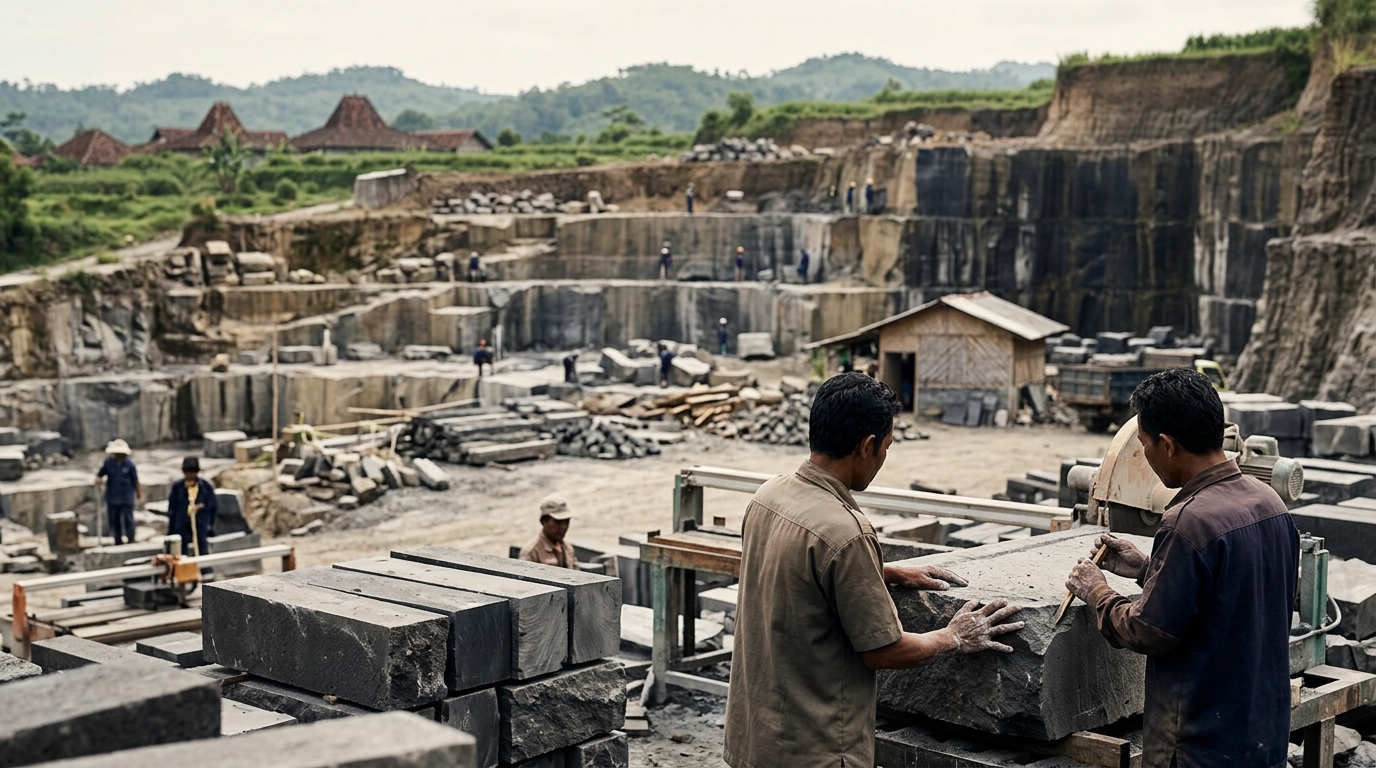
East Java is the dominant production region for lava stone suppliers Indonesia black candi. The Kediri and Malang areas sit within a geologically active volcanic corridor. Stone quarried here tends toward a deep black coloration with consistent grain. Porosity is high, which suits decorative cladding and pool applications.
Supply volumes from East Java are the largest in Indonesia. Most established exporters with direct quarry access are based or sourced here. Lead times are typically shorter because quarry-to-port logistics are more developed.
Central Java, Bali, and the West Java Emerging Zone
Central Java produces stone that is slightly greyer in tone. It is often marketed as grey basalt-lava rather than black candi. The color difference matters for project color matching. Request physical samples from each regional source before committing to a specification.
Bali quarries produce smaller volumes. Stone from Bali often carries a premium because of brand association with Balinese architecture. Quality can be high, but supply consistency is lower than East Java. Batch color variation is more common.
West Java is an emerging secondary source. Quarrying activity has increased in recent years. Stone characteristics vary more widely because the geology is less uniform. West Java suppliers may offer lower pricing, but quality documentation is less standardized. First-time importers should approach West Java sources with additional due diligence.
How Quarry Location Affects Supply Reliability
Proximity to Surabaya port (East Java) shortens container loading timelines. Bali-sourced stone must move through Benoa port or be trucked to Surabaya, adding transit time. Central Java suppliers typically load through Tanjung Emas (Semarang). Ask each supplier for their standard quarry-to-port lead time separately from production lead time.
Surface Porosity, Finishes, and Freeze-Thaw Performance for US Climates
Porosity Ranges and Water Absorption
Black candi lava stone is among the more porous natural stones available for commercial specification. Water absorption rates typically fall between approximately 5% and 15% by weight, depending on quarry source and stone density. This range is wide. Specify maximum acceptable absorption in your purchase order and request test certificates.
High porosity has two consequences. First, the stone requires mandatory sealing before use in wet areas. Second, it is vulnerable to freeze-thaw spalling if water penetrates unsealed stone in cold climates.
Comparing Surface Finishes
Three finishes are commercially available from Indonesian lava stone suppliers:
| Finish | Surface Description | Best Use | Slip Resistance |
|---|---|---|---|
| Natural Cleft | Split along natural grain planes | Exterior walls, rustic paving | High |
| Bush-Hammered | Mechanically textured, uniform roughness | Pool decking, wet areas | High |
| Honed | Ground smooth, matte surface | Interior walls, spa floors | Moderate |
Bush-hammered is the preferred finish for pool decking and wet-area flooring. It provides measurable slip resistance. Honed finishes reduce slip resistance and should not be used as wet-area flooring without anti-slip additive sealers.
Freeze-Thaw Performance in US Climate Zones
This is a critical point that generic supplier content routinely omits. Indonesian lava stone is quarried and primarily marketed for tropical climates. US applications span USDA hardiness zones from subtropical Florida to freezing northern states.
Unsealed or poorly sealed candi stone will absorb water. In climates where temperatures drop below freezing, that water expands. The open-cell structure of black candi makes it more susceptible to spalling than denser andesite or granite.
For installations in US climate zones with freeze-thaw cycles (approximately USDA zones 1–7), a penetrating silane-siloxane sealer applied correctly at installation is not optional — it is a structural requirement. Sealing dramatically reduces water absorption and extends the stone's service life in cold climates. Annual re-sealing inspection is recommended for outdoor installations in freeze-thaw zones.
Applications Where Candi Lava Stone Delivers Maximum Design and Durability Value
Wall Cladding: Interior Accent Walls and Exterior Facades
Wall cladding is the most forgiving application for black candi stone because moisture exposure is lower. Interior accent walls benefit from the stone's texture and dark tonal depth. Exterior facades in non-freeze climates perform well without heavy sealing schedules. Random ashlar and stacked formats are both available from Indonesian suppliers. Specify joint width and grout color early — both affect the final visual result significantly.
Pool Copings, Surrounds, and Wet-Area Flooring
Pool surrounds and copings are the highest-demand application among US importers sourcing from lava stone suppliers Indonesia black candi. Bush-hammered black candi provides natural slip resistance. The dark color absorbs heat, which some clients prefer around heated spa pools but which can be a concern in direct sun applications in hot climates.
Ensure all pool-zone stone is sealed before grouting and before water contact. Specify a water-resistant grout with low porosity. Pool chemical exposure (chlorine, salt) accelerates sealer breakdown. Re-seal pool surrounds approximately every one to two years depending on use intensity and sealer type.
Spa, Wellness, and Temple-Style Architectural Features
Spa interiors using honed black candi on walls create a low-reflectance, textured environment. The material's volcanic origin reinforces wellness narratives authentically. Temple-style garden features — water walls, feature plinths, pathway edging — use the full range of candi stone formats. These applications typically have lower moisture exposure than pools, reducing sealing frequency requirements.
Tile and Slab Formats, Sizes, Thickness Standards, and Export Packing
Indonesian lava stone suppliers offer a standardized range of formats with custom cutting available at additional cost and extended lead time.
| Format | Common Sizes | Thickness Options | Typical Application |
|---|---|---|---|
| Standard Tile | 10×10, 20×20, 30×30, 40×40 cm | 1 cm, 1.5 cm, 2 cm | Wall cladding, floor tile |
| Large Format Tile | 40×60, 60×60 cm | 2 cm, 2.5 cm | Pool surrounds, exterior paving |
| Random Ashlar | Variable irregular pieces | 1.5 cm, 2 cm | Rustic cladding, feature walls |
| Slab | Custom dimensions | 2 cm, 3 cm, bespoke | Structural cladding, countertops |
| Pool Coping | 30×60, 40×60 cm bullnose | 2 cm, 3 cm | Pool edge coping |
Minimum order quantities (MOQ) vary by supplier type. Direct quarry exporters typically set MOQs around one full 20-foot container. Trading companies may accept smaller orders at higher per-unit pricing. LCL (less-than-container-load) consolidation is available through freight forwarders for trial orders.
Export packing standards for lava stone: tiles are typically palletized on wooden pallets with foam interleaving and shrink wrap. Slabs ship in wooden crates. Confirm fumigation certificates (ISPM-15) are included for all wooden packaging — US Customs requires this.
- ✓Wooden crates or pallets comply with ISPM-15 fumigation standard
- ✓Foam or cardboard interleaving between tile layers
- ✓Pallet weight does not exceed freight forwarder limits
- ✓Crate dimensions match container loading plan
- ✓Packing list matches invoice line by line
Sealing Requirements and Maintenance Schedules for Pool and Outdoor Installations
Why Sealing Is a Mandatory Specification, Not an Afterthought
Black candi lava stone's porosity means it will absorb oils, minerals, pool chemicals, and biological matter without a sealer. Unsealed stone in pool zones will stain within weeks of installation. Efflorescence — white salt deposits migrating to the surface — is common in improperly sealed volcanic stone installations.
Sealer Chemistry: Penetrating Impregnators vs. Topical Coatings
Two main sealer categories apply to porous volcanic lava stone:
Penetrating impregnating sealers (silane, siloxane, or fluoropolymer chemistry) penetrate the stone's pore structure and repel water and oil at the molecular level. They do not change the surface appearance significantly. They are the preferred choice for pool copings, exterior paving, and any surface subject to UV exposure. Silane-siloxane blends offer both water and oil repellency and are widely specified for volcanic stone.
Topical coating sealers (acrylic or polyurethane chemistry) sit on the surface and create a film barrier. They can enhance color and add sheen. However, they are not recommended for pool zones or outdoor applications subject to UV because they yellow, peel, and trap moisture beneath the film. Topical coatings are more appropriate for indoor, low-traffic wall applications where enhanced color is desired.
For pool surrounds and spa flooring: specify a penetrating silane-siloxane or fluoropolymer impregnator as the mandatory pre-installation treatment. Apply two coats before grouting.
Re-Sealing Intervals and Maintenance
| Installation Type | Climate | Recommended Re-Seal Interval |
|---|---|---|
| Interior wall | Controlled indoor | Every 5–7 years (inspect annually) |
| Exterior wall (non-freeze) | Subtropical / mild | Every 3–5 years |
| Exterior wall (freeze-thaw) | Northern US | Every 2–3 years |
| Pool surround / coping | All climates | Every 1–2 years |
| Spa floor (wet area) | All climates | Every 1–2 years |
All intervals are approximate and depend on sealer brand, application method, and use intensity. Consult the sealer manufacturer's technical data sheet for product-specific guidance.
How to Qualify Indonesian Lava Stone Suppliers Before Placing an Order
Core Qualification Criteria
Supplier qualification for first-time importers of lava stone suppliers Indonesia black candi should follow a structured framework. Indonesian suppliers fall into three main categories: direct quarry owners with export licenses, trading companies that aggregate from multiple quarries, and merchant exporters. Each has different risk profiles.
- ✓Quarry ownership or direct supply agreement documented
- ✓Active export license (SIUP/NIB) confirmed
- ✓Previous US or EU export shipment references provided
- ✓Physical sample pack received and color-matched to project spec
- ✓Quality control documentation: stone test reports for absorption and compressive strength
- ✓ISPM-15 compliant packing process confirmed
- ✓Bank or trade reference available
- ✓Lead time commitment in writing with penalty clause option
What to Include in a Sample Request
Do not accept generic showroom samples. Request samples that specify:
- Exact quarry source and batch reference number - Finish type (natural cleft, bush-hammered, or honed) - Thickness matching your project specification - Minimum two samples per finish to assess color consistency within the batch
Color lots vary between quarry batches. If your project requires a large volume over multiple shipments, request a batch hold or negotiate a color-match clause in the supply contract.
Red Flags That Indicate Supplier Risk
- Color variation between sample and production batch with no acknowledgment - No export shipping history to the US, EU, or Australia - Missing or generic quality documentation (no actual test data) - Unwillingness to provide quarry visit access or third-party inspection - Pricing significantly below market without explanation
Trade Channels and Indonesian Stone Associations
The Indonesian Chamber of Commerce and Industry (KADIN) and the Indonesian Stone Exporters Association (ASMINDO covers broader categories) can assist in identifying registered exporters. Indonesian stone trade fairs, particularly those in Surabaya and Denpasar, provide direct access to quarry operators. US-based stone importers associations can provide sourcing references for verified Indonesian suppliers.
US Import Logistics, Tariff Rates, and Lead Time Planning for Lava Stone
HS Code Classification and Import Duty Rates
Indonesian lava stone products are classified under different HS codes depending on form:
| Product Form | HS Code (Approximate) | General Rate of Duty |
|---|---|---|
| Worked monumental or building stone (tiles, slabs) | 6802.99 | Approximately 3.7% ad valorem |
| Rough-cut or sawn stone blocks | 6801.00 | Generally free or low rate |
| Dressed stone for paving / cladding | 6802.91 / 6802.99 | Verify current rate with CBP |
Indonesia benefits from no Section 301 tariff exposure (unlike Chinese stone imports). This is a material landed cost advantage for US buyers. The general duty rate on worked stone is modest, but it applies to the FOB value of the shipment, so verify with a licensed customs broker.
Typical Lead Times from Order to US Port
| Stage | Approximate Duration |
|---|---|
| Production (standard formats, stock) | 2–4 weeks |
| Production (custom cut, large volume) | 4–8 weeks |
| Container loading and pre-shipment inspection | 1–2 weeks |
| Ocean freight (Indonesia to US West Coast) | Approximately 18–25 days |
| Ocean freight (Indonesia to US East Coast) | Approximately 25–35 days |
| US Customs clearance and inland delivery | 3–7 business days |
Total elapsed time from order confirmation to project site: plan for approximately 8–14 weeks for standard orders. Custom formats or large-volume orders extend this to 12–18 weeks.
Container Options for Different Order Sizes
A 20-foot FCL (full container load) typically carries approximately 18–22 metric tonnes of natural stone, sufficient for moderate commercial projects. A 40-foot FCL doubles capacity and reduces per-unit freight cost significantly.
LCL (less-than-container-load) consolidation is viable for sample orders and small trial shipments. Freight costs per cubic meter are higher for LCL. For initial qualification orders, LCL is practical. For production orders, FCL is almost always more economical.
Frequently Asked Questions from US Architects and Importers
What is the difference between black candi stone, grey basalt-lava, and andesite from Indonesia? Black candi is the most porous and darkest. Grey basalt-lava is mid-grey with moderate porosity. Andesite is denser, lighter in color, and more resistant to water absorption. See the comparison table in the first section for full property comparison.
Does Indonesian lava stone need to be sealed before installation in pool areas? Yes, sealing is mandatory. Apply a penetrating silane-siloxane impregnator before grouting and before any water contact. Re-seal pool-zone installations approximately every one to two years.
What tile sizes and slab formats are available from Indonesian lava stone suppliers? Standard tiles range from 10×10 cm to 60×60 cm. Pool coping formats with bullnose edges are available in approximately 30×60 and 40×60 cm. Custom slab dimensions are available from larger exporters at extended lead times.
How do US import tariffs affect the landed cost of Indonesian black candi lava stone? The general duty rate on worked volcanic stone tiles is approximately 3.7% of FOB value. Indonesian stone is not subject to Section 301 tariffs. Confirm the applicable 10-digit HTS code with your customs broker.
Which regions in Java and Bali produce the best quality black candi lava stone? East Java (Kediri and Malang districts) is the most established source for consistent black candi with developed export infrastructure. Bali produces smaller volumes with higher price points. Central Java leans toward grey basalt-lava tones.
Is Indonesian lava stone suitable for outdoor use in cold US climates? Yes, with correct sealing. In freeze-thaw climate zones, a penetrating silane-siloxane sealer is a structural requirement, not an option. Specify maximum water absorption in your purchase order and verify with test certificates.
Qualifying the right supplier from East Java or Bali, specifying the correct surface finish, and mandating professional sealing at installation are the three decisions that separate successful US lava stone projects from costly failures. Treat Indonesian black candi as a high-performance material that requires technical management — not as an off-the-shelf commodity.
You now have the specification framework, supplier qualification criteria, and logistics context to source Indonesian volcanic lava stone confidently for commercial projects. The next step is getting physical samples in hand.
With the sourcing framework above, you are ready to evaluate real material against real project specifications. Contact verified Indonesian black candi lava stone suppliers today to request a free sample pack by quarry region and finish type, and receive a wholesale quote based on your project volume and format requirements.
Request Free Sample Pack and Wholesale Quote →Need eyes on the ground in Indonesia?
MTS is an execution partner — supplier verification, manufacturing management, quality control and export logistics across Indonesia, Vietnam and China.
Related services
Related articles
Receive furniture sourcing insights across Asia.
One email per week. No spam.