Stone Wall Cladding Panels Suppliers Indonesia: Complete Sourcing Guide for Contractors
14 min read
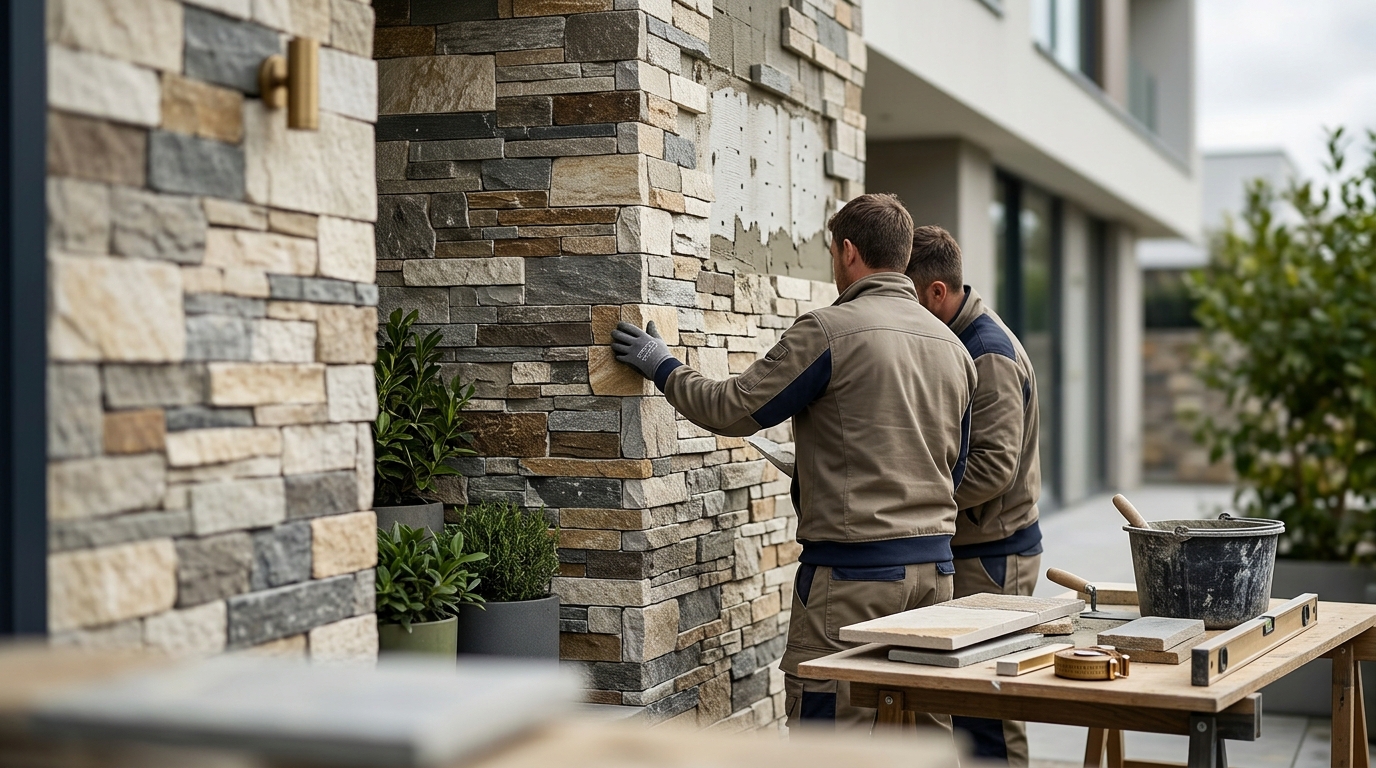
Sourcing stone wall cladding panels from Indonesia is not a simple product search. It is a supply chain decision with structural implications — substrate compatibility, freeze-thaw ratings, freight costs, import duties, and supplier verification all intersect before a single panel ships. US facade…
Sourcing stone wall cladding panels from Indonesia is not a simple product search. It is a supply chain decision with structural implications — substrate compatibility, freeze-thaw ratings, freight costs, import duties, and supplier verification all intersect before a single panel ships. US facade contractors and stone retailers face a market where Indonesian suppliers vary dramatically in quality, export capability, and documentation standards.
This guide covers the full sourcing cycle. You will find stone type specifications, weight and load data, mounting system compatibility with US codes, the sample approval workflow, and current import tariff classifications. The goal is to give procurement teams and contractors a decision-ready framework — not a catalog of pretty stone finishes.
Indonesia has become a primary origin fornatural stonewall cladding panels shipped to the United States. Understanding why that is, and how to extract value from it while managing risk, is where this guide begins.
Why Indonesia Controls a Dominant Share of Global Stone Wall Cladding Supply
Indonesia sits on the Pacific Ring of Fire. That geology is not incidental — it directly produces the volcanic stone types that define the country's export strength. The island arc running through Bali, West Java, and Central Java yieldslava stone, andesite, and basalt in commercially extractable volumes that few other countries can match.
Quarry regions and stone types
The main quarry clusters are concentrated in three areas:
- Bali: lava stone (paras), sandstone, limestone — strong artisan processing base - West Java: andesite, basalt — harder volcanic stone, suited to exterior facade applications - Central Java: andesite, slate, mixed volcanic formats — mid-range processing capability
Key stone types available from Indonesian suppliers include:
| Stone Type | Origin Region | Typical Use |
|---|---|---|
| Lava stone (paras) | Bali | Interior accent walls, water features |
| Andesite | West Java, Central Java | Exterior facades, paving, cladding |
| Basalt | West Java | Heavy-duty exterior, commercial facades |
| Limestone | Bali, East Java | Interior cladding, feature walls |
| Sandstone | Bali, Yogyakarta | Residential facades, hospitality |
| Slate | Central Java | Ledger panels, stacked stone formats |
Cost position versus competing origins
Indonesian natural stone wall cladding panels are generally priced below comparable material from India, China, or Turkey on an FOB basis. The cost advantage comes from lower quarrying labor costs, proximity of processing facilities to quarry sites, and high quarry density in key regions. The gap narrows when shipping to US East Coast ports is factored in, but the material cost advantage typically holds.
Export ports and logistics infrastructure
Three ports handle the majority of Indonesian stone exports:
- Semarang (Central Java) — primary port for Central and East Java production - Surabaya (East Java) — handles high-volume container traffic - Denpasar/Bali — smaller throughput, used for Bali-origin stone and artisan formats
Transit times and FCL availability differ across these ports. Semarang and Surabaya offer more frequent direct services to US West Coast ports.
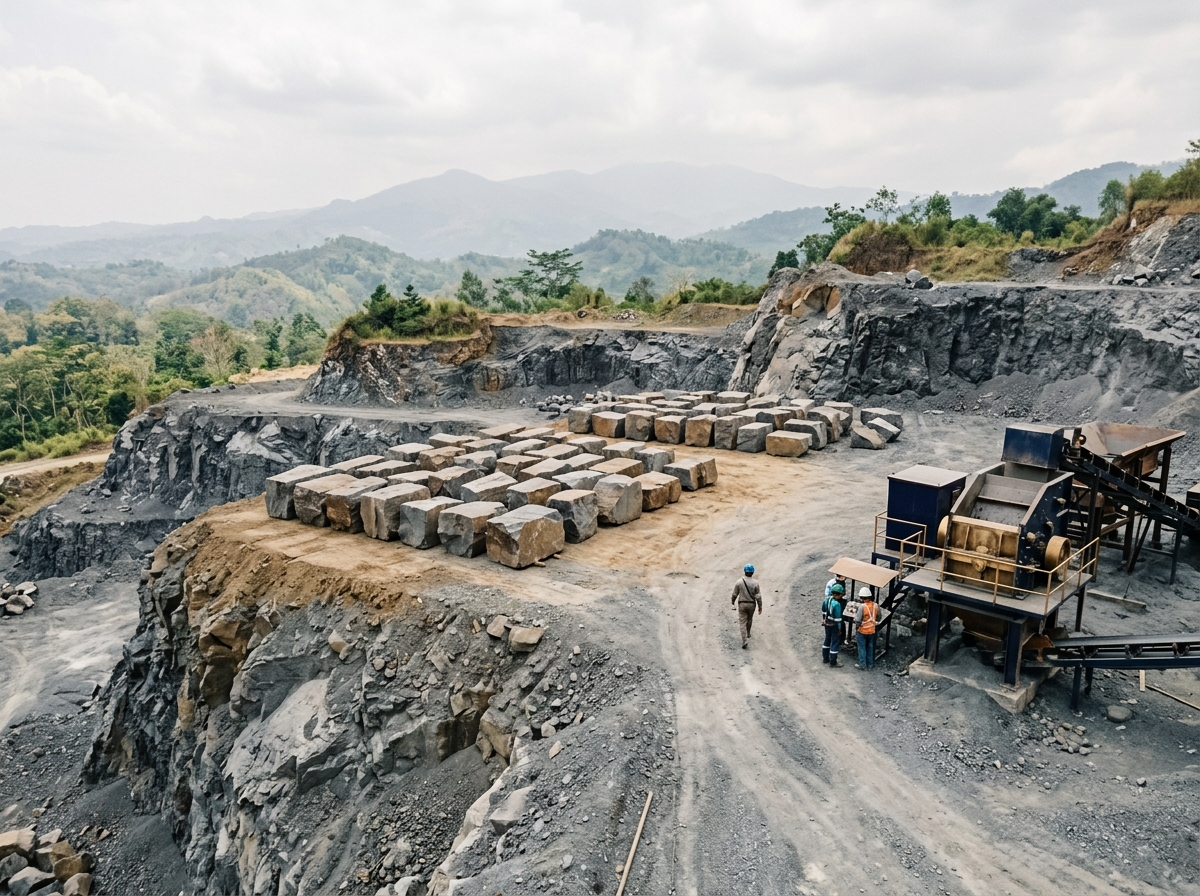
Stone Formats and Surface Finishes Available from Indonesian Stone Wall Cladding Panels Suppliers
Indonesian suppliers produce a broad format range. Understanding the differences between formats is essential before issuing a purchase order.
Ledger panels
Ledger panels are the dominant export format. Standard sizing is typically around 6×24 inches or 6×12 inches, though metric sizing (150×600 mm, 150×300 mm) is common from suppliers who also serve European buyers. Key specifications:
- Thickness: typically 25–35 mm for standard ledger veneers - Joint options: tight-joint (dry-stack appearance), open-joint for grouted installation - Coursing: linear (uniform height), alternating height, ashlar pattern
Confirm that panel heights are consistent within a batch. Variation greater than approximately ±2 mm creates visible coursing breaks in installed facades.
Stacked stone formats
Stacked stone panels are manufactured to replicate a dry-stack fieldstone wall. Two construction types are available from Indonesian suppliers:
- Interlocking panels: factory-cut for end-to-end interlocking, reducing site cutting - Mortar-set panels: flat-backed, installed with polymer-modified thinset
Stacked stone panels from Indonesia are often produced in lava stone, slate, or mixed volcanic aggregate. Verify that the panel backing (mesh or cement board bonded) is rated for exterior moisture exposure if the application is outdoor.
Corner pieces and accent formats
- Mitered corners: factory-cut at 45°, natural face on two sides — premium finish, higher cost - L-shaped factory corners: two-sided, solid stone — more durable at outside corners - Loose mosaic and polygonal formats: used for accent walls, fireplace surrounds, and feature columns
Surface finishes
| Finish | Description | Typical Application |
|---|---|---|
| Split-face | Natural fracture plane exposed | Exterior facades, rough texture |
| Tumbled | Machine-tumbled edges and surface | Rustic interiors, feature walls |
| Honed | Smooth, matte — no gloss | Interior accent walls |
| Brushed | Wire-brushed texture, semi-smooth | Contemporary interiors |
| Bush-hammered | Mechanical pitting, anti-slip | Exterior horizontal surfaces |
Interior vs Exterior Specifications: Critical Data for US Facade Contractors
Not all Indonesian stone performs equally outdoors in US climate zones. This is the area where under-specified purchases create the most costly failures.
Absorption and porosity
Exterior stone wall cladding must have low water absorption to resist freeze-thaw cycling in USDA climate zones 5 and below. General guidance:
- Andesite and basalt: water absorption typically below 3% by weight — generally suitable for exterior use including freeze-thaw climates - Lava stone (paras): higher porosity, absorption rates can exceed 10% — requires sealing for any exterior application - Sandstone: variable absorption; request test data before specifying for exterior use in cold climates - Limestone: moderate absorption; assess freeze-thaw test results (ASTM C880, ASTM C97 equivalents)
Relevant test standards
Request supplier documentation referencing or equivalent to:
- ASTM C97: water absorption and specific gravity - ASTM C170: compressive strength - ASTM C880: flexural strength - ASTM C1354: freeze-thaw resistance for dimension stone
Indonesian exporters targeting the US market are increasingly able to provide third-party test reports. If a supplier cannot provide any test documentation, treat that as a qualification failure.
Sealing requirements
Lava stone and porous sandstone panels require penetrating silane/siloxane sealer application before installation. For exterior use, a minimum of two coats on all exposed faces and the panel back is standard practice. Factor sealer cost and application into your project budget.
Weight Per Square Metre and Structural Load Planning by Panel Type
This data is absent from most competitor sourcing guides. It is operationally critical for facade engineers and structural consultants.
Typical weight ranges
| Panel Type | Thickness | Approx. Weight (kg/m²) |
|---|---|---|
| Thin ledger veneer | 20–30 mm | 25–40 kg/m² |
| Standard stacked stone panel | 35–50 mm | 45–65 kg/m² |
| Full-thickness cladding | 50–80 mm | 65–90 kg/m² |
| Loose mosaic on mesh | 10–20 mm | 15–25 kg/m² |
Weight figures are approximate and vary by stone density. Andesite and basalt are denser than lava stone and sandstone.
Substrate and mounting requirements
- Cement board over steel stud: suitable for thin ledger veneers up to approximately 40 kg/m²; verify stud spacing and board thickness - Masonry substrate (CMU block, poured concrete): suitable for full-thickness panels; preferred for heavy commercial facade applications - Mechanical clip systems: required for panels above approximately 50 kg/m² on steel-frame structures; reduces point-load stress and allows thermal movement
For high-rise facades, a licensed facade engineer must calculate dead load, wind load, and seismic factors. Stone cladding panels exceeding approximately 60 kg/m² on curtain wall systems require engineered anchor point calculations regardless of substrate.
Mounting System Compatibility with US Building Codes and ASTM Standards
Clip-and-rail vs mortar-set systems
Indonesian suppliers increasingly offer panels pre-configured for either clip-and-rail or mortar-set installation. The distinction matters for US projects:
- Mortar-set: panels back-buttered with polymer-modified thinset, bonded to substrate. Lower installed cost. Requires full-coverage bond — minimum 95% contact per ANSI A108. - Clip-and-rail: panels hang on concealed aluminum or stainless rail. Allows panel replacement, accommodates thermal movement, preferred for commercial facades.
US code and ASTM compatibility
Key reference standards for exterior stone cladding installation in the US:
| Standard | Scope |
|---|---|
| ASTM C1242 | Standard guide for exterior dimension stone cladding systems |
| ASTM C1528 | Selection of dimension stone |
| ANSI A108 | Installation of ceramic tile and dimension stone |
| IBC Chapter 14 | Exterior wall coverings, US building code |
Request panel flatness and thickness tolerance data from suppliers. Panels with face variation greater than approximately ±3 mm create alignment problems in clip-and-rail systems.
Expansion joint requirements
US climate zones require expansion joints at intervals specified by project engineers — typically every 6 to 9 meters for exterior cladding runs. Ensure your Indonesian supplier's panel format accommodates joint placement without requiring custom cuts that generate excessive waste.
How to Evaluate and Qualify Stone Wall Cladding Panels Suppliers in Indonesia
Supplier type classification
Three main supplier types operate in the Indonesian natural stone export market:
- Direct quarry exporters: own or lease quarries, process and export directly. Best for price and consistency. Require longer lead times and higher MOQs. - Trading houses: aggregate from multiple quarries. More format flexibility. Greater batch variation risk. - Bali-based stone exporters: strong on artisan formats, lava stone, and smaller order quantities. Less suited to large-volume homogeneous commercial orders.
Documentation to request
- ✓Export license and business registration documents
- ✓Third-party stone test reports (ASTM C97, C170, C880 or equivalent)
- ✓Sample set with material data sheet (MDS) for each stone type
- ✓Photographic evidence of QC processes at processing facility
- ✓Export packaging specification (crating, palletizing standard)
- ✓References from US or European import customers
- ✓Bank reference or trade credit history
- ✓Freeze-thaw test data for any stone specified for exterior use in cold climates
Red flags to reject early
- No physical samples available for dispatch within two to three weeks - Inability to provide any third-party test documentation - No documented export history to the US or EU - Color batch samples that show more than moderate variation — stone has natural variation, but extreme inconsistency signals poor quarry control - Pricing significantly below market without explanation
Sample Approval Workflow: From First Supplier Contact to Pre-Production Sign-Off
A structured sample workflow protects contractors from costly production mismatches. The steps below reflect standard B2B practice for sourcing natural stone wall cladding panels from Indonesia.
Step 1 — Digital catalog and material data sheets
Request a full digital catalog with stone type, format, surface finish, thickness range, and available panel sizes. Ask for material data sheets covering water absorption, density, and compressive strength. Evaluate this before committing to sample shipping costs.
Step 2 — Physical sample sets
Order physical sample sets covering all formats and finishes under consideration. Indonesian suppliers typically dispatch via DHL or FedEx. Delivery to US addresses typically runs seven to fourteen days. Expect to pay sample shipping costs — suppliers who offer free samples on first contact often offset this in panel pricing.
Evaluate samples against: - Color range (assess three to five samples per stone type, not one) - Surface finish consistency - Dimensional accuracy (measure thickness variation across the sample) - Edge quality and cut precision
Step 3 — On-site mock-up review
Install a representative section of panels on a mock-up board at your facility or project site. Assess: - Visual appearance at installation distance (typically 3–5 meters for facades) - Coursing alignment across adjacent panels - Color blending across the sample range
Step 4 — Pre-production sample and color-range sign-off
Before releasing a bulk order, request a pre-production sample (PP sample) from the confirmed production batch. This sample must match the approved reference sample. Issue written sign-off against a numbered reference. This document forms the basis for any quality dispute during or after shipment.
Freight Planning, Lead Times, and US Import Tariffs for Indonesian Stone Cladding
Freight lead times
| Route | FCL (Full Container Load) | LCL (Less-than-Container Load) |
|---|---|---|
| Semarang / Surabaya → US West Coast | Approx. 18–25 days transit | Approx. 25–35 days transit |
| Semarang / Surabaya → US East Coast | Approx. 28–38 days transit | Approx. 35–45 days transit |
Transit times are approximate and subject to carrier schedules, port congestion, and seasonal factors.
Add production lead time — typically four to eight weeks for standard orders from Indonesian suppliers — before transit. Total order-to-delivery cycles of twelve to sixteen weeks are common for first orders.
Packaging standards for stone panels
- 20-foot or 40-foot FCL is standard for volume orders. LCL is viable for sample-to-small orders. - Panels must be packed in wooden crates or palletized with foam interleaving between layers. - Strapping to pallet base is required. Loose stone in standard cartons generates high breakage rates in ocean freight. - Specify maximum crate weight (typically under 1,000 kg per crate for forklift handling).
US HTS import tariff codes
Natural stone wall cladding panels from Indonesia are classified under Chapter 68 of the US Harmonized Tariff Schedule:
| Material | HTS Code Range | Notes |
|---|---|---|
| Worked monumental/building stone | 6802.xx.xx | Covers cut and dressed panels |
| Slate (worked) | 6803.00.xx | Specific to slate formats |
| Stone tiles and panels (other) | 6802.91–6802.99 | Varies by stone type |
HTS codes should be verified with a licensed US customs broker before import. Misclassification can result in delays and penalties.
Indonesia does not currently face the Section 301 tariffs that apply to Chinese goods. As of available information, Indonesian natural stone imports attract the standard MFN (Most Favored Nation) duty rate, which is typically low — around 3.7% to 4.9% for processed stone panels under Chapter 68, depending on exact classification. Confirm current rates with a customs broker, as tariff schedules are subject to change.
Incoterms commonly offered
- FOB Semarang / Surabaya: most common. Buyer controls freight from port. Recommended for experienced importers. - CIF (US port): supplier arranges freight and insurance. Easier for first orders, less cost visibility. - DDP: rare for Indonesian stone exporters at this scale, but some larger trading houses offer it.
Design Trends and Stone Combinations Driving US Facade Contractor Demand
Contemporary commercial facades
Dark lava stone or basalt panels combined with grey andesite creates high-contrast facades popular in commercial and hospitality construction. The tonal contrast between near-black basalt and mid-grey andesite reads well at scale and suits curtain wall grid compositions.
Residential and hospitality applications
Warm-toned sandstone ledger panels from Bali and Yogyakarta are in demand for residential feature walls, resort lobby facades, and boutique hotel exteriors. The warm ochre and buff tones of Indonesian sandstone complement timber and weathering steel accents — two materials common in contemporary residential facade packages.
Biophilic design and finish preferences
The biophilic design trend is pushing demand for tumbled and split-face finishes over polished or honed surfaces. Tumbled andesite and split-face lava stone give facades tactile depth that reads as natural rather than manufactured. Stacked stone ledger panels in split-face finish are the most requested format among US facade contractors currently sourcing from Indonesian suppliers.
Mixed material compositions
Stone cladding panels combined with large-format timber cladding boards or perforated metal panels are common in contemporary US facade packages. Confirm that your stone panel reveal depth and fixing method are compatible with adjacent cladding materials before finalising the facade detail.
Frequently Asked Questions
What is the minimum order quantity for stone wall cladding panels from Indonesian suppliers? MOQs vary by supplier type. Direct quarry exporters typically require a minimum of one FCL (approximately 20–25 tonnes of finished panels). Trading houses may accept smaller orders — often around 5–10 tonnes. For sample orders, there is generally no formal MOQ, but shipping cost economics make orders below approximately 2 tonnes impractical via LCL.
How much do Indonesian stone cladding panels weigh per square metre? Thin ledger veneers (20–30 mm) weigh approximately 25–40 kg/m². Standard stacked stone panels run approximately 45–65 kg/m². Full-thickness panels (50–80 mm) can reach 65–90 kg/m². Confirm with the supplier's weight certificate for the specific format ordered.
Are Indonesian natural stone panels suitable for exterior use in cold US climates? Andesite and basalt — the denser volcanic stones from West Java — are generally suitable for exterior use including freeze-thaw climates, provided water absorption is below approximately 3%. Lava stone, sandstone, and some limestones have higher porosity and require verified freeze-thaw testing before exterior specification in climate zones 5–7.
What are the current US import tariffs on stone cladding panels from Indonesia? Indonesian natural stone panels are classified under HTS Chapter 68. MFN duty rates are typically in the range of approximately 3.7% to 4.9% for processed stone panels, depending on classification. Indonesia is not subject to Section 301 tariffs. Confirm the exact rate with a licensed US customs broker before importing.
How long does shipping take from Indonesia to the US for stone cladding orders? FCL transit from Semarang or Surabaya to US West Coast ports is approximately 18–25 days. East Coast transit is approximately 28–38 days. Add production lead time of four to eight weeks. Total cycle from order confirmation to US delivery is commonly twelve to sixteen weeks.
What mounting systems are compatible with Indonesian ledger stone panels? Indonesian ledger panels are compatible with both mortar-set (back-buttered polymer-modified thinset) and clip-and-rail concealed fixing systems. For panels above approximately 50 kg/m² on steel-frame structures, mechanical clip systems are preferred. Confirm panel thickness tolerances with the supplier — clip-rail systems require tighter dimensional control than mortar-set applications.
Sourcing stone wall cladding panels from Indonesia offers US contractors genuine cost and format advantages, but only when suppliers are qualified on technical documentation, stone performance data, and export capability — not just sample aesthetics. Structural load planning, frost resistance verification, and a structured sample approval process are the three areas that separate successful first orders from costly corrections.
You now have the specification data, supplier evaluation framework, and import logistics detail to make a sourcing decision with confidence. The next step is putting verified Indonesian suppliers in front of your procurement process.
You have the specifications and the workflow — now connect with suppliers who can deliver against them. Request physical sample sets and an indicative freight quote from verified Indonesian stone wall cladding panels suppliers today.
Request Samples and Freight Quote →Need eyes on the ground in Indonesia?
MTS is an execution partner — supplier verification, manufacturing management, quality control and export logistics across Indonesia, Vietnam and China.
Related services
Related articles
Receive furniture sourcing insights across Asia.
One email per week. No spam.