Indonesian Furniture Wholesale Prices: A Complete Buyer's Cost Guide
21 min read
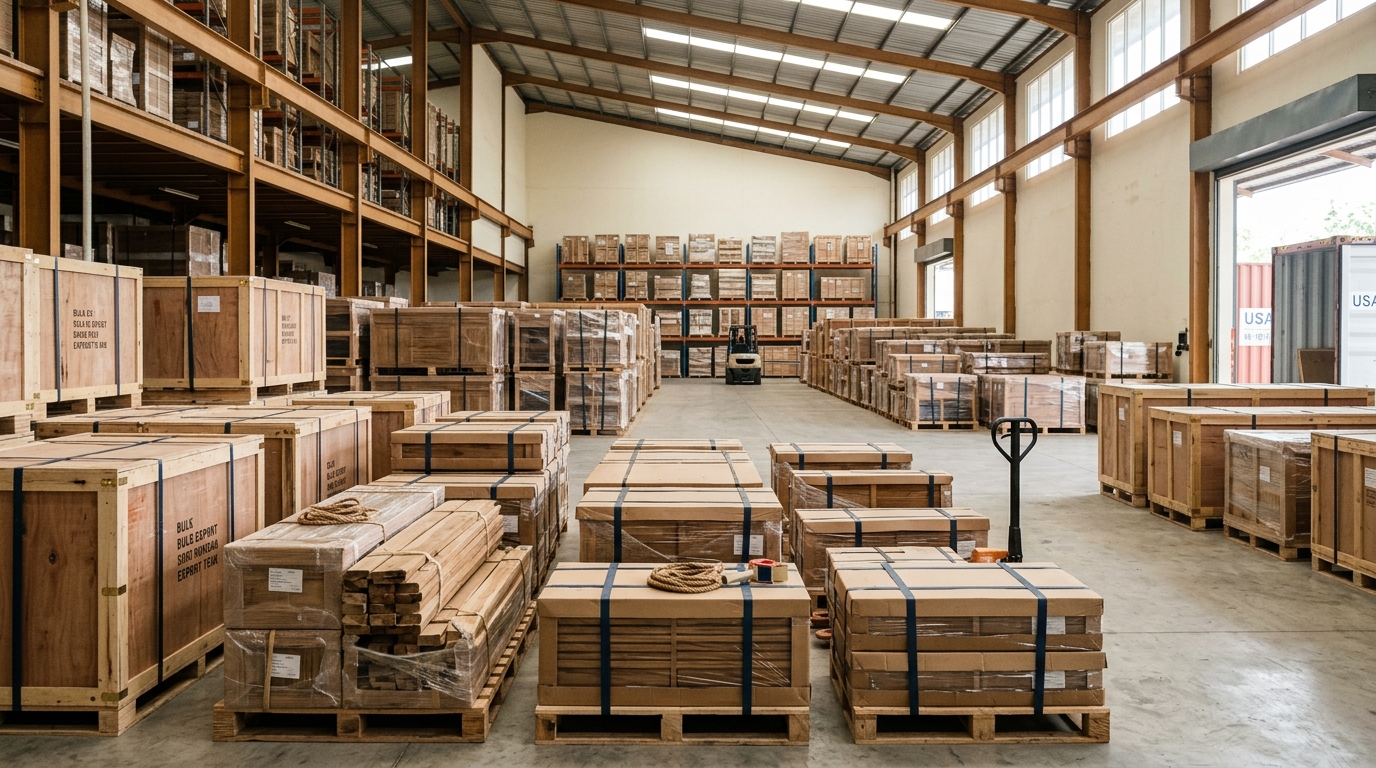
If you are a furniture retailer, importer, or wholesale buyer actively comparing sourcing options, you already know that getting accurate Indonesian furniture wholesale prices before you commit to a container order is not straightforward. Supplier websites quote ranges that span hundreds of…
If you are a furniture retailer, importer, or wholesale buyer actively comparing sourcing options, you already know that getting accurate Indonesian furniture wholesale prices before you commit to a container order is not straightforward. Supplier websites quote ranges that span hundreds of dollars per piece, FOB terms vary by region, and the true landed cost in a US warehouse can be dramatically higher than the factory-gate number. Without a clear framework, you risk overbidding on freight, underbidding on duties, or partnering with a trading intermediary who adds a silent margin between you and the factory.
This guide cuts through that noise. It covers how FOB pricing is structured in Indonesia, what benchmark cost ranges look like across teak, rattan, bedroom, and living room categories, which hidden fees inflate your total landed cost, and how production regions like Jepara and Bali compare on price and product fit. You will also find supplier vetting criteria, negotiation tactics, and a step-by-step process for placing your first wholesale order — all grounded in publicly available trade data, certification frameworks, and commercial realities that experienced importers navigate every day.
Indonesia ranks consistently among the top five global furniture exporters, and for buyers focused on solid wood, rattan, and handcrafted pieces, it offers a combination of material quality and craft depth that few competing countries can match at the same price point. Whether you are sourcing teak dining sets for a retail chain or resort-grade accent furniture for a hospitality project, understanding how Indonesian furniture wholesale prices are built — from factory gate to US port — is the foundation of a profitable sourcing decision. The sections below give you exactly that.
Why Indonesia Belongs at the Top of Every Wholesale Buyer's Sourcing List
A Global Export Powerhouse Built on Rare Raw Materials
Asia has dominated global furniture manufacturing for three decades, and within that landscape Indonesia holds a distinctive niche. While China leads on volume and Vietnam has grown rapidly in panel-wood and upholstered categories, Indonesia owns the premium natural-material segment: teak, mahogany, rattan, suar, and reclaimed wood. These materials are not incidental to Indonesia's export identity — they are its primary competitive advantage.
Teak grown in Java's government-managed plantations is widely regarded as among the finest commercially available. Its density, natural oil content, and resistance to moisture and pests make it the benchmark material for outdoor and high-end indoor furniture in the US market. Mahogany offers a lighter, more affordable alternative with excellent workability for carved and detailed pieces. Rattan and bamboo serve a fast-growing outdoor and boho-aesthetic segment. Suar (also called monkeypod or rain tree) and reclaimed teak appeal to sustainability-conscious retailers and interior designers. No other single country delivers this breadth of premium natural materials at comparable export scale.
Key Production Hubs and What Each Does Best
Indonesia's furniture manufacturing landscape is structured around distinct regional production clusters, each defined by its own area of expertise:
| Region | Primary Specialization | Buyer Profile |
|---|---|---|
| Jepara (Central Java) | Solid teak and mahogany, carved and classic styles | High-volume wholesale, mass retail |
| Bali | Artisan luxury, resort and boutique hospitality | Interior designers, boutique retailers |
| Cirebon (West Java) | Rattan and bamboo furniture | Outdoor and lifestyle retailers |
| Solo (Central Java) | Traditional Javanese carved wood | Specialty and ethnic retail |
| Surabaya (East Java) | Mid-market export manufacturing | Balanced volume and quality buyers |
| Semarang (Central Java) | Outdoor and garden furniture | Patio and garden wholesale |
Certifications That Protect US Buyers at the Border
Two certification frameworks carry significant weight for US importers. SVLK (Sistem Verifikasi Legalitas Kayu) is Indonesia's government-mandated timber legality verification system, providing documentation that wood incorporated into export furniture was legally harvested and processed throughout the supply chain. FSC (Forest Stewardship Council) certification applies a higher bar, independently verifying responsible forest management practices at every stage of production.
Both certifications have direct bearing on US Lacey Act compliance. The Lacey Act bars the importation of wood products derived from illegally harvested timber and places the responsibility for due diligence squarely on the importer of record. Sourcing from an SVLK- or FSC-certified Indonesian supplier is the most defensible way to demonstrate that due diligence should Customs and Border Protection ever request supporting documentation. Suppliers holding neither certification introduce a measurable level of import risk — one that extends beyond ethical considerations into concrete legal and financial exposure.
How Indonesian Furniture FOB Prices Are Actually Structured
Getting a clear picture of Indonesian furniture wholesale prices starts with understanding precisely what the FOB term covers — and equally, what falls entirely outside it.
FOB vs. CIF: What Each Term Really Means
FOB (Free On Board) assigns the seller responsibility for goods up to the point they are loaded onto the vessel at the designated Indonesian port — most commonly Tanjung Priok (Jakarta), Tanjung Perak (Surabaya), or Benoa (Bali). Once loading is complete, the buyer assumes all costs, including ocean freight, marine insurance, and any charges incurred at the destination. CIF (Cost, Insurance, Freight) shifts ocean freight and insurance to the seller up to the named destination port, yet the buyer remains responsible for US customs clearance, applicable duties, and final inland delivery.
For buyers placing their first wholesale orders, FOB is generally the better choice — it puts freight carrier selection and insurance coverage in your hands while keeping all cost components visible and accountable. CIF can look more attractive at the quote stage, but that apparent saving typically conceals a freight margin built in by the seller.
The Price Layers Between Factory and Buyer
A quoted FOB price is rarely a pure factory-gate cost. Typical layers include:
- Factory gate price: the actual manufacturing cost plus the factory's margin - Merchant exporter markup: many Indonesian factories — especially smaller Jepara workshops — sell through specialized export houses that handle documentation, container loading, and banking. Their margin commonly adds a percentage on top of factory pricing. - Agent or sourcing commission: if you found the supplier through a sourcing agent or B2B intermediary, their fee may be embedded in the quote or invoiced separately
To get closer to factory-gate pricing, buyers with sufficient volume should pursue direct relationships with factories that have their own export licenses, rather than routing orders through trading companies.
How MOQ Shapes Your Per-Unit Price
Minimum order quantities (MOQs) in Indonesia vary significantly by factory type. Small artisan workshops in Jepara may accept orders as low as a single container's worth of mixed SKUs — sometimes even less for sample orders. Mid-size export factories typically require a full 20-foot container (FCL) as a minimum commercial order, and the best pricing is usually reserved for buyers committing to 40-foot high-cube containers or multi-container annual volumes.
The per-unit price impact of MOQ is substantial. A teak dining chair priced at approximately $180 FOB at a one-container MOQ might drop to around $140–$150 FOB when ordered in three-container quantities. This leverage is real and worth factoring into your negotiation strategy from the first conversation.
Currency Risk Between USD and Indonesian Rupiah
Indonesian manufacturers predominantly quote export orders in USD, which eliminates most routine currency risk for US buyers. The complicating factor is that the factory's underlying cost base is denominated in Indonesian Rupiah. A meaningful weakening of the Rupiah against the dollar makes Indonesian exports more price-competitive and opens up additional room for negotiation. Conversely, a strengthening Rupiah tends to put moderate upward pressure on USD-denominated quotes. Keeping an eye on the USD/IDR exchange rate during active negotiation periods provides useful context for understanding a supplier's resistance to further price reductions.
Indonesian Furniture Wholesale Price Benchmarks by Category
The table below reflects approximate FOB price ranges commonly quoted by mid-tier to established Indonesian export manufacturers. These are directional benchmarks, not guarantees — actual pricing depends on wood grade, finish specification, hardware, carving complexity, and supplier type.
| Category | Product Example | FOB Price Range (Per Piece) |
|---|---|---|
| Teak dining | Side chair, solid teak | $120 – $280 |
| Teak dining | Extension dining table (180cm) | $380 – $750 |
| Bedroom | Queen bed frame, solid teak | $450 – $900 |
| Bedroom | 4-door wardrobe, mahogany | $350 – $650 |
| Bedroom | Pair of nightstands | $140 – $280 |
| Outdoor | Teak garden chair | $90 – $220 |
| Outdoor | Rattan lounge chair | $65 – $160 |
| Outdoor | Teak 6-seat dining set (table + 6 chairs) | $600 – $1,400 |
| Living room | 3-piece rattan sofa set | $280 – $550 |
| Living room | Suar wood console table | $180 – $380 |
| Living room | Teak accent cabinet | $220 – $480 |
Hidden Costs That Inflate Your Total Landed Cost From Indonesia
This is the section most competing guides omit entirely — and it is precisely where first-time importers encounter the most costly surprises. Indonesian furniture wholesale prices represent only one layer of your true cost. By the time a piece reaches a US warehouse, the actual landed cost per unit can be substantially above the FOB figure.
A Worked Total Landed Cost Example
Assume you are importing a 40-foot high-cube container of teak dining furniture — approximately 200 dining chairs at an average FOB price of $160 per chair.
| Cost Component | Amount (Approximate) | % of FOB Value |
|---|---|---|
| FOB value (200 chairs × $160) | $32,000 | 100% baseline |
| Ocean freight (40ft HC, Indonesia to US West Coast) | $3,500 – $5,500 | 11% – 17% |
| Marine insurance (approx. 0.5%–1% of cargo value) | $160 – $320 | 0.5% – 1% |
| US import duty (teak furniture, HTS 9403.60 — typically 0%) | $0 | 0% |
| Customs brokerage fee | $250 – $450 | ~1% |
| Port handling and ISF filing | $200 – $350 | ~1% |
| Fumigation / phytosanitary certificate (origin) | $100 – $200 | ~0.5% |
| Third-party pre-shipment inspection | $300 – $500 | ~1% |
| Inland drayage to warehouse | $500 – $1,200 | 1.5% – 4% |
| **Estimated total landed cost** | **~$36,700 – $40,500** | **~115% – 127% of FOB** |
| **Landed cost per chair** | **~$184 – $202** | — |
HTS Codes and US Import Duty Rates
The majority of solid wood furniture imported from Indonesia into the US falls under HTS chapter 9403 (other furniture and parts thereof). Under the normal trade relations rate applicable to Indonesian exports, the general duty rate for wooden furniture within this chapter is commonly 0%. That said, the precise sub-heading classification carries real consequences:
- HTS 9403.30 – 9403.60: wooden furniture for various uses — frequently 0% duty - HTS 4602: rattan baskets and woven products — may carry a modest duty rate - HTS 9401: seats (including chairs) — verify sub-heading for exact rate
LCL vs. FCL: Container Strategy and Cost Implications
Less-than-container-load (LCL) shipments are available for buyers not yet ready to fill a full container. However, LCL freight rates per cubic meter are significantly higher than FCL on a unit-volume basis, and you also absorb consolidation fees and longer transit times through a freight forwarder's hub. For ongoing wholesale purchasing, moving to FCL ordering — even if it means a larger MOQ commitment — typically reduces your per-piece freight cost meaningfully.
Jepara vs. Bali: Matching Production Region to Your Budget and Product Type
Jepara: Indonesia's High-Volume Teak Capital
Jepara in Central Java is the backbone of Indonesian furniture export. It hosts hundreds of factories and workshops ranging from small family-run carving operations to mid-size export-ready manufacturers with CNC equipment, kiln-drying facilities, and in-house finishing departments. The concentration of skilled wood craftspeople, combined with proximity to Java's teak supply chains, makes Jepara the most competitive region for buyers seeking solid-wood furniture at scale.
For a standard teak dining chair with clean lines and oil finish, Jepara factory-direct pricing typically falls in the lower-to-middle portion of the FOB benchmark ranges shown above. A 4-door mahogany wardrobe from a Jepara mid-size factory will generally be priced more aggressively than the same piece sourced from Bali. Lead times from Jepara for a standard container run approximately 45–75 days from order confirmation, depending on the complexity of the order and factory capacity at the time.
Bali: Artisan Quality at a Premium Price Point
Bali's furniture sector is shaped around luxury, boutique hospitality, and design-led retail. The workshops and factories here tend to be smaller and more specialized, with long-standing relationships with international interior designers and hospitality procurement teams. The work itself is characteristically intricate — hand-carved motifs, bespoke lacquer finishes, natural fiber inlays — and the pricing reflects the substantial labor input that this level of craft demands.
For the same teak dining chair specification, expect Bali-sourced pricing to run approximately 20%–40% higher than a comparable Jepara piece. That premium is justified when the buyer needs a distinctive artisan aesthetic, custom design development, or resort-grade quality assurance. It is not justified if you are filling a standard retail furniture line at volume.
| Factor | Jepara | Bali |
|---|---|---|
| Best for | Volume teak and mahogany wholesale | Artisan, boutique, hospitality |
| Relative FOB price level | Lower | Higher (20%–40% premium) |
| Typical MOQ | 1 container (FCL) or mixed container | Lower MOQ, higher per-unit cost |
| Lead time (standard order) | 45–75 days | 60–90 days |
| Certification availability | Widely available (SVLK, FSC) | Available but verify per supplier |
| Product complexity | Standard to moderately carved | High craft, bespoke designs |
Vetting Indonesian Suppliers: Certifications, MOQs, and Red Flags to Watch
Manufacturer vs. Trading Intermediary: Know Who You Are Talking To
Indonesia's export ecosystem includes a mix of direct manufacturers, merchant exporters, and trading companies. A direct manufacturer owns the factory, controls production planning, and can offer factory audits and transparent production timelines. A trading intermediary sources from multiple factories and adds a margin — sometimes providing useful consolidation services for buyers with mixed SKUs, but at the cost of price transparency and direct quality control.
To establish whether you are engaging a direct manufacturer or an intermediary trader, request the physical factory address and arrange a video call or virtual tour of the production facility. Any legitimate manufacturer will be willing to accommodate this. Ask for their SVLK certificate number and cross-check it through Indonesian government verification channels. Follow up with questions about workforce size and production capacity in your specific product category. Evasive or vague responses to these inquiries should be treated as a clear warning sign.
Sample Order Process and Lead Times
Before committing to a full container, any credible supplier should be willing to fulfill a sample order — generally 3–10 units of the items you plan to carry. Plan to pay full FOB pricing plus airfreight costs for those samples; factories have little incentive to subsidize samples for buyers who have not yet placed a commercial order. When samples arrive, assess finish quality, dimensional consistency, joinery strength, and actual wood grade against the agreed specifications. This step is not optional, even when catalogue photography is impressive — images cannot reveal finish adhesion failures, loose joinery, or misrepresented wood grades.
- ✓Confirm physical factory address and complete a virtual or in-person factory tour
- ✓Request and verify SVLK and/or FSC certificate numbers
- ✓Review export history — ask for references from US or EU buyers
- ✓Order and inspect physical samples before committing to FCL
- ✓Confirm production capacity and current lead time for your SKUs
- ✓Review proforma invoice for itemized cost breakdown (not a lump-sum quote)
- ✓Agree on pre-shipment inspection terms and third-party QC access
- ✓Confirm payment terms and bank details through verified channels
Common Red Flags That Signal a Risky Supplier
- No verifiable factory address or refusal to allow audit - SVLK or FSC certificates that cannot be verified or appear altered - Pricing dramatically below market benchmarks with no clear explanation - Requests for 100% payment upfront with no inspection provision - Generic catalogue products with no ability to specify materials or finishes - Communication exclusively through personal email rather than business domain
Negotiating Better Indonesian Furniture Wholesale Prices With Manufacturers
Volume, Repeat Business, and SKU Consolidation
The most reliable lever for better FOB pricing is volume — both per order and across an annual relationship. Factories value predictability. A buyer who commits to four container orders per year at consistent specifications is a lower-risk customer than one who places a single large order with no follow-up. Make your purchasing forecast visible to the factory from the first negotiation conversation.
Reducing SKU complexity also drives down factory costs in ways that flow directly into your per-unit pricing. Ordering ten dining chair styles across five different finishes introduces production complexity that factories account for in their margins. Consolidating to three chair styles and two finishes — applied across a larger total volume — enables batch production and more efficient scheduling, and a factory that runs more efficiently has room to pass part of that saving on to you.
Timing Orders Around IFEX and Trade Fair Cycles
IFEX Jakarta (Indonesia International Furniture Expo) is the country's premier furniture trade fair, held annually and attended by hundreds of factories seeking new export relationships. Attending in person gives you direct access to factory owners, the ability to inspect actual product quality, and negotiating leverage that does not exist in a remote email exchange. Many factories offer preferential pricing or waive sample fees for buyers who commit at or shortly after IFEX, making it one of the highest-ROI activities in an Indonesian sourcing program.
Payment Terms as a Negotiation Lever
T/T (telegraphic transfer) is the payment method most Indonesian factories default to, typically structured as a 30%–50% deposit on order confirmation with the remaining balance due against a copy of the bill of lading. Larger, bank-qualified manufacturers also accept Letter of Credit (L/C), and offering one from a reputable US bank signals financial credibility that can work in your favor during pricing discussions. On larger orders especially, an L/C reduces the factory's credit exposure, and that reduction in risk can translate into a modestly lower FOB price.
Step-by-Step Process to Place Your First Wholesale Order From Indonesia
Finding Suppliers and Requesting Comparable Quotes
Start with IFEX Jakarta for direct factory access. B2B platforms that aggregate Indonesian furniture manufacturers are a secondary research tool, but treat listings there as leads to qualify — not verified suppliers. Sourcing agents based in Indonesia can accelerate the vetting process if you lack the time or language capability to conduct direct outreach, but factor their fee (typically a percentage of FOB value) into your landed cost model.
Request proforma invoices (PI) from at least three suppliers for identical specifications. A legitimate PI will itemize the product description, quantity, unit FOB price, total FOB value, port of loading, estimated lead time, and payment terms. Avoid any supplier who provides only a lump-sum quotation without line-item detail.
Documentation Checklist Before the Container Ships
- ✓Signed purchase order and proforma invoice
- ✓Commercial invoice with itemized product descriptions and HTS-applicable values
- ✓Packing list with carton dimensions and gross/net weights
- ✓Bill of lading (issued by freight forwarder after loading)
- ✓Certificate of Origin (Form E or general CO from Indonesian Trade Ministry)
- ✓SVLK certificate or FSC certificate for wood species used
- ✓Phytosanitary certificate (required for solid wood)
- ✓Pre-shipment inspection report from approved third-party inspector
- ✓ISF (Importer Security Filing) submitted to US CBP at least 24 hours before vessel departure
Timeline From Order Confirmation to US Warehouse
A realistic end-to-end timeline for moving a first container order from Indonesia to a US warehouse typically breaks down as follows:
| Phase | Approximate Duration |
|---|---|
| Supplier negotiation and sample approval | 3–6 weeks |
| Production (standard specifications) | 45–75 days |
| Pre-shipment inspection and documentation | 5–10 days |
| Ocean transit (Indonesia to US West Coast) | 18–25 days |
| US customs clearance | 3–7 days |
| Inland drayage to warehouse | 1–5 days |
| **Total from order confirmation** | **Approximately 4–5 months** |
Planning a first Indonesian order with a four-to-five-month runway is not conservative — it is realistic. Buyers who underestimate this timeline and place orders against a tight retail season deadline frequently absorb costly air freight upgrades or miss inventory windows entirely.
Frequently Asked Questions About Indonesian Furniture Wholesale Pricing
What is a typical FOB price range for Indonesian teak furniture? FOB prices for teak furniture vary widely by product and grade. Solid teak dining chairs typically range from approximately $120 to $280 FOB per piece. Teak dining tables run approximately $380 to $750 FOB depending on size. Teak outdoor garden sets (table plus six chairs) often fall in the $600 to $1,400 FOB range. These are directional benchmarks — actual pricing depends on wood grade, finish, joinery complexity, and supplier type.
How much does it cost to ship a container of furniture from Indonesia to the US? Ocean freight on a 40-foot high-cube container moving from Indonesia to a US West Coast port generally falls in the range of approximately $3,500 to $5,500, though these figures shift with broader global shipping market conditions. Routing to East Coast ports via the Suez Canal extends both transit time and, typically, overall freight expenditure. Before building your landed cost model, request current spot quotes from at least two licensed freight forwarders to ensure the figures reflect actual market rates.
What certifications should I require from an Indonesian furniture supplier? SVLK (Sistem Verifikasi Legalitas Kayu) certification is the non-negotiable starting point — it is a mandatory requirement for all Indonesian wood furniture exports and serves as your principal Lacey Act compliance documentation. FSC chain-of-custody certification represents a more rigorous standard and is the preferred credential when you are supplying markets or retail partners with formal sustainability commitments. On the production quality side, ISO 9001 is worth requesting from larger-scale factories, though it is rarely held by suppliers operating in the artisan segment.
What is the minimum order quantity for Indonesian wholesale furniture? MOQs differ considerably depending on factory type. Small to mid-size operations in Jepara commonly accept a mixed 20-foot container — roughly 20–30 cubic meters of furniture — as the floor for a commercial order. Larger export-focused manufacturers generally require at least a full 20-foot or 40-foot FCL. Certain artisan producers in Bali will work with lower volumes, though this flexibility comes at higher per-unit pricing. For any factory type, sample orders of 3–10 pieces are almost universally available before a buyer commits to a container.
How long does it take to receive a furniture order from Indonesia? For a first order arriving at a US warehouse, plan on approximately four to five months from the point of order confirmation. That window encompasses production (45–75 days for standard pieces), pre-shipment procedures, roughly 18–25 days of ocean transit to the West Coast, and the time required for US customs clearance and inland delivery. On repeat orders where specifications are already agreed and the supplier relationship is established, the production phase can often be shortened.
Are Indonesian furniture prices negotiable for repeat wholesale buyers? Yes, significantly. Factories reserve their best FOB pricing for buyers who demonstrate volume, consistency, and long-term relationship potential. Committing to an annual purchase forecast, consolidating SKUs, standardizing finishes, and offering predictable payment terms all create negotiating room. Buyers who treat each order as a standalone transaction typically pay more per unit than those who position themselves as long-term partners.
Indonesia's combination of premium natural materials, skilled craft tradition, competitive manufacturing costs, and robust export infrastructure makes it one of the most strategically valuable sourcing destinations for US furniture wholesale buyers. The difference between a profitable Indonesian sourcing program and a costly one comes down to three things: understanding the full landed cost before you place an order, vetting suppliers against SVLK and FSC certification benchmarks, and building supplier relationships that reward your volume with better FOB pricing over time.
With a thorough understanding of how Indonesian furniture wholesale prices are built — from the factory gate all the way to a US warehouse — the logical next step is to test that framework against a real supplier quote.
You now have the pricing benchmarks, landed cost framework, and vetting criteria to evaluate any Indonesian furniture quote with confidence. Request a free, itemized FOB price quote from a pre-vetted Indonesian furniture manufacturer today and see exactly how the numbers compare to your current sourcing costs.
Request Your Free FOB Quote →Need eyes on the ground in Indonesia?
MTS is an execution partner — supplier verification, manufacturing management, quality control and export logistics across Indonesia, Vietnam and China.
Related services
Related articles
Receive furniture sourcing insights across Asia.
One email per week. No spam.