Jackets and Outerwear Manufacturers in Indonesia: A Brand Sourcing Guide
14 min read
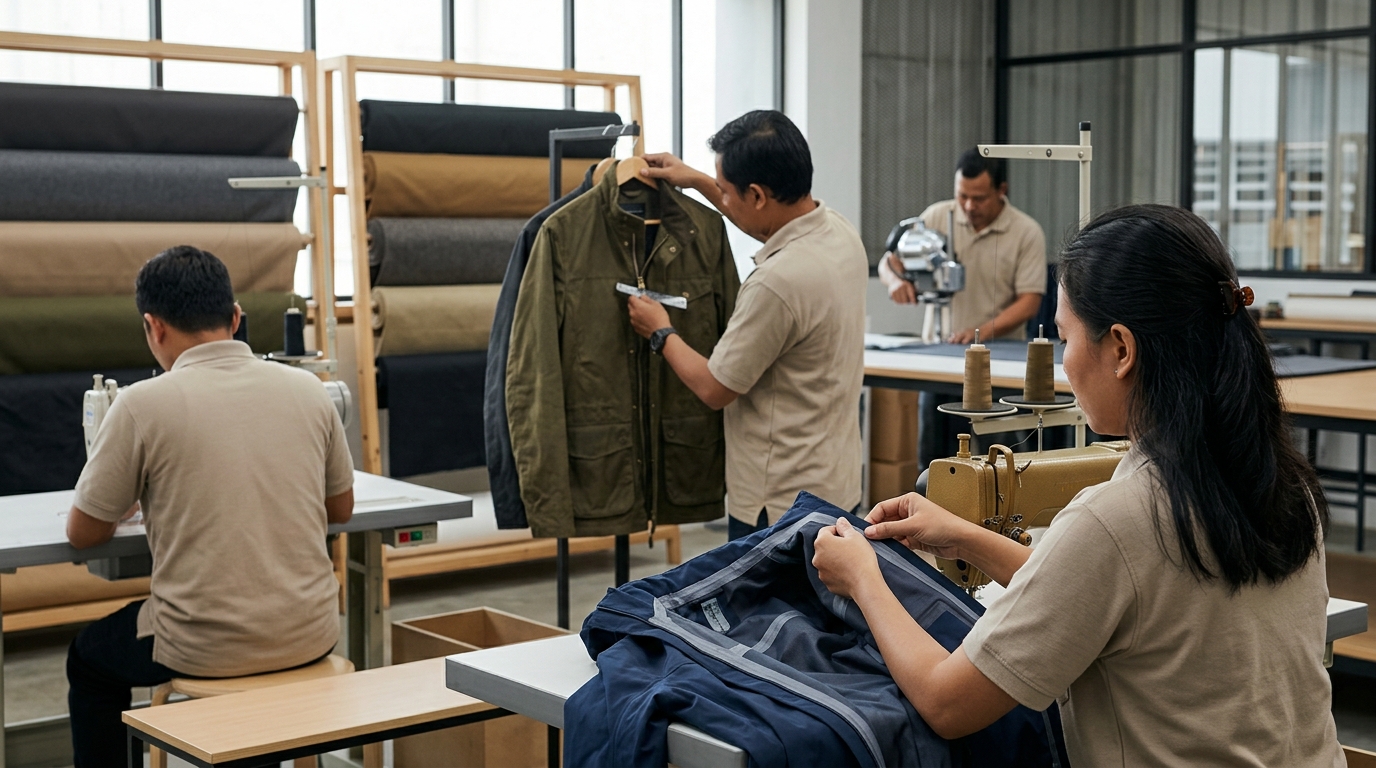
US outdoor and fashion brands face a common sourcing dilemma: balancing technical construction quality, unit cost, compliance requirements, and reliable lead times. China dominates outerwear production by volume, but rising tariffs, increasing labor costs, and supply chain concentration risks are…
US outdoor and fashion brands face a common sourcing dilemma: balancing technical construction quality, unit cost, compliance requirements, and reliable lead times. China dominates outerwear production by volume, but rising tariffs, increasing labor costs, and supply chain concentration risks are pushing buyers to diversify.
This guide addresses what jackets outerwearmanufacturers Indonesiacan actually deliver. It covers production capabilities, fabric sourcing, compliance standards, seasonal planning, and how to verify a factory before committing to bulk. The goal is to give sourcing managers and private label entrepreneurs a structured framework for evaluation — not a directory of names, but a methodology for finding the right partner.
Indonesia's garment export base is substantial. The country consistently ranks among the world's top ten apparel exporters. Its outerwear sector is concentrated in West Java, Central Java, and Greater Jakarta, with factories ranging from small CMT studios serving boutique brands to large-scale export manufacturers working with global sportswear labels.
Why Indonesia Stands Out Among Global Outerwear Sourcing Destinations
Cost Competitiveness Against Key Rivals
Jackets outerwearmanufacturers Indonesiaoccupy a distinct cost position in the Asian supply chain. Labor costs in Indonesia are generally lower than in China and Vietnam on a per-unit basis for cut-and-sew operations, though higher than Bangladesh.
A rough cost comparison for a mid-complexity woven shell jacket:
| Country | Relative FOB Cost | Technical Capability | Compliance Maturity | Tariff Risk (US) |
|---|---|---|---|---|
| China | Baseline | High | High | Elevated (Section 301) |
| Vietnam | +5–10% vs. China | High | High | Low–Moderate |
| Indonesia | +0–8% vs. China | Moderate–High | Moderate–High | Low |
| Bangladesh | –10–15% vs. China | Moderate | Moderate | Low (GSP eligible) |
Figures are approximate and vary by factory tier, construction complexity, and volume.
Indonesia benefits from favorable trade conditions for US importers. Under the Generalized System of Preferences (GSP), certain apparel categories have historically received duty reductions. Buyers should verify current GSP status with a licensed customs broker, as program eligibility changes periodically.
Industrial Zones and Factory Concentration
The core outerwear manufacturing belt runs through West Java — Bandung and surrounding areas — into Greater Jakarta (Tangerang, Sunter Agung) and eastward into Central Java (Solo/Surakarta). Each zone has a distinct production profile:
- West Java / Bandung: Fashion-forward woven jackets, smaller CMT operations, and mid-scale export factories. - Greater Jakarta / Tangerang: Proximity to Tanjung Priok port, multinational brand hubs, and larger compliance-audited facilities. - Central Java / Solo: Large-scale, export-oriented woven garment factories with high throughput capacity. - Bali: Smaller ethical manufacturers serving boutique and premium brands with low-to-mid MOQs.
Tanjung Priok, Jakarta's main container port, handles the majority of Indonesia's garment exports. Transit times to US West Coast ports run approximately 18–22 days; East Coast ports via the Suez Canal typically add 7–10 days. Factor these lead times into your seasonal planning.
Production Capabilities: What Indonesian Factories Can Build for Jackets and Outerwear
Woven Shell and Hard-Shell Jackets
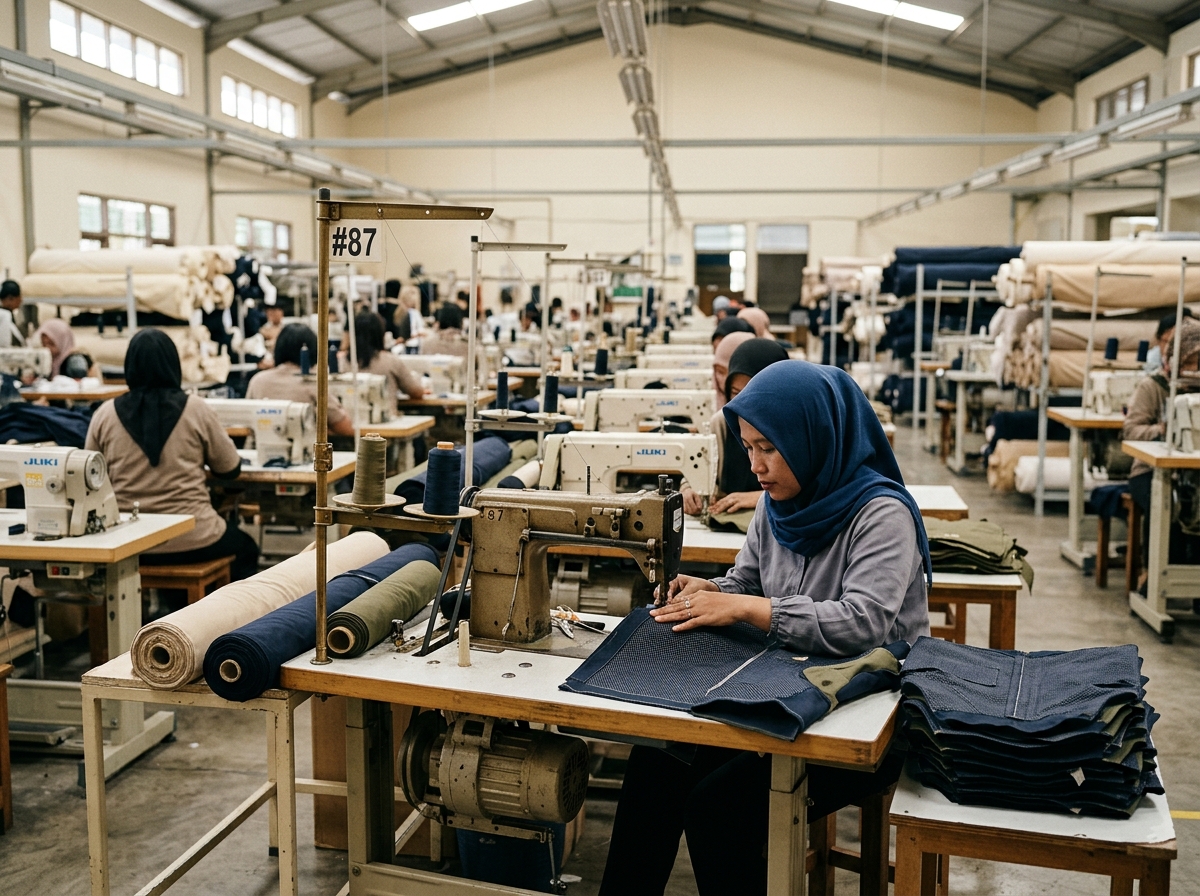
Most mid-to-large factories in Indonesia handle woven shell construction in:
- Nylon ripstop (70D, 100D, 210T weights) for lightweight packable jackets - Polyester taffeta and dobby for standard shell and rain jackets - Blended fabrications combining nylon and polyester for stretch panels
Factories with technical outerwear experience can work with bonded and laminated fabrics. Multi-layer construction — 2L (fabric + membrane), 2.5L (fabric + membrane + print backer), and 3L (fabric + membrane + inner fabric) — is available at larger facilities with bonding equipment.
Padded and Quilted Jacket Manufacturing
Padded jacket manufacturing is a core strength across Indonesia's export factories. Capabilities include:
- Down fill: RDS-certified (Responsible Down Standard) down is available through select suppliers. Verify fill power (typically 550–800FP for export-grade) and duck vs. goose sourcing on the tech pack. - Synthetic insulation: PrimaLoft-equivalent and bluesign-approved synthetic fills are accessible through import channels. Some factories maintain approved vendor lists for international insulation brands. - Bonded and quilted constructions: Channel quilting, box quilting, and sonic-welded baffle constructions are offered by manufacturers with appropriate equipment.
Softshell and Fleece-Lined Outerwear
Softshell production — combining a stretch woven face with a bonded fleece or mesh backer — is available at factories serving European and North American brands. Fleece-lined jackets (polar fleece, anti-pill fleece) are a high-volume category. Confirm whether factories source fleece domestically or import from Korean and Taiwanese mills, as this affects lead times and fabric consistency.
Technical Features Indonesian Outerwear Factories Can Deliver
This is where specification-level vetting separates capable factories from commodity producers.
Seam Sealing and Waterproofing
- Fully taped seams: All interior seams covered with thermoplastic seam tape, required for waterproof ratings above approximately 10,000mm hydrostatic head. - Critically taped seams: Tape applied only to exposed shoulder and key seams. Lower cost, adequate for light waterproof applications. - Welded seams: Ultrasonic or RF welding eliminates needle holes entirely. Requires specialized equipment; available at select technical factories.
Ask specifically whether a factory owns seam-sealing tape machines (hot-air tape machines are standard; more advanced factories have programmable tape applicators). Request proof — a photo of the equipment room or an equipment list is a reasonable ask before sampling.
Waterproof Membranes and DWR Finishing
Leading Indonesian suppliers can apply or work with:
- TPU membrane lamination: Applied to face fabric via dry or wet lamination.Waterproof ratings of approximately 10,000–20,000mm hydrostatic head are achievable. - Gore-Tex compatible construction: Some factories hold authorization to work with W.L. Gore & Associates approved fabrics. Verify authorization status directly with Gore's supplier portal — do not rely on factory claims alone. - DWR (Durable Water Repellent) finishing: Applied via padding or spray finishing. C6 and C8-free DWR formulations are increasingly demanded by US brands for PFAS compliance. Confirm the chemistry with the finishing mill.
Hardware and Zipper Sourcing
YKK is the dominant zipper supplier across Indonesian outerwear factories. Most export-oriented factories maintain YKK accounts and can specify:
- Waterproof coil zippers (YKK Aquaguard series) - Reverse-coil and vislon zippers - RIRI and SBS are available through import for premium or European-specification projects
Custom zipper pulls, branded pullers, and slider branding are standard private label services.
Structural and Ergonomic Features
Factories experienced with outdoor brand clients can execute:
- Helmet-compatible hood constructions with wire-brim peaks - Articulated patterning for mobility (pre-bent elbows, action-back yokes) - Underarm venting (pit zips) - Drawcord systems with cord locks at hem, hood, and waist - Storm flaps over main zippers with internal snap closures
- ✓Seam tape adhesion test (peel strength)
- ✓Hydrostatic head pressure test result on fabric
- ✓Zipper brand and model confirmation (YKK grade)
- ✓DWR contact angle measurement or spray test rating
- ✓Hood fit test on helmet-compatible block
- ✓Articulation assessment in range-of-motion test
Fabric Sourcing Options Available Through Indonesian Suppliers
Domestic vs. Imported Performance Textiles
Indonesia has a functioning domestic textile industry, particularly in West Java. Domestic woven polyester and nylon fabrics are cost-effective for mid-market jackets. However, for high-performance technical outerwear — lightweight ripstop with calendered coatings, stretch wovens, or high-tenacity fabrics — most factories source from:
- South Korea: Hyosung, Kolon, and other Korean mills supply technical nylon and polyester with consistent quality. - Taiwan: Taiwanese mills (particularly in the Taichung and Changhua clusters) produce premium blended and functional fabrics.
Imported fabric adds 3–6 weeks to sampling lead times if not already in the factory's approved vendor inventory. Build this into your calendar.
Sustainable Fabric Options
This is a growing differentiator for US outdoor brands. Available options through Indonesian outerwear manufacturers include:
- GRS-certified recycled polyester: Global Recycled Standard (GRS) certified fabric is available through select mills. Confirm GRS certificate numbers and scope certificates — don't accept factory claims without documentation. - bluesign-approved fabrics: Some factories work with bluesign system partners for face fabrics and linings. bluesign certification covers chemical safety, resource productivity, and worker safety at the mill level. - RDS-certified down: Responsible Down Standard certification traces down from farm to finished product. Request the supply chain certificate, not just a product claim.
Compliance, Testing, and Certification Standards to Require
Chemical and Material Safety
For outerwear exported to the US market:
- OEKO-TEX STANDARD 100: Tests for harmful substances across finished garments and components. Relevant for all fabric, insulation, and lining materials. Request the certificate number and verify it at oeko-tex.com. - REACH compliance: Though a European regulation, many US brands require REACH alignment for chemical safety — particularly for restricted substances in coatings and dyes. - CPSC compliance: The US Consumer Product Safety Commission has specific requirements for drawcords on children's outerwear. If you're producing youth jackets, ensure factory awareness of CPSC guidelines. - PFAS restrictions: Several US states have enacted or are enacting PFAS restrictions on apparel. Require documentation on DWR chemistry from the finishing mill.
Social Compliance Audits
Factory social compliance is a baseline requirement for most US retail channels. Accepted audit frameworks include:
- BSCI (Business Social Compliance Initiative) - SMETA (Sedex Members Ethical Trade Audit): 2-pillar or 4-pillar - SA8000: More rigorous, useful for brand-sensitive sourcing
Request audit reports directly, not summaries. Check the audit date — reports older than 24 months are generally not accepted by major retailers.
Quality Control Checkpoints
- Inline inspection: During production, before seam sealing and lining attachment. - Pre-shipment AQL inspection: AQL 2.5 for major defects is the standard for most US buyers. Hire an independent third-party inspection firm — do not rely solely on factory self-inspection. - Waterproof column pressure testing: Hydrostatic head tests on sealed garments (not just fabric swatches) confirm real-world performance. Some factories have in-house Suter or James Heal-type test equipment; others use third-party labs.
MOQ Ranges, Lead Times, and Seasonal Production Planning
Factory Tiers and Order Parameters
| Factory Type | Typical MOQ | Sampling Lead Time | Bulk Lead Time | Service Model |
|---|---|---|---|---|
| Small CMT studio | 50–200 pcs/style | 3–4 weeks | 45–60 days | CMT only |
| Mid-size export factory | 200–500 pcs/style | 4–6 weeks | 60–75 days | CMT or FOB |
| Large export manufacturer | 500–2,000 pcs/style | 5–7 weeks | 75–90 days | Full FOB / OEM |
| Large contract manufacturer | 1,000+ pcs/style | 6–8 weeks | 90–120 days | Full FOB / OEM / co-development |
All figures are approximate and depend on construction complexity, fabric sourcing, and factory loading.
Aligning with US Buying Seasons
US Fall/Winter outerwear typically requires bulk goods arriving at US distribution centers by August–September. Working backward from a September 1 target:
- Ship from Tanjung Priok by early August (allow 20– approximately 25 days ocean freight). - Start bulk production by mid-May (allow 75–90 days). - Approve pre-production samples by late April. - Submit final tech pack by early March. - Start sampling by January–February.
Planning Around Indonesian Production Calendars
This is a planning detail most sourcing guides omit. Indonesia's production calendar has two significant interruption windows:
- Ramadan and Eid al-Fitr: Factory output drops 20–30% (approximately) during Ramadan as workers observe fasting. The two-week Eid holiday that follows causes factory shutdowns. The timing shifts annually with the Islamic lunar calendar — confirm exact dates for each production year. - National holidays: Indonesia observes multiple national holidays that can cause one-to-three day shutdowns. Stack these against your critical path.
For brands targeting US Fall/Winter, an Eid shutdown falling in March–April can compress pre-production sampling windows significantly. Build a two-to-three-week buffer into any timeline that overlaps with this period.
How to Evaluate and Vet an Indonesian Outerwear Manufacturer
Factory Audit Criteria for Technical Outerwear
Equipment verification is non-negotiable for technical jacket categories. A capable factory should have, or have documented access to:
- Flatlock and overlock machines for seam construction - Hot-air seam-sealing tape machines - Bonding presses (for laminated constructions) - Bar-tacking machines for stress points - Sample room with at least one dedicated pattern maker and sample sewers
Request an equipment list or a video walkthrough of the production floor before visiting. Compare what you see against what was claimed.
Red Flags to Screen Before Sampling
- No third-party audit records (BSCI, SMETA, SA8000) - Cannot produce waterproofing test results from a recognized lab - Opacity about subcontracting — who handles seam sealing, who does cutting - Certificates that cannot be verified through the issuing body's online database - Sampling done at a different facility than proposed bulk production
Recommended Sourcing Channels
- Trade fairs: Indo Intertex (Jakarta) and regional Apparel Sourcing events expose buyers to mid-to-large export factories with existing compliance infrastructure. - B2B platforms: Alibaba, Global Sources, and Made-in-China list Indonesian factories, but listings vary widely in accuracy. Treat them as a starting point for longlist generation, not as verified supplier data. - Sourcing agents: Independent agents working on transparent service fees (not factory-side commissions) provide factory access and audit support. Agents earning commissions from factories have a structural conflict of interest. - Buying offices: Established buying offices in Jakarta with resident teams can execute ongoing QC programs for brands with regular volume.
Key Regions and Factory Profiles for Sourcing Jackets and Outerwear in Indonesia
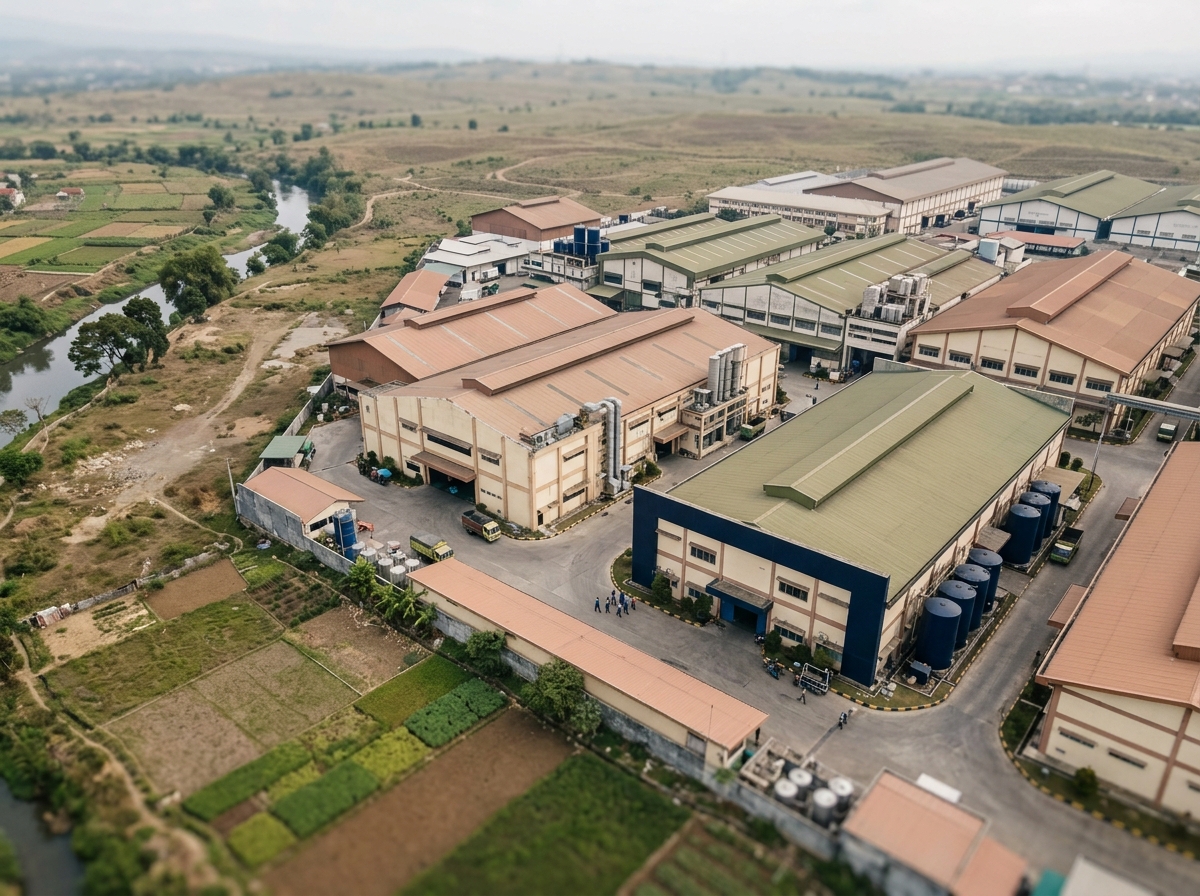
Bandung / West Java: The densest concentration of woven outerwear factories. Ranges from small CMT studios (50–150 workers) to mid-scale export operations. Strong in fashion-forward jacket construction and woven outerwear. Some factories here have served European fast-fashion and outdoor brands. MOQs tend to be more flexible than Central Java.
Solo / Surakarta (Central Java): Home to larger, export-oriented woven garment manufacturers. Higher throughput capacity. More rigid MOQ requirements (typically 500 pcs minimum per style). Better suited for brands with established seasonal programs and predictable volume.
Greater Jakarta / Tangerang: Proximity to Tanjung Priok port reduces domestic freight costs and lead times. Factories here often have existing compliance audits from multinational brand programs. Better infrastructure for third-party inspection access.
Bali: A smaller cluster of ethical and boutique-oriented manufacturers. Lower volumes, higher per-unit cost, but stronger on sustainability positioning and artisan finishing. Relevant for premium private label brands with low MOQ requirements.
Private Label and Co-Design Services for Outerwear Brands
Service Models Explained
Indonesian factories offer three primary service structures for private label outerwear:
- CMT (Cut, Make, Trim): Buyer supplies fabric and trims; factory provides labor and machinery. Buyer controls fabric sourcing and cost. Requires more buyer involvement in supply chain management. - FOB (Full Package): Factory sources fabric, trims, and accessories; manages production; ships on FOB terms. Simpler for buyers but less control over material sourcing. - OEM/Co-development: Factory participates in product development — pattern making, grading, material selection — alongside the buyer's design team. Most appropriate for brands without in-house technical design resources.
Pattern Making, Grading, and Tech Pack Development
Leading Indonesian outerwear manufacturers maintain in-house pattern rooms with Lectra or Gerber CAD systems. Services typically include:
- First pattern from a reference sample or technical sketch - Size grading across a buyer's size run - Tech pack review and commentary before sampling - Pre-production sample approval process with measurement reports
For brands without completed tech packs, some factories offer tech pack development as a paid service. This reduces friction in sampling but requires the buyer to review output carefully against their intended construction.
Branding and Customization Services
Standard private label branding available through most mid-to-large factories:
- Woven labels (main label, care label, size label) - Heat transfer and screen-printed logos on shell fabric - Custom zipper pulls and slider branding (YKK custom program has minimum order requirements) - Hang tags and poly-bag packaging to buyer specification - Custom color development on stock fabrics (minimum yardage requirements apply)
Frequently Asked Questions About Sourcing Outerwear from Indonesia
What is the typical minimum order quantity for jackets from Indonesian manufacturers? MOQs range from approximately 50–200 pieces per style at small CMT factories to 500–2,000 pieces at large export manufacturers. Factory tier, construction complexity, and service model (CMT vs. FOB) all influence the minimum.
Can Indonesian factories produce Gore-Tex or waterproof membrane jackets? Yes, with qualification. Some factories are authorized to work with Gore-Tex fabrics through W.L. Gore's approved manufacturer program. Others produce TPU-laminated equivalents with comparable waterproof ratings. Verify authorization status directly with Gore before placing orders.
How do I verify that an Indonesian outerwear manufacturer is OEKO-TEX certified? Visit oeko-tex.com and use the certificate search tool. Enter the certificate number provided by the factory. OEKO-TEX STANDARD 100 certificates are public and verifiable. Do not accept a PDF certificate alone — always cross-check the number online.
What are standard lead times for bulk outerwear production in Indonesia? Sampling typically takes 3–6 weeks. Bulk production runs 60– approximately 90 days from approved pre-production sample. Add 20–25 days ocean freight to US West Coast ports. Total pre-planning lead time from initial contact to US warehouse delivery is commonly 5–7 months.
How does sourcing jackets from Indonesia compare in cost to sourcing from China or Vietnam? Indonesia is broadly cost-competitive with China and Vietnam for cut-and-sew outerwear, with less tariff exposure than Chinese-origin goods under current US trade policy. Bangladesh is lower cost but has more limited technical outerwear capability.
Do Indonesian manufacturers offer private label and custom branding services for outerwear? Yes. Most mid-to-large export factories offer full private label services: woven labels, custom zipper pulls, heat transfer logos, branded packaging, and in some cases co-development of seasonal collections with in-house pattern and design resources.
Indonesia offers a capable, scalable, and increasingly compliance-mature base for jackets and outerwear manufacturing. The combination of technical production depth, growing sustainability credentials, and favorable trade positioning makes it a strategic alternative — and for some categories, a first-choice destination — for US brands diversifying away from China.
You now have a framework for evaluating jackets outerwear manufacturers Indonesia across capability, compliance, and commercial terms.
You understand the factory landscape, technical requirements, and vetting criteria. The next step is identifying the specific manufacturers that match your construction specs, volume, and compliance standards. Request a free sourcing consultation with vetted Indonesian outerwear manufacturers today.
Request Free Sourcing Consultation →Need eyes on the ground in Indonesia?
MTS is an execution partner — supplier verification, manufacturing management, quality control and export logistics across Indonesia, Vietnam and China.
Related services
Related articles
Receive furniture sourcing insights across Asia.
One email per week. No spam.