Mindi Wood Furniture Indonesia: The Importer's Complete Sourcing Guide
17 min read
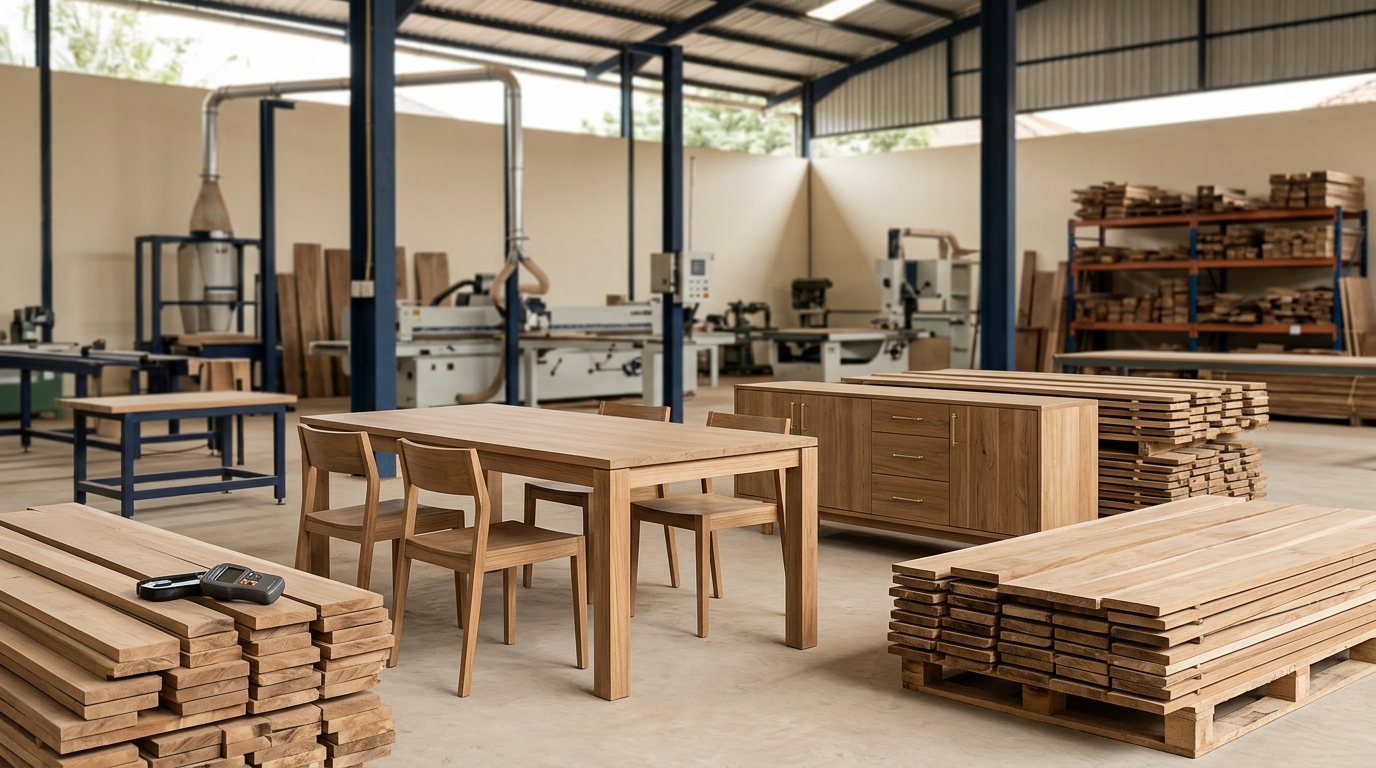
If you are evaluating mindi wood furniture Indonesia as a potential product line addition, you are likely weighing cost efficiency against the quality thresholds your retail buyers demand. The decision is rarely straightforward: you need to understand the material itself, how it compares to…
If you are evaluating mindi wood furniture Indonesia as a potential product line addition, you are likely weighing cost efficiency against the quality thresholds your retail buyers demand. The decision is rarely straightforward: you need to understand the material itself, how it compares to established hardwoods like teak, what certifications protect you under US law, and what realistic landed costs look like before committing to a container order. This guide covers all of that in one place.
Over the following sections, you will find a full material profile of mindi wood, an honest cost and quality comparison against teak, rubberwood, and acacia, a breakdown of the certification landscape including SVLK, FSC, and Lacey Act compliance, port-level logistics intelligence for Semarang, Surabaya, and Jakarta, and a landed cost framework you can use to model margins. The goal is to give US-based importers and wholesale buyers the data they need to make a confident sourcing decision — not to recycle generic claims about teak alternatives.
Indonesia has been one of the world's leading producers of solid hardwood furniture for decades, with well-established export clusters on Java and Bali serving buyers across North America, Europe, and Australia. Mindi wood sits within that ecosystem as a commercially mature, plantation-sourced hardwood that is widely used by mid-market manufacturers but remains underexplained in most sourcing literature. That gap is what this guide addresses.
What Mindi Wood Actually Is and Where It Grows in Indonesia
Botanical identity and common names
Mindi wood comes from Melia azedarach, a fast-growing deciduous tree native to South and Southeast Asia. In different markets it is sold under several common names — Persian Lilac, White Cedar, Cape Lilac, and bead tree among them. In Indonesia the tree is called mindi or mindi putih, and the name has become standard in the country's furniture export trade. Understanding the botanical identity matters for US importers because the Lacey Act requires accurate species-level declarations on import documentation, and generic trade names alone are insufficient.
Indonesian growing regions and supply infrastructure
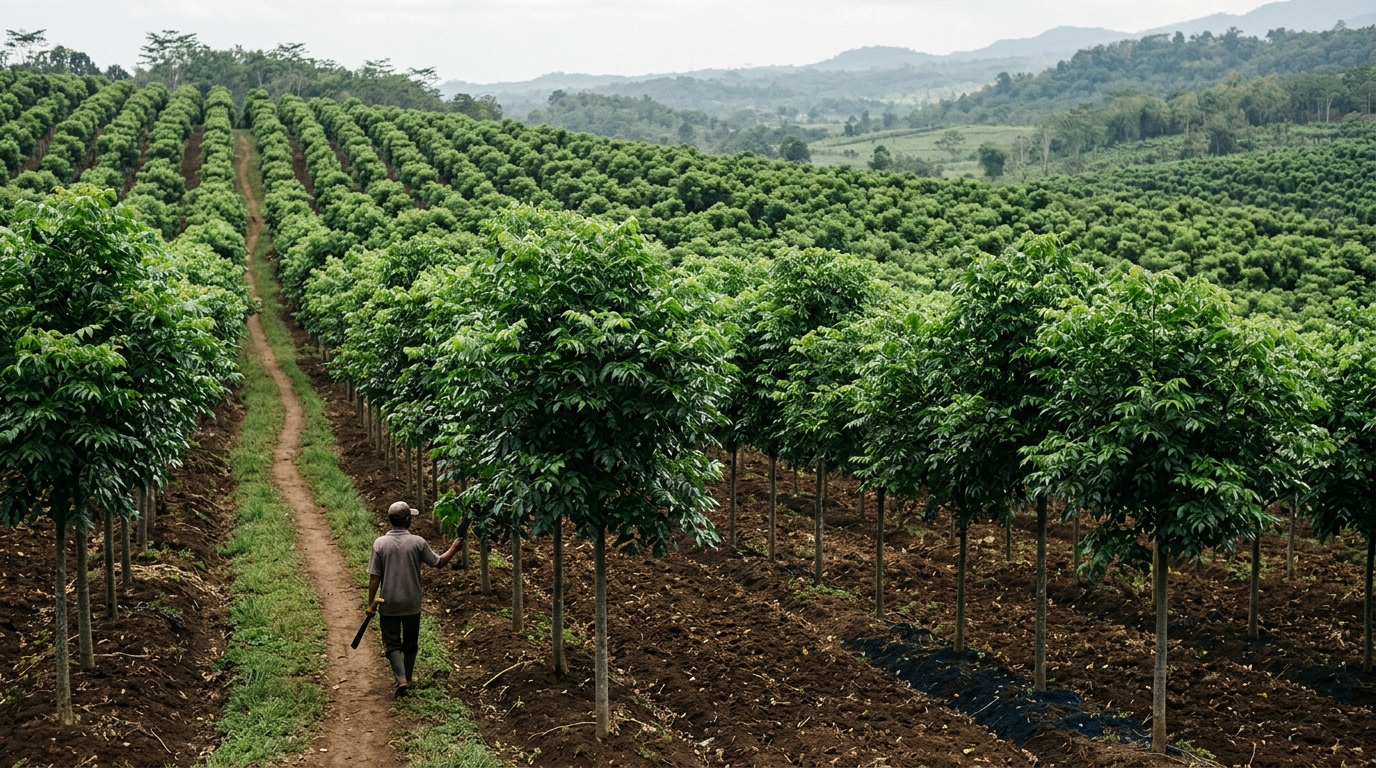
Mindi is primarily plantation-grown on Java, particularly in Central and East Java, where the climate, soil conditions, and proximity to furniture manufacturing clusters make it commercially ideal. Smaller volumes are also grown on Sulawesi and other outer islands. The tree reaches a harvestable diameter of approximately 50 centimeters within a growth cycle of roughly 10 to 12 years — significantly faster than teak, which typically requires 20 to 40 years to reach comparable dimensions.
This fast rotation cycle is central to mindi's value proposition for importers: it supports a more stable and scalable raw material supply than slow-growth species, and it aligns with plantation forestry models that can carry credible sustainability certification. The key furniture export hubs — Jepara and Semarang in Central Java, and Surabaya in East Java — are all within practical trucking distance of the primary growing regions, which keeps raw material logistics efficient.
Is Mindi a True Hardwood? Material Properties Every Importer Should Evaluate
Hardwood classification and Janka hardness
By botanical classification, mindi is a hardwood — it comes from a deciduous angiosperm tree, which places it in the same broad category as teak, oak, and walnut. However, hardwood classification is a botanical distinction, not a performance guarantee, and Janka hardness ratings vary considerably within the hardwood family.
Mindi's Janka hardness falls in a range that is generally considered moderate — meaningfully softer than teak, which is among the denser tropical hardwoods, but comparable to or harder than rubberwood, which is widely accepted as a furniture-grade material in mid-market US retail. For indoor furniture applications — dining tables, bed frames, cabinets, sideboards — mindi's hardness profile is commercially adequate. It is not suited for high-abrasion surfaces or flooring, but for structural and decorative furniture components it performs reliably.
Grain, color, and workability
Mindi displays an attractive, relatively open grain with a figure that can resemble lighter-toned mahogany. The natural color ranges from pale cream to light golden brown, often with subtle grayish or pinkish undertones depending on the specific growth region and kiln process. It takes stains, paint, and clear finishes well, which is one reason Indonesian manufacturers value it for customizable product lines where buyers want a consistent color match across SKUs.
Workability is a practical strength. Mindi machines cleanly, holds screws and dowels reliably when properly dried, and responds well to both hand and power tools. This makes it suitable for the variety of joinery methods — mortise and tenon, dowel, and biscuit — that furniture buyers typically specify for structural integrity.
Moisture sensitivity and kiln-drying requirements
Mindi is moderately sensitive to moisture and requires proper kiln-drying before furniture production. Industry-standard moisture content for indoor furniture destined for the US market is typically in the range of 8 to 12 percent. Wood that has not been adequately kiln-dried will be prone to warping, cracking, and joint failure after import — particularly given the lower humidity environments common in US interiors, especially during winter.
When vetting Indonesian mindi furniture manufacturers, confirm that their kilns are properly calibrated and that they can provide batch-level drying documentation. Reputable mid-market factories in the Semarang and Surabaya clusters treat this as standard practice; smaller workshops may not.
Mindi Wood vs. Teak and Other Hardwoods: An Honest Comparison for Commercial Buyers
The instinct in sourcing content is to call mindi a 'teak alternative' and leave it there. That framing undersells what mindi actually is and overstates the comparison. Teak and mindi serve overlapping but distinct commercial roles. Understanding the real differences — and where they do not matter — is what allows you to position mindi correctly in your product line.
Where teak outperforms mindi
Teak (Tectona grandis) contains naturally occurring oils that make it genuinely resistant to moisture, insects, and outdoor weathering. This is not a surface treatment — it is inherent to the wood's cell structure. Teak's density and oil content also give it superior dimensional stability in changing humidity. For outdoor furniture, marine applications, or high-end indoor pieces marketed on longevity, teak's premium is justified.
Mindi lacks these natural oils. It is not suitable for outdoor furniture without significant surface treatment, and even then it will not match teak's weather performance. For outdoor product lines, this is a disqualifying limitation.
Where mindi competes effectively
For indoor furniture — particularly dining room, bedroom, and living room pieces positioned in the mid-price tier — the functional differences between mindi and teak are largely invisible to the end consumer. Both can be finished to a high standard. Both offer attractive grain. Both support the structural joinery methods required for solid wood furniture. The price differential, however, is significant: mindi typically sells at a substantially lower FOB price than teak, often less than half the per-cubic-meter cost of plantation teak from comparable Indonesian suppliers.
That margin difference is where mindi earns its place in a product line. If your retail price point targets the $400–$900 range for a dining table, mindi allows you to hit that price while maintaining viable import margins. Teak at the same quality level would require a retail price that pushes most of your buyers into a higher bracket.
Full hardwood comparison table
| Criteria | Mindi | Teak | Rubberwood | Acacia |
|---|---|---|---|---|
| Janka hardness | Moderate | High | Moderate-low | Moderate-high |
| FOB price (relative) | Low–moderate | High | Low | Low–moderate |
| Outdoor suitability | Indoor only | Excellent | Indoor only | Limited |
| Grain appearance | Open, attractive | Fine, oily | Uniform, plain | Variable, rustic |
| FSC / SVLK availability | Yes (plantation) | Yes (plantation) | Yes | Yes |
| Workability | Very good | Good | Very good | Good |
| US market positioning | Mid-price indoor | Premium indoor/outdoor | Entry-mid indoor | Mid-price rustic |
| Supply stability (Indonesia) | High (plantation) | Moderate | Moderate | Moderate |
| Sustainability profile | Strong (fast rotation) | Good (plantation) | Strong (byproduct) | Moderate |
Certifications and Legal Compliance for Importing Mindi Wood Furniture Indonesia
This is the section most sourcing guides skip — and the one that can expose US importers to significant legal and reputational risk.
SVLK: Indonesia's timber legality framework
SVLK (Sistem Verifikasi Legalitas Kayu — Indonesia's Timber Legality Verification System) is a mandatory government-administered framework that verifies the legality of timber harvesting and the chain of custody through processing and export. All Indonesian timber products exported to international markets must carry SVLK documentation. For mindi furniture, SVLK certification confirms that the wood was sourced legally — whether from plantation or managed forest — and that the manufacturing and export chain has been audited.
For US importers, SVLK serves as primary documentary evidence supporting Lacey Act compliance. It does not replace your own due diligence, but a current, valid SVLK certificate from your Indonesian supplier is the foundation of a defensible compliance position.
FSC certification and what it adds
FSC (Forest Stewardship Council) certification is a voluntary international standard that goes beyond legality to assess responsible forest management practices. For plantation-grown mindi, FSC certification is attainable and increasingly available from Indonesian manufacturers who serve US and European markets. FSC-certified mindi allows importers to make credible sustainability claims in retail marketing and satisfies the procurement requirements of US retailers with formal ESG purchasing policies.
US Lacey Act compliance: what importers must do
The Lacey Act (16 U.S.C. § 3371 et seq.) requires US importers to declare the scientific name of each plant species in their products, the country of harvest, and the quantity and value of the import. For mindi wood furniture, the required declaration is Melia azedarach, Indonesia. Using a generic trade name alone — 'mindi' or 'white cedar' — without the botanical species name is a compliance error.
Penalties for Lacey Act violations range from civil fines to criminal prosecution for knowing violations. More practically, CBP can hold shipments pending documentation review. Ensuring your Indonesian supplier provides accurate, species-specific documentation on all commercial invoices and packing lists is not optional.
- ✓Confirm supplier holds a current, valid SVLK certificate (check issue date and expiry)
- ✓Request FSC chain-of-custody certificate number and verify on FSC certificate database
- ✓Confirm scientific species name (Melia azedarach) appears on all commercial documentation
- ✓Ask for sample Lacey Act import declaration from a previous US shipment
- ✓Verify that the declared country of harvest is Indonesia, not a re-export third country
- ✓Request kiln-drying records or third-party moisture content test reports
What to Expect From Indonesian Mindi Furniture Manufacturers
Product categories and customization depth
Indonesian manufacturers working with mindi produce across the full indoor furniture spectrum. The most common export categories include dining tables and chairs, bed frames, dressers and nightstands, sideboards and buffets, console tables, bookshelves, and coffee tables. Jepara and the surrounding Central Java cluster are known for solid wood craftsmanship with hand-carved detail options. The Surabaya cluster in East Java tends toward cleaner, more commercial mid-market production styles.
Customization options at established manufacturers typically include dimensions, finish color and sheen level, hardware specification, and joinery method. Many mid-market factories can accommodate OEM production — building to your design drawings — as well as ODM, where they offer their existing designs with your branding and specification modifications.
Lead times for bulk and custom orders
Realistic lead times for mindi furniture from Indonesian manufacturers depend on order complexity and factory capacity. For standard in-catalog products with modest customization (finish color, minor dimension adjustment), lead times of approximately 45 to 75 days from deposit to container loading are common at organized mid-market factories. For custom designs with new tooling or significant design engineering, 90 to 120 days is a more reliable planning figure.
These timelines assume a clean sample-approval process. Delays in sample sign-off, late payment of production deposits, or specification changes mid-production are the primary sources of timeline extension — factors within the buyer's control as much as the factory's.
Common quality control issues and how to address them
The most frequently reported quality issues with Indonesian mindi furniture shipments are: moisture-related warping or joint movement on arrival, inconsistent finish application across pieces in the same batch, and dimensional variance exceeding tolerance. All three are manageable with proper pre-shipment inspection.
Sourcing and Importing Mindi Furniture From Indonesia to the US: Logistics and Compliance
Port-level logistics: Semarang, Surabaya, and Jakarta compared
Indonesia's three primary furniture export ports each serve distinct manufacturing clusters and have different operational profiles relevant to importers.
Semarang (Central Java) is the closest major port to the Jepara furniture cluster, Indonesia's most concentrated solid wood manufacturing zone. It handles substantial furniture export volume and is the natural loading point for mindi and teak furniture produced in Central Java. Container availability and booking lead times are generally manageable, though congestion can occur during peak export seasons.
Surabaya (East Java) serves the East Java mid-market furniture cluster and is Indonesia's second-largest container port overall. It offers good frequency of direct or transshipment services to US West Coast ports. Surabaya is often the preferred loading point for buyers sourcing from multiple East Java factories, as cargo consolidation services are well-developed there.
Jakarta (Tanjung Priok port) is Indonesia's largest and most connected port, with the broadest range of shipping line services including direct calls to US East and West Coast ports. It is the practical choice for buyers consolidating cargo from multiple Java suppliers across different regions, or for those whose suppliers are located in the greater Jakarta industrial area.
| Port | Primary Cluster Served | US Route Options | Notes |
|---|---|---|---|
| Semarang | Jepara, Central Java | Transshipment via Singapore/Port Klang | Best for Central Java mindi and teak producers |
| Surabaya | East Java, mid-market | Direct and transshipment to US West Coast | Good consolidation infrastructure |
| Jakarta (Tanjung Priok) | Greater Java, multi-cluster | Widest direct service options | Best for multi-supplier consolidation |
HS codes, import duties, and Lacey Act declarations
Indonesian wooden furniture for home use typically falls under HS Chapter 94, with the most commonly applicable headings being 9403.60 (wooden furniture for domestic purposes, other) and subheadings thereunder. The applicable US Most Favored Nation (MFN) tariff rate for wooden householdfurniture from Indonesiais generally in the range of zero to a low single-digit percentage depending on the specific product subheading — importers should verify current rates with a licensed customs broker, as classification can vary by product type.
Unlike Chinese furniture, Indonesian wooden furniture is not subject to the Section 301 additional tariffs that have significantly affected China-origin sourcing costs since 2018. This is a meaningful cost advantage for US importers comparing total landed cost between supply origins.
For Lacey Act purposes, the import declaration (PPQ Form 505) must accompany the shipment and include the botanical name Melia azedarach and the country of harvest (Indonesia).
Minimum order quantities and pricing tiers
Mid-market Indonesian manufacturers typically structure pricing around container volume. A 20-foot container represents a common minimum for factory-direct pricing, though some manufacturers will accept smaller trial orders at a price premium. Forty-foot containers are standard for established import relationships and typically attract better unit pricing.
Pricing Mindi Furniture for Your US Product Line: A Landed Cost Framework
FOB price ranges by product category
FOB prices for mindi furniture from Indonesian manufacturers vary by product complexity, finish specification, and factory tier. As a general orientation:
- Dining chairs in solid mindi with a standard stain finish typically range from a low double-digit to mid double-digit USD per unit at factory FOB prices for container quantities. - Dining tables (standard 180cm rectangular) in solid mindi commonly range from low to mid three-digit USD at FOB. - Bed frames (queen, standard design) in solid mindi are typically in the mid to upper three-digit USD range FOB. - Storage pieces (sideboards, buffets) vary widely with size and detailing but are generally positioned between dining tables and bed frames on a per-piece basis.
These are orientation ranges only; actual pricing depends on specification, factory relationship, and order volume. Always obtain itemized quotations and compare across at least three vetted suppliers before committing.
Landed cost calculation framework
A practical landed cost model for US importers sourcing mindifurniture from Indonesiashould include the following components:
| Cost Component | Typical Range / Notes |
|---|---|
| FOB Indonesia (per unit) | Varies by SKU — obtain factory quotes |
| Ocean freight (per container) | Varies by route, season, and carrier |
| US port handling and terminal fees | Fixed per container, obtain from freight forwarder |
| US customs duty (MFN rate) | Applied on FOB or CIF value depending on classification |
| ISF filing fee | Standard fee per shipment |
| Domestic drayage (port to warehouse) | Varies by destination |
| Pre-shipment inspection | Per inspection, amortized across units |
| Financing cost (if applicable) | Based on payment terms and carry period |
The landed cost per unit then becomes the basis for margin calculation against your retail or wholesale price. For mid-price US retail positioning, mindi furniture from Indonesia typically supports retail margins that are competitive with rubberwood furniture from Malaysia and meaningfully better than plantation teak at the same retail price tier.
The Sustainability Profile of Indonesian Mindi Wood Furniture
Plantation sourcing versus old-growth: why the distinction matters
All commercially exported mindi wood furniture from Indonesia is sourced from plantation-grown trees, not old-growth forest. This is a meaningful distinction. Old-growth tropical timber harvesting carries well-documented biodiversity and deforestation risks. Plantation forestry — where trees are grown on managed land specifically for harvest — does not carry those risks in the same way, provided the plantation management itself is responsibly conducted.
For US importers navigating ESG reporting requirements from retail customers or internal sustainability commitments, the plantation origin of mindi is a genuine asset, not merely a marketing claim.
Carbon sequestration and the fast-rotation cycle
Mindi's 10-to-12-year rotation cycle means that harvested plantation land is quickly replanted and re-entering its carbon sequestration phase. Compared to slow-growth species where the same land would sit idle or be converted to other uses between harvests, fast-rotation plantation hardwoods like mindi support a more continuous and quantifiable carbon cycle. This is increasingly relevant for US retailers who are required to document the environmental profile of their supply chains for corporate sustainability reporting.
Labor and ethical sourcing considerations
Indonesian furnituremanufacturing, like all developing-country supply chains, includes a spectrum of labor practices. Larger, export-oriented factories in the Semarang and Surabaya clusters typically operate under Indonesian labor law with documented employment contracts, whereas smaller artisan workshops may be less formally structured. Importers with fair trade or ethical sourcing requirements should include labor practice questions in their factory audit process and look for manufacturers who can provide documentation of worker conditions, wage levels, and social compliance audits.
Frequently Asked Questions: Mindi Wood Furniture from Indonesia
Is mindi wood good quality for furniture? Yes, for indoor furniture applications. Mindi is a true hardwood with adequate density, attractive grain, and good workability. It takes finishes well and holds joinery reliably when properly kiln-dried. Its limitation is outdoor suitability — without teak's natural oils, it is not appropriate for exterior use.
Is furniture made in Indonesia any good? Indonesia has been a globally recognized furniture exporter for decades, with particular strength in solid hardwood, rattan, and artisan categories. Quality varies significantly by manufacturer and factory tier, as it does in any producing country. Properly vetted, export-oriented Indonesian manufacturers consistently produce furniture that meets US retail quality standards.
How does mindi wood compare to teak in price and durability? Mindi is substantially less expensive than teak at FOB prices — often less than half the per-cubic-meter cost. For indoor durability, the gap in performance is small and largely invisible to end consumers. For outdoor durability, teak is categorically superior due to its natural oil content.
Is mindi wood considered a hardwood? Yes, botanically. Melia azedarach is a deciduous angiosperm, which places it in the hardwood classification. Its Janka hardness is moderate — suitable for indoor furniture but not for high-abrasion applications.
What certifications should I look for when importing mindi wood furniture? At minimum, require a valid SVLK certificate from your Indonesian supplier — this is mandatory for all Indonesian timber exports and supports your Lacey Act compliance. FSC chain-of-custody certification is the recommended addition for importers with ESG or sustainability reporting requirements.
What is the typical lead time for bulk mindi furniture orders from Indonesia? For standard products with moderate customization, approximately 45 to 75 days from confirmed deposit to container loading is realistic at organized factories. Custom designs or new tooling development add 30 to 45 days. Build in additional time for sample approval before confirming production lead times with your supplier.
Mindi wood furniture from Indonesia occupies a defensible and commercially mature position in the mid-price solid hardwood category: plantation-sourced, certifiable under both SVLK and FSC, well-suited to indoor furniture across all major room categories, and priced at a level that supports viable retail margins in the US market. For importers who need supply reliability, legal compliance clarity, and material quality above the entry-level tier without the cost structure of teak, mindi warrants serious evaluation alongside rubberwood and acacia at the same price point.
You now have the material data, certification framework, port logistics, and cost modeling structure to evaluate mindi wood furniture Indonesia as a sourcing category with confidence. The logical next step is to put real numbers against the framework with quotes from verified manufacturers.
You now understand the material, the certifications, and the landed cost variables — the next step is validating your target price points with actual factory quotes. Contact a verified Indonesian mindi furniture manufacturer today to request FOB pricing for your target SKUs, minimum order quantities, and lead time confirmation.
Request a Bulk Quote →Need eyes on the ground in Indonesia?
MTS is an execution partner — supplier verification, manufacturing management, quality control and export logistics across Indonesia, Vietnam and China.
Related services
Related articles
Receive furniture sourcing insights across Asia.
One email per week. No spam.