Exotic Leather Sourcing Indonesia CITES Compliance: The Definitive Guide for Luxury Brands
14 min read
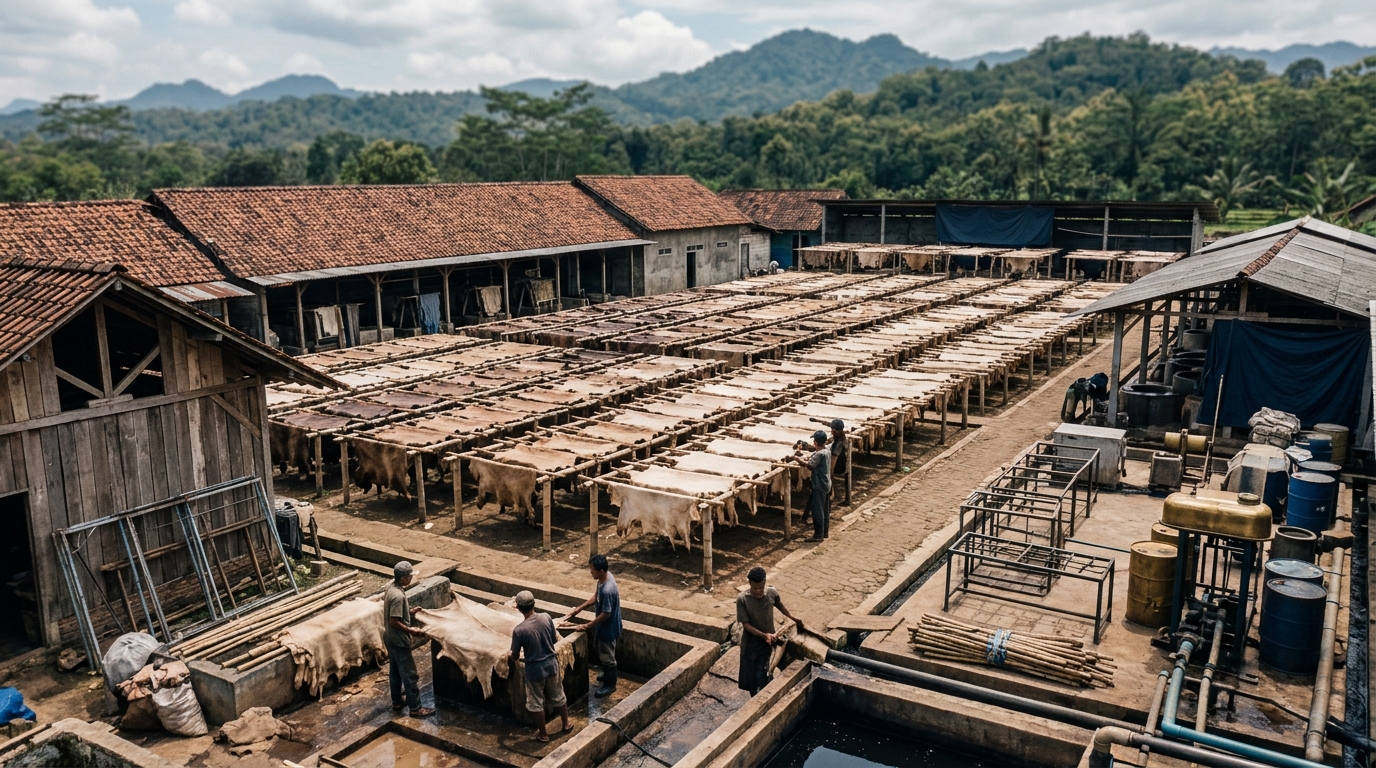
Sourcing exotic leather from Indonesia means operating inside one of the world's most regulated commodity chains. Python, crocodile, lizard, and stingray skins are globally coveted. They are also subject to multilateral treaty controls, national export quotas, a multi-stage domestic permit system,…
Sourcing exotic leather from Indonesia means operating inside one of the world's most regulated commodity chains. Python, crocodile, lizard, and stingray skins are globally coveted. They are also subject to multilateral treaty controls, national export quotas, a multi-stage domestic permit system, and US import law that carries criminal penalties for non-compliance.
This guide addresses the full compliance architecture: what CITES Appendix II requires, how Indonesia's internal permit chain works before a single shipment clears customs, how annual quotas are set and monitored, and what US-side obligations attach at port of entry. It also covers species-specific sourcing considerations, supplier vetting standards, and the contractual structures that shift liability where it belongs.
The sourcing professionals who get this right treat exotic leather sourcing Indonesia CITES compliance as a program, not a transaction. This guide gives you the framework to build that program.
Why Indonesia Dominates Global Exotic Leather Supply
Indonesia's geographic position across the Indo-Pacific biodiversity hotspot gives it unmatched species diversity. The archipelago is home to Python reticulatus (reticulated python), Crocodylus porosus (saltwater crocodile), Crocodylus novaeguineae (New Guinea crocodile), Varanus salvator (water monitor lizard), and several stingray species within Himantura spp. and related genera.
Legal trade volumes are substantial. Indonesia consistently ranks among the top three global exporters of python and monitor lizard skins by volume, according to CITES Trade Database records. The luxury sector absorbs a significant share of this output: fashion houses, specialistleather goodsbrands, and footwear manufacturers all rely on Indonesian tanneries and processors as primary supply nodes.
The reputational exposure is significant precisely because the trade volumes are substantial. A single non-compliant shipment can result in US Fish and Wildlife Service (USFWS) detention, brand-level media coverage, and removal from downstream retailer programs. The legal framework governing these exports operates simultaneously under international treaty obligations, Indonesian domestic legislation, and US import law.
The CITES Appendix II Framework Every Exotic Leather Buyer Must Understand
Appendix I vs. Appendix II: A Critical Distinction
CITES structures its species protections across three appendices, each reflecting a different level of extinction risk and trade sensitivity. Appendix I effectively prohibits commercial trade for the most critically threatened species. Appendix II permits trade but places it under regulatory control — every commercial consignment must be accompanied by a valid CITES export permit issued by the Management Authority of the exporting country.
Every primary exotic leather species exported commercially from Indonesia falls under Appendix II. The practical consequence is clear: the permit requirement is mandatory, not discretionary, and it applies to every commercial shipment — irrespective of volume or whether the leather has been incorporated into finished goods.
Which Species Fall Under Appendix II in Indonesia
| Species | Common Name | CITES Listing |
|---|---|---|
| *Python reticulatus* | Reticulated python | Appendix II |
| *Crocodylus porosus* | Saltwater crocodile | Appendix II |
| *Crocodylus novaeguineae* | New Guinea crocodile | Appendix II |
| *Varanus salvator* | Water monitor lizard | Appendix II |
| *Himantura* spp. | Stingray (selected species) | Appendix II / varies by species |
What a Valid CITES Export Permit Must Contain
A compliant CITES export permit issued by Indonesia's Management Authority must include:
- Species name (scientific and common) - Source code (C = captive-bred, R = ranched, W = wild-caught) - Quantity and unit of measure - Permit number and expiry date - Purpose of trade (commercial = purpose code T) - Importer name and country - Issuing authority signature and stamp
Permits are issued per shipment. A permit covering one consignment does not authorize subsequent shipments.
Consequences of Non-Compliance
- US Customs and Border Protection detention of the shipment - USFWS criminal referral under the Lacey Act - Country-level import suspension under CITES Conference of Parties decisions - Brand-level civil liability if downstream retailers face enforcement
How Indonesia Sets Annual Export Quotas for Exotic Leather Species
The Role of KLHK and Non-Detriment Findings
Indonesia's Ministry of Environment and Forestry — known by its Indonesian acronym KLHK — holds primary authority over exotic species export quotas. Before KLHK sets any annual quota, a Non-Detriment Finding (NDF) must be completed.
An NDF is a science-based assessment that evaluates whether the proposed volume of trade poses a risk to the survival of the species in the wild. Under CITES Article IV, the exporting country's Scientific Authority is required to issue this finding before any export permits can be granted.
The NDF process incorporates:
- Population survey data from key habitat provinces - Historical harvest and trade data from CITES Trade Database records - Species reproductive rate and habitat quality assessments - Consultation with provincial BKSDA offices (Natural Resources Conservation Agency)
The output is a recommended sustainable harvest level. KLHK translates this into an annual national export quota by species.
How Quotas Are Allocated
Quota allocation operates as follows:
1. KLHK publishes the national annual quota for each species (typically before the calendar year begins) 2. Licensed exporters and processors apply for quota allocation 3. BKSDA provincial offices track quota consumption as permits are issued 4. Once the national quota is exhausted, no further permits can be issued for that species in that quota year
Python and crocodile quotas are tracked separately. They are not interchangeable. Monitor lizard quotas are also maintained independently.
Sourcing Strategy Implications
Quota exhaustion mid-year is a real operational risk. Luxury brands with seasonal production cycles that depend on Indonesian exotic skins should:
- Confirm available quota balance with suppliers before placing orders - Build quota-aware lead times into collection calendars (typically 4–8 months ahead of delivery) - Diversify across multiple licensed suppliers to reduce single-supplier quota dependency
Captive-Bred, Ranched, and Wild-Caught: Compliance Implications for Exotic Leather Sourcing Indonesia CITES Compliance
Source Code Definitions Under CITES
The source code appearing on a CITES permit carries substantive legal weight — it is not a routine administrative entry. What it communicates is the legal and compliance profile attached to the animal from which the skin was derived.
| Source Code | Definition | Common in Indonesia |
|---|---|---|
| C | Captive-bred (F2+ generation, closed breeding colony) | Crocodile farms |
| R | Ranched (wild-collected eggs or juveniles, raised in captivity) | Python and crocodile operations |
| W | Wild-caught (taken directly from wild population) | Monitor lizard, some python |
Source code C offers the strongest compliance profile. Captive breeding programs are closed-cycle and do not draw directly on wild populations. Source code R is widely accepted and common in Indonesian python and crocodile operations but involves a wild-harvest link at the egg or juvenile collection stage.
Source code W carries the highest compliance scrutiny. It requires robust NDF support and provincial-level documentation of harvest location and method. For luxury brands, W-source skins present greater audit burden and reputational sensitivity.
Indonesia's Licensed Farming Landscape
Indonesia operates licensed crocodile farms — primarily Crocodylus porosus and C. novaeguineae — concentrated in Papua, Sulawesi, and Kalimantan provinces. Python ranching operations are more geographically distributed, with activity across Sumatra and Java. These operations must be registered with KLHK and are subject to periodic government inspection.
A licensed farm registration number is a minimum verification requirement for any supplier claiming C or R source codes. Request this documentation before contracting.
Species Deep Dive: Python, Crocodile, Lizard, and Stingray
Reticulated Python (Python reticulatus)
Python reticulatus is the world's longest snake species and Indonesia's most significantpython leatherexport. Key sourcing hubs include Java (particularly East Java processing centers) and Sumatra. Skins are traded primarily as R-source (ranched). Annual quotas fluctuate based on NDF outcomes and have faced periodic tightening in response to population monitoring results. Python skins are measured in centimeters of belly width and total length — specifications that must align between the export permit and the finished goods description.
Saltwater and New Guinea Crocodile (Crocodylus porosus / C. novaeguineae)
Both species are produced through commercial farming operations in Indonesia. C. porosus holds prestige status in the luxury segment, achieving premium prices on the strength of its distinctive scale pattern. C. novaeguineae farming is concentrated primarily in Papua. The majority of commercialcrocodile leatherexported from Indonesia is assigned source code C or R. Leather traceable to farm operations provides the most defensible documentation chain for compliance purposes.
Water Monitor Lizard (Varanus salvator)
Monitorlizard leather(commonly called "karung" in the trade) is used extensively in accessories and footwear. Indonesian exports of Varanus salvator skins are significant by volume. Most commercial trade uses W-source designation, which means the NDF and quota framework are the primary safeguards.
Stingray (Himantura spp.)
Stingray leather — commonly known as shagreen — originates from fishery operations, and its CITES status varies by species: not every Himantura species is listed under Appendix II. Where a listing applies, standard CITES export permit requirements are triggered. Where no listing exists, documentation establishing fishery origin and accurate species identification becomes essential, particularly in satisfying Lacey Act obligations at the US import stage.
The Legal Documentation Chain: From Farm Gate to Export Container
Step-by-Step Indonesian Domestic Permit Flow
This is the dimension of exotic leather sourcing Indonesia CITES compliance that buyers most consistently overlook. The CITES export permit sits at the end of a document chain — it is not the starting point.
Step 1: Farm/Harvest Operation Registration The source farm or licensed wild-harvest operator must hold a valid registration issued by KLHK. This registration number anchors the entire documentation chain.
Step 2: SATS-LN (Domestic Transport Permit) Before skins can move from farm or harvest point to tannery or processor, a SATS-LN permit must be issued. SATS-LN stands for Surat Angkut Tumbuhan dan Satwa Liar — Luar Negeri in its export variant, but the domestic transport permit (SATS-DN) governs movement within Indonesia.
Step 3: Tannery Processing and Traceability The licensed tannery or processor receives skins under the SATS-LN and must maintain intake records linking each batch to the corresponding transport permit. Buyers should contractually mandate that tanneries retain these records for a minimum of five years and make them available for audit.
Step 4: CITES Export Permit Issuance The exporter submits an application to the relevant BKSDA office — or to KLHK at the national level, depending on the species and applicable quota tier — for a CITES export permit. That application must reference the SATS-LN permit numbers associated with the skins included in the consignment. The permit is then issued against the remaining national quota balance.
- ✓Farm or wild-harvest operator registration number (KLHK-issued)
- ✓SATS-LN domestic transport permit for each skin batch
- ✓Tannery registration certificate and processing intake records
- ✓CITES export permit (original or certified copy) with correct source code and quota year
- ✓Species scientific name confirmation matching CITES permit
- ✓Permit expiry date confirmed against expected shipping date
- ✓BKSDA issuing office name and permit number for cross-reference via CITES Trade Database
Verifying Permit Authenticity
Permits reported by importing and exporting countries are recorded in the CITES Trade Database. When a permit fails to appear in that database after an appropriate lag period, it warrants further investigation. CITES has also developed the eCITES electronic permitting platform, though Indonesia's adoption of this system remains in progress. In the meantime, physical permit verification directly with the issuing BKSDA office continues to be the primary method available.
US and EU Import-Side Obligations for Exotic Leather Compliance
USFWS Form 3-177 and Declaration Requirements
Each commercial shipment of CITES-listed exotic leather arriving in the United States must be declared to the US Fish and Wildlife Service through Form 3-177 (Declaration for Importation or Exportation of Fish or Wildlife). Filing must occur at a USFWS-designated port of entry. Because not every US customs port carries that designation, routing a shipment through an undesignated port constitutes an automatic regulatory violation.
Form 3-177 requires:
- Scientific species name - Source code - Country of origin - CITES permit number - Quantity and description of goods - Value and purpose of import
Lacey Act Exposure
Under the Lacey Act, importing, exporting, selling, or acquiring wildlife that was taken or traded in violation of any US or foreign law is prohibited. For exotic leather, this has a direct operational implication: if the original sourcing violated Indonesian domestic law, the US importer may face civil penalties and potential criminal liability — regardless of whether the importer had any awareness of the underlying violation.
The "no knowledge" defense has limitations. Courts have found that commercial importers in regulated industries have constructive knowledge obligations. This makes supplier vetting and documentation retention not just best practice but legal protection.
EU Wildlife Trade Regulation (338/97)
EU-based operations or brands importing into EU member states must comply with Council Regulation (EC) No. 338/97. Appendix II species require an EU import permit in addition to the Indonesian CITES export permit. The EU import permit is issued by the wildlife authority of the member state of import. Lead times for EU import permits should be factored into sourcing calendars.
Building a Compliance-First Exotic Leather Sourcing Program
Supplier Vetting Criteria
A compliance-first approach begins at supplier selection. Minimum vetting criteria for any Indonesian exotic leather supplier:
- Valid KLHK farm or processor registration (verifiable by registration number) - Documented CITES permit history (request copies of permits from prior two quota years) - Named BKSDA contact for permit issuance (signals legitimate operating relationships) - Willingness to undergo third-party audit (refusal is a disqualifying signal) - Tannery traceability system capable of linking finished skins to SATS-LN batches
Contractual Clauses That Transfer Compliance Liability
Sourcing agreements with Indonesian exoticleather suppliersshould include:
- Permit warranty clause: Supplier warrants that all skins supplied under the agreement are covered by valid, unexpired CITES permits with correct source codes. - Document retention obligation: Supplier must retain all domestic permit documentation (SATS-LN, farm registration, intake records) for a minimum of five years and provide copies on request within 10 business days. - Audit access clause: Buyer or its designee has the right to conduct on-site documentary and physical audits with reasonable notice. - Indemnification clause: Supplier indemnifies buyer against all losses, fines, and legal costs arising from permit defects or quota violations attributable to supplier-side documentation failures. - Suspension right: Buyer may suspend orders immediately upon credible evidence of CITES non-compliance pending investigation resolution.
Digital Traceability Tools
Indonesian tanneries serving luxury brands are beginning to pilot RFID tagging at the individual skin level. RFID chips embedded in processed skins create a digital link between the physical material and its documentation chain. Blockchain-based supply chain platforms are also being evaluated by several tannery operators to create immutable permit and batch records.
Compliance as Brand Equity
Documented compliance is a tangible brand asset. It enables:
- Truthful "legally sourced" product claims in marketing and retail contexts - Reduced customs clearance friction and predictable supply continuity - Qualification for retailer supplier programs that mandate CITES documentation - Defense against NGO or media scrutiny with verifiable paper trails
Brands that invest in exotic leather sourcing Indonesia CITES compliance infrastructure differentiate themselves from competitors operating on thinner documentation.
Frequently Asked Questions: CITES Compliance for Indonesian Exotic Leather
Q: What is a CITES Appendix II permit and do I need one for every exotic leather shipment from Indonesia?
Yes. A CITES export permit issued by Indonesian authorities is required for every commercial shipment of Appendix II-listed exotic leather, and that permit must be presented at the US port of entry. No volume threshold exists below which this requirement is suspended for commercial trade.
Q: How do Indonesian annual export quotas work and how can I check current quota availability?
KLHK sets annual quotas by species based on Non-Detriment Findings. Quota availability at any point in the year depends on how many permits have already been issued against that quota. Check current quota status directly with your Indonesian supplier's BKSDA contact or query the CITES Trade Database for prior-year consumption patterns as a benchmark.
Q: What is the difference between captive-bred, ranched, and wild-caught source codes on a CITES permit?
Source code C designates skins from a captive-bred, closed breeding colony. Source code R applies to animals ranched from wild-collected eggs or juveniles raised under controlled conditions. Source code W identifies wild-caught specimens. Each code carries distinct implications for compliance risk, documentation demands, and brand sensitivity. C represents the strongest compliance position, while W attracts the highest level of regulatory scrutiny.
Q: What documents should I request from an Indonesian exotic leather supplier to verify legal origin?
At minimum: farm or harvest operator registration number, SATS-LN domestic transport permits for each batch, tannery intake records, and the CITES export permit with matching species, source code, and quantity. Cross-reference the CITES permit number against CITES Trade Database records where possible.
Q: Are stingray and monitor lizard skins subject to the same CITES rules as python and crocodile in Indonesia?
Monitor lizard (Varanus salvator) falls fully under Appendix II controls and requires a CITES export permit without exception. For stingray, the compliance obligation depends on the exact species: certain Himantura spp. carry Appendix II listings while others do not. Even for non-listed stingray species, Lacey Act requirements at US import still demand precise species documentation. Stingray sourcing decisions should be made at the species level — not on the basis of genus-level generalizations.
Q: What are the penalties for importing non-compliant exotic leather into the United States?
Civil penalties under the Lacey Act can reach tens of thousands of dollars for a single violation. Knowing violations expose parties to criminal fines and imprisonment. Beyond financial consequences, CITES infractions may trigger permit suspension that affects future import privileges. Goods may be seized and permanently forfeited. In practice, the damage a brand suffers to its reputation from an enforcement action tends to dwarf the direct monetary penalties involved.
Exotic leather sourcing Indonesia CITES compliance is not a single-document exercise — it is a layered system running from provincial farm registration through domestic transport permits, national quota management, export permitting, and US import declaration. Brands that understand each layer and build contractual, operational, and digital controls around them protect their supply chains, their legal standing, and their market positioning simultaneously.
You now have the framework. The logical next step is applying it to your specific species mix, supplier base, and production calendar with qualified support.
Your sourcing program has specific species, volumes, and supplier relationships that require tailored CITES compliance review. Connect with a specialist who can assess your current documentation chain, identify gaps, and structure supplier agreements that protect your brand at every step.
Request a Compliant Exotic Leather Sourcing Consultation →Need eyes on the ground in Indonesia?
MTS is an execution partner — supplier verification, manufacturing management, quality control and export logistics across Indonesia, Vietnam and China.
Related services
Related articles
Receive furniture sourcing insights across Asia.
One email per week. No spam.