Private Label Shoes Manufacturer Indonesia: From Sample to Scaled Production
14 min read
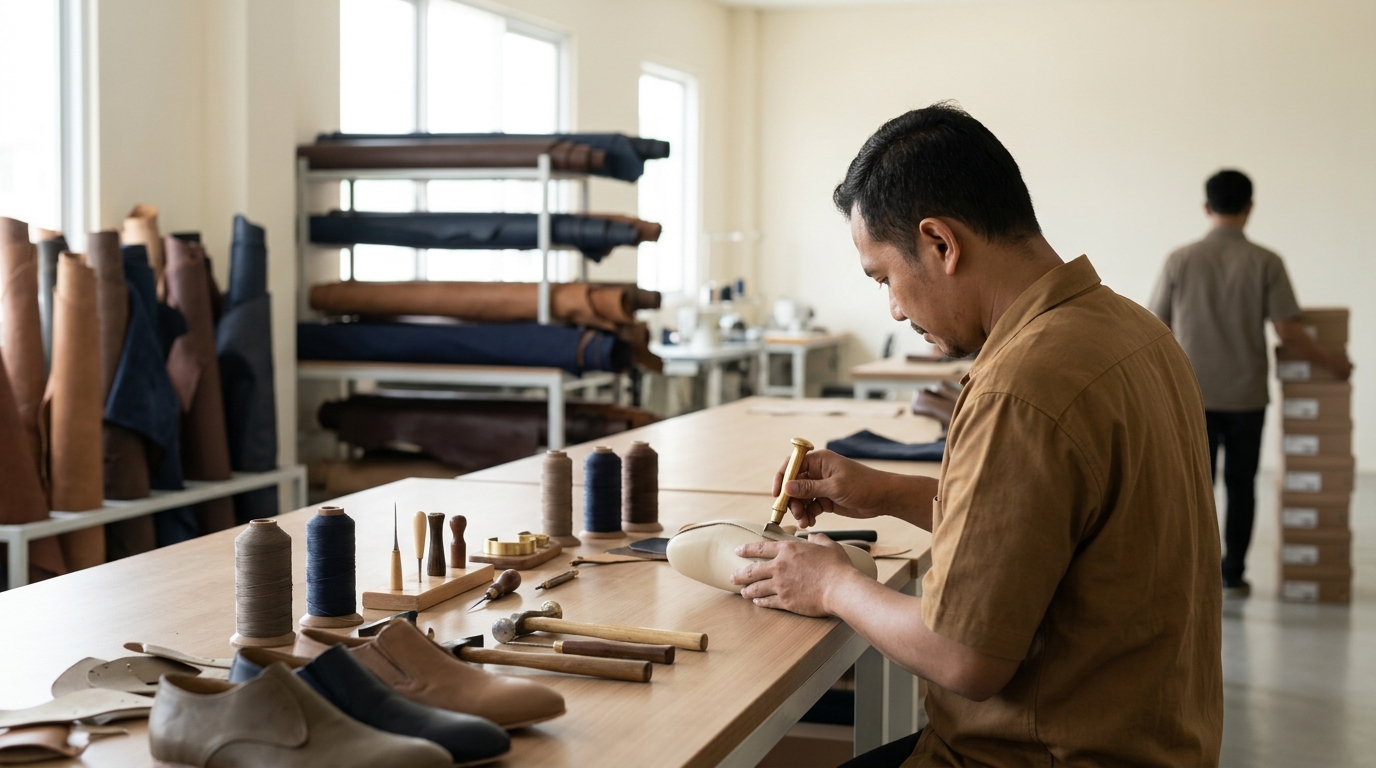
You receive a prototype shoe box from a factory in Sidoarjo, East Java. The leather upper looks clean. The welt stitching is tight. But the last pulls narrow at the toe, and the insole has no brand mark. You now face a decision that will define your launch timeline, your tooling budget, and your…
You receive a prototype shoe box from a factory in Sidoarjo, East Java. The leather upper looks clean. The welt stitching is tight. But the last pulls narrow at the toe, and the insole has no brand mark. You now face a decision that will define your launch timeline, your tooling budget, and your per-unit economics for the next two years.
That decision — and every one that follows — requires a framework, not a directory. This article walks US-based footwear entrepreneurs through the full path from factory evaluation to scaled production with an Indonesian private label shoes manufacturer. You will find construction comparisons, tooling cost ranges, a landed-cost worked example, and a vetting checklist built around Indonesia-specific practices.
Indonesia is not a backup sourcing option. For specific construction types, it is the primary one. The country's manufacturing clusters, artisan depth, and labor cost structure make it one of the most compelling sourcing destinations for US brands building a private label footwear program at realistic DTC volume thresholds.
Why Indonesian Footwear Manufacturing Outperforms for Private Label Brands
Indonesia ranks among the world's ten largest footwear producers by volume (approximate figure, consistent with World Footwear Yearbook reporting). The country's manufacturing base is not monolithic. It spans three distinct regional clusters, each with different strengths.
- East Java (Sidoarjo, Surabaya, Malang):leather dress shoes, Goodyear-welt, hand-sewn, artisan constructions - West Java (Bandung, Subang, Bogor): large-scale athletic, cemented casual, and injection-molded categories - Banten: export-oriented factories serving global sportswear brands
Labor costs in Indonesia remain meaningfully lower than coastal China for handcrafted and welted constructions, where machine automation provides limited savings. Vietnam has competitive labor costs, but Indonesia's artisan depth in welt construction is harder to replicate at comparable price points. For cemented casual and sandals, the cost gap narrows, but Indonesian factories can still be competitive on quality-adjusted unit cost.
Indonesia has benefited from Generalized System of Preferences (GSP) eligibility for certain HTS classifications in prior US trade cycles. GSP status has lapsed and been reinstated historically, so confirm current eligibility with your customs broker before building it into margin projections.
How to Match Your Brand to the Right Indonesian Factory Tier
Not every factory in Indonesia is suited to every private label program. Understanding the factory tier structure is the first qualification filter.
Large OEM and ODM Factories
Factories such as TKG Taekwang Indonesia and PT Dwi Prima Sentosa (named here as illustrative examples of the large-factory tier, not as endorsements) operate at export scale. They hold compliance certifications, run multiple production lines, and serve multinational brands. Their MOQs typically start at several thousand pairs per style. Private label customization is possible, but their systems are built for high-volume consistency, not low-volume flexibility.
Boutique Private Label Specialists
Factories in the Fortuna Shoes or Jalan Sriwayaja tier (again, illustrative of this category) are small-to-mid operations that actively court private label clients. They have sample development departments, accept lower MOQs, and will work through multiple proto revisions. Their compliance certifications may be limited, which makes your own audit process more important.
Matching Volume to Tier
| Annual Volume (pairs) | Factory Tier | Typical MOQ per Style | Flexibility |
|---|---|---|---|
| Under 1,000 | Boutique specialist | 100–300 | High |
| 1,000–10,000 | Mid-tier OEM | 200–500 | Medium |
| 10,000+ | Large OEM/ODM | 500–3,000+ | Low |
Choose your factory tier before you approach any factory. Mismatching volume to tier wastes months of development time.
Construction Types and Their Direct Impact on MOQ, Lead Time, and Unit Cost
Construction method is the single variable with the highest leverage on your program economics. It determines tooling investment, MOQ floor, production lead time, and unit cost — simultaneously.
| Construction | Typical MOQ (pairs/style) | Approx. Unit Cost Range | Lead Time (sample to bulk) |
|---|---|---|---|
| Goodyear-welt | 100–300 | Higher | 14–20 weeks |
| Hand-sewn / moccasin | 100–200 | Higher | 12–18 weeks |
| Blake-stitch | 150–300 | Mid | 12–16 weeks |
| Stitchdown | 150–300 | Mid | 12–16 weeks |
| Cemented (glued) | 100–200 | Lower–mid | 8–14 weeks |
| Vulcanized | 300–600 | Lower–mid | 10–16 weeks |
| Injection-molded | 500–1,000+ | Variable (tooling-heavy) | 14–22 weeks |
All figures are approximate industry ranges. Confirm with factories during RFQ.
Goodyear-welt and hand-sewn constructions suit brands targeting the approximately $150–$400 retail range. East Java factories have genuine artisan depth here. Cemented construction fits the approximately $60–$150 retail range and allows faster iteration. Injection-molded tooling is capital-intensive — plan for outsole mold investment of $1,500–$8,000 or more depending on complexity before committing to this category.
The Development Path: From Reference Sample to Production-Approved Shoe
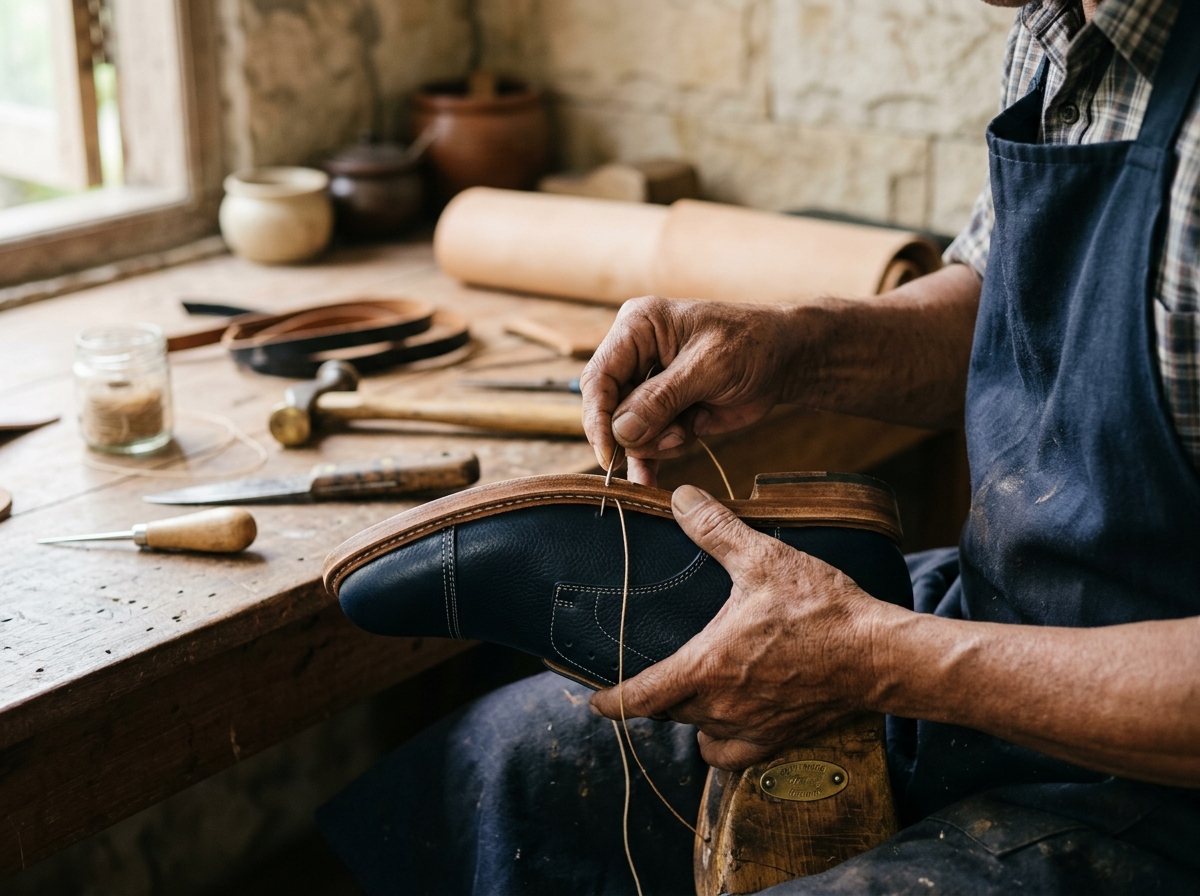
Every private label shoes manufacturer Indonesia relationship follows a structured development sequence. Skipping stages creates rework costs and delays.
Stage 1 — Brief Submission Submit a tech pack, reference sample, or detailed sketch with the following: last specification (toe shape, heel height, width fitting), upper material and color, sole unit reference, construction method, and target FOB price range. Factories cannot quote accurately without this minimum information.
Stage 2 — Proto Sample The factory builds a first prototype, typically in one size. Expect to pay approximately $150–$500 per style (approximate industry range). Timeline: three to six weeks from confirmed material availability. You own the right to reject or iterate — but each revision cycle adds two to four weeks.
Stage 3 — Fit and Wear Trial Test the proto on your target foot profile. Check last fit across your size run. Request a counter-sample if construction or material revisions are needed. Some programs require two to three counter-sample rounds before advancing.
Stage 4 — Sealed Production Sample (GPS/TOP) The Golden Production Sample or Top-of-Production sample is the reference standard for your bulk order. Once approved and sealed with both parties' signatures, it governs QC acceptance. Do not release a purchase order without a signed GPS.
Tooling and Last Investment: Ownership, Costs, and IP Protection
Tooling is where most first-time buyers make expensive mistakes with an Indonesian footwear factory.
Last (Shoe Mold) Costs
A last is the three-dimensional foot form around which the shoe is built. Stock lasts are available at most factories — they cost nothing to use but offer no brand differentiation and can be used by any other client. Proprietary lasts, machined to your specification, cost approximately $80–$300 per size run depending on material (aluminum lasts cost more than plastic but last longer in production).
For a US full-size run (approximately 7 men's to 12 men's, or 5 women's to 11 women's), budget for multiple last units to allow parallel production.
Outsole Mold Costs
Injection-molded outsoles require steel or aluminum molds. Costs range from approximately $1,500 for a simple flat mold to $8,000 or more for complex multi-part athletic outsole molds. Cemented constructions using stock or prebuilt outsoles may require no new mold investment — a significant early-stage cost advantage.
Tooling Ownership and IP Protection
Key contract language to include:
- Explicit statement that lasts and molds are buyer's property upon payment - Prohibition on factory use of buyer's tooling for third parties - Right to physical transfer of tooling upon request with 30-day notice - Amortization schedule if the factory is offering to offset tooling cost against per-unit pricing (understand what volume commitment triggers this offset)
MOQ Negotiation Strategies for Private Label Footwear Indonesia Programs
MOQ is not a fixed number. It is a negotiation anchored to factory economics. Understanding what drives the factory's floor helps you negotiate down without alienating your supplier.
Colorway consolidation: Running three colors of the same style in a shared production batch allows you to meet the factory's overall quantity requirement without tripling your per-color commitment. Consolidate colorways before negotiating.
Pilot order with committed second order: Offer a lower first-order MOQ (for example, 150 pairs) paired with a written commitment letter for a follow-on order of 300–500 pairs within six months. Many boutique factories will accept this structure. Get the commitment language specific about timeline and style.
Material pre-ordering: Factories set MOQ floors partly to justify ordering minimum material quantities from their suppliers. If you offer to pay for material pre-ordering upfront, you reduce the factory's financial risk. This can lower your effective MOQ floor.
Sizing impact: Women private label shoes typically run narrower size ranges than men private label shoes in US distribution. However, women's programs often require more half sizes, which can fragment your per-size quantity and make it harder to hit MOQ per size run. Build a size curve before you negotiate — factories will ask for it.
Private Label Branding: Every Touchpoint from Insole to Box
Branding in footwear is not just a logo on a box. A well-specified private label program touches at least six physical points on the product.
Branding touchpoints to specify: - Heel tab or counter patch: embossed or debossed brand mark - Tongue label: woven or printed label with brand name and sizing - Insole print or sock liner: full-surface brand or pattern print - Outsole deboss: brand mark or logo pressed into rubber outsole during molding - Box print: custom branded shoe box with colorway and size labeling - Tissue and inner packaging: branded tissue paper or dust bag for premium positioning
Setup fees for custom woven labels, printed insoles, and debossed outsoles are typically charged per item type, not per pair. Expect tooling setup costs for each branding element. Minimum quantities for custom packaging components are often separate from shoe MOQs — confirm both.
Sustainable packaging: A growing number of Indonesian factories can source FSC-certified shoe boxes and recycled tissue. Request this specifically in your RFQ. Not all factories stock it by default.
US Customs labeling: Under HTSUS regulations, footwear imported into the United States must display country-of-origin marking on the product itself (not just the outer carton). "Made in Indonesia" must appear on the shoe, typically on the sock liner or inside the tongue label. Confirm this with your customs broker and specify it in your production requirements.
Landed Cost Planning for US Importers Sourcing Indonesian Footwear
Incoterms: FOB vs. CIF
Negotiate FOB (Free on Board) from either Tanjung Priok (Jakarta, West Java) or Tanjung Perak (Surabaya, East Java) wherever possible. CIF transfers freight and insurance decisions to the factory, which reduces your cost transparency. FOB lets you control freight rates and carrier selection.
US Import Duty Rates by Construction and Upper Material
Duty rates under HTSUS vary significantly by upper material and construction. The following are approximate ranges — confirm exact classification with a licensed customs broker before finalizing your landed-cost model.
| Footwear Category | Approx. HTSUS Chapter | Approx. Duty Rate |
|---|---|---|
| Leather upper, dress shoe (e.g., HTS 6403) | Chapter 64 | ~8.5%–12.5% |
| Textile upper, casual/athletic | Chapter 64 | ~7.5%–12% |
| Rubber or plastic upper | Chapter 64 | ~6%–37.5% |
| Sandals, rubber/plastic sole and upper | Chapter 64 | ~6%–37.5% |
Rates are approximate. Rubber/plastic footwear rates vary widely by subheading. Classify carefully.
Landed-Cost Worked Example
Assumptions (approximate, illustrative only): - FOB unit cost: $28.00 per pair (cemented leather casual, 300-pair order) - Total FOB value: $8,400 - Ocean freight, LCL from Tanjung Perak to US West Coast: approximately $0.80–$1.20 per pair (LCL rate estimate, variable by market conditions) - US import duty: 10% of FOB = $2.80 per pair - Customs brokerage: approximately $0.30–$0.50 per pair (spread across shipment) - 3PL drayage and receiving: approximately $0.40–$0.60 per pair
Approximate landed cost: $32.30–$33.10 per pair
At a $95 retail price, that yields a gross margin of approximately 65% before marketing and returns — a healthy DTC footwear margin if maintained at scale.
Freight Port Options
Tanjung Priok handles the majority of West Java factory shipments. Tanjung Perak is the primary port for East Java factories in Sidoarjo and Surabaya. Transit times to US West Coast are typically 18–25 days by sea (approximate). US East Coast adds approximately five to seven days.
Due Diligence and Compliance: Vetting an Indonesian Shoe Factory Before Committing Capital
The single most common mistake US buyers make is paying sample fees and tooling deposits before verifying factory legitimacy. Indonesia has both credible export manufacturers and intermediaries presenting as factories.
Certifications to request:
- BSCI (Business Social Compliance Initiative) audit report - SA8000 certification (labor standards) - ISO 9001 (quality management system) - Sedex/SMETA audit (ethical trade)
Legal document verification:
- Request the factory's Nomor Induk Berusaha (NIB) — Indonesia's unified business registration number - Ask for export license documentation confirming active export status - Cross-reference factory address on NIB with the physical production address — mismatches signal an intermediary
Third-party audit options:
QIMA and Bureau Veritas both operate in Indonesia and can conduct factory audits, pre-shipment inspections, and during-production (DUPRO) inspections. A factory audit costs approximately $300–$600 for a one-day visit (approximate market rate). This is your best investment before committing tooling funds.
Red flags in supplier communication:
- Refusal to allow factory visits or third-party audits - No sample department, only catalog photos - MOQ numbers that shift dramatically between messages - No NIB or export documentation available on request - Payment terms requiring 100% upfront before any sample is produced
- ✓Request NIB registration number and verify it independently
- ✓Confirm physical factory address matches legal registration
- ✓Ask for BSCI or Sedex/SMETA audit report dated within 24 months
- ✓Request export history references or customs data verification
- ✓Commission a third-party factory audit before committing tooling deposit
- ✓Confirm sample department exists with in-house proto capability
- ✓Verify tooling ownership language in NDA before signing
Frequently Asked Questions: Private Label Shoes from Indonesia
What is the typical minimum order quantity for private label shoes in Indonesia? MOQ depends on construction type. Cemented and hand-sewn constructions typically start at 100–200 pairs per style at boutique specialist factories. Injection-molded athletic styles require 500– approximately 1,000+ pairs due to tooling economics. These are approximate industry ranges.
How much does shoe tooling (lasts and outsole molds) cost from an Indonesian factory? Proprietary lasts cost approximately $80–$300 per size run. Injection-molded outsole molds range from approximately $1,500 to $8,000 or more depending on complexity. Cemented constructions using stock outsoles may require no mold investment.
How long does it take to develop a new private label shoe style from scratch in Indonesia? From tech pack submission to sealed production sample approval, expect 12–20 weeks depending on construction complexity and revision rounds. Bulk production then adds eight to twelve weeks. Total time-to-delivery for a new style is commonly five to eight months.
Can I own my lasts and molds if I switch Indonesian factories later? Yes — if you negotiate it in writing before paying tooling fees. Ownership does not transfer automatically. Require explicit contract language stating lasts and molds are your property upon full payment and that the factory will not use them for other clients.
What US import duties apply to shoes manufactured in Indonesia? Duty rates vary by HTSUS subheading and upper material. Leather upper dress shoes fall approximately in the 8.5%–12.5% range under Chapter 64. Rubber or plastic upper footwear can range from approximately 6% to 37.5% depending on the specific subheading. Classify with a licensed customs broker before finalizing costs.
How do I verify that an Indonesian shoe factory is legitimate and compliant? Request the factory's NIB registration, export documentation, and a current BSCI or Sedex/SMETA audit report. Commission a third-party audit through QIMA or Bureau Veritas before committing tooling funds. A real factory welcomes audits — an intermediary avoids them.
A Step-by-Step Launch Plan for Your Private Label Shoe Line from Indonesia
Executing a private label footwear program requires sequencing decisions correctly. Running these steps out of order is the primary cause of wasted development budgets.
1. Define your program before approaching any factory. Lock in: construction type, target retail price, target FOB cost, annual volume forecast, and US size run. Factories cannot give you a meaningful quote without this.
2. Build a shortlist of three to five factories matched to your construction category and annual volume tier. Use the tier framework above. Do not contact large OEM factories if your first-year volume is under approximately 2,000 pairs.
3. Submit an RFQ with a tech pack or reference sample. Include last specification, upper material, sole unit reference, target FOB, and your size run. Ask for proto cost, proto timeline, MOQ, and production lead time in the same request.
4. Sign an NDA and tooling ownership agreement before paying any fees. Never pay a proto fee or tooling deposit without a signed agreement that specifies your ownership of lasts and molds and the factory's confidentiality obligations.
5. Commission a third-party factory audit before releasing a tooling deposit or purchase order. This is a non-negotiable step for any factory you have not visited in person.
6. Manage the development sequence: proto sample → fit trial → counter-sample → sealed GPS → bulk order release. Do not compress or skip stages.
7. Build your landed-cost model using confirmed FOB quotes, current freight benchmarks from Tanjung Priok or Tanjung Perak, HTSUS duty rates for your construction category, and customs brokerage estimates.
Sourcing from a private label shoes manufacturer Indonesia requires capital discipline, contract clarity on tooling ownership, and a realistic understanding of construction-specific economics. The brands that scale successfully from Indonesia are the ones that treat factory selection as a strategic decision — not a price-shopping exercise — and who manage the proto-to-production sequence without skipping the compliance and approval gates.
You now have the framework. The logical next step is identifying which specific factories match your construction type, annual volume, and compliance requirements.
You understand the construction options, tooling costs, and landed-cost mechanics. Now match that knowledge to factories that fit your category and volume. Request a curated shortlist of vetted Indonesian private label shoe factories aligned to your construction type and budget.
Request Your Factory Shortlist →Need eyes on the ground in Indonesia?
MTS is an execution partner — supplier verification, manufacturing management, quality control and export logistics across Indonesia, Vietnam and China.
Related services
Related articles
Receive furniture sourcing insights across Asia.
One email per week. No spam.