ODM Furniture Manufacturing Indonesia: A Complete Sourcing Guide for Brands
13 min read
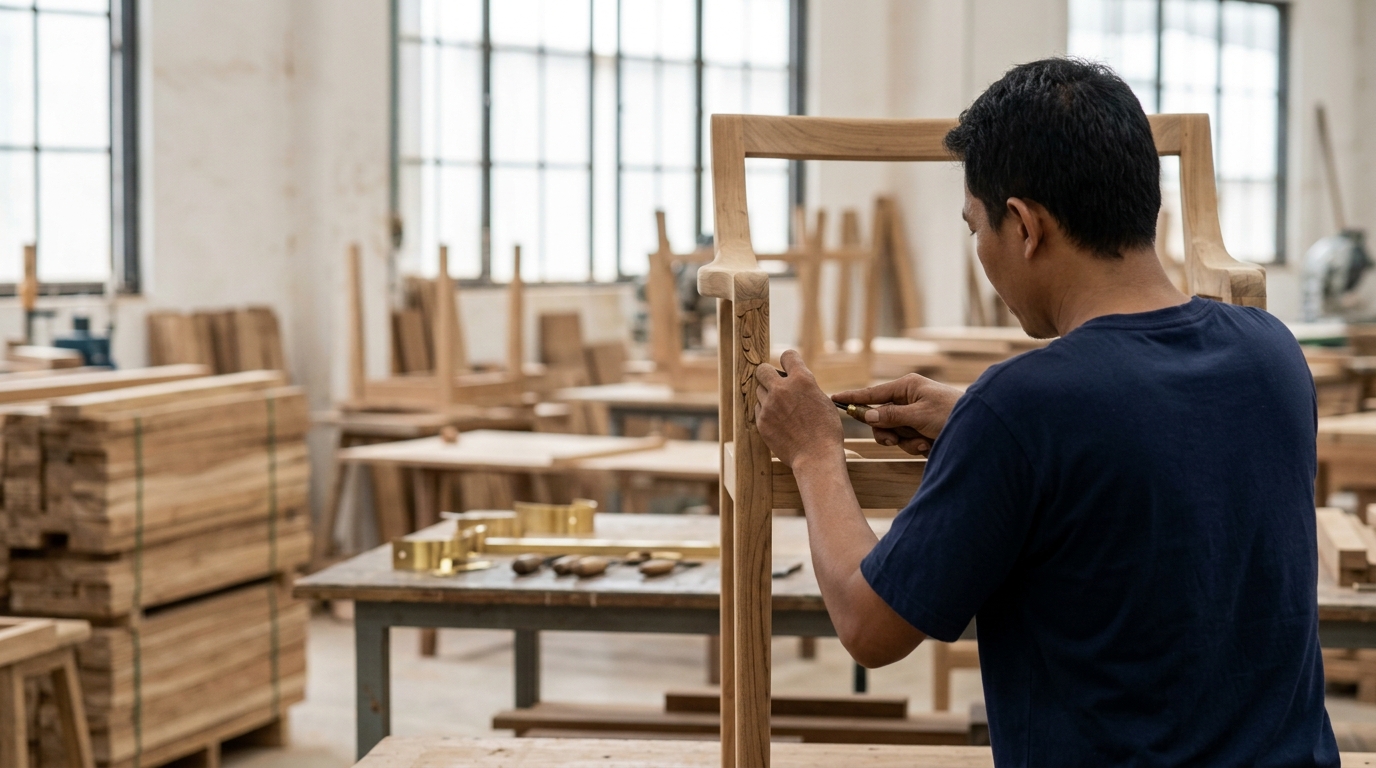
US retailers and e-commerce brands sourcing furniture from Asia face one decision that shapes everything downstream: do you bring your own designs to a factory, or do you build a collection from what the factory already makes?
US retailers and e-commerce brands sourcing furniture from Asia face one decision that shapes everything downstream: do you bring your own designs to a factory, or do you build a collection from what the factory already makes?
ODMfurniture manufacturing Indonesiaoffers a faster, lower-risk entry than full custom development. Indonesian factories — particularly in Jepara, Cirebon, and Surabaya — maintain deep design libraries across teak, mahogany, rattan, and reclaimed wood categories.
This guide covers every decision layer a US buyer needs to evaluate. It addresses IP ownership, ODM design modification limits, and exclusivity negotiation. Also included: MOQs by modification tier and Indonesia's current US tariff position.
The sharpest differentiator between ODM and OEM is not price or speed. It is who owns the design from day one. Start there.
How ODM Furniture Manufacturing in Indonesia Actually Works
ODM stands for Original Design Manufacturer. In theIndonesian furniturecontext, it means a factory that employs its own design team, produces a proprietary catalog of finished product designs, and licenses production of those designs to buyer brands — often with modifications applied.
The factory owns the base design IP. The buyer selects from the catalog, applies permitted changes, and sells the product under its own brand. The factory retains the underlying design rights unless a separate IP transfer agreement is executed.
This is structurally different from OEM (Original Equipment Manufacturer), where the buyer supplies complete design specifications and retains IP ownership from the first sketch. In OEM, the factory is a production service provider. In ODM, the factory is also a design asset.
ODM is also not the same as private-label branding. Private labeling refers to how a product is presented to the end consumer — labeling, packaging, brand identity. ODM describes the product development and manufacturing model upstream of that.
In Indonesia, ODM is particularly well-developed in natural material categories: teak outdoor and indoor furniture (Jepara), rattan and wicker (Cirebon), and mixed commercial product lines (Surabaya).
ODM vs OEM in Indonesian Furniture: IP Ownership Differences That Matter
This is the highest-stakes distinction in the entire model. Getting it wrong creates legal exposure and competitive risk.
Who Owns What, and When
In an OEM agreement, the buyer's design IP is established at contract execution. The factory manufactures to specification. It has no claim on the design, cannot replicate it for other buyers, and cannot modify it without instruction. IP ownership is clean from day one.
In an ODM agreement, the factory owns the base design. The buyer licenses production rights — sometimes exclusively, sometimes not. Any modifications the buyer introduces (colorways, finish variants, hardware swaps) may or may not be owned by the buyer, depending on what the contract specifies.
Most standard ODM contracts in Indonesia do not automatically assign modification IP to the buyer. Without explicit language, a buyer who develops a distinctive finish variant on a catalog design may find that finish available to competitors in the next catalog season.
Contractual IP Clauses You Need in Writing
Minimum contractual protections for any ODM program with an Indonesian manufacturer should include:
- Modification ownership clause: confirms that buyer-initiated design changes, colorways, and derivative adaptations belong to the buyer - Non-replication clause: prohibits the factory from applying buyer-specific modifications to catalog versions sold to other brands - Design freeze clause: locks the base SKU design for the duration of the exclusivity window - IP indemnification: factory warrants that its base designs do not infringe third-party IP rights — relevant because some Indonesian ODM designs replicate popular Western silhouettes
The Non-Exclusivity Risk
A catalog design sold to one brand can — without exclusivity — be sold to any other brand. This is the primary commercial risk in ODM.
Exclusivity negotiation is addressed in detail below. The key point here: non-exclusive ODM catalog access is the default. Exclusivity requires active negotiation and contractual documentation.
| Dimension | ODM | OEM |
|---|---|---|
| IP Ownership | Factory owns base design | Buyer owns design from day one |
| Customization Scope | Within factory-defined parameters | Full scope, buyer-specified |
| MOQ (typical wood) | 20–50 units/SKU (off-shelf) | 100–200+ units (with tooling) |
| Lead Time | 8–14 weeks production | 16–24 weeks including design dev |
| Exclusivity Options | Negotiated separately; not default | Inherent — design is buyer-owned |
| Cost Structure | Lower entry cost; potential design premium | Higher upfront tooling; lower per-unit at scale |
Inside Indonesian Factory Design Catalogs: Structure, Tiers, and Materials
How Catalog Libraries Are Organized
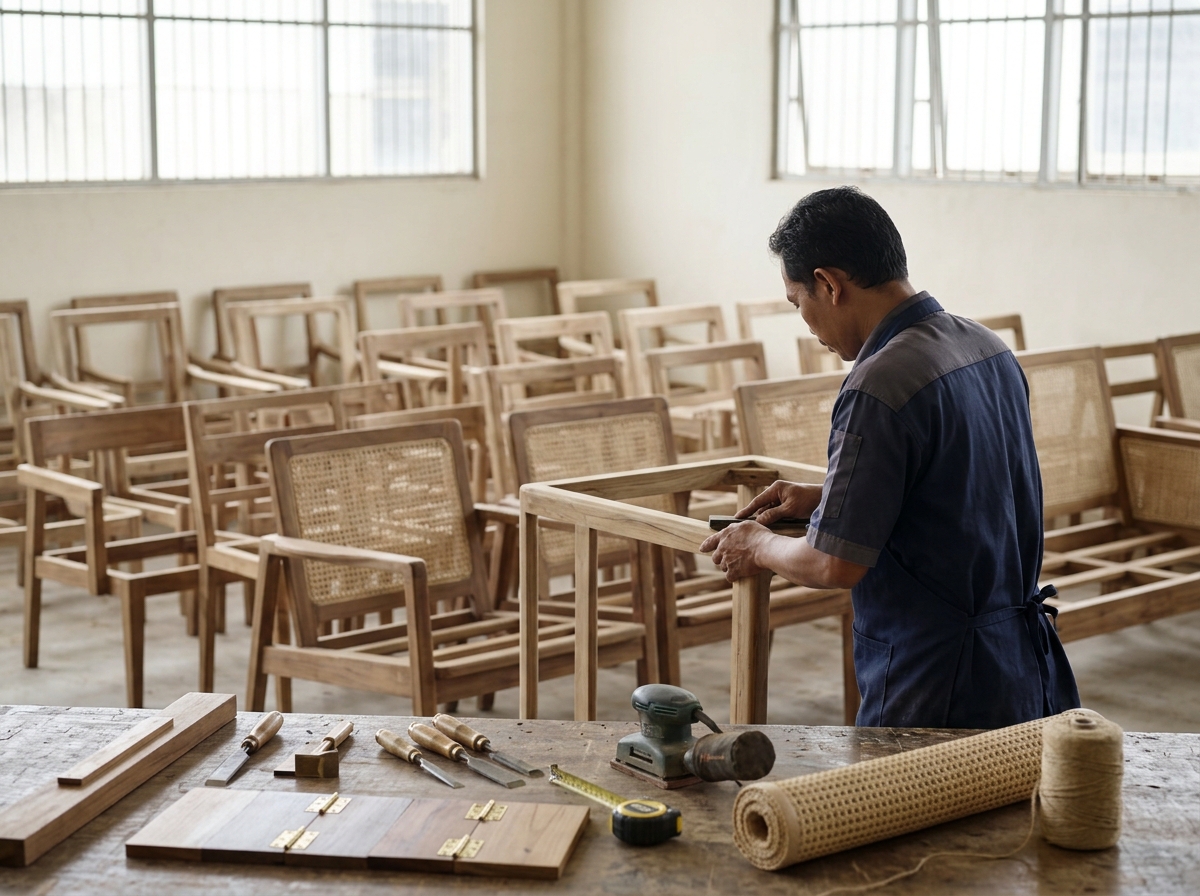
Most established ODM furniture factories in Jepara and Cirebon maintain design libraries segmented by product category: bedroom, dining, outdoor, accent, and occasional. Libraries are typically updated seasonally — some factories do this annually, others twice per year.
Within each category, designs are often further segmented by market tier:
- Mass retail tier: higher-volume SKUs, simpler joinery, cost-optimized materials - Mid-market tier: solid wood construction, more refined finish options, broader modification allowances - Premium/contract tier: complex joinery, premium teak or mahogany, hospitality-grade durability specs
Buyers should request catalog access organized by tier rather than by category. This immediately surfaces whether a factory's ODM positioning matches the buyer's retail price point.
Materials and Their Sourcing Implications
| Material | Primary Cluster | Typical MOQ Range | Notes |
|---|---|---|---|
| Teak (solid) | Jepara | 20–50 units/SKU | SVLK/FSC certification available |
| Mahogany | Jepara, Surabaya | 20–50 units/SKU | Strong for indoor dining/bedroom |
| Rattan/wicker | Cirebon | 10–30 units/SKU | Faster retooling, lower MOQs |
| Reclaimed wood | Jepara, Bali | 30–100 units/SKU | Material variability affects consistency |
| Upholstered (wood frame) | Surabaya, Semarang | 20–50 units/SKU | Fabric sourcing adds lead time |
Teak ODMfurniture from Indonesiaremains one of the strongest value propositions in the global market. Indonesian teak quality is internationally recognized. SVLK-certified teak satisfies US Lacey Act due-diligence requirements — more on this below.
Customization Limits in ODM: What Triggers OEM Reclassification
What Buyers Can Typically Change
Permitted modifications within standard ODM programs vary by factory, but the following are commonly allowed without structural reclassification:
- Finish and stain color (within tested options) - Hardware substitution (pulls, hinges, knobs) - Upholstery fabric or leather (on framed pieces) - Minor dimension adjustments (±10–15% on non-structural elements) - Surface treatment changes (oiled vs lacquered vs brushed)
These modifications typically do not alter MOQ significantly and do not require new tooling investment.
What Triggers OEM Reclassification
Structural or silhouette changes push a modification out of ODM territory. Examples include:
- Altering leg profile, frame geometry, or joinery type - Changing overall proportions beyond factory tolerance thresholds - Introducing new functional elements (storage, mechanisms, extensions) - Combining elements from multiple catalog designs into a new form
When a modification crosses into structural territory, factories typically reclassify the order as OEM — which means new technical drawings, sample development fees, tooling costs, and higher MOQs. This is not a penalty; it is a reflection of the actual development work involved.
Tiered Modification Pricing
More sophisticated Indonesian ODM manufacturers offer a defined modification tier structure. A typical three-tier model looks like this:
- Tier 1 (cosmetic): finish, hardware, fabric — no fee or minimal per-SKU fee, no MOQ increase - Tier 2 (dimensional): minor size changes — small engineering fee (approximately USD 50–200 per SKU, verify with factory), MOQ may increase to 50–100 units - Tier 3 (structural): silhouette or joinery changes — OEM reclassification, sample fee, tooling contribution required
ODM Speed-to-Market: Why Indonesian ODM Beats Custom OEM for Seasonal Launches
Full custom OEM furniture development from Indonesia typically runs 16–24 weeks from design brief to production-ready sample approval. That timeline includes: design development, technical drawing, sample fabrication, revision rounds, and final sign-off.
ODM furniture manufacturing in Indonesia bypasses the entire front-end design phase. A buyer selecting from an existing factory catalog can reach production start within 2–4 weeks of sample approval — often faster if the buyer selects an existing finish option without modification.
Typical ODM production-to-shipment timeline:
| Stage | ODM | OEM |
|---|---|---|
| Design development | 0 (pre-existing) | 6–12 weeks |
| Sample fabrication | 2–4 weeks | 4–6 weeks |
| Sample revision | 0–1 round | 1–3 rounds |
| Production | 8–14 weeks | 8–14 weeks |
| **Total (approx.)** | **10–18 weeks** | **18–32 weeks** |
For brands launching seasonal collections — spring outdoor, fall/winter dining — the ODM model provides a genuine operational advantage. A brand that misses a seasonal window with a custom OEM program loses revenue that cannot be recovered. ODM reduces that risk substantially.
Pre-engineered designs also reduce sampling errors. The factory has already manufactured the design multiple times. Joinery tolerances, material behavior, and finish application are understood. First-sample approval rates are higher than in new OEM development.
Negotiating Exclusivity: Protecting Your US Market Position with ODM Partners
Exclusivity Structures Available
Exclusivity in Indonesian ODM programs can be structured across three dimensions:
- Per-SKU exclusivity: the specific catalog design (or your modified version) is locked to your brand - Geographic exclusivity: the design is not sold to brands operating in a defined market (e.g., US only) - Channel exclusivity: the design is not sold to brands in a specific retail channel (e.g., e-commerce, hospitality contract)
US buyers can and should negotiate US-market-only exclusivity as a minimum. This protects against a competing US brand running the same design without requiring the factory to restrict global sales — which most factories will resist.
What Triggers Exclusivity Rights
Factories grant exclusivity in exchange for volume commitment or financial compensation. Common structures:
- Annual volume commitment: buyer commits to a defined annual unit purchase per SKU; factory locks the design for that period - Royalty or design license fee: buyer pays a per-unit or flat fee for exclusivity without volume guarantee - Upfront design deposit: buyer pays a non-refundable amount to remove the design from the open catalog
Time-limited exclusivity windows of 12– approximately 24 months are standard before designs return to the open catalog. Some factories offer renewable exclusivity contingent on continued volume performance.
Per-Market vs Global Exclusivity
Global exclusivity is expensive and difficult to enforce. Per-market exclusivity — US-only — is commercially achievable and contractually defensible. When drafting the agreement, define "US market" precisely: sales into the United States by any entity, regardless of shipping origin. This prevents indirect re-export workarounds.
- ✓Define the specific SKU(s) covered by exclusivity
- ✓Specify geographic scope (e.g., United States only)
- ✓Define the exclusivity duration (12 or 24 months)
- ✓State the volume commitment or fee that triggers exclusivity
- ✓Include renewal conditions and performance benchmarks
- ✓Confirm that buyer-initiated modifications are buyer-owned IP
- ✓Include a non-replication clause covering modification variants
- ✓Require written notice if factory intends to re-enter the design into open catalog
Minimum Order Quantities for ODM Programs in Indonesia: A Tiered Reality
MOQs in ODM furniture manufacturing in Indonesia vary by material, modification level, and factory scale. The figures below are approximate industry ranges — confirm specifics with each factory.
Off-the-shelf ODM catalog designs (no modification): - Solid wood (teak, mahogany): approximately 20–50 units per SKU - Rattan/wicker: approximately 10–30 units per SKU - Upholstered wood frame: approximately 20–50 units per SKU
Tier 1 modifications (finish, hardware, fabric): - MOQ typically unchanged or increases to 30–50 units per SKU - Rattan pieces often stay at lower end due to faster retooling
Tier 2 modifications (dimensional adjustments): - MOQ typically rises to 50–100 units per SKU - May require small engineering fee from factory design team
Tier 3 modifications / OEM reclassification: - MOQ typically 100–200+ units per SKU - Tooling cost contribution required (amount varies by complexity — confirm with factory)
Rattan and upholstered pieces consistently carry lower MOQs than solid teak or mahogany. If a brand is testing a new category, starting with rattan ODM through Cirebon-based factories reduces inventory risk while validating the design direction.
Evaluating Indonesian ODM Manufacturers: Verification Criteria That Matter
Certification Signals for US Market Compliance
SVLK (Sistem Verifikasi Legalitas Kayu) is Indonesia's mandatory timber legality verification system. For US buyers, SVLK-certified Indonesian wood furniture satisfies the due-diligence requirements of the US Lacey Act, which prohibits import of illegally harvested wood products.
FSC (Forest Stewardship Council) certification is an additional layer. FSC-certified teak or mahogany supports sustainability claims in US retail and e-commerce positioning. Not all Indonesian ODM factories carry FSC; request documentation and verify certificate numbers independently.
Production Cluster Selection by Category
Matching your ODM product category to the right Indonesian production cluster is a practical sourcing decision that affects quality, MOQ, and factory design depth:
| Cluster | Specialization | ODM Strength |
|---|---|---|
| Jepara (Central Java) | Solid wood, teak, mahogany | Deep teak ODM libraries; strong in indoor and outdoor wood furniture |
| Cirebon (West Java) | Rattan, wicker, bamboo | Leading rattan ODM cluster; lower MOQs, fast retooling |
| Surabaya (East Java) | Mixed, mid-market commercial | Broader category range; stronger in hospitality and contract |
| Semarang (Central Java) | Outdoor, garden furniture | Mid-tier outdoor ODM; competitive on price |
| Bali | Luxury artisan, resort | Premium ODM with high design value; higher price point |
Additional Verification Signals
- Dedicated in-house design team (vs outsourced freelancers) — ask to see the team's portfolio and CAD capability - References from US or EU brands currently running ODM programs with the factory - Capacity to produce product documentation (HTS code guidance, material specs, test reports) relevant to US import compliance - Transparent factory classification — any factory unwilling to confirm whether it is a direct manufacturer is a higher-risk counterparty
US Import Tariffs and Trade Compliance for Indonesian Furniture ODM
Indonesia's Tariff Advantage Over China
Chinese furniture has been subject to US Section 301 tariffs since approximately 2018 — adding 25% or more on top of standard duty rates for many wood furniture categories.Indonesian furnitureis not subject to Section 301 tariffs.
Standard US import duty on woodenfurniture from Indonesiafalls under HTS Chapter 94. Rates vary by product subcategory — confirm exact HTS codes and applicable duty rates with a licensed US customs broker before finalizing ODM pricing or landed cost models.
Lacey Act Compliance in the ODM Context
The US Lacey Act requires importers to declare the genus, species, country of harvest, and quantity of plant materials in imported wood products. For ODM furniture buyers sourcing teak or mahogany from Indonesia, SVLK certification from the manufacturer provides the documentation baseline for Lacey Act compliance.
In practice, this means:
- Request SVLK certificates from the factory before order placement - Confirm the certificate covers the specific timber species in your ODM designs - Retain documentation in your import records — Lacey Act due-diligence is an ongoing obligation, not a one-time check
Preparing Your Trade Compliance Package
Before the first ODM shipment from Indonesia, a US buyer should have:
- HTS code confirmed by a licensed customs broker - SVLK certificate (and FSC if applicable) from the manufacturer - Commercial invoice and packing list with wood species declared - Country of origin documentation (Indonesia) - Any applicable preferential duty program documentation (verify current eligibility with a customs broker)
Frequently Asked Questions: ODM Furniture Sourcing from Indonesia
What is the difference between ODM and OEM furniture manufacturing in Indonesia? In ODM, the Indonesian factory owns the base design and the buyer selects from a ready-made catalog — often applying finish, hardware, or minor dimensional changes.
Who owns the design IP in an Indonesian ODM furniture agreement? The factory owns the base design IP by default. Buyer-initiated modifications may or may not be buyer-owned depending on contract language. Buyers must include explicit modification ownership clauses in any ODM agreement.
Can I get exclusive rights to an ODM furniture design in the US market only? Yes. US-market-only exclusivity is achievable and more commercially realistic than global exclusivity. It requires active negotiation — typically tied to a volume commitment or exclusivity fee — and must be documented in a signed written agreement.
What are typical minimum order quantities for ODM furniture modifications in Indonesia? Off-the-shelf catalog designs: approximately 20–50 units per SKU for solid wood, 10–30 units for rattan. Finish or hardware modifications: 30–100 units. Structural modifications (OEM reclassification): 100–200+ units plus tooling contribution. These are approximate ranges — confirm with each factory.
How long does it take to get an ODM furniture order from Indonesia to the US? Production lead time is approximately 8–14 weeks for standard ODM orders. Add 3–5 weeks for ocean freight to US West Coast ports (approximately), or 4–6 weeks to East Coast.
Does Indonesian furniture avoid US tariffs compared to Chinese-made furniture? Indonesian furniture is not subject to US Section 301 tariffs, which have added 25%+ to many Chinese furniture categories since 2018. This is a meaningful landed cost advantage.
ODM furniture manufacturing in Indonesia gives US brands a practical shortcut to market — but only if the contractual foundations are correct. The model's speed and design-depth advantages are real. So are the IP risks, the exclusivity gaps, and the compliance obligations that most sourcing guides skip past.
Buyers who approach Indonesian ODM manufacturers with clear modification scope requirements, written exclusivity terms, and verified SVLK documentation will build programs that scale. Buyers who treat it as informal catalog shopping will face preventable problems.
You now have the framework to evaluate Indonesian ODM partners on the criteria that actually determine program success — from IP ownership to tariff compliance. The logical next step is getting factory design catalogs and ODM terms in front of you.
You understand the ODM model, the IP structure, the exclusivity mechanics, and the compliance requirements. The next step is evaluating specific factory design libraries and ODM program terms against your collection goals. Connect with vetted Indonesian furniture manufacturers — teak, rattan, and mixed-material specialists — and request their ODM catalogs and standard terms today.
Request Factory ODM Catalogs →Need eyes on the ground in Indonesia?
MTS is an execution partner — supplier verification, manufacturing management, quality control and export logistics across Indonesia, Vietnam and China.
Related services
Related articles
Receive furniture sourcing insights across Asia.
One email per week. No spam.