Bali Pebble Stone Suppliers Indonesia Wholesale: Complete Buying Guide for US Importers
13 min read
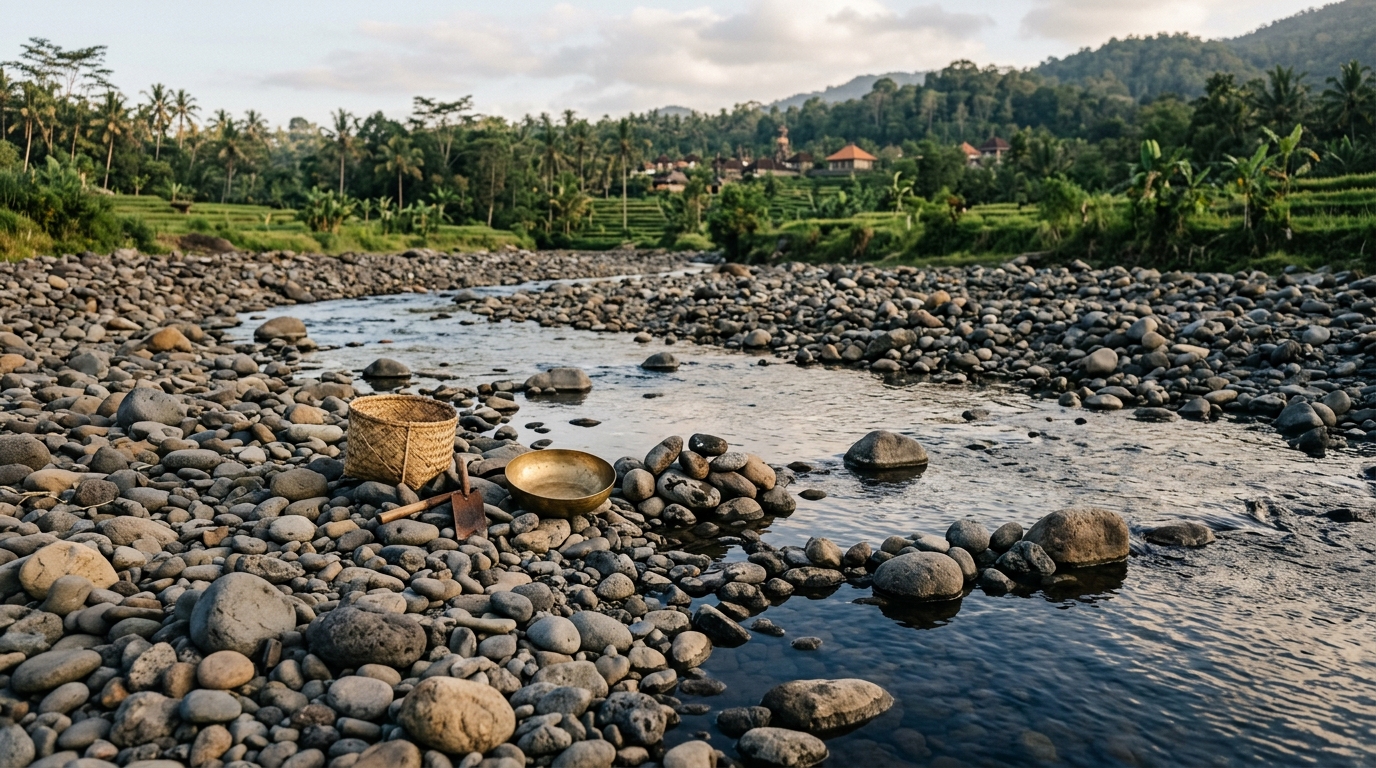
US landscape suppliers, pool finishers, and garden-product distributors face a common sourcing problem: finding reliable bulk pebble stone at a landed cost that supports healthy margins. The global decorative stone market offers options from China, India, and Vietnam, but Indonesia — and Bali…
US landscape suppliers, pool finishers, and garden-product distributors face a common sourcing problem: finding reliable bulk pebble stone at a landed cost that supports healthy margins. The global decorative stone market offers options from China, India, and Vietnam, but Indonesia — and Bali specifically — consistently attracts repeat container buyers. The reasons are structural, not accidental.
This guide covers everything a US importer needs before placing a wholesale order: pebble types, grading standards, packaging formats, mesh-mounted tile specs, freight economics, HTS code classification, and supplier vetting criteria. It is written for buyers who already understand container logistics and want actionable sourcing intelligence, not a general introduction to natural stone.
Bali pebblestone suppliers indonesiawholesale represent a mature, export-ready segment. Indonesian exporters have shipped decorative stone to the US, Europe, and Australia for decades. Infrastructure, trade documentation, and quality grading practices are well-established.
The sections below move in decision sequence: why Indonesia, what to buy, how to specify it, what it costs, how to vet your supplier, and how to move the goods.
Why Bali and Indonesia Dominate the Global Decorative Pebble Stone Market
Indonesia sits on the Pacific Ring of Fire. Volcanic geology across Bali, Java, and West Java produces river pebble deposits that are dense, hard, and naturally smooth. Centuries of water movement through volcanic river systems round the stones and create the uniform shapes that landscape and pool applications demand.
Geographic Supply Depth Across Three Islands
Bali, Java, and West Java each contribute distinct stone varieties. Bali produces the black and grey andesite pebbles most associated with the region's aesthetic. East Java, centered on Surabaya, supplies brown river pebbles and larger grading sizes used in driveway and commercial landscape applications.
Cost Advantage Over Competing Origins
Ex-works price benchmarks from Indonesian suppliers run approximately USD $200–$250 per metric ton (roughly $180–$225 per short ton) for natural unsorted river pebble. Comparable decorative stone ex-works from China or India typically runs higher once sorting, finishing, and export compliance costs are factored in. Vietnam's pebble export sector is smaller and less infrastructure-mature.
Export Infrastructure Maturity
Indonesian pebble exporters have operated container shipments to the US for well over two decades. Freight forwarders, customs brokers, and pre-shipment inspection agencies — including SGS and Bureau Veritas, both of which operate in Bali and East Java — are familiar with decorative stone classification and documentation requirements.
Pebble Stone Product Types Available from Indonesian Wholesale Suppliers
Understanding the product range is the first specification decision. Indonesian suppliers offer distinct categories with different price points, lead times, and application suitability.
| Product Type | Color Options | Common Sizes | Finish | Indicative Ex-Works Price Range (USD/MT) |
|---|---|---|---|---|
| Natural river pebble | Black, white, grey, mixed, Java brown | 1–2 cm through 6–9 cm | Natural | ~$200–$250 |
| Polished tumbled pebble | Black, white, grey, mixed | 1–2 cm, 2–4 cm | Machine-polished | ~$280–$380 |
| Lava stone pebble | Dark grey, black | 2–4 cm, 4–6 cm | Natural rough | ~$220–$300 |
| Andesite river pebble | Grey, dark grey | 2–4 cm, 4–6 cm | Natural or honed | ~$240–$320 |
| Crushed marble chips | White, cream | Fine to 2 cm | Natural | ~$180–$260 |
| Mesh-mounted pebble tile | All available colors | 30×30 cm / 30×60 cm sheets | Natural or polished | ~$4–$9 per sheet (FOB approx.) |
All price ranges are approximate benchmarks based on publicly available market data. Actual pricing depends on order volume, specification, and current raw material and freight conditions.
Natural river pebbles are the highest-volume export category. Black and white mixed pebble — sometimes called "salt and pepper" — is the most requested colorway from US pool and landscape buyers. Java brown offers a warmer palette suited to residential garden applications.
Polished pebbles undergo machine tumbling, which intensifies color and creates a wet-look sheen without water. They command a price premium of approximately 30–50% over natural finish. Pool surround contractors and interior designers are the primary buyers.
Lava stone and andesite pebbles serve specialty landscaping and Zen garden applications. Andesite is denser than standard river pebble and resists freeze-thaw cycling better — relevant for US buyers in northern climate zones.
Crushed marble chips are often sourced as a complementary line by distributors who already import pebble. They fill retail garden center SKU gaps without requiring a separate supplier relationship.
Grading, Sizing, and Sorting Standards to Specify Before Ordering
Standard Size Grades
Indonesian exporters use metric sizing. Common commercial grades are:
- 1–2 cm (approximately 3/8–3/4 inch): pool waterline mosaic, shower floor mesh tiles - 2–4 cm (approximately 3/4–1.5 inch): garden bed dressing, indoor feature walls - 4–6 cm (approximately 1.5–2.4 inch): garden path infill, landscape borders - 6–9 cm (approximately 2.4–3.5 inch): driveway edging, large-scale landscape beds - Custom sizing: available from established exporters, typically requires minimum volume and 4–6 week lead time
Sorted vs. Unsorted Supply: Price and Use-Case Differences
Sorted pebble is screened through mechanical sieves to meet a defined size tolerance — typically ±5 mm within the stated grade. It costs approximately 15–25% more than unsorted supply. Sorted pebble is required for mesh-mounted tile production, pool waterline applications, and any retail bag product where visual uniformity matters.
Unsorted (mixed-grade) pebble contains a range of sizes within a broad band. It is suitable for bulk landscape dressing, driveway infill, and erosion control where exact sizing is not critical. It is the lowest-cost entry point for high-volume buyers.
Roundness and Uniformity Criteria
Reputable exporters grade pebble for roundness visually and by mechanical rotation test. Ask for the percentage of angular rejects per batch. For pool and interior applications, specify a minimum roundness standard. For bulk landscape use, a lower roundness threshold is acceptable and reduces cost.
Requesting Grading Certification
Ask your supplier for a grading report or packing list that documents size distribution by weight percentage. This is standard practice among experienced exporters. If a supplier cannot provide this, treat it as a disqualifying signal.
Mesh-Mounted Pebble Tiles: Production Specs and Pool Application Suitability
How Mesh-Mounted Sheets Are Produced
Indonesian artisans hand-set sorted pebbles onto fiberglass mesh backing, typically in 30×30 cm (approximately 12×12 inch) or 30×60 cm (approximately 12×24 inch) sheet formats. Each pebble is placed individually to achieve consistent coverage density and pattern uniformity. Production is labor-intensive. Lead times for custom-color or custom-size mesh orders typically run 4–8 weeks beyond standard stock availability.
Backing options include:
- Fiberglass mesh net: the standard format; flexible, lightweight, adheres well to thin-set mortar - Epoxy-set backing: pebbles pre-adhered with epoxy; higher rigidity, suited for vertical feature wall applications - Interlocking panel format: rigid substrate with snap-fit edges; used for DIY-adjacent commercial installations
MOQ and Lead Times for Mesh-Mounted Orders
Stock colorways (black, white, mixed black-white) are typically available in quantities from approximately 50–100 m² per color. Custom colorways or custom sheet sizes generally carry a minimum order of 200–500 m². Lead times for stock: approximately 2–3 weeks. Custom production: 4–8 weeks before container loading.
Packaging Formats, Bag Weights, and Container Loading Options for US Buyers
Standard Bag Formats
Indonesian exporters offer multiple packaging configurations:
| Format | Weight | Weight (lbs) | Typical Use |
|---|---|---|---|
| Retail polybag | 10 kg | ~22 lbs | Garden center retail resale |
| Standard wholesale bag | 20–25 kg | ~44–55 lbs | Landscape contractor supply |
| FIBC bulk bag (jumbo bag) | 1,000 kg (1 MT) | ~2,205 lbs | Bulk distribution, re-bagging |
| Loose floor-loaded | N/A | N/A | Maximum weight per container |
Re-bagging and private-label packaging services are offered by a number of established Indonesian exporters. This means a US distributor can specify their own bag artwork, weight, and labeling and receive palletized, retail-ready product. This is a material differentiator for garden-product distributors who sell through hardware chains or independent garden centers.
Container Loading Capacity
A standard 20-foot FCL (full container load) typically holds approximately 18–22 metric tons (approximately 20–24 short tons) of pebble stone, depending on stone density and packing method. Polished pebble is denser than standard river pebble and may load toward the higher end of this range.
Palletized loading protects bagged product from transit damage but reduces total weight per container by approximately 10–15% due to pallet and dunnage volume. Floor-loaded containers maximize weight but require manual unloading at the US destination port.
LCL Consolidation for Sub-Container Buyers
Buyers who cannot fill a 20-foot container — generally those ordering under approximately 18 MT — can use LCL (less-than-container-load) consolidation through a freight forwarder. LCL freight rates are higher per metric ton than FCL, and transit times may be longer due to consolidation hub handling.
- ✓Confirm bag weight and labeling match US retail or wholesale requirements
- ✓Specify pallet dimensions (US standard 48x40 inch preferred)
- ✓Confirm bag material rating for moisture resistance during ocean transit
- ✓Request photos of packed container before door sealing
- ✓Confirm FIBC bags meet UN load rating if applicable
Wholesale Price Ranges and Landed Cost Economics for US Importers
Ex-Works Price Benchmarks
| Product | Ex-Works Bali/Indonesia (USD/MT approx.) | Premium Over Base Natural |
|---|---|---|
| Natural river pebble, unsorted | $200–$250 | — |
| Natural river pebble, sorted | $230–$290 | ~15–25% |
| Polished tumbled pebble | $280–$380 | ~30–50% |
| Mesh-mounted tiles (per sheet) | $4–$9 FOB approx. | N/A |
Freight Cost Variables
Ocean freight from Benoa (Bali) or Tanjung Perak (Surabaya) to US West Coast ports (Los Angeles/Long Beach) typically adds approximately $1,500–$3,500 per FCL 20-foot container, subject to carrier rate fluctuations and fuel surcharges. East Coast ports (New York, Savannah) add approximately $500–$1,000 in additional routing cost.
US Import Tariffs and HTS Code Classification
This is an area most competitor guides omit. US importers must classify Indonesian decorative pebble stone under the correct HTS code before calculating landed cost.
Relevant HTS codes (verify current rates at USITC.gov before filing):
| Description | HTS Code (approximate) | General Rate of Duty |
|---|---|---|
| Pebbles, gravel, broken stone (natural, not further worked) | 2517.10.00 | Free |
| Worked monumental/building stone (including cut or sawn) | 6802.xx.xx | Varies by finish/type |
| Ceramic mosaic tiles (if tiles with mesh backing reclassified) | 6907.xx.xx | Varies |
Indonesia does not currently face Section 301 tariffs (which target Chinese goods). This is a direct cost advantage for US importers comparing Indonesian and Chinese pebble stone sources. Natural decorative stone from Indonesia generally enters under a Free or low-duty rate under Chapter 25, but confirm with your customs broker as product specifications can shift classification.
Side-by-Side Landed Cost Estimate: Natural vs. Polished Pebble (Pool Finisher Perspective)
Assuming a 20-foot FCL to Los Angeles, approximate landed cost per metric ton:
| Cost Component | Natural River Pebble | Polished Pebble |
|---|---|---|
| Ex-works (Indonesia) | ~$230 | ~$330 |
| Ocean freight (FCL share) | ~$120 | ~$120 |
| US customs + port fees | ~$40 | ~$40 |
| Total landed (approx.) | ~$390/MT | ~$490/MT |
| Per kg landed | ~$0.39 | ~$0.49 |
All figures are approximate benchmarks. Use these for initial feasibility only; request supplier and freight forwarder quotes for actual calculation.
How to Evaluate and Vet Bali Pebble Stone Exporters Before Committing
Supplier Credentials to Verify
Credible bali pebblestone suppliers indonesiawholesale will provide:
- Active Indonesian export license (Surat Izin Usaha Perdagangan / SIUP and export registration) - Trade references from existing US or European buyers (verifiable by direct contact) - Factory and quarry/river source photographs with date-stamped metadata - Product-specific grading reports or packing list samples from previous shipments - Clear origin documentation stating province and river system
Red Flags in Online Supplier Listings
- No factory photos, or photos that appear to be stock images - Vague origin claims ("natural stone from Asia") - Inability to provide sample within 2–3 weeks - No trade references outside of their own website testimonials - Quoted prices significantly below market benchmarks (often indicates grade substitution risk)
Sample Ordering Process
Request a physical sample before committing to a container. Specify: stone type, color, size grade, finish, and any roundness requirements. A credible exporter will ship a 5–10 kg (11–22 lb) sample within 2–3 weeks via courier at your cost or theirs. Evaluate the sample against your application requirements before approving.
Third-Party Pre-Shipment Inspection
SGS and Bureau Veritas both operate inspection offices in Bali and East Java (Surabaya area). A pre-shipment inspection covers weight verification, size grading compliance, packing condition, and container loading supervision. Inspection fees are typically modest relative to container value and are strongly recommended for first-container orders from any new supplier.
Freight Logistics from Bali to US Distribution Centers: Ports, Transit Times, and Customs
Primary Export Ports
| Port | Location | Primary Use for Stone Export |
|---|---|---|
| Benoa Port | Bali | Small-to-mid FCL, Bali-origin product |
| Tanjung Perak | Surabaya, East Java | High-volume FCL, East Java product |
| Tanjung Priok | Jakarta, West Java | West Java product, high container throughput |
Most Bali-origin pebble clears through Benoa. Larger shipments, or those combining Bali and Java product, often route through Tanjung Perak for better vessel frequency to the US.
Ocean Transit Times
- US West Coast (Los Angeles/Long Beach): approximately 18–25 days from Bali/Surabaya - US East Coast (New York, Savannah): approximately 28–38 days, depending on routing and Panama Canal slot availability - US Gulf Coast: approximately 30–40 days
These are approximate transit times and exclude port congestion delays, which can add days unpredictably.
Customs Documentation Checklist
- ✓Commercial invoice (FOB or CIF value, HTS code, country of origin)
- ✓Packing list (weight per bag, bags per pallet, total MT)
- ✓Bill of lading (ocean or multimodal)
- ✓Certificate of origin (Indonesian Chamber of Commerce issued)
- ✓Pre-shipment inspection certificate (if commissioned)
- ✓Any required fumigation certificate if wooden pallets are used (ISPM 15)
US Market Applications Driving Demand for Indonesian Pebble Stone
Pool Coping, Waterline Accents, and Shower Floors
Pool finishers are among the highest-value buyers of polished Indonesian pebble. Black and white mixed polished pebble at 1–2 cm and 2–4 cm grades is used for pool waterline accent banding and coping borders. Mesh-mounted sheets in these grades reduce labor time significantly on large pool installations.
Residential and Commercial Landscape Bed Dressing
Sorted colored pebble at 2–4 cm and 4–6 cm grades is the workhorse SKU for landscape contractors. Natural black, white, and mixed colorways are the most consistently ordered. Commercial landscape projects — retail centers, hospitality properties — often purchase in multi-container quantities and benefit from volume pricing negotiation with Indonesian suppliers who can commit to color-lot consistency across multiple shipments.
Garden Paths, Driveway Infill, and Large-Scale Grading
The 4–6 cm and 6–9 cm grades serve garden path infill and driveway edging. These grades are often sold in 1-MT FIBC bulk bags through landscape supply yards. The price per kilogram is lower than smaller-grade sorted pebble, making this the most accessible entry point for high-volume landscape supply distributors.
Retail Garden Center Bagging and Private-Label Resale
Garden-product distributors who sell through retail chains should ask Indonesian suppliers about private-label re-bagging services. Several established exporters will pack product into buyer-specified 10 kg (22 lb) or 20 kg (44 lb) retail bags with custom artwork, UPC codes, and bilingual labeling. This converts a commodity import into a branded retail product without requiring domestic re-bagging infrastructure.
Frequently Asked Questions from US Wholesale Buyers
What is the minimum order quantity for wholesale Bali pebble stone imported to the US? Most experienced exporters set FCL (20-foot container, approximately 18–22 MT) as the standard wholesale minimum. LCL consolidation is available for buyers under this threshold, typically from approximately 1–5 MT upward, at higher per-ton freight cost.
What US import tariffs or HTS codes apply to decorative pebble stone from Indonesia? Natural unworked pebble and gravel typically classifies under HTS 2517.10.00 at a Free (0%) general duty rate. Worked or finished stone may fall under Chapter 68. Mesh-mounted tiles may classify under Chapter 69 as ceramic mosaic.
How long does ocean freight from Bali or Surabaya to a US port typically take? Approximately 18–25 days to US West Coast ports (Los Angeles/Long Beach). Approximately 28–38 days to East Coast ports (New York, Savannah). Add 3–7 days for inland transit to a distribution center after port clearance.
What is the difference between sorted and unsorted pebble stone, and which should I order? Sorted pebble meets a defined size tolerance (e.g., 2–4 cm ±5 mm) and costs approximately 15–25% more. It is required for mesh-mounted tile production, pool applications, and retail bagging.
Can Indonesian suppliers provide custom-color or custom-size pebble grading for a project? Yes. Established exporters can accommodate custom size grades (e.g., 3–5 cm) and can source specific color-dominant lots on request. Custom sizing typically requires higher minimum volumes and 4–6 weeks additional lead time. Request confirmation in writing with a reference sample before committing.
Are mesh-mounted pebble tiles from Bali suitable for submerged pool waterline applications? Standard fiberglass mesh tiles require epoxy-compatible adhesive systems for submerged or wet-zone installation. Specify epoxy-set backing when ordering for pool waterline use, and confirm adhesive compatibility with your tile contractor. Request material data sheets from the exporter for both the mesh and adhesive components.
Selecting the right bali pebble stone suppliers indonesia wholesale comes down to three converging factors: precise product specification, credible supplier verification, and accurate landed cost modeling inclusive of freight and HTS classification.
Indonesia's volcanic geology, export infrastructure, and competitive pricing make it the default origin for serious US pebble stone importers. The margin opportunity is real — but it requires sourcing discipline, not shortcuts.
You now have the specification framework, price benchmarks, and vetting criteria to evaluate Indonesian pebble stone sources with confidence. The next step is getting actual supplier quotes against your specific grades, volumes, and packaging requirements. Request a wholesale pebble stone quote from verified Bali suppliers today and benchmark real landed costs before your next container decision.
Request a Wholesale Quote →Need eyes on the ground in Indonesia?
MTS is an execution partner — supplier verification, manufacturing management, quality control and export logistics across Indonesia, Vietnam and China.
Related services
Related articles
Receive furniture sourcing insights across Asia.
One email per week. No spam.